“Spring winds”, with thanks to Nevrax for the underlying loose sketch.
Midderlands for D&D
The old-school fantasy Midlands role-playing game Midderlands runs on Swords & Wizardry Complete… but is now Kickstarting for a Midderlands D&D 5e edition. I’m no expert on tabetop RPGs but it looks like this will convert the existing game and its material to run with the popular Dungeons & Dragons Fifth Edition, in the form of a single large letter-sized book (the American ‘sort-of A4’). The Kickstarter for this ends 2nd April 2020, and currently looks like it has a good chance of hitting its target.
I have a Midderlands Stoke-on-Trent expansion, for free.
Buy Gun Moor
Thanks to Karen Bradley MP for the tip that… “Staffordshire Wildlife Trust are trying to raise £156,000 to buy Gun Moor.”
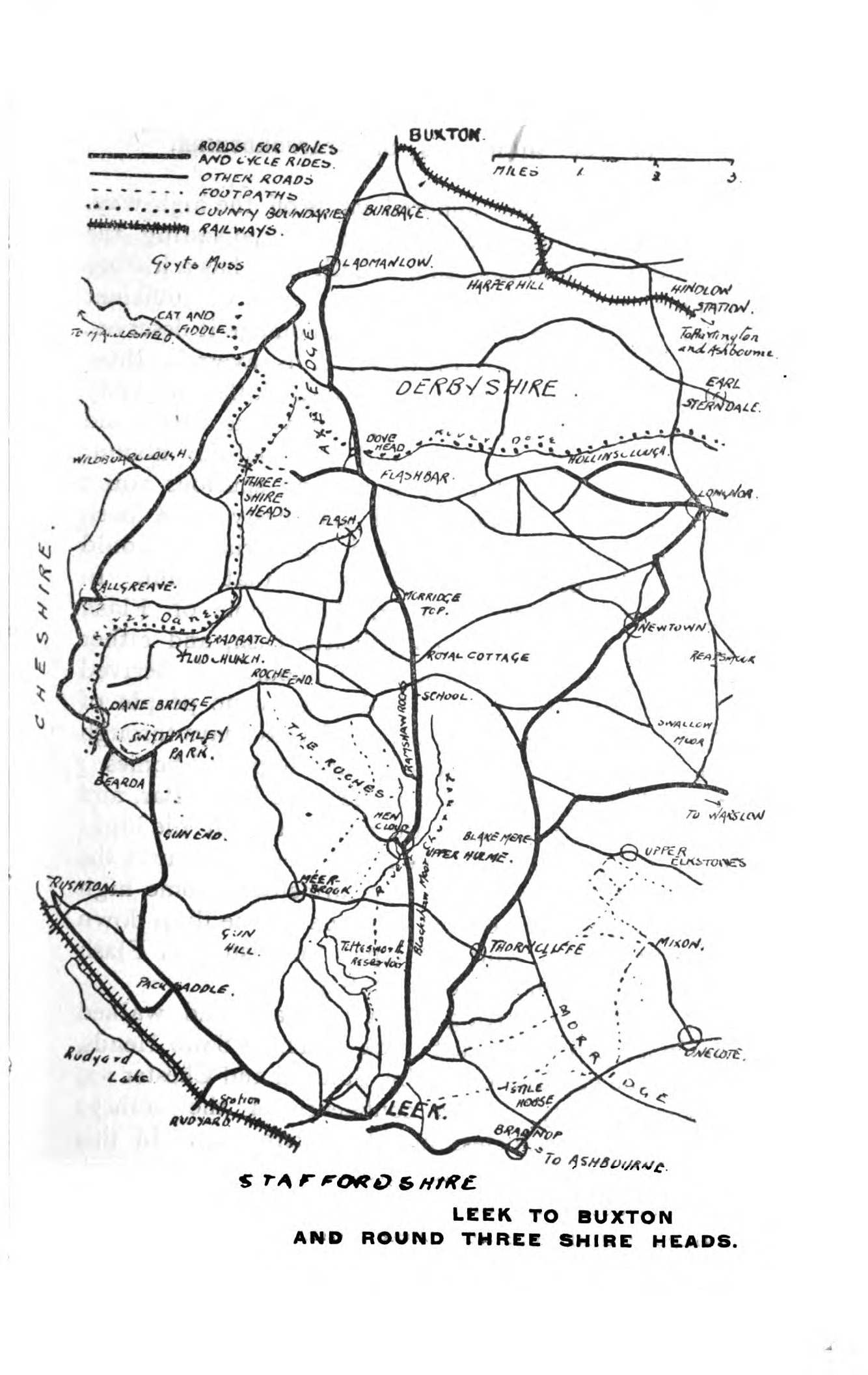
The Moor is wildlife-rich un-ploughed moorland in Gawain country, above Rushton Spencer in the Staffordshire Moorlands.
The Rushton Spencer Historical Society has a public talk on the 16th March 2020 (7.30pm): “Gun Moor; Past, Present & Future’, with local historian Alan Weeks and Jon Rowe, Staffordshire Wildlife Trust Warden for the Roaches and Gun Moor.
The Birmingham Oratory’s ‘Retreat’
New on eBay, a picture of ‘The Retreat’, kept by the Birmingham Oratory at Rednal in the Lickey Hills near Birmingham. The young Tolkien spent the later part of the summer of 1904 at a cottage in the grounds, and Tolkien would sit on the veranda of the main house with the house dog ‘Lord Roberts’ (*) and Father Francis while he smoked his large cherrywood pipe. Apparently it was only in this place that Father Francis allowed himself the luxury of pipe-smoking. Cardinal Newman was buried nearby, in the grounds.
* The dog’s full name was ‘Lord Roberts of Kandahar’, and according to Tolkien’s brother Hilary it was an Irish breed.
Another local book: The Old Man of Mow.
Another local book found, Alan Garner’s The Old Man of Mow. It’s a story woven around a set of photos of two boys having random adventures and exploring in and around Mow Cop.
The cover picture shows them at the foot of the giant column of rock known as The Old Man of Mow, on the summit of Mow Cop.
The photos were obviously not staged with the story in mind, as the story seems rather loose and shoe-horned in afterwards. Such things can work, and the British photo-comics of the 1970s made them work in b&w for an audience in middle-childhood. But in this instance one imagines that not many children were impressed on reading the book. Most of the photos are in mid-1960s black-and-white, in that dour Bill Brandt sort of style that was then fashionable among agitprop photographers of the inner-city. It doesn’t suit the rural setting or the tale.
Still, the storyteller was Alan Garner and some of the colour pictures are fine , so it’s of some interest. In 2020 one might even ask permission to revisit the book with an ink pen and watercolours, to make a new and lighter version by drawing over the photos.
Garner’s Red Shift would revisit the site a few years later…
“The Man in the Moon”, Ludlow, circa 1314-1349
In my readings on Tolkien I’ve been pleased to discover another supernatural lyric narrative poem from the Midlands, which in time and spirit seems to sit alongside Gawain and the Green Knight on which I recently wrote a book. The “Man in the Moon” lyric is from the Harley MS. 2253, also known as “The Harley Lyrics”. The best authorities say this performative verse is from “a single scribe working in Ludlow, south Shropshire” (now in Shropshire) and must have been written by a scribe who was active c. 1314 to c. 1349. Which puts it about a generation before Gawain, and in a similarly liminal border-place in the Western Midlands. A touch of Welsh, apparently detectable in a few words, also pins it to the English fringe of the Welsh Marches. It thus has the same difficulty of language and translation that Gawain has, but is just as lively. It has the Man in The Moon coming down to earth, and behaving in a strange ‘alien from the stars’ manner, and thus in a way it’s sort of weird ‘proto science-fiction’. I’ve made a free translation of it that some may enjoy.
This post is now superseded by the new fuller version The Man in the Moon 3.0
Complete Mythlore
Last time I looked, in December 2017, not all of Mythlore: A Journal of J.R.R. Tolkien, C.S. Lewis, Charles Williams, and Mythopoeic Literature was online. But it appears that the entire run is now in PDF and online for free.
Note that the internal OCR of some words can throw off some searches. For instance, an internal site search for Earendel will not pick up the discussion of the early Earendel poems in the article “Niggle’s Leaves: The Red Book of Westmarch and Related Minor Poetry of J.R.R. Tolkien”. Yet a Google search of site:https://dc.swosu.edu/cgi/ will find it, as the Googlebot runs its own OCR on PDFs and the word occurs in the early pages of the article (the Googlebot sometimes doesn’t OCR all the pages).
Robbi Unwin’s “Walter”
I’ve just discovered this, put on YouTube a year ago. Robbi Unwin’s “Walter”, about his soldier ancestor from North Staffordshire…
[youtube https://www.youtube.com/watch?v=92DoHv4l9Bs?start=4&w=560&h=315]
“Hark the robbers!”
A Wolstanton children’s game-song, collected circa the early 1890s by Miss Alice Annie Keary, folklore-collector of Stoke-on-Trent, and published in The Traditional Games of England.
Possibly related to pick-pockets coming through a crowd, then a common occurrence. Incidentally, she grew up at “The Hollies”, Trent Vale and she later gives her location as very nearby Oakhill (aka Oak Hill, on the edge of Trent Vale). This is not to be confused with the Oakhill just beyond the south-east edge of Stoke, which online map services will misleadingly take you to if you search for “Oakhill”.
A parish newsletter, placed online, mentions than an old lady remembered that “The Hollies” was demolished but was located quite near to where the Tesco store is today…
“Revd Pat Dunn has been a resident in Trent Vale since 1948 and shared her memories of growing up in a village … As we watch building on a plot of land near to Tesco, Pat told me that the large house recently demolished, was called ‘The Hollies’.”
T. E. Hulme updated
My 2014 post on T. E. Hulme has been updated, adding a list of books.
Felis imperium!
Sir Gawain and The Green Knight movie – release-date and trailer
The feature-film of Sir Gawain and The Green Knight is set for release on 29th May 2020. As readers of my recent book will know, the famous supernatural tale is mostly set in North Staffordshire. As such it’ll be interesting to see if recognisable places are evoked in this indie film adaptation.