The Wonders of the Peak

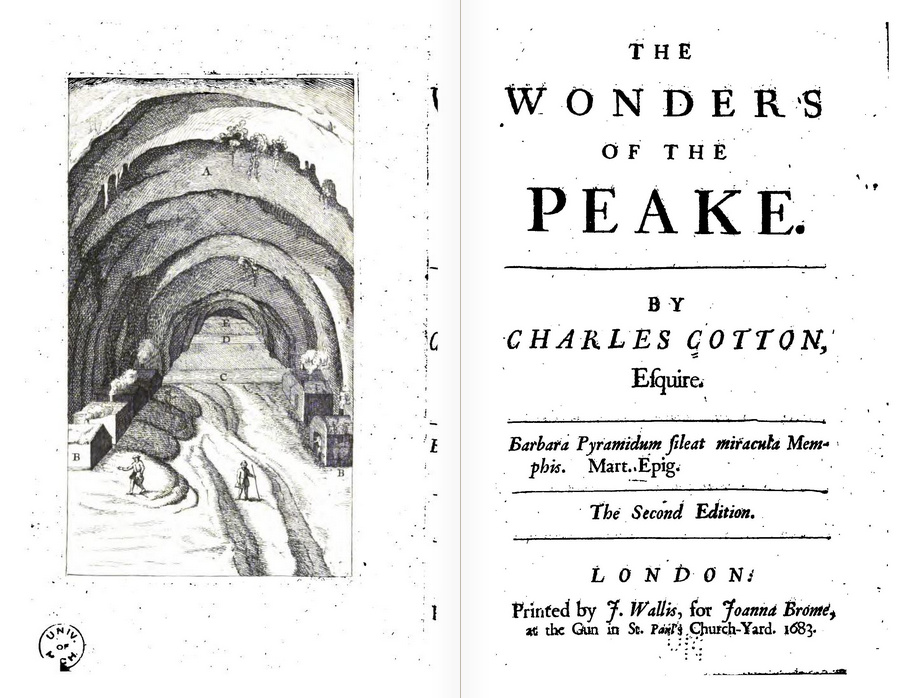
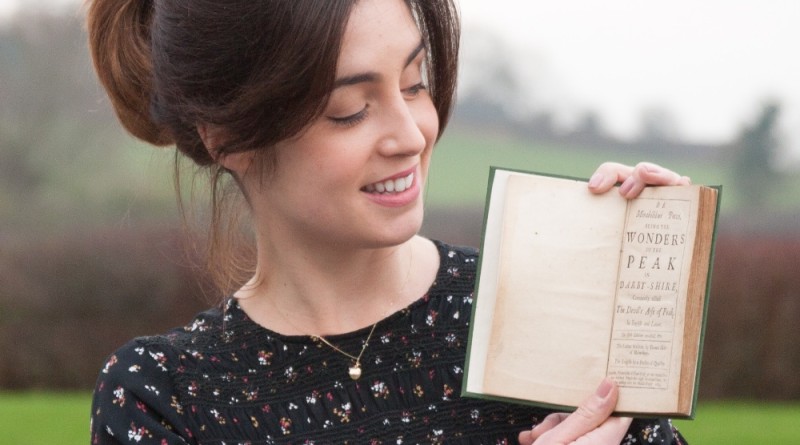
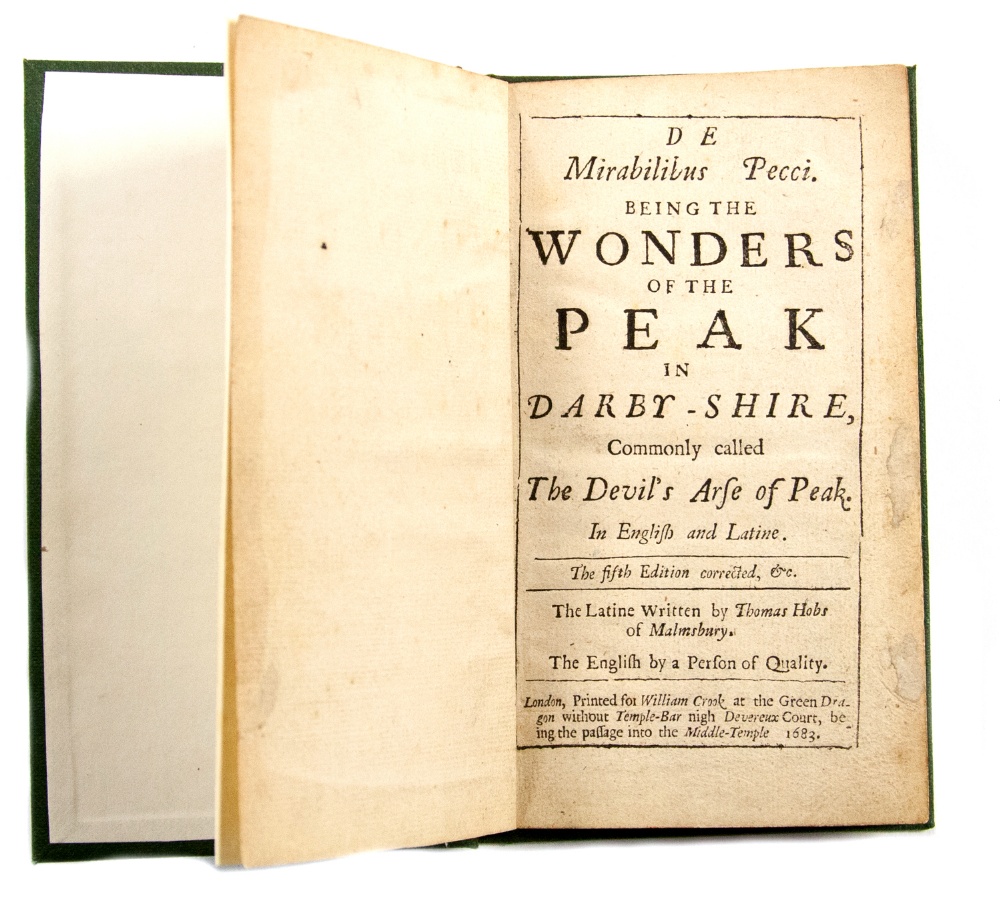
Free public full-text for Thomas Hobbes’s book De Mirabilibus Pecci: being The Wonders of the Peak in Darby-shire (1678), a poem giving an account of the philosopher Hobbes’s tour of the Peak District in 1626. Written in Latin, with an English version.

By its own country Metal [mined lead] is led on
Captive to rocks of artificial stone.

There was also a later book-poem imitative of Hobbes, The Wonders of the Peake (1725), which is also online for free. This was in English only and was by Charles Cotton (The Compleat Angler) — who repeated Hobbes’s journey in the opposite direction.

cotton

Stoke valley pictures in Art UK

A local selection from the Art UK website, a £6m online catalogue of all oil paintings in public ownership

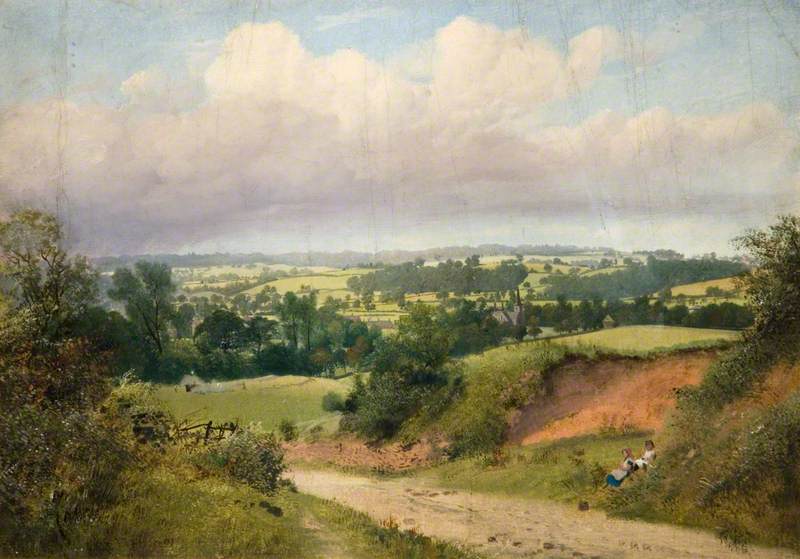
Pratt, Henry Lark I; Trent Vale from Penkhull; The Potteries Museum & Art Gallery; http://www.artuk.org/artworks/trent-vale-from-penkhull-20078

Pratt, Henry Lark I; Trent Vale from Penkhull; The Potteries Museum & Art Gallery; http://www.artuk.org/artworks/trent-vale-from-penkhull-20078

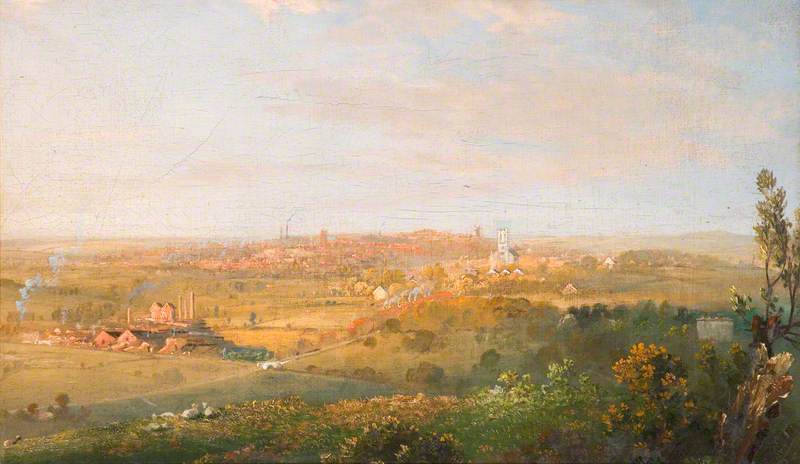
Pratt, Henry Lark I; View of Shelton from Hartshill; The Potteries Museum & Art Gallery; http://www.artuk.org/artworks/view-of-shelton-from-hartshill-20081

Pratt, Henry Lark I; View of Shelton from Hartshill; The Potteries Museum & Art Gallery; http://www.artuk.org/artworks/view-of-shelton-from-hartshill-20081

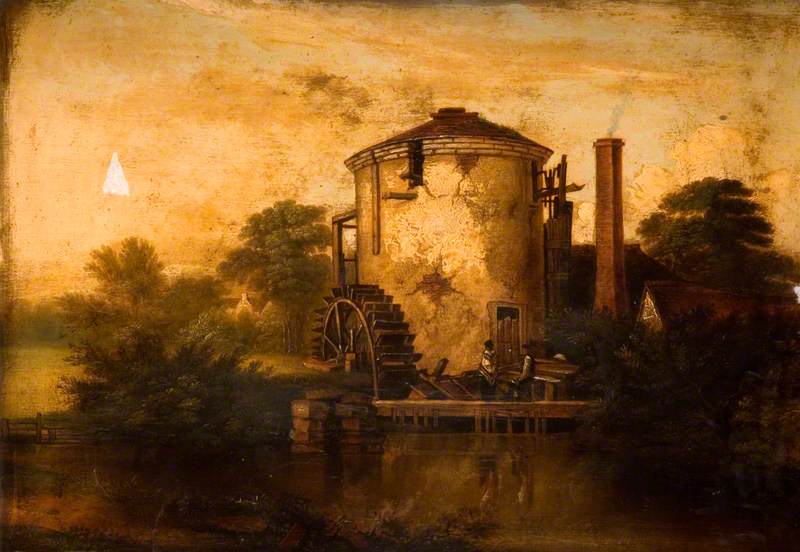
Pratt, Henry Lark I; Boothen Mill, Stoke; The Potteries Museum & Art Gallery; http://www.artuk.org/artworks/boothen-mill-stoke-20079

Pratt, Henry Lark I; Boothen Mill, Stoke; The Potteries Museum & Art Gallery; http://www.artuk.org/artworks/boothen-mill-stoke-20079

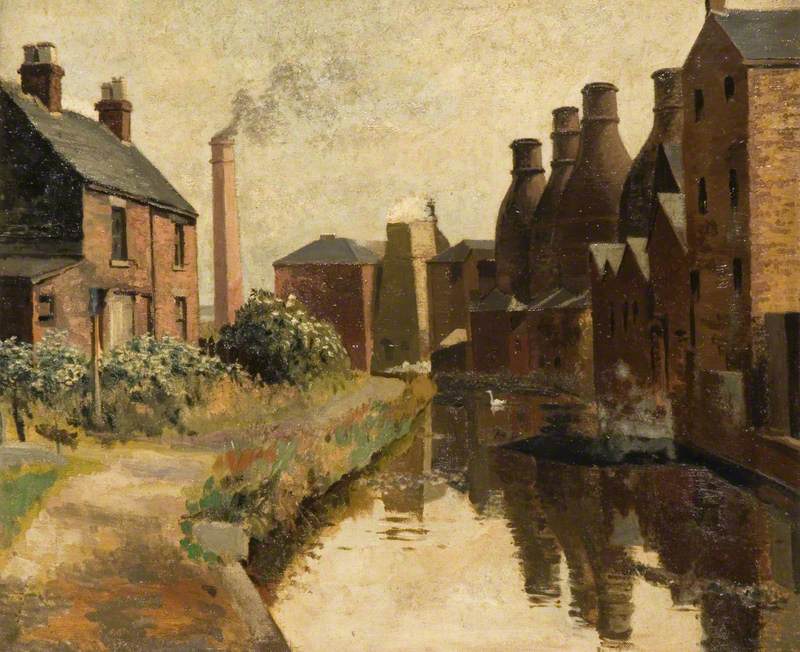
Harper, W. K.; Wood's Pottery, Longport; Brampton Museum; http://www.artuk.org/artworks/woods-pottery-longport-18502

Harper, W. K.; Wood’s Pottery, Longport; Brampton Museum; http://www.artuk.org/artworks/woods-pottery-longport-18502

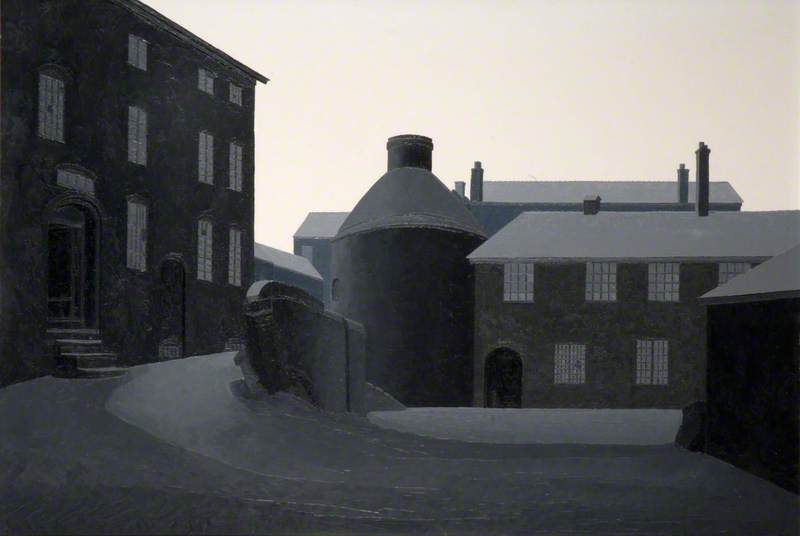
Wade, Maurice; North Round House and Bridge, Etruria; Wedgwood Museum; http://www.artuk.org/artworks/north-round-house-and-bridge-etruria-20312

Wade, Maurice; North Round House and Bridge, Etruria; Wedgwood Museum; http://www.artuk.org/artworks/north-round-house-and-bridge-etruria-20312

The Star Carr pendant

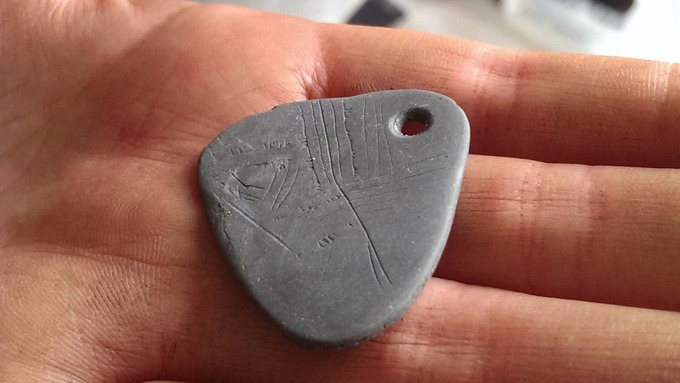
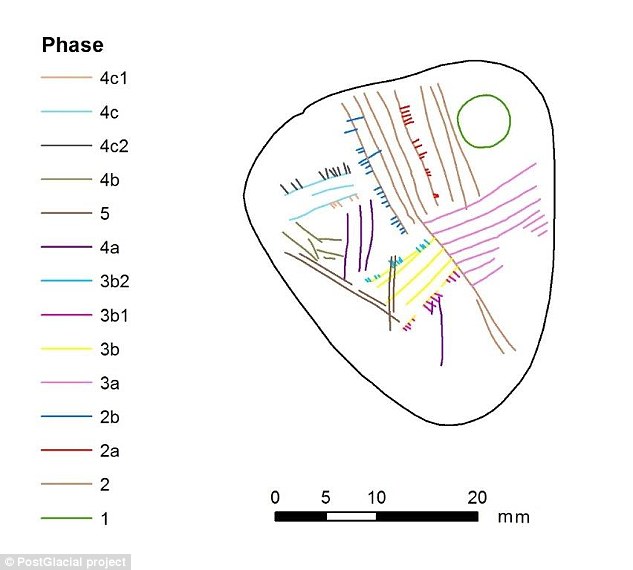
An 11,000 year old engraved shale pendant discovered by archaeologists during excavations at the Early Mesolithic site at Star Carr in North Yorkshire.”

scarcarr1

starcarr

Given that the scientists have shown it was done in stages it’s clearly not a whole design like a tree or leaf. It represents a process, which is most likely to be related to hunting/foraging in a landscape. It looks to me like a map of a local river and its tributaries – plus notches to record hunting/foraging trips in the marshy fringes of that river and their relative success. Perhaps the owner might have had a collection of such pendants, to serve as guides to navigation and hunting along a river at different times of the year.

The Guardian plays ‘fantasy politics’ with Stoke

I spotted a recent letter in the left-wing Guardian newspaper, from someone who comes across as a far-leftist of some sort…

“As a working-class male who taught in an area of Stoke–on-Trent with an unemployment rate of 80% and a life expectancy among males of 45…”

There may have been such an “area” of Stoke for a brief time, although I must say that I’ve never heard of it. Even Middleport, where I lived for many years, wasn’t that bad. When the steelworks and the mines shut, a great many working men moved away rather than stay put and claim the dole and add to local statistics. Frankly I have to doubt that the letter’s statistics are correctly remembered, unless perhaps they refer a tiny ‘special case’ electoral ward in some especially neglected bit of Normacot for a few months in 1982.

But the effect of the use of such statistics in The Guardian, in this age of speed-reading and drive-by politics, is to unfairly malign and misrepresent the whole city by elision. Some of the real facts, from the 1980s to the 2000s, are easily found and are quite different for the city…

   “… in spite of the general decline in the manufacturing sector in the UK economy, the unemployment rate locally [in Stoke-on-Trent] is roughly at the national average, and has been falling both in absolute terms and relative to the average within the UK economy over the relevant period.” — from a detailed paper on Stoke-on-Trent and unemployment in the 1980s, later included the major academic book On the Mysteries of Unemployment: Causes, Consequences and Policies, Springer, 2013.

   “… the unemployment rate [for Stoke-on-Trent] in 2006, at 5.1%, lay marginally below the regional (5.5%) and national (5.3%) levels” — report of the House of Lords, Select Committee on Economic Affairs, 2007-8.

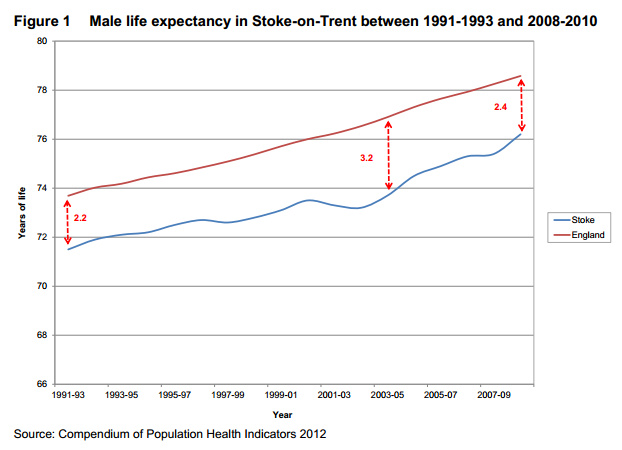
   “Male life expectancy at birth in Stoke-on-Trent increased from 76.5 years in 2009-2011 to 76.7 years in 2010-2012.” — Joint Strategic Needs Assessment, Stoke-on-Trent City Council. Earlier male life expectancy figures are given in this graph from another Stoke-on-Trent City Council research document…

lifeexp

Stoke’s dip between 2000 and 2004 was, I would guess, somewhat due to the heroin epidemic.

George Orwell on Burslem, February 1936

George Orwell’s short account of Burslem, 80 years ago. He briefly saw part of the town from the roads, while walking and taking buses north through England in early February 1936. That was during the depths of the Great Depression. He arrived in Hanley by bus, in the early morning of 3rd February 1936…

“Frightfully cold, bitter wind, and it had been snowing in the night; blackened snow lying about everywhere. Hanley and Burslem about the most dreadful places I have seen. Labyrinths of tiny blackened houses and among them the pot-banks like monstrous burgundy bottles half buried in the soil, belching forth smoke. Signs of poverty everywhere and very poor shops. In places enormous chasms delved out, one of them about 200 yards wide and about as deep, with rusty iron trucks on a chain railway crawling up one side, and here and there on the almost perpendicular face of the other, a few workmen hanging like samphire-gatherers, cutting into the face with their picks apparently aimlessly, but I suppose digging out clay. Walked on [in]to [the countryside at] Eldon and lunch at pub there. Frightfully cold. Hilly country, splendid views, especially when one gets further east and hedges give way to stone walls. Lambs here seem much more backward than down south.

Spring lambs born in a bitter January in the Moorlands hill-country, to be seen in the fields in early February? That seems highly unlikely, as lambing season arrives in March. But… maybe he was talking about lambs from the spring before.


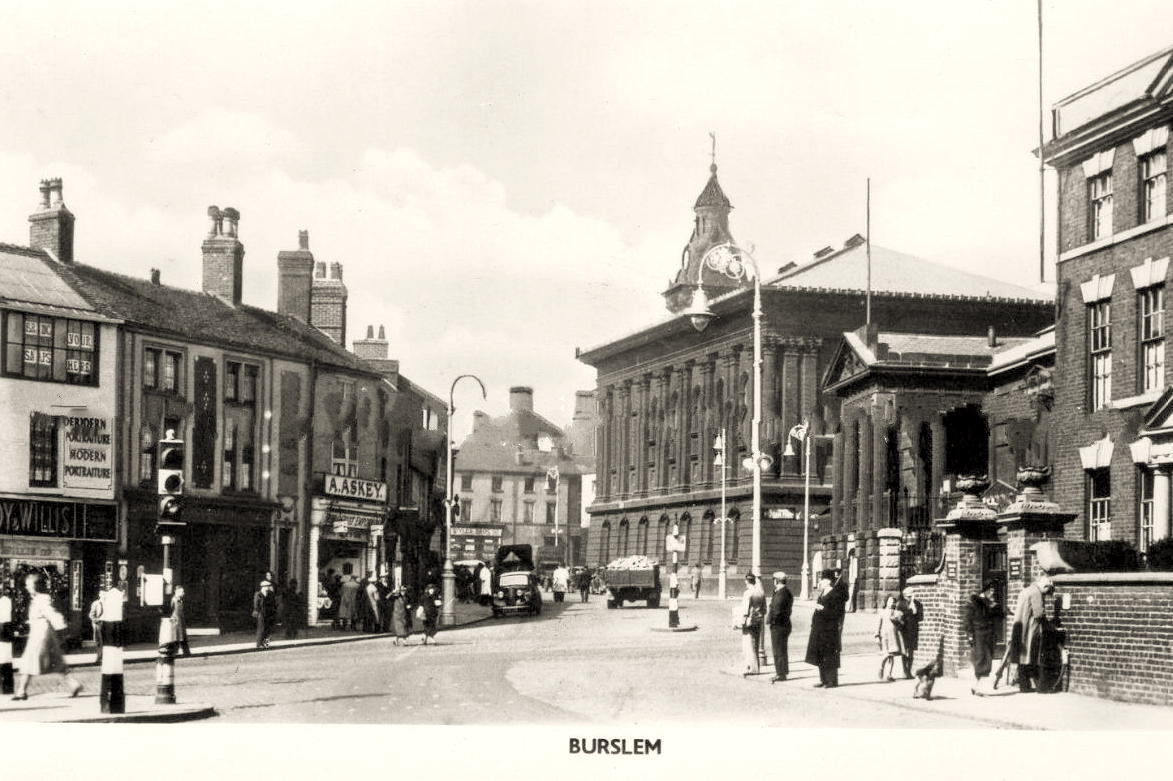
Burslem in the late 1930s, the road Orwell must have passed along running from left to right:

More Burslem scenes from The Spyders of Burslem, pictured

Another batch of Bert Bentley pictures on The Sentinel newspaper’s website, this time of Burslem. Three show places that feature in my novel The Spyders of Burslem.

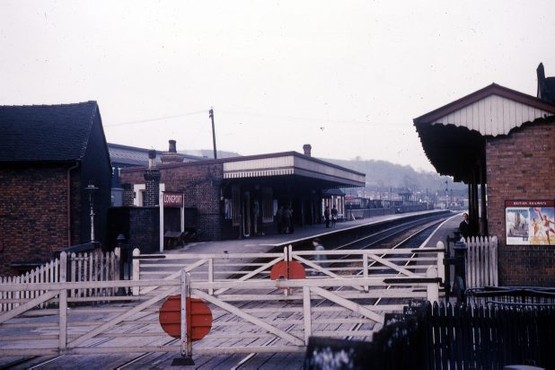
Longport train station, at which the novel’s hero first alights in Stoke-on-Trent. Bradwell Woods in the background, which also feature near the end of the novel…

BERT BENTLEY ARCHIVE - BURSLEM - Longport station & level crossing.

BERT BENTLEY ARCHIVE – BURSLEM – Longport station & level crossing.

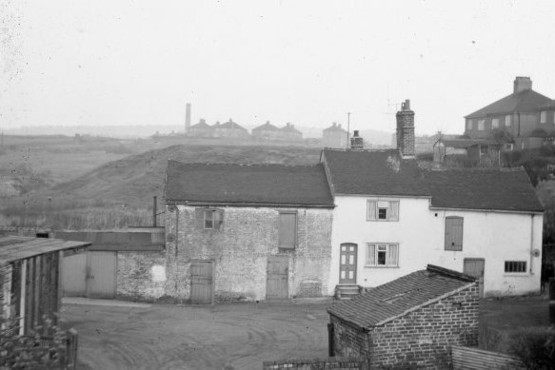
The Sytch wasteland at the northern edge of the town centre, on which our hero encounters a key character, and on the lip of which sits the workshop of the steampunk tinkerer Miss Merryweather Craft. This is almost exactly how I imagined her workshops and yard, just with more outbuildings and perched higher up above the Sytch…

BERT BENTLEY ARCHIVE - BURSLEM - Off Westport Road. The Sytch mill. The old mill house.

BERT BENTLEY ARCHIVE – BURSLEM – Off Westport Road. The Sytch mill. The old mill house.

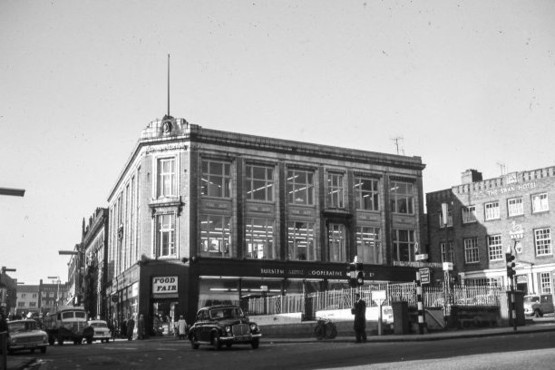
The underground toilets (the railings area, in the foreground of the picture) in which our hero encounters Marcel Wurmious, the local Wildean artist…

BERT BENTLEY ARCHIVE - BURSLEM - Swan Square. Burslem Co-operative Stores.

BERT BENTLEY ARCHIVE – BURSLEM – Swan Square. Burslem Co-operative Stores.

Some European fairy tales can be dated to the Bronze Age

A new computer modelling analysis of European fairy tales claims to have found one or two that date to the Bronze Age. Like all ‘big computing’ modelling of complex systems with limited and skewed data inputs, the findings should probably be treated with strong caution. The researchers also applied their model only to a subset of story types, the “Tales of Magic” from the Aarne-Thompson-Uther Classification of Folk Tales. But their key finding on age is rather interesting, nonetheless…

“Our findings regarding the origins of ATU 330 ‘The Smith and the Devil’ are a case in point. The basic plot of this tale — which is stable throughout the Indo-European speaking world, from India to Scandinavia — concerns a blacksmith who strikes a deal with a malevolent supernatural being (e.g. the Devil, Death, a jinn, etc.). The smith exchanges his soul for the power to weld any materials together, which he then uses to stick the villain to an immovable object (e.g. a tree) to renege on his side of the bargain.” [this it seems, actually refers to the sub-variant of 330, 330A]

“a Bronze Age origin for ATU 330 [‘The Smith and the Devil’] seems plausible under both major models of Indo-European prehistory [i.e.:. competing theories that complex metal-working was brought into Europe with large migrations from either the Pontic-Caspian steppe (north-east of the Black Sea) or from Anatolia (south of the Black Sea)].”
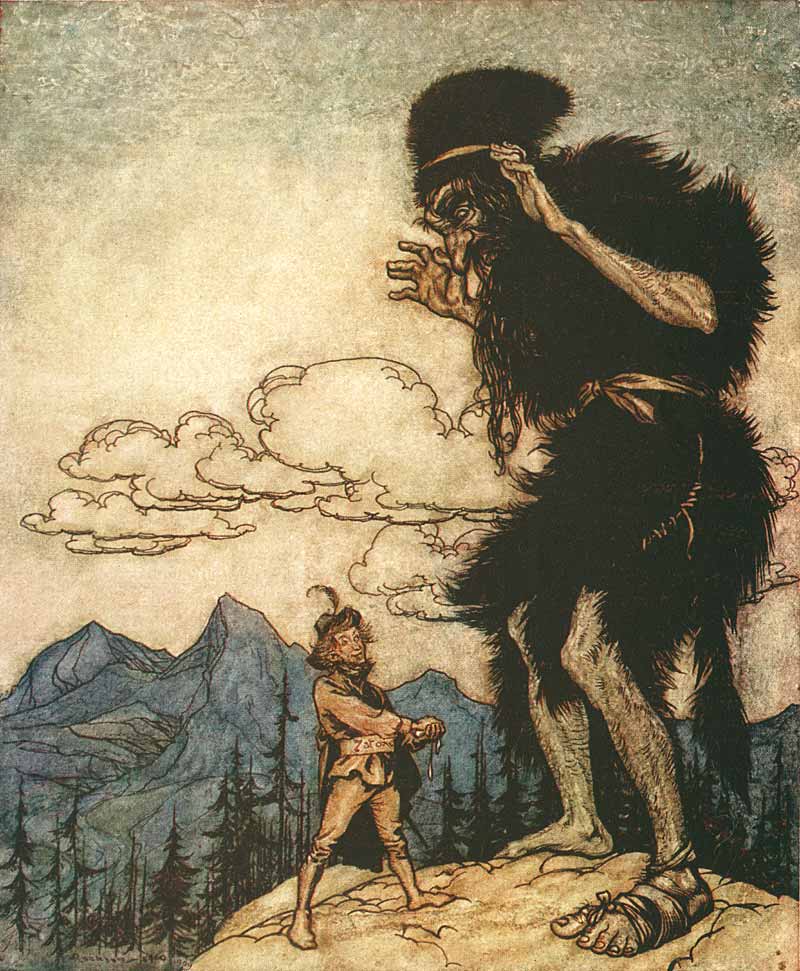
Arthur_Rackham

ATU 328 “The Boy Steals the Ogre’s Treasure” (the basis of “Jack and the Beanstalk”) is a story nearly as ancient, according to the model, and was presumably a story type that emerged when complex metallurgy enabled newly-portable treasure hoards, along with new trade routes that imported cut gem-stones and amber.

Though not magical, I’d imagine that “The Boy Who Cried Wolf” is perhaps even more archaic. Due to its sheep-herding subject matter it quite possibly pre-dates the emergence of complex metallurgy. My thanks to Nathan Fleischman for pointing out that this tale has been included as a tale type in Classification of Folk Tales as “Shepherd Who Cried ‘Wolf!’ too often” (ATU 1333), even though it is commonly casually attributed to Aesop. Presumably the inclusion is due to its popular fame in Europe since the 15th century, and now apparently also in India (presumably introduced by the British Raj?). I imagine that the listing implies nothing about its age or antiquity.

But what of the dates? One might at first think that Aesop had his “The Boy Who Cried Wolf” tale from Ancient Greece during the fabled Aesop’s lifetime, said to be circa 620 and 560 B.C. Though here we must be cautious, as ‘Aesop’ is more likely to have been a formulaic ‘once upon a time’ name. A name to whom any time-served fireside fable could be attributed, and which was later elided with a slave of the same name.

The early fairy-tale authority Joseph Jacobs states this fable can only be shown to derive from Babrius, who was later in time. Jacobs accepts as plausible the research suggesting that Babrius was probably a Roman who had adopted Greek ways and had become fond of versifying old Greek fables. Jacobs offers…

“Ultimately derived from Babrius: though only extant in the Greek prose Aesop. Gitlbauer has restored it from the prose version in his edition of Babrius, number 199.”

(Regrettably “199” does not translate thus, and is ‘Fathers and Daughters’. Nor is Gitlbauer’s index any help re: wolf/wolves (λύκος/λύκοi) and his cross-referencing to a “Halmianam” edition, which means the earlier author Halm, is of no help either. Similar numbers to 199 were tried in Gitlbauer, assuming a slip of the pen by Jacobs, and I even tried some footnote text. Nor is there any other edition of Gitlbauer. I eventually translated the whole thing and found it’s 161 not 199, and that Gitlbauer unhelpfully indexes it only as παῖc ψεύςετηc (Playing liar). Anyway, here’s my translation.).

Does this bring us any closer to dates? Well, the dates that scholars try to pin on Babrius are variable, and the 9th Ed. of the Britannica observes that various “dates have been assigned to him from 250 B.C. to 250 A.D”. The modern Britannica plumps confidently for “flourished 2nd century A.D.”, yet the modern Oxford Encyclopedia of Ancient Greece and Rome has his writing “dating probably to the third century A.D.” So we’re more or less back to around-about the dates of the first occurrence in an edition of Aesop, which is said to be in the Collectio Augustana, aka Augustana Collection in the 2nd century A.D. Though I read that “scholars have suggested many different dates for it” and it cannot be dated either internally or externally. Ho hum… so both sets of dates are very hazy.

Either way on dates, and assuming that the fable was gathered in an eastern Mediterranean sheep-market rather than invented in a scriptorium in Rome, then it is still from what is culturally the Ancient Greek world. Thus the fable seems likely to have emerged from the millennia-deep folk-culture of teaching-fables taught to shepherd-lads, though it cannot now be reliably placed as far back as ‘five centuries before Christ’ by attributing it to Aesop.
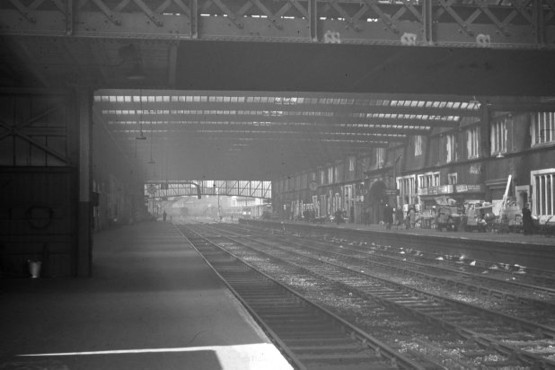
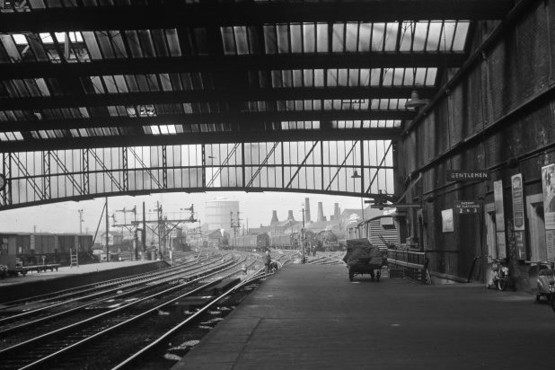
Stoke train station in the early 1960s

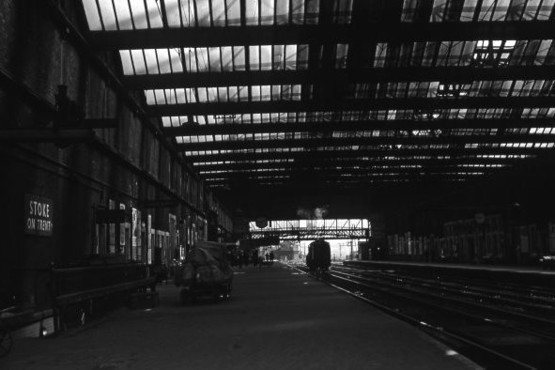
Another selection of Bert Bentley pictures, courtesy of The Sentinel newspaper. Several in this batch show Stoke train station, and in a suitably gothic mode, which is a setting of a scene early on in my novel The Spyders of Burslem

BERT BENTLEY ARCHIVE - STOKE -  1963/64 - Stoke Station

BERT BENTLEY ARCHIVE – STOKE – 1963/64 – Stoke Station

BERT BENTLEY ARCHIVE - STOKE -  1963/64 - Stoke Station

BERT BENTLEY ARCHIVE – STOKE – 1963/64 – Stoke Station

BERT BENTLEY ARCHIVE - STOKE -  1963/64 - Stoke Station

BERT BENTLEY ARCHIVE – STOKE – 1963/64 – Stoke Station

In the middle picture it looks like there’s litter on the line, but actually it seems to be dappled sunlight. Similarly, in the bottom picture what looks like litter actually seems to be either snow or recent rain puddles.

Beware The Cat

William P. Holden’s erudite 1963 edition of Beware The Cat is now available online. An excellent introduction, and then a solid transcription of the Elizabethan English version of the novel. It’s effectively the first novel in English, and certainly the first horror novel. My ‘modern English’ adaptation and abridgement of Beware The Cat is available in my book Tales of Lovecraftian Cats (horrible pun intended). The story has many macabre and fantastical elements, and the main tale opens in North Staffordshire.