Tolkien Gleanings #205

Tolkien Gleanings #205.

* Amon Hen #307 (June 2024) is now available to Tolkien Society members. Note they are looking… “for a Layout & Graphic Designer for Vingilot, with the potential to move up to Amon Hen as well with experience”. Vingilot being the relatively new digital magazine which seems to offer a home for longer linguistic or similarly technically-complex essays, while at the same time also soaking up some of the poetry being submitted. The latest Amon Hen also has details of a weekly art challenge for Society members, with theme-prompts for July through to September.

* In the April 2024 edition of Omnes, Giuseppe Pezzini, professor at Oxford, interviewed. He is…

“currently participating in the conference ‘Tolkien: the actuality of myth’, held at the Pontifical University of the Holy Cross in Rome. In this interview, he talks about fundamental concepts of Tolkien’s thought, such as subcreation or his theory of fantasy.”

* In the ground floor gallery of New York City’s Grolier Club until 27th July 2024, an exhibition on dictionary-making titled “Hardly Harmless Drudgery: Landmarks in English Lexicography”. This offers…

“more than 100 objects, from early printed books to CD-ROMs, that tell stories of the people who struggled to define English vocabulary […] The exhibition also features letters to lexicographers from dictionary aficionados [including one by] J.R.R. Tolkien”.

* Another pick from Archive.org’s ongoing ingestion of open-access books, From Clerks to Corpora: essays on the English language yesterday and today (2015). This has two essays on Tolkien, “‘Mythonomer’: Tolkien on Myth in His Scholarly Work” and “Reflections on Tolkien’s Use of Beowulf”.

* A further open-access book of possible interest is Northern Archaeology and Cosmology: A Relational View (2019). This seeks to place animistic–shamanistic cosmologies in the context of the landscapes, animals, weather, and skyscapes of the early North, all informed by the most up-to-date archaeology and finds in material culture. Most of the focus appears to be on Finland and its wider region.

* A new Manchester University Press academic-theoretical book A Book of Monsters: Promethean horror in modern literature and culture (June 2024) has a chapter on “Spectres of Marx in Tolkien’s Middle-Earth”. A copy can be yours for a mere £70, comrade. Though only when discounted by kindly woke megacorp Amazon. The capitalist fat-cats at De Gruyter would like to charge you over £200 for a copy.

* Due in August 2024, the French language book Allers et retours du Hobbit: Des mots aux images. Appears to be about the adaptation(s?) of The Hobbit. Traces the story of The Hobbit from its genesis, all the way to the world-premiere of the movie version.

* And finally, a Welsh nationalist press article this week on “Yr Hobyd: Tolkien’s The Hobbit to be published in Welsh”. With background information, publisher quotes, and a view of some interior pages of the forthcoming book. In English and freely available online.

How to pick up a parcel from an eBay ‘locker’ in the UK

I swore I wouldn’t use eBay again, due to sellers lying about sending by normal second-class mail (they rarely do except on tiny items, and sending ‘signed for’ or by courier can cause huge complications and hassle). But a nice hardback copy of The Journeys of Frodo map-book for The Lord of the Rings for just £15 was too much temptation. I thought that sending the parcel 2nd Class Royal Mail (as stated) to an eBay locker would solve the problem. Turns out that it was actually sent “Signed For” (grrr, but that didn’t matter in the end) not proper normal 2nd class, and that the local ‘locker’ I could see on Google Street View… wasn’t real!

ADVICE FOR FIRST TIME eBAY ‘LOCKER’ PICK-UP USERS:

eBay lockers seem to be just a sort of metal ‘advertising hoarding’ made to look similar to Amazon lockers. These pseudo-lockers don’t have instructions to first-time users fixed on them (at least, mine didn’t). Lack of instructions will confuse the heck out of 80% of the first-time users.

This is what those instructions should say, if they were fixed to the front of the supposed ‘lockers’:

1. Forget about this ‘locker’. It looks very real but has no screen, is not functional for pick-up and doesn’t work like an Amazon locker. Your parcel is not in here. The InPost screen adjacent has no connection with eBay deliveries.

2. What you actually need to do is go into the shop or petrol station, wait in a queue, and then ask at the checkout.

3. The assistant will have a loose pile of parcels somewhere behind the counter.

4. Let him scan the barcode and/or show him the pickup code.

5. He will then ask you your surname, and (hopefully) fish out and hand you your parcel.

Note also that:

1) The barcode image is only present in the email notification that the order is ready. Not in the website notification page. The notification page only has the pickup code. Simply showing a pickup code alone may not be enough, in some shops, according to forum chatter.

2) Cable transfer of the barcode image to a phone may be impossible from a desktop computer’s email software due to security. You may need to copy it to a tablet instead.

3) Also, to get the barcode in the first place you may need to access your email via Web mail, rather than a desktop email software — if the desktop security software blocks certain types of images (e.g. .PNG or .WebP) from displaying in email.

Finally, bear in mind that it may be impossible to send an International parcel to a pick-up, as eBay may only allow a home address delivery.

Tolkien Gleanings #204

Tolkien Gleanings #204.

* A new article from Oronzo Cilli on “Tolkien’s Proposed Translation of Old Norse Egilssaga”, aka ‘Egils Saga’ or ‘Egil’s Saga’.

* As part of Archive.org’s ongoing ingestion of recent open-access books, up pops Tom Shippey’s Hard Reading: Learning from Science Fiction (2016, Liverpool University Press). There’s no Tolkien, but the essay on “The Golden Bough and the Incorporations of Magic in Science Fiction” may interest some. Also newly ingested, and of possible interest to Gleanings readers, a book on the famous early videogames Myst and Riven, Myst and Riven: The World of the D’ni (2011).

* On 10th June 2024, the final public lecture in the current Magdalen College Tolkien lecture-series, John Holmes (University of Birmingham) on “A Veritable ‘Middle Earth’: Tolkien and the Palaeoanthropological Imagination”. “Palaeoanthropological” hopefully = Tolkien in the context of the British anthropology and ethnography of his time. I say “British” because, circa the 1890s-1930s, there were apparently very strong national barriers between schools of anthropology. (Update: no, it’s about study of the anthropology of prehistory — early man etc — rather than the early history of anthropology and ethnography as a field of study).

* The website of musical composer Paul Corfield Godfrey reports, in addition to the already-announced LoTR opera, a forthcoming album of his solo piano works…

“Also coming early 2025 [a new album with] the epic piano rondo Akallabêth, a solo piano version of the ‘Wedding March’ from The Fall of Gondolin and a new work composed specifically for […] this album – The Passing of Arwen.”

* In Poland, an event to discuss the history of Tolkien under communism. 7th June 2024 at what translates as the “Central History Station” in the city of Warsaw, and the “meeting will be broadcast on the IPNtv channel”. The event will ask how the tales of Middle-earth found their way to Poland, how a ‘Tolkien fandom’ arose, and how the tales were understood under the communist dictatorship. According to the Tolkien Encyclopedia (2006) The Hobbit and LoTR had appeared there 1960-63, in faithful translations — but ones subject to unspecified censorship. I also recall reading that Polish copies were sometimes smuggled into Russia prior to the 1980s, for those Russians who could also read Polish and were brave enough to put aside thoughts of the prison camps.

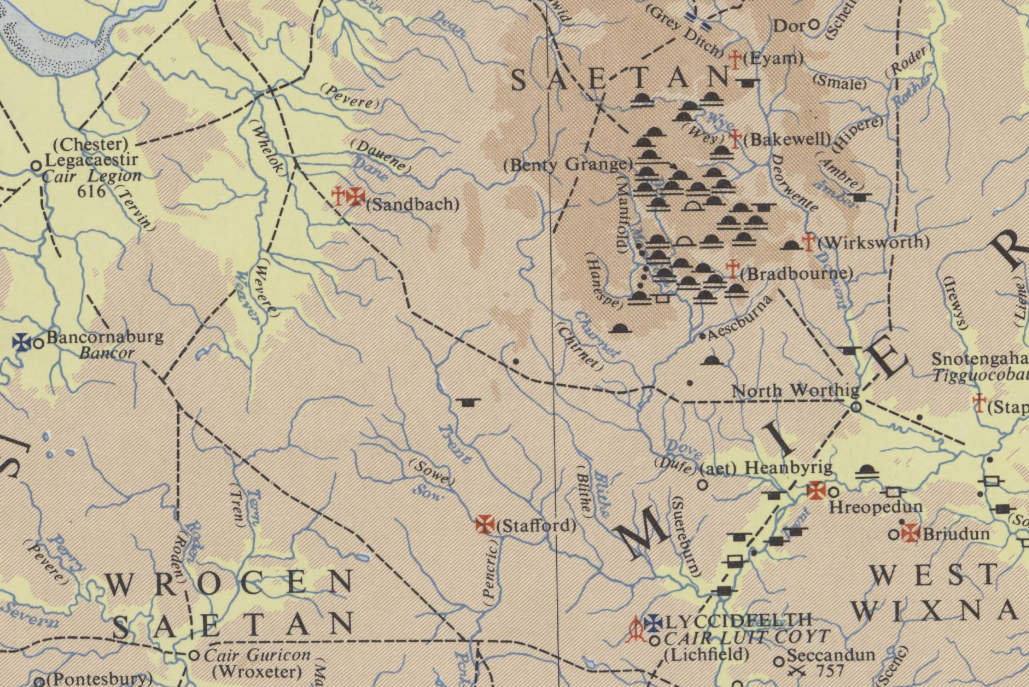
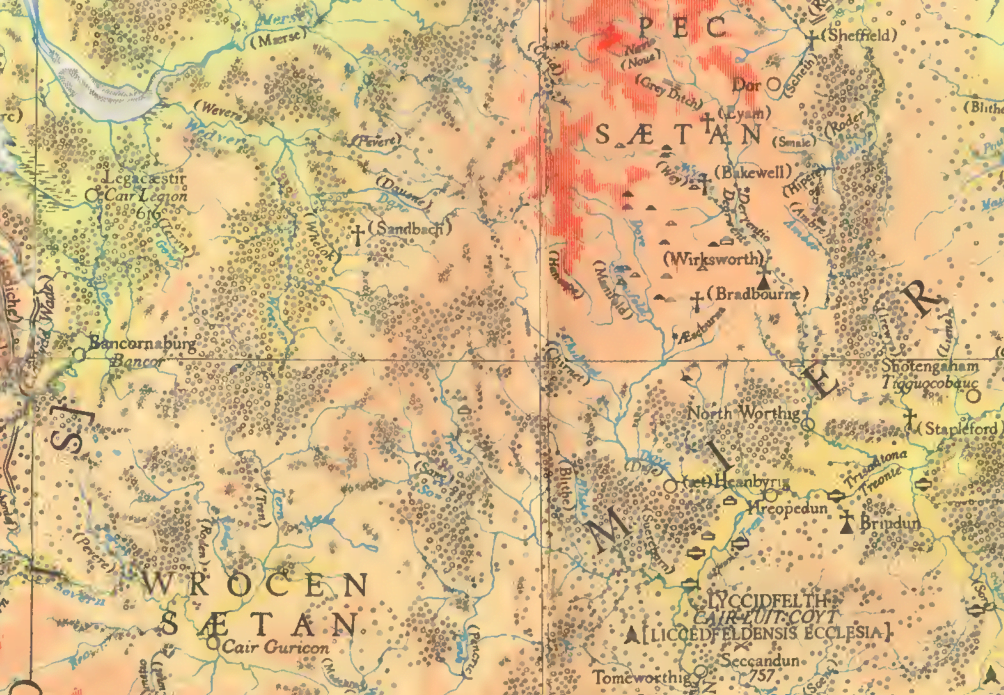
* My reading of the first 50 Mallorn issues is yielding up some interesting nuggets. One such is that in 1972 James Ead of Stone in mid Staffordshire wrote to Mallorn, giving his notes made from a face-to-face talk he had with one “Father C.J.R. Tolkien”. Ead and his local Smial had ventured a few miles north of Stone to visit Fr. Tolkien in his home at Hartshill, Stoke-on-Trent. By 1972 this was also where the elder Tolkien had spent many post-retirement holidays with his son. The elder Tolkien, it was reported, “knows the ‘language’ of trees as the wind sighs through the branches and the noises they make when moved by the wind.” (Mallorn #5, 1972, page 7). Recall here Anglo-Saxon ‘prognostics’, Tolkien’s uses of wind as a subtle sign of possible divine presence in LoTR, and also Tolkien’s “The Horns of Ylmir” (Spring 1917)…

‘Twas in the Land of Willows where the grass is long and green –
I was fingering my harp-strings, for a wind had crept unseen
And was speaking in the tree-tops,

Compare the German poet Ernst O. Hopp ably evoking the poignant Biblical event of Moses being shown the Promised Land (which he will never reach) while hearing the voice of god, in a poem of 1876…

So wie einst beim Abendstrahle
Moses von des Nebo Gipfel
Niederwärts im Jordanthale
Rauschen hörte leis die Wipfel,

So like that long-past glimpse at evening
Moses had from the Nebo Peak
Gazing out into the Jordan Valley
Quietly listening to the treetops speak,    (my translation)

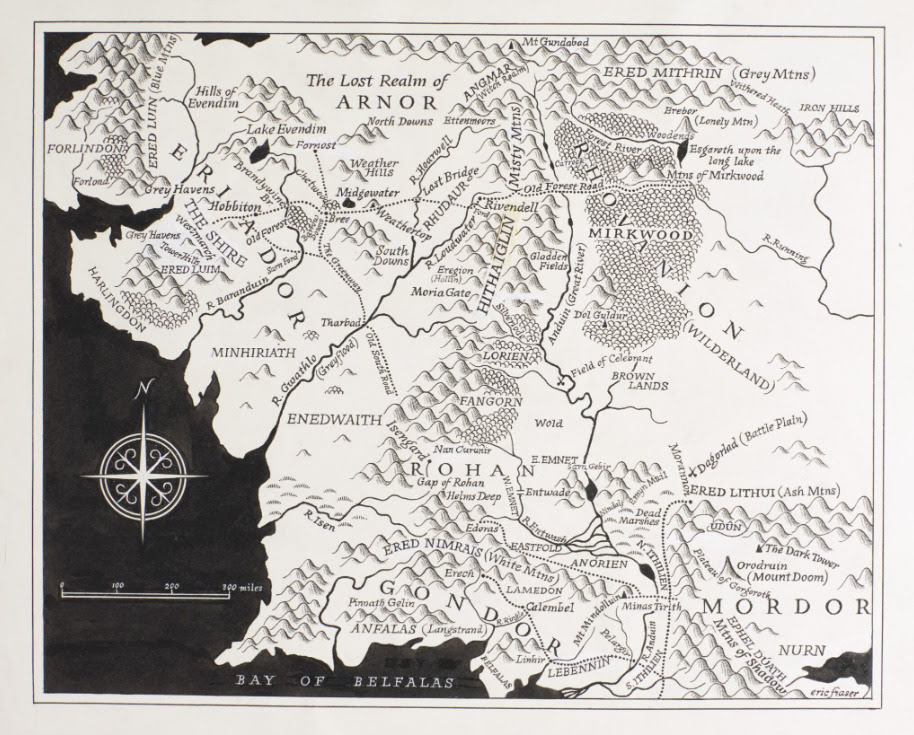
* And finally, from 2015 but new to me, Tolkien’s annotated map of Middle-earth transcribed… “a map of Middle-earth featuring annotations by J.R.R. Tolkien had been re-discovered in a copy of The Lord of the Rings owned by the late [Tolkien illustrator] Pauline Baynes.”

Tolkien places horses and cattle (kine) in the wide empty land between the desolated Brown Lands and the gardens and vineyards of Dorwinion. Presumably wild and un-tended, with ‘herds’ implied. This presence suggests that the desolation of the hills of the Brown Lands was only of limited extent, giving way to relatively dry grasslands (presumably dry, because no major rivers) most suited to ranging herds of horses and wild cattle. I imagine small shaggy steppe-like horses, with neutral-colour coats to blend with their surroundings. The cattle perhaps more akin to shaggy and long-horned Scottish highland cattle than to modern milkers. We can at least know something of the equine colouring and size because, in the years leading to the events of LoTR, Barad Dur could not find its desired large black horses in such nearby terrain. Instead Sauron’s orcs have to raid the battle-horse herds of Rohan for such beasts (as Eomer says: “choosing always the black horses”).

Tolkien Gleanings #203

Tolkien Gleanings #203.

* A new edition of The Hobbit in Welsh translation. Pre-ordering now, and it seems to be for sale by pre-order only. Shipping in June 2024, so be quick to pre-order…

This is the first publication of any work by J.R.R. Tolkien in the Welsh language. [Translated] by Adam Pearce, who has previously translated H.G. Wells into Welsh. [The book] been prepared in accordance with J.R.R. Tolkien’s own instructions for translators of his work, and officially licenced by the Tolkien Estate.

* Another open-access / Creative Commons book, one in the big new ingestion of such on Archive.org, Ancrene Wisse: From Pastoral Literature to Vernacular Spirituality. Although, curiously, Tolkien appears to have been all but erased. Only being mentioned in one footnote… “Dobson follows Tolkien in using linguistic evidence to place the author of Ancrene Wisse on the Herefordshire/Shropshire borders”.

* It has been confirmed that Tom Shippey will be speaking at the scholarly convention Mythmoot XI: ‘The Resilience of Imagination’. 20th-23rd June 2024, at the National Conference Center in Virginia, USA. Booking now.

* Another recent podcast appearance for Austin Freeman, again talking about his book on J.R.R. Tolkien’s theology as it can be determined from the works and letters.

* Malvern Hills cultural walks: the Tolkien trail & the Lewis loop. Guided walks with an expert local man, available this summer. Well-reviewed and bookable now via AirB&B.

* My searches led me to “Tolkien and the Vikings: On J.R.R. Tolkien and Victorian Literature About The North”, in the 2017 edition of the journal Creatio Fantastica. In Polish, with an English abstract. Freely available online (see the tiny ‘Download’ link). This same issue of the Polish journal Creatio Fantastica was a “John Ronald Reuel Tolkien” special issue, and (with a little hunting) the entire issue turns out to be freely available from a University Repository. The journal is under Creative Commons Attribution, meaning you are free to translate articles and publish elsewhere. Note that the creatiofantastica.com website appears to be defunct, and the journal home is now creatiofantastica.wordpress.com — albeit with back-issue links back to the defunct .com site (tip to orgs: don’t buy expensive prestige .com domains if you can’t afford their hefty running costs). The last issue of the journal was 2020, and the last blog post spring 2020, so I guess it’s possible the journal was yet another casualty of the lockdowns? Thankfully Archive.org’s Wayback Machine has archived most of the back-issue PDFs.

* Another oldie, from 2014, but new to me. The scholarly blog article “A ‘Sorcerer’s Stronghold’ in Anglo-Saxon Nottinghamshire”. Informed placename musing, about a site about nine miles north of Tolkien’s Gedling (although the author of the article hadn’t spotted how close the two places are). Interesting also for its mention of the apparent Anglo-Saxon fuzziness between the concepts of ‘sorcerer’ and ‘painter’, which (if correct) casts a new light on Saruman’s making of a ‘cloak of many hues’ for himself.

* The long-running science-fiction fandom newsletter Ansible #443 (June 2024) reports that the old Middle-earth Festival — a long-vanished family-friendly ‘cos-play + market + song and talks’ event formerly held around Sarehole Mill in the south of Birmingham — is not to be revived in 2024 due to lack of funding. There had apparently been hopes that it would be. The unmentioned back-story here is that the city’s local authority is currently bankrupt, and nearly all the city’s arts funding has had to be cut as a result. Further, £750m of the city’s public property is mooted to be for sale, possibly even including (for those with deep pockets) Tolkien’s Sarehole Mill itself. A documentary film which delved into this ultimately put the blame on “decisions by council bosses stretching back decades”. Including the city suffering a massive legal claim over equal-pay (indoor and mostly female office cleaners claimed they should have had the same pay-rate as outdoor bin-men), and a disastrous new IT system that became “a financial black hole”. The ‘killer blow’ was then the loss of business rates (i.e. the UK’s local tax on all businesses) during the lockdowns, as well as post-lockdown inflation and the ever-rising ‘social care’ costs.

* And finally, and on a happier note, the mighty Jodrell Bank Radio Telescope in Cheshire. The site has a midsummer “day of panels, screenings, and walks celebrating novelist Alan Garner” […] “In this, his 90th year, hand-picked specialists from the realms of archaeology, physics, and literature will gather at this key site to discuss how Garner’s fiction has inspired them, and explore how time and place are re-imagined in his classic novels.” 21st June 2024, booking now.

Tolkien Gleanings #202

Tolkien Gleanings #202.

* New on Archive.org, part of a large intake of open-access ebooks, Tolkien on the name ‘Nodens’. Their only other copy of this item is now “Borrow Unavailable”. Among the other open-access ebooks being added is The Dream of the North: a cultural history to 1920 (2014).

* Zeitschrift fur Fantastikforschung reviews Thomas Honegger’s recent book Tweaking Things a Little on Tolkien and George Martin. Freely available online, in German.

* A new one-hour Seen & Unseen podcast face-to-face interview with “Holly Ordway on the Christian faith of J.R.R. Tolkien”. Also, Holly Ordway’s recent book Tolkien’s Faith is reviewed in the latest issue of the journal Literature and Theology ($ paywall), with what appears to be a partial free sample of the review. I assume the free sample is not the whole review.

* I’ve now finished perusing all 300+ PDF issues of The Tolkien’s Society’s Amon Hen. Sorry Gleanings readers, but it would have been too much work to make notes and then type up and elaborate all my discoveries here. Suffice it to say that I found trawling Amon Hen worth it for the time-travel effect (videogames that load from cassette-tape, etc), the Kristine Larsen articles, and a half-dozen ‘I remember Tolkien’ articles (from family, those who knew him socially, or who studied with him). And for the passing mention of The Face in the Frost (1969), an acclaimed short fantasy novel I’d never heard of. I’ve now started skipping merrily back through the first 50 issues of Mallorn.

* I also went looking for equivalent publications in the USA. No PDFs there, but I did find the Web page American Tolkien Society – Back Issues, which offers their paper journal Minas Tirith Evening Star

“Currently, 24 back issues are available. Order ‘All Available Back Issues’ and get the reduced price of $45.00 US (includes shipping)!”.

Or, should I say… ‘seems to offer’. Since their website appears to have been last updated in 2020, thus the offer may well be out-of-date in both price and availability. Is the Society still active?

* Other Minds #27 (February 2024), the unofficial magazine for the 1980s Middle-earth pen & paper role-playing game, and some later equivalent tabletop RPGs. Freely available online, and all Other Minds issues are under Creative Commons Noncommercial (except for artwork labelled © or stated as being ‘fair-use’).

Issue #27 has a fine multi-page links-list for relevant Middle-earth artists, and part two of an RPG-elaborated history of the Rangers of the north. If the latter interests, then you’ll also want #26 which has part one. #26 also asks “Where in Bree-land is Combe?”…

“The locations differ more or less wildly in all publications so far (both scholarly and official RPG maps) and you will find this article very helpful in making your own mind up”.

Which is especially interesting to me, since I’ve just bagged the The Journeys of Frodo map-book in hardcover for £16 from a UK seller.

* EconLib has a short but thoughtful new article on “Asimov vs. Tolkien”. Compared to the 1970s ‘timeline futurists’ such as Asimov, the article states that Tolkien’s…

Elrond recognizes not only that things unfolded in ways that even the wisest could not foresee. More importantly, Elrond also says that the unforeseeability of how things would unfold is itself something that the truly wise would have already understood. And this shows the difference between raw intellect and true wisdom. In terms of sheer brainpower, I’m sure that Asimov would have outclassed Tolkien. But wisdom is about more than mere intelligence — and all too often the hubris that comes with great intelligence undermines the humility necessary for true wisdom.

Something we’ll all need to remember as AI use takes hold, I’d suggest, and especially if ‘augmented intelligence’ leads to a belief in our individual ability to see into the future in a seemingly ‘predictive’ way. Messy reality will probably quickly squish that dream, but maybe not for some. If not, Tolkien’s observations on the untrustworthiness of the Palantiri may also be useful to keep in mind.

* And finally, a library Special Collections exhibition “Exploring the Fairytale Forest: The Fantastic & Imaginative Illustrations of Arthur Rackham” at Lafayette College, through summer 2024. The College is located at Easton, Pennsylvania — which it turns out is about 50 miles west of New York City. Running at the same time over in Chicago, the Driehaus Museum’s “Jewelry In Perspective” exhibition, of superb fin-de-siècle work that reviews have compared to Elvish adornments.

Tolkien Gleanings #201

Tolkien Gleanings #201.

* Forthcoming, the book Catalogue de l’exposition permanente «Aubusson tisse Tolkien», now listed on Amazon as Aubusson tisse Tolkien, l’aventure tissee. This will be the catalogue for what has become a large collection of Tolkien tapestries at Aubusson in France. The book will include a section on “Christopher Tolkien, interpreter and creator: the map of Middle-earth”, related to the tapestry that is auto-translated as “a carpet”. Whatever it is, it’s made after a map of Middle-earth drawn “for the first edition of The Lord of the Rings“. The catalogue is apparently due in early July 2024.

* New at Word on Fire and freely available online, an essay on “Tolkien and the Machines”… “Tolkien’s critique of the Machine is not intended to have us flee from making things.” Bear in mind also that his everyday machines were just machines, for the most part. Bicycles for instance, which he enjoyed. But ours are now often ‘connected’ devices tethered to remote and unaccountable bureaucracies. One thing we might do to counter the tendency toward machine-isation is to always aim for the machine that gives us the most personal autonomy possible. Open-source local-AI desktop PCs, for instance, rather than AI laptops controlled and snooped on by corporations.

* In Argentina in July 2024, 3rd International Congress on Art & Myth, with a focus on Tolkien, Chesterton, and Lewis. The organisers have improved their AI image-generation skills since the last promo splash, though their Tolkien still doesn’t look quite right.

* The Italian Tolkien association’s third ‘Tolkien Studies Days’ event, happening this weekend.

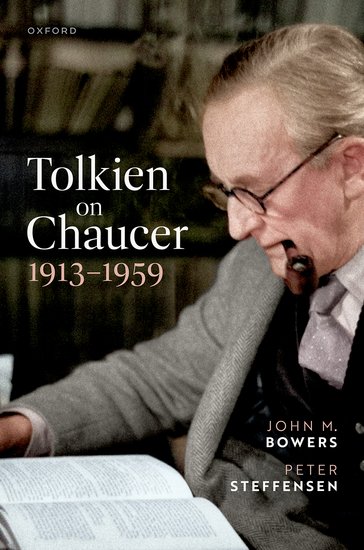
* Tolkien on the word ‘losenger’ (1951). Freely online, though two pages of the essay are missing. A rare philological essay which comes from the same period of The Lord of the Rings. The word eventually devolves into ‘idle sluggard’ in the late period, and one thus wonders if part of the interest for Tolkien was its possible influence on ‘lob lie-by-the-fire’? It’s possible this essay may be reprinted in full in the forthcoming Tolkien on Chaucer, 1913-1959 OUP book, since Tolkien opens by saying that he found the word in Chaucer. But that’s just my guess.

* Up for auction, Tolkien’s gift-copy of a first-edition of The Hobbit, inscribed to “Margaret from Ronald”. Margaret was the sister of Christopher Wiseman, and had become a nun at Oulton Abbey — which is just north of the town of Stone in mid Staffordshire.

* A new book this month, The Music of Harry Potter and The Lord of the Rings: Sounds of Home in the Fantasy Franchise, written by a Lecturer in Musicology at the University of Huddersfield in the UK. Available now from Routledge. The author tells his university’s PR fire-hose wranglers that… “my next large-scale project will focus on the music of children’s media, starting with an initial symposium on the music of early-years television”, which may interest some Gleanings readers.

* “A 9th-century church room has been recreated in the Viking town of Ribe”. Apparently authentically. Is it dark and dingy? Far from it. More like a bright 1920s comic-strip, judging by the photographs. I imagine the original makers of such things would have bees-waxed the rather plain floor planks, though. And/or strewn them with rushes.

* And finally, something tree-ish. Yorkshire Post reporter fully vindicated in his reporting on the long-running Sheffield tree-felling scandal. The city council had developed a strange Saruman-like hatred of its own trees, and for years felled and lopped them at seemingly every opportunity.

Tolkien Gleanings #200.

Tolkien Gleanings #200.

Welcome to the 200th edition! If you value these ‘gleanings’, please consider becoming my patron on Patreon.


* In Italy, the three-day Chianciano Terra di Mezzo event returns, 28th–30th June 2024…

“an extraordinary event entirely dedicated to the writer J.R.R. Tolkien and his work […] meetings, exhibitions, shows, music, films […] evening concerts, shows […] This year we take our key inspiration from one of Tolkien’s first poems [“Kortirion”] which is a celebration of Warwickshire, envisaging Warwick as the city of the Land of Elms, and as Alalminore of the faerie realm.

        … amid this sleeping land
of silver rain, where still year-laden stand
in unforgetful earth the rooted trees    (— from Book of Lost Tales 1)

* Newly republished online and freely available, Tolkien’s 1945 letter to The Catholic Herald on ‘the Name of Coventry’, the West Midlands city…

“The settlement and naming of the Midlands lies far back in English history, and in the main preceded the conversion [to Christianity] of the Angles. Indeed, the giving of names often preceded the formulation of the ‘places’, that is of the villages and towns, and so originally denoted isolated swellings, boundary-marks, and local features, near which communities were later formed.”

He roots the name Coventry to the Anglo-Saxon “Cofa’s tree”, and Cofa to “cove”, which he ‘nods through’ as being a word used by later men to recall the shrewd original “farmer-settlers” — those who left behind them only a tamed lowland landscape and their burial mounds on the heights…

The name Cofa appears in other place-names in other parts, Covington, Covenham, and Cobham: but these names are the only records that these long-forgotten “coves,” these farmer-settlers, have left on the pages of history to-day.

Thus he appears to claim the word “cove” as the origin of that which survived into the common speech of the 19th and early 20th century. An “old cove” being a canny and somewhat rascally old man, still sharp and knowledgable but somewhat antiquated and withdrawn from the main stream of life. Possibly also reluctant to give sums of money to his relations (a “stingy old cove”). This would sit somewhat alongside the more accepted meaning for the Anglo-Saxon cofa, a cave-like chamber scooped out under a mounded hillock (the still-current modern sea-shore word “cove”, as a scooped-out inlet between rock walls, is similar). In that, the phrase “old cove” also implies that the old man has ‘one foot in the coffin’. Or the barrow-mound, in the case of the early Angles of Mercia. Tolkien’s earlier mention of “isolated swellings” in the landscape then suggests for Coventry a large pre-Christian Anglian burial mound, from which a large and notable tree grew.

* At Signum University, an eight-class online course on ‘Tolkien and the Classical World’. Forthcoming in July 2024, though only if enough students sign up for it.

* A new YouTube recording of a Signum University Thesis Theater: On The “Notion Club Papers and Tolkien’s Vision of Creative Mysticism”.

* The Tolkien Guide has a new post containing an article on “Tolkien-Inspired Art from the ‘Hobbit Craze’ Years, 1965-1969: Untraced Works”. Freely available online.

* The Tolkien Society Annual Guest Speaker 2024 is announced

“Dr. Andrew Higgins is the Director of Development at Imperial War Museums [and a Tolkien scholar…]. His talk to the Society, in honour of the publishing of the new extended version of Tolkien’s Letters, will be ‘Epistolary Glossopoeisis: Tolkien’s Letter Writing and Language Invention'”.

* In the latest issue of The Criterion, student journal of the College of the Holy Cross, an article on “Language and The Lord of the Rings: The Expansion of a Universe”. The author aims to show how, with the aid of its many “linguistic markers, […] Tolkien hints at a larger world outside the narrative”. Freely available online.

* From 2018, but new to me, ““Learn Now the Lore of the Living Creatures”: On J.R.R. Tolkien’s Alliterative Poetry”. Freely available online.

* Another worthy blast-from-the-past. The early Tolkien fanzine Niekas #16, now freely available online as a PDF via the Fanac History Project. #16 has the full version of an essay that Amon Hen No. 9 recalled as “the most penetrating commentary on The Lord of the Rings that had yet appeared” by the early 1960s, “Men, Halflings and Hero worship”. Note that this same essay was severely truncated in the later book Tolkien and the Critics (1968), and the truncation was repeated by the same editors in their updated volume Understanding The Lord of the Rings (2004). If you think you’ve read this seminal essay there, you haven’t.

* Note that April 2025 will be the 100th anniversary of the publication of Tolkien and Gordon’s edition of Sir Gawain and the Green Knight. Surprisingly I don’t see the 1925 edition on Archive.org. Superseded in 1967, true, but the 1930 corrected reprint “remained the most widely used text of the poem for forty years” and it appears to have gone through eight reprints. As such the original as-printed edition should really be readily available for study as a historical document. It isn’t, so far as I can tell, except in the dead-tree form now made expensive by book collectors.

* Advance notice of a new lecture-series class from the high-quality Great Courses company, to be titled The Inklings: C.S. Lewis, J.R.R. Tolkien, and Others. Due in 2025.

* Apparently, Tolkien once wrote something about Chelsea, London? Or so claims the UK’s Royal Philharmonic Orchestra in their blurb for a Chelsea-themed concert in June 2024… “hear words written in and about Chelsea from authors including A.A. Milne, Jane Austen, J.R.R. Tolkien…”. The Chronology only has him present at the 1968 Chelsea launch of the song-cycle “The Road Goes Ever On”, so perhaps some late writing arose from that? One likes to imagine him using the opportunity to have a quick potter down the famed Kings Road in 1968, sampling — with raised eyebrows — the swinging dandy fashion and psychedelic rock-music of the time. But perhaps not.

* Severely overcrowded with tourists, partly due to its Tolkien claims, the Swiss village and valley of Lauterbrunnen… “plans to charge visitors to experience ‘Middle-earth'” according to various news reports.

* And finally, Games Beat magazine has a long and well-padded interview with Lee Guinchard the CEO of Embracer Freemode. No surprise revelations, but interesting background if you can slog through it all. Here’s the digest for the rest of us. Guinchard is a highly experienced game producer and sees “big opportunities for further exploration and expansion” in the Middle-earth IP, envisaging something multi-platform and akin to the ‘Marvel Universe’. But based around the “games [i.e. videogames, that] are going to be made to fully explore the new universe being created”, possibly with AI character enhancement and the maturing “new technology for how people immerse themselves in worlds”. This is as part of “a 10-year or 20-year plan” while Tolkien is still in copyright, which will aim to align with other companies (making new movies, TV series, card games etc). Current videogames (such as the dire Gollum, the soon-to-close Heroes of Middle-earth, the imminent and icky Tales of the Shire, and the mediocre Return to Moria) were approved before he arrived on the scene. He sees no “rights issues” for stories set in the Second Age of Middle-earth. The overall aim will be to “reach billions” of buyers and “work with a wide variety of merchandise companies” to generate income. This likely includes reaching the big Chinese audience, and he poses the question “how would it be visualized for them?” Personally I’d be happy with interactive AI-driven audio, where I can imagine my own visuals.

Tolkien Gleanings #199

Tolkien Gleanings #199.

* The latest edition of the journal Thersites has a review of J.R.R. Tolkien’s Utopianism and the Classics.

* Dr Lynn Forest-Hill blogs that she has… “received the news that the new version of my translation of Sir Bevis of Hampton is now officially forthcoming in 2024. […] the Introduction is completely revised to suit a wider audience, and extended and updated with my most recent research. The new edition includes a more extensive bibliography and footnotes.”

* The latest The Imaginative Conservative has a new article musing on “The Screen & the Abolition of Imagination”

“my objection to the film version of The Lord of the Rings is at a more fundamental level […] filmic versions of fantasy fiction serve to abolish the imagination. […] you read his story [on the page and] you interpret it through the filter of your experiences, memories, literature, and learning. […] This is the powerful covenant between the sub-creator of a fantasy world and the reader.”

* The Family Tree of the Tolkien Legendarium is back online, and this wall-chart now has its own expensive .com Web domain at https://lotrtree.com. Currently at version 8.2 (May 2024). Note also the link to the PDF companion guide.

* I didn’t know that Arthur Ransome (Swallows and Amazons) read The Hobbit after publication, and that he boldly suggested tweaks for the next edition. Tweaks which were actually accepted by Tolkien, with the proviso that there might not be another edition — since the book wasn’t selling well.

* The 2023 Anor No. 60 from the Cambridge Tolkien Society. Articles musing on sanitation and food-supply in Middle-earth, and the perennial question of dwarf-women. Freely available online.

* And finally, Neil Gaiman and P. Craig Russell’s The Complete Norse Mythology is now complete and in a deluxe oversized edition, with three volumes slipcased. In total a 450-page graphic-novel of the mythology, with excellent artwork.

Tolkien Gleanings #198

Tolkien Gleanings #198.

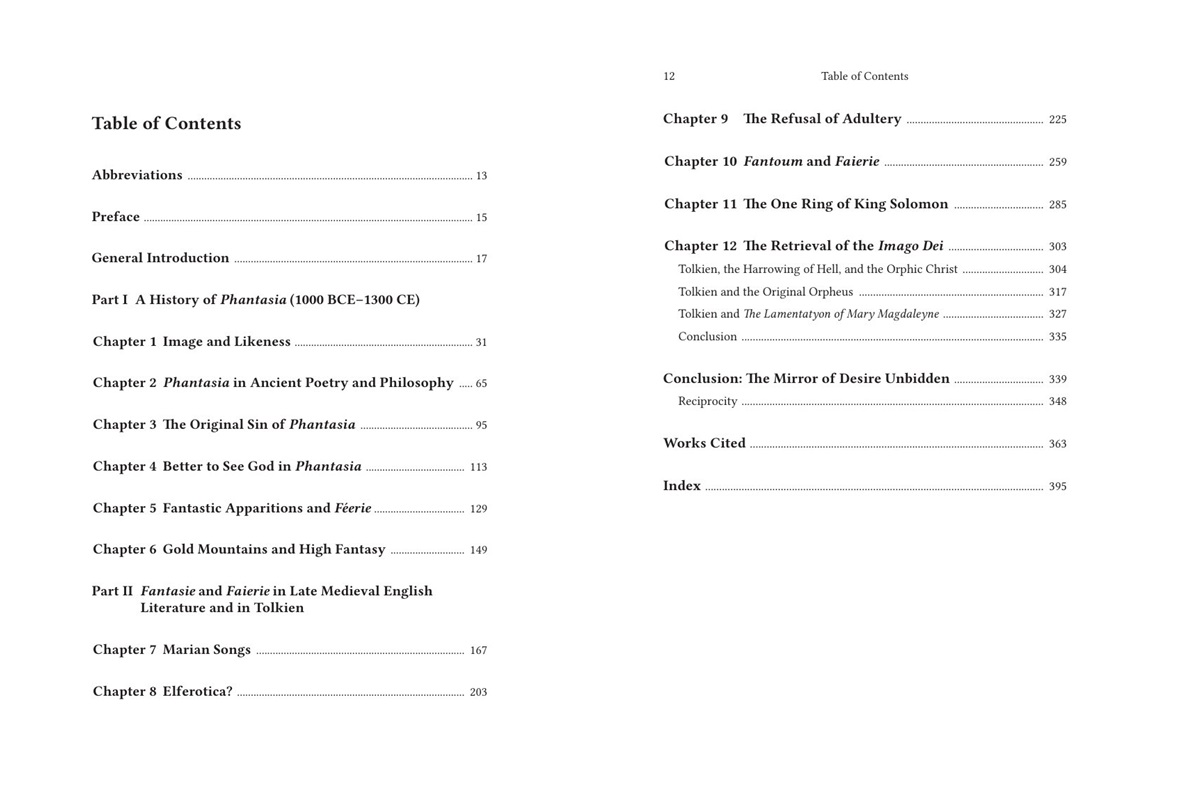
* The “New York Tolkien Conference Returns in 2024” and the guest of honour has now been announced as… “Professor Nicholas Birns of NYU, who will present on his forthcoming book, The Literary Role of History in the Fiction of J.R.R. Tolkien.” This book is actually available now, albeit at such hefty prices that Amazon offers ‘instalment plans’ for would-be purchasers. But it looks like an interesting read. The TOCs are…

* Full List of Incoming and Returning IRH Fellows 2024-2025… “Sarah Schaefer (Art History, University of Wisconsin–Milwaukee), “Tolkien’s Art Histories””.

* Amazon has Tom Shippey’s Author of the Century being published as an affordable ebook in Spanish translation, on 10th July 2024.

* Amazon also shows that Polish translations of The History of Middle-earth are appearing, with Vol 4. due at the end of May 2024.

* The Tolkien Society reports that Peter Jackson is working on a new LoTR film as a hands-on producer. The film is titled The Hunt for Gollum and directed by and starring the Gollum actor Andy Serkis. Some readers will recall this tale has already been a well-reviewed fan-film, and will perhaps also recall last year’s videogame disaster Gollum (May 2023). 2026 is the pencilled-in date for the new Gollum movie.

* A thorough and highly illustrated local history article on the Essex Bridge in mid Staffordshire, along with its nearby iron cousin. The writer has also used one of the book plates of the bridge that I found and colourised. Interestingly, the iron bridge would have been longer in Tolkien’s time…

“the length of the Iron Bridge that spanned over the River Trent was removed during the 1950s. This modification left only the section that crosses the Trent and Mersey Canal intact. Although if you head into the woods opposite the gatehouse to Shugborough, you will find the remains of the footing of the Iron Bridge, and some of the old railings still standing.”

This could have given, even if the way was perhaps barred at the Shugborough end, an alternative vantage point on ‘The House of a Hundred Chimneys’.

* The Lord of the Rings: An imaginary geography of Europe”, a free chapter from the open-access book Signs of Europe (2023), being the EU-centric proceedings of the 12th conference of the Hellenic Semiotics Society. The chapter notes the… “marked geographical affinities between Middle-earth and Europe”, outlines how Tolkien’s semiotics at the “spatial level reflects the logic of the narrative as a whole”, and then more ambitiously tries to “identify Tolkien’s views on the political structure of his fictional Europe”. Which apparently “represents a pretty good metaphor for the principle behind the EEC [i.e. the EU] of Tolkien’s times.”

* And finally, alien metal from outer space. In the new Stuff To Blow Your Mind podcast… “Before the dawn of the Iron Age, ancient humans had but one source of workable iron for their artifacts and weapons: meteorites. Robert and Joe discuss various examples of meteoric metal artifacts, including several precious sky-weapons of antiquity.” And Part 2 and Part 3. See also Kristine Larsen’s “Swords and Sky Stones: Meteoric Iron in The Silmarillion (freely available online).

Tolkien Gleanings #197

Tolkien Gleanings #197.

* Tonight at Ronde College in Denmark, a talk by Casper Clemmensen on ‘Tolkien and Jutland’. He offers…

“an insight into how elements from Jutland’s landscape and characters from its legends were woven into Tolkien’s descriptions of his creatures and worlds. However, it is not just geography that inspires Tolkien. Deeper themes and symbols in Jutlandic mythology, such as the battle between good and evil and the vagaries of fate, resonate in Tolkien’s works and add depth to his tales.”

The event poster suggested a book, so I went in search of one…

Only Amazon Germany knows about it. Published May 2022 as Tolkien og det mytiske Jylland, under the Hovedland imprint. Now “Currently Unavailable”. But there’s a long review by a historian which shows several of the appealing interior illustrations and concludes… “The book is fascinating and well written and, with its rich apparatus of notes, sources and references, it is also quite convincingly professionally presented.”

* Oronzo Cilli has a new and long article, “Tolkien, Shakespeare, and the Stocks Tree in West Wickham”. Freely available online.

* In the U.S. the Marion E. Wade Center will have a new Director from June 2024. The press-release has a profile and picture of the successful candidate.

* At the UK’s venerable Chichester Centre for Fairy Tales, Fantasy and Speculative Fiction in May, a talk on “Fairy God(s) Mother? The Virgin Mary and the Fairy Godmother in Western Fairy Tales”

“As part of on-going research on the relationship between Christianity and the fairy tale, Dr Paul Quinn will examine the role of the Virgin Mary, and Marian-like figures, in a range of Western fairy tales”

* The New York C.S. Lewis Society Student Essay Contest, now open. Cash prizes, and (in the small print) seemingly open worldwide to bona fide students. Deadline: 29th June 2024.

* A new CTO podcast on “Crafting Code and Conquering Fear: A Journey Through Middle-earth and Conway’s Law”. A veteran software engineer, here interviewed in depth, offers… “his unique perspective [which] illuminates the profound impact of literature on technological creativity and problem-solving.”

* And finally, currently still online is a virtual interactive tour of the recent ‘Tolkien memorabilia’ exhibition at Barnsley Museum in the UK. Access through a normal Web browser.

Tolkien Gleanings #196

Tolkien Gleanings #196.

* Forthcoming, a short introductory book on Tolkien and the Kalevala. From the publisher Routledge, and due in mid-October 2024. The table-of-contents is already available…

* Tomorrow, a new online Thesis Theatre at Signum University. The thesis being defended has examined the story “Smith of Wootton Major”, in terms of expressing Tolkien’s final understanding of… “Faërie as necessary, universal, beneficent and transformative to humanity”.

* Abstracts for three of the papers presented at the April 2024 ‘Tolkien: the relevance of myth’ event in Rome.

* Now open in Oxford, the exhibition ‘C.S. Lewis: Words & Worlds’ at Magdalen College’s Old Library. Runs until 11th September 2024, and a catalogue is planned.

* New in The Iron Room (blog of the archivists at Birmingham’s central public library), a new illustrated article on the city’s Barrow’s Stores. With good b&w interior pictures, albeit from the 1920s after the department store had expanded and re-fitted.

* And finally, a new glimpse of one of the great many filmed-but-not-released scenes from the LoTR movie trilogy. It comes from near the start of The Fellowship of the Ring and lacks the digital backdrop which would have depicted the Shire. Gandalf and Frodo are on the fireworks cart approaching Hobbiton and we hear an additional fragment of their talk. Gandalf very briefly teaches Frodo a bit of what he says is “Sindarin, the language of the Elves”. Online here with audio, for now. So far as a practised eye can tell, it is not an AI generated prank.

Tolkien Gleanings #195

Tolkien Gleanings #195.

* The book The Medieval North and Its Afterlife: Essays in Honor of Heather O’Donoghue (2023) ($ paywall) has, among others, a chapter on “Tolkien and Mirkwood”.

* The latest Journal of Tolkien Research is filling up. Now the first peer-reviewed article has appeared, “Middle-earth’s Middleman: Exploring the Contradictory Positionalities of Faramir in J.R.R. Tolkien’s The Lord of the Rings”. Freely available online.

* “Professor Receives Fulbright Award to Teach and Research in Slovakia” in Eastern Europe…

“Among the topics Murphy will investigate is ‘samizdat’ […] “There was a whole underground of people who had typewriters and were making copies of books and manuscripts,” says Murphy. “The government saw books such as J.R.R. Tolkien’s Lord of the Rings as being a threat to a communist ideology and people could go to jail for reproducing these books. I’m very interested in finding out more about how people accessed literature.””

* Useful for scholars, the free ePub translator plugin for the free Calibre ebook management and conversion software. Supports the free and fast Microsoft Edge translation service, and several others that offer large banks of languages and AI assistance. You install the plugin .zip file from inside Calibre.

* A current course module at the University of York, ‘From Tennyson to Tolkien: The Middle Ages & Modern Literature, 1840-1940’.

* On the Malvern Hills, a new spring and Well Dressing Festival, following the similar tradition found in the Derbyshire Peak District and parts of the Staffordshire Moorlands. 4th-12th May 2024. Might be a nice event for Tolkien tourists to coincide with, in future?

* And finally, the South Essex Echo News has “Essex’s links to Lord of the Rings author J.R.R. Tolkien”. This local newspaper story claims “it is believed” locally that Barad Dur = Colchester Castle. Though I can’t find that startling claim in any source I have access to. Unmentioned by the article is that mid Essex at least has the site of the Battle of Maldon, and thus Tolkien’s work on it and its topography, together with its symbolic later resonance. As Garth points out, in April 1915… “Zeppelins struck the Essex coast just where the Anglo-Saxon earl Beorhtnoth and his household troop had been defeated by Viking raiders almost ten centuries before.” Tolkien would play his part in the defence against the Zeppelin menace, albeit on the Yorkshire coast. South-west Essex also has a slight tangential connection, when one learns that Tolkien’s hero-writer William Morris had ridden and walked the depths of the Essex greenwood as a boy… “as a young boy, he would dress up in his child-size armour and ride his pony through Epping Forest” (The Prose Romances of William Morris). One recalls here Theoden’s gift to Gimli of his own child-armour, in LoTR. But that, so far as I can tell, is it for Essex and Tolkien connections.