A snippet on Stoke

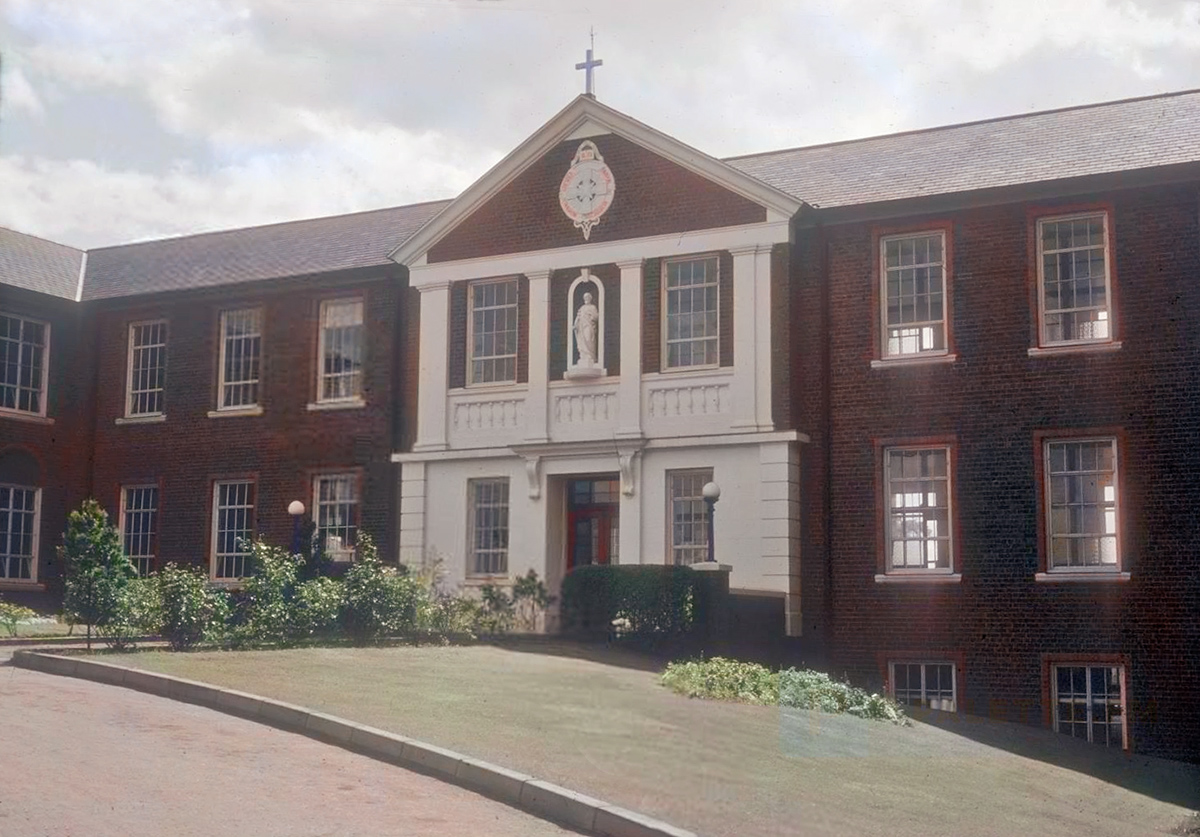
A snippet on Stoke, from Holly Ordway’s new biography of Tolkien. In 1962, he was prize-giver at the Catholic boys’ school of St. Joseph’s in Stoke-on-Trent. The summer event was reported in the Catholic Herald on 1st June. He was presumably able to attend because he was staying with his son who lived in Hartshill, Stoke. The school was not far away in Trent Vale, down on the London Road, thus Tolkien would likely have walked or cycled down there from Hartshill in the May weather. If he was staying at Hartshill, then we can add the summer of 1962 to the times Tolkien stayed in Stoke. Unfortunately there’s no further research in the book on Tolkien’s activities in Stoke.

Frontage of St. Joseph’s, Trent Vale.

Tolkien Gleanings #176

Tolkien Gleanings #176.

* “Tom Bombadil and the ‘hyper-fantastic’ in J.R.R. Tolkien”, a new essay in English from the Spanish Tolkien Society. Freely available, newly posted as part of the Society’s Aelfwine 2023 set of contest-winning essays.

* Freely available, the Masters dissertation “Fantasy in Translation: an Analysis and Comparison of the English Chapter ‘The Council of Elrond’ from J.R.R. Tolkien’s The Lord of the Rings and its Chinese Translation” (2023). Italian, in English with Chinese quotations. It concludes that…

“Despite several errors – some of which produce a distortion of the original text’s meaning – this [Ding Di] Chinese edition of The Lord of the Rings is important as it marked a new era for the country’s fantasy production.”

This complements the new book Reading Tolkien in Chinese: Religion, Fantasy and Translation (2024).

* New in Russian, an essay which translates as “The motif of radiance in the poems ‘Christ’ by Cynewulf and ‘The Last Wandering of Earendel’ by J.R.R. Tolkien” (2023). Freely available. The author suggests the ‘Christ’ echoes…

“Dionysius the Areopagite, a church thinker of the 1st century, who in his work “On the Heavenly Hierarchy” directly says that the angels are filled with “sacred radiance” [5, p.21]. It is unclear whether Cynewulf was familiar with the work of the Areopagite, but the idea itself had long been comprehended by the Church and adapted for preaching.”

* “Why Tolkien Hated Dune”. A strong and long article, but “hated” is too strong a word. Even if Tolkien’s comment in a letter that “I dislike Dune with some intensity” comes close. I object to the use because the casual-fanboy clickbait-y use of “Tolkien hated…” seems a worrying new trend. He “hated” Disney. He “hated” Frank Herbert’s Dune. He “hated” modern technology. He “hated” the Roman Empire, and so on. All this seems dangerous in a world where there are some who would like to establish a false consensus, in the minds of the uninformed young, that “everyone knows” Tolkien was a hater. Such headlines may contribute to subtly establishing a climate-of-feeling about the man, which could then be exploited further by those with an anti-Tolkien agenda.

* Depressed by the media’s relentless drum-beat of doom, pessimism and alarmism, this week The Good Catholic finds hope that ““The Eagles Are Coming!”: Tolkien & the Catholic Hope of Eucatastrophe”. Well… yes. But perhaps adding a reading of the secular The Rational Optimist could triple the antidote effect.

* On “Forgetting the Way to Faerie”, with some choice quotes.

* Forthcoming in May 2024 from Manchester University Press, the book Fantastic Histories: Medieval fairy narratives and the limits of wonder. Set to examine…

“the histories of Gerald of Wales and Walter Map, the continental mirabilia of Gervase of Tilbury, and the fourteenth- and fifteenth-century French Melusine romances and their early English reception”.

* “Bees in folk belief and practices before and now” (2023), free via searching for the article title “in quotes” on Google Scholar. A well-researched Estonian scholarly essay in English, with a strong medieval focus and useful awareness of Eastern Europe.

* On DeviantArt, Kuliszu of Poland, who paints often-charming naive-style artworks of Middle-earth scenes.

* And finally, Tolkien’s uncle Wilfred (1870-1938). Not much to go on at present, but who knows where slim leads might lead to?

Archaeology Day 2024

The annual regional Archaeology Day 2024, Saturday 23rd March at the Potteries Museum in Stoke-on-Trent.

* Excavations at Nesscliffe, an unusual Iron Age hillfort in Shropshire.

* Archaeological sites found along the HS2 line in Staffordshire.

* A massive Iron Age post alignment, amidst a landscape of prehistoric features in the Derbyshire Trent Valley near Repton.

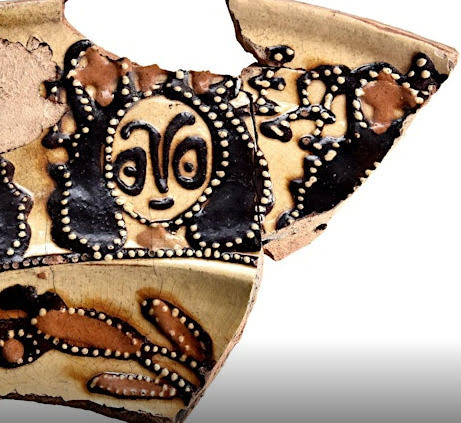
* Pottery found at the Hilderstone dig, with comparison to examples in the Potteries Museum collection.

* Three Anglo-Saxon sites investigated in Barton, Uttoxeter and Stafford.

Free and booking now.

Tolkien Gleanings #175

Tolkien Gleanings #175.

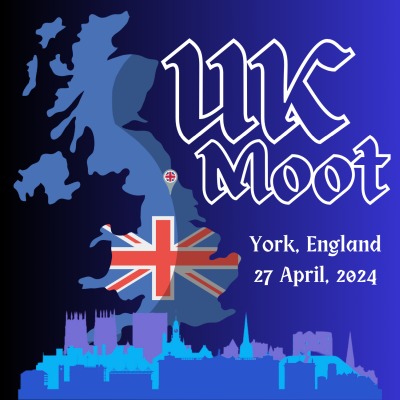
* Signum University and the Mythgard Institute return to the UK, for the UK Moot on ‘Death and Immortality: The Great Escapes’ in relation to Tolkien. To be held in the city of York, 27th April 2024. Booking now, and it appears that speaker proposals are still being accepted.

* “Frank N. Magill in 1969, on The Lord of the Rings”. Being his lengthy critical evaluation, newly discovered by myself. Judging by Google Books, the 1969 appearance was probably actually a reprint from one or more earlier publications from the prolific Magill. Sadly the probable 1954-56 Masterplots Annual sources are not online at Archive.org or Hathi. Also, I’ve since tested some more lines from it online, to see if someone had recognised it in some form before I did. But no, I’ve only found it partly plagiarised in a 2008 dissertation from the Middle East.

* There are now details of the speakers and topics for the Tolkien sessions at the International Medieval Congress at The University of Leeds (July 2024). Various topics, including Anna Smol on “Eärendil’s Mythopoeic Journeys”.

* More details on the forthcoming 2024 German event to discuss ‘Tolkien and His Editors’

“In addition to the central figure of Christopher Tolkien […] the roles of the editors Stanley and Rayner Unwin, the biographer Humphrey Carpenter (Biography; Letters), the student and later colleague Alan Bliss (Hengest and Finn), the daughter-in-law Baillie Tolkien (The Father Christmas Letters) or the Elvish Linguistic Fellowship should also be examined.”

* New on Archive.org, scans of Parma Eldalamberon #21 (Quenya noun structure) and Parma Eldalamberon #22 (Quenya verb structure, Feanorian alphabet). Both issues are said to be otherwise out-of-print and unavailable.

* This week the Cultural Debris podcast interviews Holly Ordway on Tolkien’s Faith. A book which I’m currently about two-thirds of the way through reading. I was slightly disappointed not to get more than a mention of the strong early influence of Francis Thompson, in her new book. But I guess that’s really a task for the very rare scholar who combines deep expertise in Francis Thompson, early Tolkien and Catholicism.

Incidentally I see the Cultural Debris podcaster also publishes a print journal, Local Culture which issues substantial themed volumes on localist topics from a conservative viewpoint. Including one issue on The Arts of Region and Place, and another on the localist thought of Roger Scruton. There are also annual conferences.

* In Italy, PhTea Talks: “The Conception of time in Tolkien’s legendarium”.

* “Tolkien Illustration in the Soviet Bloc”, post-censorship. A University of Plymouth (UK) talk set for 17th April 2024. Booking now, and the event appears to be in-person only.

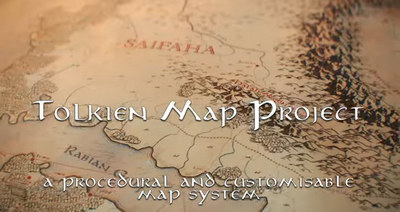
* And finally, a new Tolkien Map Project video on YouTube. Said and shown to be a “procedural and fully customisable map system” for making Tolkien-like maps, and now in its final finished form.

Frank N. Magill in 1969, on The Lord of the Rings

Here is a possibly overlooked critical and positive appreciation of The Lord of the Rings, found buried in Frank N. Magill’s Masterpieces Of World Literature In Digest Form; Vol. 4 (1969). At that time the weighty volume(s) would likely only have been available in larger or university libraries. Though it is said to be a reprint under a new title, and snippets from Google Books suggest that the LoTR items originally appeared in Magill’s Masterplots: The four series in eight volumes (1958), and probably earlier than that in his Annual. Which if correct would make it a very early piece of criticism, and perhaps more widely distributed than in 1969 (among the many authors who would have subscribed to the Masterplots series in the 1950s, and associated Annuals). It may have been overlooked because Tolkien researchers assumed the Magill books contained only bald plot summaries?

The item does not occur in A Chronological Bibliography of Books about Tolkien under “1969”, a list in which Magill only enters in 1983 with his Survey of Modern Fantasy Literature. The same is true of the items referred to in Tom Shippey’s “Tolkien as a Post-War Writer”.

The three books are treated in different parts of the volume, and are here run together.


Samuel Johnson is credited with saying that “A book should teach us to enjoy life or to endure it.” J.R.R. Tolkien’s trilogy The Lord of the Rings teaches both. It also fits the dictum of another writer, Robert Louis Stevenson: “And this is the particular triumph of the artist —not to be true merely, but to be lovable; not simply to convince, but to enchant.” Tolkien has been compared with Lodovico Ariosto and with Edmund Spenser. Indeed, he is in the mainstream of the writers of epic and romance from the days of Homer. His work is deeply rooted in the great literature of the past and seems likely itself to be a hardy survivor resistant to time. In The Fellowship of the Ring, the first volume of The Lord of the Rings, Celeborn the Elf King (no doubt speaking for his author) warns against despising the lore that has survived from distant years; for old wives’ tales may be the repositories of needful wisdom. Although The Lord of the Rings is advertised as a trilogy, with each volume bearing a different title, it is really a single, continuous romance. The author is in complete control of his copious material. He has created a consistent world with a sharply realized geography, even furnishing maps; he has worked out a many-centuried time scheme, summarizing the chronology in an appendix to the third volume, The Return of the King. With fertile inventiveness Tolkien has poured out an amazing number of well-drawn characters and adventures; and his memory of the persons, places, and events of his creation is almost incredible. If there are any loose ends in the three volumes, they are so minor as to be negligible. The book has been pronounced an allegory; with equal positiveness it has been pronounced not an allegory. At any rate, it is a gigantic myth of the struggle between good and evil.

The author also presented his invented creatures, the hobbits or halflings, in an early book, The Hobbit, to which The Lord of the Rings is a sequel, but a sequel with significant differences. Hobbits are small, furry-footed humanoids with a delight in simple pleasures and a dislike of the uncomfortable responsibilities of heroism. They share the world with men, wizards, elves, dwarfs, trolls, orcs, and other creatures. Although many of these creatures are not the usual figures of the contemporary novel, the thoughtful reader can find applications to inhabitants and events of the current world, which has its share of traitors, time-servers, and malice-driven demi-devils, and is not completely destitute of men of good will and heroes. Of the three volumes, The Fellowship of the Ring has the widest variation in tone: it begins with comedy and domestic comfort, then moves into high adventure, peril, and sorrow. Occasional verses appear in the pages, but the quality of Tolkien’s poetry is in both his prose and his verse.

The Two Towers is the second volume of The Lord of the Rings. Like its predecessor, The Fellowship of the Ring, and its successor, The Return of the King, the volume has its roots in faérie, which is not quite the same thing as our conventional fairyland. The setting is a country inhabited by creatures of miraculous goodness or horrifying evil just beyond the borders of our so-called “real” world, and its time is not our time. In his essay “On Fairy-stories,” Tolkien defines a fairy story as an account of the adventures or experiences of men in faérie or on its shadowy borders. He defends the idea that fairy-stories should be written for adults and read by them, and not, as an American scholar said of Sir Walter Scott’s novels, unjustly “banished to the nursery.” In The Two Towers, Tolkien’s fertile imagination continues to pour out fascinating beings and exciting adventures; and his poetic spirit continues to cast a light of heartrending beauty and a shadow of sadness on his story. In the men of Rohan he recaptures the heroic spirit of Beowulf; in his creation of Ents, gigantic herdsmen of trees who resemble their own flocks, he goes far beyond his predecessors who have furnished their pages with animated tree-beings; and in the spidery Shelob, he creates a malevolent, blood-chilling monster worthy to join his favorites, the great dragons of Germanic story. Aragorn, who grows in stature as the book moves on, speaks for the author and helps to furnish a critique of the book and its philosophy. He points out that the earth itself is a principal matter of legend and that the events of the present provide the legends of the future. He also declares that good and evil are the same in all generations. It is Aragorn also who pronounces most clearly “the doom of choice.” For The Lord of the Rings is a story about choice, or free will. Character after character is brought to a choice, and the sum of the choices makes the fate of the character. In this volume as in the others there are lyrical passages which are small prose poems. Such a passage is the description of Gandalf, returned from the depths and transfigured. The author paints a picture of the wonderful old man holding sunlight in his hands as if they were a cup. The power of the image is increased when the old man looks straight into the sun.

The concluding volume of The Lord of the Rings, The Return of the King, brings to fruition the choices and labors of the opposing forces of good and evil, whose struggle is narrated in The Fellowship of the Ring, The Two Towers, and the present work. Like a symphony the book reaches its climax and subsides into a quiet coda, mingling profound joy and sadness. After depicting many adventures, it returns to the Shire, where the first volume began; but the Shire and its inhabitants are much changed from what they were at the beginning. As in the other volumes, the author shows his mastery of narrative and his poetic power. No brief summary can cover all the incidents or name all the memorable characters in the book; nor can a mere retelling of the story do more than hint at its depths. When Tolkien speaks of the song of the minstrel after the overthrow of Sauron, he, perhaps unwittingly, characterizes his own work, for the singer led his hearers into the regions where joy and sorrow coalesce. The book looms like a survivor from some ancient age but speaks wisely and pertinently to the present.

The appendices to The Return of the King include chronologies of the First, Second, and Third Ages, family trees, legendary histories of the peoples appearing in The Lord of the Rings, and keys to pronunciation of names and to the languages, including the elven tongue. Although not necessary to the understanding of the book, the appendices are a playground for the linguist and teller of tales, and they furnish delight to readers with similar tastes.

Tolkien Gleanings #174

Tolkien Gleanings #174.

* New and free on YouTube, “Newman, Tolkien, and the Perils of Beauty”, being the 2024 Annual Newman Lecture with Dr. David O’Connor. 40 minutes, with excellent clear delivery and audio.

* The book Tolkien and the Gothic: XXIV (Peter Roe Series) is set for publication on 26th March 2024, at least according to the wayward Amazon UK. The book has the proceedings of a 2022 Tolkien Society seminar, as seven papers in 134 pages. Also to be available as an affordable £5 Kindle ebook.

* In the new book The Spirit and the Screen: Pneumatological Reflections on Contemporary Cinema (2023), the chapter “Exegeting Samwise the Brave Advocate”. I see the whole chapter free, via Google Books.

* In this month’s edition of the UK’s The Critic magazine, the article “Campus Confidential” ($ paywall) recounts the joining of a secret student society at Cambridge University (UK). Necessarily secret because they discuss C.S. Lewis. And presumably, though left unsaid, their discussion sometimes also turns to Tolkien. The secrecy is said to be needed during term-time, due to the likelihood of baying mobs of ‘cancel cultists’ turning up outside the venue.

“Conservative-leaning university students now have to meet in secret to avoid the ‘cancel’ mob and risk derailing their careers for the crime of having unfashionable views. [In order to join, the student writer went through a 90 minute interview …] The lecturer wanted to know how an English student, theatre kid and barefoot pagan came to be excluded from liberal and tolerant society and to seek the company of Christians. After 90 minutes the professor sat back with a satisfied nod. “I wanted to be sure of you.”

* The Tolkien Society AGM and Springmoot 2024, will be held in mid April at Cambridge University. The dates are out of term-time, so presumably the university’s baying mobs will be absent.

* A new book on The Arts and the Bible (2024), being the proceedings of a 2017 U.S. conference. Tolkien is only briefly nodded to, if the table-of-contents is anything to go by.

* And finally, the worthy project Bookstore Chronicles is calling for recorded contributions for an oral history of bookselling in America, as told by the nation’s own booksellers. The call is open.

Tolkien Gleanings #173

Tolkien Gleanings #173.

* A talk by Tom Shippey on “H. Rider Haggard and J.R.R. Tolkien”, set for 9th March 2024. Online, but it’s a $20 ticket for the live talk. Booking now.

The talk is organised by Uppsala, who will also have Tom Shippey discussing Woden on a new YouTube video — set to air on 2nd March 2024. This one looks free.

* A free YouTube recording of the talk “Tolkien and/or Jackson? Filming Tolkien’s legendarium”, given recently by the chairman of The Tolkien Society at the venerable Chichester Centre for Fairy Tales, Fantasy and Speculative Fiction in the UK. The listenability is just about acceptable, though it can sometimes be difficult to catch what’s being said.

* Available now, the new book Tolkien’s Transformative Women: Art in Triptych (January 2024). Here are the TOCs…

* A new post at The Green Man Review rounds up the links to past Tolkien-related reviews. Who knew there was an audiobook of Sir Gawain and the Green Knight, read by Terry Jones of Monty Python fame?

* At The Imaginative Conservative, “Sir Martin Gilbert and the Inklings”

“Sir Martin Gilbert, the official biographer of Winston Churchill, knew J.R.R. Tolkien, C.S. Lewis, and the Inklings personally. At one memorable lunch, Sir Martin gave me his impressions of these great men and of the Oxford of their day.”

* New to me, paid-for Tolkien Fonts, hand-drawn and digitised. Nice, but pricey. There’s always been a big gap between what font makers think their fonts are worth, and what people (who are not £40k-a-year graphic designers) will pay.

* U.S. publisher Abrams has announced a new graphic novel, The Mythmakers: The Remarkable Fellowship of C.S. Lewis and J.R.R. Tolkien, due in September 2024. By the Christian illustrator John Hendrix. He has a hand-drawn storybook style that’s also heavily influenced by 1990s/2000s graphic design.

John Hendrix cover illustration for an article on Viking DNA.

And a cover preview…

* And finally, a new Viking houses and standing stones LORA. Meaning, a free style-guidance plugin for use in generating AI images with Stable Diffusion 1.5 on a PC.

William Blake exhibition in Stoke

At last, a reason to visit the Potteries Museum, after a seemingly endless run of unappealing shows. I missed the news of a William Blake exhibition at the Potteries Museum and Art Gallery. It opened before Christmas, is still on and closes on 5th May 2024. So there’s plenty of time yet to see it, perhaps alongside the new Spitfire extension and/or a look to see how political the Natural History galleries have become these days.

Probably on the River Dove in the lower reaches of the Staffordshire Moorlands.

The artist is the Potteries photographer William Blake, not the earlier visionary poet of the same name. On show at the Museum are 50 of the 1,500 Blake images held by the Museum. Perhaps 800 of these appear to be on Staffordshire Past Track. The Warrillow Collection at Keele obviously has more of his, judging by the description of the show, since some pictures have been borrowed from there.

The Museum is closed Mondays and Tuesdays. But is open Wednesday to Saturday from 10am to 5pm, also Sunday from 11am to 4pm.


Update: Visited. A small show, greatly marred by reflective glass and badly positioned lights. Meaning it’s almost impossible to get a clear all-in-view view of most of the pictures as they should be seen. The glass should have been removed, as they’re only prints and not originals. The commentary in the small postcard selection might have mentioned that many homes would have had a postcard magnifier-viewer in the parlour. Lots of political choices of picture, as you might expect. No colorised images to enliven the dour b&w feel of the room. I would have paired it with another room in full colour, of his natural ‘sacred places’ pictures shown as 3ft wide matt prints on blocks without glass. Or backlit.

The Museum’s Natural History galleries continue to be excellent and focused as before on wildlife. The only axe-grinding I saw being the entirely justifiable display about litter.

Tolkien Gleanings #172

Tolkien Gleanings #172.

* A planetarium lecture on “Tolkien’s Sky”, 8th March 2024 at the planetarium in Milan, Italy. What a fine idea. All sorts of night skies will presumably be shown in the sparkling dome. Real (e.g. Tolkien’s seminal observation of Venus and the Moon), time-shifted, and in Middle-earth. Though apparently a certain level of intervention would be required for the latter, since the popular Stellarium freeware can’t wheel the stars back in time beyond a certain point.

* Stellarium Sky Cultures: Elvish, a free plugin for night-skies as shown by the popular Stellarium astronomy freeware.

* Newly appeared and nicely ‘filling up the corners’ of the latest Journal of Tolkien Research, two speculative source essays. “The Holy Thorn of Glastonbury and the Two Trees of Valinor” and Kristine Larsen’s “The Royal Astronomer and the Astronomer Royal: Tar-Meneldur and Sir Harold Spencer Jones”. Both are freely available.

* The April issue of The National Review magazine ponders “The Enduring Appeal of J.R.R. Tolkien” ($ paywall) to receptive readers, in a review of the new Tolkien’s Faith.

* Law & Liberty magazine looks at “An Arthurian Brit in the Land of the Free”, in a new review of the book C.S. Lewis in America (November 2023).

* The journal article “Teaching Students to Hope with J.R.R. Tolkien’s “Leaf by Niggle””, new on Academia.edu. Non-members of which can also get a full PDF for free, by searching for the article title on Google Scholar. Scholar has a special arrangement with academia.edu.

* Sacnoth’s Scriptorium notes the formation of the Peruvian Tolkien Society.

* From a few years back now, but only just found, a long article on “Great-Granduncle Bullroarer”. The post has fascinating details on Tolkien’s personal tutor at Exeter. The blog, though apparently in abeyance, has been newly added to my Little Delvings in the Marsh search-engine for Tolkien scholars.

* American Songwriter on “The Story Behind “Over the Hills and Far Away” [1968] by Led Zeppelin and How It Was Inspired by a Tolkien Poem”

Tolkien wrote a poem in 1915 called Over the Hills and Far Away. Plant took no lines from the poem other than the title. The area where Plant grew up was called the Black Country. This region north of Birmingham, England, was also where Tolkien was raised in the 1890s. The rolling hills and small villages inspired the setting of Tolkien’s books. Plant lived in Worcestershire, while Tolkien lived in Birmingham.

The poem was written at Brocton Camp in mid Staffordshire and then revisited and revised in 1927. It is to be found today in The Book of Lost Tales. But Plant was raised in Halesowen, with the large carpet-making town of Kidderminster being his nearest town-of-resort during his youth. Halesowen is to the west and below Birmingham on the map, and Kidderminster further so, with the town being distinctly isolated from Birmingham and its adjacent industrial Black Country. In those days oral histories show that people from Halesowen did not class themselves as Black Country, and nor did they have the distinctive dialect. Today there is some debate, as there always is about the boundaries of ‘The Black Country’. Tolkien on the other hand went to school in central Birmingham but was raised in the south of Birmingham, and he also knew the Lickey Hills in the rolling countryside further south. It’s quite possible he never even walked the industrial Black Country proper, though he may (like Auden) have seen it on the train from Birmingham to Wolverhampton. Thus the comparison the article makes between the two environments is broadly valid, and they are near to each other and would have been similar in topography, architecture and wry self-depreciating West Midlands attitudes (so different from those of the north of England, above the invisible line of what Jonathan Meades calls ‘The Irony Curtain’). So the article’s author is only really confused in thinking the places to be “north of Birmingham” and in the Black Country. They’re not.

* And finally, The Iron Room blog has a new post which considers the Birmingham Trade Catalogue Collection : All The Tricks of the Trade for library researchers. A few years ago I see the blog also had a post on Researching Birmingham Newspapers. I’d imagine these sources have been fairly well mined for likely Tolkien family-tree biographical material, but the guides may still be of use to some.

Tolkien Gleanings #171

Tolkien Gleanings #171.

* New in Portuguese, the book A arte de encontrar Deus entre fantasias e versos: Dante Alighieri, C.S. Lewis e J.R.R. Tolkien (2024), (‘The art of finding God among fantasy and verse: Dante Alighieri, C.S. Lewis and J.R.R. Tolkien’). Although it lists as being 88-pages long, so… perhaps more of a printed set of lectures or a dissertation?

* A call-for-papers for the conference ‘A Multi-Disciplinary Approach to Arda’, to be held in Germany in June 2024. The organisers state that… “the possibilities for engaging with Tolkien’s legendarium are almost endless”. Which implies that a speculative future-oriented paper, surveying ‘what has not yet been done, but might be’, could be of interest.

* New on Archive.org, J.R.R. Tolkien: Life and Legend (1992). Being a fair scan of the illustrated catalogue for the 1992 exhibition at the Bodleian Library.

* Also new on Archive.org in PDF, a good scan of Tolkien’s edition of the Ancrene Wisse (1962) for The Early English Text Society.

* In open-access at Glasgow, “By the waters of Anduin we lay down and wept: Tolkien’s Akallabeth and the prophetic imagination”. This was the lead article in Mallorn #64 in late 2023, and is thus otherwise locked down for non-members.

* The latest edition of The Critic magazine has a short review of the new expanded Tolkien Letters, and feels… “There is a lushness to this expanded Letters.

* On Etsy to buy, The Fellowship of the Ring and The Two Towers in Yiddish translation, in handmade editions. The Return of the King is yet to come, it seems.

* Some LORAs, for use with your PC’s local Stable Diffusion image generator. One for the clothing of the Regency Period in Britain, which means 1811-1820. Though the gentleman’s style lingered on in less fashionable places for another five years or so. Regency could be a useful addition to the arsenal of steampunk artists, but I’m thinking it might also be usefully mixed with some of the older RPGHobbit LORA, to try to generate a more ‘rural gentry’ type of hobbit?

Update: If this one doesn’t do what you want, a few days later there was also another called Regency Period SD1.5.

This week there’s also a new first attempt at a LORA for Gondor’s city architecture and streets, Minas Numenor. Not entirely convincing, judging by the samples, but it might give you a base for a manual over-painting.

* And finally, new on Archive.org, the Complete Tengwar Fonts Collection.