Tolkien Gleanings #416
* John Garth welcomes the new book J.R.R. Tolkien and G.B. Smith: With Wind in our Ears (2026)…
I’m still reading and absorbing the papers, but so far it’s a feast. Clearly, contributors have put in much valuable work beyond what they were able to prepare for the excellent 2023 conference [on Smith].
* A new YouTube video on What Tolkien’s Oxford students were reading in the 1930s…
“Thanks to university records and the enormous amount of Tolkienalia published, we have a pretty good idea of what being one of the professor’s Old English students at Oxford must have been like. Today’s video covers his primary ‘reading list’: the fifteen poems and works that he lectured on and read most frequently with his students, while teaching Old English at Pembroke College.”
I imagine the various exam papers for his courses should be available somewhere, as well?
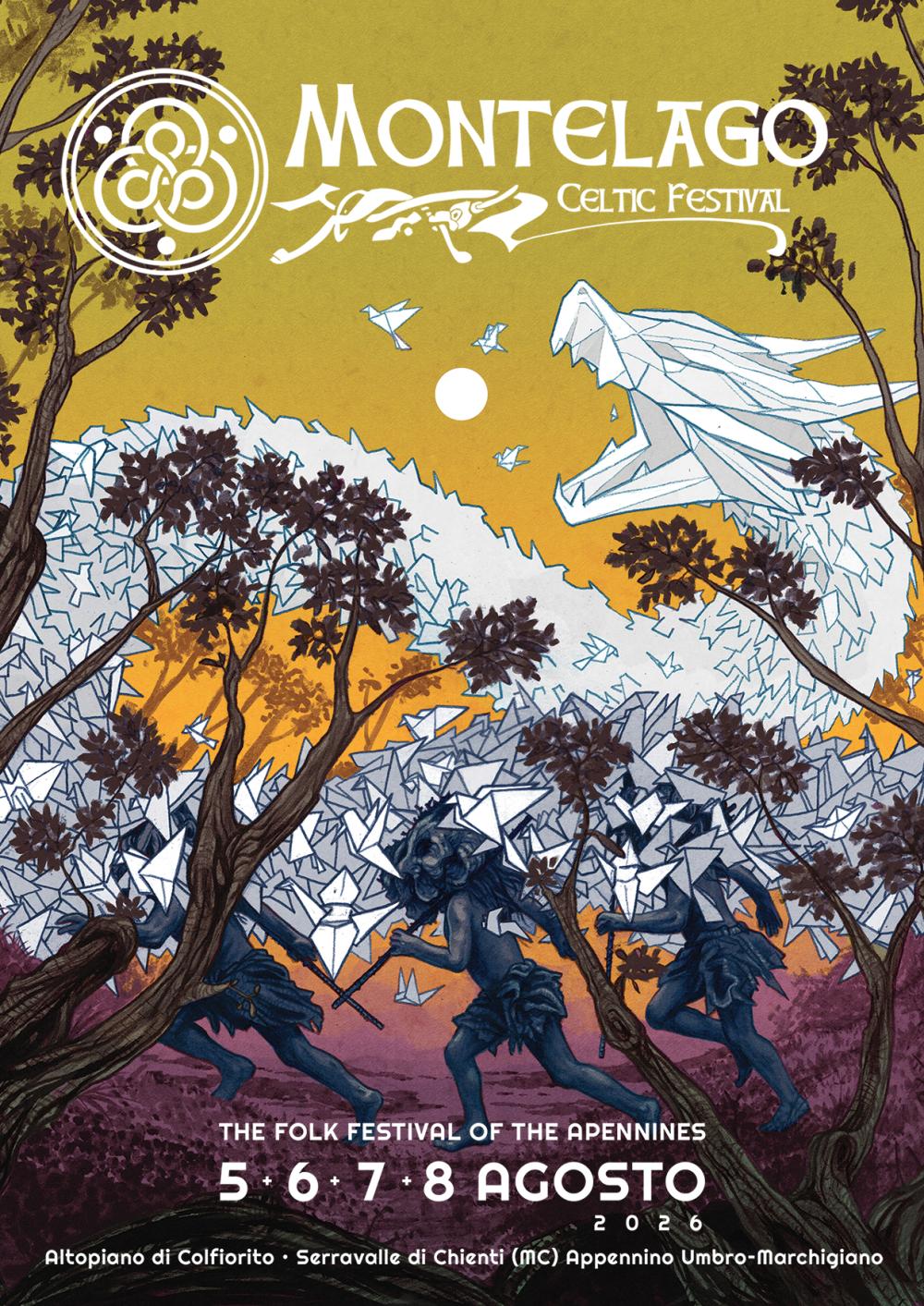
* Italy’s August 2026 Montelago Celtic Festival appears to foreground Tolkien, with events including…
Stefano Giorgianni talking on Tolkien and environmentalist thought; Cesare Cata’s lecture-show, conceived as a journey between Tolkien’s narration and symbols of medieval mythology; and a talk on Tolkien and RPGs. The event concludes with Wu Ming 4’s keynote on the constructed nature of The Lord of the Rings and the imagery of Middle-earth.
* The French national library (Bibliotheque Nationale de France) now has the catalogue available for its current Paris exhibition Cartes imaginaires – Inventer des mondes (‘Imaginary Maps: Inventing Worlds’). March 2026, 256 pages, in French but lavishly illustrated.
* Alas Not Me muses on the similarity of the approach used by the German historian Leopold von Ranke and Tolkien, in his new blog post “What really happened,” or, “Was hat Ranke mit Tolkien zu tun?”. Ranke very sensibly used sources that were as close to the historical period as possible, while overlooking or discounting nothing from the period as irrelevant.
* Miriam Ellis has a short new post on “Tolkien and the Old Wives”, along with a new painting.
On this topic, it occurred to me recently that there’s an unwritten subtext to the return of the women of Gondor, returning on what Beregond states was… “the road to the vales of Tumladen and Lossarnach, and the mountain-villages, and then on to Lebennin”. They return on this same road, perhaps a journey of two or three days for women with children and belongings. Their return is described as… “And the City was filled again with women and fair children that returned to their homes laden with flowers”. The attentive reader also knows by this point that Lossarnach is where Ioreth and her sisters gather healing herbs, and that these are conveyed to the market in the city (“it is days out of count since ever a carrier [of healing plants] came in from Lossarnach”. Thus the “flowers” being brought back in the wains, collected at the perfect plucking-time when “spring and summer joined and made revel together”, are likely not only a scattering of decorative and childish fancies. Indeed the wains are “laden” with flowers, in other words they are ‘weighed down’. Thus these “flowers” could also be the results of some five weeks of a great effort by the older women to find, gather, dry and bundle up healing plants. Intended, when they returned, as the means to restore the greatly depleted stocks of the healers of the city and its townlands.
* The Last Homely House podcast celebrates its 200th edition with a discussion of Notable Numbers in Middle-earth.
* And finally, a new interview on ‘fantasy synth’ music…
“The style of music known as fantasy synth is too new to feature on [a key map] of music genres […] [For this interview we welcome] one of fantasy synth’s most avid listeners — the British artist and designer Luke Edward Hall.”
Don’t overlook the Web link at the very bottom of the page, to Bandcamp’s “Exploring the Mystical Realms of Fantasy Synth” guide. This has descriptions, cover artwork and embedded album tracks.