Pioneering photographers in the Moorlands

I’m pleased to learn that David Cliffe of Leek is doing good work uncovering the photographic history of the town of Leek and the wider Staffordshire Moorlands, and publishing the results as accessible books.

He’s also integrating the knowledge into local mystery novels in his Old Leek Mystery series…

Tragedy strikes when a travelling theatre visits the Staffordshire market town of Leek in Edwardian times. The town also becomes embroiled in suspicion of foreign agents. Local photographer Nathaniel Blake and his teenage daughter Cora turn amateur detective and find themselves in peril.

A better attempt at mapping the line of the Roman Road through Stoke

Having obtained the various OS map coordinates from the North Staffordshire Journal of Field Studies (1967), I can now plot more precisely the line(s) of the ancient Roman Road that ran from Chesterton – Stoke – Longton. The map used is public-domain OS and pre mass-housebuilding.

Updated: fixed dumb WordPress blogging software, which had scaled down the large image automatically. Now links to the full large version!

Tolkien Gleanings #332

Tolkien Gleanings #332

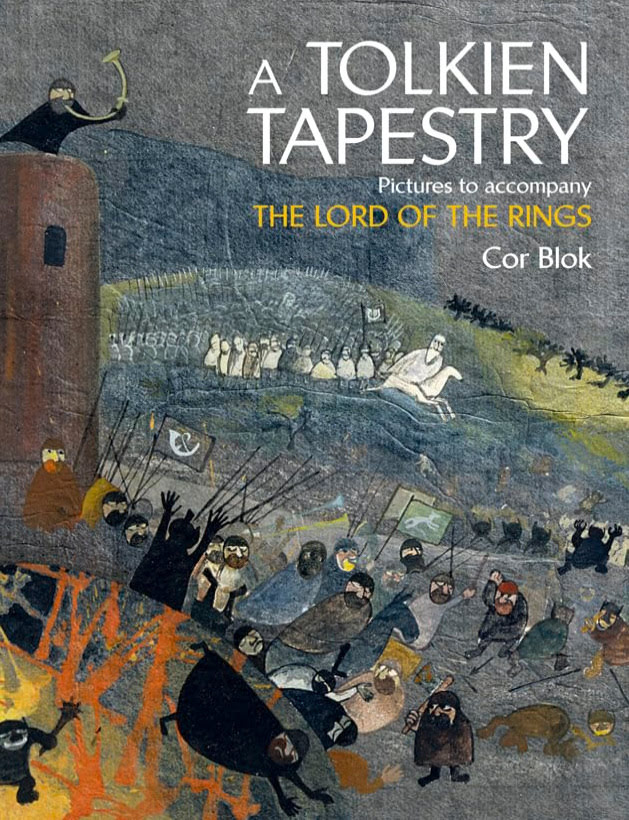
* Tolkien Society members now have a new issue of Vingilot (Fall 2025, though the cover has “Summer 2025”) to download. Poems and artwork, plus the article “The Hunt for the Fellowship”, which with the aid of the text and various timelines… “attempts a plausible reconstruction of the actions carried out by the enemy factions” in Fellowship, who these are and why they act.

* The latest edition of the open-access journal Alambique has two reviews in Spanish (Review 1 and Review 2) of the book Resena de Fantasia epica Espanola (1842-1903) (2024). The book offers an introduction and an “anthology of representative texts” of early Spanish fantasy literature from 1842-1903.

* Talking of early continental fantasy novels, Maurice Sand’s epic fantasy / sword-and-sorcery novel Le Coq aux Cheveux D’or (1867, in French) now has a free English translation on Archive.org. This is the first translation, so far as I know.

* In English from Poland, “Delights of Dinners, Pleasures of Picnics in the ‘Make-believe’ Food Fantasies of the Edwardian Children’s Literature” (2024). The article surveys a handful of classic British works translated into Polish. Tolkien’s hungry hobbits and (later) cooks would seem to echo this tradition. Freely available online.

* Signum University now has a page for the short online courses proposed for November 2025. Note “The Poetic Corpus of J.R.R. Tolkien: The Later Poems 2 (Volume 3: The Years 1931-1967)” and “She Watered It With her Tears: Grief, Mourning, and Death in Tolkien’s Legendarium”. And Anne-girls everywhere will also want to consider October’s now-confirmed online course “Reading Anne of Green Gables as Fantasy”.

* The Staffordshire Catholic History Society was formed in 1961, and to 1991 it produced twenty-four issues of a scholarly journal titled Staffordshire Catholic History. Thereafter the journal was issued as the journal of the Midlands Catholic History Society, an annual title which continues today. I’ve looked through the online tables-of-contents for both these journals, and the only item of possible Tolkien relevance appears to be the article “An English Spring: Newman’s Anglo-Saxonism” (2006). This sounds like it may have background relevance to Tolkien’s intellectual upbringing, though I can’t tell — because the journal runs are not online.

* This week on YouTube, “History in Flames with Robert Bartlett” offers a long podcast interview with the author of a new book on the destruction of mediaeval manuscripts over the centuries.

* And finally, London’s Curtis Brown agency, now owned by the Beverley Hills based UTA, has taken over the handling of rights requests on behalf of The Tolkien Estate.

Tolkien Gleanings #331

Tolkien Gleanings #331

* Tolkien Notes 22 (September 2025), new at the blog of Wayne G. Hammond & Christina Scull. They also have links to their current “addenda and corrigenda” PDFs for various books including the new Poems, and an “Index to The Letters of J.R.R. Tolkien (1981, 2023)”.

* Drout’s forthcoming The Tower and the Ruin: J.R.R. Tolkien’s Creation has a cover image, a seemingly firm date, and is now pre-ordering for the more affordable Kindle ebook.

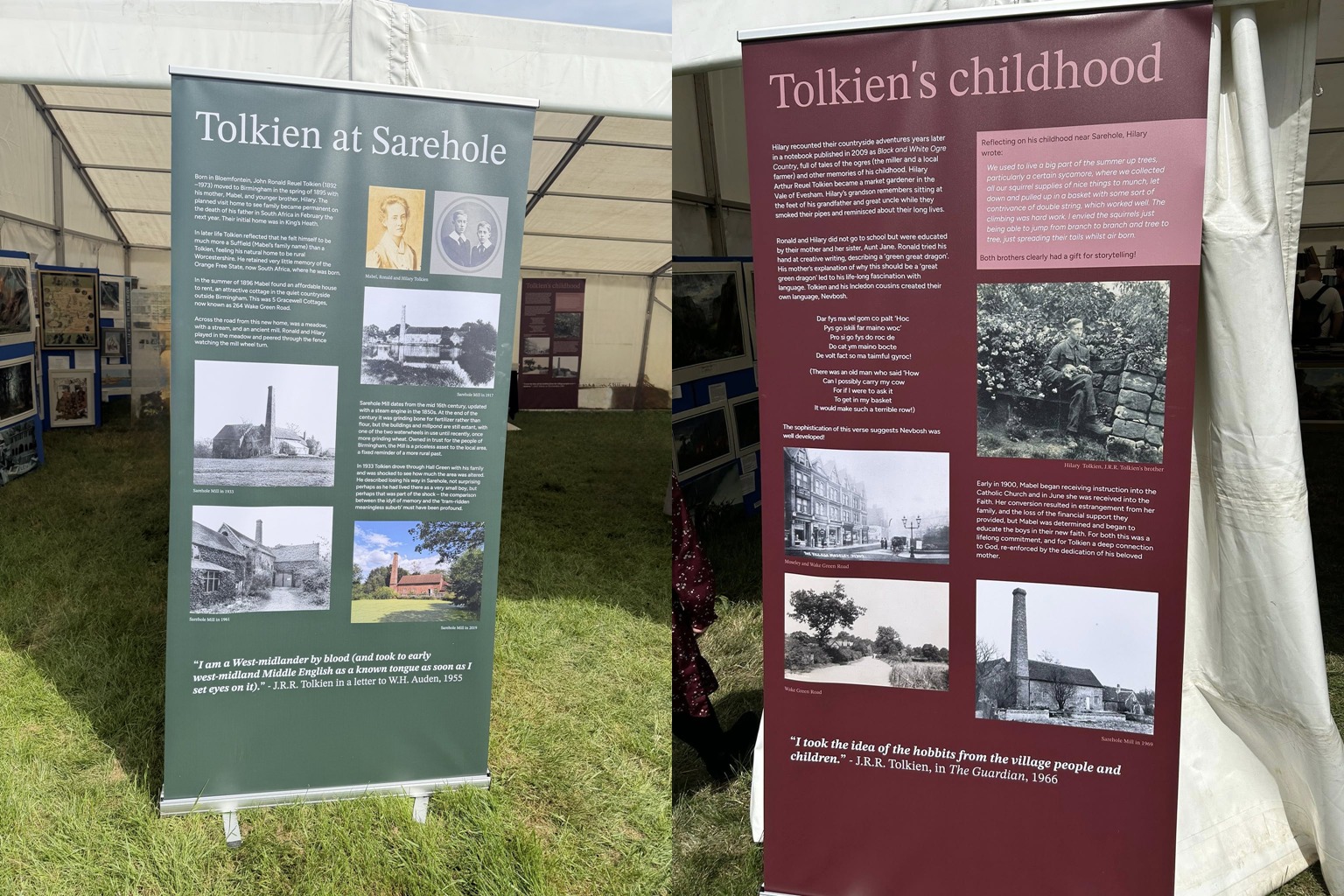
* The UK’s annual Heritage Open Days happen each September. 2025 offers a number of free tours of Tolkien sites, including the Birmingham Oratory and in nearby Warwick the “beautiful church where J.R.R. Tolkien was married in 1916”. Nothing Tolkien-specific for the Lickeys, but visitors will be able to see “watercolours by Elijah Walton of the area in the 1850s” and the views, hills and lanes Tolkien knew as a boy were much the same fifty years later.

* The Spanish Tolkien Society has announced the 21st edition of its Essay Awards for unpublished essays. Open to all it seems, but you do also have to submit a Spanish version of your work. Deadline: 5th October 2025.

* There’s to be a Prancing Pony Podcast Moot, just before Christmas 2025. 18th – 21st December in Dallas, Texas and online. The theme will be “Creating Historical Depth within Fantastical Worlds”.

* I’m pleased to see that The Time Machine has been translated into Gaelic (Inneal na Time by H.G. Wells). It’s currently battling A’ Hobat by one J.R.R. Tolkien, for the annual Gaelic translation prize. Seems a little unfair that two great masterpieces should have to go head-to-head, but I guess it’s the quality and fluidity of the translation that counts.

* Recent lidar (ground penetrating radar) probing by archaeologists has discovered more about one of Sir Gawain’s two likely ancient Roman road routes, the routes which could have taken an armored knight up off the Cheshire Plain and into North Staffordshire.

* And finally, I note that Tolkien’s posthumous book Sir Gawain and the Green Knight, Pearl, and Sir Orfeo is now fifty years old. Having been published in September 1975.

Two lidar discoveries on the route of the Roman road through Stoke-on-Trent

I’ve found a local item I missed in 2019, an article going by the unpromising name of “Investigation leading to the Scheduling of RR181”, in the Roman Roads Association Newsletter, Summer 2019. Titled differently on the newsletter’s contents-page as “RR181, from realisation to Scheduling”.

Stoke-on-Trent’s Roman road (the ‘Ryknield Street’) from Chester to Derby had, as the article details, been missing knowledge of “its first four miles as far as Langley Common [west of Derby], where no confirmed evidence of the road had ever been identified.” The newletter’s article is mostly about the discovery of this lost Langley Common route and the consequent scheduling.

However, page 7 of the same article also usefully details the route back to Stoke-on-Trent and the fort at Chesterton in Newcastle-under-Lyme. This reveals a vital new bit of lidar evidence for Stoke…

Where the Roman line crosses Queensway close to its junction with the A53, lidar [i.e. ground-penetrating radar] reveals a substantial road cutting, now appearing artificially filled. It is conceivable that the Roman road survives well within the cutting.

This is of course only a trace, but it adds good evidence to my suggestions that the Basford Bank was more-or-less the place the road came down off the ridge and crossed the marshy Fowlea valley. The valley would have been just too waterlogged further down, as it approached the Trent. If the road sloped slowly down the valley side from Wolstanton Marsh towards the bottom of the Basford Bank, or if it came down steeply at the old Basford Bank (now the quiet lane behind the modern road) must remain unknown for now. However, the possible need for a deep cutting suggests it came down a steep slope as it approached the Fowlea.

After crossing the Fowlea and the valley-bottom, then much wider and marshier than today, the road must have got up onto somewhat higher ground east of the Fowlea. Before then proceeded on through Cliffe Vale towards its known route past what is now Stoke Station, and then across the Trent (roughly where the University nature reserve is now) and out through Fenton and along part of King Street.

Here is what the article means by the “line”, which I’ve marked approximately here…

Green indicates the two possible approaches to the Fowlea, either across the top of Etruria Woods and gently down the valley slope, or dropping off the valley side steeply at the old Basford Bank lane.

One might thus whimsically imagine a footsore Roman legion rocking up at the Holy Inadequate pub, had it been there back then, thirsty and in need of reviving drafts of ale! Unfortunately there’s no precise location for the lidar discovery of the buried cutting at the Queensway / A53 junction, and that item in the Roman Roads Association Newsletter article is unreferenced. Possibly it can be seen on recent lidar maps, but I can’t immediately find where those are online. Archiuk.com has a lidar map for Stoke, but it fails to respond and is anyway possibly not up-to-date.


There has also been another key recent lidar development, that I also missed. This discovery was made at the Chesterton end of our Roman road, as detailed at the Roman Roads in Cheshire website…

The route of the [Roman] road is well documented in the north of the county [of Cheshire], but the nearer it got to Chesterton the more its course was lost, with several alternative suggestions. The biggest clue to tracing it south is that the road direction just south of Sandbach appears to be in alignment on the high ground near Bignall Hill / Wedgwood’s Monument. This represents a logical direct alignment, but until lidar [i.e. ground penetrating radar] the evidence was not forthcoming. [But] we can now be confident that the route took a very direct course and went over Bignall Hill / Wedgwood’s Monument, as the lidar evidence is convincing there.

The direct route approached Chesterton fort along the ridge of high ground around [the east side of] Wedgwood’s Monument. The latter would have been a very logical position with excellent view ahead to set out the alignment to Middlewich — assuming it was set out south to north. With the release of Series 2 lidar we now have the [exact] route across Bignall Hill/Wedgwood Monument. [Nearby] Red Street would appear to be a clue [to the presence of an ancient road, due to its name]. It is [however now revealed to be] slightly off line, but must have been named after the [nearby] road.

Or after its purloined stones, perhaps? The routes are very close, and it would have been relatively easy to cart the stones over.

This discovery adds another local node to the route. It came up off the Cheshire Plain and slipped around what is now Wedgwood’s Monument and into North Staffordshire. Which also makes it, in mediaeval times, Sir Gawain’s likely route into North Staffordshire. I had suggested the nearby Red Street for this entry-point in my recent book on Gawain, but now there’s an even more precise mapping. But that’s another story.

So it’s good to learn that the old road isn’t totally forgotten today, and that the lidar boffins still occasionally probe the likely route and make solid discoveries.

Tolkien Gleanings #330

Tolkien Gleanings #330

* The 3rd edition of A Bibliography of Tolkien Studies in French and English (summer 2025) is now available. The venture is nicely ‘filling up the corners’, with the current edition offering… “4,245 references […] classified and presented in several usual [scholarly] quotation formats.” Freely available online, under Creative Commons Attribution ShareAlike.

* The OxonMoot 2025 schedule (warning: VPN users are automatically blocked, with not even a captcha). Among others, these caught my eye…

   – “Ho! Ho! Ho! To the Bottle I Go: The Pub in Tolkien’s Life and Works”.
   – “Tolkien the Caveman: Poetry as a Cudgel” (Tolkien’s poetic ridicule of his colleague Percy Simpson).
   – “Belliphonic Tolkien: Sounds of War in The Lord of the Rings”.
   – “Tolkien and the Miniature” (his “sustained interest in the minuscule and in the interplay of different scales”).
   – “Tolkien’s Bicycle” (his bicycles and cycling life, amid the emerging and increasingly dangerous car-culture).

* In the August 2025 issue of the journal Themelios, “Angelic Fall Theodicy in Dialogue with Tolkien, Augustine, and Aquinas”. Freely available online.

* In Italy, Avvenire reviews Tolkien and the Mystery of Literary Creation (2025). Review freely available online, in Italian.

* New at the website of the venerable Catholic journal The Lamp, “Soaring Music”. A rather mis-titled article in which the author muses on the appeal of “the strangeness of Tolkien”, and compares The Lord of the Rings with Nabokov’s Pale Fire. Freely available online.

* Due in September 2025 and pre-ordering now, a new issue of Undefined Boundary: The Journal of Psychick Albion. Includes the article “The Other Country: Numinous Landscape in English Supernatural Fiction” and “On Time Slips: Jack Finney, Charles de Lint and an old house in Chester” (which at a guess may be a survey of English ‘time-slip’ literature).

* Extended free access to a large medieval site is a rare thing in England today, other than castles. But there’s still the walkable circuit of ye olde city-walls at Chester, formerly a major port city. Clas Merdin has posted a new up-to-date descriptive photo-tour of the city-walls walk, on his blog: Part One and Part Two. Might be a good place for a Tolkien event, such as a promenade performance, I’d suggest?

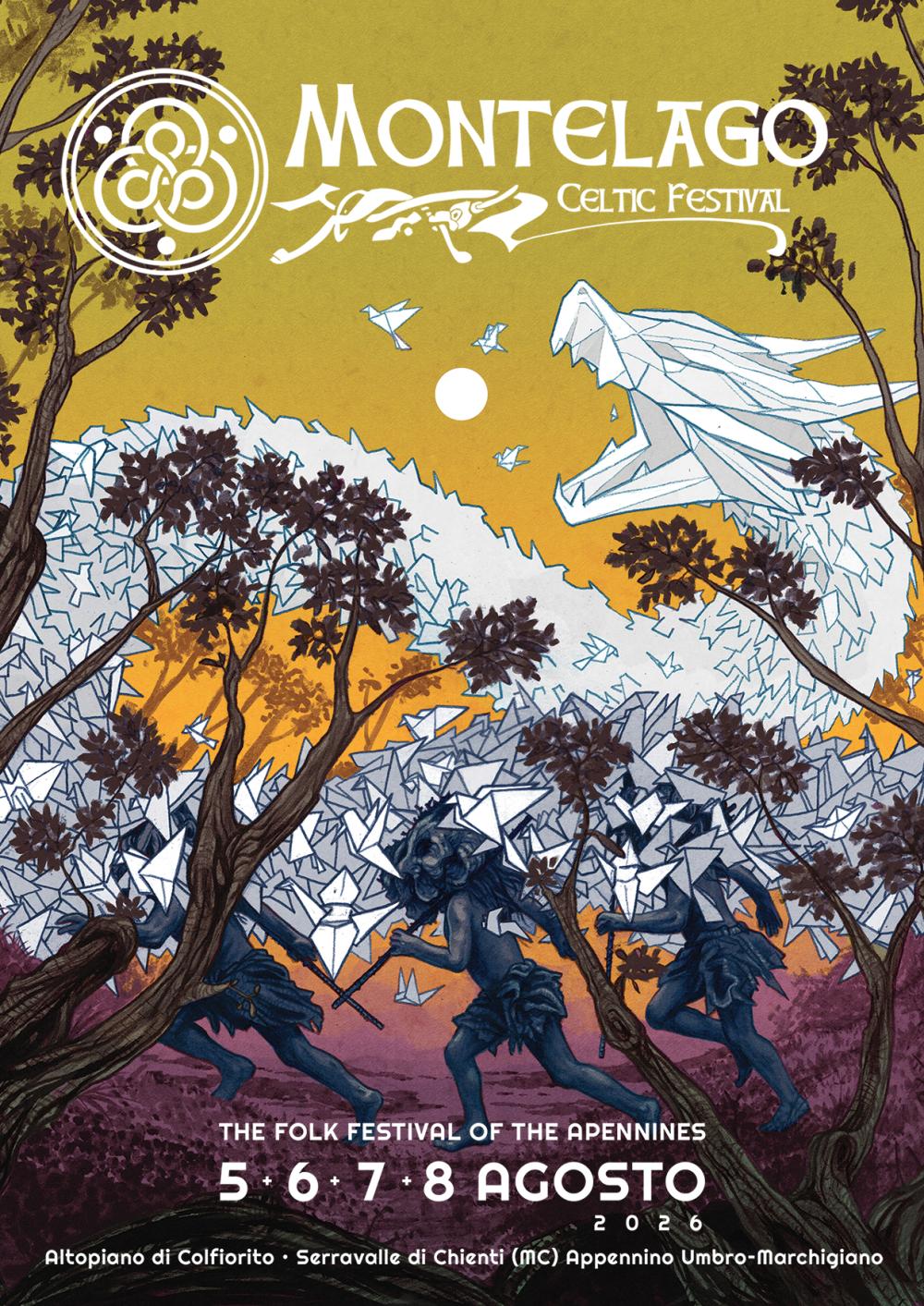
* Lovely poster for the Hobbiton 2025 program in Italy. That’s how you do event posters.

* And finally, Tolkien pictures were bought for six eggs in wartime Hull…

“The pictures, which are of two stylishly dressed women and dated 1918, were handed down generations of the farmer’s family, along with the story of how he got them [from Tolkien].”

If genuine, then they show Tolkien experimenting with collage as a medium.

Tolkien Gleanings #329

Tolkien Gleanings #329

* Inklings-Jahrbuch 41 (2025), containing the proceedings of 2023 conference ‘Defying Death: Immortality and Rebirth in the Fantastic’. Freely available online. Among other items the journal has the German articles…

    – “Death and Immortality in Old English setting: Life and after life in Tolkien’s Rohan”.
    – “Longevity, immortality and rebirth in Middle-earth”.

    – Plus reviews of:

    – Essays on the Epic Fantasy of J.R.R. Tolkien & G.R.R. Martin.
    – Tolkien Studies Volume XIX and its XIX Supplement.
    – J.R.R. Tolkien’s Utopianism and the Classics.

* A new rolling issue of Journal of Tolkien Research has begun, Vol. 22, Issue 2, 2025. First up is the article “Josef Madlener’s “Der Berggeist”: Not the “Origin of Gandalf””. Note also that there’s to be an article on the same topic by a different author in the forthcoming Tolkien Studies journal (2024, but not yet issued), “”The ‘Origin of Gandalf’: Josef Madlener’s Der Berggeist and the Transboundary Mountain Spirit Rubezahl as Purported Sources of Inspiration for Tolkien’s Wizard””.

It’s not mentioned in the article, but I’d add that I can easily find evidence on eBay of the same Josef Madlener’s interest in a cloaked big-booted Gandalf-like shepherd figure, and of the publication of the resulting paintings as postcards.

In the lower two cards the shepherd is praying in the open fields.

The outfit here seems to be the traditional one from Provencal (SE France, neighbouring the Swiss Alps), and indeed it has been celebrated on one of their postage stamps (above). The traditional outfit worn by the Swiss shepherds, those Tolkien might have seen in the Alps in 1911, appears to have been different. Circa 1920, which is the earliest I can find snapshot photos of such men, high mountain Swiss summer shepherds appear to have instead worn long lederhosen, pointy clogs, short tunic, and the well-known ‘fedora + feathers’ Swiss man’s hat.

* Newly released from embargo, the Spanish PhD thesis From Taniquetil to Orodruin: the portrayal of mountains and caves in J.R.R. Tolkien’s Legendarium (2021). In English, and now freely available online.

* The Russell Kirk Center’s University Bookman has a long new review of The Worlds of Dorothy L. Sayers: The Life and Works of the Crime Writer and Poet (2025). Sayer was friends with C.S. Lewis, and was on the fringes of the Inklings circle.

* The author Alan Garner (Weirdstone of Brisingamen, The Owl Service) was also on ‘the fringes of the fringes’ of the Inklings, later. A Reddit comment today spurred me to look up an interview now online at the Robbins Library Digital Projects. In which he said…

“I happened to be [studying at the University of Oxford] just after Professor Tolkien had retired, but he still gave bravura demonstrations of Beowulf. He would walk up and down and declaim it, and I used to go to those performances. That’s when I first heard English, and I was thrilled by simply the drama and the music of it. […] I didn’t know [the Inkling] Charles Williams, but my tutor at Oxford was one of the Inklings. Thus I was on the fringe of all of that, and I’ve no doubt that my tutor talked about things that C.S. Lewis had said the night before.”

* Up for auction with Forum Auctions back in 2019, with the catalogue only now appearing on Archive.org, the signed playbill of a 1967 children’s theatre performance of The Hobbit.

* And finally, an item from the world of fan-fiction. In August 2025 it was reported that… “Faerie, a Tolkien fanfiction [online] archive, is being imported to the Archive of Our Own (AO3)”.

Tolkien Gleanings #328

Tolkien Gleanings #328

** New site for Tolkien Gleanings, now at https://jurn.link/spyders/ — please update bookmarks, links and RSS feeds. The old free one is now unavailable, because WordPress abruptly closed all access to it without warning or explanation. The cause is unknown, but I guess the peril of having a 15-year blog is that someone can always find something to make a vexatious claim about. So far as I know, there’s nothing here that deserves such abrupt treatment. Anyway, it’s easier just to load up the local backups and port everything over to my paid webspace. As someone once said, “the Internet interprets censorship as damage and routes around it”.

* Downloads of video transcripts are now available for sessions at the Mythopoeic Society’s Online Midsummer Seminar (OMS) #4 (August 2025). Titles include, among many others…

  – “”Her hair was held a marvel unmatched”: The Significance of Long, Blonde Hair in Tolkien’s Imagination”.

  – “”Mysterium Tremendum et Fascinans”: Melian’s and Luthien’s Numinosity”.

  – “The Influence of the Pearl-Maiden on the Imagination of J.R.R. Tolkien”.

* Full details of the Mereth Aderthad 2025 conference sponsored by the Silmarillion Writers’ Guild in July 2025. The page now has links to, among others, the paper “Love, Grief, and Alliterative Verse in Tolkien’s Legendarium”, with transcript, and the same scholar also has a paper online on alliterative verse as an Elvish practice. All freely available online.

* The Mereth Aderthad 2025 conference also produced a free PDF ‘zine of Middle-earth fiction, poetry and art. Freely available online, but a print version can also be ordered. No non-fiction articles.

* The contents-list for the delayed Tolkien Studies: An Annual Scholarly Review (2024) is now available online. To include, among others…

  – “Tolkien’s Elegiac Trees: Enta Geweorc and the Ents Across Time”.

  – “The Wanderer’s Return: New Findings on Tolkien in Oxford 1918-19”.

  – “Reconsidering the Early Critical Response to The Lord of the Rings“.

* The latest Liturgical Arts Journal reviews The High Hallow: Tolkien’s Liturgical Imagination. Freely available online.

* The Italian exhibition on Tolkien is to open in Trieste soon…

“After stops in Rome, Naples, Turin, and Catania, the traveling exhibition ‘Tolkien: Man, Professor, Author’ will conclude its run in Trieste. The show, dedicated to J.R.R. Tolkien, the Oxford scholar and creator of Middle-earth, opens on 19th September 2025, at the Salone degli Incanti and runs through 11th January 2026.”

* The Oxfordshire town of Banbury has dates for its turn at hosting the travelling The Magic of Middle-earth memorabilia exhibition. 31st January – 28th June 2026, at the Museum. Not free, this time.

* And finally, new on YouTube is a 90 minute podcast in which Paul Corfield Godfrey and Simon Crosby Buttle talk operatic Lord of the Rings.

Some new local books, recently added to the Internet Archive

Some links to local books, recently added to the Internet Archive:

The 5th North Staffords and the North Midland Territorials (The 46th and 59th Divisions) 1914-1919 (1920).

Notes on Staffordshire Placenames (1902).

Medieval Newcastle-Under-Lyme (1928), by Pape who was the leading local historian of the time.

Memorials of Old Staffordshire (1909), being a book collection of antiquarian essays on various local historical topics, including “Staffordshire Forests”, “Some Local Fairies”, “Old Towers and Spires”, “In Charles Cotton’s Country”, and more.

The Portland Vase booklet (1936), on the history of the making, and the remaking of the vase by Wedgwood.

Story of Wedgwood, 1730-1930 (1930).

Artes Etruriae (1920), being an illustrated booklet giving a tour of the Wedgwood factory in Etruria, North Staffordshire.

Sun Pictures (1859) by Mary Howitt. Being a vivid and lively account of a long summer trek through the Staffordshire Moorlands of England in the late 1850s. 22,000-word travel writing serial, with parts collected into a PDF.

Samuel Parsons 1747 map – North Staffordshire section.

Phillip Lea 1689 map of the country of Staffordshire.

A Uttoxeter Treasure Trove At Your Finger Tips (2025), being “A List Of Books, Publications, Photo Collections On The History And Heritage Of Uttoxeter”.

The Gawain Country (1984) by Ralph W.V. Elliott. Plus several essays published after the book appeared. Sir Gawain and the Green Knight in the Staffordshire Moorlands.

The Oxford Book Of Carols (1928). Has the dream-fantasy hymn/carol “All Bells in Paradise” (with tune) … “this version was recovered in the middle of the nineteenth-century in North Staffordshire”.

DREWEATTS. Old Master, British & European Art. Catalogue 29 May 2025. Auction catalogue with a portrait of the young Thomas Bateman, later maker of Biddulph Grange.

Speculations by T.E. Hulme (1924). Collection of the essays of the North Staffordshire philosopher and early modernist poet, killed in the First World War.

Also of interest, at the National Library of Scotland, Ordnance Survey map of the Staffordshire Potteries & District, O.S. One-Inch 3rd Edition (District) (1913).

New URL for my Spyders blog and ‘Tolkien Gleanings’!

I’ve now moved the Spyders of Burslem blog from the free WordPress blog domain, to a proper hosted WordPress blog install at   https://jurn.link/spyders/ — please update your Web links and RSS feeds.

The new RSS Feed for your feedreader is https://jurn.link/spyders/feed/ for everything posted at the blog, or https://jurn.link/spyders/category/tolkien-gleanings/feed/ if you just want the Tolkien Gleanings newsletter posts.

You can also get the PDF magazine-style omnibus edition of Tolkien Gleanings at Archive.org, with the most recent issue collecting the Gleanings from August to October 2023, with clickable links retained.

The blog links are now a nice green to match the magazine version, turning dark red after you’ve visited them.