A few notes on ‘Tolkien’s Library’

I’ve had a chance to peruse Oronzo Cilli’s excellent new second edition of his Tolkien’s Library: An Annotated Checklist. Here are my brief notes, and I’ll take the items in date order.

1908-09. These are the dates given in the new book as likely for Tolkien’s fateful purchase of the Gothic Grammar, in Birmingham.

1912. Halldor Hermannsson’s third Bibliography of the mythical-heroic sagas. One would have expected some of the historical atlases from this late-Edwardian period, but they’re not listed.

1914. He borrows the hefty journal Anglia: Zeitschrift fur englische Philologie in Vol. IX (1886). This is in German, devoted to philology dealing with English material. I would imagine he also had the separate Supplement volume, containing an organised bibliographic survey of the year’s work. A little digging shows me that the main volume has Felix Liebermann on “Gerefa”, this being the history of the tradition of the local English sheriff, and Sherrazin on “Beowulf and Kynewulf”.

1915. One of his Oxford Exams was on the Prose Edda. Also Old English texts, part of The Amazons and The Voyages of Ohthere and Wulfstan.

1921. John Masefield’s Reynard the Fox (1921). Not, as it turns out from my quick perusal, the classic medieval tale of the wily anti-hero. Rather, a long modern poem on the ancient tradition of English fox hunting.

1922. Acquires the Book of Taliesin (Facsimile and text) by John Gwenogvryn Evans. Dated “1910” in Tolkien’s Library, but Celli has not discovered that the volume was issued in 1916, although dated on the title page as “1910”. Tolkien had many other books by Evans, but apparently not his companion volume of translations Poems from the Book of Taliesin (also 1916), which would have given him far easier access to the gnomic poem ‘The Battle of the Trees’. One would have expected both books to sit on the shelf together, although I know of no other evidence that Tolkien was aware of Taliesin’s ‘The Battle of the Trees’ (which centres on Ent-like trees marching into battle).

1922. Yes, he had a copy of E.R. Eddison’s The Worm Ouroboros, and in the “very limited” first edition of 1922. He also had Eddison’s Egil’s Saga (1930).

1923. Locally, I spotted E.W. Bowcock’s Shropshire place names (1923). This was unknown to me, and is also unknown to Archive.org. Not online.

1930. An amusing sidelight on Tolkien in 1930. He played the part of ‘the tobacconist’ in Linguaphone’s recorded course for foreign students learning conversational English for use in shops and workplaces. Sadly it appears that the audio recording has not survived.

1935. In 1938 Tolkien cited Joseph Neill’s novel Land under England (1935) as a “weak” example of a genre of which he is “extremely fond”. He then presumably means a certain type of imaginative early British science-fiction with underground adventures (the Morlocks of The Time Machine, Fowler Wright’s The World Below etc). In this case Neill imagines a nightmare authoritarian dystopia, surviving underground from Roman times, discovered by a son searching for his missing archaeologist father. Deep underground ‘the common good’ has become the only principle, and an excuse for ‘Master Minds’ to telepathically control brainwashed and emotionless workers. The young discoverer escapes, but can he be sure his memories have not been telepathically tampered with?

1958. Tolkien has Joaquin Verdaguer’s The Art of Pipe Smoking (Curlew Press, 1958). Said elsewhere to be a booklet of 60 pages, illustrated throughout. Not online, as far as I can see. One would have expected a reprint, by now.

1967. The evidence for Tolkien liking at least one of R.E Howard’s better Conan tales, in later life, is still incredibly slim. No new evidence here. L. Sprague de Camp remembered in 1983 a snatch of conversation had with Tolkien in his suburban garage-study in 1967. That was it, so far as I can tell.

1971. “A statement by Tolkien describing his reading habits as a teenager”, published in Attacks of Taste and then Beyond Bree. One source has the contribution as “one page”, another as “one paragraph”. Neither 1971 publication is online.

And finally, a lovely quote from Tolkien…

“English is an instrument of very great capacity and resources, it has long experience not yet forgotten, and deep roots in the past not yet all pulled up. It can, if asked, still play in modes no longer favoured and remember airs not now popular; it is not limited to the fashionable cacophonies.” (comment on Burton Raffel’s Poems from the Old English, 1961).

Tolkien Gleanings #43

Tolkien Gleanings #43

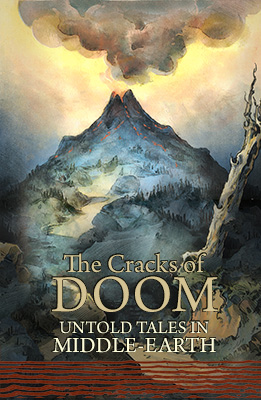
* The Cracks of Doom: Untold Tales in Middle-earth ebook is now available as the expanded third edition. Newly added are a full set of notes for The Hobbit, plus many expanded or new additions for The Lord of the Rings. The book now totals 28,000 words. Despite the many new additions, I’ve dropped the price by a dollar to $5.99 (about £5, depending on currency exchange-rates). If you’ve already purchased the Kindle ebook edition, then forcing a fresh download should bring you the new edition at no extra cost.

* News of a Tolkien conference in Italy organised by Eterea Edizioni in collaboration with the Museum of Religions ‘Raffaele Pettazzoni’ in Rome. The conference theme is animals in Tolkien’s works. The organisers are interested in Tolkien in relation to medieval animal traditions, fairy-tales, and animals in religion. Also his main animal characters and shape-shifters (such as Beorn), and his lesser animals (badgers, birds, ponies etc). The call for papers closes 30th April 2023, for the face-to-face conference on 21st-23rd July 2023. Submissions must be in Italian. Further details from: info@etereaedizioni.com

* In relation to the above, note also the forthcoming “Tolkien’s Animals” special issue of the Journal of Tolkien Research. As I was typing that, it struck me that there’s very little mention of fish in LoTR. Despite the many streams, rivers, pools, lakes, marshes, oceans, bridges and boats. Where it is mentioned it’s what poor Deagol’s doing when he’s murdered, or Gollum’s slimy/smelly raw food and brief fish-riddle, or a mass of eel-like tentacles surging toward the doors of Moria. It’s amusing to think that, had Tolkien been a rod-and-line fisherman as well as a pipe-smoker, we might have heard just as much about the beautiful fishes of Middle-earth as about pipes and pipe-weed. As it is one gets the impression that, along with Samwise, Tolkien thought that the only good fish was a dead one deep-fried in batter and served with potato chips.

* Mises muses this week on “J.R.R. Tolkien on the danger of centralized political power”

“many libertarians unfortunately fail to call upon one of the most articulate critics of centralized political power with unparalleled intellectual and cultural influence; J.R.R. Tolkien. While Tolkien is no doubt a popular figure among many libertarians, [there is] an unfortunate unfamiliarity with his work on a deeper intellectual level”

* Being released in a few weeks, the journal Hither Shore No. 18: Tolkien und Politik – Tolkien and Politics. It appears to be a 2023 release of a heavily delayed 2021 edition? Though the contents-list suggests it will have been worth the wait, with article titles such as…

~ “An examination of Tolkien and eco-anarchism” (English)

~ “Tolkien und die libertare kritik an staat und politik” (German. ‘Tolkien and the libertarian critique of the state and politics’)

~ “A re-reading of the Tolkienian concept of war” (English)

~ “Tolkien on heroism and politics” (English)

~ Also book reviews, and what appears to be a review article on “Tolkien’s Artwork: publications and exhibitions in Paris”.

* Hither Shore No. 18 also has a review of a book I’d not heard of before, Gleanings from Tolkien’s Garden: Selected Essays (2020). Thirteen articles, four new, from the co-founder of the Dutch Tolkien Society. I can’t find a contents-list online, and Amazon UK thinks the book’s unavailable. But the above Web link is apparently the one to use if you’re shipping the book to an address outside the Netherlands.

* There’s a new free audiobook version of Studies in the Fairy Mythology of Arthurian Romance, just released on Librivox. I assume it’s the 1903 public domain version rather than the 1960 version. But the latter is free on Archive.org as a scan and might be of interest to Tolkien scholars. Especially those seeking a unified survey of the relevant 1903-1950s fairy scholarship Tolkien could have accessed or seen reviewed. Because the 1960 edition updated the 1903, being a…

“Second edition enlarged by a survey of scholarship on the fairy mythology since 1903 and a bibliography by Roger Sherman Loomis”.

* And finally, I see the documentary Tolkien’s Great War (Free Spirit Film, 2014) is now freely available on YouTube. The 33 minute film was… “produced for a centenary exhibition at King Edward’s School, Birmingham.”

Tolkien Gleanings #42

Tolkien Gleanings #42

* Joel Wentz reviews the new book Tolkien Dogmatics (2022). The book is found to be an…

“astoundingly well-researched volume […] I do not think these insights can be found in any other writing on Tolkien, which itself is a remarkable achievement.”

* The Western Front Association asks “Who was ‘Tea-Cake’ Barnsley?”. Their answer is in the form of an excellent long illustrated essay, with footnotes.

* New and freely available on Archive.org is the Sindarin Dictionary, in the form of a special issue of Hisweloke (seems to be from the early 2000s?).

* A new academic book from a Spanish author writing in English, The Atlantic as Mythical Space: An Essay on Medieval Ethea (2023). Nearly 300 pages and described as a scholarly…

“study of medieval culture and its concomitant myths, legends and fantastic narratives as it developed along the European Atlantic seaboard. It is an inclusive study that touches upon early medieval Ireland, the pre-Hispanic Canary Islands, the Iberian Peninsula, courtly-love France and the pagan and early-Christian British Isles.”

* Another Tolkien event has recently popped up on Google Search as a listing…

“Celebrating the 70th anniversary of J.R.R. Tolkien’s Sir Gawain and the Green Knight lecture at the University of Glasgow (1953-2023).”

Bookings via Eventbrite.

Looking up the dates in the Chronology, I see Tolkien’s lecture was given in Glasgow on 15th April 1953. He left England on the 14th and it’s implied that, at a first-class table on the train to Scotland, he had to work to polish up the unfinished lecture. Unfinished because he had been ill over Christmas and then assailed by a triple-whammy of moving house, academic administration work, and trying to complete The Lord of the Rings. Afterwards he had no time to go haggis-hunting, but jumped on the train back to England…

“I travelled all the way from Motherwell to Wolverhampton with a Scotch mother and a wee lassie [a small girl], whom I rescued from standing in the corridor of a packed train, and they were allowed to go ‘first’ [to sit at a table in the first-class carriages] without payment since I told the inspector I welcomed their company.”

Tolkien Gleanings #41

Tolkien Gleanings #41

* A new and long YouTube video lecture in the Vermont Humanities Lecture Series, which surveys ideas about “Tolkien and Goddess Worship” in relation to the Virgin Mary, and with the final third becoming a rather unconvincing hunt for valkyries. The lecturer is a Tolkien scholar from the University of Vermont, and he’s also on the board of the journal Mythlore. Though I see that Vermont Humanities is wholly independent of his University, being funded by the U.S. National Endowment for the Humanities for public outreach. Sound quality is excellent for the main speaker, but the audience questions at the end can’t be heard and are not summarised by the speaker.

* Briefly appearing on the search engines in late February, a University of Oxford residential summer-school “The Making of Middle-earth: J.R.R. Tolkien and the First Age” (July 2023). The Merton College Web page for this vanished within a day or two. Despite the chunky four-figure ticket-price, I suspect all the tickets sold-out in ‘a bang and a flash’.

* Newly for sale by a rare book dealer, at a ridiculous price, 14 old Tolkien fanzines and three old journal issues.

The issues are: Entmoot #2 to #4 (now freely online); Niekas (an APA perzine, now freely online), #9 to #16, #19, #20; Palantir #4 (now freely online); and Tolkien Journal Vol. II, 3 & 4; Vol. III, No. 2 (1966, now freely online).

* A new academic book is being trailed by the International Balkans University, titled Reimagining the Works of J.R.R. Tolkien. Amazon and Google Books know nothing about it at present. The University page for it doesn’t offer a table-of-contents, and none can be found via search. Though the page does at least state… “seven critical essays and one personal account” plus a foreword by Thomas Honegger. The volume’s editor has an essay in the book and there’s a public abstract for this on ResearchGate, which reveals it to be Jungian in approach. I also found a note from the cover artist, which implies that the printed book is due soon. Honegger’s list of recent publications has it as “2022”, but it looks to me like the book has slipped to spring 2023.

* In German, a new open-access compilation of academic responses on the topic of the emerging paid profession of research into the fantastic. Sadly the licences are confused, which may inhibit translation or summary for publication in English. The front page has the permissive “Creative Commons Attribution”, but then the second page has the much more restrictive “Creative Commons Non-Commercial Share-Alike”.

* And finally, Tolkiety spots a curious syncronicity in Tolkien’s choice of his life-long wall-pictures.

New on the Internet Archive

Newly posted local books, free on Archive.org…


* New lifestyles in old age: health, identity and well-being in Berryhill Retirement Village (2004)

* Childhood’s Domain: play and place in child development (1986) (free-range kids, about a third of the book was researched via fieldwork in Stoke-on-Trent)


* Thanks For The Memory: great tales from North Staffordshire’s past (1999)


* AA 50 walks in Staffordshire (field-checked 2009) (offers plenty in North Staffordshire).

* Best Staffordshire Walks (1996)

* Cycling in the Peak District: off-road trails and quiet lanes (2007)


* Voice of the Universe: building the Jodrell Bank telescope (1987) (revised and updated)


* Wedgwood, of Etruria & Barlaston: an exhibition to celebrate the 250th anniversary of Josiah Wedgwood (1980, museum catalogue)

* Mason Porcelain and Ironstone 1796-1853: Miles Mason and the Mason manufactories (1977)

* Master Potters of the Industrial Revolution (1965)

* Keele Hall, a Victorian country house: the rebuilding of Keele Hall in the mid-19th century (1986)

* A History of the County of Stafford: Vol. 7 – Leek and the Moorlands (1996) (The Victoria County History)


* The River Trent (1955) (Has opening chapters on sources, the pottery towns, the upper Trent, the River Dove).

* Limestones and Caves of the Peak District (1977)

* Well-dressing in Derbyshire (2003)

* Man-land relations in Prehistoric Britain: the Dove-Derwent Interfluve, Derbyshire (1979)


* A Medieval Society: The West Midlands At The End Of The Thirteenth Century (1966)

* An Index of Names in Pearl, Purity, Patience, and Gawain (1981)

* Cheshire under the Norman Earls (1973)

At Swythamley

Currently on eBay in b&w (here colorised) and of possible interest to historians interested in Sir Gawain and the Green Knight, Swythamley Hall as it was at perhaps circa the early 1900s. The card being posted from the Wincle sub Post Office in 1905 and the deer being at the Hall since at least 1895…

And co-incidentally, some curious evidence from 1895 of the wild weather in the area together with a view across the parkland…

Tolkien Gleanings #40

Tolkien Gleanings #40

* “J.R.R. Tolkien and the Ethnography of the Elves”

A key publication that Tolkien would have had access to is Jon Arnason’s Islenzkar þjodsogur og aefintyri (Icelandic folklore and fairy-tales), printed in Leipzig in 1862. The book contains a large collection of elf stories collected in the 19th century (pages 5–130), but of no less interest is the introductory material which reviews Icelandic information on elves and their characteristics, using 18th and 17th century sources as well as contemporary tales.

* Mythmoot X from Signum University, on the theme of “Homeward Bound”. 22nd-25th June 2023 at the U.S. National Conference Center. The theme allows a variety of interpretations, and for The Lord of the Rings (my guesses) might encompass: the rarely discussed homeward journey from Gondor to Bree; Frodo’s changed sense of home after his quest; the dwarvish conception of Moria as ancient home; or Aragorn’s return home to Gondor and his long-anticipated kingship. Note online attendance at Mythmoot is possible… “our remote [access] team creates an excellent experience for our distance attenders with broadcasts”.

* A call for papers from Germany, for their Tolkien Seminar 2023 on the theme of “The Visualisation of Tolkien’s Work”. The organisers seem most interested in visual depictions of landscapes and places, rather than characters.

* The next Annual Tolkien Lecture will be at the University of Birmingham, with John Garth presenting. Although Tolkien never attended the university in his home city, a wartime military hospital had been set up there in the central Great Hall. This hospital was where Tolkien was first brought from France. 12th May 2023 is the date of the Garth lecture and (if last year was anything to go by) the YouTube release should then be January 2024.

* And finally, a review of The Fellowship of the Ring in Concert at Radio City Music Hall

Howard Shore’s exemplary [movie trilogy] score was performed by the Lviv National Philharmonic Orchestra of Ukraine, with choir vocals provided by MasterVoices and Brooklyn Youth Chorus, featuring soloist Kaitlyn Lusk and conducted by Ludwig Wicki.

Tolkien Gleanings #39

Tolkien Gleanings #39

* John Garth talks about working with original Tolkien source-materials, among other things, on the latest Prancing Pony Podcast (#278, 5th February 2023).

* I see the new book Thanks for Typing: Remembering Forgotten Women in History (2021) has a short ten-page section titled “Edith Tolkien in the eye of the beholder”. I then found there was a very brief review-note in a recent Mythlore on this, which called this section a “sound” survey of how Edith was understood in public forms such as a memoirs, biographies and (now) cinema. What little can be had of it via Google Books suggests it’s indeed a useful survey of her later stereotypical incarnations, as “Romantic Heroine”, “Unhappy Ever After”, “Proud and Opinionated Princess”, etc.

* A long sample of an ElevenLabs TTS Tolkien AI narrator voice. Not bad, a little ‘Indian English’ in places, but very listenable. It sounds almost as if they trained this AI voice on the official LoTR audiobook narrator and then trained that against readings by a similarly very refined high-caste Indian English-speaker. The disadvantage with these new AI TTS voices is that (so far) none can be produced offline and they require monthly paid subscriptions. For offline you’d still need to use the old-school TSS voices (the abandonware IVONA 2 Brian, British, is still the best such) and then in the Balabolka software you’d hand-craft various XML tags that control and shape how a TTS voice talks.

* Another demo, this time of AI-cloned Stephen Fry narrating The Hobbit. Impressive, and it’s from the Poland-based ElevenLabs again. A good demo, but if I plan to spend 8-12 hours or more with an audiobook I’ll still want it read by a human. Because I know that after ten minutes you get the aural equivalent of sea-sickness, even with these new AI TTS voices.

But that said, there are millions of good books which will never be an audiobook in any other way, and we’re only at the very beginning of the AI revolution. The results will get even better by 2024, 2025… and all the moaning and hand-wringing and EU ‘bans’ in the world won’t stop that from happening now. Of course, I do recall an account of Tolkien ‘casting the demons out’ of an early dict-a-phone machine (an early form of voice-recorder) before he would speak into it… so it’s highly unlikely he would have approved of such things. But they’re here to stay now.

* And finally, it appears that the rather pleasing 1975 Frank Frazetta Lord of the Rings Portfolio is back in print(?). Certainly $80 seems remarkably low, if what’s being offered is really one of the original 1975 run of the portfolio. So I’m assuming a reprint facsimile? Anyway the prints are b&w pen and ink drawings and are not too far from how I see the story, apart from his early-1970s ‘glam mag’ Eowyn.

Tolkien Gleanings #38

Tolkien Gleanings #38

* I’ve realised that 2024 will mark the 111th (“eleventy-first”) birthday of the birth of Tolkien’s legendarium, which sprang from his first encounter with the Old English word earendel.

* Did Tolkien’s Aunt Jane own a cottage on Dartmoor, Devon, in the early 1923? An old ad I found in Country Life suggests she did…

From Country Life magazine, 21st April 1923, ads supplement page xlii. Tolkien’s Aunt Jane had moved to Dormston Manor farm in 1922 after “living briefly in Devon” (Reader’s Guide) and had re-named the farm ‘Bag End’ based on an old name for part of the immediate area. Tolkien came to visit the farm in 1923, seemingly in July, once she’d settled in and when he had fully recovered from severe pneumonia. Given the above advert I think it’s fairly safe to assume that this Dartmoor cottage was the same place in Devon she is known to have been “briefly” living in 1922. It was evidently on Dartmoor rather than on the coast, and she later she let it out for parts of the summer. It sounds quite sizeable and habitable, enough to let out as a 1920s holiday-let. 1923 was the time when the new-fangled ‘automobiles” and motorised charabancs took off, bringing remote places within reach, so she was prescient in anticipating this new business opportunity.

* Schreiner University presents the Margaret Syers Lecture for 2023, Dr. Martin Lockerd on “The Stolen Gift: Tolkien and the Problem of Suicide”. To be given on 28th April 2023 in Texas.

* My new post on “On Stocc and Stoke”, with reference to Tolkien and LoTR.

* And finally, “The Repair Shop applauded for ‘astonishing’ restoration” of letters from J.R.R. Tolkien. These being… “two notebooks with the letters, taken to bookbinder Chris Shaw who was able to work his own form of magic to revive the notes, which had fallen into disrepair after 55 years.”