Tolkien Gleanings #92

Tolkien Gleanings #92.

* Sean Grundy’s 55-minute afternoon radio-play “Tolkien in Love” (2017), now newly on YouTube. I see that it’s also on Archive.org in .MP3, uploaded a year ago.

* New in The European Conservative, and freely available online, the long and learned article “Tolkien’s True Love”.

* Even more ruins! Tolkien’s Medievalism in Ruins II (yes, II) calls for papers on ruins in either the wider Legendarium or in movie adaptations. Amusingly, partly organised by the appropriately named “Slippery Rock University”. Deadline: 30th September 2023.

* Registration is still open for Franciscan University’s conference on Tolkien… titled “A Long-Expected Party: A Semicentennial Celebration of Tolkien’s Life, Works and Afterlife, the conference will focus on all aspects of Tolkien’s life and work, including his most recent posthumous publications”. 22nd-23rd September 2023, near the city of Pittsburgh, USA. Notes, with some justification, that… “2023 is a significant turning point in Tolkien studies because the generation of scholars that truly knew him is entering retirement”. But also wrongly assumes that there is therefore a dearth of scholarship. The organisers either haven’t been looking, or have only looked at certain pay-walled academic databases, or they need to be more specific and say that there should be more explicitly religious scholarship.

* And finally, some details of a film and stage play titled Tolkien and Lewis: An Unlikely Friendship, with both projects pencilled in for a “2026” release. Presumably not to be confused with the forthcoming five-part Web series that was filming and VFX-ing in the UK recently, The Forge of Friendship: J.R.R. Tolkien and C.S. Lewis (shooting title ‘Fellowship: Tolkien & Lewis’).

Tolkien Gleanings #91

Tolkien Gleanings #91.

* The University of Maryland abroad: Tolkien in Oxford

“You will get a chance to visit the halls of Merton and Exeter College in Oxford University, conduct research at the Bodleian Library where many of Tolkien’s manuscripts are housed, and hold writing workshops over meals in the same cozy inns frequented by Tolkien and his colleagues. […] Non-UMD Students Eligible to Apply: Yes”.

The deadline is cryptically “10/01/2023” — which is possibly American for ‘1st October 2023′, rather than the ’10th of January’.

* A Masters dissertation for Liberty University, on “The Interplay Between Language and Culture in J.R.R. Tolkien’s Middle-earth” (January 2023). Finds… “that J.R.R. Tolkien used Northern influences to appeal to his English audience, while he used general principles of linguistics to appeal to a worldwide audience.”

* New in the Japanese open-access journal Studies of Language and Culture, “Eucatastrophe and Satori: J.R.R. Tolkien’s Legendarium as Interreligious Myth” (June 2023, in English). A short survey of “unintentional Buddhist thematic resonances” in Tolkien.

* New to me, a blog on ‘Nymphology – a blog about nymphs – their nature, habitats and history’. Being a side-project from the author of the worthy and long-running British Fairies blog. Somewhat Tolkien related, in that it is likely that nymphs (in paintings and book illustration) played a part in the early conceptualisation and visualisation of Tolkien’s elves…

“The Men who journeyed westward were in general those who remained in closest touch with the true Eledai, and for the most part they were drawn west by the rumour of a land in or beyond the Western Sea which was beautiful, and was the home of the Eledai where all things were fair and ordered to beauty […] Thus it is that the more beautiful legends (containing truths) arose, of oreads, dryads, and nymphs; and of the Ljos-alfar [the ‘light-elves’].” (Tolkien, from “The Theory Of The Work”, HoME, Sauron Defeated).

* And finally… the call-for-papers for ‘Failures in print and audiovisual culture’ may interest, given the continuing litany of failure in Tolkien media… “We are interested in those books, comics, magazines, videogames, films or series that form the uncanonical, illegitimate refuse of modern culture” in the English-speaking world.” Plenty to choose from. Deadline: 6th November 2023.

Tolkien Gleanings #90

Tolkien Gleanings #90.

* The Exeter College library has been undergoing refurbishment and restoration. Readers will recall that this was Tolkien’s old undergraduate book-grubbing ground (“I have got to go to the college library now and get filthy amongst dusty books …”). The College’s plan to blow the dust off has been underway for several years now, and it was originally “scheduled to reopen in October 2023”. Now a new post on the official website bring news that the project “draws nearer to completion” and that the plans are still on track for October, with…

“the return of books in August, followed by students in Michaelmas Term 2023. […] Oak flooring has been installed throughout the wing. The stone has been thoroughly cleaned, revealing the original, much lighter appearance. The Victorian bookcases on the ground floor have been restored, structurally enhanced, and returned. On the ground floor, the ceiling has been painted an understated and appealing dusty blue. [… On the] north facade, a floor-to-ceiling arched window, has been fully revealed for the first time since 1955, when it was concealed by bookshelves. As in the lower floor of the main wing, the ceiling has now been painted, in this case a sophisticated shade of Cotswold green. Along the ceiling, windows will be installed as an additional source of natural light, improving the study space.

* A new 80-minute podcast interview, Professor Rachel Fulton Brown on “Mystic Christianity, Tolkien’s Cosmogony, and The Logos of Created Worlds”. The link’s .MP3 download is hidden under the “More” button. The interview starts at 4:00 minutes.

* A new PhD thesis Tom Bombadil: Mistrrio Irredutivel (2023) (‘Tom Bombadil: Irreducible Mystery’) from Brazil. Freely available online in a PDF which allows copy-paste, and can thus be auto-translated.

* A new undergraduate dissertation, “Direct Speech and Characterization in J.R.R. Tolkien’s Novels” (2023). Extracted all the ‘direct speech’ of Sam and Aragorn into a dataset, and then used “corpus linguistic tools and methods” to look for keywords and “distinctive linguistic features”.

* And finally, a sheet-music pack for Johan de Meij’s Symphony No. 5 – Return to Middle Earth (2019), with parts for full orchestra and choir. May contain dragons.

Tolkien Gleanings #89

Tolkien Gleanings #89.

* Found, another survey-book on nature and landscape in Middle-earth. This time it’s the Italian book Paesaggi della Terra di Mezzo: La Natura nelle opere di Tolkien (2021) (‘Landscapes of Middle-earth: Nature in the works of Tolkien’). From Eterea Edizioni in 266 pages, it appears to be a brisk and systematic trot through most the well-known regions of Middle-earth. Plus some specific looks at…

  – The gardens of the Shire;
  – Goldberry’s flowers;
  – In white, green and gold: the colours of the Rohirrim;
  – Ithilien between permanence of the past and resistance to change;
  – The deserts of Sauron;
  – Hortus Conclusus, body and soul care in the healing garden;
  – On the Istari and their staffs;
  – The stars and celestial objects.

* I see that the book’s publisher Eterea Edizioni also has a themed scholarly Tolkien journal in Italian, currently at issue #3. #1: Tolkien and the Fourth Age, #2: Tolkien and Translation; and #3: Beowulf in Oxford: Tolkien’s Literary Style. This last is the latest 2022/23 edition. Looking though the auto-translated contents lists I see, among others…

  – #1. “Make It Modern! Tolkien, Pound and the Search for the Lost Eden”; “Tolkien and Yeats: With Mythology to Meet the Challenge of Immortality”; and “Re-enchanting an Unenchanted World: Tolkien and Lovecraft”.
  – #2. “The Name of The Map: Cartographic Translations of the World of Tolkien” and “What meteor, that night, came down”: Tolkien and the Victorian Man-in-the-Moon”.
  – #3. “Like A Beat: The Rhythm of The Lord of the Rings“.

I see that Eterea Edizioni are also partners in the forthcoming Italian conference ‘The Animals of Middle-earth’, set for 21st-23rd July 2023.

* At Mount Saint Vincent University, “Dr. Anna Smol receives award for research excellence” for her work in Tolkien scholarship. Mentioned in the news release is her relatively new Tolkien and Alliterative Verse website.

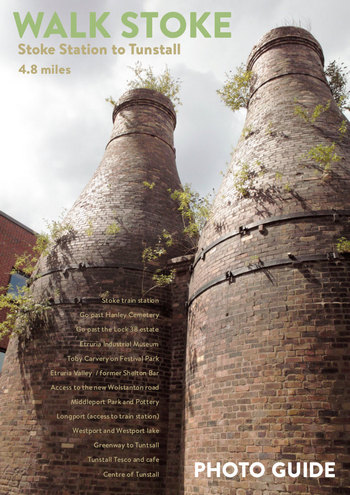
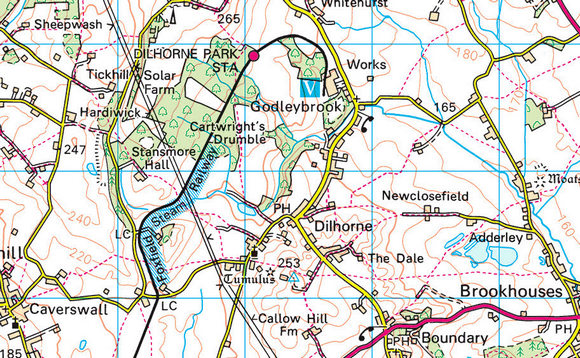
* And finally, Stoke-on-Trent & Newcastle-under-Lyme Ramblers will be walking the “Tolkien Trail & Great Haywood” (10 miles) on Thursday, 19th October 2023. Two of their scheduled walks may also interest researchers who are visiting boots-on-the-ground Sir Gawain & The Green Knight landscape walkers: Rushton Spencer and Bosley Cloud; and Wildboarclough.

Tolkien Gleanings #88

Tolkien Gleanings #88.

* An event on the visual adaptations of Tolkien’s works, to be held at the University of Gottingen, Germany. Billed as a “seminar”, but looks rather substantial and taking place over three days on 27th-29th October 2023. I’m thus guessing that “seminar” has a very different meaning to Germans-using-English, compared to its use in the English-speaking world. Good to know, if that’s the case.

* “Les portes de la Terre du Milieu : La notion du seuil dans l’univers de Tolkien” (‘The Doors of Middle-earth: the idea of the threshold in the worlds of Tolkien’). A paywalled book chapter in French, but with an English abstract. Examines… “the symbolism and the role of the door in […] The Hobbit and The Lord of the Rings [using three] approaches, namely the symbolic, the mythocritical, and the actancial”. The latter method is unfamiliar in English but arises from linguistic semiotics (of the early ‘sender-receiver’ type), and was influenced by attempts to systematise European folk-tales. The approach tried to boil down a quest story to its simplest parts. In plain English these might be: archetype/hero/actor, the quest, the helper, the enemy, the intermediary, the gift-giver or ‘receiver’ of the hero — all examined in a quasi-scientific manner in relation to the motivated actions they take in the expected narrative.

* In Ad Fontes: A Journal of Protestant Letters, and freely available online, the long “Tolkien: Naive Storyteller or Political Realist?” (November 2022).

* In the VoegelinView, and freely available online, thoughts on “Gardening and Nobility in Tolkien” (September 2018).

* A Lewis/Tolkien religious retreat-course in America, Poets for the Kingdom: The Sacramental Stories of Lewis and Tolkien. Booking now for November 2023.

* And finally, new on Archive.org to borrow is The Study of Names in Literature: A Bibliography (1978).

Tolkien Gleanings #87

Tolkien Gleanings #87.

* Details of a forthcoming paper in the paywall journal Tolkien Studies, “An Archaeology of Hope and Despair in the Tale of Aragorn and Arwen”. Abstract only. Uses drafts… “available in the Tolkien Archives at Marquette University, only some of which have been previously published in The Peoples of Middle-earth, as well as one discovery in the Bodleian”.

* The latest Vol. 16 | No. 1 issue for the open-access Journal of Tolkien Research has posted the first two articles, including ““We Could Do with a Bit More Queerness in These Parts”: An Analysis of the Queer against the Peculiar, the Odd, and the Strange in The Lord of the Rings. This tries to detect some parallels with the sexual use of the word, but along the way has a very useful survey of similar words. These examples are presented in even more useful word-tables.

* A call for a forthcoming Tolkien Society Online Seminar 2023 on ‘Tolkien and Religion’, set for the end of November 2023. Deadline for papers: 8th September 2023. Seems to offer a wide scope, within the topic…


* “Tolkien: sua vida, suas obras”. Some details, on YouTube, of a June 2023 conference. Held in Brazil. The page lists five speakers, but not what they were speaking about.

* And finally, new on Archive.org to borrow is a so-so scan of Smaug: unleashing the dragon. A 100-page “making of” artbook which details the making of the magnificent Smaug in the movie version of The Hobbit. Whatever the many faults of the cinema release of The Hobbit, the 15-minute Smaug section wasn’t one of them. Actually, The Hobbit on the screen can be kind-of rescued. /Spoilers/ The “Empty Sea Edit” fan-edit is really very good… right up until the dwarves tip out of their barrels at Laketown. At that point you immediately stop watching and switch to Bluefax’s unabridged cast + music audio version. Listen through Laketown, finding the secret entrance to the mountain, and right up until the point when Bilbo goes down the tunnel. Then go back to the movie for a visual Smaug. After the short Smaug section, nothing can rescue the rest of the movie… so it’s back to Bluefax and headphones to finish.

Tolkien Gleanings #86

Tolkien Gleanings #86.

* I was very pleased to find the book Loremasters and Libraries in Fantasy and Science Fiction: A Gedenkschrift for David Oberhelman (2022). Who knew? I hadn’t heard even a whisper of it. This chunky 400-page book contains, among other things, a reprint of “A Brief History of Libraries in Middle-earth: Manuscript and Book Repositories in Tolkien’s Legendarium” (otherwise trapped in the out-of-print Inklings hardcover Truths Breathed Through Silver). It has several others relating to Middle-earth, and also the Tolkien scholar Kristine Larsen on “‘Books! Best Weapons in the World’: How Libraries Save the World in Popular Culture”. Looks fun, and doesn’t appear to drift off too far into TV and film. It even has a somewhat affordable Kindle ebook edition at £7.39 ($10).

* The Music of Paul Corfield Godfrey website anticipates his upcoming recording of the final part of his grand Silmarillion opera set. This final part, plus a full boxed collection-set with a 128-page booklet, are both set for release on 23rd June 2023.

* The Imaginative Conservative has a new essay which asks “Tolkien’s Traditionalism: Conveniently Forgotten?”

* Rather too late now, but YouTube has a recording of Professor Nick Megoran, Newcastle University, on “What’s the point of university during a pandemic?” (Summer 2020)… “This talk draws on the wartime writings of C.S. Lewis and J.R.R. Tolkien, professors of English Literature, who grappled with similar questions during the Second World War.”

* New to me is Tolkien & illustration – Artists in Middle-Earth: from text to image… “This academic blog is dedicated to the illustrations for Tolkien’s texts in English editions.” Appears to have begun in 2020, part of the writing of a PhD thesis. The researcher will be presenting at the forthcoming Oxonmoot.

* And finally, some advance notice from the eminent scholar of the weird and fantastic S.T. Joshi. He has joined with the Nightlands festival team, which recently delivered an excellent festival, and…

We are now planning a much larger event in two years’ time, with panel discussions, perhaps an art show, and much else. In all frankness, we will consciously plan this event as an antidote to the increasingly narrow and hyper-political conventions that now dominate the realms of science fiction and fantasy. We shall have freewheeling discussions (without any attempt to censor unpopular views) and avoid political ranting in its entirety. Let’s see what happens!

This is more at the spooky end-of-the-lane footpath signposted to ‘the weird’ / ‘literary horror’, but some Gleanings readers may be interested in making contact to find out more.

Tolkien Gleanings #85

Tolkien Gleanings #85.

* The new online Guide to Tolkien’s Letters is starting to fill up.

* In Italy, the hill-village of Chianciano Terme rises from the hills about 40 miles south of Florence and 60 miles north of Rome. The place is set to mark the 50th anniversary of the death of J.R.R. Tolkien…

over three days, from 30th June to 2nd July 2023, offering insights from internationally renowned speakers, and multiple cultural events in Chianciano, from the Parco Fucoli and Parco Acqua Santa to the historic centre. “Chianciano Terra di Mezzo: Journey into Tolkien’s genius” was developed by the town with the ViviChianciano (‘Living Chianciano’) public-private network which is made up of over 50 companies from Chianciano, and which obtained the patronage of the national Ministry of Culture and the Associazione Italiana Studi Tolkieniani (‘Italian Association for Tolkien Studies – Tolkien Society of Italy’).”

* A talk by Tom Shippey on “Politics in Tolkien: What We Can Learn From Hobbits” (2015). As AI-cleaned audio, newly made from this almost un-listenable ‘big ballroom, massive echo’ recording on YouTube.

* New on Archive.org to borrow, a good scan of Essays And Studies: Collected for the English Association (1953, Vol. 6, New Series). With Tolkien’s “Beorhtnoth” as the lead item.

* The March 2023 issue of ICMA News had a review-report on the 2022 ‘J.R.R. Tolkien: The Art of the Manuscript’ exhibition.

* And finally, “The 16 types of graduate supervisor, by J.R.R. Tolkien”.

Tolkien Gleanings #84

Tolkien Gleanings #84.

* Following on from my idle musing about elvish handicraft in Gleanings #82, “Medievalism, the Lost Book, and Handicraft in The Lord of the Rings” (2022), a Masters dissertation for Laurentian University in Canada. Freely available online. Suggests, among other things, that Tolkien’s eventual mass-market success helped to keep alive the connection in the thinking public’s mind between fine handicrafts and the medieval…

Clearly the association of handicraft and the Middle Ages exists before and beyond The Lord of the Rings, as evidenced by the Arts and Crafts movement, but the continued popularity of The Lord of the Rings and subsequent medievalisms have only heightened the association between handicraft and the Middle Ages.

* Somewhat related, a Masters disseration for the Dept. of History and Archaeology, Macquarie University, Australia. “Harmony and folklore: the function of the forest in Middle-earth” (2022). Freely available online. Offers, via Tolkien…

“a close reading of the texts to track how forests function within the medievalism of Victorian England, and the changing medievalism of the [early] twentieth century.”

* A Masters dissertation for Leiden University “J.R.R. Tolkien and the Modern Philosophies of Death and Immortality” (2022). Freely available online. Looks rather interesting, in that I would never have thought to use both Existentialism and Posthumanism to address Tolkien’s concerns on these topics.

* A page for the new Amon Hen #301, with a full table-of-contents. A new addition to the gappy coverage of the title at Tolkien Gateway wiki.

* In Gleanings #83 I admired the new cover for a forthcoming 2024 book. Why the in-filling on the letters marking “Gondor” I wondered? To get around an Estate trademark, presumably.

This led me to note some clear ‘prior art’ in the word “Gondor”. For instance it’s trivial to find…

  – “At Gondor is the residence of the king, Elias by name, Ate or Nogoos, called by the Abyssinians” (Missionary Journal and Memoir of the Rev. Joseph Wolff, 1829).

  – “the most important prince was the party called by Europeans an Emperor, but known to Abyssinians as the Athie or Negus, whose capital was Gondor, in Amaraha, or the south-western division of the kingdom [of what is now Ethiopia]” (Transactions of the Ethnological Society of London, 1868).

Page scans show these are not OCR errors. The use of the word in English has continued to the present day, though it is now sometimes also called Gonder or Gondar by aid/development agencies. Capital, seat of the king (an ancient Christian ruler, indeed), in the south… it all sounds rather familiar. Much later, in 1971, Tolkien mused that the 1935-37 Italy-Abyssinia war may have brought it frequently to his eye in the newspapers, but he also recalled that it had entered the legendarium early and related to ond = ‘stone’.

* And finally, Lord of the Rings Stamps for Postage – 10 x Royal Mail 1st Class (2004). I’m faintly amazed to see these still available at summer 2023, on Amazon and at non-collector prices. £15 for ten, at present, not much more than it might cost to buy 10 x regular 1st’s these days. The Christmas and themed picture-stamps are said to be still valid, while the plain ones are defunct unless they have a bar-code on the side.

Tolkien Gleanings #83

Tolkien Gleanings #83.

* The Digital Tolkien Project has posted abstracts for three upcoming talks. Talks on how an innovative interactive “digital reading environment” might help scholars visualise and navigate the 12-volume History of Middle-earth; on “the relationship of the Second Age Tale of Years to the text of Lord of the Rings, the Silmarillion, and Unfinished Tales“; and on “Linguistic Variation in Tolkien’s Writing Styles”.

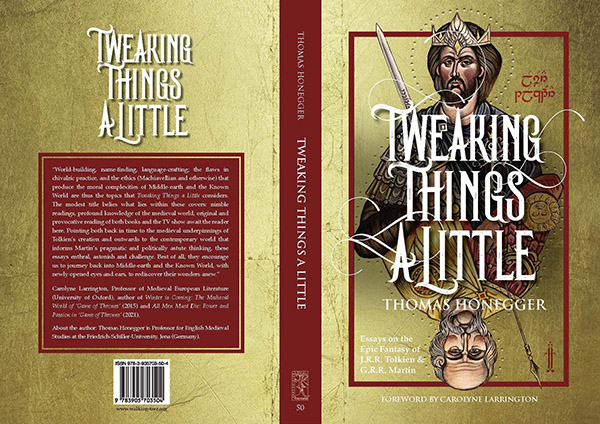
* News of a new ‘for academic libraries’ book of the £85 variety, Mapping Middle-earth: Environmental and Political Narratives in J.R.R. Tolkien’s Cartographies. Due 22nd Feb 2024 from Bloomsbury Academic. Presumably based largely on the freely available 2019 PhD thesis from the same author. The new book has added a pleasing cover…

I assume the filling-in of the word “Gondor” is because of the Estate’s trademark.

* And talking of book covers, here’s a peep at the cover for the book and exhibition catalogue Sur les traces de Tolkien et de l’imaginaire medieval: Peintures et dessins de John Howe, due to ship in a few weeks.

Also “Online ticketing is open” for the French summer show for which this is the catalogue. “Online” here meaning tickets to the show, not an online virtual tour (yet).

* Somehow I’d completely missed the book The Mirror Crack’d: Fear and Horror in J.R.R. Tolkien’s Major Works (2008). Not even my Lovecraft blog had noted it, at the time. Issued in hardcover only, and Amazon UK suggests it’s now well out-of-print and unavailable. Among others, Mythlore gave it a review. This and other reviews suggest a usefully unique volume of patchy quality, though The Irish Journal of Gothic and Horror Studies noted that the essays do “cohere clearly in their investigation of Tolkien’s medieval sources”. Also useful, I’d suggest, for not spending half the book on the movies.

* A new study offers a useful reminder to scholars that articles by academic historians in leading journals have a 24.27% error rate in their use of quotation references. And that’s after peer-review and proof reading. The new study in the journal Scientometrics asked if the references actually… “substantiate the propositions for which they are cited”. Around 25% don’t. That sounds about right to me, from my experience. If planning to rely on an evidential quote from such a source (usually time-pressed university academics, rather than independent scholars) always dig back to get the source, if that’s possible. Be wary of their use of titles, too. For instance, in the academic book Horror in Architecture (2013) I recently found mention of “the cursed De La Poer family of Lovecraft’s The Drowned”, for which the title should of course be “The Rats in The Walls”. No-one had picked up this obvious error regarding one of the greatest horror tales of the 20th century. Tom Shippey has often also amusingly observed similar errors in literary academia. All this is why, in my opinion, full footnotes are required (ideally with the full reference, which is what I do). Hiding ‘endnotes’ at the back of the article or chapter, which then need to be again tracked down in the bibliography, greatly aids such fudging and fakery.

* And finally, the excellent $70 desktop back-of-the-book index maker PDF Index Generator. Version 3.3 (May 2023) has “fixed footnotes, as it was showing footnote number & normal page number too!” A useful fix.