Sad to hear that Tony Chilton, traditional gent’s barber of Stoke-on-Trent, has passed away. He was my barber for about seven years, at Tony’s Barber Shop, 121 College Road by the University. A real character and a nice bloke, he always had time for you if he liked you, and he has so far proved impossible to replace. Chapter Six of my novel The Spyders of Burslem features a Tony-alike Italian barber in 1860s Burslem, a “Toni Chilterni”.
Below are some pictures that I kept made by Sophie Robinson, a sports photojournalist student studying at the nearby university. She photographed Tony for a course assignment titled “Brief 4: Human Interest” in November 2012. I think that was the last full year he ran the shop. Sadly her blog has long gone, so I’m placing her post and pictures online again in remembrance of Tony. Tony also spoke of a documentary film that students had made of him and the shop, though the Web seems to have no record of it.
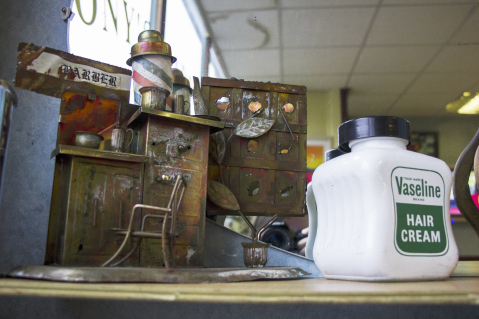
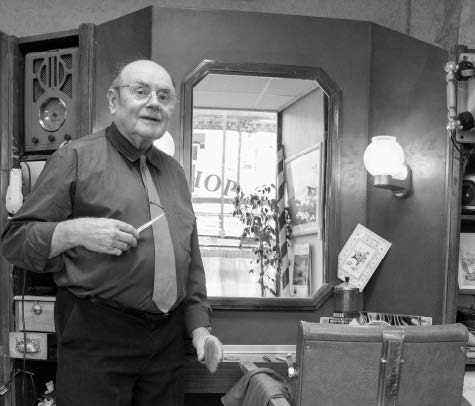
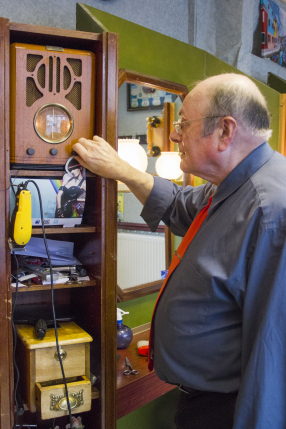
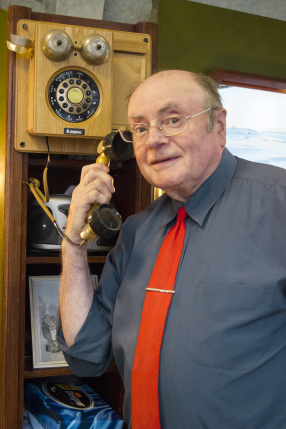
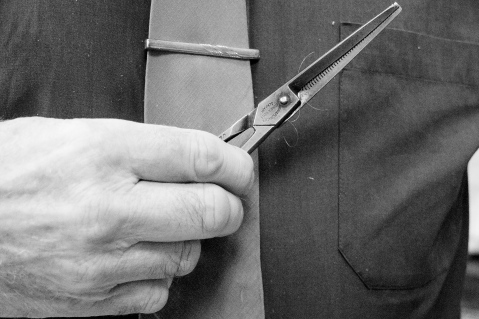
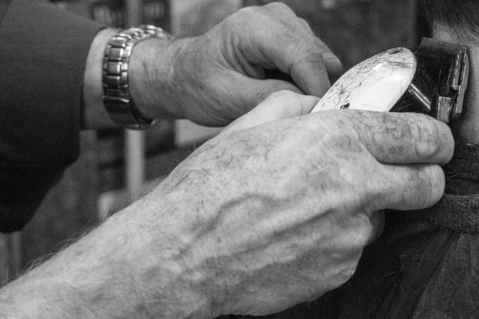
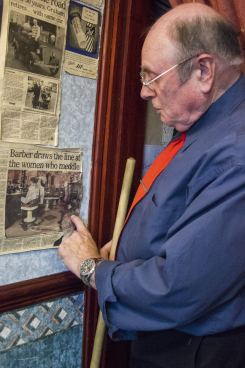
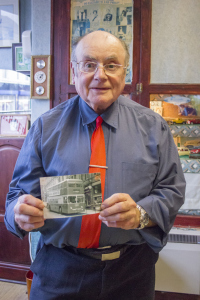
Tony Chilton. Owner of Tony’s Barber Shop in Stoke 1988-2013.
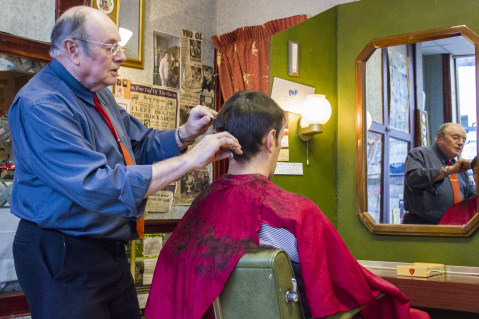
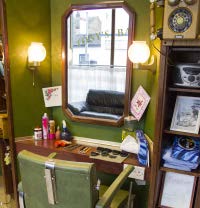
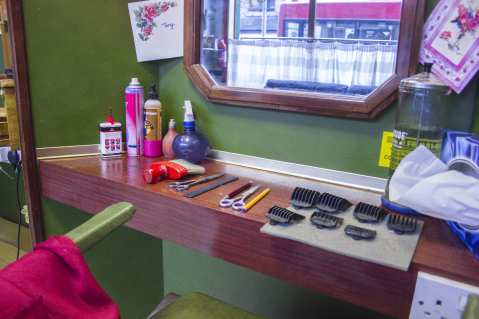
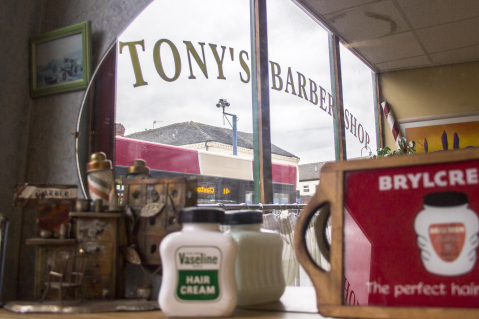
Thomas ‘Tony’ Chilton runs a quaint retro barbershop in Stoke-on-Trent. He has lived in the area all of his life and this weekend celebrated his 75th birthday with family, friends and long-term customers of his shop. His shop is decorated with knick-knacks and memorabilia from the 40’s, 50’s and 60’s. “The shop is exactly the way it was when I first owned it. I have had this same equipment and layout for as long as I’ve been here. The sofa and TV are new, but you need some sort of comfort when you are here all day!” Tony gets all kinds of customers coming into his shop “it can be a slow news day or a fast news day” he says, “we always get a story”.
‘Tony’s Barber Shop’ is situated a moments walk away from Staffordshire University. Tony has met many people in his time in the shop, some, he says, he will remember forever. However the business runs deep into his family’s history, generations of men in his ancestry ran similar shops to Tony’s and Tony remembers how he started in the business to this day: “It was my great grandfather who I can remember having a shop. I did very well to know my great grandfather; they didn’t live very long in his generation. His shop was no bigger than a matchbox; he had one small stool and an old mirror on the wall. He used sheep shears for long hair and long scissors for short hair. He’d have people queuing down the street, he was the only barber in Hanley at the time and he did very well. “After my great grandfather retired through ill health, my father bought another shop in Hanley, around 1944, right down by an old bookstore. I remember he had styled the shop in a very modern way for his time; it was coming to the end of the war. He had big green metal chairs, with footrests; you’d never seen a footrest on a barber chair before, it was always a small wooden stool or a wooden chair. He had these huge mirrors on the benches around the shop, on all four walls, even either side of the window bay. The place looked like it went on forever but it was only tiny. “He fought in the [second world] war so my uncle and my mother had to continue with the shop until he came back. I helped around, sweeping and making drinks and it inspired me. I wanted to continue in my father’s footsteps. After he died I moved to Birches Head, then to Sneyd Green in 1962 where I opened a small shop with my brother and then to Stockton Brook in 1964 where I finally opened my own shop. “It wasn’t much to look at, but I took all of my father’s war memorabilia with me. I displayed it in the shop window and all around the shop. Britain was still very proud of their war heroes at this point and it used to attract customers from all over the city. I thought, “Why are they so interested in my dad?” It turns out; they were interested because it was a little shrine or a little museum to the people who had lost their loved ones in the war. They came to my shop to have their hair cut and they went away with a little satisfaction that they had lost them to honour and pride, I liked that.
“[Then] I wanted something a little bigger. That place was only a few square metres wide and long, so I found a little shop for sale here in Stoke. It was 1988 when I finally got it up and running. It used to be a sweet shop, and that is where I have stayed until today. There are little pieces of every shop I have been a part of in here. I have all my vintage pieces; my phone from my first shop, my wireless and my tools.” Tony’s shop in Stoke is decorated in the exact same style as his first shop in Stockton Brook. He tells how he wanted to keep a little part of his past in every shop he has been in. “Looking around here you would think you were in the 50’s.” It is a literal step back in time, the only tell-tale sign is the flat screen TV on the wall and the new leather sofa for customers where Tony spends most of his day when he isn’t taking appointments. His till is a wooden box with one drawer and he still uses a classic phone. His cabinets in the shop are full of war medals, photographs, paintings and models: “They all tell a story; every time somebody comes in we get talking about something in here.
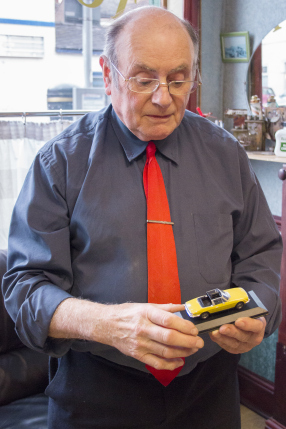
“I collect cars too; not real ones, model ones, and trains. In my back yard at home I have a massive model railway. I worry someone will jump over the fence and pinch it! But everyone who lives around me keeps neighbourhood watch on my trains when I’m at the shop. The cars in the cabinet are replicas of all the cars I have owned or dreamed of owning.” Tony holds out a small model of a yellow Triumph Stag: “This was my first car. My wife divorced me in ’72 so I went out and got myself a nice new car with the shop takings. I was in my element. I have been on my own since then, never remarried. I channelled my energy into collecting cars and cutting hair. I have kept that ‘free’ feeling in all the shop’s I have owned.”
Years of cutting hair is told through the “only tools you need”, the hands tell the story of a lifetime. Tony worked for some time in the Special Service [Armed Forces], so his fathers’ war memorabilia holds a special place in his heart and his shop. A painting of the Spitfire takes up one part of the far left wall and newspaper cuttings of the ‘First Day of the War’ in the Express from 1939 on the opposite side. Tony has also sponsored ‘Troops Relief’ on numerous occasions and all of this history litters the walls of his shop. “There is one thing about being in the service; you got the girls. We [Tony and his friends] would go out dancing at Victoria on the Square on a Thursday night and then Friday night for ‘Grab a Granny’. We were never short of someone for a little company.”
Tony lives alone after his divorce and says that his shop is the main thing that keeps him in touch with the public: “We are open every day apart from Thursdays, which is when I do my shopping, or go out for a little while or just spruce up my train track. I am here until quite late at night. I prefer to watch the soaps in here and sometimes I’ll get a customer which is nice at that time of the evening. They are usually drunk or going to a wedding the following day.” Tony’s sense of humour shines through in everything he says. He sits in one of the barber chairs doing impressions of comedians and actors and he is extremely in touch with modern culture and events, even though he lives such a classic existence in the shop.
His large outdoor model-railway track he had running around his garden and rockery at home. He mentioned it to me several times.