Aliens do exist and have been found living in the clouds above the Peak District, according to new claims by British scientists. Who knew? 🙂 Am feeling a new novel coming on…
Category Archives: Uncategorized
The future sucks
The pneumatic message system, featured in my novel The Spyders of Burslem, is set to make a high-tech comeback according to New Scientist magazine.
“Pneumatic tubes were once heralded as the future of communication and delivery” [but in London today] “Hidden in the walls is a vast computer-controlled network of pipes propelling capsules via air pressure and vacuum. Installed in the early 2000s, it is one of many places worldwide boasting a high-tech pneumatic network. Some places have hundreds of stations, fed by several kilometres of tubes and junctions.”
Talking of science journalism, it’s sad that New Scientist is one of the few places at which intelligent readers can escape from the tidal-wave of sloppy reporting of science and junk science that is swamping the daily newspapers and the BBC.
Essays On The History Of North Staffordshire
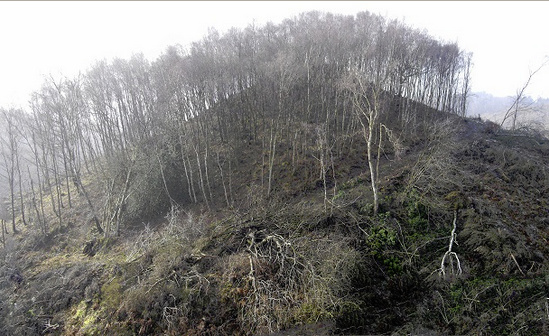
There’s an interesting new website, Martin Docksey’s Essays On The History Of North Staffordshire, currently with a focus on Norton-in-the-Moors (east of Burslem), the ancient history of the Maer Hills, and Burslem during the plague of 1647-8. With a fine picture of the apparent site of the first Norman Mott and Bailey (i.e. a wooden fort, 1070-1086), sited near the Shrewsbury-to-Chesterton Roman road…
Peak Enlightenment
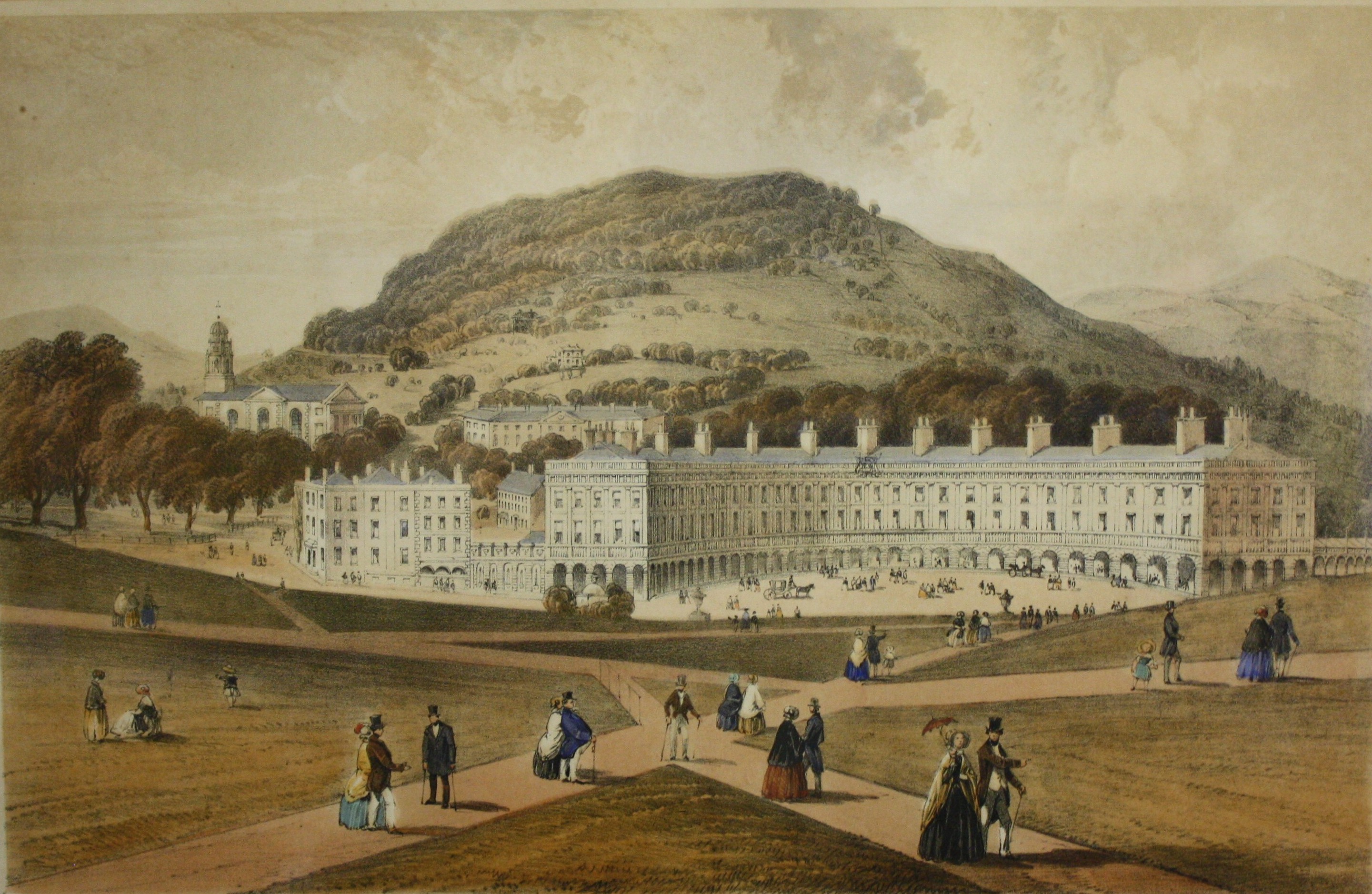
Interesting new blog at enlightenmentderbyshire.wordpress.com on the place of the Derbyshire Peak and Derby in the Enlightenment. A Heritage Lottery Project to tell the story of Derbyshire’s role in the Age of Scientific Discovery (1712 – 1916).
Potteries Folk Art exhibition
It would be great to have a folk art exhibition at the Potteries Museum and Art Gallery. Perhaps in two parts. The first could include items like the Buxton Mermaid; the Staffordshire Clogg Almanacs; the Staffordshire corn dollies recently exhibited in 2010 in St. Ives and the traditional corn bowknots of Staffordshire; examples of the pottery bird whistles that were placed in chimneys to prevent spirits from entering the house that way; the oldest traditional canal art relics; unusual weather vanes; small pre-Victorian kinetic wood or papier-mache toys; textiles and embroidery; wood carving if some has survived from before the 19th century (also the Staffordshire Clogg Almanacs); archaic designs on ceramic slipware from the 1700s and 1600s, with curious ceramics such as bear jugs and the weird archaic owl in the FitzWilliam. More could probably be found if one put out a call to the UK’s museums. But if there’s not enough material available, then the older items could be the lead-in for an exhibition of modern and contemporary (genuinely naive) folk art from Staffordshire.
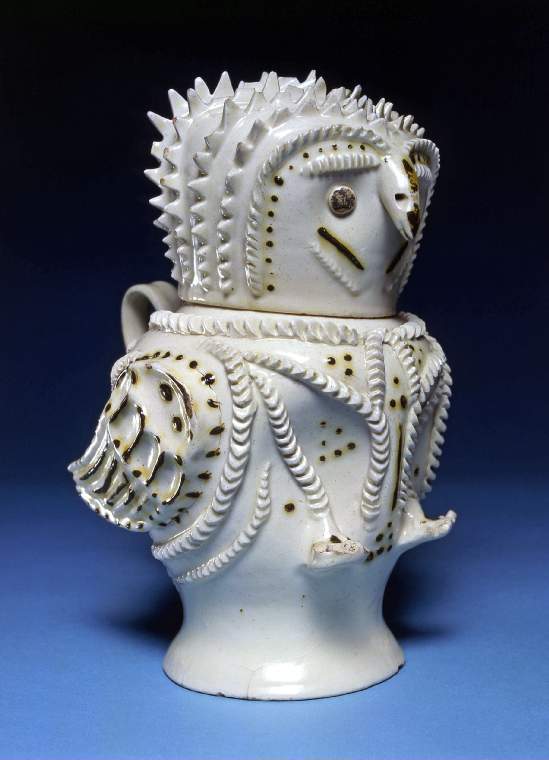
Staffordshire owl at the FitzWilliam, circa 1730-1750.
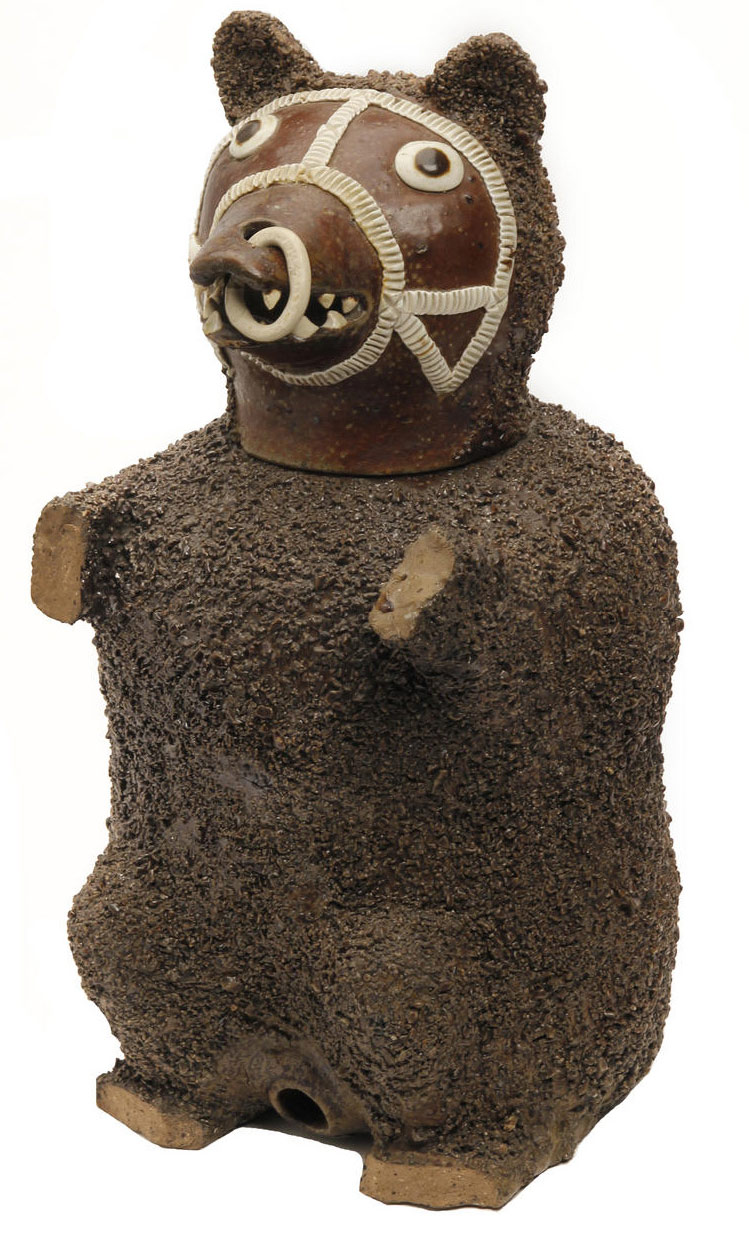
Primitive bear jug.
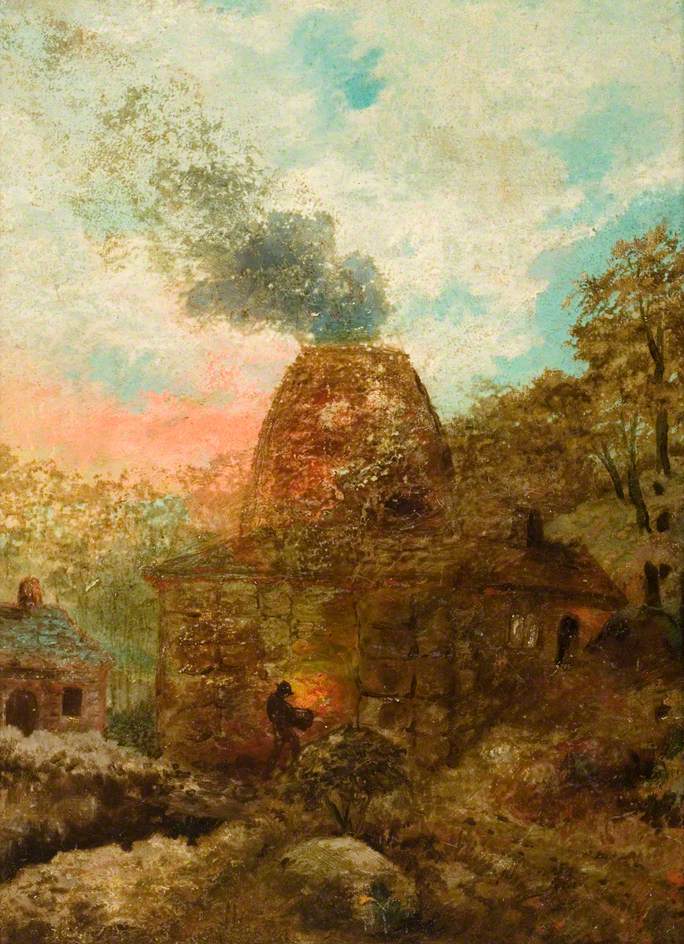
The Old Pottery Kiln, Bradwell Wood
Super. “The Old Pottery Kiln, Bradwell Wood”, by Unknown Artist. If this was an on-the-spot painting of the short-lived Elers’ pottery then it would be from circa 1690s.
Wedgwood Institute to be saved
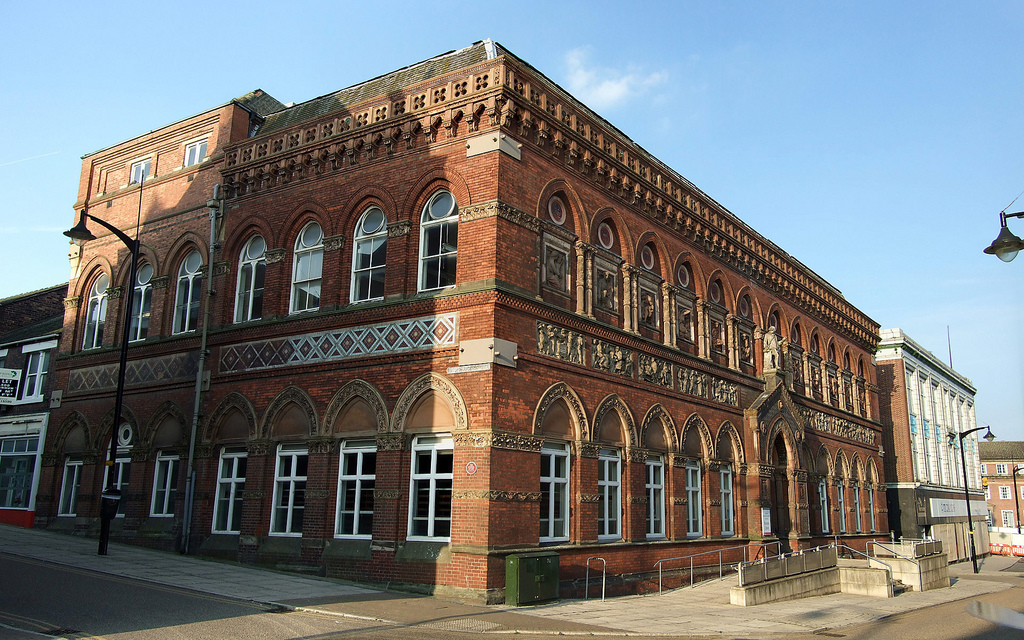
Super news! One of the main settings for my novel The Spyders of Burslem, The Wedgwood Institute in Burslem, is to be brought back to life….
“Burslem’s historic Wedgwood Institute has been identified by the Prince [Prince Charles] for his latest Potteries regeneration project.”
It was last used as the Burslem public library, but that was closed by the City Council (Labour) and the building mothballed. A few years ago I was told that the roof needs a lot of attention, but if anyone can pull off a restoration it’s the Prince’s Trust.
A creative industries use would fit nicely with the School of Art etc nearby. It would be nice to see it as home to a mix of craft ceramics makers and digital 3D modelling and 3D printing startups, based around project work where craft makers and digital technologists worked together on projects — something which might also chime with the City Deal’s aims of working with innovative new materials in Ceramic Valley.
Garden as eschatology
Interesting article on the possible beliefs implicit in the garden at Biddulph Grange [dead link removed, not re-findable], from Paul Baker of the Garden History Society…
The concept of a link between the Millenarian belief of the imminent second coming [of Christ] and the layout of the garden at Biddulph has been the subject of some literary discussion. […] Brent Elliott in his book Victorian Gardens writes ‘… the garden at Biddulph Grange, by evoking vanished and alien civilizations, served as an affirmation that the millennium was coming.’
However, Peter Hayden’s Biddulph Grange, Staffordshire: A Victorian Garden Rediscovered (1989) is more cautious…
“While religion was an important factor throughout Bateman’s life, it is difficult to gauge to what extent the garden was created as an expression of faith”
Old Staffordshire saying: Fetch a duck off water
I heard an interesting old phrase used in natural speech today, by an elderly man remembering a girl he once knew: she’d “fetch a duck off water”. The Internet has hardly heard of it and its possible variants, and Google Books hasn’t heard of it. My source used it in the context of remembering a Hartshill (Stoke-on-Trent) childhood in the 1940s, and used it naturally to refer to someone so ugly that they’d “fetch a duck off water”. Or possibly I was mis-hearing, and he said she was ugly but had eyes that would “fetch a duck off water”.
Online I found a memory by Ian Clayton who remembers of his grandmother that…
“She met and fell in love with my Granddad [a man originally a miner from Staffordshire, the “rural Midlands” north of Wolverhampton] on a bus near Tadcaster after he had said to her “You have got eyes that could fetch the ducks off the water.”
I then did some further online research and found…
Manchester:
Nick Allen (raised in Manchester) remembers of his grandmother…
“As me granny would say “he could charm a duck out of water and money from a miser”
I’ve only found one use in old literature: The Sorcery Shop, an impossible romance (1906), a utopian political romance novel in the English tradition of William Morris…
“She has an eye that would charm a duck off the water”
The author was Robert Blatchford, who after 1890 was based in Manchester.
East Midlands:
An online source from someone living in Nottingham uses it to mean that: someone’s eyes were so attractive that they’d “fetch a duck off water”…
“Eyes to fetch a duck off water, and she does”
And there’s an oral history account in the BBC wartime memories archive in which “fetch a duck off water” is used by someone from Leicester…
“I noticed what beautiful eyes she had, large and dark brown, they spoke volumes. I always said ‘They would fetch a duck off water’.”
Yorkshire and general:
There’s also a recent review of a folk LP by Bob Pegg originally of Leeds and later for a long time in Yorkshire, that uses…
“singing, guaranteed to charm the ducks off the water”
P.R. Wilson’s Thesaurus of Traditional English Metaphors (1993) does record something like it, but only in Yorkshire…
“It would charm the ducks off the water” (West Yorkshire)
An earlier book Modern proverbs and proverbial sayings (1989) records the same phrase in a newspaper from 1956, and this may be where the 1993 Thesaurus had it from. That exact phrase has since been used in three pulp historical romance novels, possibly all by the same person writing under pseudonyms, and again I’d suspect the author(s) had it from one of these book collections.
There’s no use of “charm the ducks off water” online either, other than one lone British review of a Turkish holiday, said by a young woman of the charm of the young Turkish waiters in the hotel.
There’s also a mention of a similar phrase in the pulp Harlequin romance No Way Out (1980) by Jane Donnelly…
“You know what they say about charming a duck off water”
It’s also used in a Christian book, Spiritual Arts (2009) by Jill Briscoe. It doesn’t say where the author grew up in, but there’s enough to know it was England during the Second World War. She uses it as…
“smiles that would charm a duck off water”
So it seems to have been used from Staffordshire above Wolverhampton, up through North Staffordshire to Manchester, and across into the East Midlands in Nottingham and Leicester. Possibly also in Yorkshire, although that may rest on a single newspaper usage that was recorded in two collections of sayings.
Anyway, it seems to have almost died out now, so I’m just “rescuing” it for the Web 🙂 Maybe a few people using it again will start a revival.
Bear jug
A wonderfully archaic Staffordshire -style bear-jug, complete with cover. Recently sold at auction and dated to the mid 18th century in either Staffordshire or Derbyshire. 16 inches high.
Slip back to the 1700s
Some of the wonderfully archaic-looking Staffordshire slipware of the 1700s and 1600s, which recently sold at auction at Christie’s in London. Is that a witch on the first plate? Or, perhaps more likely, a man with a telescope under a pair of surveyor’s dividers. Not sure why he’d be wearing a skirt, though. Unless it’s meant to be a Masonic apron?


Trubshaw Cross
An interesting new article from historian Fred Hughes, on Trubshaw Cross, between Dalehall and Longport [Longbridge] in Stoke-on-Trent…
“Trubshaw Cross is one of Stoke on Trent’s major gateways. It’s where Percy Adams gave us a glimpse of an ancient world where the packhorse was once king of the road.”
Now the area’s modern bits are mostly demolished.
But in 1624 the Cross was described as the terminus of the Moorlands and Peak packhorse routes headed across the Fowlea for the London Road…
“a great passage out of the north parts unto diverse market towns”.
The turn-piking of roads in 1763 likely put paid to the cost-effectiveness of the onward route to Newcastle-under-Lyme, and then canal haulage effectively came to Burslem around 1805 with a new wharf just a stone’s throw from the Cross.
Trubshaw Cross is a place which is featured in the first chapter of my novel The Spyders of Burslem. Fred interestingly notes an antiquarian dating of the cross base…
“[Percy] Adams identified the stone base as being of Saxon origin” […] “the historian John Ward Ward notes in 1843 that only the stone base remained”.
Fred seems to imply there’s a threat that the cross’s traffic island might be removed. In which case, if it is Anglo-Saxon (as seems likely from the ancient age of the site and the old documentation), then it might be interesting to first do a proper deep archaeological dig on the site of the whole island. Perhaps nearby Steelite might sponsor that?