Spring at last. In the UK Spring starts on the night of 19th/20th March, the Vernal Equinox — when daylight and dark hours become equal in length.
Category Archives: Uncategorized
Archaeology Day 2024
The annual regional Archaeology Day 2024, Saturday 23rd March at the Potteries Museum in Stoke-on-Trent.
* Excavations at Nesscliffe, an unusual Iron Age hillfort in Shropshire.
* Archaeological sites found along the HS2 line in Staffordshire.
* A massive Iron Age post alignment, amidst a landscape of prehistoric features in the Derbyshire Trent Valley near Repton.
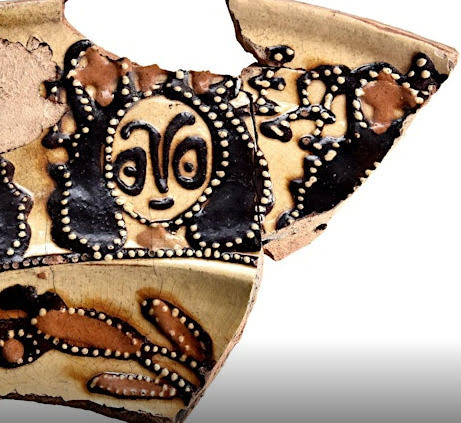
* Pottery found at the Hilderstone dig, with comparison to examples in the Potteries Museum collection.
* Three Anglo-Saxon sites investigated in Barton, Uttoxeter and Stafford.
Free and booking now.
William Blake exhibition in Stoke
At last, a reason to visit the Potteries Museum, after a seemingly endless run of unappealing shows. I missed the news of a William Blake exhibition at the Potteries Museum and Art Gallery. It opened before Christmas, is still on and closes on 5th May 2024. So there’s plenty of time yet to see it, perhaps alongside the new Spitfire extension and/or a look to see how political the Natural History galleries have become these days.
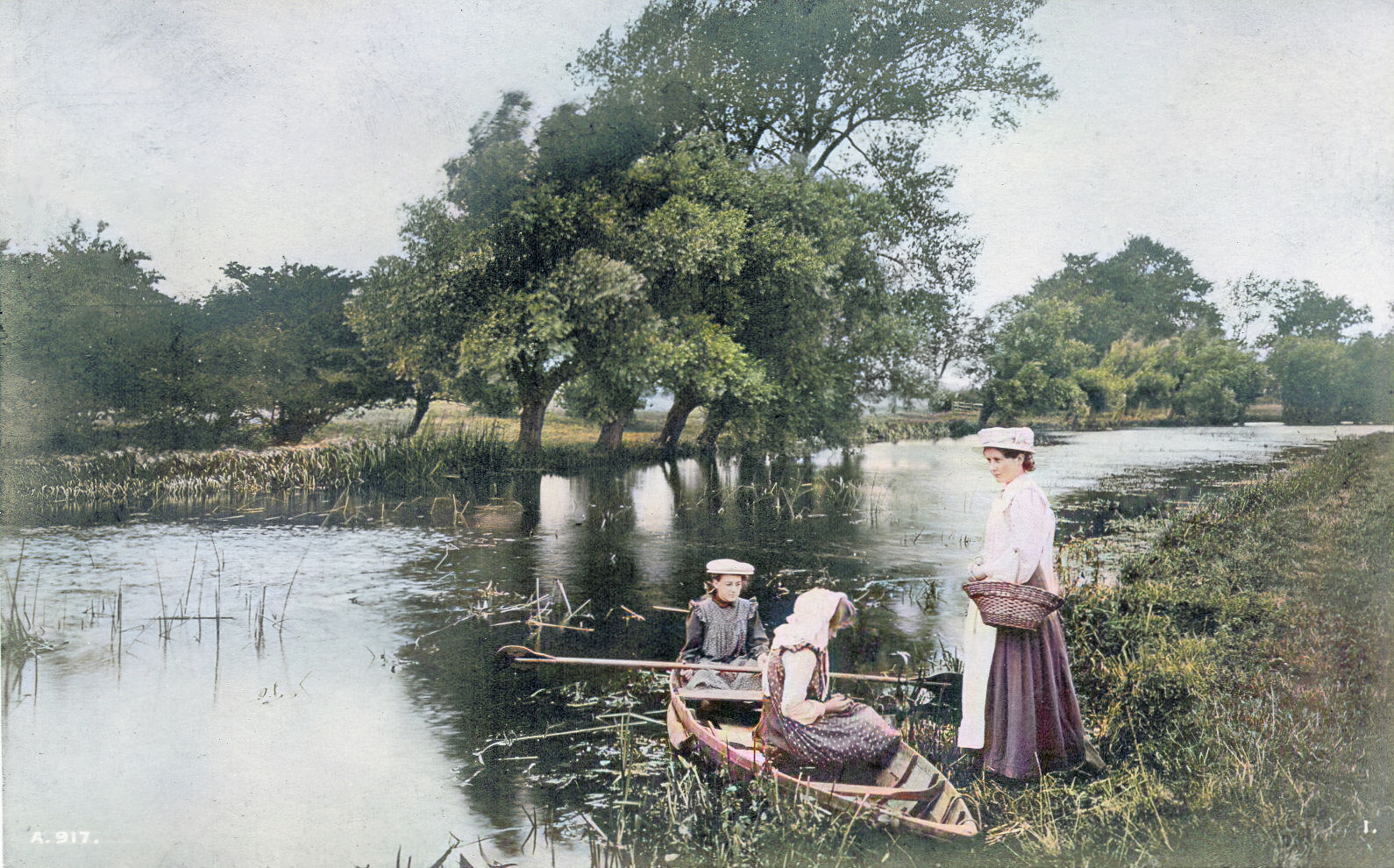
Probably on the River Dove in the lower reaches of the Staffordshire Moorlands.
The artist is the Potteries photographer William Blake, not the earlier visionary poet of the same name. On show at the Museum are 50 of the 1,500 Blake images held by the Museum. Perhaps 800 of these appear to be on Staffordshire Past Track. The Warrillow Collection at Keele obviously has more of his, judging by the description of the show, since some pictures have been borrowed from there.
The Museum is closed Mondays and Tuesdays. But is open Wednesday to Saturday from 10am to 5pm, also Sunday from 11am to 4pm.
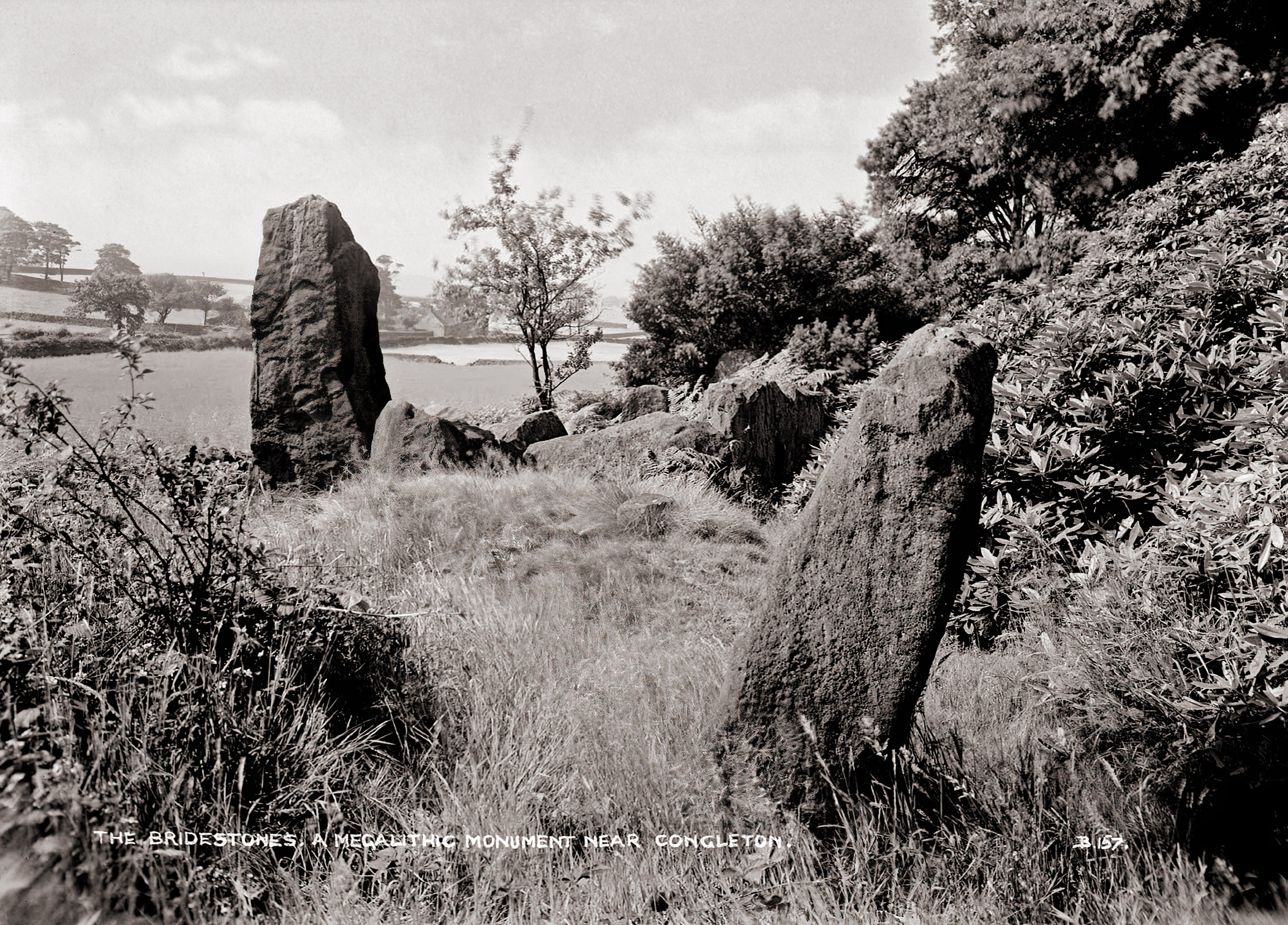
Update: Visited. A small show, greatly marred by reflective glass and badly positioned lights. Meaning it’s almost impossible to get a clear all-in-view view of most of the pictures as they should be seen. The glass should have been removed, as they’re only prints and not originals. The commentary in the small postcard selection might have mentioned that many homes would have had a postcard magnifier-viewer in the parlour. Lots of political choices of picture, as you might expect. No colorised images to enliven the dour b&w feel of the room. I would have paired it with another room in full colour, of his natural ‘sacred places’ pictures shown as 3ft wide matt prints on blocks without glass. Or backlit.
The Museum’s Natural History galleries continue to be excellent and focused as before on wildlife. The only axe-grinding I saw being the entirely justifiable display about litter.
A fine font
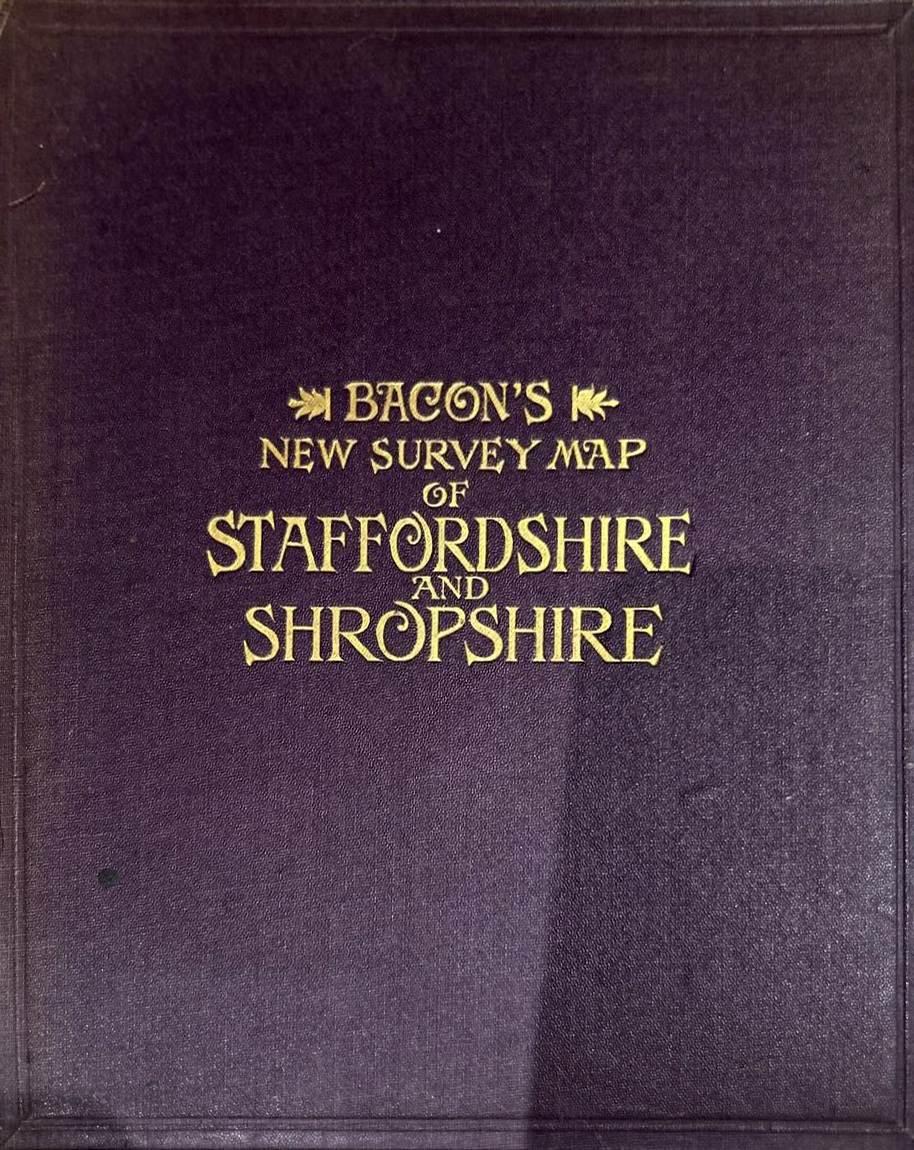
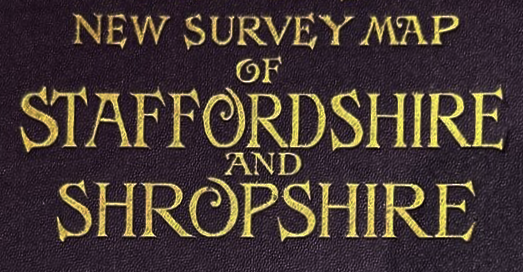
And perhaps an otherwise lost one? Font ID services can’t seem to identify it.
Den takes the Spotlight
Good news from Stoke. Popular radio DJ Den Siegertsz ‘over the moon’ at bagging new radio show…
“a weekly Sunday show with 6 Towns and will also do a monthly stint championing the area’s theatre and arts scene.”
The theatre and arts show will be titled ‘In The Spotlight’, but the scheduled time for this is not mentioned. Though the weekly Sunday shows starts next week.
Time for magpies
Magpies can see the future. I just saw one briefly investigating the known site of a pigeon nest, outside my windows. 30 minutes later, a pigeon turns up to do its first reconnoitre of the same site. For some reason the site of a tall hedge is liked for nesting, even though exposed to the north-west wind. But as yet the hedge has no eggy nest for the magpie to raid, and it won’t have for some six weeks. Spring only just started late Friday afternoon, in that glorious pink-sky 5pm stillness, and ‘spring proper’ is still weeks away in the lowland valleys of North Staffordshire.
Yet the intelligent and bold magpie is both remembering where the pigeon nest was last year, and also anticipating a clutch of pigeon-eggs to scoff. At that time the magpies will then fit the slot nature has allotted them, that of population control. Because it wasn’t for the intelligent nest-raiding magpies, we’d be even more overrun with dozy and pestiferous pigeons than we already are.
Bussed
Our bankrupt city council has new contacts available for subsidised bus services across Stoke-on-Trent. Across being the operative word. Looking at the list, I see that everything goes to the city centre, i.e. Hanley. But who wants to go up to Hanley these days? (I don’t count the popular Festival Park as Hanley).
This is the key problem with the Potteries bus services. It’s an ungainly two part spoke-and-hub system, everything going via the bus stations in either Hanley or Newcastle-under-Lyme.
What we need to at least try for six months is an ‘inner circle’ and ‘outer circle’ bus, akin to Birmingham’s famous No. 11. Neither such service would go anywhere near the bus stations, but would just circle.
Incidentally, none of the Council’s new proposals are to restore the No. 101 Sunday service (recently cut completely). The 101 is the supposed ‘flagship’ showcase route for the Potteries.
Painting Romans
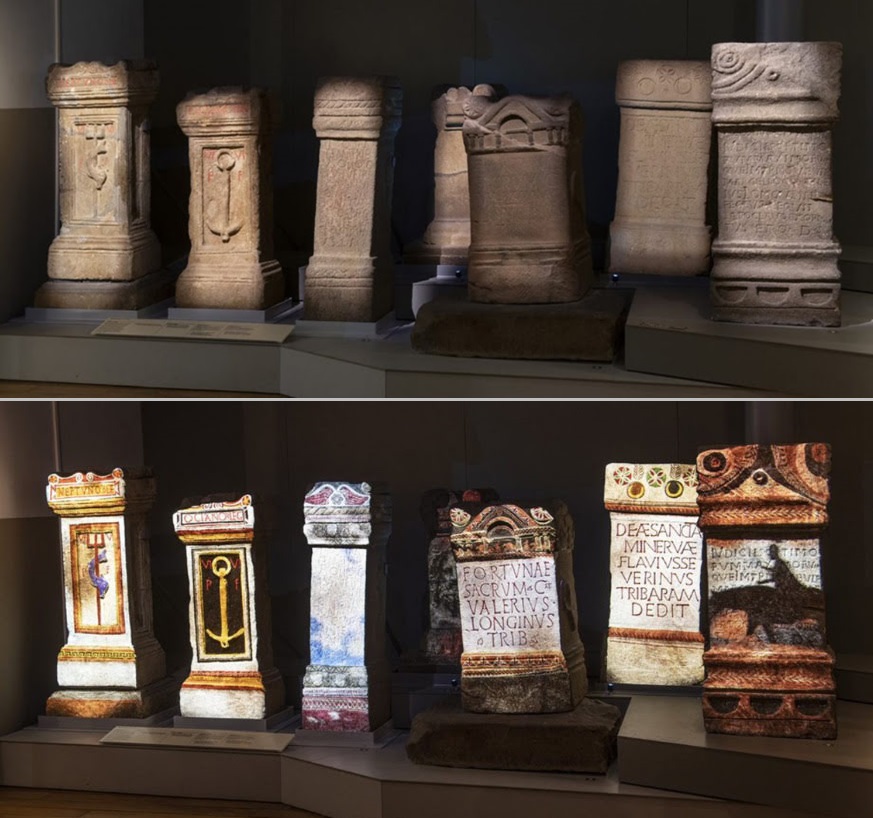
“Roman Britain in Colour”, a new article on using digital projection techniques to ‘re-paint’ Roman artefacts in situ in museums, giving them more of their original appearance.
Bob Fowke exhibition
A solo “exhibition of 70s sci-fi art” runs for three days only (16th, 17th & 18th February 2024). Part of the Open Studios event in the town of Bishop’s Castle, Shropshire.
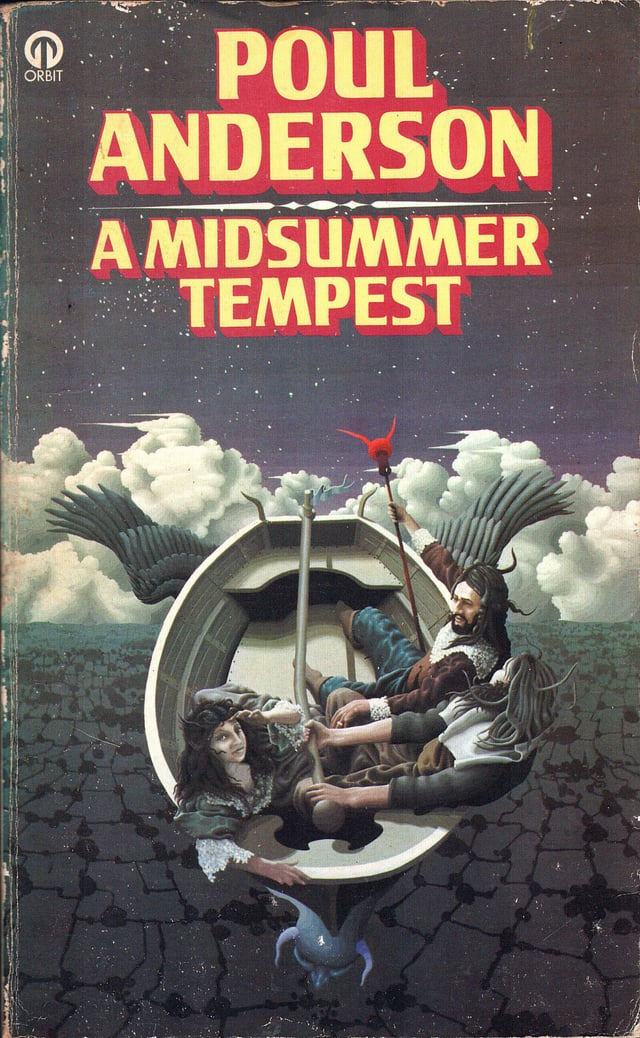
He did the cover for the British editions of Poul Anderson’s classic British fantasy.
Bob Boote at the boot sale…
Up for sale on eBay (not from me), a local 16mm documentary film by Bob Boote apparently titled “The Pacemakers”. The BFI reveals what it is…
“1969 – 1971. The Pacemakers was a series of twenty-six colour film programmes produced by the Central Office of Information. #18: Bob Boote, chairman of the European Conservation Committee and Deputy Director of the Nature Conservancy, discusses the measures taken to combat pollution in Stoke-on-Trent. Each programme was around thirteen minutes and often presented by the subject themselves, as with the pioneering conservationist Bob Boote.”
The BFI has a copy, so it’s not the only one. But for a tenner someone may want it. There may be potential for remaking as a new “before and after” film, if there are many on-site shots of the polluted landscapes without the presenter present. Showing first the ravaged landscape, and then the current restored landscape. That might make a nice student project at the university, potentially. Apparently the film was later edited and re-released in 1970 under the title Black Spot to Beauty Spot. So there may be later footage there.
Only snippets can be found for Boote, though the Telegraph has an obituary behind a paywall. But enough to assemble at least a partial outline of the man. Boote served in the Second World War, rising to the rank of Major and leaving the Army in 1948. He was appointed “principal of Nature Conservancy”, apparently since its formation in 1949. This body had responsibility for all British fauna and flora. By all accounts he was something of a ‘force of nature’ himself, and was very active and outspoken and seems to have had the ear of Prince Phillip. He was instrumental in setting up an early research project to determine the exact adverse effects of the over-use of pesticides. He was later the first director-general of the Nature Conservancy Council, at the time of Dutch elm disease and rabies. Forward thinking, he saw that most “air and water pollution could be eliminated in 10 or 15 years” given the will, along with new methods and new technologies. He seems to have seen Stoke as a tough test-bed for speedy land reclamation for nature, and he brought The Civic Trust conference to Stoke-on-Trent in April 1970, “which took as its theme ‘Derelict land'”. The Garden Festival site later bore out his theories magnificently.
As “Robert Arvill” he penned the 1967 Penguin/Pelican mass-market paperback Man and Environment, which set out his ideas on conservation and restoration.
It appears he was from Stoke himself, though I can’t discover which town he grew up in. A New York Times profile had…
Robert Edward Boote was born on Feb. 6 1920 in Stoke-on-Trent
The New York Times ($ paywall) has a snippet which reveals he attended school at Hanley High School, Stoke-on-Trent.
All this suggests that the remaking of the above as a new “before and after” film might also be extended into being a bit of a film biography of a pioneering British conservationist.
Flogging an old horse…
An experiment in postcard scenes.
Take an unpromising old snap of a b&w postcard card showing a snowy lane near Thorncliffe, Leek…

Run it through an AI and two Controlnets…

Not great, but not bad. However it suggests that, with a crisper and more hi-res source, much more could be done.
The AI has also picked out that there’s probably a church in the distance, seen side-on through the bare trees, something I would not otherwise have noticed.
The Folkore of North Staffordshire, version 1.9
Here’s my latest annual ‘updated and expanded’ version of The Folk-lore of North Staffordshire: An Annotated Bibliography. Now at 58 pages, so it won’t print so easily as before as a booklet (should be 64 pages, for booklet pagination). Please replace any older editions you were previously holding or using.

Download: staffordshire_folklore-19.pdf