Free British Sapi5 voices

It’s interesting to learn that there are new text-to-speech Sapi5 voices, available in regional British variants:

* Welsh voices, Geraint and Gwyneth for text-to-speech as either Welsh-accented English or Welsh. Free, but an email request is required — registered blind people can request the voices directly from the RNIB.

* Scottish Voices, Heather and Stuart, plus Ceitidh for Gaelic. Educational non-commercial use only, and free — but registration is required.

* There are no other free accented voices, such as Cornish or Brummie, so far as I can tell. But as the cost of developing a Sapi5 TTS voice comes down, via automation of the process, and as the systems that drive the voices make them sound less robotic, I foresee a future in which some distinctive British regions and cities develop and offer their own ‘voice’. (Update: there’s now a Black Country voice and even a Glasgow voice).

There’s also Microsoft Hazel, a free British voice and better than the previous Microsoft British variants. This voice shipped as standard with Windows 8 and 8.1. The quickest way to tell if a Windows 8 user has it seems to be to install the best genuinely freeware TTS reader for Windows, Balabolka.

If you don’t have Microsoft Hazel you may be able to get it from Windows Control Panel: Language Pack | Add a Language | Select | the wait until you see the “Download is ready…” link appear. (You can apparently also get a free French-accented Sapi5 voice, Hortense, this way. Just download the French language pack for Windows).

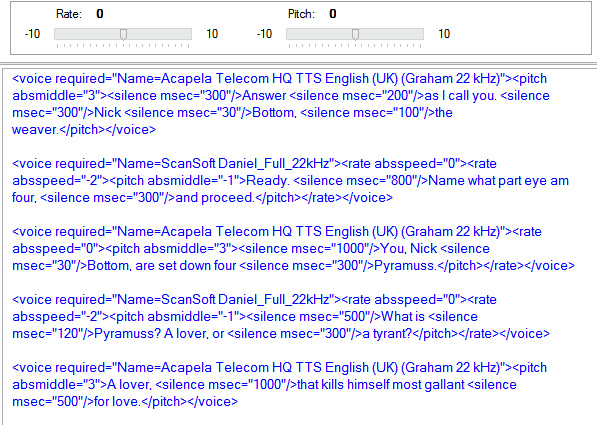
Balabolka’s “Direct Speech” and XML tags markup option can help you set up a stage-play -like script, in which there are different voices speaking in the same document. So you could, theoretically, have a Scot talking to someone from the Black Country. Here is an example of a coded script containing a few lines from A Midsummer Night’s Dream, and showing voice changes, pauses and pitch/speed shifts…

Keep in mind there are different markup tags, and some will work with some voices and not others.

Note that spelling needs to be fixed to get some voices to pronounce properly, for instance for to four,and I to eye. Overall it’s a bit of a laborious process, and — until we can get some AI-automation onto it — you might do better to hire some actors on Fiverr or rent a local music studio if you want to make a short audio play.

If you do want a few commercial British voices, then the following are recommended and are effectively abandonware today:

* IVONA 2 Amy and Emma (aka 1.6, but they’re actually 2) (32-bit)

* IVONA 2 Brian (aka 1.6, but they’re actually 2) (32-bit)

* Voiceware VW Bridget (shows up in the lists as American, but is British, upper-class) (32-bit)

32-bit will run on Babaloka (32-bit) on 64-bit Windows.

Survey and analysis of the place-names of Staffordshire (2003)

David Horovitz, A survey and analysis of the place-names of Staffordshire (2003), freely available for download…

“The main body of this work consists of a gazetteer of all of the main, and many of the minor, place-names of Staffordshire (meaning any places which are or were at any time known to have been in what was, or became, Staffordshire), with early spellings, and observations on the likely or possible derivation of those names, often in a rather more discursive form than standard works on place-names, particularly where uncertainty exists as to the derivation.”

The springs at Willowbridge Wells, near Newcastle-under-Lyme

A new letter, purchased by The Bodleian library this week…

“Lady Gerard’s discovery of a ‘healing spring’ at Willowbridge in Staffordshire would be recorded in 1676 by her chaplain Samuel Gilbert in a pamphlet entitled ‘Fons sanitatis’ (London, 1676). She died in 1703. … The present letter reveals Lady Gerard to have had a serious interest in writings on witchcraft”.

The springs appear to have been about 8 miles south-west of Newcastle-under-Lyme…

“Willowbridge Wells are on the north side of the parish, nearly 2 miles North of Ashley, and in the neighbourhood of extensive woods which supply immense quantities of crate-wood for the Potteries, and timber for the manufacture of oak baskets. The wells in the now enclosed park of Willowbridge were formerly in great celebrity for their medicinal virtues.” — from William White’s History, Gazetteer and Directory of Staffordshire, 1851.

Roy Booth has dug up the relevant text from “Fons sanitatis, or, The healing spring at Willowbridge in Stafford-shire found out by the Right Honourable the Lady Jane Gerard”, and gives an extract…

“This Spring was first taken notice of, and several experiments tryed with it, by the most Ingenious and true vertuosa, that Right Honourable Lady Jane Gerard, Baroness of Bromley, of Sandon in Staffordshire, whose Charitable care and charge, in damming it out from the common Water, into which it delivered it self, (a large Pool through which the River Terne runs, taking its beginning about half a mile above it,) causing it to be divided into two large Baths; the one for Men, the other for Horses.”

I’ve also searched Google Books. I see that the whole of Fons sanitatis is available there. Thomas Pennant’s account of The Journey from Chester to London (1783) notes…

“I RETURNED into the great road by Winnington forge and Willowbridge wells. The last were once in high esteem for their sanative waters, strongly impregnated with sulphur. They were formerly much frequented on account of bathing…”

The “once” suggests they had declined in repute or power, by the 1780s.

William Pitt’s A Topographical History of Staffordshire (1817) add more…

The North Staffordshire Field Club visited a century later in 1917, a short while after the woods had been denuded for war-time timber needs…


PIPEGATE, WILLOWBRIDGE AND ASHLEY.

April 28th, 1917.

The opening excursion of the season was favoured with the usual “Club weather” and on alighting at Pipegate Station the members at once made their way to the outskirts of Willowbridge Wells, where the leader gave a short address. He stated that the place owed its name to the large number of sulphurous springs, as no less than sixty of these had been noted within an area of ten square yards. In the 17th and 18th Centuries the waters were highly esteemed on account of their curative properties, and Dr. Plot, who visited the district in 1686, quaintly remarks:—

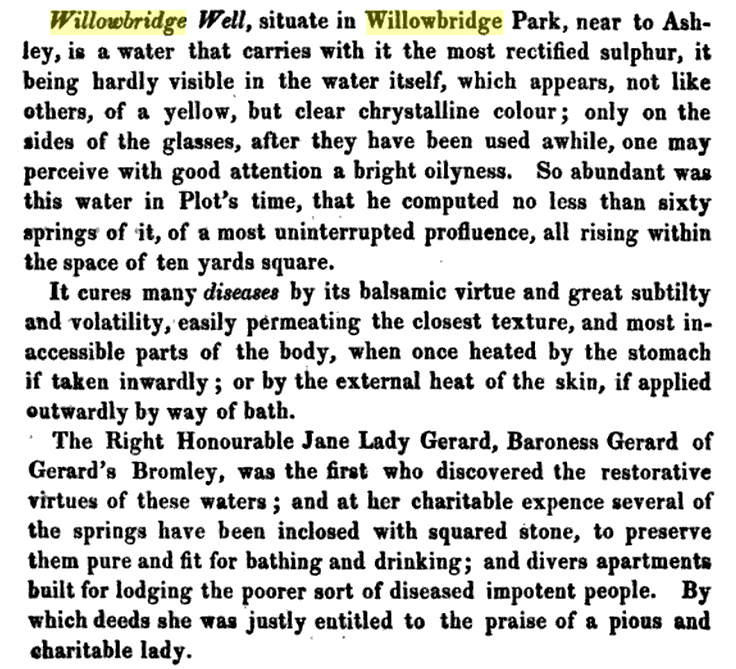
“It cures many diseases by its balsamic virtue and great subtlety and volatility, easily permeating the closest texture and most inaccessible parts of the body, when once
heated by the stomach if taken inwardly, or by the external heat of the skin, if applied outwardly by way of a bath.”

The road led through Willowbridge Woods, which have suffered heavily from the recent demand for timber, and here Mr. Ridge addressed the party on the ecology of the district, tracing the steps by which the once dominant type of forest vegetation became converted into heather moor.


There’s no mention in the 1917 report (given in the 1918 volume) of the springs still being in existence, or the relics of their stone enclosures visible. In which case one has to assume that the transition from woodland to heathland may have dried them up long before the First World War fellings. The mention of “wells” in the 1851 text (see above) suggests the natural water level had sunk quite deep by the 1850s, deep enough that wells were required to get to the sulphurous waters that once flowed on the surface.

Sax Rohmer in audiobooks

I don’t think I ever knew that the author Sax Rohmer (creator of Fu-Manchu) was originally from Birmingham. He was born there as Arthur Henry Ward, but it seems we can’t really claim him — as he moved to South London when young.

Judging by his death-date he and his characters don’t enter the public domain in the UK until 2029. Unless, perhaps, Brexit allows us to introduce a more sensible UK copyright period in the near future. But that seems unlikely, given the combined power of the literary estates, publishers and movie studios. The Rohmer copyright status hasn’t prevented some free non-commercial audio readings, but sadly there are no tolerable free readings of the first three Fu-Manchu books:

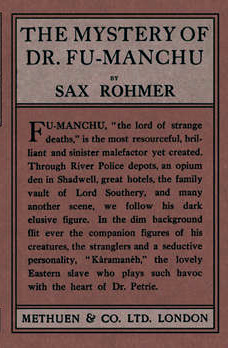
* The Mystery of Dr. Fu-Manchu (1913), aka The Insidious Dr. Fu-Manchu.
* The Devil Doctor (1916), aka The Return of Dr. Fu-Manchu.
* The Si-Fan Mysteries (1917), aka The Hand of Fu-Manchu.

The links are to the paid-for Trantor readings, which have a very good mid-Atlantic reader in John Bolen. Currently at a very reasonable $7 each.

After the first three books Rohmer then tired of the character, and it was not until 1931 that Fu-Manchu returned — at the behest of publishers and in an ever-expanding series.

Other Rohmer books which seem worth trying are:

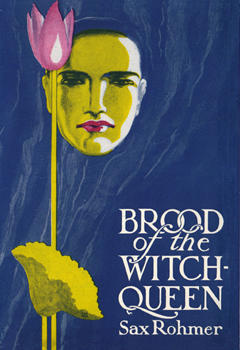
* The Brood of the Witch-Queen (1918) which is his horror masterpiece. The only free reading I can find is the rather over-the top American one at Librivox, with the reader obviously camping it up with the voices. But if you like the 1940s ‘Olde Tyme Radio’ style then you may enjoy it.

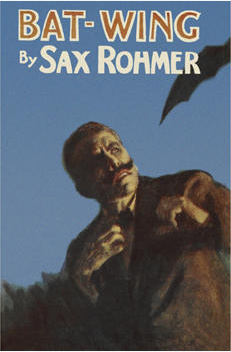
* The voodoo mystery-adventure Bat Wing is also popular. The free audiobook is from a strong American reader who plays it more or less straight, though straying lightly into the hard-boiled detective style. There appears to be no commercial reading.

* One of his best book-length British adventure mysteries is said to be The Quest of the Sacred Slipper (1919). Its twee title probably went down well with buyers in war-weary 1919, but today it doesn’t help to lure in strong audio readers. Sadly there’s only a free audio version which is competent, but not really satisfactory. There appears to be no commercial reading.

UK’s oldest sacred site is in Shrewsbury

Interesting news, from not that far away from Stoke. “Dig finds UK’s oldest [known] sacred site is in Shrewsbury”

“The current church appears to have incorporated and deliberately built over late Neolithic/early Bronze Age remains. The 15-inch section of post we found was sticking up into the Medieval foundations,” said Janey Green, of Baskerville Archaeological Services. “It is an incredibly complex site and appears to have been used and re-used for religious purposes for over 4,000 years. It is well known that Christians liked to build churches over pagan sites.”

Some archaeologists have disputed that last point, in the last few decades. Many in the profession were alarmed by the sweeping claims made by the fringe lay-line hunters in the 1970s and 80s, and thus became very wary on the idea. Their wariness was also informed by the wealth of new studies since the 1970s. So the more vehement of the anti-continuation archaeologists do have a point, though it’s a point that can only be based on the evidence which has survived. There are still a handful of strong sites like the one above — where there is clear evidence of continual ritual use from ancient times onwards.

Waterstones buzzes

I love the idea of Hive.co.uk where any book can be delivered to a local independent bookshop, and picked up in person from the shop. In practice it was easy and simple, bypassing all the inevitable hassle with big heavy parcels and couriers trying to deliver to a residential address where the outer door needs an entry-code.

I say “was” because, since the demise of my local indie bookshop, there’s now nowhere local to collect from. There is one local Hive affiliate left, but that’s up in the nearby moorland town of Leek. For me that might as well be on the Moon, in terms of the public transport connections and times. Not to mention the inevitable bus-sickness on two hours there-and-back. (‘How can it take that long to go ten miles’, you ask — ‘Welcome to North Staffordshire’s bus service’, I reply).

The city centre does still have a medium-sized Waterstones with a fairly humdrum stock, and it’s walk-able in terms of the distance. But I hadn’t even considered them as a Hive alternative until now. It turns out they do now offer a Hive-like collection service, via their online catalogue. They also offer something which Hive doesn’t, a wish-list. Bliss.

Delivery to the shop is free, too.

It turns out they have most, but not all, of the most important books I want. I’m happy to buy Kindle ebooks, of course. But there are many small scholarly publishers who use print-on-demand and offer no ebook edition.

Currently my local Waterstones can get, for instance…

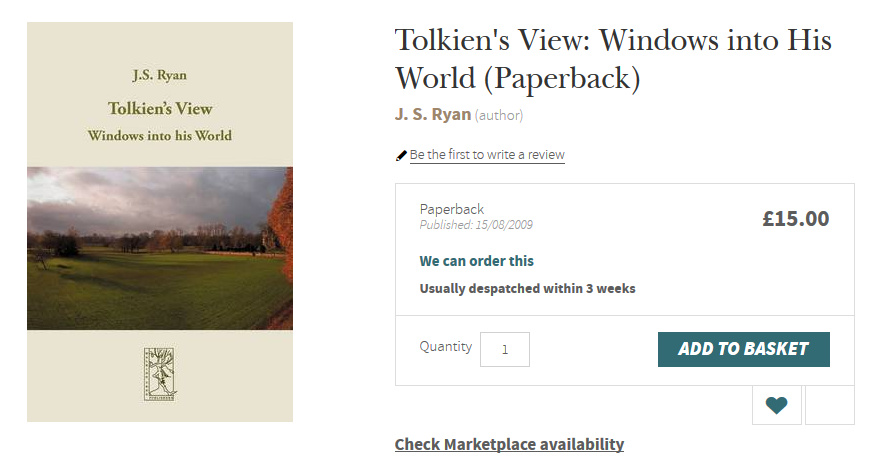
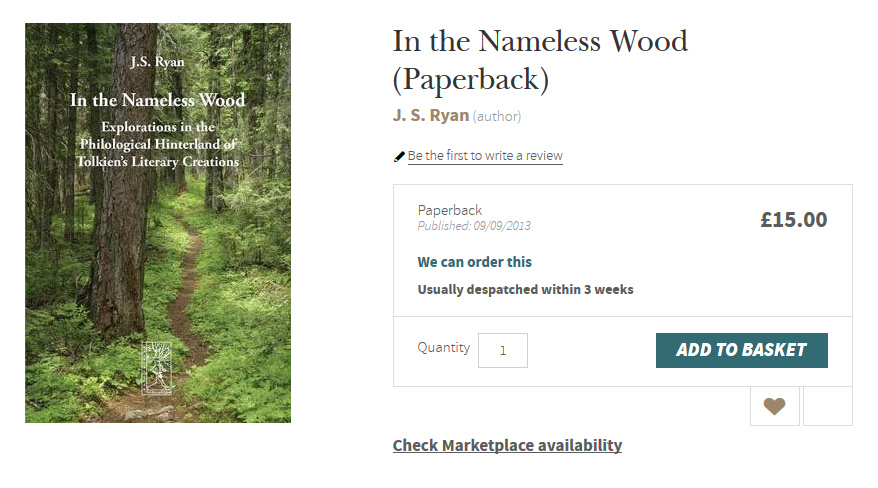
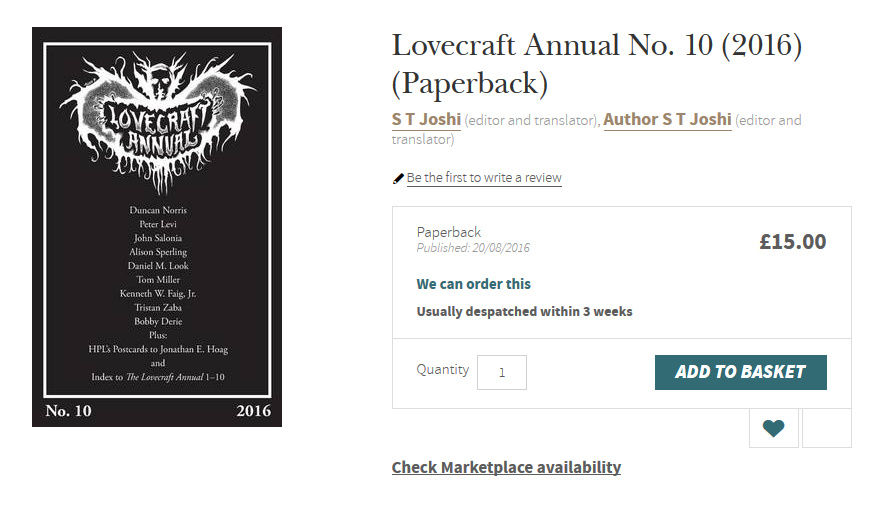
However they’re light on some items. It’s difficult to believe, for instance, that J.R.R. Tolkien: Artist and Illustrator can have been allowed to go out of print and become unavailable in both paperback and hardback. How is that even possible? There’s also no listing of the University of Tampa’s vital book of key Lovecraft letters, O Fortunate Floridian: H.P. Lovecraft’s Letters to R.H. Barlow, still in-print. Some of the most recent Hippocampus Press titles are as-yet unlisted, but that’s probably because Hippocampus (or perhaps the POD printers Lightening Source) hasn’t yet uploaded the metadata to the world’s databases. It’s curious that the Disney book Before Tomorrowland is also missing, despite Amazon having it. Stover’s annotated The Time Machine: an Invention: A Critical Text is only “unavailable” as a hardback, where there’s a perfectly good in-print paperback available. They do however have a paperback of Arata’s The Time Machine – Norton Critical Editions.

Sadly they have the same jumbled and junky reviews as Amazon does — reviews which pertain to some other edition of the work rather than to the specific edition of it that you’re buying. Thus reviews of shoddy audiobooks get jumbled with reviews of ebook editions, and then these reviews are somehow supposed to ‘represent’ a fine annotated critical edition.

Anyway, Waterstones keep your shipment for 90 days at the shop, giving ample leeway for assemblage of a disparate order and then an in-person pick-up. Regrettably… “We do not currently accept National Book Tokens or paper gift vouchers online”. But it’s left unclear if they might accept book tokens for an in-person pickup, if (as with Hive.co.uk) one pays only on collection?

Sadly there’s no mention of accepting PayPal for a pre-paid order, so presumably they want a credit card. Big companies like this miss out on so many impulse buys, which would come if only they accepted PayPal. The same goes for Amazon’s Kindle ebooks.

I see there’s also a Waterstones Marketplace which links with Alibris for used books, but reading between the lines it looks like this is handled by the Alibris vendor and is thus ‘ship-to-the-home’ rather than ‘ship-to-the-store for 90-day collection along with your new books’. On a search for the missing Fortunate Floridian (see above) there was anyway no offer of a button to ‘Search on Marketplace’ for it.


Update: I see that eBay are now offering free shipping to and collection from your local Argos store (and Sainsbury’s, some of which have Argos inside them). It seems that all my local Argos and Sainsbury’s participate. And, of course, PayPal is accepted by eBay. This makes it a very interesting alternative to Waterstones (see above), though it seems it’s limited to the same set of new books and doesn’t extend to used books. The only downside would be that it would definitely be a less-cultured pick-up, re: waiting in the queue at a Stoke-on-Trent Argos.

Further update: no, it also extends to most used books a well, from large sellers. Wonderful! The only (fairly huge) problem there is that it is only kept for seven days inc. weekends. Compared to a much more sensible 90 days for Waterstones. For new books, it may be worth paying a premium of a few pounds at Waterstones in order to be able to collect at leisure, as and when.

Some starting points on affectionate friendship in The Lord of the Rings

I’ve sometimes encountered comments from new readers of Tolkien’s The Lord of the Rings, in regard to their surprise and even shock at the book’s rising level of male-male affection, kissing, expressions of love, and also the book’s general celebration of un-neurotic and un-conflicted male bonding. It may seem curious to today’s readers that Tolkien felt free to so boldly portray these aspects of Middle-Earth, and also to launch such books into the cultural and emotional ice-age of the 1950s.
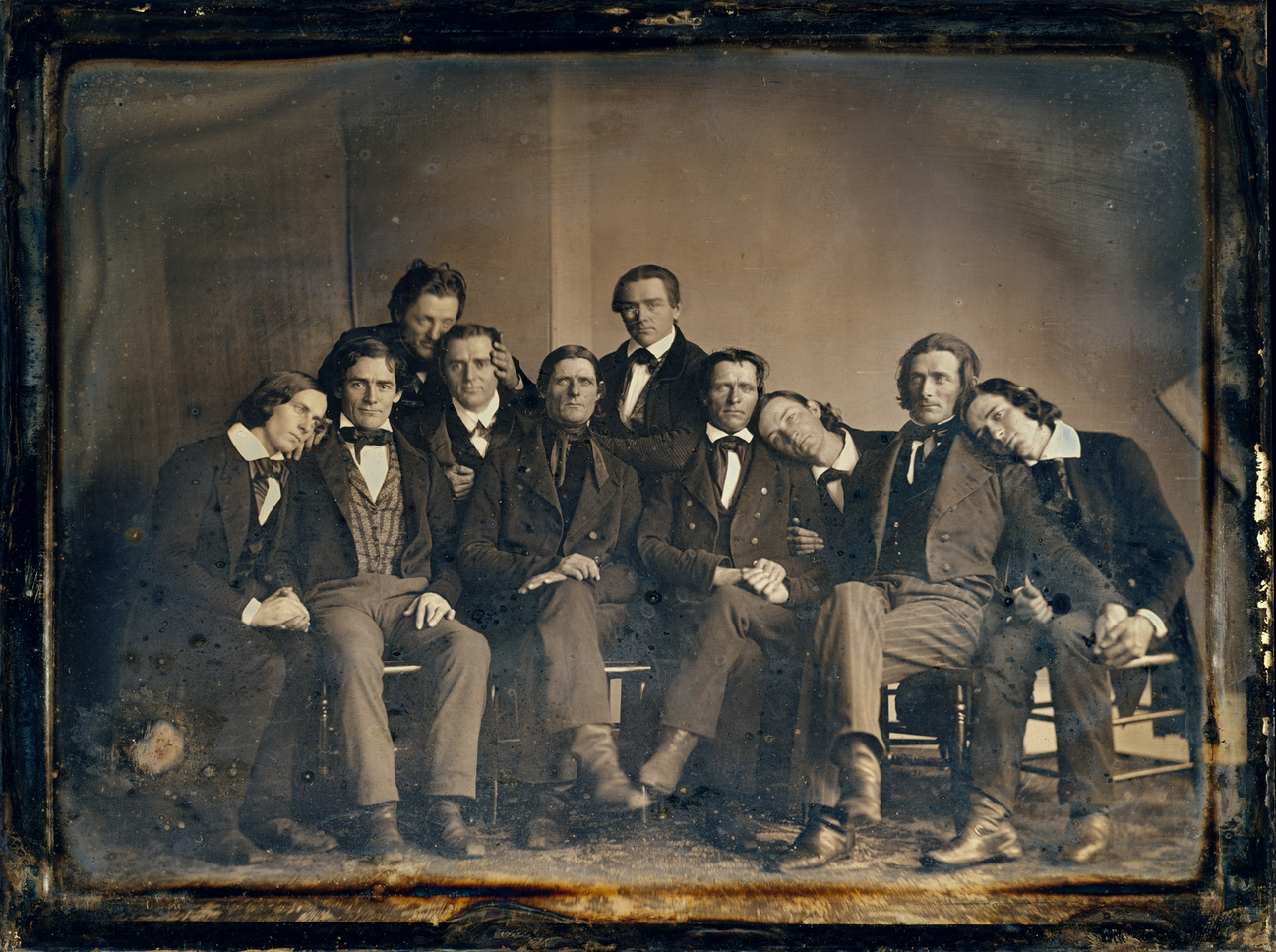
Probably it has something to do with the period in which Tolkien came of age, roughly 1908-1922.

* Wilde and poetry. It was a post-Wilde world, in which previously open traditions of casual male-male affection in friendship (see above picture) were diminished and policed. But his youth was perhaps sufficiently distant from the immediate impact of the notorious Wilde trial, in time and also in space. He was coming of age in practical can-do Birmingham, rather than the overheated literary salons of London. One might perhaps also consider the ongoing impact of Whitman’s poetry among literary lads, in terms of celebrating affectionate male bonding in England at that time, though I don’t know offhand of any evidence that Tolkien thought highly of Whitman. Housman’s A Shropshire Lad seems likely to have had more impact in Britain, especially in the context of the First World War — when a copy was reputed to have been in almost every back-pack as our soldiers departed for the Front. For strong discussions of the war poetry and its portrayal of affectionate friendship in a post-Wilde context, one might look at Touch and Intimacy in First World War Literature (2005) and the seminal The Great War and Modern Memory (1975). For the modern student, it’s perhaps important to highlight that poetry was then vastly more culturally important than it is today, and also engaged in a far more active dialogue with art.

* Freud. Doubtful. Tolkien lived in a pre-Freud world as he came of age. Freud only became widely known among the intelligentsia in the English-speaking world from about 1919, and even then he was usually encountered through a lens of superficial re-interpretations and even ‘progressive’ charlatans and quacks. The fathers of Tolkien’s Birmingham Oratory were Catholics of a variety who were fairly open to the world, by the standards of the time, but one has to doubt they had any regard for the likes of Freud and his followers. Still less would they have had an affection for Freud’s befuddled leftist acolytes — of the sort who drifted around Greenwich Village and Bloomsbury, revelling in a heavily sexualised home-brew made from half-fermented bits of Alder, Jung and Freud. The type later became academics and plagued Tolkien with their detested attempts at early ‘literary criticism’ of his work. It’s true that such ideas did become increasingly fashionable in England in the 1930s, and the writings of Freud’s associate Jung were known to some of Tolkien’s circle. But it would be a huge mistake to claim that Tolkien was juggling psychoanalytical ideas on male affection while devising The Lord of the Rings.

* Service. Far more important for understanding Tolkien’s main work seems to be the forgotten history of the entangling affections which can grow up in an enduring master-servant relationship. Also the traditions and set of implicit boundaries which develop from that, within a stable and self-confident civilisation. Then the ways in which that tradition fed into, and was changed by, the experience of the First World War and the ideological ferment of the 1930s.

* Fraternity and fellowship. There is also the little-regarded history of ‘public friendship’ to consider, in which affection became embedded and expressed in the brotherly networks of civil society and mutual aid, often along lines of civic/political affiliation. One could even see Tolkien’s The Lord of the Rings as making an attempt at ‘working back’ to an idealised Christian form of this, as a reaction to the ‘politicised friendship’ developed by the proto-fascist left/right in Europe in the 1910s and 20s around hiking and the outdoors life, and which was later so ruinously militarised by the youth cadres of both national socialism and soviet socialism.

* Brotherly and knightly love. Asexual brotherly love and its traditions and standards within Christianity, would also prove a useful and fruitful line of enquiry. It was a strong tradition, in which gestures of love and affection were simply not culturally understood as diminishing one’s masculinity, or inviting an onlooker to cast aspersions about one’s innate erotic inclinations. The brotherly love tradition arose from The Bible’s examples, but was also deeply developed by the Christian monastic literary tradition which celebrated highly romanticised loving male friendships, often within a knightly tradition. On that, see Edward Joe Johnson, Once There Were Two True Friends, Or, The Idealized Male Friendship in in French Narrative from the Middle Ages Through the Enlightenment (Summa, 2003). I imagine that one may also be able to trace such ideas in Tolkien favourites such as the neo-medievalist fantasy novels of William Morris (there is no concrete evidence, but we can be almost certain he read House of the Wolfings, Roots of the Mountain, and Jason fairly early on).

* Within strands of old-school Catholicism there are said to be traditions of ‘spiritual friendships’, of ‘soul love’, related to the above.


My short and quick search for further print material reveals that the introductory book on ‘Loving asexual affection among male friends: a history’ has yet to be written. Many in our highly politicised Eng. Lit. depts. will think it enough to reflexively point the beginner to Sedgwick’s famous Between Men: English Literature and Male Homosocial Desire (1985). But that book assumes desire, and is now understood within a wider perspective which is very much entangled in discovering a history of casual gay sex and the wider project to back-date the modern post-1972 naffly rainbow-flagged gay identity.

A glance at the contents page for the book Sentimental Men: Masculinity and the Politics of Affect in American Culture (1999) suggests that none of the essays there are on-topic. The book The Overflowing of Friendship: love between men and the creation of the American republic (2009) looks much better. The British Empire and American ‘wild frontier’ experiences of male bonding are probably quite important in terms of feeding their structures of feeling through into the all-male ‘big landscape’ adventure novels of Tolkien’s youth (Henty etc). In that regard the article “Romantic friendship: male intimacy and middle-class youth in the northern United States, 1800-1900” (Journal of Social History, 1989) also looks like it might be a useful starting point.

The book Modernism, Male Friendship, and the First World War (Cambridge, 2003) is on the novelists Forster, Conrad and D.H. Lawrence and judging by Google Books it looks rather tedious (I was forced to read and study Lawrence and Forster at school, and as a consequence loathe both). But the book is on-topic in terms of the influence of the war and may prove to have some useful structuring ideas which are portable. But note that the author appears to come at this “neglected topic” via a modern leftist viewpoint, one which focusses on “institutional social power” and assumes “thwarted homoerotics”.


There is more to be found, lightly scattered among the Tolkien essays:

* Marion Perret, “Rings off their fingers: hands in The Lord of the Rings“, Ariel, Vol.6, No.4, 1975, pages 52-66. (Hands, fingers, touching are all recurring motifs in the book, and of course hands are an important means of conveying affection. Tolkien was also academically interested in the communicative role of hand gestures in combination with speech).

* Marion Zimmer Bradley, “Men, Halflings and Hero worship”, 1961. Severely truncated in Tolkien and the Critics: Essays on J.R.R. Tolkien’s The Lord of the Rings, 1968. Full version online in Niekas 16.

* A. Smol, “”Oh… oh… Frodo!”: Readings of Male Intimacy in The Lord of the Rings“, MFS: Modern Fiction Studies, 2004.

* A. Smol, “Male Friendship in The Lord of the Rings: Medievalism, the First World War, and Contemporary Rewritings”, 2005. (Conference paper).

* Magnús Örn Þórðarson, The theme of friendship in J.R.R. Tolkien’s The Lord of the Rings, 2012. (A short degree dissertation, in English).

New addition, June 2017: Kaufman, Roger: “The amplification and avoidance of homosexual love in the translation of Tolkien’s work from books to films”. In: Kapell and Pilkington (Eds.), The Fantastic Made Visible: Essays on the adaptation of science fiction and fantasy from page to screen, McFarland & Company, 2015.


This blog post is just my quick and rather flighty survey of the topic, a version of that undertaken for a friend, but it may help someone more interested than I am to get started on writing in-depth about the topic.
In the Potteries in the 1820s and 1840s

Two first-hand accounts of personal visits to the Potteries in the first half of the 19th century, extracted from books:

1823, letter to The Monthly Magazine:

“You pass, in two minutes, from a crowded street into a meadow or a corn-field; and, amidst shops and factories, you continually stumble upon what was not long since a farm-house, and which yet retains somewhat of its rural, cottage-like character, wholly distinct from that of the mercantile edifices which have sprung up around it. Figure to yourself a tract of country, the surface of which, cut, scarred, burnt, and ploughed up in every direction, displays a heterogeneous mass of hovels and palaces, farm houses and factories, chapels and churches, canals and coal-pits, corn-fields and brick-fields, gardens and furnaces, jumbled together in “most admired disorder,” and you will have a pretty correct idea of the Staffordshire potteries. Then pervade the space your fancy has thus pictured, with a suffocating smoke, vomited forth incessantly from innumerable fires, and the thing will be complete.

The people, however, who pass their lives amid this dingy atmosphere, this “palpable obscure,” this worse than Egyptian darkness, seem to experience no inconvenience from it; and, in fact, to be scarcely sensible of the existence of the evil. One of them asked me, with most amusing simplicity, “whether London was not a terribly smoky place to live in?” The inhabitants, nevertheless, I repeat, though not blessed with the rosy cheeks we generally see in country-folks, appear to enjoy good health, with the exception of the colliers [miners], and a few pallid mortals employed in the preparation of certain deleterious articles made use of in the manufacture of pottery.”


24th January 1850. Letter XXIX, given in the book The Victorian Working Class: Selections from Letters to the Morning Chronicle:

“As a whole, the appearance of considerable portions of the Pottery towns, is not very unlike that of the better parts of the iron and coal districts which I have described in the south of the county. The population, however, from the nature of their occupation, look clean and respectable. At meal times, or in the evening, they pour out from the manufactories — men, women, and children — with aprons and sleeves plentifully besprinkled with dashes as of liquid white clay. Here and there, however, you see a symptom of the neighbouring coal-mines, in the appearance of men and boys in coarse besmirched flannel clothing and wooden clogs, with faces and hands like [chimney] sweeps.”

Did Karl Marx ever visit the Potteries?

An article in the local paper today states, very much in passing, that Karl Marx once visited The Potteries district (Stoke-on-Trent, north Staffordshire). It’s news to me and I can find no reference to such a visit, via Google Books. Also, I did a keyword search in the full-text of all the major biographies of Marx — such as those by Werner Blumenberg, Francis Wheen (both titles, one on Marx, one on Kapital) and others. I searched their full-text for keywords: Stoke | Potteries | Hanley | and Staffordshire. The results reveal “no results” on all such searches.

Surely Marx’s major biographers, or some other book accessible via Google Books, would have mentioned Marx making a visit to the Potteries? Surely the venerable local historian and socialist Fred Hughes would have mentioned such a visit in print, at some time in the past thirty years? But no, it seems they didn’t.

I also searched the complete online archive of Marx’s letters at http://www.marxistsfr.org/archive/marx/letters/ for the keywords: Stoke | Potteries | Hanley | and Staffordshire. Again, no mentions. I even tried a search for Pottery. Again, no mention of even so much as a humble pot.

So I can only assume that the author of this rather slight article in the local paper was thinking of the use made by Marx of some questionable statistics on the Potteries, and that he was assuming that these figures must have been collected by Marx during a personal visit to the district. They weren’t.