Small town games

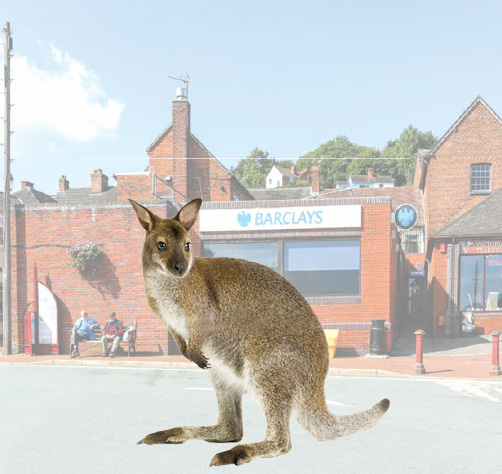
The latest PC Gamer magazine brings a review of a welcome new phenomenon, regional British comedy videogames. Or, at least, one videogame — the first of what will hopefully become a sub-genre. Thank Goodness You’re Here (August 2024) is set in Yorkshire, toon style.

“… here to educate the entire world about our nation’s obsession with sausages and bare bottoms” (Rock, Paper, Shotgun review).

Surreal slapstick comedy, Carry On style double-entendres and innuendo, dialect and funny voices, eccentric characters… amid which you play a travelling salesman and odd-job man in the town of Barnsworth. Very odd jobs, indeed. PC Gamer‘s review gives the £16 game a stellar 90% score. Hopefully there will soon be a Stoke-on-Trent version.

And while we’re waiting for that, “Spitfire cockpit flight simulator launched at Stoke-on-Trent gallery”.

The Stoke O.S. map for 1947 – two online sources

Ordnance Survey, Sheet 110 – Stoke on Trent – OS One-inch to the mile, England and Wales, New Popular Edition, 1947. Surveyed 1916, and here with later revisions. Yellowish, neon-green woods, and fuzzy, all slightly nauseating.

The Internet Archive also has it as a small .JPG preview and a 30Mb .SID file. An obscure format, but the popular IrfanView image-viewer has a plugin (in the plugins pack) that can open these. The huge .SID turns out to be crisper at 66% view, and with much more natural colour.

The latter can also be made portable, for offline fieldwork.

Some of Staffordshire’s woods

Popping up on eBay with a few sample pages photographed, Some of Staffordshire’s Woods (1974, 16-page booklet with maps). The Hanchurch and Maer pages are one of the sample images.

The text notes 20 acres of open space, given by Lord Stafford in 1960 for the enjoyment of the public, across which the Council has developed a car-park. Very 1970s.

New book: Staffordshire – Pevsner’s The Buildings of England series

The latest edition of The Critic magazine has “Midlands marvels and mysteries”. Being a very long review of the new book Staffordshire (Pevsner’s The Buildings of England series) (2024). The review is freely available online…

“This greatly enlarged, updated guide to the architecture of Staffordshire completes the comprehensive revision of the Buildings of England series. The version is a great improvement in terms of the splendid illustrations alone, replacing the somewhat murky half-tones of the original.”

North Staffordshire gets prime place, at least in the key visuals, with Wootton Lodge (Staffordshire Moorlands) on the front cover and the Wedgwood Memorial Institute (Burslem, Stoke-on-Trent) on the back cover. And, so far as I can tell from a combination of the review and the blurb, mid and north Staffordshire are not at all overlooked. The book is available now, as a chunky 844-page £37 hardback. An ideal Christmas present, I’d suggest, for someone interested in such things.

“Unexpected good news in the bagging area…”

Seemingly very good news today… “Morrisons ditches self-checkouts in major change as boss says ‘we went too far'”.

The headline is a bit misleading, though. They will only “decrease the number of self-checkouts in its stores”, not actually do away with the infernal robo-tills. They also say…

“We have invested additional hours in manned checkouts and that’s been within the existing physical infrastructure [of the stores]. It’s not more checkouts, it’s more colleagues on checkouts.”

Which is a bit mealy-mouthed. Times, numbers, number of stores with more staff? We want specifics. The start-time is what I personally want to hear stated. Are they going to 100% guarantee at least one checkout till is staffed by 7am? Or are the staff still not going to get onto the tills until 8am or even 9am? In which case the changes will be useless for many early shoppers who have to get to work for 8am. They’ll still be forced to try to use the robo-tills, or else abandon their trolley and walk out on finding there are no staffed checkouts.

Staffordshire oak wood project reports

The seven-year oak wood project in mid Staffordshire has reported its findings, in the journal Nature. The wood being studied is the 46-acre Mill Haft, full of mature English oaks, around six miles west of the county town of Stafford. In this wood, various plots of 32 yards diameter were studied, these being pumped with CO2 over seven years.
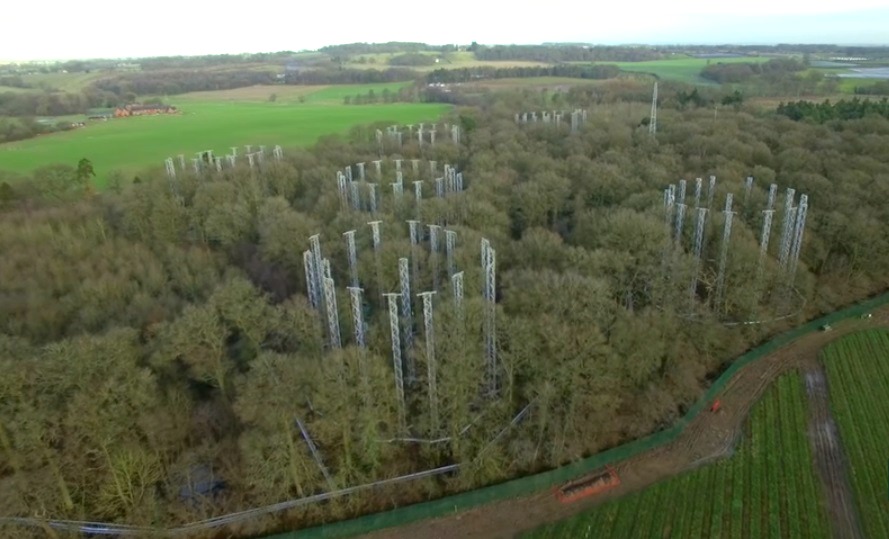
The results, now in, show that…

“over the seven years of treatment, tree growth was 9.8% greater […] Most of the observed increase was attributable to wood production; there was no difference in fine-root or leaf mass production”.

Also note that…

“Exudation of organic carbon from roots is rarely included in estimates [by others. But here, our repeated] analysis indicated a significant overall effect [stated as between 43% and 64% more exudation, depending on year].

Which means (in layman’s terms) that not only is elevated CO2 being used by the tree to make a bit more wood (hardly noticeable to the eye, for most people), but the tree is also rather usefully pumping a lot more of it underground than before. As the report suggests, this then benefits the microbes living in the soil below the tree…

[the exudation is] “disproportionately important to ecosystem biogeochemistry [since it primes] the microbial community and associated nitrogen and phosphorus cycling” [in the soil].

All of this is to be expected, as CO2 is ‘plant food’. But it has not before been proven in temperate mature woodland. Overall, the project’s results clearly contradict earlier assumptions that…

“older, mature forest systems have no capacity for response to [elevated atmospheric] C02”.

The project plans to continue for another seven years.
Tunstall ‘ginnels’

An interesting word I hadn’t encountered before. In parts of Tunstall, people call their rear alleyways “ginnels”, according to a local newspaper report today on fencing these to keep druggies out.

The word ginnel appears to come originally from Yorkshire, according to 19th century sources. Though one early Lancashire dialect book also found it there. There was speculation that it may perhaps go back to the Anglo-Saxon gin, a narrow channel, open. Similar, I would suggest, to the Old Norse gin, meaning mouth, open. Given the Yorkshire core of usage it may well come from Norse rather than Anglo-Saxon. Although Anglo-Saxon gynian was ‘to yawn’, so there were evidently close similarities between the two.

An early memoir gives it as “goonhole”, presumably as an onomatopoeia (writing down a word as it sounds), which would seem a strangely congruent folk-twist on Old Norse ‘open mouth’. If such it was.

Dialect studies now also note it being found in Manchester and across larger towns of the East Midlands, used to refer to back-alleys. And evidently now also in Tunstall, Stoke-on-Trent. Today it seems it can also be applied to un-walled paved “footways between strips of land” between estate houses (e.g. such as the ones which criss-cross the Bentilee estate in Stoke, though I’ve no idea what residents there call these).

Witt Collection now online

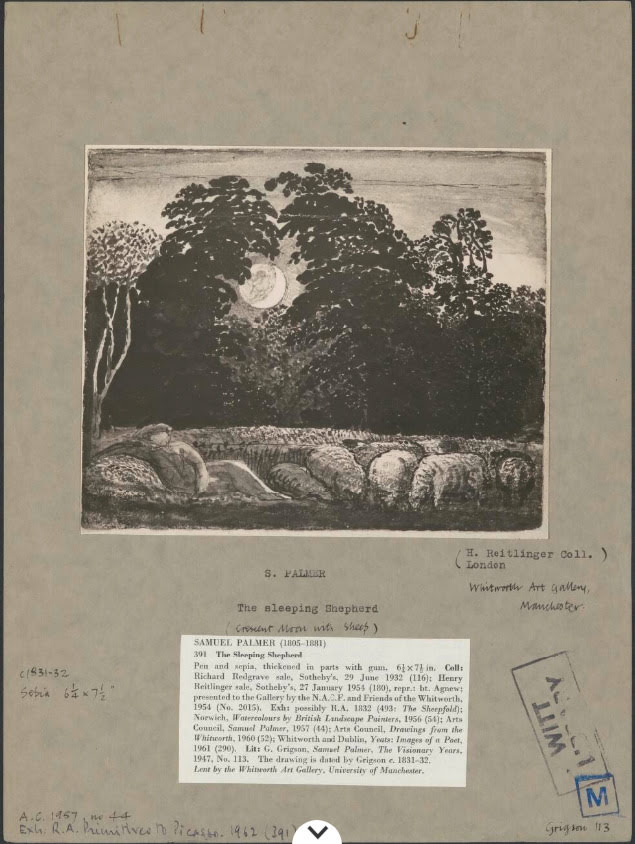
The Witt Collection of British Art is now scanned and online. Over 500,000 reference cards with good images from auction listings and magazines, seemingly omitting the ‘portrait of a long-forgotten local worthy’ type of auction picture.

Regrettably it doesn’t seem possible to search by ‘location of scene’. Thus a search for “Birmingham” becomes swamped by items once belonging to Birmingham City Museum etc. Nothing for “Staffordshire”. Over 1,000 items from Samuel Palmer, though. Also many by Edward Lear and Turner.

Some new local items on Archive.org

Westward on the High-Hilled Plains: The Later Prehistory of the West Midlands.

The Color Blue In Pottery And Porcelain.

The Gawain Country – extended with bonus chapters.

The Staffordshire Hoard: An Anglo-Saxon Treasure.

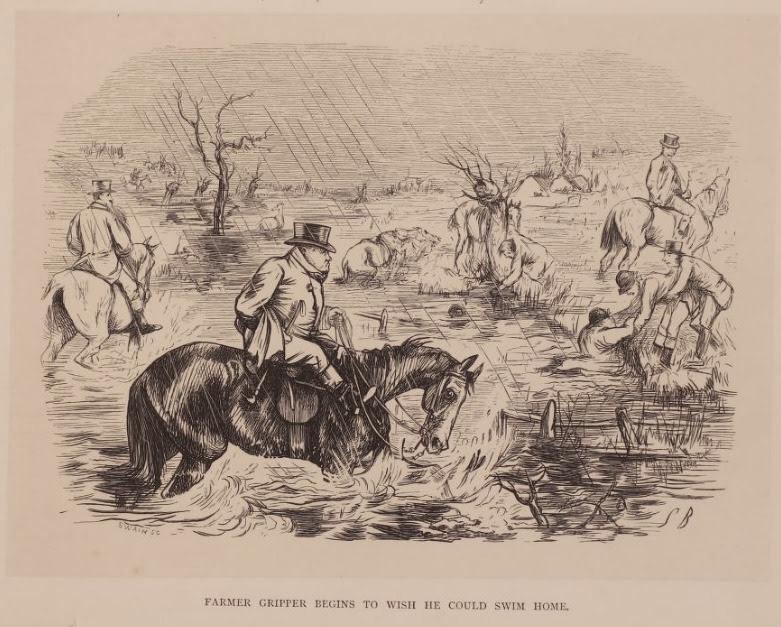
A Month in the Midlands. Humorous sketches from a fox-hunting and horse-racing tour.

Letters to a Young Constable. A 1947 book by the Chief Constable of Stoke-on-Trent. General advice in a short book, no specific Stoke content that I noticed.


Ecological flora of the Shropshire region.

Vegetation of the Peak District.

War and society in medieval Cheshire, 1277-1403.


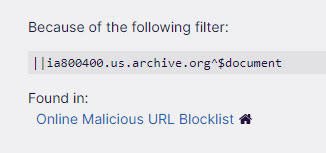
Also, some idiot has added archive.org’s PDF download URL to a default blocklist in the popular Ublock Origin browser add-on.

So, either remove the blocklist altogether, or select “do not warn me again” when the ‘blocked’ page comes up.