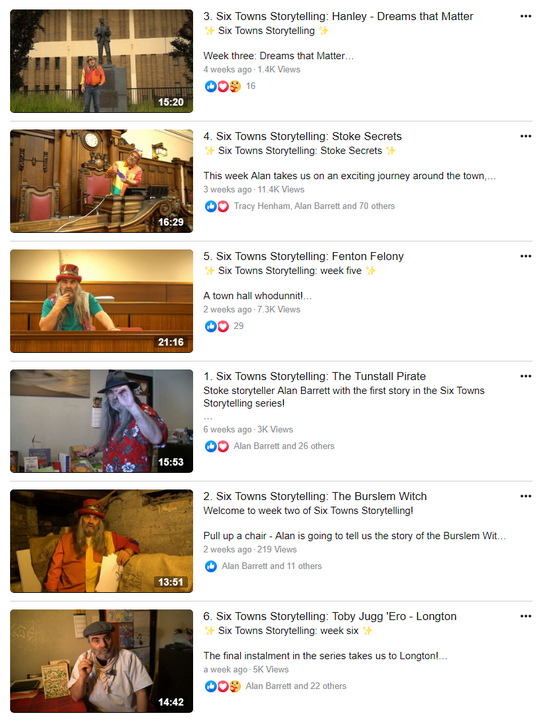
Alan Barretts’s ‘Six Towns Storytelling’ lockdown videos are now complete and online as a DVD-length playlist at Facebook.
There’s also a viewer survey asking for your responses.
Alan Barretts’s ‘Six Towns Storytelling’ lockdown videos are now complete and online as a DVD-length playlist at Facebook.
There’s also a viewer survey asking for your responses.
Simplified by Duha, a nice fast clean way to use Google Maps for simple “where is it?” lookup, with only major tourist attractions pinned and all the pin-and-label spam gone.
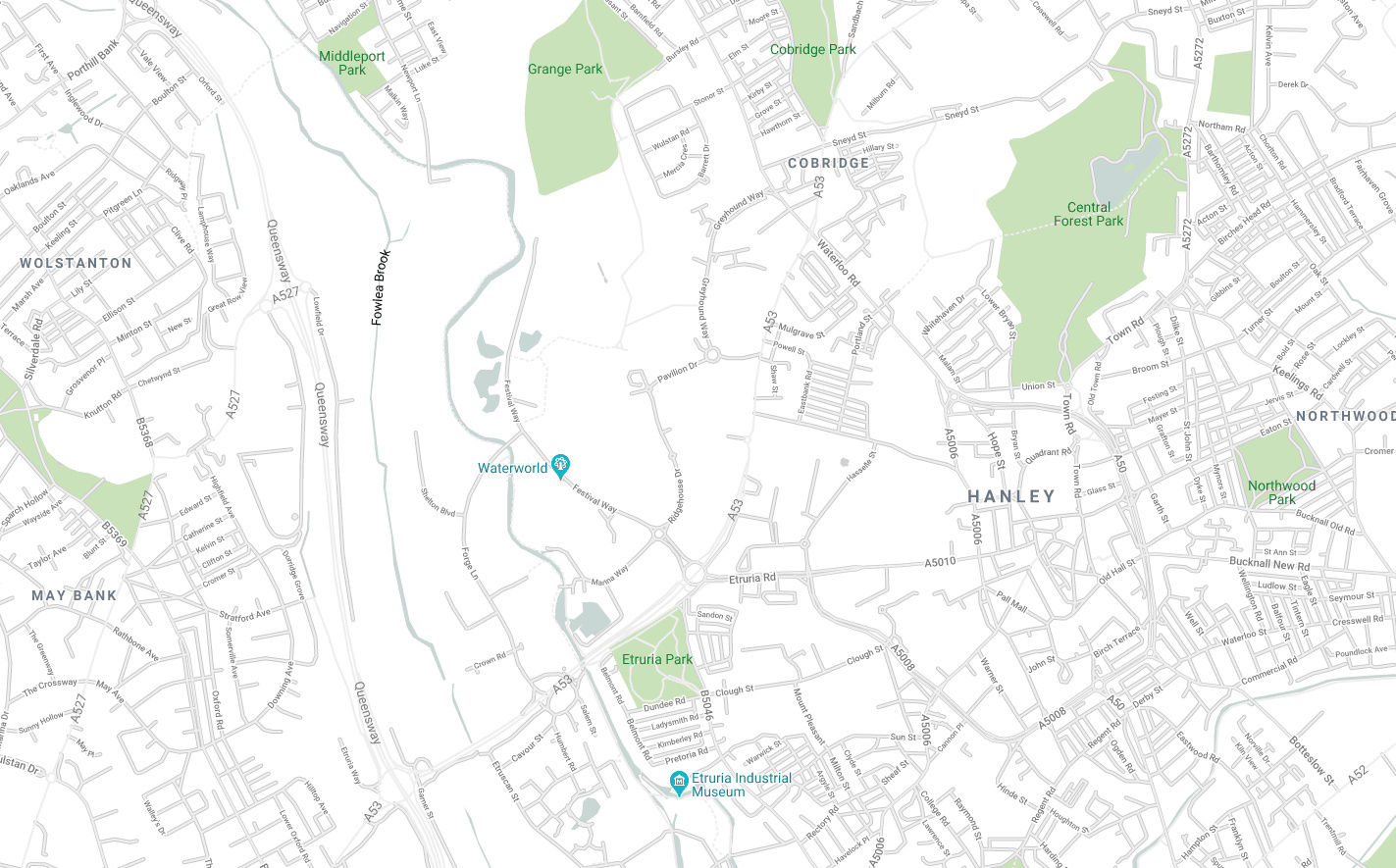
Regrettably only the ‘known to officialdom’ green-spaces are marked, and for instance you can see here that the green bit of Festival Park is not green. That’s because it’s not mown by the local Council, but rather is tended privately by St. Modwen. Thus it’s not on the Council’s GIS maps, and thus “doesn’t exist” when it comes to showing the world the green spaces in the city. But, for a simplified map it’s still pretty good.
No little yellow “Google Streetview guy” to drag and drop, but the far faster-to-load option for that on a desktop is an install of the free Google Earth. Google Earth also has access to StreetView.
Another new local book found, The Journals of William Clowes (1844). He was born in Burslem in 1780, and came of age and was married in 1800. Among the accounts of prayer meetings and verbose ‘tremblings before god’, there are some insights into local lore and difficulties of travel. For instance, it seems inconceivable today that it would be any difficulty to get from Tunstall to Kidgrove, and yet in the winters of the early decades of the 19th century it could be a wild boggart-haunted road…
It was about this period also that Mr. W. E. Miller, the travelling preacher in the circuit, strongly pressed me to lead a class at Kidsgrove, to which I consented. This place, at which there is a large colliery [coal mine], is distant about two miles from [my home in] Tunstall; and to attend every week, and especially in the winter season, when the nights were cold and stormy, was not a very easy matter.
In a lonely part of the road leading to Kidsgrove, which is skirted by a wood, there wandered a ghost, as tradition and common report asserted. It was called the “Kidsgrove bogget”. On my first induction into office as the Kidsgrove class-leader, I confess, when passing the haunted domains of this “Kidsgrove bogget”, that I occasionally felt a little fear creeping on me; but, unlike the school-boy with his satchel on his back in crossing the church-yard, “Whistling aloud to keep his courage up”, I endeavoured to pray away those fears […] Very frequently my Tunstall friends would accompany me; and on these occasions we used to make the lonely lane to ring with shouts of glory, and singing the praises of God.
The class-meeting at Kidsgrove rose into great vigour and usefulness in a short time, and many of the roughest colliers [miners] were brought to God. At one period several of these came into the house where we were holding the class-meeting, some of whom were half drunk, and the house was crowded with people. I hardly knew what course to adopt; at last I came to the resolution to address both saint and sinner, and to give an exhortation […] I then began personally to address the ungodly [drunkard ruffians] some of them were struck with such terror and alarm that they jumped up and rushed out of the house, and they confessed afterwards that they thought they should have fallen into hell if they had remained any longer in the house, and they should take care not to go to William Clowes’s class again. [But] One ruffian was so wrought on that he fell like an ox, and laid quietly under the form [of address] till the meeting closed. The meeting being thus tolerably cleared, a mighty shout of glory went through the house.
This usefully shows that the Boggart pre-dates the building of the Harecastle Tunnel. Some have suggested the tunnel-building as ‘the cause’ of the Boggart’s appearance.
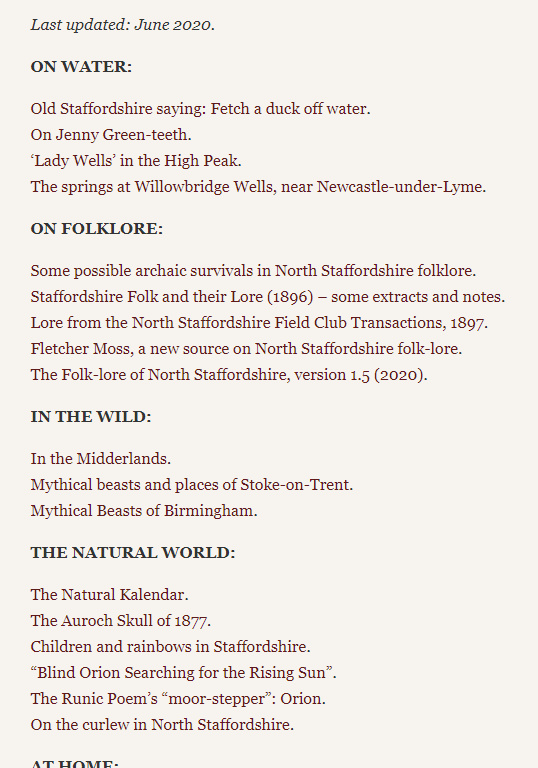
There’s a new page on this blog, “Blog-to-ebook”, being a handy way to read the best of this blog as a 55,000 word ebook. Articles and posts are linked, and are collected by theme or location.
… etc. If I were to one day format it for print, I’d add various other articles of local interest, which have appeared elsewhere. Many would also be polished and expanded.
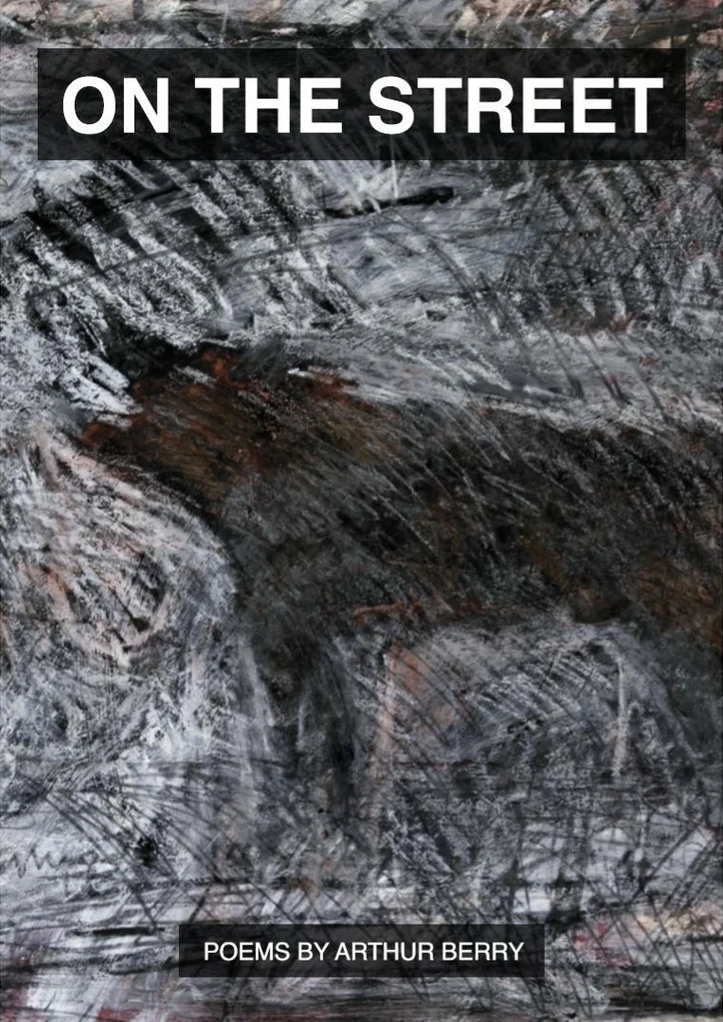
New to me, a 2018 book of new poems by Potteries poet Arthur Berry, “found among his papers”. Still available.
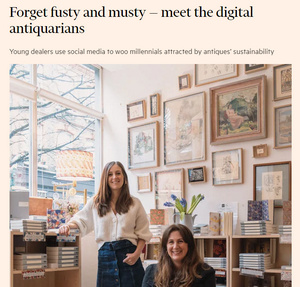
Standards are everywhere plummeting in what now passes for newspaper journalism, but the decline comes home when even the Financial Times doesn’t know the difference between an “antiquarian” and an “antiques dealer”.
From Boston, Michael Grasso at We Are The Mutants reviews Alan Garner’s The Voice That Thunders. Garner being the local fantasy writer of Alderley Edge, just a bit north from here and over the border from North Staffordshire. And his book being one I was unaware of, a collection of…
“sixteen essays, prepared lectures, and newspaper columns that return to the mythic themes that Garner’s more than half-century of novels explore”
It was issued back in 1997, and has been available in Kindle since 2014. The review adds…
“The collection is in effect an expressionistic autobiography”
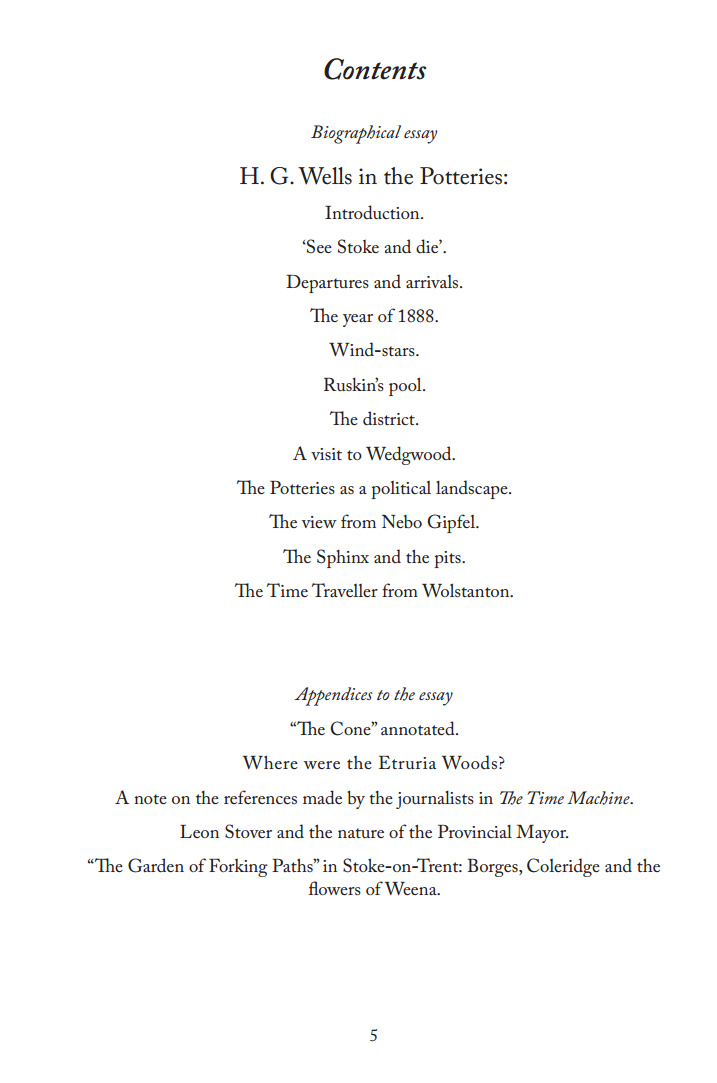
Interesting. I dug out the contents list…
As such it seems like a shelf companion to Garner’s recent autobiography of his childhood, Where Shall We Run To, also available in Kindle ebook form.
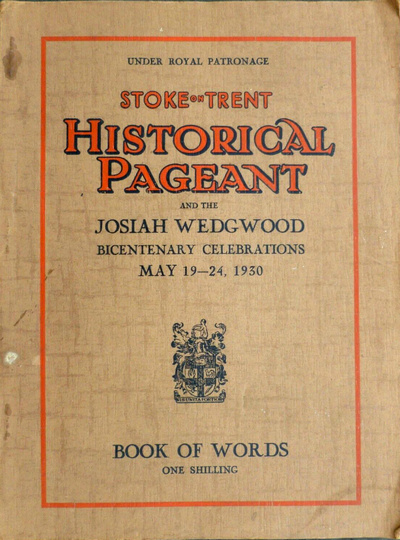
The opening page of the 1930 Historical Pageant in Stoke-on-Trent…
EPISODE ONE
EARLY BRITONS URGED BY THEIR ARCH DRUID TO
RESIST THE OCCUPATION OF THE ROMANS
UNDER SUETONIUS PAULINUS AT
STOKE-ON-TRENT, 58 A.D.
Scene: A local moorland district with Druid grove in background.
Period: 58 A.D. [A large Roman force is marching through England intent on destroying Mona, the island of Anglesea, holy site of the Ancient Britons].
THIS scene is a tableau intended to convey the beginnings of early life amongst the inhabitants of North Staffordshire during the Roman Occupation.
Enter crowd of early Britons, men, women and children who collect around the sacrificial stone. The chant of the Druids can be heard in the distance, and they enter, led by the Arch-Druid, Druidical Priests and Bards. The Arch-Druid stands on a huge stone or boulder in front of the oak grove with the armed Britons seated and standing in from of him, and the women and children around.
ARCH-DRUID:
“Princes, Noblemen and Britons all. Dark times have overwhelmed our land. The proud legions of Rome are within our gates, sworn to make Britain a Roman province and Britons their slaves. We long ago gave freely of our art and wisdom to the tribes of Latium, to-day their offspring swarm here as locusts ravenous to devour us.
Our fathers taught the noble Greek the craft of smith and sophist, and he in turn taught Rome. The Roman heel crushed the gifted Greek and made him serf, and now the heartless horde, with their ruthless arms seek our ruin also — heedless whether by force or fraud.
It was but yesterday they despoiled fair Siluria, took her chiefs in bonds and butchered them to make a Roman holiday for their mob by their muddy Tiber. They robbed our kinsmen from the high Alps unto the sea. The flower of our manhood fell by the Rhine and Rhone, fighting the Roman whelps for right and home.
Mona [Anglesea, holy site of the Ancient Britons] itself with its holy temples, where all our tribes assemble to light the sacred fire at the birth of each new year, is in dire danger….”
There was also a sixpenny Handbook…

Shorter & Sons ceramic cruet set, from Stoke-on-Trent.

There were various other surreal items from which to enjoy your fish and chips from…

I wonder if there’s enough of this sort of thing out there, for the Potteries Museum to put on a “Surreal Stoke” exhibition of the best of it? Start with the strangest of the Longton Hall pottery, and hipster teapots of the 1760s, and work forward. Some of the Woods of Burslem teapots should probably be in there.
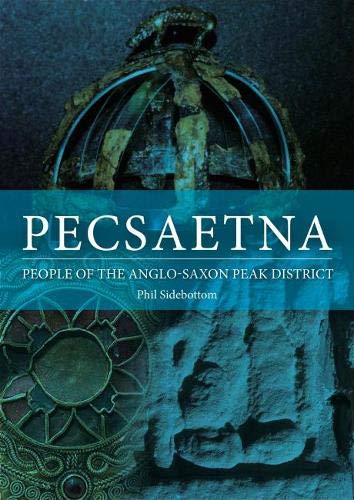
Coming in August 2020, and now pre-ordering, Pecsaetna: People of the Anglo-Saxon Peak District.
I’m definitely not one for prog rock, especially not at album length. But I couldn’t help but be intrigued by a new concept prog rock album in that style, and seemingly with a tilt toward the Peter Gabriel end of the spectrum. The concept here being the friendship between Tolkien and C.S. Lewis, with a track at the end which evokes their legacies.
The album The Bardic Depths has been getting great reviews including (apparently) a glowing one from the main prog rock magazine, so don’t be put off by the strange choice of cover art.
A lecturer at Hillsdale College in America, I see Brizer also has a new 17-lecture series online, Mythology and Western Civilization. The first part surveys “the ancient to the medieval” and the second part focuses on J.R.R. Tolkien.
On YouTube, ITV’s lavish TV adaptation of the Clayhanger novels by Arnold Bennett, set in Victorian Stoke-on-Trent. It formed a 23 hour costume drama broadcast in 1976, on the UK’s only commercial TV channel at that time. A small handful of Bennett’s classic Potteries novels were filmed, to make an epic family saga.

The quality is VHS, and it’s also available on torrents at Archive.org if you want to do tweaks or audio fixes. But note that the series is on DVD on eBay where — if you shop around — you can currently have the seven-disk set for about £15 including postage.
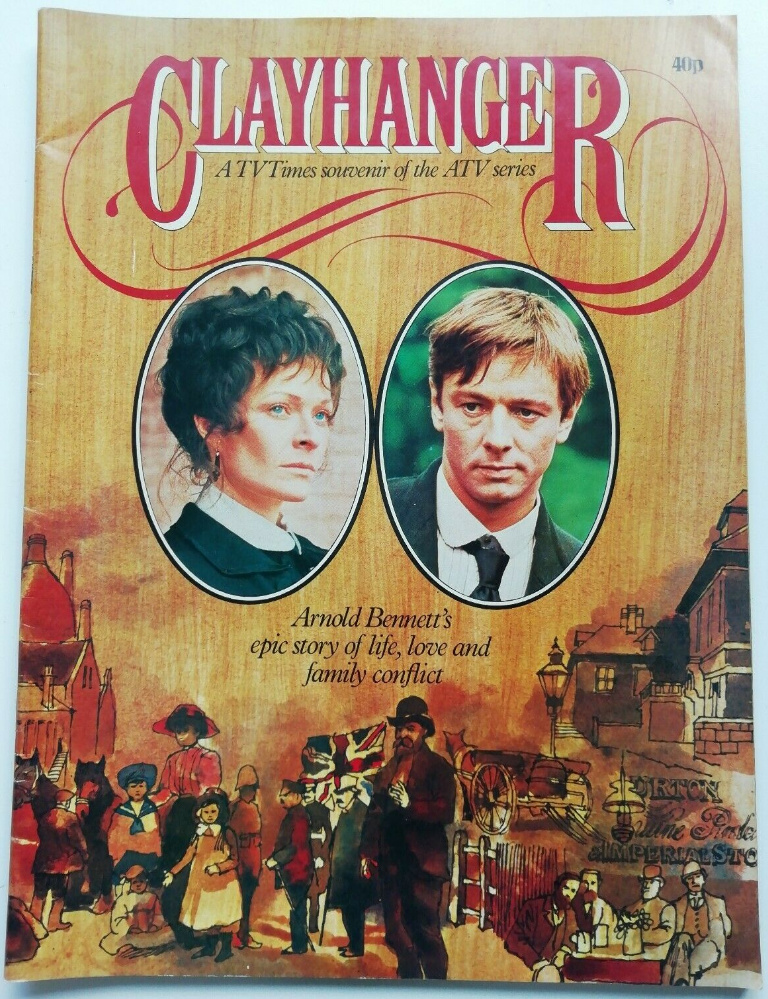
It was the coherent work of a single scriptwriter, unlike the ‘all must have prizes’ tag-teams of today. Despite some slow and thoughtful moments, it was a success and the series “dug deeply and sensitively into the grimly heroic world of Arnold Bennett’s novels” — Country Life magazine, 1977.
Some of it was filmed in the Potteries, and the rest in ‘the Potteries recreated’ on a large filming lot behind Elstree Studios. They did a good job, and the writer Douglas Livingstone recalled…
Michael Bailey, the designer, and his team did such a convincing job that visitors from the Potteries who’ve seen it have been known to become damp-eyed with nostalgia.
But despite the vast effort, and a cast of over 100, the series was effectively lost for decades. As Maire Messenger Davies, a University of Ulster film and TV historian, commented in an MIT paper…
“the question is raised as to why this prestigious costly production has so completely disappeared from view [and an] expensive, and star-studded adult serial has been lost to public access. [Its loss is especially felt because] It was the last of its kind – there were no more 26 episode series after this … It had an extremely starry cast … [playing to] a major literary work by a regional novelist [and was] filmed, and provided employment, within the Midlands region itself.”
Thus it was an important series on a number of levels, not least as a major expression of ITV’s cultural remit to serve its home region of the West Midlands. Yet it wasn’t just for a Midlands audience. Despite its regional flavour, in those days ITV (aka ATV) could easily have half the nation watching such a major series. And all the way through too, with none of the sort of ‘rapid tail-off’ that you see today, where audiences shrink drastically after episode four of a long series such as the current Doctor Who.
Whatever the reason for its burial it was gone for 35 years, and at a time when other old series were pouring into the shops on VHS and DVD. But it was eventually found and prised out of the archives of the rights holders. After much searching the entire series was found by the Arnold Bennett Society and TV producer Tim Brearley, languishing and dusty…
“in a warehouse in France”
It was only one warehouse fire away from being lost for good.