Tolkien Gleanings #8

Tolkien Gleanings #8

* A Concise List of Lord of the Rings Textual Changes (1954-2021) by Zionus (2022). Free, online, and covering the published editions rather than the drafts. Finds… “70+ changes unrecorded by others [and] a dozen possible errors in the latest edition.”

* Tolkien, Europe, and Tradition: From Civilisation to the Dawn of Imagination (2022). From… “a specialist in Germanic studies [who] demonstrates the European heritage that inspired Tolkien by explicating the finer details of Anglo-Saxon and Scandinavian myth, the Finnish Kalevala, Greco-Roman influence, and much more.” Appears to be a translation from the French. Despite the grandiose title, it has just 48 pages of core text. As such it can hardly be called a book, and at a guess it may be a printed lecture?

* An August 2023 summer school with John Garth, at the University of Oxford Department for Continuing Education, “An Introduction to Tolkien’s Mythology”. “From £1,315”. Fully booked in a bang and a flash, of course.

* A short report on the John Garth lecture, given in November 2022 as part of Marquette’s large Tolkien exhibition in the USA. The lecture…

“‘Whispering Leaves: How Tolkien’s Manuscripts Reveal the Secrets of His Creativity’ ran a little over an hour […] Garth teased a little bit of his next project as well. He said he was working on a book, tentatively entitled “Tolkien’s Mirror,” wherein he seeks to ground the work of The Lord of the Rings in Tolkien’s intra-war period (1918-1939) and World War II years (1939-1945), and show that much of Tolkien’s world-building reflected contemporaneous events, including those worldwide.”

* Vermonter Jeb J. Smith’s newly-funded Kickstarter book A New Perspective on J.R.R. Tolkien and Middle-earth. Funded but not yet produced and shipped. The blurb is off-putting. For instance, claiming that it’s… “the first book of its kind to place Tolkien within his proper context” [re: how his] “worldview impacted his mythology”. Tom Shippey and others might wish to disagree. Also makes it sound like the author is going to be reliant only on his examination of “a wide range of Tolkien’s writings” and little else.

* And finally, a new Creative Commons Sharealike picture of the Entrance and cloister of the Birmingham Oratory, home-from-home for the young Tolkien. I’ve here given the view a de-modernising, shadow lift, and a b&w fix. Feel free to re-use under the same CC licence.

Tolkien Gleanings #7

Tolkien Gleanings #7

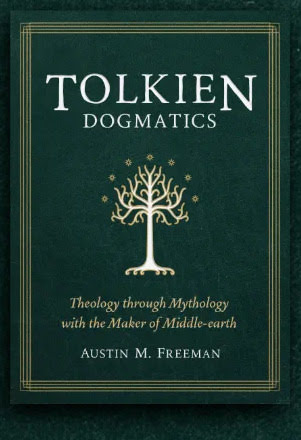
* The new book From Imagination to Faerie: Tolkien’s Thomist Fantasy now has a partial Google Books preview and TOCs…

* “The Vyne Ring in context: powerful people and powerful rings during the end of Roman Britain”, an open-access English chapter from the sumptuous and scholarly Rings of Power print book (2019, 2 volumes) on the cultural archaeology and thinking on ancient finger-rings. Readers will recall Tolkien’s connections with this and Nodens.

This open-access chapter also gives the TOCs, and there one finds the essay paired in the book with Thomas Honegger’s German-language “Tolkien und die Tradition der Ringe der Macht”. I find an English version of Honegger’s article is freely available. The book’s TOCs also show that most of the other chapters are in German. There appears to be no open-access version, other than these chapters.

* The new book Beowulf as Children’s Literature (December 2021, $ paywalled on JSTOR) considers the 100 or so children’s adaptations of Beowulf which appeared during the 19th and 20th century, and at the end has a chapter on “Children’s Beowulf for the New Tolkien Generation”.

* The open-access “To Bring Back some Eagleness to Eagles: On Bird Worldings in the Bronze Age” (2020). Relevant to Tolkien’s understanding of eagles in ancient Northern history and tales. The…

“research community has paid very little attention to avian creatures [and] birds seem to vanish from the air [in recent cultural studies of farming and landscape, since] Marxism still seem to rule contemporaneous Bronze Age research”.

Goes on to provide an interesting non-communist cultural/archaeological study (“According to north European birdlore, eagles were thought to be immortal”), and then the last third rapidly leaves the Bronze Age and comes up to date.

Tolkien Gleanings #6

Tolkien Gleanings #6

* A download of a lecture by Prof. Giuseppe Pezzini (University of Oxford), Tolkien on the Nature and Purpose of Christian Art. “This lecture was given on 21st April 2022 at The Christian Heritage Centre at Stonyhurst as part of the ‘Catholicism and the Arts: An Intellectual Retreat’.” (Online August 2022). Be warned that the Centre’s disastrous podium microphone often goes haywire and this, combined with the very heavy Italian accent, makes for a difficult listen. See also his open-access journal article “The Lords of the West: Cloaking, Freedom and the Divine Narrative in Tolkien’s Poetics” (2019).

* A theological podcast from October 2022 interviews the French author of the new book From Imagination to Faerie: Tolkien’s Thomist Fantasy (July 2022). The interview and discussion are excellent. I can’t locate any reviews of this book, as yet, even on Amazon.

* Amazon is now listing Tolkien’s Library: An Annotated Checklist: Second Edition Revised and Expanded, due 31st January 2023. The book is currently listing as a Kindle ebook only, and the listing previews an appealing new cover…

* Further out in time, a major new Tolkien book has been announced for the end of March 2023 and this is pre-ordering now. To be titled The Battle of Maldon: together with The Homecoming of Beorhtnoth, it will have Tolkien’s scholarly notes and “unpublished and never-before-seen texts and draft”. Plus related essays by Tolkien, and the text of his lecture “The Tradition of Versification in Old English”.

* Tolkien Studies, Volume 19, 2022 Supplement (July 2022, $ paywall). Has a single book-length article, “The Chronology of The Lord of the Rings”. This appears to be the first full publication of Tolkien’s own day-by-day working ‘grid chart’ for The Lord of the Rings, used by him to keep track of which characters were where on which day. I seem to recall that I saw a large section of this at the Bodleian exhibition in Oxford, a few years ago. This special Tolkien Studies supplement has extensive scholarly notes and an introduction. Amazon UK appears to know nothing about it.

* New in the questionable Brazilian Journal of Development (not in DOAJ or the Brazilian aggregators, and I won’t index it in JURN), a November 2022 article in English. “J.R.R. Tolkien: an analysis of the English conservative political culture” is said to be drawn from a Masters dissertation.

* In The Spectator magazine ($ paywall) this week, “In defence of fairy tales”

“A recent opinion poll has revealed that they terrify people under the age of 30, who consider them horribly inappropriate for children [and] ‘sexist’ and old-fashioned and outdated.” [Yet] “Some of these fairy tales date back 6,000 years […] That they have lasted, often scarcely changed, over the intervening millennia seems to me evidence that they contain certain immutable truths, applicable to all, regardless of whether we were chasing the last handful of mammoths or attempting to split the atom. [But today they are too often seen as] simply conduits for grievance and resentment” [And when such] “stories are read with blinkers on … The real point of the story is entirely lost.”

* And finally, the new research study “The Influence of the Mother Tongue on the Perception of Constructed Fantasy Languages”. Researchers found that Tolkien’s Elvish languages Quenya and Sindarin sounded the most mellifluous to German and Japanese speakers. While Orkish which the second most favoured language among Chinese speakers.

Tolkien Gleanings #5

Tolkien Gleanings #5

* The open-access paper GIS & Middle Earth (online 2021). GIS = computer-assisted mapping and map-making. Complete with free DEM height-map downloads, containing the entire terrain of Middle-earth.

* I see that An Unexpected Journal had a special issue on The Imaginative Harvest of Holly Ordway (Christmas 2021). This was inspired by her book which surveys the modern writers whose books Tolkien might have read.

* Calmgrove has a long August 2022 blog article in which he scrutinises some claims made for Tolkien’s Sidmouth (a small English seaside resort)…

“It seems to me that the most likely way that Sidmouth may have inspired Tolkien was that it provided periods of relaxation and escape in which to allow his imagination to run where it wanted, rather than any specific aspects of the Devon seaside and Jurassic Coast. Did Tolkien really “essentially” turn Sidmouth into the Shire and did the Jurassic Coast truly inspire the landscapes, flora, and fauna of the hobbits’ homeland? Or are the town’s advocates chasing a chimaera?”

At first glance there may be some disagreement with Garth. Calmgrove has… “While in Sidmouth he brought the hobbits far to the east of the Old Forest and the Barrow Downs to The Prancing Pony in Bree”, while Garth instead has him writing from Bree to Rivendell (Worlds, p. 74). Actually the Chronology supports both, since when he arrived in Sidmouth for a long holiday (“1st-15th September 1938”, Chronology) he already had the “In the House of Tom Bombadil” chapter done, if the reference to “Chapter VII” is the same as the book’s published chapter numbering. Tolkien then spent the holiday writing the tale from there up to Frodo meeting Gloin at Rivendell. What Calmgrove doesn’t snag is that Garth notes that Tolkien found the name Barnabas Butter on a old Sidmouth gravestone (Worlds, p. 21, side column).

* The December 2022 event “On Dragons and Dinosaurs” at the Oxford University Museum of Natural History

“On the 1st January 1938, J.R.R. Tolkien gave his thoughts on dragonlore and dinosaurs in an illustrated lecture at the Museum not discussed anywhere else in his works. [Now we stage a live] once-in-a-lifetime re-run of Tolkien’s lecture featuring his original slides, supporting specimens, and documents.”

Completely sold-out in a bang and a flash, of course. Hopefully it will be recorded and placed online after the event. “Tolkien’s Deadly Dragons” has an account of the original lecture.

* Dr. Philip Irving Mitchell’s ongoing public archive of online classroom handouts on Tolkien and Medieval Tradition. With useful short summaries such as Emotional Monarchy in Tolkien’s Lord of the Rings (August 2022).

* And finally, The Times Diary: Tolkien’s flag flying again (October 2022, $ possible paywall)…

“A historic Oxford pub where Tolkien and C.S. Lewis used to drink [has reopened, post-lockdowns] after supporters each paid at least £1,000 for a share in a 15-year lease. As well as being de-modernised to create a suitably Inklings air, The Lamb and Flag will now host book launches and talks.”

And The Spectator magazine ($ paywall) has an October 2022 article by a leader of the group, describing… How we’re saving Tolkien’s pub.

Tolkien Gleanings #3

Tolkien Gleanings #3.

Newly noticed at the latest edition of Journal of Tolkien Research, the short conference paper “Tolkien’s Coleridgean Legacy” (i.e. Coleridge).

Also new there, a review of the book Law, Government, and Society in J.R.R. Tolkien’s Works (2022). Another review from 2021 is found here.

New website: Tolkien and Alliterative Verse – A resource for students, poets, researchers, and anyone interested in J.R.R. Tolkien’s poetry, from Anna Smol. Has a Descriptive Bibliography for Tolkien, a guide to finding a small handful of worthy writing to introduce Alliterative Metre, and (“coming soon”) a guide to Secondary Sources.

Old, but new to me: “The Horns of the North: Historical Sources of J.R.R. Tolkien’s Trilogy” (1976). A short conference paper, now online. Some interesting early suggestions for sources, in a major but little-known event in Turkish / central European history.

Updated archive: Tolkien Journal, The 1965 – 1972, said yesterday by the curator to be newly in searchable .PDF form at fanac.org.

Audio interview: Writing About Tolkien, with John Garth (2022). Reveals that Tolkien at Exeter College has gone to a second edition. Nicer format (the first was laser-printed and stapled), adds some of the materials and high-res pictures used for the Bodleian exhibition, and has a few updates, according to a podcast interview with the author. £14 from his website. Not on Amazon, and not likely to be.

The Incredible Nineteenth Century

The Incredible Nineteenth Century: Science Fiction, Fantasy, and Fairy Tale. An open-access journal flagged as “Journal coming soon!” from Middle Tennessee State University. Will seek to focus on…

“the time period in which the modern genres of science fiction and fantasy began, and in which the academic study of fairy tale and folklore has its roots.”

Relevant to the 1906-1926 Tolkien, since his world was partly formed by the products of that earlier time in the late 19th century. Much as today someone would have been formed by the 1966-1986 period, though still living and working in the 2000s and onward.

New ‘Tolkien Gleanings’ tag for posts

This blog now has a new tag category for posts, Tolkien Gleanings. This has the more news-y posts on Tolkien items and exhibitions, not my essay-posts on Tolkien. I’ve gone back through the blog and retrospectively tagged relevant posts, back to about 2016. Movie stuff is not included, and the focus is on scholarship.

This new post tag (‘category’ in WordPress speak) means there is now also an RSS feed here just for posts tagged with Tolkien Gleanings. Though, as I said, my Tolkien essay-posts — such as the recent Foxy Tolkien? — won’t show up in this.

Tolkien Gleanings #2

Here’s another of my occasional round-ups of interesting new-ish items of Tolkien scholarship. No-one else appears to be publicly tracking such material (I looked hard, including on Twitter). So I guess I had better do it. And I guess I can’t go on calling these posts “mega-tolks”, so Tolkien Gleanings seem apt and also mellifluous. I had also better number them. Thus… welcome to Tolkien Gleanings #2.

* “Shakespeare’s Faerie Art of Enchantment through Tolkien’s Lens: A Historiographical Introduction”. A new Masters dissertation for the University of Toronto, freely online.

* “Reconstruction Of Medieval Consciousness In The Constructed Middle Ages Of J.R.R. Tolkien”. No download, despite offering a PDF link. But has a long abstract in English. Tolkien’s work as… “the continuation of traditions of European medieval humanitarian thought and the framework of texts that reveal the way of consciousness of people of that epoch”. Possibly the PDF download, should it be enabled, will reveal the full-text to be in Russian?

* The new paid-for journal Hither Shore 17: Brucken und Grenzen – Bridges and Borders (September 2022). Amazon UK calls it a German edition, and indeed it is published by the German Tolkien Society. But so far as I can tell there’s not also a twin English edition, and the TOCs suggest a substantial part of the issue is in English. Indeed, the issue opens with an editorial which muses on what happens when a German journal becomes substantially English. The same shift is apparently true of their conferences.

Among other items in Hither Shore 17, I noted essays in English on…

~ “Explorations into the linguistic character of Westron”. You’ll recall this is the “common tongue” of Middle-earth. Said to be very sparsely documented by either Tolkien or Tolkeinists. Concludes that Westron was a language with several inputs, one heavily Elvish in the early period, and that by the time of the events of LoTR it had diverged somewhat into regional dialects (e.g. the Shire and the Mark) — and it is thus akin to English in its history and divergences.

~ “Reconsidering Tom Bombadil in The Lord of the Rings“.

~ “”One Must Tread the Path that Need Chooses”: The Choice of Need in Tolkien’s Moria Sequence.”

* The paywall journal Behavioral and Brain Sciences has two new Tolkien articles, “Middle-earth wasn’t built in a day: How do we explain the costs of creating a world?” and ““Never Land”: Where do imaginary worlds come from?”. Somewhat related to this theme is Kristine Larsen’s new personal essay in the free journal Messengers from the Stars #6 (2022).

* Also behind a paywall, I note that the Catholic journal Touchstone carries occasional Tolkien articles, such as “Tom Bombadil’s Dominion: A Good Reason for the Appearance of Tolkien’s Obvious Misfit” and “Why Tolkien’s Middle-earth Table Manners Matter Today”.

* New scholarly book: Tolkien ja Kalevala.

* My own “On Merry and Marmaduke” and “Foxy Tolkien?”. Both freely online.

* My new book is also available, Tree & Star: Tolkien and the quest for Earendel.

New book: Tolkien ja Kalevala

Jyrki Korpua’s Tolkien ja Kalevala (‘Tolkien and the Kalevala’, 2022, £28) is a new book relevant to the young Tolkien. It’s in Finnish and about Tolkien and his discovery and engagement with the Finnish national folk-epic the Kalevala. Like many of his time, the young Tolkien found such (then relatively newly-recovered/reconstructed) Northern mythology fresher than the well-worn southern myths of Greece and Rome. Also a window through which to peer into the deep past of a harsh and misty North. But according to reviews the new book’s author also asks if “Tolkien would have started to create a larger world without the Kalevala”, and if it would have lacked certain key character types, ideas, activities (song and music) and heroic tasks.

Tolkien ja Kalevala

Introduction

I. From folklore to fantasy

About role models, ancient heroes.
Lonnrot’s Kalevala.
Tolkien’s known Kalevala.
Tolkien’s production.
What did Tolkien think of the Kalevala?
Fusions of the Finnish language and the Kalevala in Tolkien.

II. The Kalevala story and Tolkien’s fantasy world

World creation and world order.
Singing contests and courtship tasks.
Sampo and the Silmarils.
Intermissions.
The end of the story.

III. The dark parts of Tolkien’s world

The power of song, music and words.
Nature and the elements.
Vainamoinen.
From Louhe.
From Ilmarinen.
From Kullervo.

Conclusion

Afterwords

References
Sources
Directory [Glossary?]

Re-piped

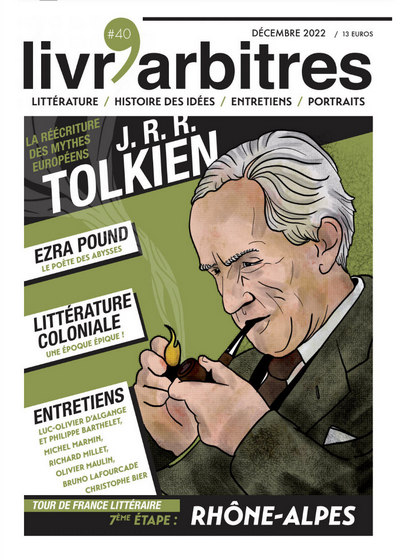
Alan Smith, “A Shire Pleasure”, Pipes and Tobaccos (Winter 2001), pages 20-24. An article on pipe-smoking in Middle-earth, in a trade/fan magazine for pipe-smokers.

Not on Archive.org, though a later run of the journal is. But now re-piped into the public realm via a free copy on the (Japanese?) tobacco-pipe site SoPipes.

Tolkien Gleanings #1

Pipe-smoking in Middle-earth is now in a third edition at $17 (September 2022).

Medievalism, the Lost Book, and Handicraft in The Lord of the Rings (the idea of the ‘lost book’)

“What’s in a Name?” Tolkien and St. Philip Neri

“The Congregation of the [Birmingham] Oratory itself was established in the sixteenth century by St. Philip Neri, who, despite having very little name-recognition in the wider world, is a major figure in Church history”

Catholic Culture podcast interviews Carl Hostetter on the recent book The Nature of Middle-earth.

A new review of Tolkien’s Cosmology: Divine Being and Middle-earth (2020)

In French, Les Lettres du Pere Noel de J.R.R. Tolkien : les metamorphoses editoriales d’un corpus epistolaire fictionnel (J.R.R. Tolkien’s Letters from Father Christmas: the editorial metamorphoses of a fictional epistolary corpus) (HTML, so easily auto-translated).

Tolkien and the Greco-Roman World

A large special issue of the German open-access journal Thersites, themed ‘There and Back Again: Tolkien and the Greco-Roman World’ and with deep articles in English. Including…

“Tolkien and Greco-Roman Antiquity”. (Very briefly “sketches the status of the research on the influence of Greco-Roman antiquity on the works of Tolkien” in terms of publication, including mentioning two non-English books I’d not heard of).

“Tolkien’s Ithilien and the Landscape of the Ancient Mediterranean”. (Excellent, and with a large bibliography).

“Ents, Sacred Groves, and the Cost of Desecration”. (Some discussion of sacred groves and the scholarly debates about pre-Christian animism and sacred trees. Unaware that Tolkien’s personal tutor at Oxford was one of the world’s great experts on animist ethnology).

“(Classical) Narratives of Decline in Tolkien”. (A small typo on the dating… “Tolkien had an extensive training in Classics at King Edward’s School (KES), the prestigious grammar school that he attended from 1900 to 1910” — he was actually there until the end of July 1911).

Review of the book Tolkien and the Classical World.