Tolkien Gleanings #67

Tolkien Gleanings #67.

* On YouTube, a “Christopher Tolkien interview compilation 2022” (September 2022). This is over an hour of segments otherwise stuck in other videos. Also includes some clips of Priscilla Tolkien remembering her father, and one section in French with hard-coded subtitles.

* Doxacon (May 2023) has its presentations from the conference on “Orthodox Faith and Fandom” online, in streaming audio. No downloads, although UBlock Origin | ‘Inspect’ link | open the DIV will find the code with the .MP3 link you need. Tolkien items include…

  – Tolkien Panel (discussion panel)

  – “Biblical Typology in The Lord of the Rings”

  – “Spiritual Portraits from the Tolkien Legendarium”

  – “J.R.R. Tolkien and Flannery O’Connor on Christians”

  – “Middle-earth, Writing About the Real, and the Theology of Community”

* In French from 2020, a Radio France audio tour with Vincent Ferre, curator of the Tolkien exhibition at the BNF [French national museum], and astrophysicist Roland Lehoucq, among other contributors, on “Tolkien and the sciences”. Seems to be a topic-focused tour of the vast Middle-earth exhibition recently staged in Paris?

* A new ebook (short, at 80 pages in paper) from an expert British faerie-folklore blogger. I’ve been following his blog for some years now. His No Earthly Sounds: Faery Music, Song & Verse is…

“on their music and song … to try to provide a comprehensive statement as to why the faeries sing and play instruments — and what exactly those tunes sound like.”

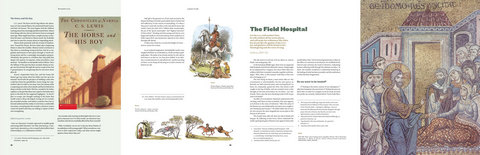
* A Masters dissertation for Washington University, “Legends of Light: Crafting middle-grade fantasy in the tradition of Catholic philosophy and medieval visual culture”. It’s a Fine Arts dissertation, which implies encouraging things about the department. Makes reference to Tolkien and C.S. Lewis, among others, for…

“the writing and illustrating of middle-grade literature that mirrors the wonder-inducing experiences of leafing through an illuminated manuscript and stepping into a Gothic cathedral.”

… and the PDF is designed as if a professional book. “Middle-grade” is an American school-system term that means middle childhood, ages 8-12.

* And finally, over in Germany I see that there’s an adult education course in Duisburg on Tolkien’s art and calligraphy…

“‘The Art of Middle-earth — J.R.R. Tolkien as Visual Artist and Calligrapher’ is the title of the last Jour Fixe in the spring semester of 2023. Axel Voss leads the program.”

Yes, I can see that Tolkien and calligraphy would be a good and natural choice for an adult education evening-course. And easy to market and get local press/blog coverage for.

Tolkien Gleanings #66

Tolkien Gleanings #66.

* The Amon Sul podcast has a new long interview with Tom Hillman about his forthcoming book Pity, Power, and Tolkien’s Ring: To Rule the Fate of Many. Start at 39:00 if you just want the section on pity.

* New at the Bodleian Library, a technical article on “Preparing J.R.R. Tolkien’s drawings for display”. No pictures of the pictures, but lots of lovely corner-hinges.

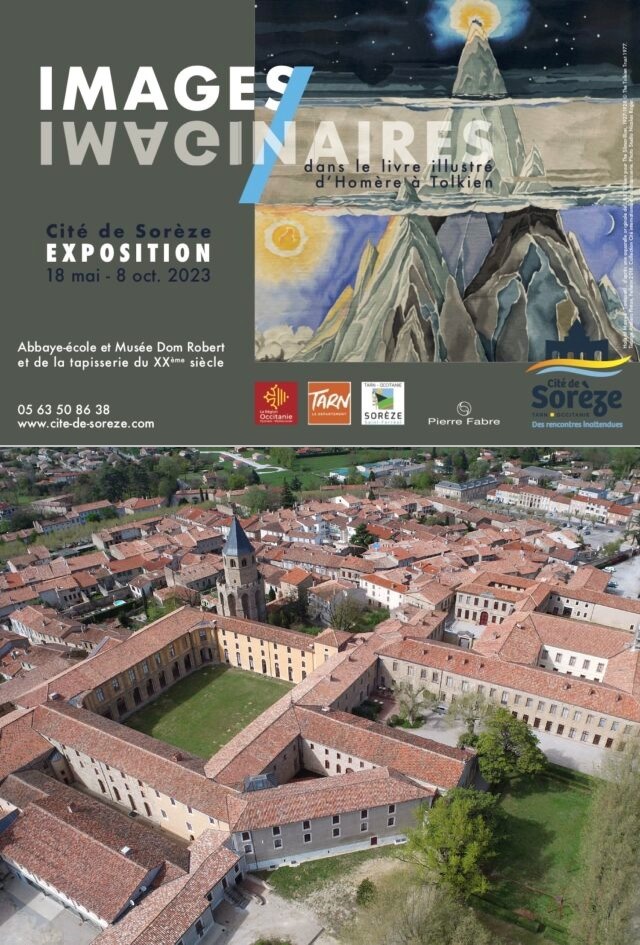
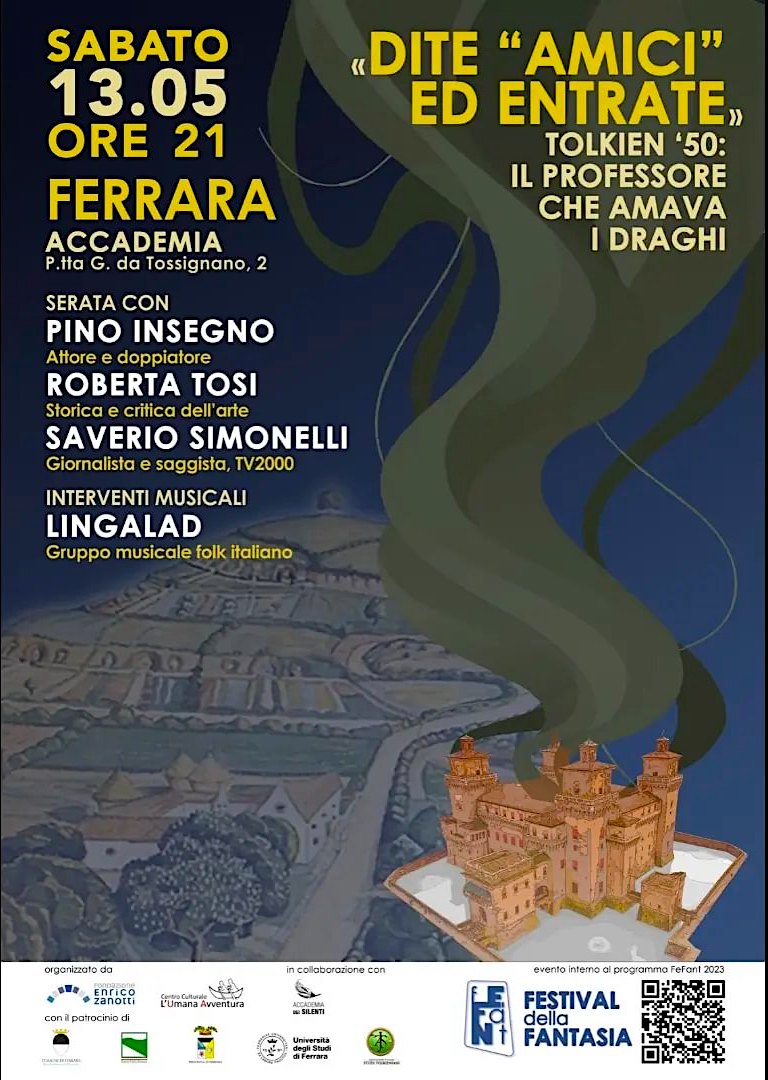
* A pleasing poster design (and enviable castle venue) for a Tolkien event in Italy, organised by the Associazione Italiana Studi Tolkeniani. One of a series happening in May 2023 on the 50th anniversary of Tolkien’s death, and with the help of what looks like abundant regional sponsors. Translates as: “Say ‘friend’ and enter”, Tolkien after 50: the professor who loved dragons.

* I see Amazon UK has a Kindle ebook edition of Perilous Realms: Celtic and Norse in Tolkien’s Middle-earth (2005), dated 25th January 2023. I assume this still-expensive £28 ebook version is new. Fimi describes the book as not quite fitting the publisher’s over-broad title. Focused on The Lord of the Rings it is… “rather a study of Tolkien’s characters, focusing on how Norse and Celtic material influenced the process of their creation and development […] not so much on motifs and storylines that Tolkien used from his Norse and Celtic sources. […] thought-provoking and well researched […] written in a simple but elegant style” and thus somewhat accessible to non-specialists. The third and fourth chapters especially so, being on travel and landscape features encountered in LoTR (“Bridges, Gates, and Doors”, and “Iceland and Middle-earth”).

* There’s a fledgling “Tolkien Fanworks Scholarship Bibliography” online (last updated July 2022).

* And finally, the finding of the One Ring as a teaching point for students of data management for provenance recovery in the field of archaeology…

From an archiving perspective, good record keeping turned out to be the real hero of the tale. [The] stewards in Gondor tending to their libraries, and providing access to an interested stakeholder, saved the day. Yet even with high-quality data management strategies and metadata in place, it still took wizard-level research and translation skills – both of which were covered in the NADAC Institute earlier in this semester – for Gandalf to decipher the ‘object biography’ of the mysterious ring [then still] in Frodo’s possession back in the Shire.

Tolkien Gleanings #65

Tolkien Gleanings #65.

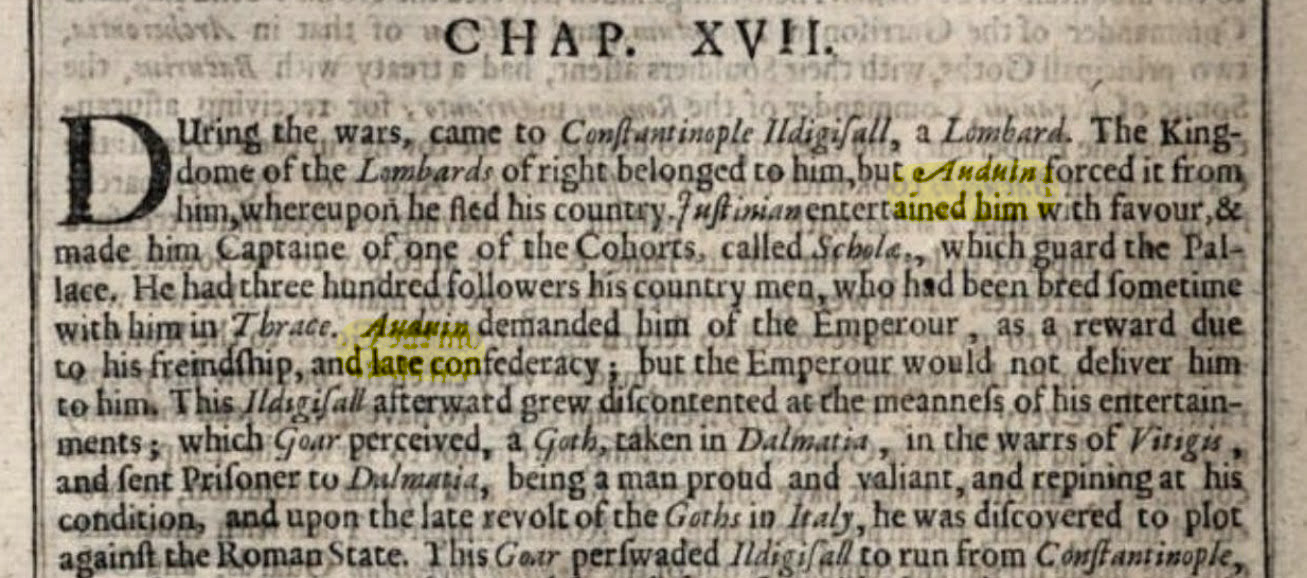
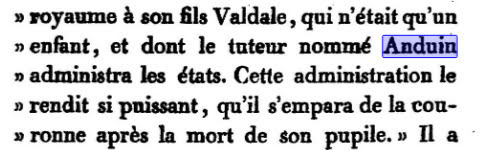
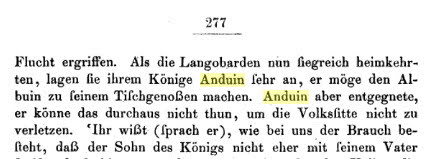
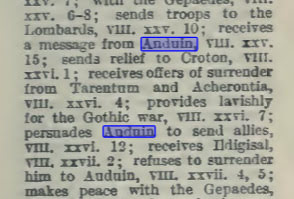
* A new open-access article by the technologies librarian at Marquette University, “Anduin: Transforming manuscripts from The Lord of the Rings into a digital experience” (2023). Incidentally I see the word is claimed as a trademark of Middle-earth Enterprises. But surely there is ‘prior art’ on this? It was long the name used to refer to one of the key Lombard kings, as Anduin (526-572 A.D.). It can be found thus in English as early as Procopius, The History of the Warres of the Emperor Justinian (1653)…

… through 1811, the 1857 in the Jahrbuch fur Deutsche Sprache, Litteratur (‘Yearbook for German Language and Literature’), and the 1928 Harvard ‘Loeb’ Classics edition of Procopius in his History of the Wars (Gothic War). Today known to modern historians as King Alboin.

* Leading Tolkien scholar Michael Drout has revealed that… “W.W. Norton will be publishing The Tower and the Ruin, my book on J.R.R. Tolkien, in spring 2024″. The title presumably relates to Tolkien’s parable of the tower, given in his The Monsters and the Critics.

* Publisher Taylor & Francis has released a date and table of contents for the forthcoming book J.R.R. Tolkien in Central Europe: Context, Directions, and the Legacy. The planned publication date is set for 29th September 2023, and the chapters cover receptions of Tolkien translations in Hungary and Czechoslovakia, and perhaps more — though other nations and peoples are not stated in the blurb or TOCs.

* Details of what sounds like an event on Tolkien and translation, in Italy on 27th May 2023… “The event, organised to coincide with the 50th anniversary of the death of J.R.R. Tolkien, is part of a series of events to celebrate the author of The Lord of the Rings”. I also see in a press release that the forthcoming Turin Book Fair has a talk about “a national campaign” happening in Italian schools, to do with the same 50th anniversary.

* The German fan magazine Flammifer von Westernis #68 (April 2023) has been published. My translation of the TOCs suggests that among other items it has an interview with Brian Sibley, an article on Tolkien and Switzerland, and a review of the book The Science of Middle-earth.

* And finally, in the latest Journal of Scottish Thought, “The Angel Creatures of George MacDonald’s Phantastes”. This issue is a special on MacDonald and also has an article on “The Literary and Theological Otherworlds in MacDonald’s Fairy Tales”.

Tolkien Gleanings #64

Tolkien Gleanings #64.

* Following the recent conference-panel at Niagara Falls (see Tolkien Gleanings #20), there’s now a call-for-papers for a subsequent edited book. “The Function of Relics and Ruins in Middle-earth” is the topic, and the deadline for abstracts is 1st July 2023.

* Only available as an abstract, but an interesting one, “Who are the True Heroes of J.R.R. Tolkien’s Middle-earth Mythology?” (2023)…

“… concludes that each race in Middle-earth has its own representative heroes with each of these characters’ heroic potential and requirements determined not only by their race, but by their individual family history [“familial curses” or an “innate fallen nature” are both suggested]. This perspective is vital to understanding these texts and Tolkien’s intended message correctly.”

I’d add that being orphaned, or half-orphaned, is also a factor to consider. Consider the casually-told familial back-story for Sam which, in dribs and drabs, serves to explain his humility and eventually to burnish his determined heroism. The reader learns (by implication) that Sam was raised with no mother, while it’s made clear at several points that Sam’s gaffer was always ready with a disparaging word or three for his son. Faramir likewise has lost his mother, and has a disparaging father. Even Smeagol, reading between the lines, was raised by his grandmother. Yet so far as I recall there’s never been a study of orphan-age and its uses in LoTR, with outside reference to the rich historical/literary context of orphans and orphan-age in England from c. 1900s-1950s. Also the mythological and folkloric context. The academic survey-book The Orphan in Fiction and Comics since the 19th Century (2018) has nothing to say about Tolkien. Nor does the dissertation “A Character Analysis of the Orphan Figure in Children’s Literature” (2016). But there obviously is something to say. There may be a dissertation for someone in that.

* And finally, among the authors whose works enter the public domain in January 2024, under the 70 year rule, is T.F. Powys. He was one of the Powys brothers, and wrote many Christian fantasy stories and novels, these often having a rather hobbity back-of-beyond setting. Drout’s Tolkien Encyclopaedia puts it in a more polished way, he… “created isolated and distinct localities emphasising a primitivist vision of the rural Englander.” He was well regarded in the pre-war years, and his tales still seem accessible today. But he’s now very obscure even to Christians. Perhaps it’s the time to prepare a “best tales of” volume, with an introduction which enquires into the possibility that Tolkien might have read some of his tales?

Tolkien Gleanings #63

Tolkien Gleanings #63.

* Now online, the YouTube recording from the recent UK event “Celebrating 70 years since J.R.R. Tolkien’s Sir Gawain lecture in Glasgow (1953-2023)”. The first of the three talks starts at 20:00 minutes in.

* I see that Cambridge University Press published two new books, just before Christmas 2022. One offers chapters which survey various modern epics, Epic Ambitions in Modern Times and this has a chapter on Tolkien’s Lord of the Rings and Silmarillion. The other is Cultural Legacies of Old Norse Literature, though snippets suggest only one chapter (by Geeraert) might perhaps have something to say about Tolkien. Both books are paywalled, though both have Kindle ebooks that are far cheaper than otherwise.

* Now available, the first issue of the new open-access journal The Incredible Nineteenth Century: Science Fiction, Fantasy, and Fairy Tale. Two articles, plus many book reviews.

* A new Masters dissertation in Philosophy, Lord of the Meaning: An Examination of Interpretive Theories (2023), which revolves around the idea of allegory-hunting in The Lord of the Rings. Freely online at the University of Saskatchewan, Canada.

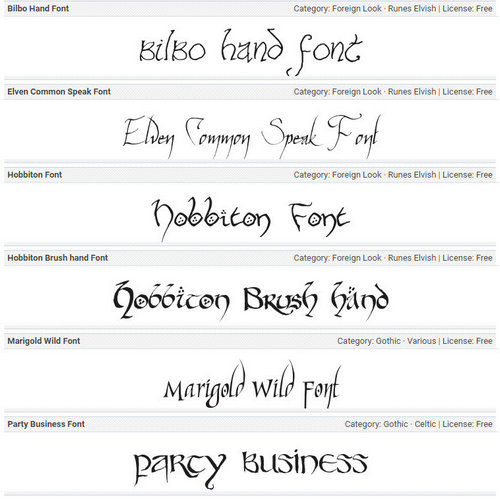
* And finally, new to me (thanks to a new listing on da.font) are the Middle-earth Fonts by Nancy Lorenz. These have freely-given permission for commercial use.

“Marigold Wild” has some especially nice capital letters, not well previewed on the mixed demo above.

Tolkien Gleanings #62

Tolkien Gleanings #62.

* A new Masters dissertation for Belmont University, “Tolkien’s Legendarium: An Answer to the Eternal Question of Why Warfighters Engage in Armed Conflict” (2023). The author… “examines how Tolkien drew upon Northern Courage, Ofermod, Comitatus, and Þræll to illustrate armed conflict in his Legendarium”. The PDF is freely available.

* The next issue of the Journal of Tolkien Research has begun posting articles. Vol. 16, Issue 1 opens with thoughts on how “The Wanderer” might have drawn on both Gothic and Classical influences. Specifically, a warrior-culture’s desire for… “a Germanic equivalent of Alexander the Great”.

* I see that Amon Hen has shipped issues to members, for February and April 2023. The latter being the big issue #300, with “seven articles” according to one blogging recipient. Table of contents? Nope, it seems not. Regrettably Tolkien Gateway’s ToCs are very patchy and the most recent is April 2022. The last issue with ToCs at the Tolkien Collector’s Guide is #206, which was about 12 years ago now.

* Below is “Anton’s plan of Barnt Green”, rescued from a local article that vanished in 2011. Note “The Hollow Oak Tree” on the edge of the village, in a map from a resident recalling the village he had known as a boy in the 1940s. Admittedly that was some 30 years after Tolkien was there, but big oaks take thing slowly. The map can be tallied with a 1926 air photo and Tolkien’s painting of the still un-located “The Cottage”. If one were to get the very high-res version (feel free, I can’t afford it and ‘Britain from Above’ is a pain to buy from) then one could fully tally it against the roof shape and the distinctive windows and end-row location. Most of the other houses in the village look like they have roofs and windows unlike those seen in Tolkien’s painting. So it would be a process of elimination, also guided by Anton’s map. Anton lived at the “Grey Cottage”.

* And finally, advanced Swedish school “students investigated whether the dragon Smaug can fly”. ‘Maybe’ seems to be the answer from their wind-tunnel tests. But only very fast, and very badly. Ah… but did they take account of his intense heat and the consequent thermal up-drafts?

Tolkien Gleanings #61

Tolkien Gleanings #61.

* Call for Papers: Creative Philology… “Signum University Press is pleased to announce a call for papers on Philology for an anthology in honour of Professor J.R.R. Tolkien”. Several suggestions lean towards the ‘invented languages’ crowd, but one may offer scope for historians… “The implicit or explicit role, place, and/or impact of philology and philological awareness in public life and popular culture.” Note there is no time-frame specified in this suggestion. Deadline for abstracts: 31st July 2023.

* A Masters dissertation “Writing for the Fantasy Genre through the Christian Worldview” (2023), for Liberty University. Wide ranging, but a key suggestion appears to be that a tale’s “Christian worldview” should allow an author to depict “magic akin to Christian miracles” — even though some in the Bible Belt might think it looks pagan.

* The Elrond’s Library website has been taken offline. It had a large A-Z listing of known Tolkien translations. The Tolkien Collector’s Guide is said to be ingesting the “data” from the site, but I’m uncertain if they’ll also take the site’s PDF essay on “Tolkien and Iceland” (in French). In which case, the Web link I give here goes to the Wayback Machine and an archived PDF.

* The Retreat, Rednal. You’re welcome… happy bidding.

* And finally, the YouTube channel Mapster takes a new eagle’s-eye view of Tolkien’s Incredible Map of Middle-earth (May 2023, 24 minutes). No wobbly hand-held cameras, dim lighting or clunky sound. This is a slick semi-pro production with a Steadicam and slow pans-and-zooms. As such I guess it stands a chance of being taken off YouTube due to copyright, so you may want to download a copy to keep.

Tolkien Gleanings #60

Tolkien Gleanings #60.

* An unusual study of “Subtlety, Understatement and Omission in The Lord of the Rings, in the new issue of the journal English Studies in Africa (April 2023) ($ paywall). It seems rather interesting, but is sadly inaccessible due to the paywall.

* A YouTube recording of a Cambridge talk “Tolkien, Barfield, and Neoplatonism: How Metaphysics Moulded Middle-earth” (2020). He’s rather a fast speaker, so you may want to download as a file and then slow/pitch-shift in AIMP or a similarly capable media-player.

* Joseph Pearce considers “Tolkien & Lewis on the Blessed Virgin Mary” (summer 2022, reprinted here for springtime 2023).

* New on Archive.org, Science Fiction And Fantasy Artists Of The Twentieth Century: A Biographical Dictionary (2009). This is a thoroughly out-of-print but major reference work. The book offers excellent short biographies and bibliographies for 400+ key artists involved with publishers of literary SF and fantasy for adults. Overwhelmingly North American, but with around 70 British artists manning the tail-guns.

* A lucky someone has managed to bag a picture-map by Bernard Sleigh (famous for “An Anciente Mappe of Fairyland”), for a mere £20. The map shows the Lickey hills in 1920, before the tram-line and terminus. As you’ll recall, the Lickeys were a key place in Tolkien’s early boyhood. Being the site of what later became ‘Fern Cottage’, and later a site of his early courtship… “Near the end of autumn term 1909 Ronald and Edith ride their bicycles to the Lickey Hills on an afternoon excursion.” (Chronology). Tolkien also returned there at other times in his boyhood, on excursions or via visits to the Birmingham Oratory’s ‘Retreat’ house with Father Francis. He also often stayed with his Incledon relatives at nearby Barnt Green, near the southern foot of the Lickeys, and… “in July 1913, he made several paintings and drawings, including King’s Norton from Bilberry Hill [a key hill on the Lickeys]” (Reader’s Guide).

Regrettably Sleigh’s home-city has never given him an exhibition, or even placed any scans of his maps online. But an example of his penmanship can be seen here on his Sutton Park map. I should add that, so far as I know, the young Tolkien did not know north Birmingham or the then-adjacent Sutton. If one is raised in Birmingham there is often not a great deal of to-ing and fro-ing between north and south, other than perhaps a one-off day-trip around the No. 11’s Outer Circle. Incidentally, I wonder if some of Sleigh’s maps (made circa 1920-37) might have influenced Tolkien’s own cartography, and that of his son and map-collaborator? Sleigh was also a contemporary fairy poet and writer of fairy-tales, and was born and raised in Kings Norton — just a little south of Tolkien’s places and some 20 years before Tolkien’s time there.

* And finally, “The Devil’s Coach Horses” (1925), by Tolkien himself. Now freely available on Archive.org and seen in its original context, after their recent mass ingestion of microfilm journals. By contrast, JSTOR would like to charge you $51 just for this one item. Here Tolkien the aspiring academic has much to say about the words used for cart-horses and the West Midlands dialects in which they were used.

Tolkien Gleanings #59

Tolkien Gleanings #59.

* New today on Project MUSE, the latest edition of the scholarly journal Tolkien Studies Vol. 19, 2022. Expensively paywalled, but the front page of each item is free. Of interest to me…

  — “A Rabble of Uninvited Dwarves”. (Appears to consider the known source of the dwarf names and, since this is the lead essay, the author presumably has new things to say on the matter).

  — “Tolkien, the Medieval Robin Hood, and the Matter of the Greenwood” (“Despite the tremendous strides that scholars of Tolkien’s works have made in identifying and discussing the role that the Arthurian legend played in shaping Tolkien’s literary corpus, they have dedicated very little attention to the ways that Robin Hood and the ‘Matter of the Greenwood’ also influenced the author’s works.”).

  — “Early Drafts and Carbon Copies: Composing and Editing Smith of Wootton Major”. (Now seems less vital for me, as I find it seeks to clarify a scholarly debate over the ordering in Verlyn Flieger’s critical edition book of Smith of Wootton Major).

  — Also the “Book Notes” and “The Year’s Work in Tolkien Studies 2019” and “Bibliography (in English) for 2020”.

* We get a free bit of the new journal’s “Bibliography” (see above) and this makes me aware of the article “In Search of Bombadil”. Which I find to be freely available in the Fall 2020 edition of the online journal Parabola. This takes a ‘spiritual search’ angle, rather than going source-hunting.

* New and free in open-access in the MDPI journal Religions, “On the Symbolic Use of Dragons by Jacobus de Voragine and J.R.R. Tolkien” (2023). Jacobus was the Italian chronicler of the Legenda aurea (debatable dates, possibly the earlier years of the 1260s) which preserves “Saint George and the Dragon”.

* The open-access transcript and Powerpoint slides for the talk “Developing a Digital Critical Edition of Tolkien Fanzines” (2023), now available.

* A new short blog post at For the Church, “Even Tolkien Felt Like a Failure”.

* Here at Spyders, my 2018 “J.R.R. Tolkien in Stoke” blog post has been expanded a bit. Also has some new or better pictures.

* And finally, in Switzerland, Herr der Ringe is billed as a stage / puppets adaptation of The Lord of the Rings by Theater HORA and Das Helmi Puppentheater. Although a snippet from a review reveals it’s a promenade production, with the audience walking between various scenes which feature live actors and puppets. I’d assume a minstrel then fills in the audience on the plot, as they move between key scenes? Four performances per week, until 1st June 2023.

Tolkien Gleanings #58

Tolkien Gleanings #58.

* The pre-release covers are now available for the forthcoming biography by Holly Ordway, examining what can be known about Tolkien’s spiritual life. The book is set for a hardback release in August 2023, and now has a basic listing on Amazon UK.

* If you want to know why AI writing and assemblage is not yet fit for public display, just look at the bot-assembled Amazon page for the forthcoming book Tolkien in the Twenty-First Century: The Meaning of Middle-Earth Today (August 2023). The book is, apparently… “An authoritative take on the history of the vampire”. Good to know that Tolkien might yet rise from his grave and take revenge on those who have ravaged his work for mega-bucks (now there’s an idea for a pulp-shocker comedy movie…).

* Mapping Middle-earth: Tracing Environmental and Political Narratives in the Literary Geographies and Cartographies of J.R.R Tolkien’s Legendarium (2020). A PhD thesis, for the University of Edinburgh here in the UK. Freely available online…

Chapter 1: Hic Sunt Dracones: Historical Perspectives on Tolkien’s Cartography.
Chapter 2: Force of Nature: Mapping Environmental Concerns.
Chapter 3: Into the Abyss of Time: Geological and Temporal Mapmaking.
Chapter 4: This Land is My Land: Maps, Power Politics, and Imperialism.

* The Sound of Middle-earth: Music and Song among Races in J.R.R. Tolkien’s The Lord of the Rings (2022). A Masters degree dissertation for Acadia University in remote Nova Scotia, Canada. Freely available online, with a structure which steps through each of the races in turn.

* New on Archive.org, free to borrow, Glee-Wood: Passages from Middle English Literature from the Eleventh Century to the Fifteenth (1949). A choice selection for a wider public, offered in English translation and with a pleasing design.

* And finally, I’ve tracked down “At The Tobacconist’s” on YouTube. This being the ’20th Lesson’ of the Linguaphone English Conversation (1930), a set of spoken-word audio discs and accompanying booklets for language learners. The digital version of the recording was taken offline by the British Library several years ago, and the Wayback Machine did not capture its streaming audio. A certain Mr. Tolkien also recorded the ’30th Lesson’ in this set, titled “Wireless” (i.e. early radio broadcasting). Thankfully this has also been saved on YouTube by a different user. Between these two clear recordings, and with the customer voice on the tobacconist’s shop trimmed out, there should be enough here for an AI voice-cloning of Tolkien’s voice. As it was in 1929, when he was in his prime.

Tolkien Gleanings #57

Tolkien Gleanings #57.

* News of a new book, Myth, Magic, and Power in Tolkien’s Middle-earth: Developing a Model for Understanding Power and Leadership. Set for release in mid July 2023, with a hefty £65 price tag for what is a 120-page book. But it does appear to be a serious study of “the social power dynamics at work” in human leadership actions. With all examples drawn from The Lord of the Rings.

* An 11th April 2023 call from the organiser of the Tolkien Studies Area of the enormous Popular Culture Association Conference (27th-30th March 2024, Chicago). Not a call for that Easter 2024 conference, but rather for a possible event (presumably for Tolkien scholars) beyond that in the summer…

“I am chairing an Exploratory Committee to gather information for the Board on what we would need to do to run a Virtual Conference during summer 2024. If you are interested in attending such a conference, or working with [us] on the project, please let me know.”

* Advance news of two books set for 2024, from the same author. Just the titles and publishers, at present. Tolkien’s House of Being from Kent State University Press, and The Herdsman of Light: Tolkien and the Mystical Theology of Anglo-Saxon Poetry from Darkly Bright Press.

* On Archive.org, four new scans of the journal Anglia: Zeitschrift fur Englische Philologie. Being the issues for 1926-28, including a 1928 review of Tolkien & Gordon’s Sir Gawain and the Green Knight glossary. Also new, five scans of The Journal of English and Germanic Philology for 1923-27, with 1927 having a review of Tolkien & Gordon’s Gawain. Further note 1923’s article “The Tradition of Angelic Singing in English Drama”, which Tolkien would likely have noticed.

* And finally, Tolkien’s legacy has helped to revive the making of tapestry wall-hangings in central France. Today Japan Today reports on the “small town of Aubusson in central France” which has “a tapestry-making tradition that stretches back to the 15th century”. In 2017 they “engaged in a collaborative project to create tapestries based on Tolkien”. This led to “an agreement with Studio Ghibli in 2019 to create five works based on Miyazaki films.” They’ve recently unveilved a giant Spirited Away tapestry. On the back of their Tolkien and Miyazaki work they have had a surge of “applicants to the centre’s artisan training program”.

Tolkien Gleanings #56

Tolkien Gleanings #56.

* More news from France, which this summer seems to be seeing a lot of Tolkien activity. ‘Journees de Recherche et de Rencontres sur Tolkien’ is the name for the Tolkiendil ‘research days’ event in France, set for 6th-7th October 2023 in “the Paris region”. The call-for-papers currently has a date of 31st May 2023. No specific focus, but they’re broadly interested in translation and biography. Note that submitted papers can be in English, as well as French.

* Also in France, Tolkien: Voyage au coeur des forges, an exhibition seemingly centered around Tolkien and metal? Not guitar-gouging heavy-metal music, but the hard clinking and clanking variety. The museum seems to be devoted to metal and metal objects.

The summer 2023 exhibition will have “unique and rare pieces collected by a passionate collector”, augmented by 2D artworks, painted scale models and fun events (a dwarwish treasure hunt, hobbit banquet and rustic crafts market). The museum is in the hills just to the west of the central city of Lyon, and the show opens on 1st July 2023. Might make for an interesting stop-over, if you can afford to take the train to the south of France this summer? And if there aren’t the inevitable French strikes and blockades.

* Just published is a chunky new book on Tolkien from a traditional Christian perspective, The Road Goes Ever On and On (April 2023). Available in paper and in Kindle ebook, which means a free 10% sample can be sent to your e-reader device. The book appears to emerge from the author’s interest in the intersections between Tolkien’s old-school religion and his political views.

The new book is not to be confused with earlier similar titles, such as A.K. Frailey’s The Road Goes Ever On: A Christian Journey Through The Lord of the Rings (2017).

* My JURN arts & humanities search-engine has been tweaked. The Tolkien publication Mallorn is auto-generating a Web page for each and every citation given in every article, posting these at journals.tolkiensociety.org/mallorn/citationstylelanguage/.. These are being indexed and thus were getting into JURN. The problem has now been fixed at the JURN end, which means these ‘single citation pages’ should no longer appear in your JURN search results.

* And finally, after all this time doing Tolkien Gleanings I’ve only just discovered The Latest on C.S. Lewis (RSS Feed). This is a monthly blog post which does for Lewis what Gleanings does for his friend Tolkien. It just goes to show how deeply buried good material can be on the Web, under mountains of piffle and bot-generated ‘content’.