Frank N. Magill in 1969, on The Lord of the Rings

Here is a possibly overlooked critical and positive appreciation of The Lord of the Rings, found buried in Frank N. Magill’s Masterpieces Of World Literature In Digest Form; Vol. 4 (1969). At that time the weighty volume(s) would likely only have been available in larger or university libraries. Though it is said to be a reprint under a new title, and snippets from Google Books suggest that the LoTR items originally appeared in Magill’s Masterplots: The four series in eight volumes (1958), and probably earlier than that in his Annual. Which if correct would make it a very early piece of criticism, and perhaps more widely distributed than in 1969 (among the many authors who would have subscribed to the Masterplots series in the 1950s, and associated Annuals). It may have been overlooked because Tolkien researchers assumed the Magill books contained only bald plot summaries?

The item does not occur in A Chronological Bibliography of Books about Tolkien under “1969”, a list in which Magill only enters in 1983 with his Survey of Modern Fantasy Literature. The same is true of the items referred to in Tom Shippey’s “Tolkien as a Post-War Writer”.

The three books are treated in different parts of the volume, and are here run together.


Samuel Johnson is credited with saying that “A book should teach us to enjoy life or to endure it.” J.R.R. Tolkien’s trilogy The Lord of the Rings teaches both. It also fits the dictum of another writer, Robert Louis Stevenson: “And this is the particular triumph of the artist —not to be true merely, but to be lovable; not simply to convince, but to enchant.” Tolkien has been compared with Lodovico Ariosto and with Edmund Spenser. Indeed, he is in the mainstream of the writers of epic and romance from the days of Homer. His work is deeply rooted in the great literature of the past and seems likely itself to be a hardy survivor resistant to time. In The Fellowship of the Ring, the first volume of The Lord of the Rings, Celeborn the Elf King (no doubt speaking for his author) warns against despising the lore that has survived from distant years; for old wives’ tales may be the repositories of needful wisdom. Although The Lord of the Rings is advertised as a trilogy, with each volume bearing a different title, it is really a single, continuous romance. The author is in complete control of his copious material. He has created a consistent world with a sharply realized geography, even furnishing maps; he has worked out a many-centuried time scheme, summarizing the chronology in an appendix to the third volume, The Return of the King. With fertile inventiveness Tolkien has poured out an amazing number of well-drawn characters and adventures; and his memory of the persons, places, and events of his creation is almost incredible. If there are any loose ends in the three volumes, they are so minor as to be negligible. The book has been pronounced an allegory; with equal positiveness it has been pronounced not an allegory. At any rate, it is a gigantic myth of the struggle between good and evil.

The author also presented his invented creatures, the hobbits or halflings, in an early book, The Hobbit, to which The Lord of the Rings is a sequel, but a sequel with significant differences. Hobbits are small, furry-footed humanoids with a delight in simple pleasures and a dislike of the uncomfortable responsibilities of heroism. They share the world with men, wizards, elves, dwarfs, trolls, orcs, and other creatures. Although many of these creatures are not the usual figures of the contemporary novel, the thoughtful reader can find applications to inhabitants and events of the current world, which has its share of traitors, time-servers, and malice-driven demi-devils, and is not completely destitute of men of good will and heroes. Of the three volumes, The Fellowship of the Ring has the widest variation in tone: it begins with comedy and domestic comfort, then moves into high adventure, peril, and sorrow. Occasional verses appear in the pages, but the quality of Tolkien’s poetry is in both his prose and his verse.

The Two Towers is the second volume of The Lord of the Rings. Like its predecessor, The Fellowship of the Ring, and its successor, The Return of the King, the volume has its roots in faérie, which is not quite the same thing as our conventional fairyland. The setting is a country inhabited by creatures of miraculous goodness or horrifying evil just beyond the borders of our so-called “real” world, and its time is not our time. In his essay “On Fairy-stories,” Tolkien defines a fairy story as an account of the adventures or experiences of men in faérie or on its shadowy borders. He defends the idea that fairy-stories should be written for adults and read by them, and not, as an American scholar said of Sir Walter Scott’s novels, unjustly “banished to the nursery.” In The Two Towers, Tolkien’s fertile imagination continues to pour out fascinating beings and exciting adventures; and his poetic spirit continues to cast a light of heartrending beauty and a shadow of sadness on his story. In the men of Rohan he recaptures the heroic spirit of Beowulf; in his creation of Ents, gigantic herdsmen of trees who resemble their own flocks, he goes far beyond his predecessors who have furnished their pages with animated tree-beings; and in the spidery Shelob, he creates a malevolent, blood-chilling monster worthy to join his favorites, the great dragons of Germanic story. Aragorn, who grows in stature as the book moves on, speaks for the author and helps to furnish a critique of the book and its philosophy. He points out that the earth itself is a principal matter of legend and that the events of the present provide the legends of the future. He also declares that good and evil are the same in all generations. It is Aragorn also who pronounces most clearly “the doom of choice.” For The Lord of the Rings is a story about choice, or free will. Character after character is brought to a choice, and the sum of the choices makes the fate of the character. In this volume as in the others there are lyrical passages which are small prose poems. Such a passage is the description of Gandalf, returned from the depths and transfigured. The author paints a picture of the wonderful old man holding sunlight in his hands as if they were a cup. The power of the image is increased when the old man looks straight into the sun.

The concluding volume of The Lord of the Rings, The Return of the King, brings to fruition the choices and labors of the opposing forces of good and evil, whose struggle is narrated in The Fellowship of the Ring, The Two Towers, and the present work. Like a symphony the book reaches its climax and subsides into a quiet coda, mingling profound joy and sadness. After depicting many adventures, it returns to the Shire, where the first volume began; but the Shire and its inhabitants are much changed from what they were at the beginning. As in the other volumes, the author shows his mastery of narrative and his poetic power. No brief summary can cover all the incidents or name all the memorable characters in the book; nor can a mere retelling of the story do more than hint at its depths. When Tolkien speaks of the song of the minstrel after the overthrow of Sauron, he, perhaps unwittingly, characterizes his own work, for the singer led his hearers into the regions where joy and sorrow coalesce. The book looms like a survivor from some ancient age but speaks wisely and pertinently to the present.

The appendices to The Return of the King include chronologies of the First, Second, and Third Ages, family trees, legendary histories of the peoples appearing in The Lord of the Rings, and keys to pronunciation of names and to the languages, including the elven tongue. Although not necessary to the understanding of the book, the appendices are a playground for the linguist and teller of tales, and they furnish delight to readers with similar tastes.

Tolkien Gleanings #174

Tolkien Gleanings #174.

* New and free on YouTube, “Newman, Tolkien, and the Perils of Beauty”, being the 2024 Annual Newman Lecture with Dr. David O’Connor. 40 minutes, with excellent clear delivery and audio.

* The book Tolkien and the Gothic: XXIV (Peter Roe Series) is set for publication on 26th March 2024, at least according to the wayward Amazon UK. The book has the proceedings of a 2022 Tolkien Society seminar, as seven papers in 134 pages. Also to be available as an affordable £5 Kindle ebook.

* In the new book The Spirit and the Screen: Pneumatological Reflections on Contemporary Cinema (2023), the chapter “Exegeting Samwise the Brave Advocate”. I see the whole chapter free, via Google Books.

* In this month’s edition of the UK’s The Critic magazine, the article “Campus Confidential” ($ paywall) recounts the joining of a secret student society at Cambridge University (UK). Necessarily secret because they discuss C.S. Lewis. And presumably, though left unsaid, their discussion sometimes also turns to Tolkien. The secrecy is said to be needed during term-time, due to the likelihood of baying mobs of ‘cancel cultists’ turning up outside the venue.

“Conservative-leaning university students now have to meet in secret to avoid the ‘cancel’ mob and risk derailing their careers for the crime of having unfashionable views. [In order to join, the student writer went through a 90 minute interview …] The lecturer wanted to know how an English student, theatre kid and barefoot pagan came to be excluded from liberal and tolerant society and to seek the company of Christians. After 90 minutes the professor sat back with a satisfied nod. “I wanted to be sure of you.”

* The Tolkien Society AGM and Springmoot 2024, will be held in mid April at Cambridge University. The dates are out of term-time, so presumably the university’s baying mobs will be absent.

* A new book on The Arts and the Bible (2024), being the proceedings of a 2017 U.S. conference. Tolkien is only briefly nodded to, if the table-of-contents is anything to go by.

* And finally, the worthy project Bookstore Chronicles is calling for recorded contributions for an oral history of bookselling in America, as told by the nation’s own booksellers. The call is open.

Tolkien Gleanings #173

Tolkien Gleanings #173.

* A talk by Tom Shippey on “H. Rider Haggard and J.R.R. Tolkien”, set for 9th March 2024. Online, but it’s a $20 ticket for the live talk. Booking now.

The talk is organised by Uppsala, who will also have Tom Shippey discussing Woden on a new YouTube video — set to air on 2nd March 2024. This one looks free.

* A free YouTube recording of the talk “Tolkien and/or Jackson? Filming Tolkien’s legendarium”, given recently by the chairman of The Tolkien Society at the venerable Chichester Centre for Fairy Tales, Fantasy and Speculative Fiction in the UK. The listenability is just about acceptable, though it can sometimes be difficult to catch what’s being said.

* Available now, the new book Tolkien’s Transformative Women: Art in Triptych (January 2024). Here are the TOCs…

* A new post at The Green Man Review rounds up the links to past Tolkien-related reviews. Who knew there was an audiobook of Sir Gawain and the Green Knight, read by Terry Jones of Monty Python fame?

* At The Imaginative Conservative, “Sir Martin Gilbert and the Inklings”

“Sir Martin Gilbert, the official biographer of Winston Churchill, knew J.R.R. Tolkien, C.S. Lewis, and the Inklings personally. At one memorable lunch, Sir Martin gave me his impressions of these great men and of the Oxford of their day.”

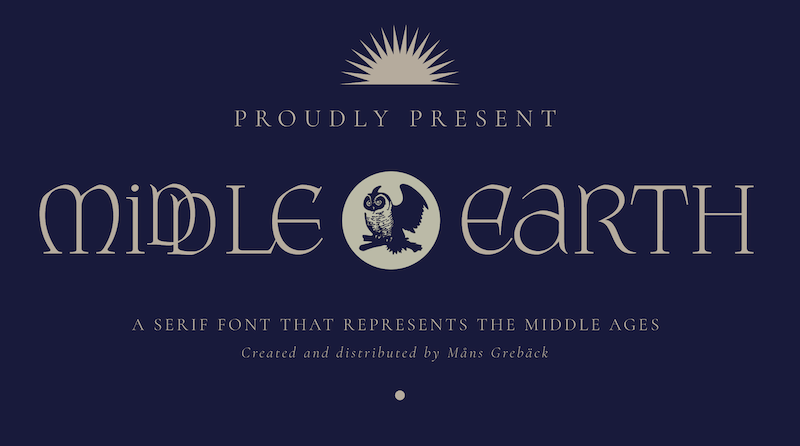
* New to me, paid-for Tolkien Fonts, hand-drawn and digitised. Nice, but pricey. There’s always been a big gap between what font makers think their fonts are worth, and what people (who are not £40k-a-year graphic designers) will pay.

* U.S. publisher Abrams has announced a new graphic novel, The Mythmakers: The Remarkable Fellowship of C.S. Lewis and J.R.R. Tolkien, due in September 2024. By the Christian illustrator John Hendrix. He has a hand-drawn storybook style that’s also heavily influenced by 1990s/2000s graphic design.

John Hendrix cover illustration for an article on Viking DNA.

And a cover preview…

* And finally, a new Viking houses and standing stones LORA. Meaning, a free style-guidance plugin for use in generating AI images with Stable Diffusion 1.5 on a PC.

Tolkien Gleanings #172

Tolkien Gleanings #172.

* A planetarium lecture on “Tolkien’s Sky”, 8th March 2024 at the planetarium in Milan, Italy. What a fine idea. All sorts of night skies will presumably be shown in the sparkling dome. Real (e.g. Tolkien’s seminal observation of Venus and the Moon), time-shifted, and in Middle-earth. Though apparently a certain level of intervention would be required for the latter, since the popular Stellarium freeware can’t wheel the stars back in time beyond a certain point.

* Stellarium Sky Cultures: Elvish, a free plugin for night-skies as shown by the popular Stellarium astronomy freeware.

* Newly appeared and nicely ‘filling up the corners’ of the latest Journal of Tolkien Research, two speculative source essays. “The Holy Thorn of Glastonbury and the Two Trees of Valinor” and Kristine Larsen’s “The Royal Astronomer and the Astronomer Royal: Tar-Meneldur and Sir Harold Spencer Jones”. Both are freely available.

* The April issue of The National Review magazine ponders “The Enduring Appeal of J.R.R. Tolkien” ($ paywall) to receptive readers, in a review of the new Tolkien’s Faith.

* Law & Liberty magazine looks at “An Arthurian Brit in the Land of the Free”, in a new review of the book C.S. Lewis in America (November 2023).

* The journal article “Teaching Students to Hope with J.R.R. Tolkien’s “Leaf by Niggle””, new on Academia.edu. Non-members of which can also get a full PDF for free, by searching for the article title on Google Scholar. Scholar has a special arrangement with academia.edu.

* Sacnoth’s Scriptorium notes the formation of the Peruvian Tolkien Society.

* From a few years back now, but only just found, a long article on “Great-Granduncle Bullroarer”. The post has fascinating details on Tolkien’s personal tutor at Exeter. The blog, though apparently in abeyance, has been newly added to my Little Delvings in the Marsh search-engine for Tolkien scholars.

* American Songwriter on “The Story Behind “Over the Hills and Far Away” [1968] by Led Zeppelin and How It Was Inspired by a Tolkien Poem”

Tolkien wrote a poem in 1915 called Over the Hills and Far Away. Plant took no lines from the poem other than the title. The area where Plant grew up was called the Black Country. This region north of Birmingham, England, was also where Tolkien was raised in the 1890s. The rolling hills and small villages inspired the setting of Tolkien’s books. Plant lived in Worcestershire, while Tolkien lived in Birmingham.

The poem was written at Brocton Camp in mid Staffordshire and then revisited and revised in 1927. It is to be found today in The Book of Lost Tales. But Plant was raised in Halesowen, with the large carpet-making town of Kidderminster being his nearest town-of-resort during his youth. Halesowen is to the west and below Birmingham on the map, and Kidderminster further so, with the town being distinctly isolated from Birmingham and its adjacent industrial Black Country. In those days oral histories show that people from Halesowen did not class themselves as Black Country, and nor did they have the distinctive dialect. Today there is some debate, as there always is about the boundaries of ‘The Black Country’. Tolkien on the other hand went to school in central Birmingham but was raised in the south of Birmingham, and he also knew the Lickey Hills in the rolling countryside further south. It’s quite possible he never even walked the industrial Black Country proper, though he may (like Auden) have seen it on the train from Birmingham to Wolverhampton. Thus the comparison the article makes between the two environments is broadly valid, and they are near to each other and would have been similar in topography, architecture and wry self-depreciating West Midlands attitudes (so different from those of the north of England, above the invisible line of what Jonathan Meades calls ‘The Irony Curtain’). So the article’s author is only really confused in thinking the places to be “north of Birmingham” and in the Black Country. They’re not.

* And finally, The Iron Room blog has a new post which considers the Birmingham Trade Catalogue Collection : All The Tricks of the Trade for library researchers. A few years ago I see the blog also had a post on Researching Birmingham Newspapers. I’d imagine these sources have been fairly well mined for likely Tolkien family-tree biographical material, but the guides may still be of use to some.

Tolkien Gleanings #171

Tolkien Gleanings #171.

* New in Portuguese, the book A arte de encontrar Deus entre fantasias e versos: Dante Alighieri, C.S. Lewis e J.R.R. Tolkien (2024), (‘The art of finding God among fantasy and verse: Dante Alighieri, C.S. Lewis and J.R.R. Tolkien’). Although it lists as being 88-pages long, so… perhaps more of a printed set of lectures or a dissertation?

* A call-for-papers for the conference ‘A Multi-Disciplinary Approach to Arda’, to be held in Germany in June 2024. The organisers state that… “the possibilities for engaging with Tolkien’s legendarium are almost endless”. Which implies that a speculative future-oriented paper, surveying ‘what has not yet been done, but might be’, could be of interest.

* New on Archive.org, J.R.R. Tolkien: Life and Legend (1992). Being a fair scan of the illustrated catalogue for the 1992 exhibition at the Bodleian Library.

* Also new on Archive.org in PDF, a good scan of Tolkien’s edition of the Ancrene Wisse (1962) for The Early English Text Society.

* In open-access at Glasgow, “By the waters of Anduin we lay down and wept: Tolkien’s Akallabeth and the prophetic imagination”. This was the lead article in Mallorn #64 in late 2023, and is thus otherwise locked down for non-members.

* The latest edition of The Critic magazine has a short review of the new expanded Tolkien Letters, and feels… “There is a lushness to this expanded Letters.

* On Etsy to buy, The Fellowship of the Ring and The Two Towers in Yiddish translation, in handmade editions. The Return of the King is yet to come, it seems.

* Some LORAs, for use with your PC’s local Stable Diffusion image generator. One for the clothing of the Regency Period in Britain, which means 1811-1820. Though the gentleman’s style lingered on in less fashionable places for another five years or so. Regency could be a useful addition to the arsenal of steampunk artists, but I’m thinking it might also be usefully mixed with some of the older RPGHobbit LORA, to try to generate a more ‘rural gentry’ type of hobbit?

Update: If this one doesn’t do what you want, a few days later there was also another called Regency Period SD1.5.

This week there’s also a new first attempt at a LORA for Gondor’s city architecture and streets, Minas Numenor. Not entirely convincing, judging by the samples, but it might give you a base for a manual over-painting.

* And finally, new on Archive.org, the Complete Tengwar Fonts Collection.

Tolkien Gleanings #170

Tolkien Gleanings #170.

* There’s now a table-of-contents for the new book Tolkien et l’Antiquité: Passe et Antiquites en Terre du Milieu (2024). Here are all the titles, translated though some are in English…

Introduction.

Antiquity and Middle-earth: two other worlds.

The Third Age as Medium Aevum: From the Ages of Middle-earth to ‘our days’.

The Virgilian golden age in Tolkien’s Legendarium.

“All that walk the world in these after-days”: antiquity and ‘haunted’ gothicism in J.R.R. Tolkien.

The Language of Knowledge: the influence of Latin on J.R.R. Tolkien’s Quenya.

Vestiges of Antiquity among the Hobbits.

From Babylon to Numenor: The reception of Near Eastern Antiquity and the use of Akkadian sources in the work of J.R.R. Tolkien.

Rome in Middle-earth: echoes of a past to come.

Velleda and Galadriel, the Antiquities of Chateaubriand and Tolkien.

The Babylon one interests, but regrettably it’s in French.

* The Church Times this week reviews Tolkien’s Faith: a spiritual biography (2023).

“… his presentation of the Hobbits as not only “merry and full of laughter”, but also “curiously tough” — the balance reflecting the Oratorian ideal of personality.”

* In the latest edition of Law & Liberty “A Life Well Lived”, being a long review of the new expanded edition of the Tolkien letters. No footnotes in the book, regrettably, but we usefully learn that…

“In the digital edition, all endnotes are internally hyperlinked so that it is easy to go from text to note and back again, more efficiently than in the print edition.”

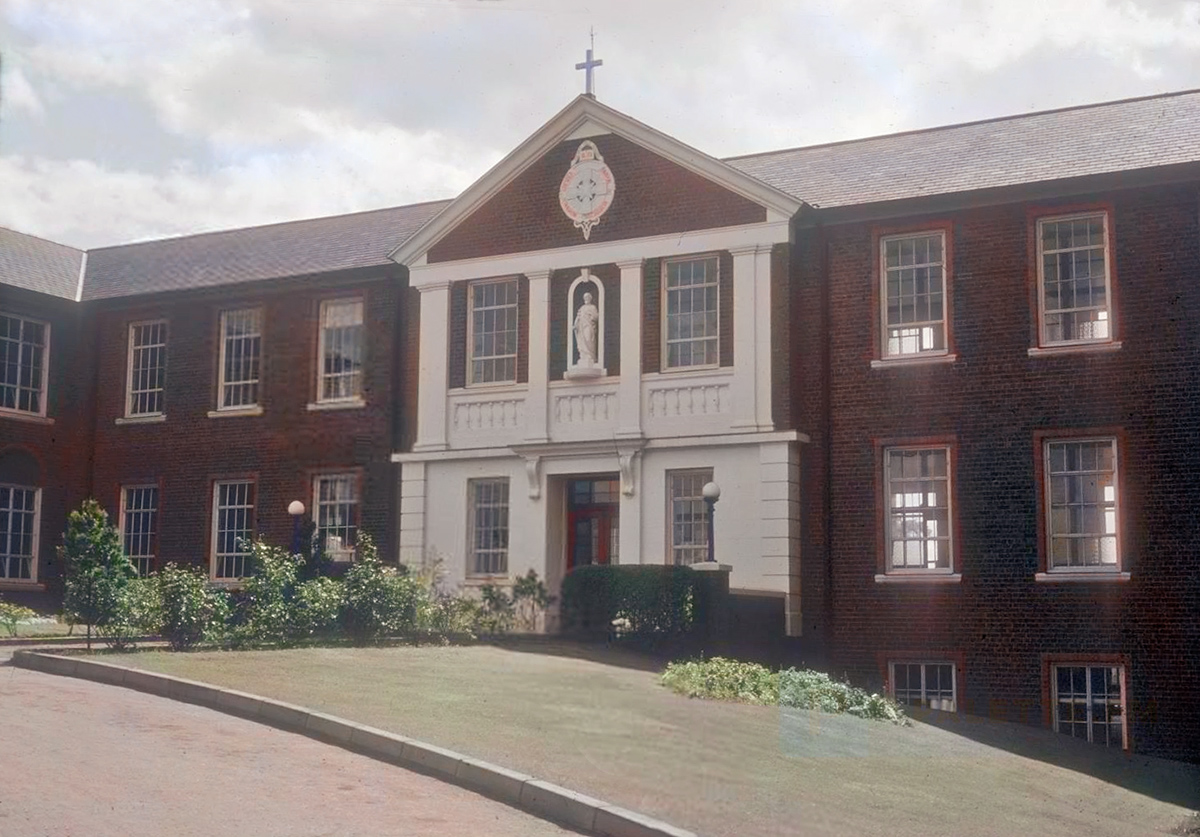
* Bookings for the UK Tolkien Society’s Oxonmoot 2024 are now open. The annual event will run from 29th August to 1st September 2024. Set to be held at “St Anne’s College, Woodstock Road, Oxford, and online.” A College that has a “1936” feel about it, by the look of it…

* John Garth is giving a public lecture at Merton College, Oxford, on Friday 23rd February 2024, titled “Inventing on the hoof: How the Riders of Rohan suddenly became Anglo-Saxon”.

* The National Library of Scotland blogs about its copy of Tolkien’s “Songs for the Philologists”. This rare publication can also be had free on Archive.org.

* More Tolkien-style mapping tutorials, using professional ‘GIS’ mapping software. The new series is now, having covered creating the map components, at “Tolkien Style Maps in a GIS: part 4, Assembly”.

* And finally, in mid Staffordshire, six new walking routes on Cannock Chase and around, for 2024, including “Tixall and Shugborough”.

Tolkien Gleanings #169

Tolkien Gleanings #169.

* Pictures by J.R.R. Tolkien, now firmly dated in hardcover for 9th May 2024 and pre-ordering. This is Christopher Tolkien’s pick of his father’s pictures, with notes, in 128 pages. “Now reissued after almost 30 years” according to the publisher.

* There is now a free ‘Errata’ PDF for the recent Tolkien book The Nature of Middle-earth (2021).

* There’s now an official page for the forthcoming German conference Tolkien and his Editors. I’m told this October 2024 conference will be in both German and English. There are currently scholarships available for young scholars of Tolkien. Walking Tree is associated with the conference, which means we will likely have a book in due course.

* Set for early September 2024 in the USA, The Undiscovered C.S. Lewis Conference. Set to have a talk on “Lewis, Tolkien, and the Oxford English School”, and to ask “What Did Tolkien Really Think about Narnia?”.

* Italy’s modest-sized Tolkien exhibition, “Tolkien: Man, Professor, Author”, has now closed. The local press reports that it saw 80,226 visitors in total. Which is not bad for a somewhat hastily-planned exhibition during the winter months. I recall there was also a hefty entrance-fee, and some hostile comment in the leftist press. All of which could have dissuaded people from visiting. Thus 80k attendance is all the more impressive. The show will now tour to other venues in Italy. It opens in Naples on 15th March and will run through to 30th June 2024. After that, the cities of Turin and Catania are booked.

* Published tomorrow in French, Pearl / Perle: suivi de “Tolkien et Perle” by Leo Carruthers. Being a translation of the Gawain-poet’s Pearl into French, followed by an essay on “Tolkien and Pearl” also in French. There’s also what sounds like a rather ambitious introduction…

“the introduction to this book examines [the Gawain-poet’s] probable origin, while proposing a new theory about the poem’s patron, previously unidentified. He would have been one of the most famous English princes of his time, son and father of kings”.

Oh dear, hopefully it’s not Edward the Black Prince. Who died in 1376 and is thus clearly too early. (Update: No, the claim turns out to have been for John of Gaunt as patron, commissioning for the babe Blanche of Portugal, 1388-1389).

* New on YouTube, a hands-on tutorial on emulating Tolkien-style maps in GIS software: part 1, forests.

* And finally, do you fancy buying Tolkien’s fave childhood mill? Birmingham City Council is reported to be planning to sell off Sarehole Water Mill and various other heritage buildings in the city. The Mill is not quite up for sale yet, but it could be shortly according to the Daily Mail. Now’s your chance, it seems. For a nicely renovated listed watermill set in ten acres in the Midlands, you’d probably be paying at least £2 million. I’ve seen the Mill’s pizza restaurant reviewed and I assume there’s also a gifte shoppe these days (I was last there in the early 1990s), so you might need perhaps £3 million. Maybe knock off a bit for the flooding risk, but also make sure you have enough for the hefty annual insurance and ongoing maintenance.

Sarehole Mill from the lane, the pool on the other side of the hedge.

Tolkien Gleanings #168

Tolkien Gleanings #168.

* Catholic World Report has a new article offering “Tolkien’s lessons for Hollywood’s failures”. Specifically, the lessons to be learned from Tolkien’s rewrites of his LoTR drafts. Freely available online.

* MultiLingual, the trade magazine for the languages industry, profiles Tolkien’s invented languages in “J.R.R. Tolkien’s Life in Languages: inventing and adapting the lexicons of Middle-earth”. Freely available online.

* Newly added to the latest Journal of Tolkien Research, a review of Thomas Honegger’s new book Tweaking Things a Little. I now see that Kristine Larsen also reviewed the book in Mallorn #64 (Winter 2023). Though neither review picks up Honegger on his earendel section.

* Newly free on Academia.edu, ““Leaf by Niggle” – The Artist and the Art” a chapter from Revisiting and Reimagining the Works of J.R.R. Tolkien (2022). If you’re not signed up to Academia.edu you can still get the PDF by searching for it on Google Scholar.

* A nice surprise, on my at last joining the Tolkien Society. I find I also have access to PDFs of a new publication called Vingilot, which sits somewhere between the Society’s Mallorn and Amon Hen. So far there are two issues, and it seems to be for longer linguistic or similarly technically-complex essays, while at the same time also soaking up some of the poetry being submitted.

* In the latest Amon Hen I see what appears to be a ‘wider Midlands and Wales’ informal meet-up event, the ‘Three Farthing Stone Smial’. The last meeting was way down in Moreton-in-Marsh (below Stratford-upon-Avon, in the Cotswolds), but for Spring 2024 they have the Midland Hotel in the centre of Birmingham pencilled in.

* Also, it’s good to see an October 2023 ad for a graphic designer for Amon Hen. One might hope for a new two-column layout, at least, which would offer a huge improvement in readability. In the meatime, it’s down to technology. There are a half-dozen ‘two-column to one-column’ solutions for scientific journal PDFs. But none the other way around. Thus the temporary ‘one-column to two-column’ DIY readability solution, at least for those with a 10″ tablet such as a Kindle Fire, is this:

1. Convert the fixed-text .PDF to a reflowable-text .ePUB with Calibre (free) or ePubor ($30).
2. Send the .ePub to the Kindle.
3. Open and read with the Librera Pro reader app.
4. Librera Pro settings: font size at 32-point, text alignment left, no hyphenation, line-spacing at 13, paragraph spacing at 3. This emulates a column.
5. Finally, select your font. The Times New Roman font is fine for me, but Librera also bundles some dedicated ebook fonts.

Of course in converting to .ePUB you jettison the page layout, though not the graphics. The solution to that is to also load the .PDF to the Kindle, browse pleasurably through it and admire the layout and design, read the short bits, and choose your longer articles. Then switch over to the .ePUB for actual close ‘columnised’ reading of selected articles.

* And finally, some Polish Tolkien book covers. And there I was thinking that the 1980s German ‘green’ covers were the most bizarre…

Tolkien Gleanings #167

Tolkien Gleanings #167.

* The Tolkien Society has a new set of free video recordings on YouTube. The short talks from a recent event include, among others, “Pagan Magic and the Marvelous: Songs of Enchantment in The Silmarillion” and “Tolkien’s Depiction of Cremation in the Context of Catholic Canon Law”.

* A new illustrated article on “Tolkien and The Swan Press”, a venture for which Tolkien wrote contributions during his tenure at Leeds University.

* A new article muses on “Introducing Tolkien Fans to the Western Canon”, with the author suggesting that Tolkien readers may like to initially sample Beowulf, Ivanhoe, and Chesterton’s The Ballad of the White Horse.

* A fine cover illustration by Matt Stewart for the latest Amon Hen #305, the bulletin/magazine of the Tolkien Society. Now that I’ve found a regular job at last (if only cleaning toilets in Stoke-on-Trent) I’ve been able to justify the £30/$40 cost of joining the Society to access their publication back-issues and presumably the coming issues for 2024. Thankfully PayPal didn’t freak out at the unusual payment, and the Society’s membership bot didn’t confuse me with the apparently-banned David Day (phew). In due course I hope to post a listing of the most interesting-to-me articles, which are (only) obtainable via membership.

* The YouTube video series My Life In Objects flips through and discusses Journeys of Frodo: An Atlas of J.R.R. Tolkien’s The Lord of the Rings. A fine book which is in need of a reprint, as used prices continue to soar. If you’re quick there’s currently a paperback copy on Amazon UK for £28, with shipping from Amazon itself — which means it can be conveniently sent to a locker for pick-up.

* Been and gone in January 2024, a talk in Liverpool on “To the boy most cunning in Thucydides: the classical world of J.R.R. Tolkien”. I don’t yet see a recording on YouTube.

* Recommended for scholars, the Windows genuine freeware AnyTxt Searcher. This speedily indexes inside your PC’s documents and then lets you search across them. It was a bit iffy five years ago when the old DocFetcher was still the best free option, but the developer has kept at it and 2023 saw a big spurt of development. It’s now very useful for scholars, has a dark mode, and appears to lack only proximity search Update: for proximity-search, turn on Regex by selecting ‘Regular Match’ in the search type drop-down, and use…

\b(?:hobbits\W+(?:\w+\W+){1,6}?supper|supper\W+(?:\w+\W+){1,9}?hobbits)\b

This example will find all instances of ‘hobbits’ within 9 words of ‘supper’.

* And finally, talking of the tech world… the craze continues for naming new technologies after Tolkien characters. The lastest is Smaug-72B, the apparently hottest open-source AI chatbot that… “surpasses other advanced open-source models [and] excels in reasoning and math tasks”. Though with the current blistering pace of AI development, ‘Smaug’ likely won’t stay top-dragon for more than a few weeks.

Tolkien Gleanings #166

Tolkien Gleanings #166.

Contains LoTR spoilers.

* A new illustrated page on the Tolkien Guide, listing what might be overlooked items of Tolkien criticism 1954 – 1973. Mostly culled from obscure titles, from the ‘little magazines’ of the period, and some science-fiction magazines.

* Which way, Western man? — George R.R. Martin’s depressing nihilism or J.R.R. Tolkien’s hope in the face of despair?

* New in The European Conservative, the long essay “J.R.R. Tolkien, C.S. Lewis, and the Cosmic Music of the Beginnings”

“Despite reading Tolkien’s letters multiple times, I could not find any clarification about this literary motif of creation through music.”

The author thus veers off into an unconvincing look at Plato. But I seem to recall something I heard in a podcast, about a clear source for this in one of those proto-‘books of the Bible’ that never made it into the official Bible?

* In Italian, the Italian Tolkien Association surveys 2023’s Tolkien exhibitions, and has many interior pictures. Several of the exhibitions are ongoing in early 2024.

* The Pastor Theologians Podcast has a new episode “On Tolkien and Theology”, with a guest who recently edited an academic collection of essays on the topic.

* The latest edition of the open-access Spanish journal Babel–AFIAL has a long and detailed review of A Companion to J.R.R. Tolkien (2022), the second expanded edition. The review is in English.

* And finally, the German open-access journal for fantasy research, ZfF, asks “Is it time to end Tolkien research?”, in favour of studying… “the incredibly diverse landscape of films, books and games in [its] aesthetic, political and social terms”. One might have thought that there are already a significant number of people doing just that in special-issues of journals, edited academic collections, and the various open-access academic journals of the fantastic and/or videogames. Tolkien, in a quantitative comparison with all that output, might appear to be something of a niche speciality. Of course if one measured such things by avid and engaged readers, rather than the simple fact of publication, then perhaps the balance would shift a little.

Also, the ZfF article says that The People’s Committee for the Suppression of Tolkien Research should make especially sure that ‘useless eater’ articles about Lobelia’s umbrella are ‘disappeared’. However I’ve always been interested in the special historical symbolism of Lobelia’s ‘release from the lockholes’, in the context of the section’s general undeniable echo of the primary-world releases from the death-camps…

Lobelia. Poor thing, she looked very old and thin when they rescued her from a dark and narrow cell. She insisted on hobbling out on her own feet; and she had such a welcome, and there was such clapping and cheering when she appeared, leaning on Frodo’s arm but still clutching her umbrella, that she was quite touched, and drove away in tears. She had never in her life been popular before. But she was crushed by the news of Lotho’s murder, and she would not return to Bag End.

…and how this could then be read as an oblique attempt to comment on (and perhaps purge) an unsavoury but seminal incident at the other end of the road to the death-camps. In which Hitler had emerged from a long talk with Nietzsche’s elderly sister, having been symbolically gifted Nietzsche’s walking stick by her…

“Taking Nietzsche’s walking stick in hand, Mr. Hitler strode through the crowd to great huzzahs.” — Times of London, 4th November 1933.

Thus, even an umbrella may have the political interpretation so yearned for by the ZfF author.

Tolkien Gleanings #165

Tolkien Gleanings #165.

* In the latest edition of the UK’s The Critic magazine, a long article on “Grimdull”. Freely online. The author is of the opinion that…

“The fantasy genre is afflicted by a dull and tedious obsession with adolescent cynicism, prurient scenes and one dimensional anti-heroes. [And even given the vast output of such fare] it’s striking how little headway [has been made in trying to seize fantasy, by leftist ‘realists’ / ironic modernists / strident atheists]. Whilst Tolkien feels timeless, not least because of its echoing of the language and sensibility of myth and fairy tale, much of the ‘realist’ fantasy that sought to supplant it now feels terribly dated. [And] even the most procedural and uninventive of past fictional fare starts to look good, next to the chaotic and senseless storytelling that is increasingly the norm.”

* In July 2024, the second International Conference on Constructed Languages. The two-day event is set to happen in Orleans, France, and the organisers write that…

“We are expecting two keynote speakers, including Edouard Kloczko, translator and expert on the languages of J.R.R. Tolkien.”

* OutSFL interviews the writer of the forthcoming biographical graphic-novel of the young Tolkien…

“A good story inspired by real events should not move away from reality as we know it for the sake of making it more exciting. Writing about a life should be a pact signed with the reader or viewer: ‘I’m telling you a true story’. Otherwise, you might as well invent the whole thing entirely. […] I read everything I could find about Tolkien’s life, on the course of the First World War and the Battle of the Somme in particular, but also on the war efforts in Oxford and Cambridge, the relationships between people at that time, their way of behaving, the clothes and uniforms, weapons, etc. I tried not to leave anything to chance and wanted to recreate as faithfully as possible a reconstruction of this period and this part of Tolkien’s life.”

Amazon currently lists the hardcover of this English translation as shipping on 27th February 2024, and the Kindle ebook version is already available.

* Anna Smol ventures into Shelob’s Lair, with the aid of Tolkien’s plans of the place…

“Once Tolkien gets his hobbits inside the Lair, he can imagine which ways they can go by drawing the Plan of Shelob’s Lair”.

* And finally, one I missed from back in 2022. The Wade Centre had a one-hour podcast on Tolkien and the Green Knight. One of the participants notes C.S. Lewis writing on the Green Knight as a man…

“… as vivid and concrete as any image in literature” […] a living coincidentia oppositorum; half giant, yet wholly a ‘lovely’ knight’; as full of demoniac energy as old Karamazov, yet in his own house, as jolly as a Dickensian Christmas host; now exhibiting a ferocity so gleeful that it is almost genial, and now a geniality so outrageous that it borders on the ferocious; half boy or buffoon in his shouts and laughter and jumpings; yet at the end judging Gawain with the tranquil superiority of an angelic being.”

This was published in 1962 (the podcast participant, who seems to be a Lewis expert, claims it dates from 1947). If 1962, which various bibliographies suggest is more likely, then this seems in part to also be Lewis’s oblique comment on the likely origin of Tolkien’s Bombadil?

Tolkien Gleanings #164

Tolkien Gleanings #164.

* A free recording of “‘Dreaming in the Margins’: Tolkien’s Engagements with The Battle of Maldon”, a recent event at Wade College in the USA.

* The new scholarly book Tolkien on Chaucer, 1913-1959 now seems firmly set for release by Oxford University Press on 25th April 2024.

* A free recording of the lecture by Holly Ordway, “Tolkien’s Faith and the Foundations of Middle-earth”, recently given at Christendom College in the USA.

* The book The Fantasy of J.R.R. Tolkien: Mythopeia and the Recovery of Creation is set for a 1st April 2024 release, from the Catholic University of America Press. In the context of the balm and healing experienced by certain types of readers, the authors discuss how Tolkien explored…

“the relation of language to reality, the nature of evil, the distinction between time and eternity and its relation to death and immortality, the paradox of necessity and free will in human action, and the grounds for providential hope”.

* The new article “Ramer contra Lowdham: comparing Tolkien’s alter ego characters in The Notion Club Papers”.

* Coming soon is a new graphic novel adaptation of The Kalevala, an early Tolkien favourite, told in a suitably chunky 300-page book. Due at the end of February 2024 according to the publisher, or May 2024 according to Amazon. It’s not a reprint of the 2005 attempt at a graphic novel version. Regrettably the publisher is misleadingly touting it as… “the basis for Tolkien’s The Lord of the Rings”.

* A blog review of Greg and Tim Hildebrandt: The Tolkien Years, picked up in a second-hand bookshop.

* On YouTube, a January 2024 update for the Digital Tolkien Project.

* A free 12th Century Gothic Art LORA. A LORA being a ‘style-guidance’ plugin, for use with AI models deriving from the Stable Diffusion 1.5 image generator. Note that this one usefully outputs at 768px, rather than the usual 512px.

* And finally, a free audio reading of The Art of Pipe-Smoking Pleasure (1946), the “Introduction” of which puts Tolkien’s pipe-smoking into brief historical context re: the prevailing attitudes to pipe smokers before and after the First World War. Tolkien may not have read this American title, and in a British context was perhaps more likely to have encountered Alfred Dunhill’s classic The Pipe Book (1924, revised 1969), of which note its chapter on “Pipes of the Far North”. He certainly had the 60-page booklet Art of Pipe Smoking (1958), which at a guess would probably have referred him to the earlier works of 1924 and 1946.