Tolkien Gleanings #184

Tolkien Gleanings #184.

* A call for articles on ‘Fantasy flora / Flore imaginaire’, for a forthcoming special issue of the journal Fantasy Art and Studies. Deadline: 10th June 2024.

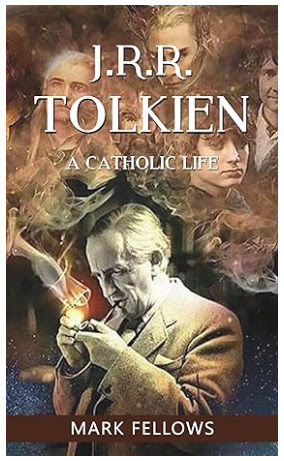
* Another sort of call. “We’d like to create the first graphic-novel biography on his life that features his Catholic faith.” Crowdfunding now, with a $23,000 goal.

* The latest issue of St. Austin Review (March/April 2024) is a themed issue on ‘The Victorian Age in Literature’. Note the one-page article “Frodo Baggins: A Dickensian Hero”. Not freely online.

* The Federalist magazine has a new podcast discussing “Tolkien’s Warning”… his “writings and warnings about power apply today”.

* New on YouTube, a recording of Tolkien Colloquium 2024: Emotions in Middle-earth. In English, with five presentations.

* New on YouTube, a recording of Conferenza: Tolkien e il gioco (‘Tolkien and the game’). In Italian. I can’t find more about the event, but skimming YouTube’s auto-translation subtitles suggests it’s about tabletop role-playing games.

* The March 2024 Update for the Digital Tolkien Project.

* And finally, in last week’s Country Life magazine, “The very nature of Middle-earth”, an article loosely woven around the Malvern Hills and Tolkien. The article is now online in full, at least in the UK.

Tolkien Gleanings #183

Tolkien Gleanings #183.

* Now freely available in PDF, “Never trust a Philologist’: C.S. Lewis, J.R.R. Tolkien, and the Place of Philology in English Studies”. Several C.S. Lewis poems are published in the article for the first time.

* New at the BARS blog, “Will Sherwood on the Romantic Echoes in the Manuscripts of J.R.R Tolkien”… “My research trip to Oxford has chiefly been concerned with locating Tolkien’s references, (mis)quotations, and criticism of the Romantics throughout his life.” Romantics here meaning the British Romantics.

* Tolkien colloquium 2024: ‘Emotions in Middle-earth’, which took place on 22nd March and is due to air on YouTube on 27th March 2024. Five talks in English.

* A seemingly new book titled Las Fronteras de lo Humano: La antropologia de C.S. Lewis y J.R.R. Tolkien (‘On the Borders of the Human: the anthropology of C.S. Lewis and J.R.R. Tolkien’). The summary seems to imply a philosophical tour through the creatures and the monsters, worryingly mentions the movies, and sounds like it may be drawing on contemporary understandings of anthropology. It doesn’t suggest any research on the historical context in relation to the anthropology of the time. A book on the influence of the pre-war British anthropologists (who ignored the Americans and only nodded to the French, it seems) would certainly be interesting, but this doesn’t seem to be that book.

* In the USA, “Wolters Centre to Host Tolkien Conference”. The focus appears to be how Tolkien was “able to bear witness to the Christian faith”. In an era that had become deeply hostile to fantasy, and was increasingly dismissive of those with deep Christian faith.

* New to me, and newly on Archive.org, a preview of the tracks on the album A Night in Rivendell: Selected Songs from The Lord of the Rings by The Tolkien Ensemble (2000).

* And finally, Folklife magazine has an article on the Swedish Eldandili Fantasy Choir. Part cos-play group, part choir, and all dedicated to “Singing Tolkien’s Middle-earth”. Freely available online.

Tolkien Gleanings #182

Tolkien Gleanings #182.

* Crowdfunding The Hobbit in Romanish… “Romanish is a unique and beautiful language and a direct linguistic heritage of the Celtic and Roman past”. Today it’s the fourth language of Switzerland, said to be the result of the long-ago influence of the spoken Latin had from the Ancient Romans.

* From the University of Notre Dame’s Church Life Journal“Tolkien’s Erotic Lent”.

* Humanum Review reviews the new Holly Ordway book, in “Tolkien, Man of Faith”.

* In France, a one-day conference on “Tolkien and the creation of Middle-earth”, 25th March 2024.

* In America during September 2024, The Orthodox Christian Tolkien Conference… “The St. Basil Center for Orthodox Thought and Culture will present a conference on the relationship between Orthodoxy and J.R.R. Tolkien”.

* A critical video review of the new graphic novel Tolkien: Lighting Up the Darkness, reviewed by someone who knows how a good comic should work (art, layout, font choice and size, reader’s eye-flow, character expressions, panel scene-depth and focus, etc). Also has a flip-through.

* An online talk set for later in 2024, “The Dragon in the West”… “Professor Ogden’s book The Dragon in the West was published in 2021 — the first serious and substantial account in any language of the evolution of the modern dragon from its ancient forebears.”

* And finally, Archive.org now offers Lists to signed-in users. Make your own public or private list of items. Hopefully this isn’t just a ‘whim feature’ and the lists won’t go the same way of the late lamented ‘Amazon Listmania’, when millions of users put a lot of time into curating lists… only to hear the sudden click of Amazon’s corporate jackboots and find that every list had been deleted. At present, re-ordering items in your Archive.org list is not possible. You’re stuck with the usual labels for re-sorting. Thus presenting a publication-date sequence of a magazine is not possible.

Tolkien Gleanings #181

Tolkien Gleanings #181.

* New from Walking Tree, the book The Romantic Spirit in the Works of J.R.R. Tolkien. An edited collection which includes among others “J.R.R. Tolkien, Walter Scott, and Scott-ish Romanticism”, and “‘The Backs of Trees’: Tolkien, the British Theological Romantics, & the Fantastic Imagination”. Available for pre-order from Amazon UK and possibly other Amazon sites, with a publication date of 31st March 2024.

* Also new from Walking Tree, the single author book Germanic Heroes, Courage, and Fate: Northern Narratives of J.R.R. Tolkien’s Legendarium. With a foreword by Tom Shippey and an introduction by Thomas Honegger. Available now.

* Free scans of books by R.R. Marett, Tolkien’s personal tutor at Exeter College from 1913. Most are collections of his famously lucid and focused lectures, and many can be downloaded.

  – The Birth of Humility (1910, inaugural lecture) (To ‘read online’ only)

  – The Threshold of Religion (1914, enlarged and revised second edition)

  – Psychology and Folk-lore (1920)

  – The Diffusion of Culture (1927, printed lecture) (To ‘read online’ only)

  – The Raw Material of Religion (1929, printed lecture, not online)

  – Faith, Hope and Charity in Primitive Religion (1930–1932)

  – Sacraments of Simple Folk (1933) (To ‘borrow’ only)

  – Head Heart And Hands In Human Evolution (1935)

* And finally, the latest issue of the open-access journal on fan-works, Transformative Works and Cultures. The topic of the issue is ‘Fandoms and platforms’, meaning online platforms rather than role-playing flets. Includes “The Fading of the Elves: techno-volunteerism and the disappearance of Tolkien fan fiction archives”.

Tolkien Gleanings #180

Tolkien Gleanings #180.

* Coming soon from the Catholic University of America Press, The Fantasy of J.R.R. Tolkien: Mythopoeia and the Recovery of Creation (May 2024)…

“This book is the first sustained attempt to show not only the centrality of recovery to Tolkien’s fantasy, but the way in which his fantasy affects that primal recovery in every reader. […] for Tolkien fantasy has within itself a healing power through which intellectual, moral and existential paradoxes are resolved and our intellectual and perceptual faculties are made whole again”.

* Free online under Creative Commons on Calameo, Dragon Verde #15 (September 2023), from the Colombia Orodruin Tolkien Society. With cover art by Thomas Orn Karlsson of Sweden.

Collects the best articles from the “eighth to the thirteenth editions of Dragon Verde.” Article titles in English translation:

  – Echoes of Middle-earth.
  – Dragon Fire and Wild Swords.
  – From Linguistics to Metaphysics: interview with Carl F. Hostetter.
  – The Rings of Power and their Influence in the Fate of Middle-earth.
  – Tolkien and the Celts.
  – Dwarven Chronicles.
  – Meowing and Barking in the Hobbit Hole. (Seems to be about dogs and cats).
  – The Spanish connection of J.R.R. Tolkien.
  – Modernity as seen by Tolkien.

Since Dragon Verde #15 is under Creative Commons Attribution Non-Commercial, the articles are free to be translated. You’d screen-capture and then use either Microsoft OneNote or ABBYY Screenshot Reader to get the text out for translation. Both are good for use with smaller 72dpi type.

* Older issues of Dragon Verde used to be found as free flipbooks on Issuu, and are technically still there. But they’re blocked. My guess is the Society has thus moved to Calameo from the Issuu service. Issuu having now made itself toxic to publishers, due to their gangster-like behaviour. A year or two back now Issuu suddenly locked down their wealth of free magazine issues, then made extorting demands for payment to unlock them. Issuu also adds insult to injury, by misleadingly blaming the magazine’s publisher for the blocking…

That’s why it’s always a good idea to mirror your free flipbook PDF magazines at The Internet Archive (Archive.org).

* Newly added to the latest Journal of Tolkien Research, a long and detailed review in English of the substantial catalogue for the 2023 Italian exhibition ‘Tolkien: Uomo, Professore, Autore’. This medium-sized exhibition has now transferred from Rome to Naples, where it runs from 16th March to 2nd July 2024.

* Some notes on Berin’s Hill in Oxfordshire.

* And finally, look again at Amazon UK’s pre-order price for the three-volume dead tree edition of the Collected Poems of J.R.R. Tolkien. As I write, this has dropped from £90 to a more affordable £60. The drop is seemingly due to an avalanche of pre-orders, making it a ‘best-seller’ long before publication. (Update: Now back up to £90).

Beren’s Hill

The new John Garth talk ““An Entirely Vain and False Approach”: Literary Biography and why Tolkien was wrong about it” reveals he’s found a Berin’s Hill, at Ipsden in Oxfordshire. Which Garth says is the place where Tolkien’s Birmingham Oratory good friend Fr. Vincent Reade came from, and where Reade’s family was the ‘head family’ of the village. Garth also says it was near to the location of the Birmingham Oratory’s boarding school, and my consultation of a map shows the proximity was some five or six miles.

I find that a 1919 Little Guide’s guide to Oxfordshire (reprinted from the 1906 first edition) has it that the hill name “preserves the name of St. Birinus”. Birinus (d. 649 or 650AD) was a man who would offer Tolkien a saint potentially bridging, in his lifetime, the old Christianity of the Roman Empire and the later British Christianity. As such the name and its apparent place-affiliation would certainly have interested Tolkien, and the connection would certainly have been relayed to him by the learned Fr. Vincent Reade.

The book Saint Berin, the apostle of Wessex (1902) has it all, bar any later tweaks. St. Birinus was sent by Asterius (Archbishop of Milan) to “scatter the seeds” of the faith and convert Mercia. But on crossing the channel and landing he was permanently stalled among the West Saxons, after discovering that they were still utterly pagan (he had been told otherwise).

The author gives an interesting link with Cornwall, while first exhaustively trying to establish and divine the forms of the name. His name and saint’s day were documented as venerated at St. Micheal’s Mount in Cornwall, before the 13th century and probably well before — since an 867 A.D. Canterbury calendar in the Bodleian also has the saint’s day. This would give Reade and Tolkien a good reason to have visited St. Micheal’s Mount on their visit to Cornwall in 1914. I couldn’t place them there in my recent book-chapter on the visit, though the Mount was within sight from the cliffs and was ‘just around the corner’ from where they were staying.

The book linked above also saves Tolkien scholars looking for the name’s meaning, since… “Birinus is meaningless in English”. It was a Latinization of some Frankish or perhaps Lombardic name. The author favours Lombardy for the name, but many other sources have the saint as “probably” Frankish. After some deliberation the author leads us (nearly) to the likely name of Beorn. Hmmm, that sounds rather familiar…

“The name, therefore, is most probably Teutonic [Germanic], and the same that becomes in the Scandinavian form Biorn” and he offers a quote from Baring-Gould… “Probably Bjorn or Baerin or Berin, a compound expressive of Bear in some form, High or Low German”.

Which rather voids the hill, regrettably, since this means that Tolkien could have had his Beren name simply from ‘Bear’, with the implication of ‘warrior’. Though in Tolkien’s Noldorin Beren means “bold”. Similar.

Of Berin’s Hill in Oxfordshire the 1906 book usefully gives a description…

“From the foot of it two remarkable tracks, hollowed out to the depth of some feet in the chalk, diverge on either side of the modern roadway which has superseded them, and meet again upon the summit. The villagers say that before the road was made, half-a-century ago, one of these hollow ways was used for ascent, and the other for descent. Whatever may be the true explanation of their form, there can be no doubt of their extreme antiquity. At the point where they meet again upon the hill-top they enclose a pair of earth-circles, each with a shallow surrounding trench. In the wood below, a few yards from the double track, is an ancient well, to which common belief and the judgment of antiquaries agree in assigning a Roman origin. Numerous coins also, from Claudius to Constantius, have been found here, and various Roman remains exist abundantly all around […] Berin’s Hill is upon the Chilterns, where certainly the Briton lingered long after he had been driven from the neighbouring valley. All along these hills we find a trace of the older language in the hollow “combes”…”

The author draws partly on “Ms. notes by the late Mr. Edward Anderdon Reade of Ipsden House”, on the hill and the history of its name. Presumably an older relative of Fr. Reade.

The well was explored and dug by local archaeologists in 1969, and their report noted “the well had been explored by Mr E. Reade [1807-1886] about 100 years ago” (SOAG Bulletin 62, “The ‘Roman Well’ near Ipsden”). The 1969 digs found a wealth of material including “one 2nd-century Roman sherd decorated with combing”, but the Roman claim is still lacking structural evidence.

Tolkien Gleanings #179

Tolkien Gleanings #179.

* “The Collected Poems of J.R.R. Tolkien” is to be published in September 2024 as a three volume boxed-set, edited by Wayne Hammond and Christina Scull. A collection to be presented in what sounds like chronological order and presumably with accompanying translations from the Anglo-Saxon, Elvish etc. It will include… “more than 60 [poems] that have never before been seen”, though regrettably not all of the poems found in The Hobbit and LoTR. The Kindle ebook edition will be £45, and the hardback set £90. I’m hoping there will be a substantial topic / name / location index at the back. If not then I’ll probably make a free one in PDF, as I did for Lovecraft’s index-less collected poems (The Ancient Track 2nd Edition).

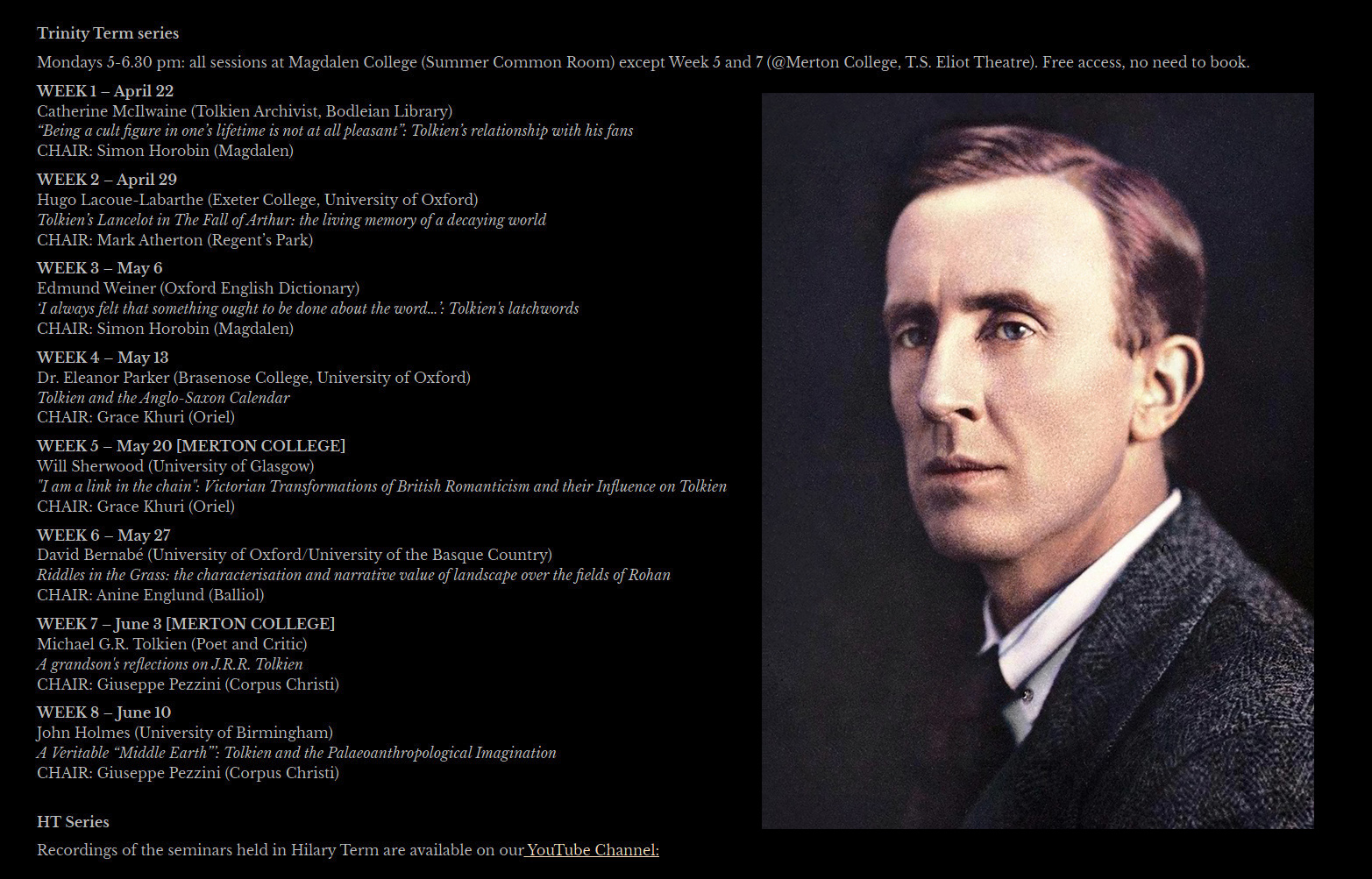
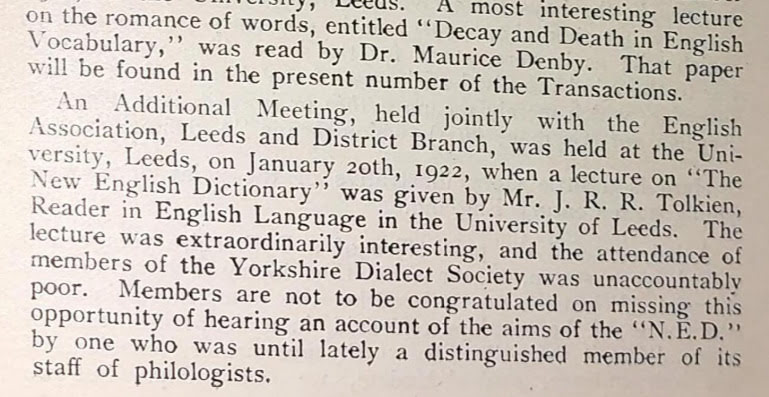
* More free YouTube recordings, from the series of talks being given at Oxford, John Garth on ““An Entirely Vain and False Approach”: Literary Biography and why Tolkien was wrong about it” and Grace Khuri on “Kipling’s Medievalism and Tolkien’s Book of Lost Tales”. “Medievalism” sounds daunting, but here just means the classic but now neglected books Puck of Pook’s Hill (1906) and the sequel Rewards and Fairies (1910). One wonders if Tolkien also took something from Kipling’s birthing of the sub-genre of ‘hard science-fiction’ in his seminal “With the Night Mail” (1905, then easily available in a book collection in 1909) (my annotated edition and in excellent audio) at around the same time, before he left for Oxford in 1911? In terms of the innovative use in “Night Mail” of an invented futuristic vocabulary within a framework of largely unexplained allusions to a larger back-story, complete with ‘appendices’ that expand the world-building. This deepens the reader’s engagement and forces one to suspend disbelief, and as such is akin to what Tolkien would later do with LoTR.

* In Italy, a two-day conference on “Tolkien: the relevance of myth”, set for April 2024.

* In America, this year’s University of Vermont Tolkien Conference is set for April 13th 2024, and is themed “The Psychologies of Middle-earth”. Includes the papers “Ponying Up: Examining the Role of Bill and Human-Animal Bonds in The Lord of the Rings” and “Love Sickness in Middle-earth”, among others.

* The first book review, in the latest edition of the gradually-filling Journal of Tolkien Research. A long and detailed review of the edited volume Tolkien and the Relation between Sub-Creation and Reality (2023).

* “The Influence of Medieval Icelandic Literature on J.R.R. Tolkien’s The Silmarillion”. Freely available online, it appears to be a 2023 Masters dissertation written in English for a French university.

* And finally, up for auction is “a touching letter to a child fan in 1961” in Lancashire. In this Tolkien states… “The Hobbit was specially written for reading aloud”. He also talks about the bitter deep-freeze winter conditions of Christmas 1961. His next winter, of Christmas 1962 to March 1963, would be even worse and also longer — a ‘great winter’ with continuous snow for months, and frozen rivers. It became the coldest British winter since records began in 1659, “this dreadful winter” as Tolkien called it in another letter, and it was especially risky for older people such as himself (cold being far more a risk for the old than heat is). This was in the era before North Sea gas and affordable central-heating, and Britain also had an old housing stock almost all without much loft-insulation. One wonders if this imminent risk to the old was partly why “deep in the winter of 1962-3” (Chronology) Tolkien tried for a reconciliation with C.S. Lewis? Lewis was then aged about 64, and thus an old man (by the yardstick of English male longevity in the mid 20th century).

Tolkien Gleanings #178

Tolkien Gleanings #178.

* Forthcoming at Signum University, “Tolkien & Tradition” is a 12-week online course which starts on 29th April 2024. Booking now.

* More recordings from the Tolkien lecture series at Oxford, now freely available on YouTube, “‘Never Trust a Philologist’: Lewis, Tolkien and the Place of Philology in English Studies” and “Tolkien’s Modern Readings: Past Perspectives, Present Insights, Future Study”.

* A new article itemising and detailing at great length “The Sauronic Empire”

“The Sauronic Empire was the largest single dominion in recorded history, stretching sixteen hundred leagues from the Sundering Seas in the west to the foothills of the Orocarni Mountains in the east, and more than four thousand and eight hundred leagues from Forodwaith in the north to Far Harad in the south. It was larger than any of the Eleven realms of the First Age, or the Kingdoms of Gondor and Arnor at their height, or the domains of Morgoth during his rule from Angband, representing an unprecedented consolidation of power and territory under a single ruler.”

* A 2023 thesis from Brazil, O Fim da Demanda: a Terra-madia de J.R.R. Tolkien entre a vontade de poder e o escape da morte (‘At the end of the quest: J.R.R. Tolkien’s Middle-earth between the will to power and the escape from death’). Freely online, and while not in English it has a substantial English abstract. Trying to boil down this rather choppy abstract, I take from it that… Tolkien’s protagonists go on “audacious quests” partly due to their inner “yearning for happiness”, in the sense of Aristotle’s eudaimonia (‘happiness in a life well-lived, in persuit of excellence and virtue’), or the similar Christian beatitude (here understood in the religious sense, but which in the secular sense might mean ‘great happiness, achieved by using one’s own natural powers to strive for the better world that is to come’). The author links these ideas with Tolkien’s wider idea of “the hope of a happy ending beyond the catastrophe of tragedy — and even of death”.

* A 2022 thesis from Finland, Supernatural Knowledge: Literary and Philosophical Approaches to Epistemology in J.R.R. Tolkien’s Legendarium. Freely available and in English. Examines how and where… “Tolkien’s complex fantasy universe partakes in philosophical conversation about the questions of knowledge”, with special reference to aspects of “Plato’s philosophical theory”. The abstract leaves the latter unspecified, but the body text reveals it to be the Theory of Forms.

* The lead article in the latest edition of the journal Greece & Rome is “Tolkien’s Unique Reception Of Pythagorean ‘Dissonance’ in the Ainulindale of The Silmarillion” ($ paywall). The author suggests that… “Tolkien has deliberately chosen a somewhat esoteric element of Pythagorean musical theory, albeit highly relevant to his own historical context”.

* And finally, a new Middle Earth Font (late 2023), as freeware for personal use. A paid commercial version is also available on request and appears to have the addition of a set of numbers. Presumably the maker knows it should be Middle-earth not Middle Earth, but he probably fears a trademark.

Tolkien Gleanings #177

Tolkien Gleanings #177.

* The obituary of Richard Douglas Plotz (1948-2024), the organiser in 1965 of the Tolkien Society of America, publisher of the early Tolkien Journal.

* Now on YouTube, the recent John Garth lecture at Oxford titled “Inventing on the hoof: How the Riders of Rohan suddenly became Anglo-Saxon”. One of a series of talks from different scholars. The audio for this one is quite listenable.

* The blog of the venerable Tolkien scholars Wayne G. Hammond & Christina Scull has re-awakened after many years, with a post that ends with a teaser for their new book. More news on the book is due “next week”.

* A new attempt to succinctly summarise the various “Tolkien Middle-earth Rights” as they currently stand and mostly for film and TV. In ten minutes. As with all legal advice, obtain a second-opinion before embarking on making your own Middle-earthy production.

* An exploratory academic project on Tolkien’s Green Knight, at Inverness in the UK. Google Search dates the page’s appearance as February 2024, but… Google.

* Long listed as “currently unavailable” on Amazon UK, I see publisher Cambridge Scholars is listing their hardback of the book The Mirror Crack’d: Fear and Horror in J.R.R. Tolkien’s Major Works (2008) as available to buy.

* “A snippet on Stoke”, adding a new 1962 date to Tolkien’s many visits to the West Midlands city of Stoke-on-Trent.

* Note that December 2024 will be the 20th anniversary of the release of the ‘Extended’ “Director’s Cut” DVDs of the LoTR movies. Even if you don’t care for the visuals or plot-chopping of the screen adaptation, the extended movies can still surely be celebrated for their magnificent soundtrack and superb voice-work. One imagines the 20th anniversary might then be the occasion for a scholarly event perhaps titled “Tolkien’s Tones and Timbres”, to discuss the sounds and delivery of voices in the literature, the three movies, and the audio fan-work (e.g. Phil Dragash). Perhaps also with a nod to that out-of-reach aspect of the historical voice that Tolkien was tantalised by, the silent modulation and inflection of the spoken word by the speaker’s simultaneous non-verbal communication. In some cases there is also the aurality of the texts to consider, and for instance Tolkien once wrote “The Hobbit was specially written for reading aloud”.

* And finally, The Great British Spring Clean is set for 15th-31st March 2024. Pick up at least one bin-bag of litter (U.S.: ‘trash’) in your area. Tolkien died just as the scourge of litter began to be recognised circa 1972-4 (the years of Keep Britain Tidy campaigning and The Wombles). But I can quite see him with a litter-picking stick and a bin-bag today, wombling around his local woodland paths. It’s surely a cause he would have approved of.

A snippet on Stoke

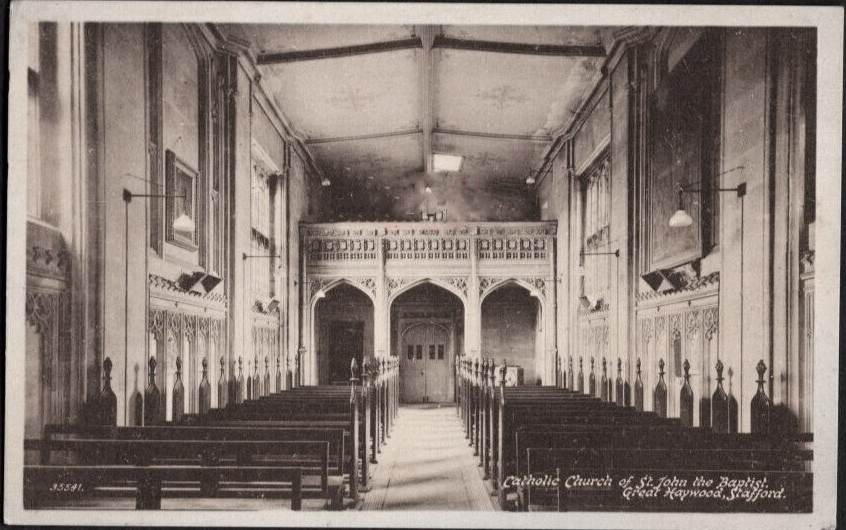
A snippet on Stoke, from Holly Ordway’s new biography of Tolkien. In 1962, he was prize-giver at the Catholic boys’ school of St. Joseph’s in Stoke-on-Trent. The summer event was reported in the Catholic Herald on 1st June. He was presumably able to attend because he was staying with his son who lived in Hartshill, Stoke. The school was not far away in Trent Vale, down on the London Road, thus Tolkien would likely have walked or cycled down there from Hartshill in the May weather. If he was staying at Hartshill, then we can add the summer of 1962 to the times Tolkien stayed in Stoke. Unfortunately there’s no further research in the book on Tolkien’s activities in Stoke.

Frontage of St. Joseph’s, Trent Vale.

Tolkien Gleanings #176

Tolkien Gleanings #176.

* “Tom Bombadil and the ‘hyper-fantastic’ in J.R.R. Tolkien”, a new essay in English from the Spanish Tolkien Society. Freely available, newly posted as part of the Society’s Aelfwine 2023 set of contest-winning essays.

* Freely available, the Masters dissertation “Fantasy in Translation: an Analysis and Comparison of the English Chapter ‘The Council of Elrond’ from J.R.R. Tolkien’s The Lord of the Rings and its Chinese Translation” (2023). Italian, in English with Chinese quotations. It concludes that…

“Despite several errors – some of which produce a distortion of the original text’s meaning – this [Ding Di] Chinese edition of The Lord of the Rings is important as it marked a new era for the country’s fantasy production.”

This complements the new book Reading Tolkien in Chinese: Religion, Fantasy and Translation (2024).

* New in Russian, an essay which translates as “The motif of radiance in the poems ‘Christ’ by Cynewulf and ‘The Last Wandering of Earendel’ by J.R.R. Tolkien” (2023). Freely available. The author suggests the ‘Christ’ echoes…

“Dionysius the Areopagite, a church thinker of the 1st century, who in his work “On the Heavenly Hierarchy” directly says that the angels are filled with “sacred radiance” [5, p.21]. It is unclear whether Cynewulf was familiar with the work of the Areopagite, but the idea itself had long been comprehended by the Church and adapted for preaching.”

* “Why Tolkien Hated Dune”. A strong and long article, but “hated” is too strong a word. Even if Tolkien’s comment in a letter that “I dislike Dune with some intensity” comes close. I object to the use because the casual-fanboy clickbait-y use of “Tolkien hated…” seems a worrying new trend. He “hated” Disney. He “hated” Frank Herbert’s Dune. He “hated” modern technology. He “hated” the Roman Empire, and so on. All this seems dangerous in a world where there are some who would like to establish a false consensus, in the minds of the uninformed young, that “everyone knows” Tolkien was a hater. Such headlines may contribute to subtly establishing a climate-of-feeling about the man, which could then be exploited further by those with an anti-Tolkien agenda.

* Depressed by the media’s relentless drum-beat of doom, pessimism and alarmism, this week The Good Catholic finds hope that ““The Eagles Are Coming!”: Tolkien & the Catholic Hope of Eucatastrophe”. Well… yes. But perhaps adding a reading of the secular The Rational Optimist could triple the antidote effect.

* On “Forgetting the Way to Faerie”, with some choice quotes.

* Forthcoming in May 2024 from Manchester University Press, the book Fantastic Histories: Medieval fairy narratives and the limits of wonder. Set to examine…

“the histories of Gerald of Wales and Walter Map, the continental mirabilia of Gervase of Tilbury, and the fourteenth- and fifteenth-century French Melusine romances and their early English reception”.

* “Bees in folk belief and practices before and now” (2023), free via searching for the article title “in quotes” on Google Scholar. A well-researched Estonian scholarly essay in English, with a strong medieval focus and useful awareness of Eastern Europe.

* On DeviantArt, Kuliszu of Poland, who paints often-charming naive-style artworks of Middle-earth scenes.

* And finally, Tolkien’s uncle Wilfred (1870-1938). Not much to go on at present, but who knows where slim leads might lead to?

Tolkien Gleanings #175

Tolkien Gleanings #175.

* Signum University and the Mythgard Institute return to the UK, for the UK Moot on ‘Death and Immortality: The Great Escapes’ in relation to Tolkien. To be held in the city of York, 27th April 2024. Booking now, and it appears that speaker proposals are still being accepted.

* “Frank N. Magill in 1969, on The Lord of the Rings”. Being his lengthy critical evaluation, newly discovered by myself. Judging by Google Books, the 1969 appearance was probably actually a reprint from one or more earlier publications from the prolific Magill. Sadly the probable 1954-56 Masterplots Annual sources are not online at Archive.org or Hathi. Also, I’ve since tested some more lines from it online, to see if someone had recognised it in some form before I did. But no, I’ve only found it partly plagiarised in a 2008 dissertation from the Middle East.

* There are now details of the speakers and topics for the Tolkien sessions at the International Medieval Congress at The University of Leeds (July 2024). Various topics, including Anna Smol on “Eärendil’s Mythopoeic Journeys”.

* More details on the forthcoming 2024 German event to discuss ‘Tolkien and His Editors’

“In addition to the central figure of Christopher Tolkien […] the roles of the editors Stanley and Rayner Unwin, the biographer Humphrey Carpenter (Biography; Letters), the student and later colleague Alan Bliss (Hengest and Finn), the daughter-in-law Baillie Tolkien (The Father Christmas Letters) or the Elvish Linguistic Fellowship should also be examined.”

* New on Archive.org, scans of Parma Eldalamberon #21 (Quenya noun structure) and Parma Eldalamberon #22 (Quenya verb structure, Feanorian alphabet). Both issues are said to be otherwise out-of-print and unavailable.

* This week the Cultural Debris podcast interviews Holly Ordway on Tolkien’s Faith. A book which I’m currently about two-thirds of the way through reading. I was slightly disappointed not to get more than a mention of the strong early influence of Francis Thompson, in her new book. But I guess that’s really a task for the very rare scholar who combines deep expertise in Francis Thompson, early Tolkien and Catholicism.

Incidentally I see the Cultural Debris podcaster also publishes a print journal, Local Culture which issues substantial themed volumes on localist topics from a conservative viewpoint. Including one issue on The Arts of Region and Place, and another on the localist thought of Roger Scruton. There are also annual conferences.

* In Italy, PhTea Talks: “The Conception of time in Tolkien’s legendarium”.

* “Tolkien Illustration in the Soviet Bloc”, post-censorship. A University of Plymouth (UK) talk set for 17th April 2024. Booking now, and the event appears to be in-person only.

* And finally, a new Tolkien Map Project video on YouTube. Said and shown to be a “procedural and fully customisable map system” for making Tolkien-like maps, and now in its final finished form.