Unleash the mega-Tolk!

It’s that time of year again. Recent Tolkien scholarship of interest, noted and downloaded for my reading as a 400-page combined “mega-tolk.pdf”. All free and public unless noted.


Tolkien’s wartime and immediate post-war experience:

* “Tolkien and the Zeppelins”… “his posting to Holderness, in April 1917, placed him in the alarms and excursions of another front line.”

* “Tolkien’s Work on the Oxford English Dictionary”. New evidence… “suggests that Tolkien was carrying out work for the OED earlier than previously believed.” By Christmas 1918.

Lord of the Rings:

* “Tolkien’s Tom Bombadil: An Enigma “(Intentionally)””.

* “Tolkien’s Lost Knights”. (On how Tolkien side-stepped the worn-out ‘fantasy knights’ genre and offered more appealing heroes).

* “Tolkien’s Thalassocracy and Ancient Greek Seafaring People: Minoans, Phaeacians, Atlantans, and Númenóreans”. (Tolkien Studies, not free)

Poetry and artistry:

* “”Doworst” by J.R.R. Tolkien: A Disappeared Poem”. (Early 1930s).

* “The Living Tradition of Medieval Scripts in J.R.R. Tolkien’s Calligraphy”. (On scribal hands that may have inspired his own style).

Book reviews:

* Garth’s “The Worlds of J.R.R. Tolkien: The Places That Inspired Middle-earth”.

* “A Wilderness of Dragons: Essays in Honor of Verlyn Flieger” (Journal of Tolkien Research).

* “A Wilderness of Dragons: Essays in Honor of Verlyn Flieger”. (Tolkien Studies, not free)

* “Music in Tolkien’s Work and Beyond”. (Mythlore)

* “Music in Tolkien’s Work and Beyond”. (Journal of Inklings Studies)

* “Tolkien and the Classics”.

* “Pagan Saints in Middle-earth”.

* “Hobbit Virtues: Rediscovering Virtue Ethics through J.R.R. Tolkien”.

* “Something Has Gone Crack”: New Perspectives on J.R.R. Tolkien in the Great War”. (Journal of Inklings Studies).

* “Tolkien’s Cosmology: Divine Beings and Middle-earth”.

* “Creation and Beauty in Tolkien’s Catholic Vision: A Study in the Influence of Neoplatonism”.

Surveys and bibliographies:

* “The Year’s Work in Tolkien Studies 2017”. (Tolkien Studies 2020, not free)

* Tolkien Bibliography (in English) for 2018. (Tolkien Studies 2020, not free)

Two local history books

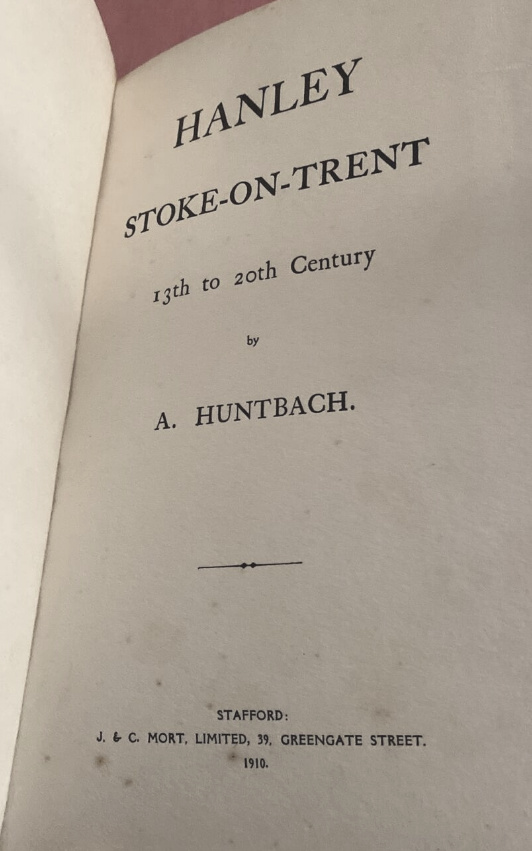
A couple of long-ago local history books I wasn’t previously aware of, which recently popped up on eBay. The 1973 story of the Staffordshire Sentinel, our local newspaper, from the mid 19th century onward. And a 1910 history of Hanley from “the 13th to 20th century”. Neither are on Archive.org.

You don’t know what you’ve got… ’till it’s gone.

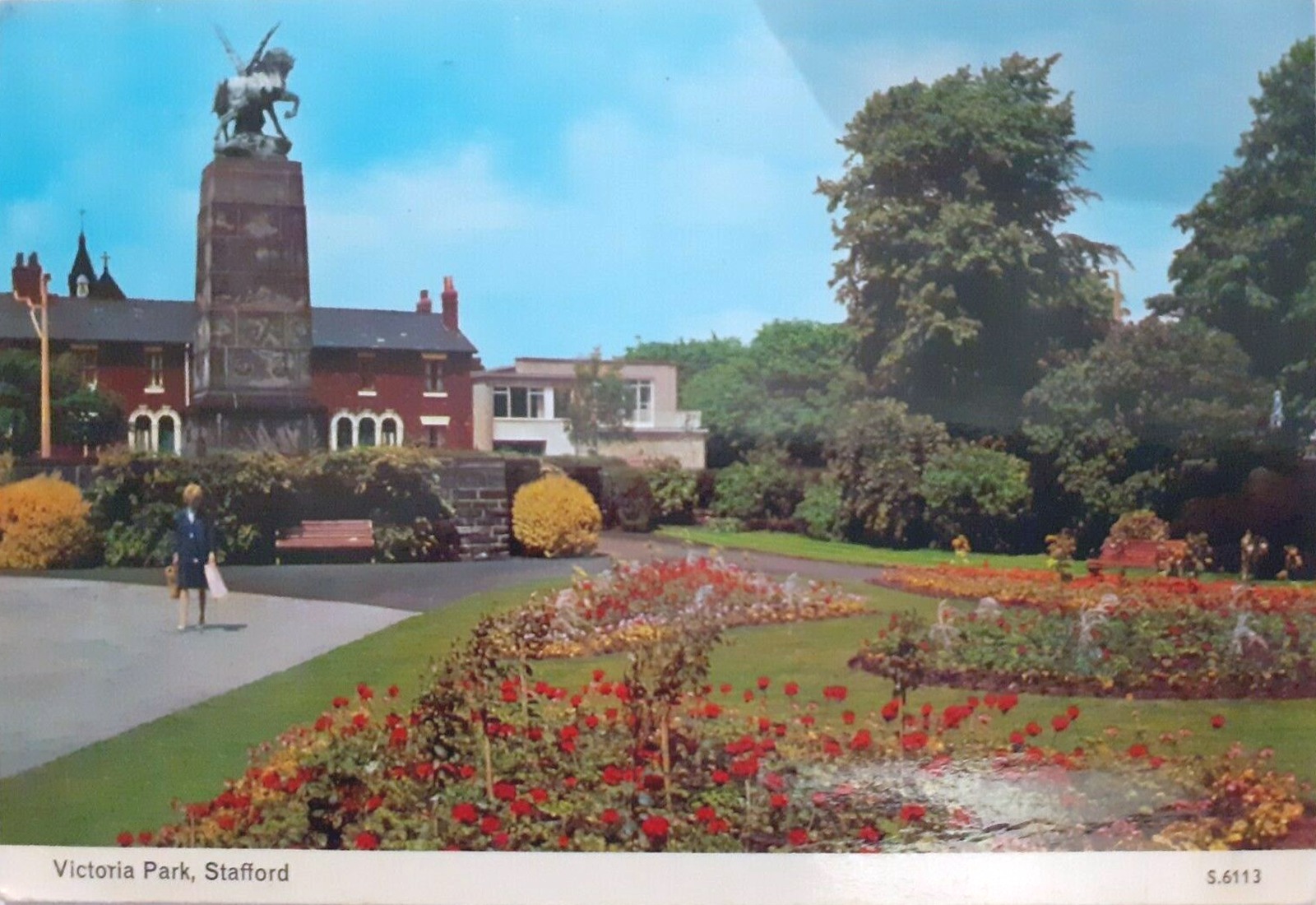
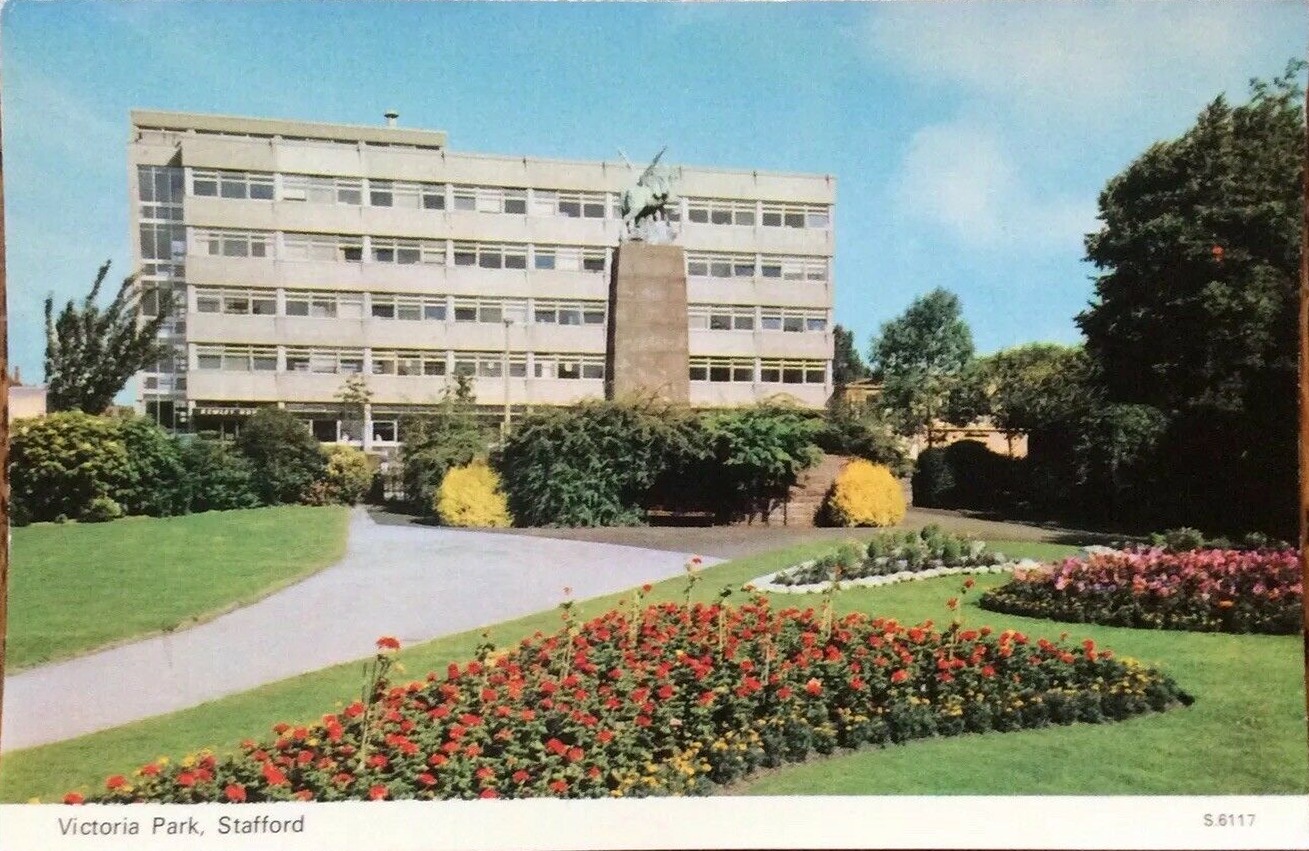
The site of the Staffordshire County war memorial in Stafford.

Before…

And after…

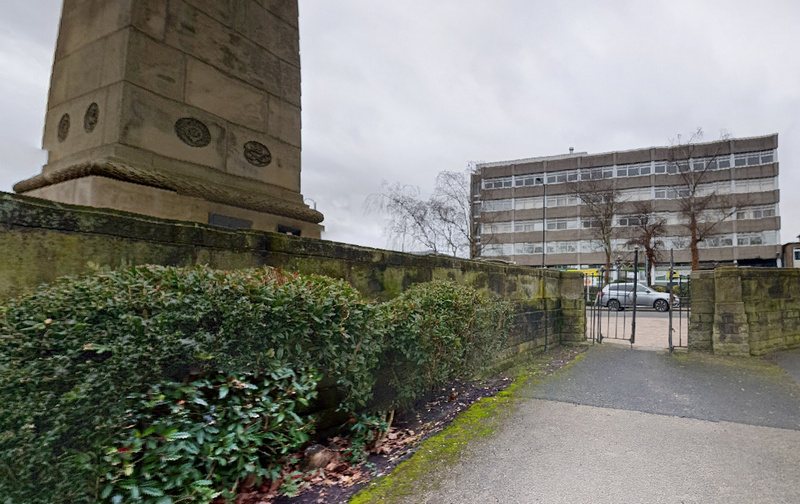
What the heck were the 1970s planners thinking? Were they so bamboozled by ‘architecture-speak’ and vague vision of a socialist utopia, that they were able to fool themselves into think that a concrete slab was somehow an ‘enhancement’ of the site’s character? Or did they just assume that the site was already so ruined by constant heavy traffic (a busy road runs between the park and the new building) and the new modernist British Rail station, that raising such a jarring concrete eyesore next to it wouldn’t matter much? They did at least clean the soot-stained memorial to better match the new building, but the modernist concrete of the office block soon weathered into a mis-matched dullness. It can’t have been the postcard-cheery sight seen above, on a dull grey day in the 1980s.

It’s still there today, accompanying that adjacent all-time classic of modernist concrete-horror, Stafford Station. Only a few scraggy and struggling trees serve to hide it, a bit, in summer.

For those unfamiliar with Stafford, I should add that this is somewhat unrepresentative of the county town, whose centre (a half-mile walk from the station) otherwise still has many appealing qualities for the pedestrian arriving by rail. It’s relatively easy for the savvy walker to avoid most of the modernist grot, both here and in the centre.

Meades on the Midlands

Jonathan Meades, on the Midlands, in his column in the latest edition of The Critic magazine…

My uncle, Harry Turner Meades, was Town Clerk of Burton-upon-Trent from the mid-1950s till the early ’70s. He was a committed Midlander, a seldom acknowledged species which does not advertise itself, nor does it travel. […] He loved, could recognise and mimic [the] many [West Midlands] accents, which are routinely mocked. […] He felt at one with [the Shropshire poet] Housman. He longed to hear Shakespeare’s work spoken as it would have been in 1600.

Being a Midlander is not something you shout about: people will affect not to understand thou. His definition of the Midlands and its precise if often redrawn border with the North was adopted with amendments by his nephew in a film about Birmingham 20 years ago. I attempted to delineate the Irony Curtain that stretches across England from roughly Lincoln to round about Chester. Essentially, with the exception of Liverpool, north of the Curtain it’s all “Me, I speak as I find, I do — I can tell you’re not from hereabouts.” Whilst the Midlands are more, much more, nuanced and modest. Black Countrymen’s stoic uncomplaining humour is at their own expense. Reticence and irony are in the blood.

[… For outsiders, the West Midlands] is a place that’s hurried through, unappreciated, on the way to somewhere else, which reveals itself [to them] by being excitingly self-caricatural, grossly self-parodic. Hence the name of that film: “Heart Bypass” [1998]. Even the inhabitants overlook it. They are perhaps not as centrifugal as they were but the ease with which Midland cities can be escaped is [still] held up as a magnet: Cannock [Chase], Malvern, Clent, Kinver, Lickey, Bredon, Clee…

On the Churnet at Barnfield.

An old railway surveyor’s map of the Churnet, showing the railway and the canal. Likely to be of interest to someone, especially those interesting in flooding in the Moorlands and exactly where the old drains ran (one is marked on the map in pencil and, since it was put in by the railway, is probably still there). Placenames are Barnfield, Little Birchall, and a route still labelled as a “turnpike”. Appears to be about where the Country Park is today.

Many of those naughty seaside-postcards were made… in Stoke

Well, well. An eBay listing reveals that many saucy ‘seaside postcards’ were actually produced in… Stoke-on-Trent. Hartshill to be exact, by one “Thomas Trow”. The Cartoon Archive has more information…

“Thomas Trow (1909-1971) of Stoke-on-Trent, whose address appears on the reverse of surviving artwork, as the Greyfriars Art Studio.”

This is what they looked like when finished and on the racks…

Trow’s old house at 24 Vicarage Road is an unassuming terrace on the short road that runs back of the Jolly Potters pub, going alongside the church to reach the middle-top entrance of Hartshill Park. For a while he appears to have also published cards as “Trowel Publishing”.

Unfortunately I can’t find more about him, other than that he was actually prosecuted. It’s difficult to imagine that saucy seaside postcards could be prosecuted by the police in the courts. But that was how it was until about 1966 and, according to The Cartoon Archive, his were prosecuted at least once by the Director of Public Prosecutions.

Once there’s a new permanent landlord in the Jolly Potters, they might want to put up a small display of his funniest postcards and an information plaque. Although in these censorious and humourless days, I suppose that might bring the police around again.

Street View VR for under £300?

So, it’s Autumn 2020 and the question is… is there yet any immersive ‘Google Street View’ VR headset for the impoverished historian and topographer, at under £300 and with good visual resolution?

The latest edition of the UK’s venerable PC Pro magazine triggered my interest in this question, with a review of a £300 VR unit called the Oculus Quest 2. Apparently it’s rather good, 1920px per-eye at a 90hz refresh-rate, £299 and just starting to ship now.

Looks good, so the deal-breaker question is… can it run Street View? It’s a difficult question to answer via search. You would think that everyone and their dog would have a neat Web page listing VR kit that works with Google Street View in 2020.

Turns out that my question was formulated wrongly, due to me being totally clueless about VR. Oculus effectively has its own app ‘wrapper’ for Street View and it’s called Wander and sells for £8. This app lists as being compatible with the Oculus Quest, so will presumably also be compatible with Oculus Quest 2. The reviews of the late-2018 app suggest the app was a bit dodgy until the end of summer 2020, when it had updates which fixed a lot of the complaints.

But Will Hart at CthulhuWho1 provides a vital snippet of information about the budget Oculus Go as a Wander-capable sub-£300 option…

“The Oculus Go does require a Wi-Fi connection, and the one-time use of a smartphone to get it connected at first”

So, while it appears the Oculus Go can currently be had for £150 from Argos in the UK, and less if you’re willing to risk eBay, the smartphone activation is a deal-breaker if you don’t actually own a smartphone. I assume that the “smartphone activation” may also be the case with the Oculus Quest 2 too.

This vital information then led me to discover that the Go and the Quest are just the wrong headsets, as…

“Oculus Rift S is meant to work with a desktop PC, connected through a dual USB 3.0 and DisplayPort cable, the Oculus Quest is completely wireless.”

Right, so that’s the solution. What I actually need is an Oculus Rift S + desktop PC + the cables. Which would actually be powerful enough to run not Wander, but rather the full Google Earth VR on Oculus Rift. Google Earth VR added Street View at the end of 2017, and is free rather than £8. It’s perhaps also more likely to continue working in the long-term.

Additionally, when I go back to the PC Pro review I learn that…

With Oculus killing off the Rift S (£399) in the coming months, the Quest 2 really is in a league of its own.

Thus the answer to the “£300?” question appears to be: wait until the Oculus Rift S can be had for £250, perhaps as a ‘discontinued hardware’ bargain in the New Year sales for 2020/21? One should be able to use it with the full Google Earth VR app and a desktop PC, given a USB 3.0 port and possibly a DisplayPort splitter cable. The risk there is that cheap Oculus Rift S’s don’t actually flood the market in a few months time, but keep their price and gradually become expensive eBay rarities for VR headset-collectors.

The other possibility is that Oculus manages to get the Oculus Quest 2 to offer a one-time activation option via an Android tablet such as the popular Kindle Fire, rather than a smartphone. But I guess one of their aims may be to harvest the phone-numbers, which they couldn’t do from tablets. Also, it would mean Facebook interfacing with an Amazon device.

Until then, it seems that the impoverished topographer has to carry on using Google Earth while nudging his nose into a widescreen desktop monitor… for free.


Update, May 2021: the Oculus Rift S never went into the bargain sales. But there are now big 34″ curved monitors priced below £500 inc. VAT. These are meant for videogamers but could be a viable StreetView alternative for many older desktop users who don’t want the VR games and want to use normal spectacles etc.

Wollheim’s pirated LOTR edition

Grognardia surveys The Covers of The Lord of the Rings in the U.S. paperbacks. From the perspective of the UK I don’t recognise any of these, but they probably mean a lot to American readers. But they’re interesting, as I’d never seen the covers for Donald A. Wollheim’s pirated Ace Books paperbacks. The American paperback covers get noticeably worse over the years, with the Barbara Remington / Ballantine covers being the best in a sort of Moomintroll-ish way — though rather puzzling as to what they actually show…