Tolkien Gleanings #8

Tolkien Gleanings #8

* A Concise List of Lord of the Rings Textual Changes (1954-2021) by Zionus (2022). Free, online, and covering the published editions rather than the drafts. Finds… “70+ changes unrecorded by others [and] a dozen possible errors in the latest edition.”

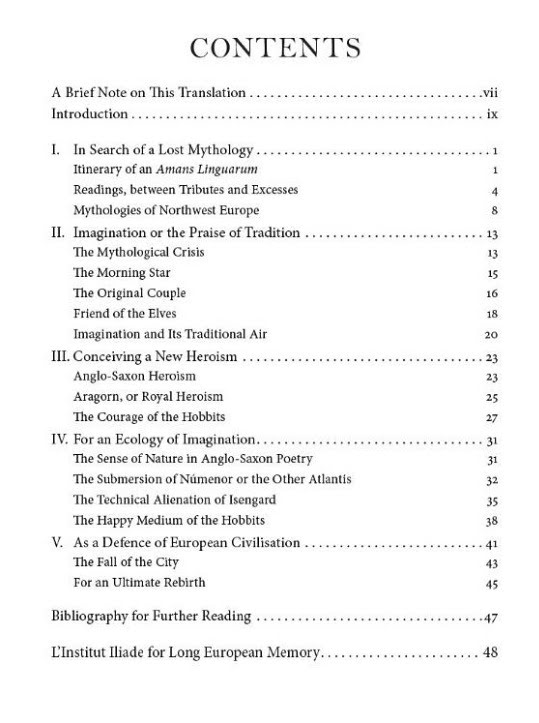
* Tolkien, Europe, and Tradition: From Civilisation to the Dawn of Imagination (2022). From… “a specialist in Germanic studies [who] demonstrates the European heritage that inspired Tolkien by explicating the finer details of Anglo-Saxon and Scandinavian myth, the Finnish Kalevala, Greco-Roman influence, and much more.” Appears to be a translation from the French. Despite the grandiose title, it has just 48 pages of core text. As such it can hardly be called a book, and at a guess it may be a printed lecture?

* An August 2023 summer school with John Garth, at the University of Oxford Department for Continuing Education, “An Introduction to Tolkien’s Mythology”. “From £1,315”. Fully booked in a bang and a flash, of course.

* A short report on the John Garth lecture, given in November 2022 as part of Marquette’s large Tolkien exhibition in the USA. The lecture…

“‘Whispering Leaves: How Tolkien’s Manuscripts Reveal the Secrets of His Creativity’ ran a little over an hour […] Garth teased a little bit of his next project as well. He said he was working on a book, tentatively entitled “Tolkien’s Mirror,” wherein he seeks to ground the work of The Lord of the Rings in Tolkien’s intra-war period (1918-1939) and World War II years (1939-1945), and show that much of Tolkien’s world-building reflected contemporaneous events, including those worldwide.”

* Vermonter Jeb J. Smith’s newly-funded Kickstarter book A New Perspective on J.R.R. Tolkien and Middle-earth. Funded but not yet produced and shipped. The blurb is off-putting. For instance, claiming that it’s… “the first book of its kind to place Tolkien within his proper context” [re: how his] “worldview impacted his mythology”. Tom Shippey and others might wish to disagree. Also makes it sound like the author is going to be reliant only on his examination of “a wide range of Tolkien’s writings” and little else.

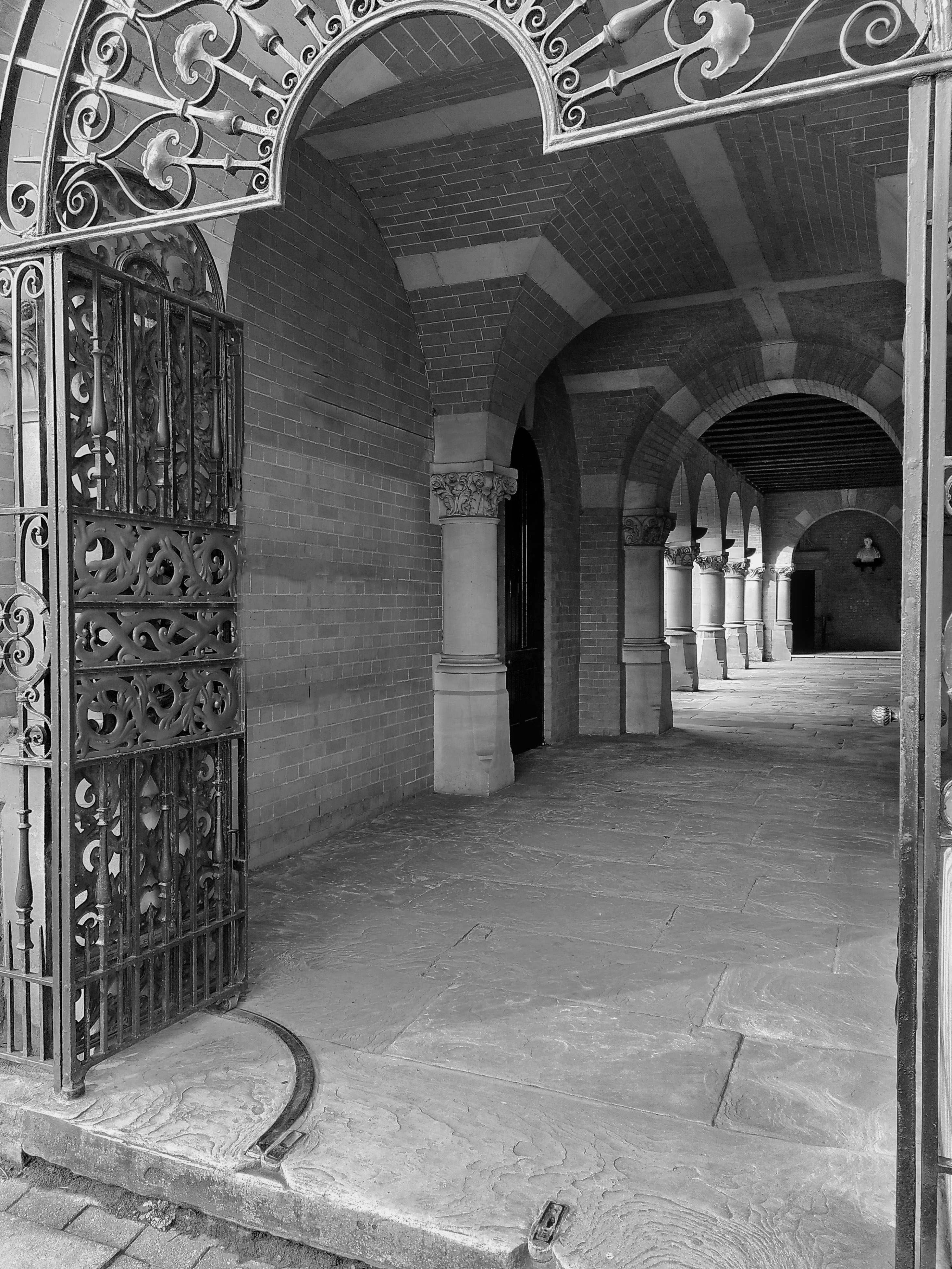
* And finally, a new Creative Commons Sharealike picture of the Entrance and cloister of the Birmingham Oratory, home-from-home for the young Tolkien. I’ve here given the view a de-modernising, shadow lift, and a b&w fix. Feel free to re-use under the same CC licence.

The ancient Lyme, the new Lyme

Good news locally. Newcastle-under-Lyme council is set to plant 850 lime trees by 2023, on their now-derelict council golf course at Keele. The planting is being pitched as a key part of a ‘new Lyme’ forest, named after the ancient forest now long-gone, and other sites are also being planted (but not with limes). Similar large planting schemes are underway in Stoke-on-Trent, and there is also a large private planting of native woodland in Eccleshall, and along the HS2 route.

The Lyme is one of a half-dozen local ancient forests discussed in detail in the new “The Forests and Elite Residences of the Earls of Chester in Cheshire, c. 1070–1237” (The Des Seal Memorial Lecture), in Anglo-Norman Studies XLIII: Proceedings of the Battle Conference 2020. Sadly this is paywalled at JSTOR but it is of obvious importance for any tracing of the Gawain journey from North Wales to the Staffordshire Moorlands, in Sir Gawain and the Green Knight.

I can get enough of the Anglo-Norman Studies article to summarise a bit, re: the Lyme. It suggests Lyme does not actually mean “lime trees”, but most likely comes from the Latin limen, meaning ‘threshold (of a house)’ or ‘boundary line’. The Lyme was a dense belt of protective forest running along the Cheshire / north Staffordshire / Shropshire border, some 50 miles long and augmented by impassable Cheshire mere-bogs and high escarpments that rise as the Cheshire Plain meets Staffordshire. Difficult to trace today, but the monk Lucian of Chester (monk of St. Werburgh) mentioned it (possibly c. 1195) as “(Cestra provincia) Lime nemoris (limite lateraliter clausa)”. Later others talk of it, including a Shrewsbury charter which knew it as “nemus quod Lima dicitur”. Through the dark wood of the Lyme passed all the passable routes from Cheshire into north Staffordshire. The forest probably linked strategically with other protective forests that lay between the Dee and the Peak, which the article also discusses.

I now speculate a little. If it dates from pre-Norman times must be unknown, unless pollen archaeology might one day shed some light on that. Lucian’s text is available in a 1912 scholarly reprint and he is said by the Latin-reading editor to be keen to give credit to his lord for creating the Lyme. Yet such a landscape-work is one of many generations, and his Lord may only have put things in order and filled in gaps of some earlier Mercian version of the Lyme. That would be my guess, but just a guess.

What we can be sure of is that from the Lyme the local places of Audlem and Burslem partly take their names. Though this does not mean that the Lyme once flowed directly around the foot of the hill and churchyard of Burslem. It would be more likely that it was way over toward Red Street and Bignall Hill, thick and thorny on the slopes and banks running down to the Cheshire Plain. Though thinning woodland may have stretched back from there, perhaps as far as the western lip of the Fowlea Valley opposite Burslem, which would make Bradwell Woods a relic. Thus Burslem would have lain some way SE of the Lyme, but near enough to take its placename (‘Burgweard’s Lyme’) from it. What Lyme might have meant to Burgweard, if it ever had a tree-ish meaning, we can’t know. But one placename study suggests ‘Elm’ as a possible meaning for ‘Lyme’. In which case the Lyme forest would have been rather tall, since elms are very big trees.

The obvious enemy that the Lyme might be defending the English heartlands against were raiding incursions from North Wales and Ireland. In total it probably formed a wide 55-mile arc from Market Drayton in Shropshire through north Staffordshire and south-east Cheshire to near Ashton-under-Lyme in Lancashire. So far as I know no-one has ever tried to map its likely spread, with reference to relic woodland and suitable terrain. An interesting ‘retirement project’ for someone, perhaps.

Tolkien Gleanings #7

Tolkien Gleanings #7

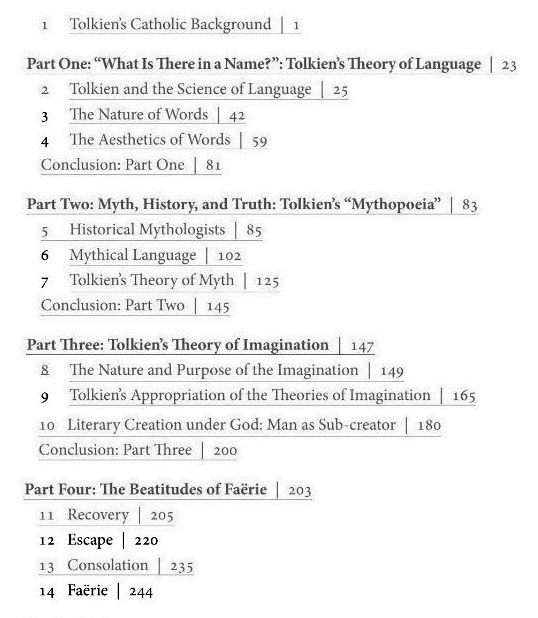
* The new book From Imagination to Faerie: Tolkien’s Thomist Fantasy now has a partial Google Books preview and TOCs…

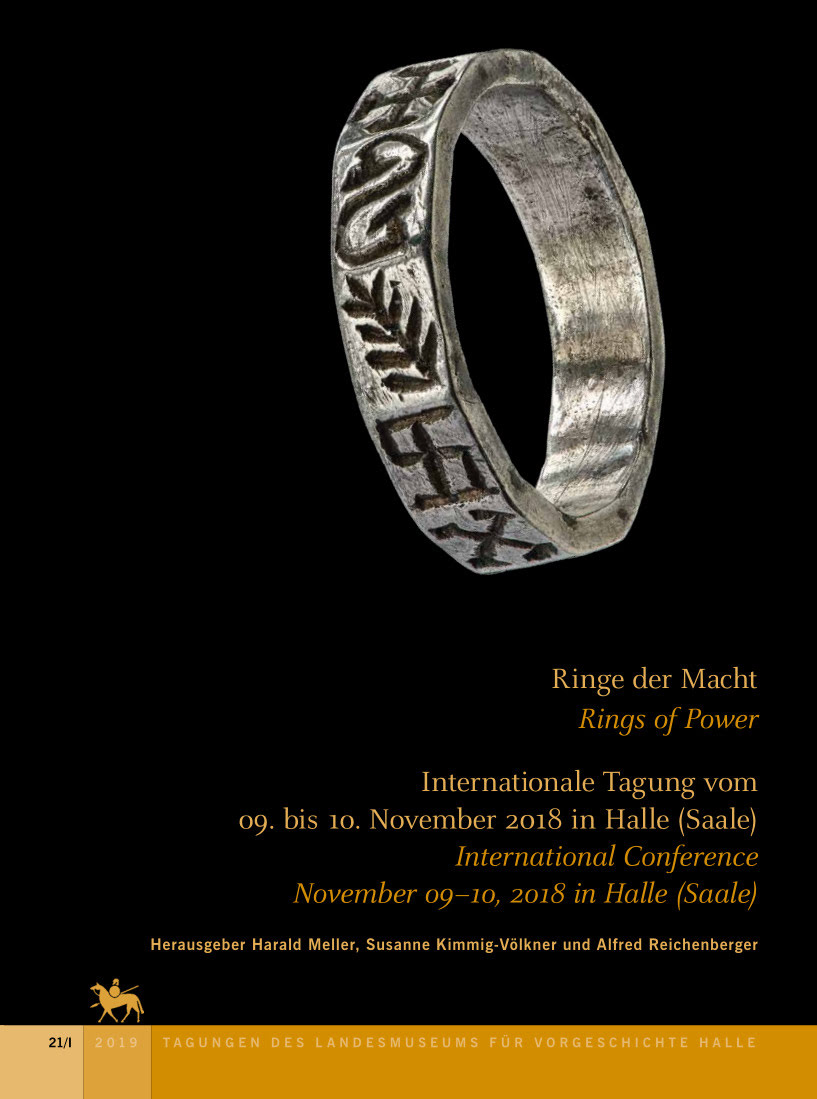
* “The Vyne Ring in context: powerful people and powerful rings during the end of Roman Britain”, an open-access English chapter from the sumptuous and scholarly Rings of Power print book (2019, 2 volumes) on the cultural archaeology and thinking on ancient finger-rings. Readers will recall Tolkien’s connections with this and Nodens.

This open-access chapter also gives the TOCs, and there one finds the essay paired in the book with Thomas Honegger’s German-language “Tolkien und die Tradition der Ringe der Macht”. I find an English version of Honegger’s article is freely available. The book’s TOCs also show that most of the other chapters are in German. There appears to be no open-access version, other than these chapters.

* The new book Beowulf as Children’s Literature (December 2021, $ paywalled on JSTOR) considers the 100 or so children’s adaptations of Beowulf which appeared during the 19th and 20th century, and at the end has a chapter on “Children’s Beowulf for the New Tolkien Generation”.

* The open-access “To Bring Back some Eagleness to Eagles: On Bird Worldings in the Bronze Age” (2020). Relevant to Tolkien’s understanding of eagles in ancient Northern history and tales. The…

“research community has paid very little attention to avian creatures [and] birds seem to vanish from the air [in recent cultural studies of farming and landscape, since] Marxism still seem to rule contemporaneous Bronze Age research”.

Goes on to provide an interesting non-communist cultural/archaeological study (“According to north European birdlore, eagles were thought to be immortal”), and then the last third rapidly leaves the Bronze Age and comes up to date.

New book: As Best We Can

I’m pleased to learn of another writer on the topography and people of the Potteries, via stumbling on a new book with poems about Stoke-on-Trent. The poet Jeffrey Wainwright had a 2020 collection from noted poetry publisher Carcanet, As Best We Can. Wainwright was born and schooled in Stoke (specifically Sandford Hill, Longton) in the 1950s. Then went to university in Leeds and took his first job on the Welsh coast. Local poems, of Etruria and Longton, in his new book include…

* “”Crockery”, a sequence of six poems […] on the products of Josiah Wedgwood’s factories draws in history, politics, class, art and aspiration.” The lustrous products of the factory are contrasted with the imagined lives of Etruria’s workers.

* “”Who Was St. Chad?” evokes the Anglican church my mother attended as a girl. She was part of a strong religious culture, mainly Anglican and Methodist, that existed in Stoke-on-Trent in the first half of the 20th century and has all but disappeared in the course of my generation and since.”

* “”Dreams of Lennox Road” [memories of] the street where I spent the first 18 years of my life.” The top end of Longton, shading into Florence / Normacot.

* ““The Prims” [on] the austere and charitable Primitive Methodists, who emerged in the early 19th century, often drawn from the poorest workers.” This originated on Mow Cop and… “had strong popular appeal in the Potteries up to the mid-twentieth century when Wainwright was a boy”.

The last quote is from the Times Literary Supplement review, which wrongly guesses “The Prims” is set the “Victorian Black Country”. The poem’s use of the word “potbanks” in describing the topography places it rather in North Staffordshire. There are big bottle-ovens (for glass, rather the clay) in Wordsley, in south Staffordshire at the far semi-rural south of the Black Country. But they are not there called “potbanks”.

Possibly there are other Stoke poems in his earlier collections. Would there be enough for a dedicated book of the Stoke poems, one wonders? Perhaps illustrated with new pen drawings?

Gummage restored

Worzel Gummidge: The Complete Restored Edition on Blu-ray in the New Year. This is the original 1979-81 children’s series, seventeen hours in total over five discs. Reworked by the British Film Institute from the original film negatives, which had been found mouldering away in barn. Pre-release reviews report a sparkling HD picture and excellent sound, for this classic series. Previous releases, even the box-set, had an abysmal sub-VHS picture quality. This was made even worse in YouTube clips.

Great to see such a fine evocation of the countryside given this treatment at last, and we can now see some of the all-time perfect gems of TV (such as “Choir Practice”) as they should be seen.

Tolkien Gleanings #6

Tolkien Gleanings #6

* A download of a lecture by Prof. Giuseppe Pezzini (University of Oxford), Tolkien on the Nature and Purpose of Christian Art. “This lecture was given on 21st April 2022 at The Christian Heritage Centre at Stonyhurst as part of the ‘Catholicism and the Arts: An Intellectual Retreat’.” (Online August 2022). Be warned that the Centre’s disastrous podium microphone often goes haywire and this, combined with the very heavy Italian accent, makes for a difficult listen. See also his open-access journal article “The Lords of the West: Cloaking, Freedom and the Divine Narrative in Tolkien’s Poetics” (2019).

* A theological podcast from October 2022 interviews the French author of the new book From Imagination to Faerie: Tolkien’s Thomist Fantasy (July 2022). The interview and discussion are excellent. I can’t locate any reviews of this book, as yet, even on Amazon.

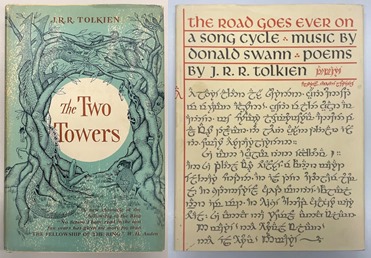
* Amazon is now listing Tolkien’s Library: An Annotated Checklist: Second Edition Revised and Expanded, due 31st January 2023. The book is currently listing as a Kindle ebook only, and the listing previews an appealing new cover…

* Further out in time, a major new Tolkien book has been announced for the end of March 2023 and this is pre-ordering now. To be titled The Battle of Maldon: together with The Homecoming of Beorhtnoth, it will have Tolkien’s scholarly notes and “unpublished and never-before-seen texts and draft”. Plus related essays by Tolkien, and the text of his lecture “The Tradition of Versification in Old English”.

* Tolkien Studies, Volume 19, 2022 Supplement (July 2022, $ paywall). Has a single book-length article, “The Chronology of The Lord of the Rings”. This appears to be the first full publication of Tolkien’s own day-by-day working ‘grid chart’ for The Lord of the Rings, used by him to keep track of which characters were where on which day. I seem to recall that I saw a large section of this at the Bodleian exhibition in Oxford, a few years ago. This special Tolkien Studies supplement has extensive scholarly notes and an introduction. Amazon UK appears to know nothing about it.

* New in the questionable Brazilian Journal of Development (not in DOAJ or the Brazilian aggregators, and I won’t index it in JURN), a November 2022 article in English. “J.R.R. Tolkien: an analysis of the English conservative political culture” is said to be drawn from a Masters dissertation.

* In The Spectator magazine ($ paywall) this week, “In defence of fairy tales”

“A recent opinion poll has revealed that they terrify people under the age of 30, who consider them horribly inappropriate for children [and] ‘sexist’ and old-fashioned and outdated.” [Yet] “Some of these fairy tales date back 6,000 years […] That they have lasted, often scarcely changed, over the intervening millennia seems to me evidence that they contain certain immutable truths, applicable to all, regardless of whether we were chasing the last handful of mammoths or attempting to split the atom. [But today they are too often seen as] simply conduits for grievance and resentment” [And when such] “stories are read with blinkers on … The real point of the story is entirely lost.”

* And finally, the new research study “The Influence of the Mother Tongue on the Perception of Constructed Fantasy Languages”. Researchers found that Tolkien’s Elvish languages Quenya and Sindarin sounded the most mellifluous to German and Japanese speakers. While Orkish which the second most favoured language among Chinese speakers.

Tolkien Gleanings #5

Tolkien Gleanings #5

* The open-access paper GIS & Middle Earth (online 2021). GIS = computer-assisted mapping and map-making. Complete with free DEM height-map downloads, containing the entire terrain of Middle-earth.

* I see that An Unexpected Journal had a special issue on The Imaginative Harvest of Holly Ordway (Christmas 2021). This was inspired by her book which surveys the modern writers whose books Tolkien might have read.

* Calmgrove has a long August 2022 blog article in which he scrutinises some claims made for Tolkien’s Sidmouth (a small English seaside resort)…

“It seems to me that the most likely way that Sidmouth may have inspired Tolkien was that it provided periods of relaxation and escape in which to allow his imagination to run where it wanted, rather than any specific aspects of the Devon seaside and Jurassic Coast. Did Tolkien really “essentially” turn Sidmouth into the Shire and did the Jurassic Coast truly inspire the landscapes, flora, and fauna of the hobbits’ homeland? Or are the town’s advocates chasing a chimaera?”

At first glance there may be some disagreement with Garth. Calmgrove has… “While in Sidmouth he brought the hobbits far to the east of the Old Forest and the Barrow Downs to The Prancing Pony in Bree”, while Garth instead has him writing from Bree to Rivendell (Worlds, p. 74). Actually the Chronology supports both, since when he arrived in Sidmouth for a long holiday (“1st-15th September 1938”, Chronology) he already had the “In the House of Tom Bombadil” chapter done, if the reference to “Chapter VII” is the same as the book’s published chapter numbering. Tolkien then spent the holiday writing the tale from there up to Frodo meeting Gloin at Rivendell. What Calmgrove doesn’t snag is that Garth notes that Tolkien found the name Barnabas Butter on a old Sidmouth gravestone (Worlds, p. 21, side column).

* The December 2022 event “On Dragons and Dinosaurs” at the Oxford University Museum of Natural History

“On the 1st January 1938, J.R.R. Tolkien gave his thoughts on dragonlore and dinosaurs in an illustrated lecture at the Museum not discussed anywhere else in his works. [Now we stage a live] once-in-a-lifetime re-run of Tolkien’s lecture featuring his original slides, supporting specimens, and documents.”

Completely sold-out in a bang and a flash, of course. Hopefully it will be recorded and placed online after the event. “Tolkien’s Deadly Dragons” has an account of the original lecture.

* Dr. Philip Irving Mitchell’s ongoing public archive of online classroom handouts on Tolkien and Medieval Tradition. With useful short summaries such as Emotional Monarchy in Tolkien’s Lord of the Rings (August 2022).

* And finally, The Times Diary: Tolkien’s flag flying again (October 2022, $ possible paywall)…

“A historic Oxford pub where Tolkien and C.S. Lewis used to drink [has reopened, post-lockdowns] after supporters each paid at least £1,000 for a share in a 15-year lease. As well as being de-modernised to create a suitably Inklings air, The Lamb and Flag will now host book launches and talks.”

And The Spectator magazine ($ paywall) has an October 2022 article by a leader of the group, describing… How we’re saving Tolkien’s pub.

Tolkien Gleanings #4

Tolkien Gleanings #4

* “Companions in Shipwreck: J.R.R. Tolkien’s Female Friendships” (2019 book chapter, and now newly open-access).

* A new scholarly blog post “Lost in Translation: Ettins in Old English”. It seems the author is pushing back strongly against a lumpy assumption held by a few confabulating pagans, who appear to want to believe that “all giants are ettins” so that they can freely start “equating ettins and ents”. The author notes that… “As far as I am aware, nowhere in the Old English corpus is there an ent who is also referred to as an ettin, or vice versa, so the two appear to be mutually exclusive.”

* Cover for the new second edition of Tolkien at Exeter College, now available direct from John Garth’s website. Apparently, according to a podcast interview, there is no expansion in terms of adding details of Tolkien’s tutors and teachers and their research interests.

* A new book in Greek, The Influence of Ancient Greek Mythology on the works of J.R.R. Tolkien (2021).

* “J.R.R. Tolkien: The Art of the Manuscript” Catalog. 200 page catalog for the current Marquette University exhibition, which closes 23rd December 2022. The exhibition, and presumably also its catalog, apparently includes unspecified “never-before published works” by Tolkien.

* A thoughtful new blog post from the Deputy Head Girl at Wimbledon High School in London, “How does mapping help to create a fictional world?”, with a strong Tolkien focus.

* Full details of a 30 credit Theology and Religion module Tolkien: Scholar, Critic, Writer at the University of Exeter. With reading list. Tutor Nick Groom… “will also consider how far Tolkien’s experience of place, including his trips to Cornwall, affected his work”. Module devised/approved in 2019, possibly still running annually.

* The Spanish Tolkien Society has a large exhibition on now. Includes a public talk on “J.R.R. Tolkien’s Spanish Connections”.

* And finally, new on UnHerd is “Who cancelled English folklore? Britain is embarrassed by its heritage.”

Tolkien Gleanings #3

Tolkien Gleanings #3.

Newly noticed at the latest edition of Journal of Tolkien Research, the short conference paper “Tolkien’s Coleridgean Legacy” (i.e. Coleridge).

Also new there, a review of the book Law, Government, and Society in J.R.R. Tolkien’s Works (2022). Another review from 2021 is found here.

New website: Tolkien and Alliterative Verse – A resource for students, poets, researchers, and anyone interested in J.R.R. Tolkien’s poetry, from Anna Smol. Has a Descriptive Bibliography for Tolkien, a guide to finding a small handful of worthy writing to introduce Alliterative Metre, and (“coming soon”) a guide to Secondary Sources.

Old, but new to me: “The Horns of the North: Historical Sources of J.R.R. Tolkien’s Trilogy” (1976). A short conference paper, now online. Some interesting early suggestions for sources, in a major but little-known event in Turkish / central European history.

Updated archive: Tolkien Journal, The 1965 – 1972, said yesterday by the curator to be newly in searchable .PDF form at fanac.org.

Audio interview: Writing About Tolkien, with John Garth (2022). Reveals that Tolkien at Exeter College has gone to a second edition. Nicer format (the first was laser-printed and stapled), adds some of the materials and high-res pictures used for the Bodleian exhibition, and has a few updates, according to a podcast interview with the author. £14 from his website. Not on Amazon, and not likely to be.

The Incredible Nineteenth Century

The Incredible Nineteenth Century: Science Fiction, Fantasy, and Fairy Tale. An open-access journal flagged as “Journal coming soon!” from Middle Tennessee State University. Will seek to focus on…

“the time period in which the modern genres of science fiction and fantasy began, and in which the academic study of fairy tale and folklore has its roots.”

Relevant to the 1906-1926 Tolkien, since his world was partly formed by the products of that earlier time in the late 19th century. Much as today someone would have been formed by the 1966-1986 period, though still living and working in the 2000s and onward.