Dr. Arthur Edward Dodd

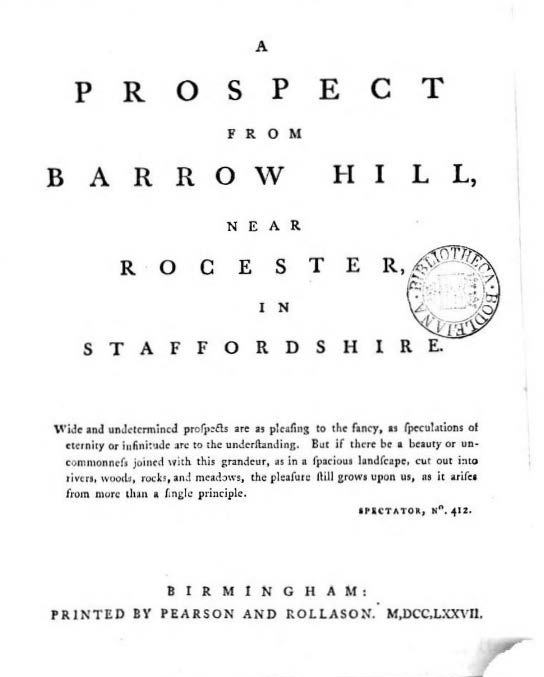
I’ve found another local author, via an eBay listing for his Weaver Hills and other Poems by A. E. Dodd.

Arthur Edward Dodd (1913-) was a local poet, playwright and historian. Combining Amazon and the Writers Directory, one can list his books and plays as:

Poems from Belmont, 1955.
Three Journeys, 1958.
Flower-spun Web (play), 1960.
Dictionary of Ceramics, 1964.
Words and Music, 1964.
To Build a Bridge (play), 1965.
Weaver Hills and other Poems, 1967.
The Fifth Season, 1971.
Gold in Gun Street (play), 1973.
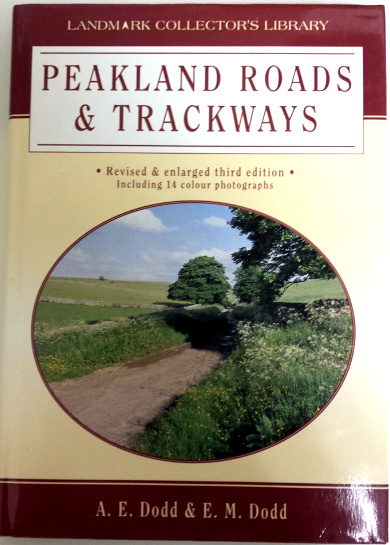
Peakland Roads and Trackways, 1974.
Beacon Stoop, 1985.

Peakland Roads, written with his wife, went through three editions. The third appeared in 2000, updated and expanded. It looks like it could do with an ebook edition soon, to keep it available.
His The Dictionary of Ceramics went to a third edition in 1994. There also appears to have been a Concise Encyclopaedic Dictionary of Ceramics edition.

The three plays may have been linked with North Staffordshire’s annual One Act Play festival? That’s just my guess. The Weaver Hills volume of poems suggests there’s some local interest there for the Moorlands, but one would have to have access to the poetry volumes to know if he also wrote any Stoke poems or not.

He also published historical articles. I found a snippet for one, “Rousseau in England” in The Listener in 1966, and there may be more. Rousseau famously hid out in the Moorlands at one time. There was a scholarly local history paper titled “The Froghall-Uttoxeter Canal” in the North Staffordshire Journal of Field Studies, 1963. He also appears to have contributed articles to encyclopaedias, such as Chambers.

He was educated at Newcastle High School and seems to have served at various times with the North Staffordshire Field Club in the 1950s and 1970s. He worked as the Chief Information Officer for the B.C.R.A. (British Ceramic Research Association), from 1938-1970…

“Outlining the work of the information department of the BCRA, Dr. Dodd said that they dealt with 30-40 enquiries each week, of a varied nature” (Ceramics journal)

In Aslib Proceedings, 1961, he had an in-depth article on this work, titled “Information Work in Ceramics: the Science and Technology Section”.

Ceramics journal hoped, noting the 1970 retirement of Dr. Dodd Ph.D., M.Sc., F.R.I.C., that people would… “continue to see this spritely figure around the Potteries”, so it sounds like he ‘cut a bit of a dash’ around the city.

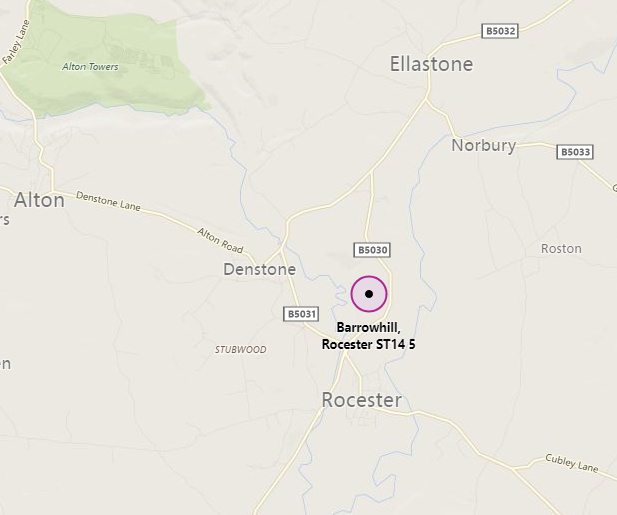
In retirement his address was given as Hall Lodge, Upper Ellastone.
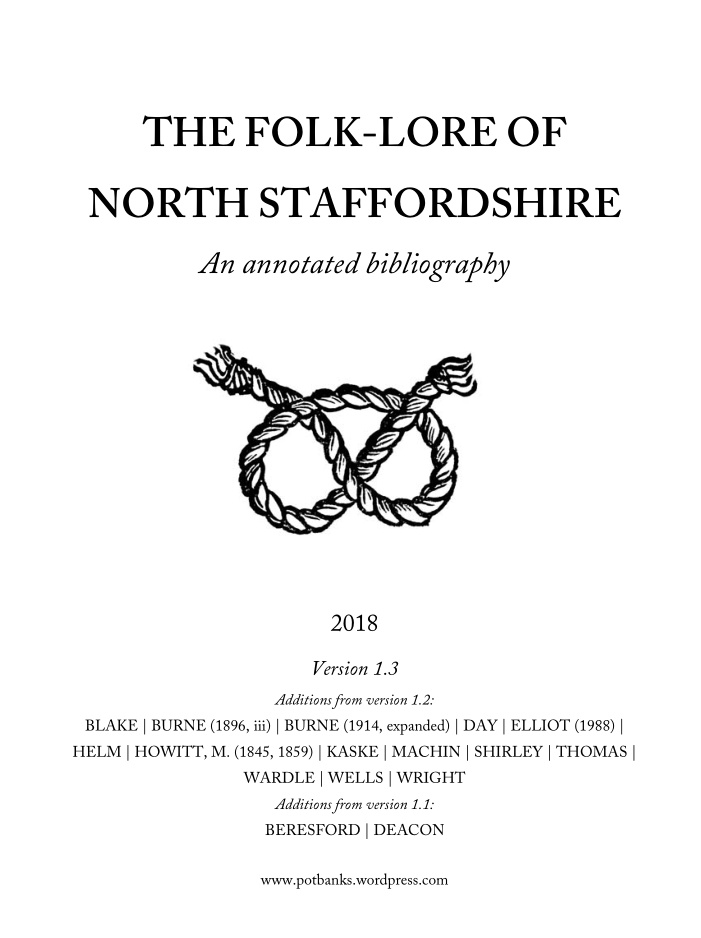
The Folk-lore of North Staffordshire, version 1.3

The Folk-lore of North Staffordshire, an annotated bibliography. A new 1.3 version with many additions.

Click to picture to download the PDF.

It’s 18 pages, so should be printable as a 6″ x 9″ booklet via the Lulu USA website (UK doesn’t offer 6″ x 9″ size) etc. Or locally with booklet-printer software. If you’re a librarian, feel free to print and archive.

Tolkien Treasures

The Oxford Mail has a bit more detail about one of the new Tolkien books which accompany the Oxford exhibition.

Tolkien Treasures highlights of the Tolkien archives held at the Bodleian. It focuses on J.R.R. Tolkien’s childhood in the Midlands and his experience in the First World War, as well as his studies at school and at Oxford University’s Exeter College.”

Excellent, a nice tight focus. 144 pages and somewhat affordable too, at £12 retail. It’s on Amazon UK under the slightly different title “Tolkien: Treasures” and at an even better £10.50.

New Tolkien letters

New Tolkien letter(s) at auction, with an interesting quote being given from one letter…

“I can only hope that the ancient proverb (attributed to King Alfred): ‘When the bale is at the highest, then the boot (betterment) is ever highest’ may prove in your case true.”

Old English bale appears to have been mostly a shorthand for ‘tormenting woe, caused by deliberate mischief and wickedness – usually arising from hate, envy and similar’. Could also include actual wounds and bodily binding arising from the same.

It was obsolete by the mid 1500s, but the use of baleful survived in poetry and today that word can still be used and understood in poetry and fantasy literature. Usefully in the descriptive context of a character or animal only having one eye, and that eye having a ‘baleful’ aspect to it. Or a star of ill-omen having a similar ‘baleful’ aspect to it.

Boot is interesting. We still have something like boot in the modern ‘booty’, meaning gathered-up and taken-away treasure. The getting of which would of course lead to betterment, enrichment.

But boot is not in Bosworth-Toller, and instead one needs to search for bót, ‘mending, repair, remedy, improvement’ (also compensation).

The original saying is found in the The Complete Harley 2253 Manuscript, Volume 3

When the bale is hest,
Thenne is the bote nest.

Which indicates that it’s one of the sayings attributed to a wise-man named “Hendyng”, who thrived in the mid 1200s in what is now the West Midlands.

Some of the Hendyng translations at ‘The Complete Harley’ seem a bit off, seemingly skewed by the later interpretive verses that precede each saying. For instance, the horse one makes more sense and is wiser and more wryly Midlands-y as: “He is free of his horse, who never had one.” But the “boot” saying is translated there as:

“When the pain is highest,
Then is the remedy nighest”

The word bale here is presumably being translated as ‘pain’ due to the context supplied by the preceding words. But that seems only partly justified by the context, which is evidently using ‘pain’ as a shorthand for what is expanded a few words later as treye ant tene, ‘trouble and grief’, rather than as a precise pain-word meaning ‘bodily agony’. Thus the translation of bale as ‘pain’ risks misleading the modern reader. Given this, and Tolkien’s suggestion of ‘betterment’ for boot, a translation might better run:

  When the woe is worst,
  Then betterment is not far off.

In modern parlance, something like:

  When things are really bad,
  It can only get better.

Which means it’s not quite the same in sentiment as the similar modern saying…

“Every cloud has a silver lining”.

It’s a little more active that that. The ‘betterment’ here comes from the anticipation that there will soon be ‘action in-the-world’ to fix things and to actively restore things to how they were before. On the other hand the modern understanding of “Every cloud has a silver lining” suggests more of a time-delayed ‘mental reconsideration and re-framing’ of, and ‘learning from’, the misfortune. Something which then potentially leads to the discovery of a new unexpected element in the resolving situation. The addition of this unexpected element then actually makes things better than they were before.

Welsh Newspapers Online

The online English newspaper archives are locked down behind a paywall, but material was often syndicated widely (i.e. was pushed through a press syndication service, where any subscribing paper could run any of the stories or articles on offer at no extra cost). For the benefit of independent scholars and researchers, here are links to three free newspaper collections, useful for searching for syndicated material. The Welsh one is especially useful for the UK, as Welsh newspapers carried a lot of syndicated content.

Welsh Newspapers Online. 15 million articles, fast and easy to use.

California Digital Newspaper Collection. Freely Accessible Repository of Digitized California Newspapers from 1846 to the Present.

Library of Congress newspapers. Mostly to about 1923.

Doubtless family-history researchers will be aware of more, but these are the three big “go-to” ones I tend to use.

“Doin’ the Lambeth pot…”

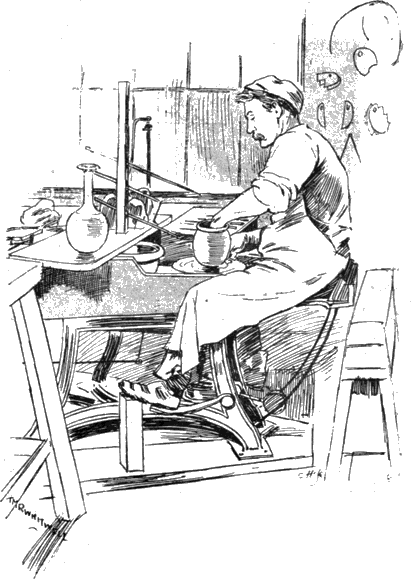
This may interest readers fascinated by Stoke-on-Trent pottery history. A tour of Doulton’s London factory in 1895, Lambeth. The process of making and the production line was much the same there as in North Staffordshire.

“the good folks in Lambeth … call it “Doulton’s place,” and the big gates and the palatial buildings that enclose and comprise it are variously inscribed “Doulton and Co., Lambeth.” … I gathered that Messrs. Doulton and Co. possess about half-a-dozen “Pottery-Lands” scattered about in Staffordshire, Warwickshire, and Lancashire, one at Paisley, and one in Paris.”