Den Siegertsz returns

Good to hear that local radio presenter Den Siegertsz is back, with a weekly Sunday lunchtime show on the non-profit Churnet Sound, sponsored by the local maker of Staffordshire oatcakes.

“Den’s new show will be on DAB in north Staffordshire and South Cheshire every Sunday from noon.”

No debut date yet, but coming soon. Churnet Sound broadcast from Biddulph Town Hall. It seems they also stream online, which is good for those for whom the DAB signal is ‘bubbling mud’.

The Haunting of Stoke-on-Trent

Always good to find a supernatural tale about Stoke-on-Trent. New to me is The Haunting of Stoke-on-Trent (2017) by Julian Middleton. 58 pages in paper (says eBay), 89 pages in paper (says Amazon UK) or 33 pages (says the Kindle ebook store). The back cover of the paperback on Amazon suggests the reason for the expanded page count… an added “special bonus story”. So my guess is it’s perhaps 15,000 words for the main tale.

The blurb suggests a children’s book…

When an earth tremor creates a gaping fissure in the middle of his street, Tom Hughes is horrified to witness a group of ghostly miners emerge from it. As a terrifying apparition looms over the distant hill of Mow Cop, and the miners create a path of destruction on their way to join it, it’s up to Tom and his sister Jen to save Stoke-On-Trent from certain doom…

And an Amazon reviews confirms. It’s a short children’s book, and is apparently written for easy comprehension by those in early middle childhood (Amazon suggests ages 7-9) who may not be regular book readers yet.

Taking the goose

New on eBay (not from me), Goose going shopping. Via Getty, so you’re not also buying further usage-rights with the print. Unless you can find Getty’s source and establish that it’s now public domain.

“3rd April 1937: Mrs Lockyer from Stoke-on-Trent takes her pet goose out shopping. The bird has been taught to accept pennies, and has collected a large sum for charity.”

Here newly colorised. Another for a hypothetical “Surreal Stoke” exhibition.

New and local on Archive.org

Some new and local items for free on Archive.org:

The Two Universities Way: a green route to walk from Staffordshire University to Keele University (2012).

Mountain Bike Guide: Midlands (1994).

The Technique of Pottery (1962).

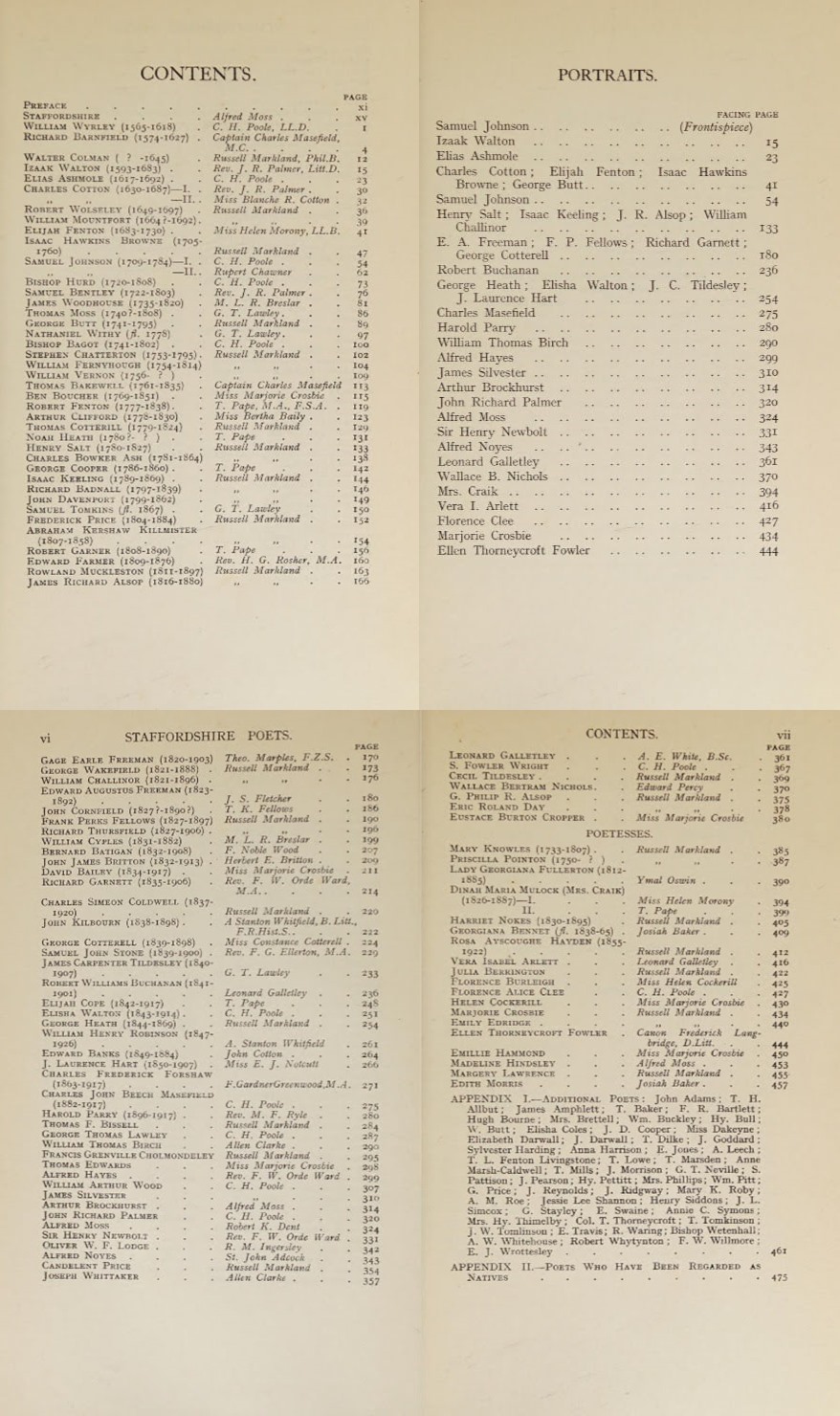
Staffordshire Poets (1928) (Poets of the Shires series).

Anglo-Saxon burial mounds : princely burial in the 6th & 7th centuries (partly a survey of Midlands mounds).

And I also found this commentary by the writer A.S. Byatt, recalling her Stoke great-aunt, and possibly also a Stoke headmistress…

“I made a story, ‘Racine and the Tablecloth’. It was written partly to defend Racine and ‘the gods in the blood’ against the schoolteachers who were encouraging my ambitious daughter to ‘be a gardener, if she wanted to’. She didn’t. She wanted to learn enough French to read Racine and go to university, but they wanted to persuade her that ambition was bad, competition was bad, French was for railway stations […] Into my story of my wrath and despair [at this attitude…] I wove an image of my great-aunt Thirza, who was photographed when she was over eighty, in her house in Stoke-on-Trent amongst her exquisitely bright tablecloths and cushions, embroidered on ivory satin, of the kind sold for wedding dresses. She was a mythical figure. my great-aunt Thirza. ‘She had blonde hair so long she could sit on it’ my aunt would always say. I believe that as well as following the linear shadowed ‘transfers’ (like neo-Platonic ‘forms’) [in her embroidery] she sometimes invented her own fruit and flowers, boughs and garlands. I have several of the cushions still. The silks are still bright. In my story my great-aunt Thirza stood for my ordinary origins, and her own bright work, for women making things in snatched time. But she was not allied with my levelling, ladylike headmistress, who haunts my dreams still: the nay-sayer, the antagonist, the fairy godmother who turned gold threads back into dull straw.” (Ovid metamorphosed).

Also on early education in the Potteries…

[In the early part of the Industrial Revolution affordable books for spelling, reading and writing – and their associated small paid-for single-teacher ‘dame’ or ‘penny’ schools – served] “a rapidly expanding middle class market, but they were so cheap and published in such numbers that it was not difficult for a working-class parent to get hold of something like Mayor’s English Spelling Book. The local newspapers in the Potteries for instance, regularly carried bookseller’s advertisements in the 1830s and 1840s for manuals on reading and writing at prices from sixpence to two shillings.” (Silences & images : the social history of the classroom).

Tolkien Gleanings #117

Tolkien Gleanings #117.

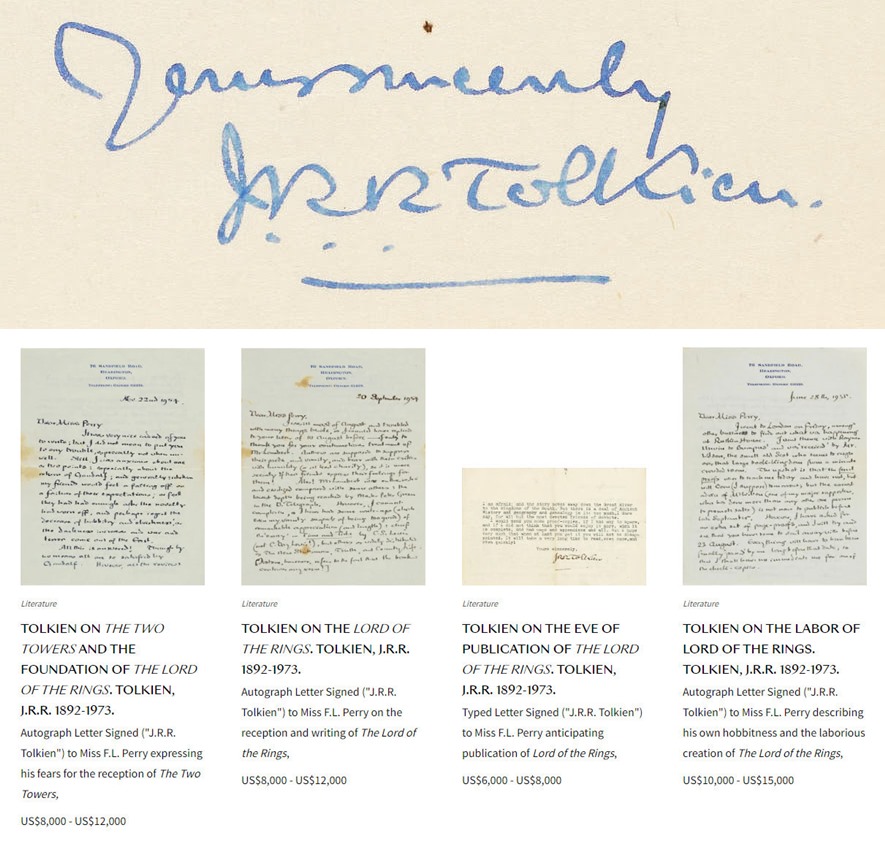
* Currently up for auction, with good pictures, a 1955 J.R.R. Tolkien autograph letter. On completing LoTR, Tolkien perhaps rather jokingly reveals he was being “bullied” by a fellow academic into not having a happy ending, but then asks with seeming anxiousness… “Would you call it a happy ending? Auden on the whole approves of Vol. III (seen in galley)”. Bidding ends 24th September 2023.

* The Franciscan University of Steubenville now has a partial speaker-list for their Tolkien conference “A Long Expected Party: A Semicentennial Celebration Of Tolkien’s Life, Works, And Afterlife”, set for 22nd-23rd September 2023. Holly Ordway and Carl F. Hostetter are the keynote speakers. Back in March 2023 the call-for-papers asked for new work on the “less studied elements of Tolkien’s legendarium and recently published works”. One hopes that the recordings will find their way online for free, after the event.

* I’ve only just spotted the long podcast “Lewis and Tolkien: Imagination and Sexuality” (March 2023), which paired Holly Ordway with the C.S. Lewis scholar Michael Ward. For the .mp3 download, click on ‘… More’, then right-click ‘Download Audio’ and then ‘Save Linked Content…’.

* New in Welsh, “Cymraeg egsotig J.R.R. Tolkien”, as an embargoed pre-print in a repository. The embargo locks pop on 22nd September 2023. The title translates as ‘The Exotic Welsh of J.R.R Tolkien’, and the article is otherwise in print in Bangor University’s stylish Welsh-language magazine O’r Pedwar Gwynt ($ paywall).

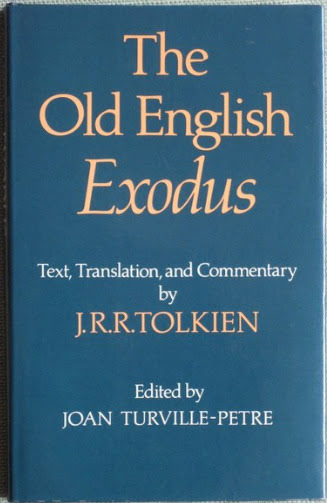
* New on Archive.org for the first time, Tolkien’s The Old English Exodus (1982). A poor and grainy scan, with no OCR… but free.

* And finally, the French newspaper La Vie interviews Vincent Ferre in French. Professor of Comparative Literature at the Sorbonne, and also overseer of the Tolkien Editions at the French publisher Christian Bourgeois. The interview has no news and is very much ‘potted Tolkien for the average newspaper reader who’s never encountered Tolkien’. But it looks like one of the better examples of the breed.

Finding a Wright’s ‘Coal Tar’ Soap alternative

I was annoyed this week to find that Wright’s Coal Tar soap bars have switched down from 125g to 100g (though still 80 pence, at supermarket prices).

On researching this I was further annoyed to find that it’s no longer even Wright’s Coal Tar soap. The EU blocked proper coal tar soap from open sale from around 2012. Wright’s is now merely billed as ‘traditional soap with coal tar fragrance’. And not so much of the old ‘coal tar’ fragrance at that, since the smell is now emulated via a blend of other scents. Quite a toned-down smell, and quite variable from bar to bar. Sometimes hardly even noticeable, I’ve been finding. I put this variability of ‘the coal tar smell’ (which I like and find pleasant) down to the lockdowns and supply problems, and gave the company the benefit of the doubt. But I now discover the horrible truth about this much-loved ‘heritage’ brand.

Wright’s soap is now said to be made in Turkey at the behest of a brand owner in Solihull, near Birmingham. The old original Wright’s firm having sold out at the end of the 1960s. The active antiseptic ingredient is now the cheap and ubiquitous ‘tea oil’, rather than coal tar (aka liquor carbonis).

Even the vintage “Original” Wright’s bars, occasionally for sale on eBay, show by their wrapping that the smell was being reduced before the EU ban…
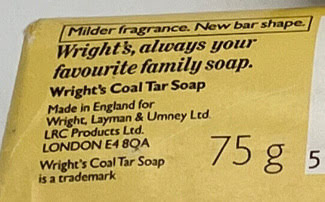
Note the “milder fragrance” claim. It’s definitely not a smell loved by all, and some (especially women who have to live with it on their men) hate it.

Ok, so are there alternatives in 2023 that have real coal tar and the proper smell? I took a look. ‘Kind of’ is the answer.

First, avoid a Russian seller on eBay. There’s a Russian ‘pine tar’ soap which a canny Russian seller passes off as ‘coal tar’, banking that the clueless buyer won’t know the difference. But pine tar is not coal tar.

The only genuine coal tar soap of any reputation in the UK seems to be Cosalic soap made by Salvia of India (aka Coslic or Cosilc on eBay). 3% coal tar. Possibly this is branded as Bistar in India, since Bistar has the same distinctive bar shape and colour as Coslic. They actively play on the “coal” idea, by making it look like a shaped lump of black coal. Nice idea, and delightfully politically incorrect.
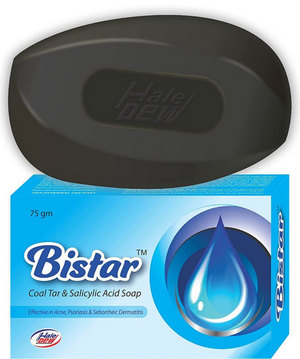
Regrettably though it’s very expensive either way. Even a 6-pack on Amazon UK will cost £3.88 a bar. That’s £3 a bar more than Wright’s! The India Bistar version seems to be even more expensive, probably due to shipping hiding in the ‘free shipping’ price.

I also found some U.S. sellers on eBay, from expensive back-room hand-made soap makers to the slick and incredibly expensive U.S. Dermabon brand (£28 a bar!).

It seems that part of the cost problem is that the equipment needed to get coal tar can only be used for coal tar extraction, not multi-use for other products. And that complying with health regulations for the extraction workers is now quite costly for the manufacturer. Once extracted the crude tar material (‘coal tar BP’) is flammable and thus presumably needs guards and a fire extinguisher system. Trade papers also report post-lockdown shortages (summer 2022) of the items needed to then make the raw coal tar into a retail consumer product.

Thus, while Cosalic soap is freely available in the UK via Amazon… it is only barely a replacement for Wright’s due to cost… and also because Cosalic’s soap appears to disguise the smell with all sorts of other things. Still, it may be worth trying. Like I said, it’s openly sold on Amazon UK.

I also found the trusted and UK-made Polytar Scalp Coal Tar Shampoo 150ml, also freely sold in the UK by Amazon. Under £10 for a 150ml bottle. Has 4% coal tar. It’s better value than the competing 2% Neutrogena T/Gel Therapeutic Shampoo 250ml, also freely sold (Tesco and Morrisons also have T/Gel on open shelves). Note that the UK’s official body NICE offers public advice on coal tar shampoo use… “applied once a week, left on for one hour and then shampooed off”. I’m not qualified to offer medical advice here, but this top-level official tip seems useful. It’s evidently best left on for a time, rather than washed off after three minutes.

Anyway, Polytar is by all accounts great for the coal tar smell, and the NICE advice means the shampoo can be left on for much of one’s bath-time. Thus it seems to me that the way to get the authentic olde 1960s ‘Coal Tar’ experience would be to apply your Polytar shampoo shortly after entering a bath, while also sparingly using a very expensive bar of Cosalic. Perhaps also have Wright’s cheapo ersatz 80p bar on hand too, to make the soap go a bit further.

Update: No Polytar at Morrisons or Tesco, but apparently Superdrug, Lloyds Pharmacy and Boots carry it on their shelves in the UK.


Interestingly in America they don’t care about EU nonsense, at least for dogs. I was amused to discover that their “PPP Tar-ific Skin Relief Dog Shampoo” sells over the counter, and by the gallon(!) and with 2% coal tar.


Also, I see that the EU has banned Zinc Pyrithione as well, from March 2022. If you were wondering why your anti-dandruff shampoo no longer works half as well as it used to, now you know. So far as I can tell the EU’s reasoning on such things is: it’s safe, but there may be ‘suitable alternatives’, thus it must be banned. That’s how the EU’s bizarre logic works. Of course, in time the ‘suitable alternatives’ may turn out to be… unsuitable. As such I’d rather stick with what’s been proven to be safe for over 50 years and billions of real-world human uses.

Update: Discovered Sudocrem. Amazing stuff! After decades of E45 with little result, I tried Sudocrem instead and… eczema clears up in 48 hours! Get it in the baby aisle of the supermarket (it’s in heavy demand for nappy-rash), at around £2.50 per pot. Cheap and easily available and… works. What’s not to like? The zinc in it, I guess, and I’d be willing to bet the government would ban it (see note on the zinc shampoo ban, above), if they thought there would not be a mother’s uprising that would sweep them out of power within a week.
Tolkien Gleanings #116

Tolkien Gleanings #116.

* New this week on the Mythmakers podcast, an interview with Holly Ordway about her important new book Tolkien’s Faith (due for release on 2nd September 2023). For the .mp3 download, click on ‘… More’, then right-click ‘Download Audio’ and then ‘Save Linked Content…’. I hadn’t realised that the Birmingham Oratory that Tolkien knew as a boy is not not the one we have now. The new building was begun when Tolkien was about age 15 and completed three years later in 1910. He left Birmingham for Oxford in 1911, so as a schoolboy he would only have known the new and current building in daily use for perhaps 18 months.

* Newly and freely online, a short scholarly introduction to “Trees in J.R.R. Tolkien’s World”. Originally in “Birks, A. (2010), Etudes Tolkiennes, Universite Catholique de l’Ouest.” This journal Etudes Tolkiennes appears to have produced two issues and was a departmental collection of “the best articles written by Masters research students studying ‘Interculturality: Languages ​​and Cultures’ at UCO”. The journal appears to have otherwise utterly vanished into the mists of time. Note that this “Trees” article can also be had as a PDF download, by those not signed up to Researchgate, by searching for the title on Google Scholar.

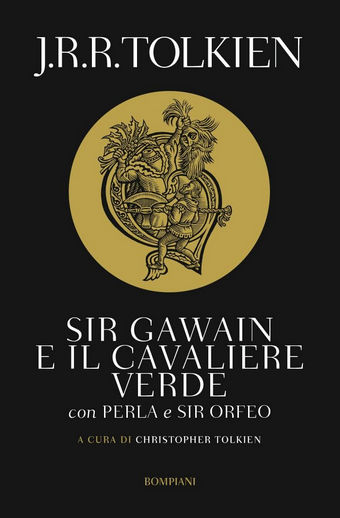
* The Tolkien et al. Gawain is to get an Italian edition next week. Sir Gawain e il cavaliere verde: Con Perla e Sir Orfeo is due to ship on 30th August 2023 from Bompiani. “Beautifully rendered in a new translation” together with Pearl, and with a translation of Christopher Tolkien’s introduction. Also coming at the end of October 2023 is an Italian hardback edition of Hammond & Scull’s J.R.R. Tolkien: artista e illustratore, which may interest non-Italian readers simply for the pictures. Italian artbooks having a certain reputation for quality printing.

* A new edition of SELIM: Journal of the Spanish Society for Medieval English Language and Literature (Vol. 28 No. 1, July 2023). Note that many of the DOI links are broken (no surprise there, as around 50% of all DOIs are broken), but the PDF links are fine. This issue of SELIM has an addendum to “The Missing Letters J.R.R. Tolkien Received from Derek J. Price and R.M. Wilson”, together with a review of Winters in the World: A Journey through the Anglo-Saxon Year (2022) and of Tolkien in the 21st Century (2022). From the sound of it the latter is surprisingly historical, given the book’s title and sub-title “Reading, Reception, and Reinterpretation”. The book having within it “Fairy Women in J.R.R. Tolkien’s The Lord of the Rings and their Arthurian Counterparts” and “Tolkien’s Runes and their Legacy” in which the reviewer notes…

“Birkett establishes that the runes devised by Tolkien, contrary to his claims, did derive from older sources, at least appearance-wise”

* “Plans to revive pub where Tolkien and C.S. Lewis met”. It’s said that the firm applying for local council planning permission remains “committed to the Eagle and Child as a public house”. If the building of a restaurant extension can be approved, the firm will also “lightly” restore and refurbish. Though it sounds like the place has been left to go to rack-and-ruin, and probably needs a lot more work. Yet there’s obviously a market in Oxford, since the newly community-owned Lamb & Flag pub was reported in mid June to be thriving more than six months after re-opening.

* And finally, 20,000 words are newly included in a new dictionary of Shakespeare’s English. These are found in the new Arden Encyclopedia of Shakespeare’s Language (August 2023). The first two volumes (of five) should be available quite soon, and together these two hold the complete new A-Z. The new words are also drawn from a huge corpus written by Shakespeare’s contemporaries, as well as from the works. They have a £400 retail list-price, but currently no price on Amazon UK. The press-release was issued before Amazon could price the books for pre-order.

Tolkien Gleanings #115

Tolkien Gleanings #115.

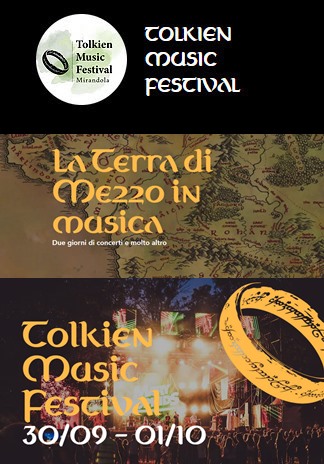
* A large Tolkien Music Festival in Italy… “the Tolkien Music Festival aims to become a cultural center-of-gravity, capable of hosting and sustaining the ongoing artistic production” inspired by Tolkien. The 2023 event also includes a contest for visual artists. 30th September to 1st October 2023, in a town about 25 miles north of the city of Bologna in northern Italy. Booking now.

* New to me, the book Words of Westernesse: Tolkien’s languages of Men and Hobbits (November 2021). A 120-page introduction to “the tongues spoken by the men of Numenor”, and by extension the Westron. Google Books has an extended free preview, which inspires more confidence than the cover. Includes…

(tentative) etymologies of Adunaic and Westron as far as the corpus of vocabulary has been established. This volumes includes updated versions of the essays ‘Lalaith’s Guide to Adunaic grammar” and “Etymologies of the Atani Languages”.

This find led me to discover the author’s Middle-earth Science Pages website / blog. Again, new to me and now indexed by my new Tolkien scholarship search-engine. From the site I found there’s a 500-page omnibus edition (March 2022), combined with several other books…

“… a new hardcover offer. And I am most impressed! The omnibus edition of my four volumes “Middle-earth seen by the barbarians”, “Words of Westernesse”, “Dynasties of Middle-earth” and “The Moon in The Hobbit” looks most professional, the colour images are crisp, the paper feels noble – “like from the bookshop” my daughter said, admiringly!

Middle-earth Seen By The Barbarians considers what can be known about the barbarians and pirates of the far east and south. The Moon in The Hobbit looks at the astronomical / calenderical aspects. Dynasties has various annotated genealogical tables. This March 2022 omnibus can also be had as a budget £5.60 Kindle ebook (about $8).

* 100 Staffordshire churches will be open to visitors in September. These will include Our Lady of the Angels and St. Peter in Chains, on the edge of Hartshill in Stoke-on-Trent. This church is of some tangential Tolkien interest, since the older Tolkien spent many holidays in Stoke-on-Trent in his retirement. His son was the priest there and thus I assume the elder Tolkien attended this next-door church, though I don’t know of any hard evidence for that. I guess it’s just possible that he found a more traditional Catholic church somewhere else in the Potteries, and went there. Possibly the forthcoming Holly Ordway book will clarify such questions of attendance. Anyway the church will be open to the public on the weekend of 16th-17th September 2023, noon to 5pm. Free, with no booking required.

* And finally, new on Archive.org is a run of White Dwarf Magazine from #1 to #100 (1977-1988). Raw and fannish early RPG gaming, before the slick corporate takeovers and makeovers. Such games and scenarios drew heavily on ideas from Middle-earth, though with a strong infusion of pre-Tolkien sword & sorcery.

September Heritage Days

The annual September Heritage Days are coming up. Some local places of interest…

* A chance to don a builder’s hard-hat and get inside the refurbishing St. Marks in upper Shelton. Saturday 9th September 2023, 11am to 3pm, no booking. Heavy restoration is still going on, replacing the roof trusses and more.

* Our Lady of the Angels and St. Peter in Chains, the large Catholic Church on the edge of Hartshill, Stoke-on-Trent. 16th-17th September 2023, noon to 5pm, no booking. Of tangential Tolkien interest. The adjacent Convent Pools, where the Catholic Convent school-girls did Botany studies, can be visited at any time in the adjacent Hartshill Park, and the pools and their walkways were restored about a decade ago.

* The Milton Building opposite Sainsbury’s in Stoke town. Formerly the city’s first School of Art, more recently as NHS offices, and today it’s what appears to be a centre run by an evangelical church. Note the “talks include Phil Rowley’s presentation on the Schools of Art in Stoke-on-Trent”. Saturday 16th September, 2023, 11am to 4pm, no booking.

I seem to recall from the past that the annual list may expand a bit in the next few weeks, with last-minute additions.

Can Venus twinkle and sparkle?

It’s sometimes said that the bright planets don’t twinkle in the night sky, and especially Venus. This appears to be an oft-repeated truism among modern astronomers. Yet it’s also equally true that for naked eye observations Venus can sometimes appear to twinkle. Especially when very low in the sky and/or seen through the cold moist air of the British Isles…

“Look at Mercury always, Mars and Venus when small or thin, or any planet when low, to see how strongly they twinkle.” Fred Schaaf, Seeing the Sky: 100 Projects, Dover Children’s Science Books, 2013.

Recall that Venus was very low on the horizon when Tolkien made the evening observation which spurred his first successful journeyman poem.

I’ve seen Venus twinkling remarkably in the pre-dawn dark of the early nearly-frosty spring, in terms of sharply sparkling surrounding ‘shafts’. Tolkien appears to have seen something similar, since in LoTR he describes the light of a “frosty star” as “flickering”…

“… Nenya, the ring wrought of mithril, that bore a single white stone flickering like a frosty star.” (LoTR: Return of the King)

And I also found these examples from Tolkien’s Edwardian era, from places with less light pollution than today…

“… a sparking jewel in the sky. I thought I saw a firework when I first saw the planet glittering through a tree at night” (The Private Diaries of Alison Uttley: Author of Little Grey Rabbit) (talking of rural England).

“The majesty of the night brought me so much consolation [in wartime]. Venus, sparkling, is a friend to me” (Letters of a Soldier, 1914-1915) (talking of rural France during wartime blackout)

I see there are also instances in poetic convention…

“Let English dames shewe foorth their shyne, lyke Venus’ twinkling starre” (from The Harleian Miscellany, Vol. 9. page 364).

“And Venus twinkling bland her tremulous lids” (Hesiod, trans. C.A. Elton). (bland = flutter [her eye-] lids, in a flattering manner)

Brill’s Translations of Babylonian Planetary Omens, from the original texts in clay tablets, interestingly has it that ‘if Venus twinkles in the West, and her light (i.e. shafts) appears to touch the earth, she is deemed to have become male’ and this is an ill-omen. Such notions suggest the wider possibility that aspects of Venus (as deity) were mutable for ancient peoples depending on the observed appearance. What seems straightforward to us was perhaps more nuanced for them, by things such as elevation above the horizon, twinkling, compass direction, ‘house’ of the sky, visibility of a crescent, proximity to the Moon and to the tops of sacred trees/groves and suchlike. Possibly also colour, since one African desert observer suggests a low twinkling Venus can appear to have several colours.

A quick look at the literature further suggests that Venus may have appeared in the ancient British Isles when showing a ‘crescent’ visible to the naked eye…

“Venus and Mercury, which at times are observed as fairly narrow crescents, do occasionally twinkle quite appreciably”. Marcel Minnaert, Light and Color in the Outdoors, Springer, 1992, page 92.

… which may be significant when one considers that pre-Roman British coinage strongly suggests that a crescent in the night sky was an emblem of special significance.

Tolkien Gleanings #114

Tolkien Gleanings #114.

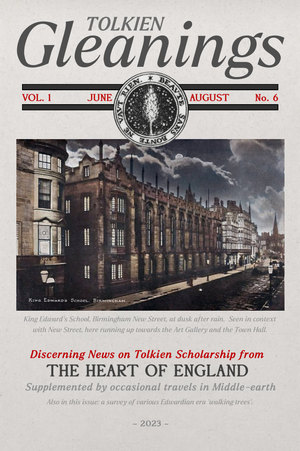
* Now available, my free PDF Tolkien Gleanings, issue 6 (2023). At just 56 pages this is not as large and magazine-like as the previous issue 5. It just collects the blog’s Gleanings posts and also has a gallery which surveys ‘walking trees’ in Edwardian arts and literature. I’m not putting it on Gumroad this time, since issue 5 showed that no-one is interested in donating a few $’s — even when there’s a big substantial issue on offer. Thus issue 6 is only on the Archive.org site.

To get clickable Web links, you need to download the PDF rather than using the Archive.org flipbook preview.

* News of a new academic book, Critics of Enlightenment Rationalism Revisited, due to ship on 11th September 2022. It… “provides an overview of some of the most important critics of Enlightenment rationalism [including] Scruton and Tolkien”. £40 in ebook or paperback.

* A recreation of Tolkien’s “On Dragons and Dinosaurs” lecture for children, is “back by popular demand” as an event at the Oxford University Museum of Natural History. Free and booking now for 5th September 2023. More details at the British Society for Literature and Science page.

* Those interested in fantasy maps may want to look at a new research-summary open-access article by Japanese researchers, “A Study of ‘Map Sense’ that Supports the Accuracy of Maps, Through Interviews with Imaginary Map Creators” (2023).

* Tolkien Gateway now has the table-of-contents for Amon Hen 301 (June 2023). An especially hobbity issue by the look of it, with reviews of the new edition of The History of the Hobbit, and The Wisdom of Hobbits. Articles include “The House where The Hobbit was Born” and “Pippin, the Persistent Rebel”.

* Interesting musings this week on “Of Home and Hearth: Tolkien and The Wind in the Willows”

Oh, we have all the pleasantries, and even similar homecoming plot points [of The Wind in the Willows (1908)], but simply acting respectable and avoiding the outside world will not cut it with Tolkien. His hobbit interest is [in] what happens when you take the smug bourgeoisie and put them in an altogether new and alien setting. That which Grahame’s narrative discourages, in terms of character curiosity and breaks from social conformity, Tolkien’s narratives encourage.

* New in an Italian newspaper’s culture section, “Roy Campbell, il poeta in esilio che ispiro l’Aragorn di Tolkien” (‘Roy Campbell, the exiled poet who inspired Tolkien’s Aragorn’). I can’t say I’ve heard this claim before, or if the evidence for it is valid, but it may interest some.

* And finally, The Times ($ paywall) reports the “Swiss village of Lauterbrunnen is under siege from tourists” this summer. The newspaper blames the especially potent combination of a Tolkien claim (‘the inspiration for Rivendell’) and the nearby mountain-top setting for a classic 1969 James Bond movie.