Tolkien Gleanings #59

Tolkien Gleanings #59.

* New today on Project MUSE, the latest edition of the scholarly journal Tolkien Studies Vol. 19, 2022. Expensively paywalled, but the front page of each item is free. Of interest to me…

  — “A Rabble of Uninvited Dwarves”. (Appears to consider the known source of the dwarf names and, since this is the lead essay, the author presumably has new things to say on the matter).

  — “Tolkien, the Medieval Robin Hood, and the Matter of the Greenwood” (“Despite the tremendous strides that scholars of Tolkien’s works have made in identifying and discussing the role that the Arthurian legend played in shaping Tolkien’s literary corpus, they have dedicated very little attention to the ways that Robin Hood and the ‘Matter of the Greenwood’ also influenced the author’s works.”).

  — “Early Drafts and Carbon Copies: Composing and Editing Smith of Wootton Major”. (Now seems less vital for me, as I find it seeks to clarify a scholarly debate over the ordering in Verlyn Flieger’s critical edition book of Smith of Wootton Major).

  — Also the “Book Notes” and “The Year’s Work in Tolkien Studies 2019” and “Bibliography (in English) for 2020”.

* We get a free bit of the new journal’s “Bibliography” (see above) and this makes me aware of the article “In Search of Bombadil”. Which I find to be freely available in the Fall 2020 edition of the online journal Parabola. This takes a ‘spiritual search’ angle, rather than going source-hunting.

* New and free in open-access in the MDPI journal Religions, “On the Symbolic Use of Dragons by Jacobus de Voragine and J.R.R. Tolkien” (2023). Jacobus was the Italian chronicler of the Legenda aurea (debatable dates, possibly the earlier years of the 1260s) which preserves “Saint George and the Dragon”.

* The open-access transcript and Powerpoint slides for the talk “Developing a Digital Critical Edition of Tolkien Fanzines” (2023), now available.

* A new short blog post at For the Church, “Even Tolkien Felt Like a Failure”.

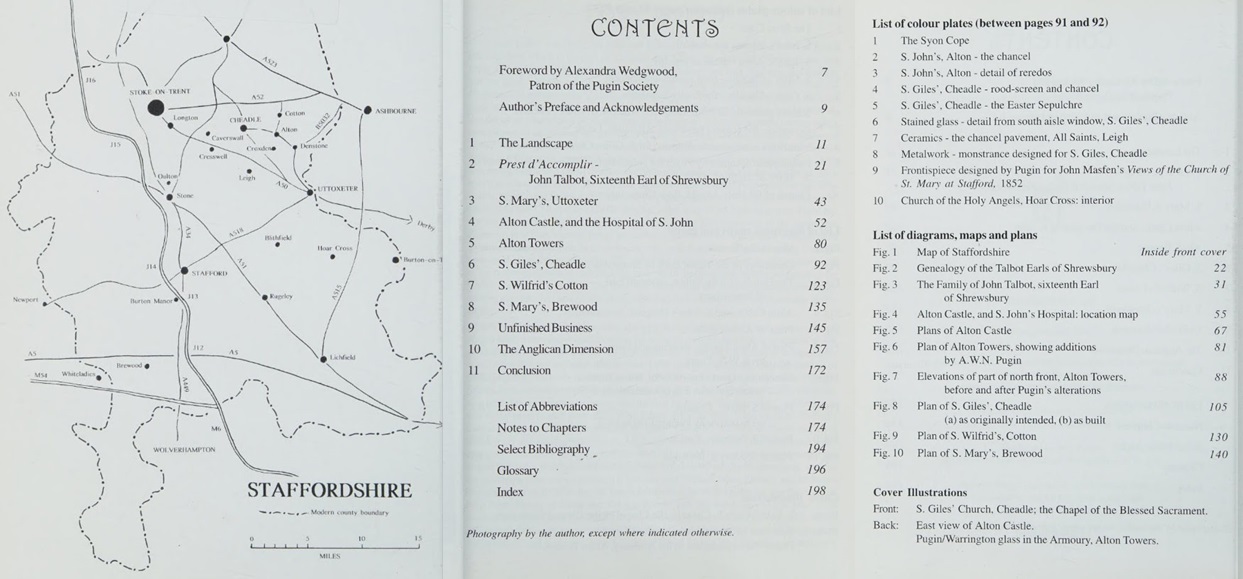
* Here at Spyders, my 2018 “J.R.R. Tolkien in Stoke” blog post has been expanded a bit. Also has some new or better pictures.

* And finally, in Switzerland, Herr der Ringe is billed as a stage / puppets adaptation of The Lord of the Rings by Theater HORA and Das Helmi Puppentheater. Although a snippet from a review reveals it’s a promenade production, with the audience walking between various scenes which feature live actors and puppets. I’d assume a minstrel then fills in the audience on the plot, as they move between key scenes? Four performances per week, until 1st June 2023.
Tolkien Gleanings #58

Tolkien Gleanings #58.

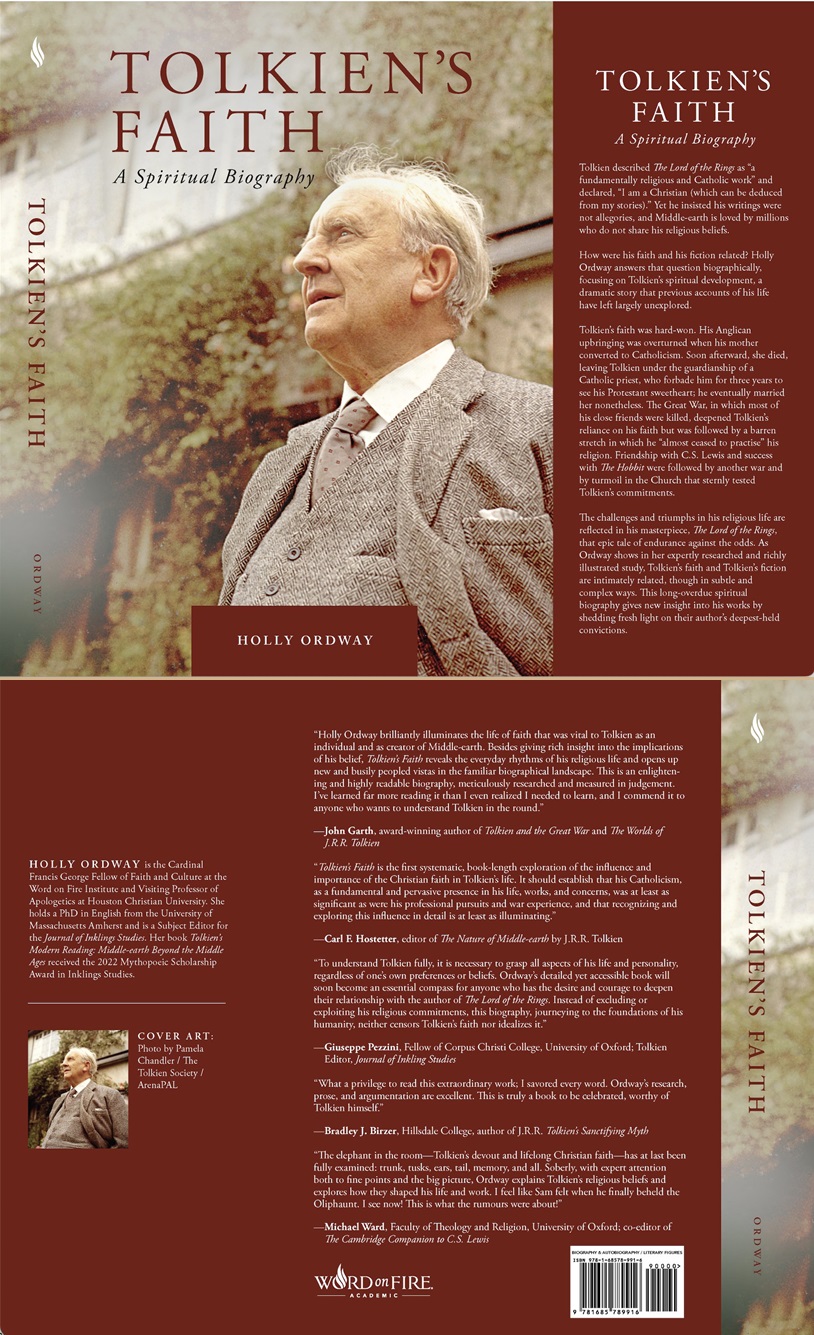
* The pre-release covers are now available for the forthcoming biography by Holly Ordway, examining what can be known about Tolkien’s spiritual life. The book is set for a hardback release in August 2023, and now has a basic listing on Amazon UK.

* If you want to know why AI writing and assemblage is not yet fit for public display, just look at the bot-assembled Amazon page for the forthcoming book Tolkien in the Twenty-First Century: The Meaning of Middle-Earth Today (August 2023). The book is, apparently… “An authoritative take on the history of the vampire”. Good to know that Tolkien might yet rise from his grave and take revenge on those who have ravaged his work for mega-bucks (now there’s an idea for a pulp-shocker comedy movie…).

* Mapping Middle-earth: Tracing Environmental and Political Narratives in the Literary Geographies and Cartographies of J.R.R Tolkien’s Legendarium (2020). A PhD thesis, for the University of Edinburgh here in the UK. Freely available online…

Chapter 1: Hic Sunt Dracones: Historical Perspectives on Tolkien’s Cartography.
Chapter 2: Force of Nature: Mapping Environmental Concerns.
Chapter 3: Into the Abyss of Time: Geological and Temporal Mapmaking.
Chapter 4: This Land is My Land: Maps, Power Politics, and Imperialism.

* The Sound of Middle-earth: Music and Song among Races in J.R.R. Tolkien’s The Lord of the Rings (2022). A Masters degree dissertation for Acadia University in remote Nova Scotia, Canada. Freely available online, with a structure which steps through each of the races in turn.

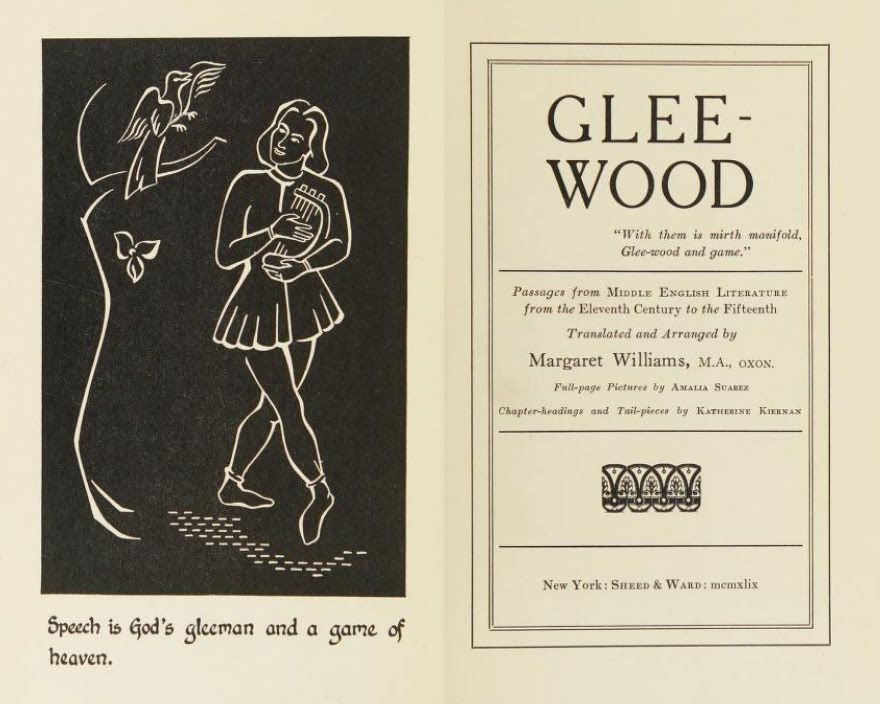
* New on Archive.org, free to borrow, Glee-Wood: Passages from Middle English Literature from the Eleventh Century to the Fifteenth (1949). A choice selection for a wider public, offered in English translation and with a pleasing design.

* And finally, I’ve tracked down “At The Tobacconist’s” on YouTube. This being the ’20th Lesson’ of the Linguaphone English Conversation (1930), a set of spoken-word audio discs and accompanying booklets for language learners. The digital version of the recording was taken offline by the British Library several years ago, and the Wayback Machine did not capture its streaming audio. A certain Mr. Tolkien also recorded the ’30th Lesson’ in this set, titled “Wireless” (i.e. early radio broadcasting). Thankfully this has also been saved on YouTube by a different user. Between these two clear recordings, and with the customer voice on the tobacconist’s shop trimmed out, there should be enough here for an AI voice-cloning of Tolkien’s voice. As it was in 1929, when he was in his prime.

The Botanic Garden in free audiobook

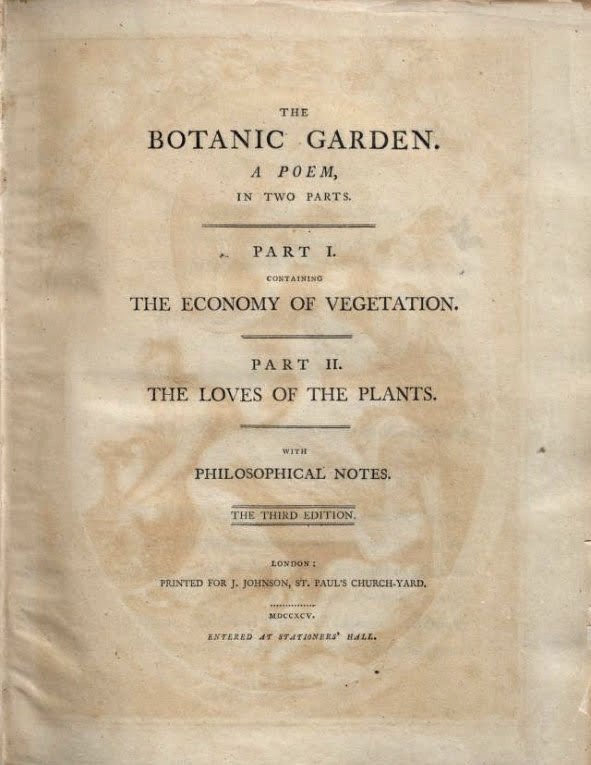
New in a free ‘public domain’ Librivox audiobook, Darwin’s The Botanic Garden, a Poem in Two Parts. The reading being of “On the Loves of the Plants”. Hopefully we’ll also soon have “The Economy of Vegetation”, which of the two is rather more interesting due to its horror sections (set in the Staffordshire Moorlands) and science-fictional future prognostications (submarines, airships etc).

The integral Notes are handled as separate readings rather than as if footnotes.

Burslem Festival 2023

Good to see that the Burslem Festival is ‘on’ this year. 30th April – 1st May 2023 in the town centre, St. John’s Square and Market Place.

Doreen in red, and Chloe’s mum, seen at the edge of Burslem Park. Preparing a previous year’s Festival ‘float and vehicle procession’ to set off down Moorland Road to the town centre.

Tolkien Gleanings #57

Tolkien Gleanings #57.

* News of a new book, Myth, Magic, and Power in Tolkien’s Middle-earth: Developing a Model for Understanding Power and Leadership. Set for release in mid July 2023, with a hefty £65 price tag for what is a 120-page book. But it does appear to be a serious study of “the social power dynamics at work” in human leadership actions. With all examples drawn from The Lord of the Rings.

* An 11th April 2023 call from the organiser of the Tolkien Studies Area of the enormous Popular Culture Association Conference (27th-30th March 2024, Chicago). Not a call for that Easter 2024 conference, but rather for a possible event (presumably for Tolkien scholars) beyond that in the summer…

“I am chairing an Exploratory Committee to gather information for the Board on what we would need to do to run a Virtual Conference during summer 2024. If you are interested in attending such a conference, or working with [us] on the project, please let me know.”

* Advance news of two books set for 2024, from the same author. Just the titles and publishers, at present. Tolkien’s House of Being from Kent State University Press, and The Herdsman of Light: Tolkien and the Mystical Theology of Anglo-Saxon Poetry from Darkly Bright Press.

* On Archive.org, four new scans of the journal Anglia: Zeitschrift fur Englische Philologie. Being the issues for 1926-28, including a 1928 review of Tolkien & Gordon’s Sir Gawain and the Green Knight glossary. Also new, five scans of The Journal of English and Germanic Philology for 1923-27, with 1927 having a review of Tolkien & Gordon’s Gawain. Further note 1923’s article “The Tradition of Angelic Singing in English Drama”, which Tolkien would likely have noticed.

* And finally, Tolkien’s legacy has helped to revive the making of tapestry wall-hangings in central France. Today Japan Today reports on the “small town of Aubusson in central France” which has “a tapestry-making tradition that stretches back to the 15th century”. In 2017 they “engaged in a collaborative project to create tapestries based on Tolkien”. This led to “an agreement with Studio Ghibli in 2019 to create five works based on Miyazaki films.” They’ve recently unveilved a giant Spirited Away tapestry. On the back of their Tolkien and Miyazaki work they have had a surge of “applicants to the centre’s artisan training program”.

Tolkien Gleanings #56

Tolkien Gleanings #56.

* More news from France, which this summer seems to be seeing a lot of Tolkien activity. ‘Journees de Recherche et de Rencontres sur Tolkien’ is the name for the Tolkiendil ‘research days’ event in France, set for 6th-7th October 2023 in “the Paris region”. The call-for-papers currently has a date of 31st May 2023. No specific focus, but they’re broadly interested in translation and biography. Note that submitted papers can be in English, as well as French.

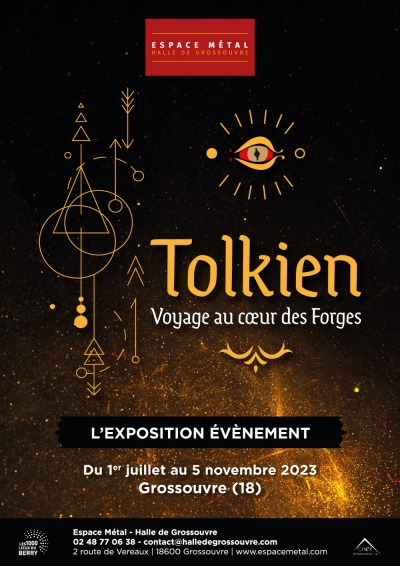
* Also in France, Tolkien: Voyage au coeur des forges, an exhibition seemingly centered around Tolkien and metal? Not guitar-gouging heavy-metal music, but the hard clinking and clanking variety. The museum seems to be devoted to metal and metal objects.

The summer 2023 exhibition will have “unique and rare pieces collected by a passionate collector”, augmented by 2D artworks, painted scale models and fun events (a dwarwish treasure hunt, hobbit banquet and rustic crafts market). The museum is in the hills just to the west of the central city of Lyon, and the show opens on 1st July 2023. Might make for an interesting stop-over, if you can afford to take the train to the south of France this summer? And if there aren’t the inevitable French strikes and blockades.

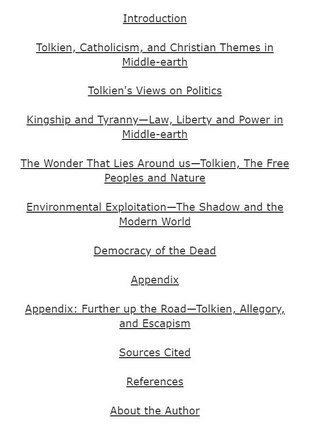
* Just published is a chunky new book on Tolkien from a traditional Christian perspective, The Road Goes Ever On and On (April 2023). Available in paper and in Kindle ebook, which means a free 10% sample can be sent to your e-reader device. The book appears to emerge from the author’s interest in the intersections between Tolkien’s old-school religion and his political views.

The new book is not to be confused with earlier similar titles, such as A.K. Frailey’s The Road Goes Ever On: A Christian Journey Through The Lord of the Rings (2017).

* My JURN arts & humanities search-engine has been tweaked. The Tolkien publication Mallorn is auto-generating a Web page for each and every citation given in every article, posting these at journals.tolkiensociety.org/mallorn/citationstylelanguage/.. These are being indexed and thus were getting into JURN. The problem has now been fixed at the JURN end, which means these ‘single citation pages’ should no longer appear in your JURN search results.

* And finally, after all this time doing Tolkien Gleanings I’ve only just discovered The Latest on C.S. Lewis (RSS Feed). This is a monthly blog post which does for Lewis what Gleanings does for his friend Tolkien. It just goes to show how deeply buried good material can be on the Web, under mountains of piffle and bot-generated ‘content’.

Tolkien Gleanings #55

Tolkien Gleanings #55.

* A new Tolkien Lore podcast examines a little-considered but important matter, “The Main Character of The Lord of the Rings Is… Middle-earth”. In 23 minutes (start at 4:20 if you’re short of time) the listener enjoys a cogent and well-delivered survey. I can add a little historical context. Tolkien would have been aware of English folk-anthropomorphism (i.e. the ‘body-scape’) of hills, such as that hinted at in Sir Gawain and the Green Knight. Where memorably, on the icy track toward Wetton, “Each hill had a hat” of cold mist. My recent book on Gawain and Staffordshire newly discovered a folk-use from the very same district… “[in] the phraseology of the place, the ‘mountain had its cap on.'” — this being published prior to the first publication of Sir Gawain.

* A listing for an evening billed as a conference on Tolkien and the Sciences, to be held at Terra Botanica in the university city of Angers in north-west France, with free tickets

On 12th May 2013, Terra Botanica welcomes renowned paleontologist Jean-Sebastien Steyer, co-editor of the book Tolkien et les Sciences (‘Tolkien and the Sciences’, 2019).

The listing alerts me to this relatively recent 400-page book in French. It offers edited contributions from 38 experts in various fields of science, plus economics and psychoanalysis.

* Consulting Philologist has a new and long blog-post which forms an “Introduction to Indo-European Linguistics and Culture Textbooks for the Perplexed”

“What I have tried to do here is point out the best textbooks to start with for absolute beginners, as well as some other useful textbooks, manuals, and reference works”.

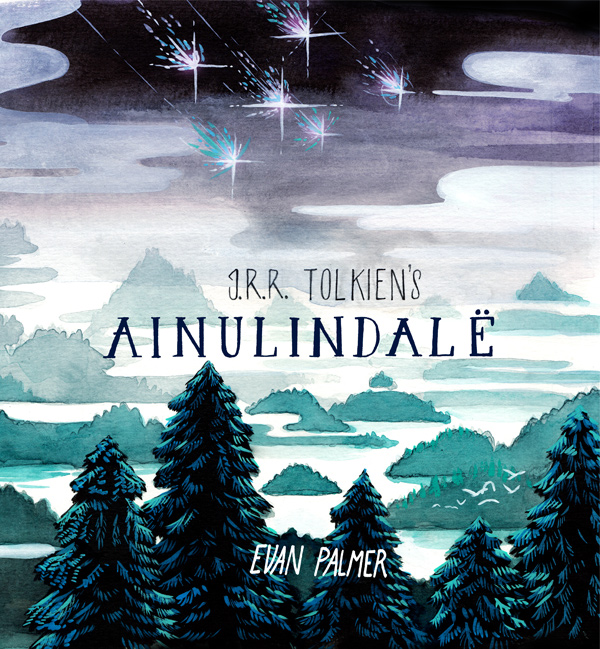
* And finally, I’ve only just spotted that Evan Palmer has released his Tolkien’s Ainulindale (2017) hand-made comic in 54 pages, and he freely posts the scans online. Rather pleasing, and I’d suggest even quite suitable for children in middle-childhood. He posts a link to his interview about the work, to be found on the Talking Tolkien Podcast.

Tolkien Gleanings #54

Tolkien Gleanings #54.

* Thanks to Sebastiano Tassinari for noting that the Renee Vink book of essays Gleanings from Tolkien’s Garden (2020) does have TOCs online. I had previously been unable to immediately find the book’s contents page, though I had found the correct Web link to order the book from Europe. It turns out that the book was detailed in a 2021 review in the Journal of Inklings Studies Vol. 11, No. 2.

* My new blog post, musing on some possible influences from “Tolkien’s wartime fireworks”.

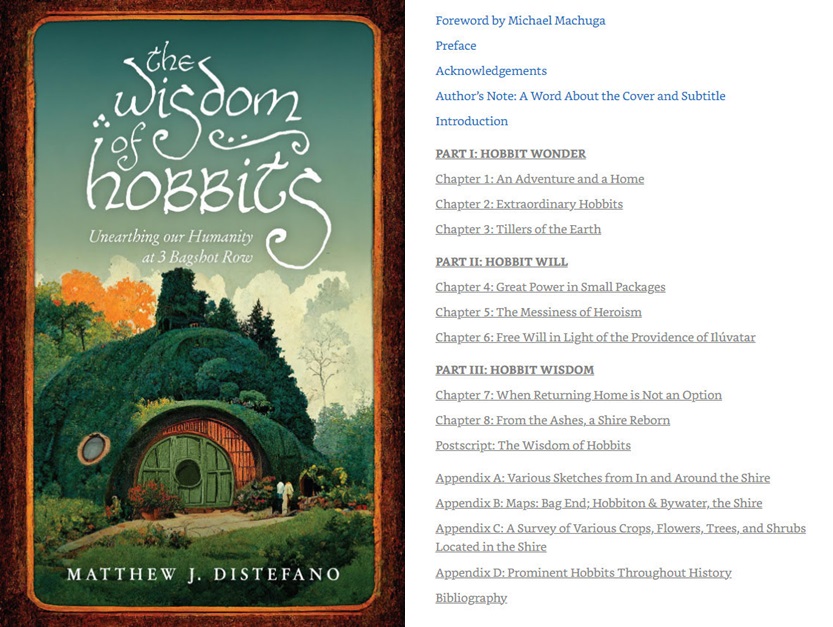
* The Wisdom of Hobbits: an online conference, 29th April 2023. This $20 event listing brings news of a new book…

“In this three-hour, fully-online event, Lord of the Rings scholars join author Matthew J. Distefano to explore themes in the newly published book The Wisdom of Hobbits.”

The full title is The Wisdom of Hobbits: Unearthing Our Humanity at 3 Bagshot Row (March 2023), available in print or as an ebook. There’s a good in-depth podcast audio review at Tolkien Lore.

I have nothing against AI images, but it’s perhaps regrettable that a book on “our humanity” uses an unretouched AI-generated image for the cover.

* A new John Garth post “Making an ass of yourself, with Geoffrey Bache Smith”, on Geoffrey Bache Smith’s sense of humour. Also a presentation slide from Garth that did not make it onto the YouTube recordings of the March 2023 conference on Smith and Tolkien.

* New in open access, Prosody in Medieval English and Norse (2023). The Oxford University Press book attempts to… “Introduce and explain technical topics and metrical theories for the understanding of readers from a range of backgrounds”. Such things are beyond me, but some may be interested… since Tolkien was. Click “Open Access”, and then the PDF link, to get the book.

* Omentielva Quainea: The International Conference on J.R.R. Tolkien’s Invented Languages will be held in France in August 2024. Further details to be announced.

* And finally, from the buzzing world of computer-code scripting languages, a new Arda Python Library emerges…

“At various times over the last ten months, I’ve been quietly working on a Python library for doing various Tolkien-related calculations. The project is still in its early stages and currently just has two things. Firstly, an initial implementation of Year and YearDelta classes for dealing with Ages and the beginnings of a Shire Calendar class ShireDate. … Much of the initial motivation for this was wrangling data for Tolkien Timelines.”

Tolkien’s wartime fireworks

“Gandalf had made a special study of bewitchments with fire and lights” — The Hobbit.

A new free audiobook on LibriVox, Pyrotechnics: The History and Art of Firework Making (1922). Includes “Military Pyrotechny in the Great War”, written only a few years after the war ended. The final third of this discusses signalling and illumination star-shells fired from Very ‘flare’ pistols, and larger rifle-fired star-shells.

The enemy capabilities were also noted by Cyril Fall (The First World War, 1960)…

“A German attack meeting stout resistance was often a remarkable cooperation between infantry and artillery by [signalling] fireworks far more detailed than the British or French could achieve. The sky was at times so full of yellow, red, and green rockets that the observer wondered how anyone could make head or tail of the signals. Yet time after time the artillery would lengthen or shorten its fire or carry out a re-bombardment of varying duration. This may be Greek [i.e. incomprehensible] to the infantryman of the Second World War because, having other means of communicating with the artillery, he finds it hard to realise how vital rocket signals might be.”.

As an experienced wartime signals officer, J.R.R. Tolkien would have had a basic familiarity with ground-candles, coloured smokes, aerial flares and the ubiquitous star-shells (the British used 10 million of these every month).

British star-shell pistol, 1917.

Presumably he also had some understanding of larger signalling fireworks, and possibly even experience of maroons. The latter being British firework rockets, usually used as maritime distress rockets at sea and designed to go off with a very loud ‘bang’ noise. These were in use in London and at least one industrial town, during the latter part of the First World War. They served as advance night-time air-raid warnings / calls for scattered fire-crews. The sound presumably being akin to the “deafening … signal for supper” dragon-rocket, encountered early in The Lord of the Rings. One imagines there would also be a dazzling flash if one happened to be looking at the night sky when one went off, akin to the flash that dazzles all the hobbits on the vanishing of Bilbo.

Which makes one wonder if Tolkien’s evident interest in fire and fireworks might have some origins among such experiences, although today we might tend to think of ‘signals’ in terms of wireless and codes. I’m however uncertain if maroons were also used for the frequent air-raids that crossed the east coast of England, where Tolkien was helping to counter airship raids later in the war. Possibly not on the sleepy coast, where a policeman or postmaster with a bicycle and a loud voice (then the more usual British method) would have sufficed for the few civilians. Perhaps further inland, in the industrial towns? But the only hard evidence I can find for the municipal civilian use of air-raid maroons outside London is from the textile town of Macclesfield in Cheshire (Reporting the Great War, p. 29).

The first use in London of maroons was not until a large airship bombing raid of July 1917, the authorities being previously worried that their abrupt use in a vast city would trigger panics and stampedes (especially dangerous at night in the blackout) for the bomb shelters. But the public fear had lessened by then, since new incendiary bullets and darts were destroying what had once seemed to be untouchable ‘monster’ airships. One is reminded here of the special bow of Lorien in The Lord of the Rings, which is used by Legolas to bring down the flying Nazgul on the Great River.

My searches suggest that the history of signalling fireworks and star-shells and maroons in the First World War remains to be written. But there is now at least a biography of the ‘wizard’ behind the many weird and yet very workable British military fireworks, Gunpowder and Glory: The Explosive Life of Frank Brock OBE (2020). It looks like this book would make an accessible starting point. I also encountered (but couldn’t get) a 1924 article of unknown title in the Journal of the Royal Engineers, and rocket-scientist Willy Ley’s book Shooters and Shooting (1942) which appears to have a section on star-shells.

Tolkien Gleanings #53

Tolkien Gleanings #53.

* Available now, a new edition of the open scholarly journal Mythlore, Vol. 41, No. 2 (Spring/Summer 2023). A half-dozen or so articles are of Tolkien interest, including “Delving Too Greedily: Analyzing Prejudice Against Tolkien’s Dwarves as Historical Bias” (asks if his dwarves were really antagonistic to and destructive of nature, as is often casually assumed). Also a short article by Verlyn Flieger in pursuit of a possible trace of wartime code-breaking in Tolkien, and another book-review for The Gallant Edith Bratt.

* Book publisher Walking Tree has a large round-up of recent reviews of their books, although the Web links are spread across multiple posts. Start at the publisher’s 31st March post and then move forward (i.e. click on each “Newer items” link), downloading the most interesting PDFs as you go.

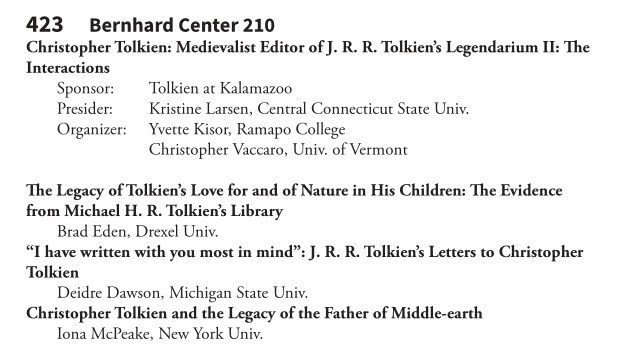
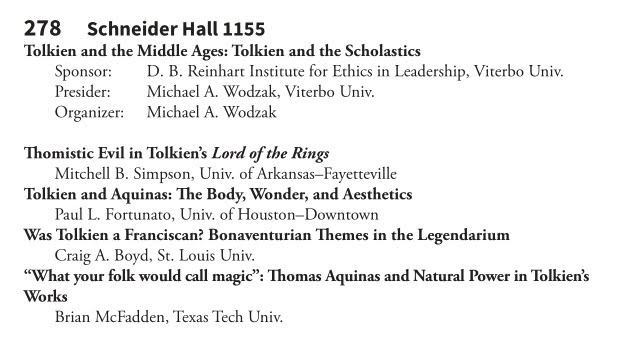
* Various multi-paper Tolkien sessions are scheduled for the giant International Congress on Medieval Studies at Western Michigan University, 11th-13th May 2023. Including: “Religion along the Tolkienian Fantasy Tradition: New Medievalist Narrative”; “Tolkien and the Middle Ages: Tolkien and the Scholastics”; and “Christopher Tolkien: Medievalist Editor of J.R.R. Tolkien’s Legendarium I: The Works” followed by “II: The Interactions”. The papers are not (yet) online, but the titles are…

* A new one-hour YouTube recording of a lecture on “Hope Beyond the Walls of the World: J.R.R. Tolkien and Christian Virtue”, given this Easter at Bethlehem College and Seminary, Minneapolis, USA. High-quality audio, of a good clear speaker.

* Thanks to Sebastiano Tassinari, who drew my attention to the fact that the “70 years since J.R.R. Tolkien’s Sir Gawain lecture in Glasgow” event now has tickets available on Eventbrite. The date is 27th April 2023.

* And finally, the blog Tolkien: Medieval and Modern has a new post on the current thinking on the history of ancient Welsh and English

“the archaeological community until fairly recently [thought] that the Anglo-Saxon invasions were overblown and that the English had a large amount of Briton in them. But a very recent genetic study of Anglo-Saxon graves (Gretzinger, Sayer, Justeau et al, 2022) proved that they indeed had overwhelmingly Germanic heritage.”

This seems to me to be over-claiming for this new study of ancient DNA. What the research actually found was that…

“the individuals who we analysed from eastern England [i.e. mostly what were then the fenlands and coastlands] derived up to 76% of their ancestry from the [adjacent] continental North Sea zone, albeit with substantial regional variation and heterogeneity within sites”.

Many were women. Thus it’s open to question if some of these were descendants of women brought from overseas as ‘old country’ brides for the new settlers of eastern England.

Tolkien Gleanings #52

Tolkien Gleanings #52.

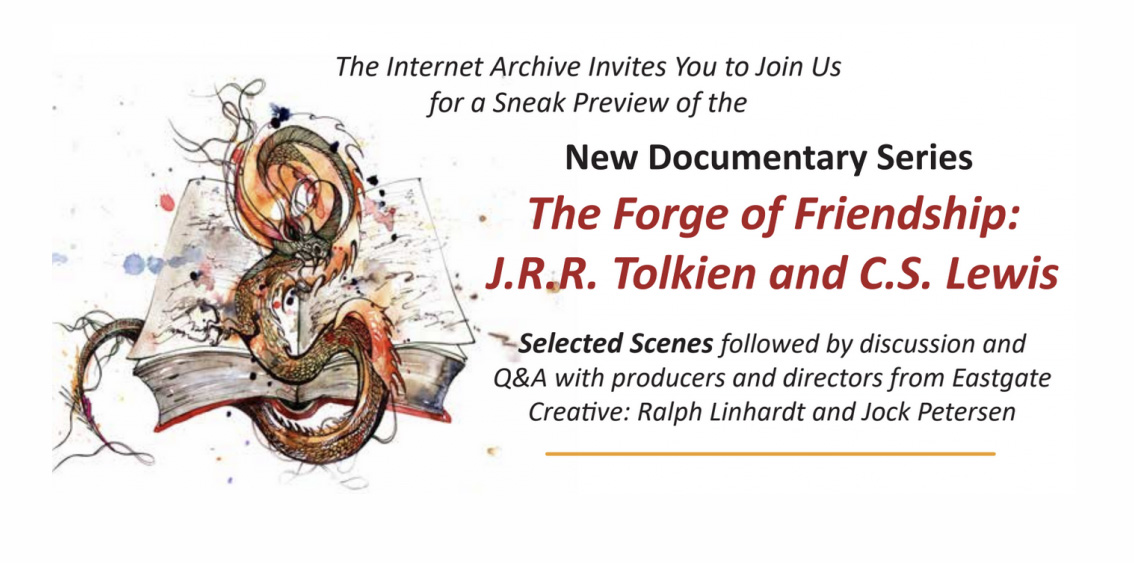
* An online partial Film Preview at Archive.org, 15th April 2023. The forthcoming film is The Forge of Friendship: J.R.R. Tolkien and C.S. Lewis. This would appear to be the same as the online Web series filmed and VFX’d in London in early 2023, then called Fellowship: Tolkien & Lewis.

“Hosted by: The Internet Archive and co-sponsored by Northwind Institute and C.S. Lewis Society of California as part of their weekend conference on ‘Tolkien & Lewis in a Digital Age’.”

* “Tolkien’s Easter Joy in The Lord of the Rings

“Tolkien’s use of the date is not some artificial mechanism by which he links his tale to the Christian myth to come, but a deliberate placement of his tale in history, and not just history, but salvation history”.

* A new Journal of Inklings Studies, Vol. 13, No. 1 ($ partial paywall). The lead article is relevant to Tolkien, “The Conversions of C.S. Lewis: Notes on Rethinking Their Chronology and Character”. There are also free public reviews of: The Fall of Numenor; The Road to Fair Elfland: Tolkien on Fairy Stories: An Extended Commentary; An Anthology of Iberian Scholarship on Tolkien; Tolkien, Enchantment, and Loss: Steps on the Developmental Journey; In the House of Tom Bombadil; and Performing against Annihilation: Identity and Consciousness in J.R.R. Tolkien. Other book reviews, such as for Critics of Enlightenment Rationalism and Critics of Enlightenment, are found to also consider Tolkien.

* And finally, a public lecture on “Holidaying in the Middle Ages”. Being the J.R.R. Tolkien Professor of English Literature and Language Inaugural Lecture at Oxford, 6th June 2023.