Tolkien Gleanings #36

Tolkien Gleanings #36

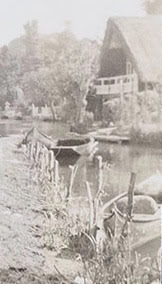
* New unseen Tolkien family photos, early 1930s. Tolkien himself is not seen, and presumably he was the one making the pictures with the camera. The discoverer of the pictures says…. “I’ll be sending high res versions over to the Bodleian shortly”, but has kindly posted low-res versions on Reddit. Tolkien is known to have gone to Lamorna Cove in 1932, but there’s no way these pictures show Cornwall. The scene could be anywhere on a lowland English river, south of the Peak and east of Exeter. Though the distinctive waterside thatched boathouse, boat-type and willow-pollarding might be able to be cross-referenced to a postcard, and thus the location identified. My guess on that would be that one would start looking around Evesham, where his brother was living. Possibly also along the River Stour over in Worcestershire or near Oxford.
* A book from late last summer, and new to me, The Road to Fair Elfland: Tolkien On Fairy-stories: An Extended Commentary (September 2022). This appears to offer the text with…

“references to Tolkien’s precedents and sources for the themes he treated in his essay” and also examples of how the famous essay “proved to be influential or even ahead of its time in the decades following”

The book is on the Kindle, so the free 10% ebook sample should get you the complete preface.

* Kent State University Press has announced the book To Rule the Fate of Many: Truth, Lies, Pity and the Ring of Power (forthcoming). Thankfully it appears to be nothing to do with That TV Series, despite using a similar name. Seems to consider how … “Tolkien could encompass in his sympathy Christian religion and pagan mythology” and thus was able to craft a dynamic place in which he could deeply consider “truth, lies, pity” and bring them “onward to a more philosophical and theological treatment”.

* Tolkien’s Mythic Meaning: The Reader’s Ontological Encounters in The Lord of the Rings. A 2020 thesis for the University of Manchester, now available online.

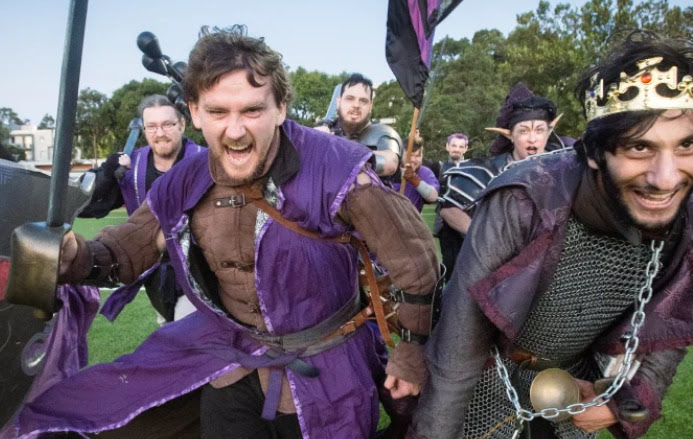
* And finally, “Australians are LARPing”.
Tolkien Gleanings #35

Tolkien Gleanings #35

* A new 2023 review of An Anthology of Iberian Scholarship on Tolkien (2022). “Iberian” here means both Portuguese and Spanish. The review is in German, but the page is in HTML and thus easily auto-translated.

“Simonson [examines] the function of the trees on the continents of Valinor and Numenor, in which beauty and utility are combined. […] only the balance between materialism and aestheticization can guarantee a responsible approach to nature.”

* Call for chapters: Theology, Religion, and Dungeons & Dragons. Relevant to Tolkien, given the formative influence LoTR had on Gary Gygax’s original classic D&D. Deadline: 15th February 2023, with the chapter to be submitted by the end of the summer.

* A public on-site talk titled “The Life and Thought of J.R.R. Tolkien”, in Houston, USA. 24th April 2023. Free and booking now.

“Professor Holly Ordway will provide an enriching presentation about the life and thought of J.R.R. Tolkien”.

* From Country Life magazine, rare images of J.R.R. Tolkien from 1961. Regrettably the magazine has sandwiched the online article with an unexpected auto-playing video of a mass of crawling insects. All video on the site can be perma-blocked, by pasting the following to your uBlock Origin ‘My Filters’ block-list…

! https://www.countrylife.co.uk
www.countrylife.co.uk##.jwplayer-margin-bottom.jwplayer-container

Or, if you want to perma-block all such nonsense in their online articles, videos or not…

! https://www.countrylife.co.uk
www.countrylife.co.uk##.injection

* And finally, on the BBC this week…

“Russell Kane and his guests discuss whether the writer [Tolkien] was evil or genius.”

Seriously. That’s their blurb. For BBC Radio Four. And they wonder why few pay any attention to the BBC these days.

Tolkien Gleanings #34

Tolkien Gleanings #34

* An update on Signum University Press. The Press is barely six months old, but now has a firm slate for 2023 and beyond. In Tolkien studies there’s news of the book Cardinal Vices of Middle-earth (September 2023), a new “comparative analysis of the role of chosen vices and virtues” from a Catholic perspective; and “An interview series with Verlyn Flieger”.

* A casting-call for Fellowship: Tolkien & Lewis… “an upcoming limited [screen] series, based on the friendship, faith, and fantasy of C.S. Lewis and J.R.R. Tolkien.” Filming in London in early spring 2023, and the call has a rather tight deadline. Why do such projects/jobs always seem to have a ‘rush-rush’ deadline of days, rather than at least a month or so?

* Wheaton University now has its list of summer school 2023 courses. Includes “The Makings of Middle Earth: Creation, Creativity, and J.R.R. Tolkien’s Lord of the Rings“, and the “Otherworlds of Imagination in C.S. Lewis”. Seems to be aimed at regional students who want a long taster of what the university can offer. I had to look up “Wheaton, IL”, and it turns out that this well-known university is on the edge of the city of Chicago.

* Issue 2 of my Tolkien Gleanings as a PDF magazine, now available for download.

* And finally, oh dear… more PR piffle for bamboozled tourists from the city of Birmingham. The Birmingham University tower… “is famously believed to have been the inspiration for the tower of Orthanc, the black tower of Isengard”. Will the city ever learn that there’s a really moving true story to tell about Tolkien and Birmingham? They don’t have to make it up.

A barnstormer…

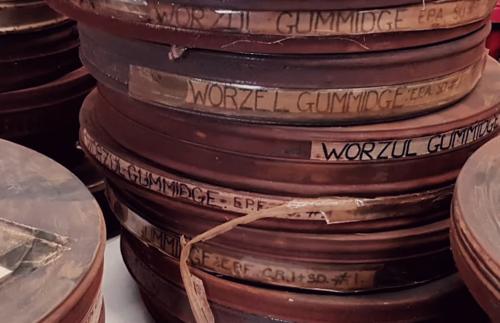
Worzel Gummidge: The Complete Restored Edition is finally shipping in Blu-ray, after several delays over Christmas. Judging by the January 2023 reviews on Amazon UK, people are very pleased with the restoration. The earlier VHS and then DVD editions had really terrible picture quality despite the classic TV series being made on film. Just another example of the criminal lack of archival care given to British 1960s-80s TV shows, at a time when the UK should have been funding a proper national preservation archive. Instead it’s been largely left to the fans and collectors, who have done a marvellous job in difficult circumstances.

This rare full restoration, previewed with some screenings at the BFI and by all accounts an amazing job, is due to the discovery of the 16mm film cans by two old-TV sleuths. As one reviewer puts it…

How fitting is it that the original 16mm film negatives were discovered in a barn, after 40 years!

Tolkien Gleanings #33

Tolkien Gleanings #33

    “33, an important number”

* A two-day conference on “G.B. Smith and J.R.R. Tolkien: a meaningful friendship” at Corpus Christi College, Oxford. 22nd-23rd March 2023. Looks excellent. Booking now.

* Starting in May 2023, a new Signum University course titled “Tolkien Illustrated: Picturing the Legendarium”. “Two 90-minute live lectures and one 1-hour discussion sessions per week as assigned (4 hours total weekly).”

* A new issue of the open-access journal Fafnir. One review is of interest, of the book A Sense of Tales Untold: Exploring the Edges of Tolkien’s Literary Canvas.

Tolkien Gleanings #32

Tolkien Gleanings #32

* In the Canadian undergraduate journal Explorations, the new essay “The Birth of J.R.R. Tolkien’s Love-Child Culture in The Two Towers. An off-putting title, but it turns out to be a detailed and worthy essay on the insular and self-governing nature of the Rohirrim. It has kindly been placed under full Creative Commons. There’s a mistake to watch out for, though. Helm’s Deep was not the work of Rohan, as LoTR states… “Men [of Rohan] said that in the far-off days of the glory of Gondor the sea-kings had built here this fastness with the hands of giants.”

* At the Fantastic Metropolis blog I found a nice copy of “The Realms of Tolkien”. This being a late interview printed in the British science-fiction magazine New Worlds (Vol. 50, No. 168, November 1966), an issue not yet on Archive.org. In the interview Tolkien elaborates a little on Queen Beruthiel and her cats, among other topics.

* Libraries and Books in Medieval England is a new book due in April 2023. It promises to be a manageable survey of the topic in 192 pages, from an eminent authority with all the latest research at his fingertips.

* Due in a few weeks, the academic book J.R.R. Tolkien’s Utopianism and the Classics (February 2023), on the still-hot academic topic of utopianising tendencies in literature. Here ‘Classics’ means ‘the ancient world and our inheritance from it’. The blurb sounded quite interesting, until I read the names of the usual suspects… Plato, Homer, Ovid. The contents are…

Introduction: Utopianism and Classicism: Tolkien’s New/Old Continent.

1. Lapsarian Narratives: The Decline and Fall of Utopian Communities in Middle-Earth.
2. Hospitality Narratives: The Ideal of the Home in an Odyssean Hobbit.
3. Sublime Narratives: Classical Transcendence in Nature and Beyond in The Fellowship of the Ring.

Epilogue

The book follows last year’s theologically-informed Utopian and Dystopian Themes in Tolkien’s Legendarium (February 2022) by a different author, which had a chapter that surveyed… “elements of anarchism, distributionism, and Toryism in Tolkien’s political philosophy”.

* And finally, a newly discovered pithy marginal note from Christopher Tolkien

“What’s the point of all this pedantry if you can’t get a detail like this right?”

Tolkien Gleanings #31

Tolkien Gleanings #31

* Now public, a recording of a new public lecture on YouTube ““I hold the key”: J.R.R. Tolkien through interviews and reminiscences”. Given by Dimitra Fimi at the University of Birmingham, in May 2022.

* My unearthing of the location of C.S. Lewis’s 1936 walk near Buxton, Derbyshire, plus a small correction to an important memoir of Tolkien.

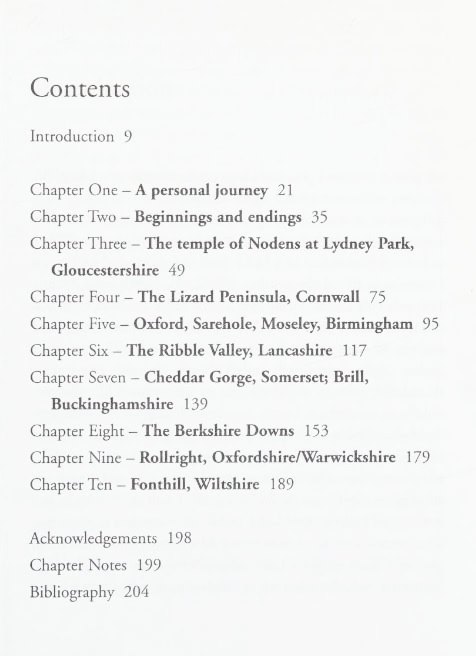
* New on Archive.org to borrow, the book There and back again: in the footsteps of J.R.R. Tolkien (2004). This reflects on a series of walks, presumably made in the late-1990s / early 2000s, in the following places…

So far as I know, Tolkien never visited the Lyndey excavations. But he certainly wrote the “Nodens” paper.

* And finally, “The Magic of Middle-earth” exhibition is travelling to West Sussex in 2023. The show opens at the museum in Chichester in April, and will require paid tickets.

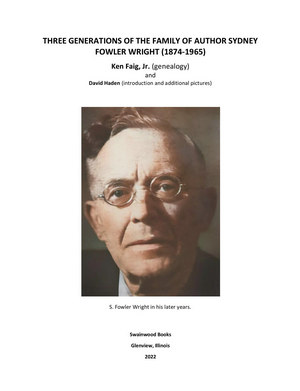
Three Generations of The Family of Author Sydney Fowler Wright

I’m pleased to present Three Generations of The Family of Author Sydney Fowler Wright (1874-1965), by leading H.P. Lovecraft scholar Ken Faig Jr.

Ken had shown me the private PDF of his genealogical text before Christmas, and I suggested that a few historians and some fiction readers in the West Midlands would be interested in this local writer, if I could add a biographical introduction and more images. He agreed to the expansion and that it could be made public. This 26-page PDF is the result, now freely available for download.

Download: fowler_wright_genealogy_life.pdf

S. Fowler Wright was a key writer in the history of early science-fiction. To earn money for his family he was also a popular crime-mystery writer of the 1930s and 40s. He was raised in Smethwick and then lived in north Birmingham. As a seminal imaginative writer and as a Birmingham man interested in Mercian history he was thus very much a contemporary of Tolkien, and he even went to the same school in New Street. I suspect a connection with Arnold Bennett, and note that Wright apparently advised Churchill on certain matters during wartime (see PDF for details). S. Fowler Wright’s biography remains to be written. I won’t be the one to write it, so feel free.

C.S. Lewis’s 1936 walk near Buxton, Derbyshire

A bit more on walking and fantasy writers, following my last Tolkien Gleanings. I found a list of long walks taken by C.S. Lewis and his brother. One walk had possibly been taken near me, in Derbyshire.

“13th–16th January 1936 in Derbyshire”

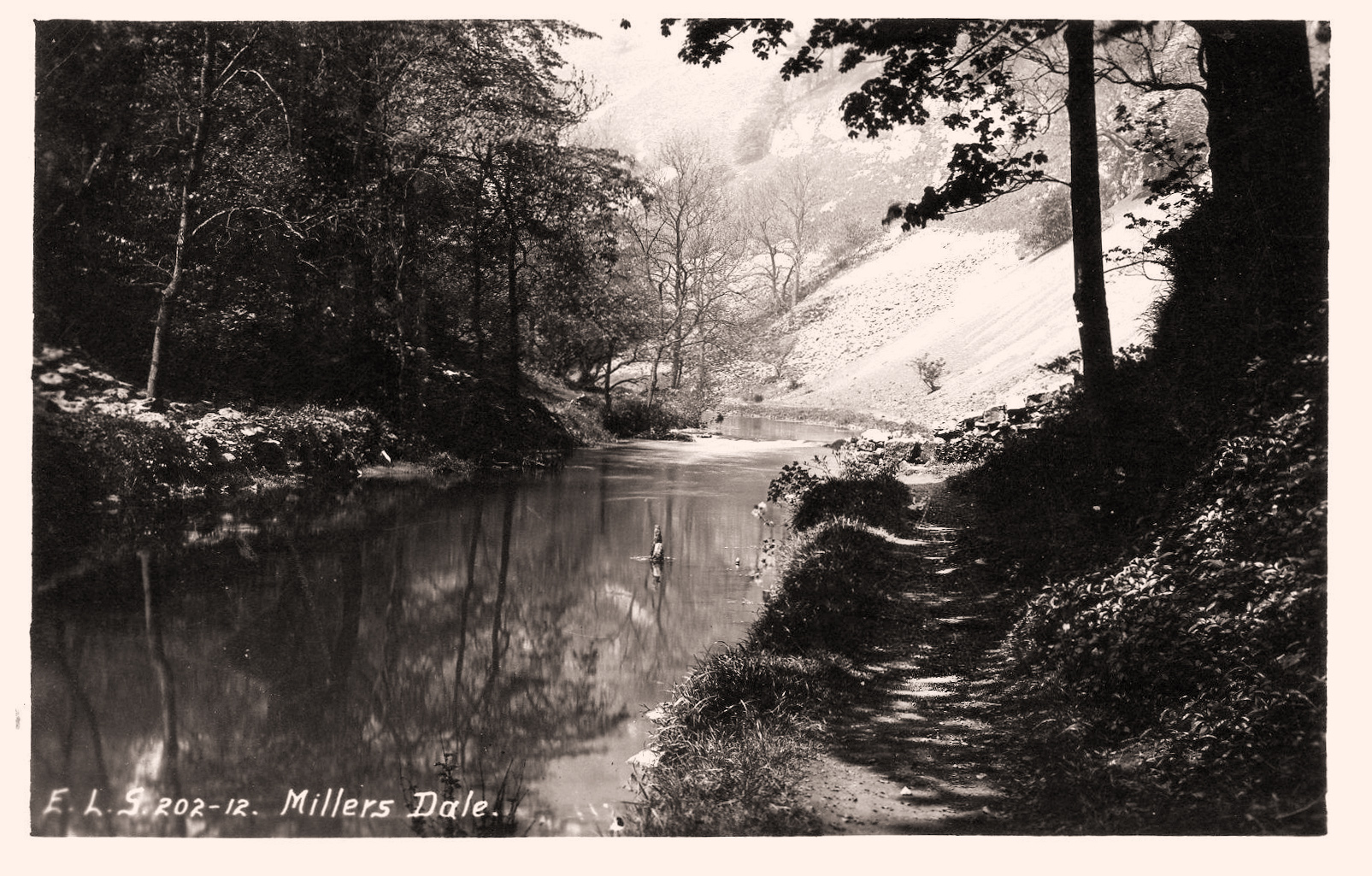
So I briefly looked into it. Tolkien was not with them, and according to the Chronology was hard at work preparing for his new academic term and dealing with tedious Early English Text Society business. But I wondered where the walk was anyway, perhaps for the benefit of some future Tourist Board leaflet. Was it on the west or the east of the Peak? The location took a bit of tracking down, but Lewis’s brother kept a diary that records a visit to the church at Taddington, which is rather amusingly described by the American diary annotator as “north of Oxford”. England may be a very small place, compared to America, but we’re not that small. More precisely Taddington is just a little east of the spa-town of Buxton, in the far west of the Peak. No further details of the precise spot are known. But logically the trip would then be on the train from Oxford – Birmingham – Derby – then onto the local milk-run train through the Peak and then off at Miller’s Dale station just before Buxton… and then brisk and chilly walking in and around the fabulous Miller’s Dale (aka Millers Dale) and probably staying in the local pub there.

Walking in the snow, since “lovely snow clad trees” feature in the diary in the entry for their final day there. A 1930s winter, with heavy snow, in the Peak, in January. Not something that even the most ardent Lewis-ite would want to re-create today, I’d imagine. Even if they could. Today even the fall of a few snowflakes could be enough to stop all transport and prevent you from getting there on public transport. Not so back then, when we had more grit and gumption.

Along the way I found a small transcription error re: another walk, the error being caught in George Sayer’s important 1992 speech “Recollections of J.R.R. Tolkien”…

I had the impression that he [Tolkien] had never walked the [Malvern] hills before [August 1947] though he had often admired the distant view of them from [his brother’s at] the Avon valley near Evesham. Some of the names of the places we saw from the [Malvern] hills produced [in his talk] philological or etymological footnotes. Malvern was a corruption of two Welsh words, “moel” meaning bear, and “vern” derived from bryn or fryn meaning hill. This of course told us that the area was in early times heavily wooded, though the ten-mile ridge of the hills was not.

I was puzzled for a moment by this, unable to ‘see the bear for the woods’. But I realised that “bear” (animal) should be “bare” (bald), from the Welsh moel (bare, bald, often applied to a prominent hill). From the Malvern Hills one looks east across Herefordshire and into Wales.

The error is repeated in Tolkien: A Celebration (1999), in which the speech is reprinted. So, no… sadly Malvern does not mean Bear-hills, but simply Bare-hills.