Tolkien and the Greco-Roman World

A large special issue of the German open-access journal Thersites, themed ‘There and Back Again: Tolkien and the Greco-Roman World’ and with deep articles in English. Including…

“Tolkien and Greco-Roman Antiquity”. (Very briefly “sketches the status of the research on the influence of Greco-Roman antiquity on the works of Tolkien” in terms of publication, including mentioning two non-English books I’d not heard of).

“Tolkien’s Ithilien and the Landscape of the Ancient Mediterranean”. (Excellent, and with a large bibliography).

“Ents, Sacred Groves, and the Cost of Desecration”. (Some discussion of sacred groves and the scholarly debates about pre-Christian animism and sacred trees. Unaware that Tolkien’s personal tutor at Oxford was one of the world’s great experts on animist ethnology).

“(Classical) Narratives of Decline in Tolkien”. (A small typo on the dating… “Tolkien had an extensive training in Classics at King Edward’s School (KES), the prestigious grammar school that he attended from 1900 to 1910” — he was actually there until the end of July 1911).

Review of the book Tolkien and the Classical World.

Back o’ Barrow’s

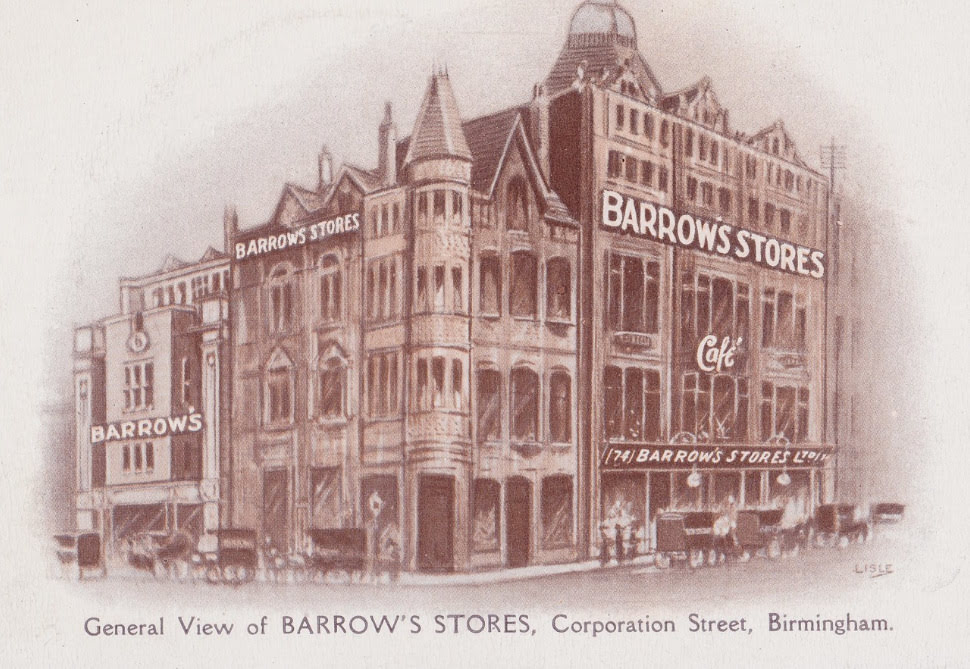
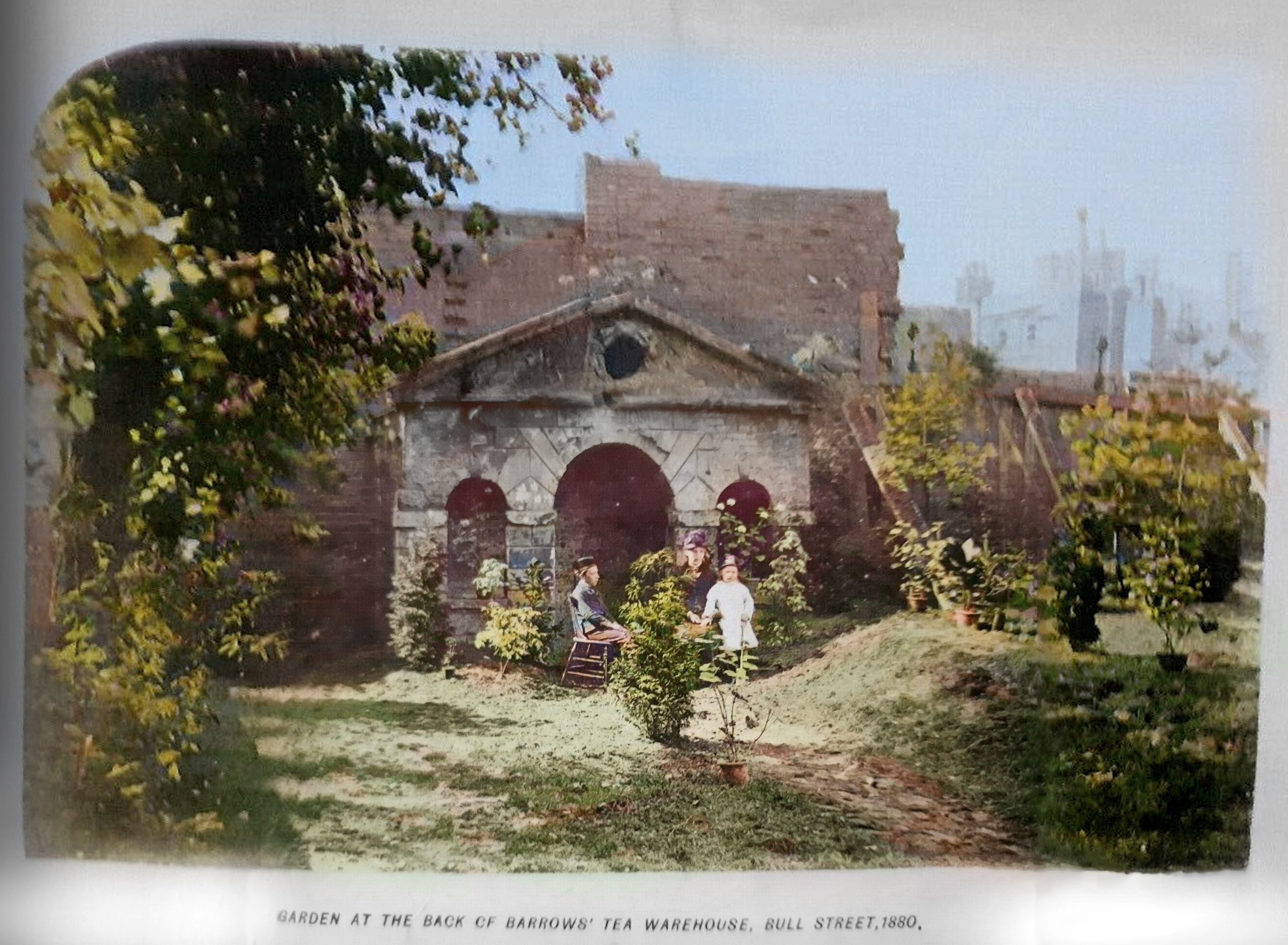
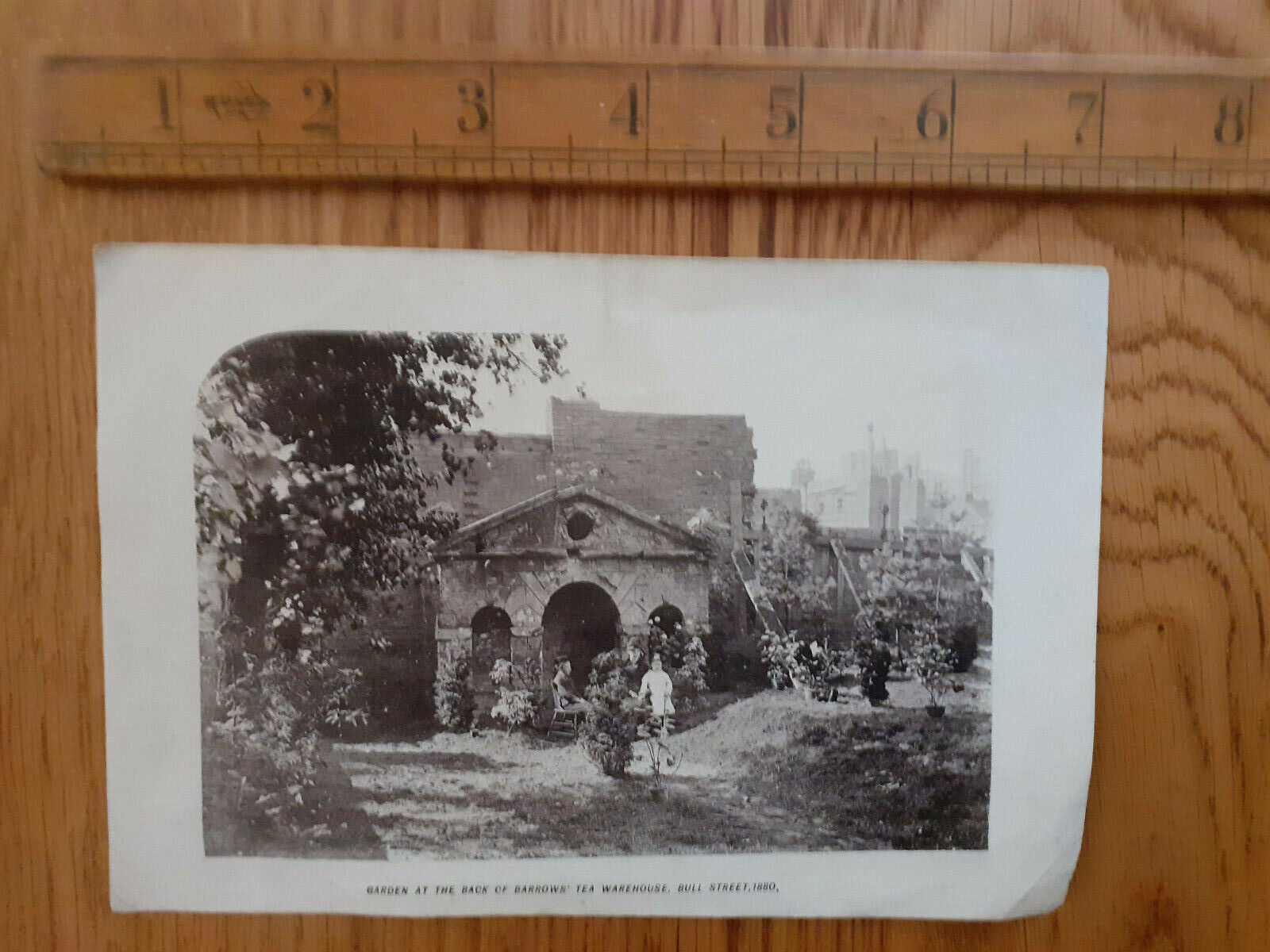
Tolkien’s favourite Barrow’s had a back garden. Or at least, it did in 1880, when a tea warehouse. If the garden was still there nearly thirty years later, and available to customers of the first-floor Tea-Rooms in circa 1909-11, is unknown. Possibly not. But commercial tea-rooms would usually be loathe to give up such a thing, if they can use it for customers.

Restored and colourised from eBay.

I’m assuming here the Barrow’s Stores was inter-connected with the older Warehouse, in an L-shape, on that Bull St. / Corporation St. corner. Which is does appear to have been on the map and also on this later picture which illustrates the L-shape…

Bull St. on the left, Corporation St. on the right.

I guess a really good large-scale deeds/sale map might give an indication, and perhaps show how long the garden existed, and if it made it into the Corporation St. era. 93 Bull St. is the target, according to this 1887 advert.

Apparently 93 Bull St. was Cadbury’s original shop/home, back in the 1830s. So even if this garden picture is not a Tolkien item then it would be a Cadbury item.

The early years of Jodrell Bank Radio Telescope – in colour

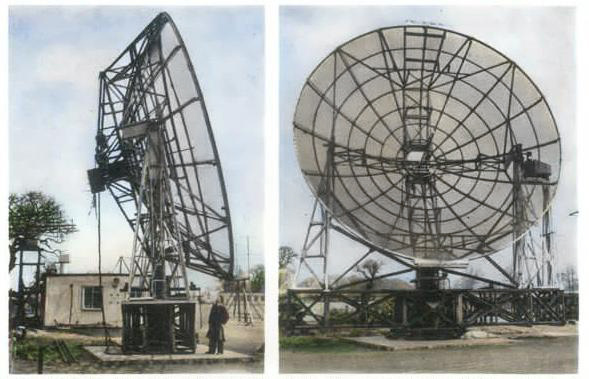
The early prototype for the steerable ‘big dish’ telescope, possibly circa 1950.
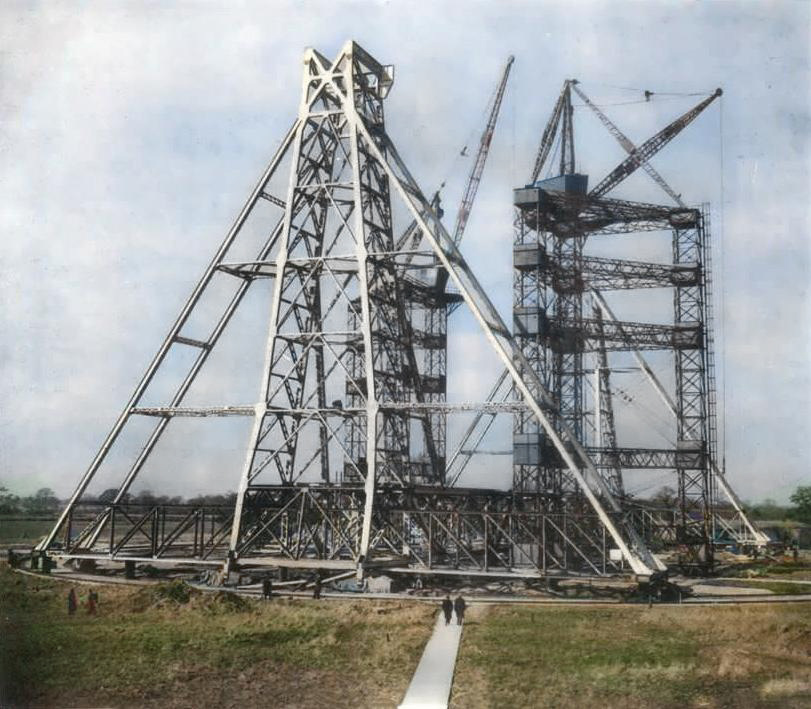
Building the tower-arms, early 1950s.
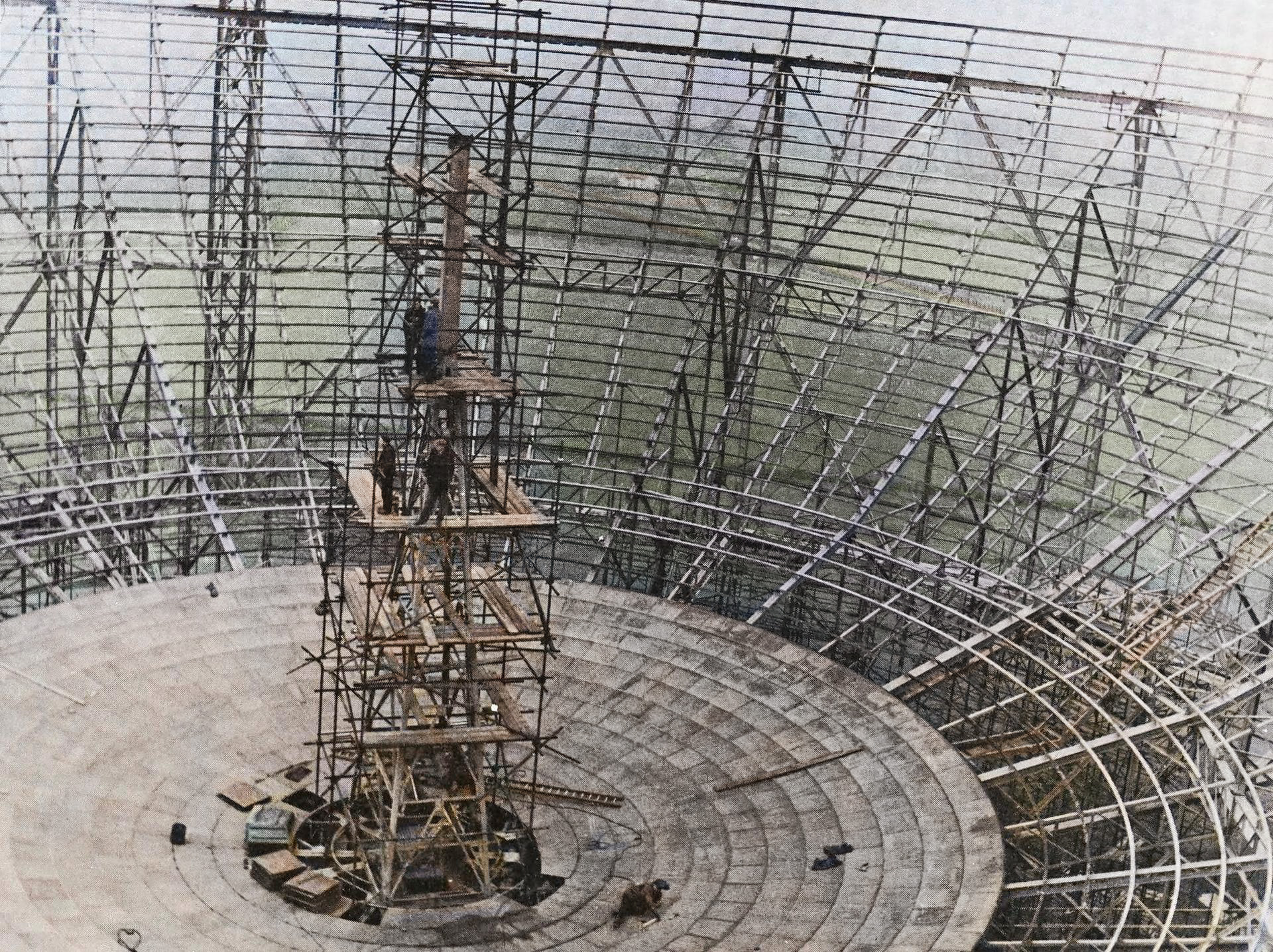
The telescope under early construction, mid 1950s.
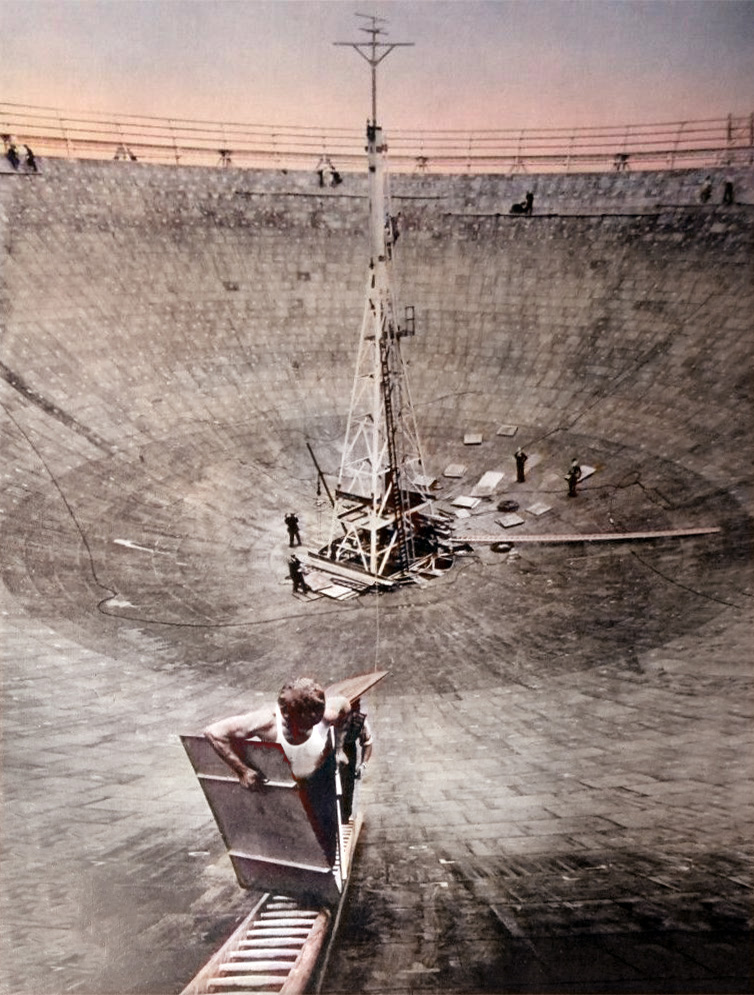
The telescope dish under construction, mid 1950s.
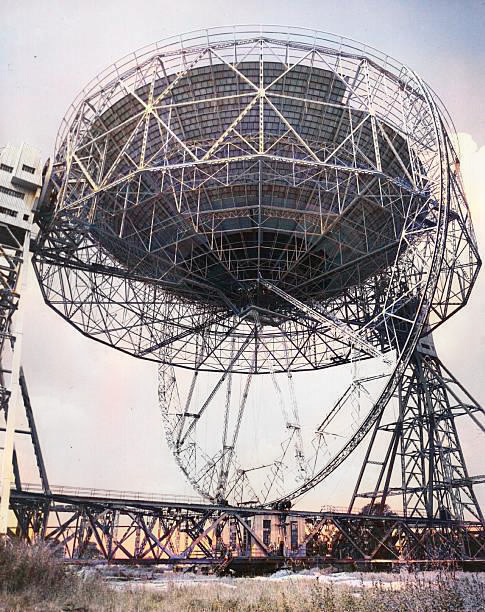
The telescope frame and dish begins to take shape, though still under construction.
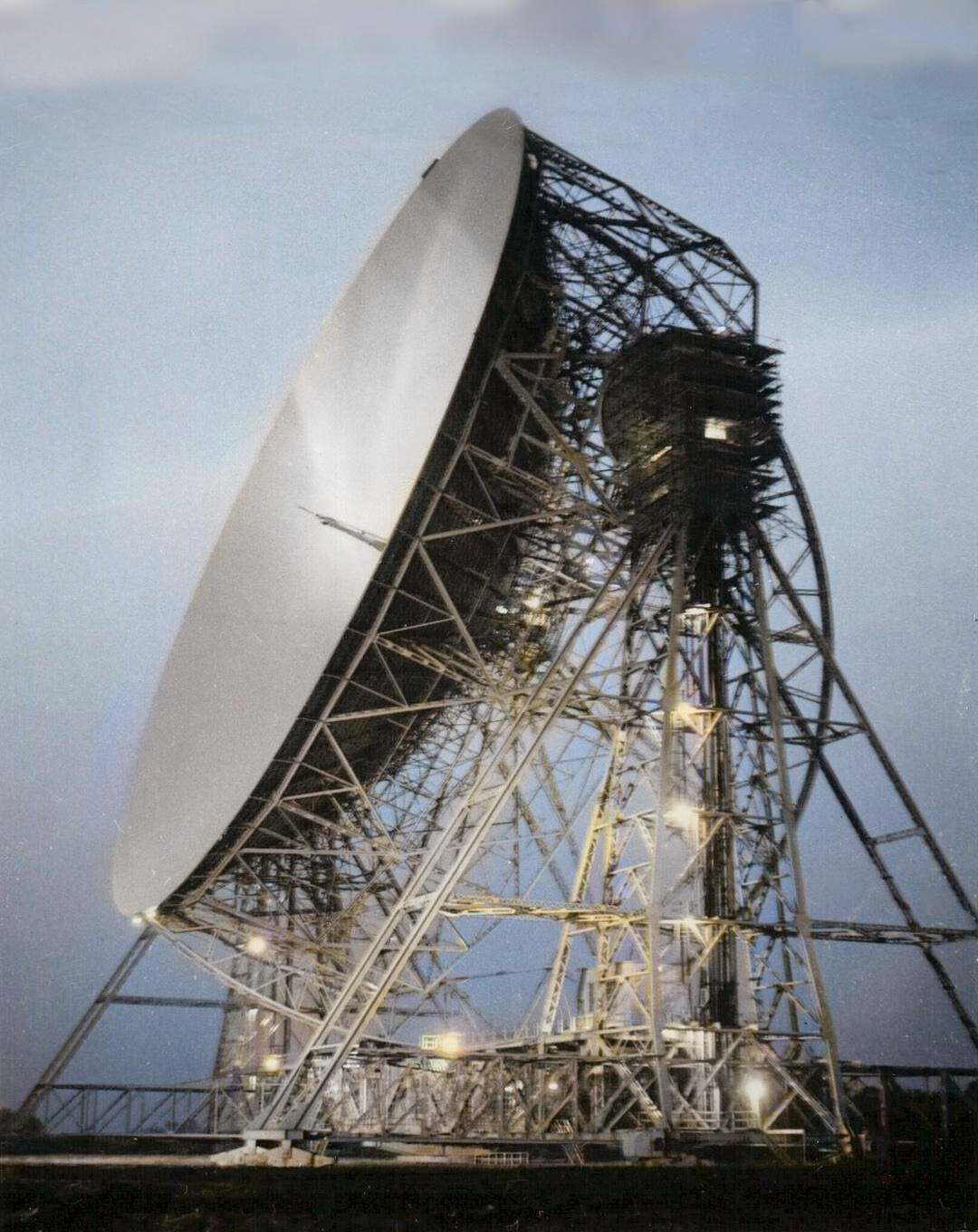
The completed telescope stands ready at dusk.
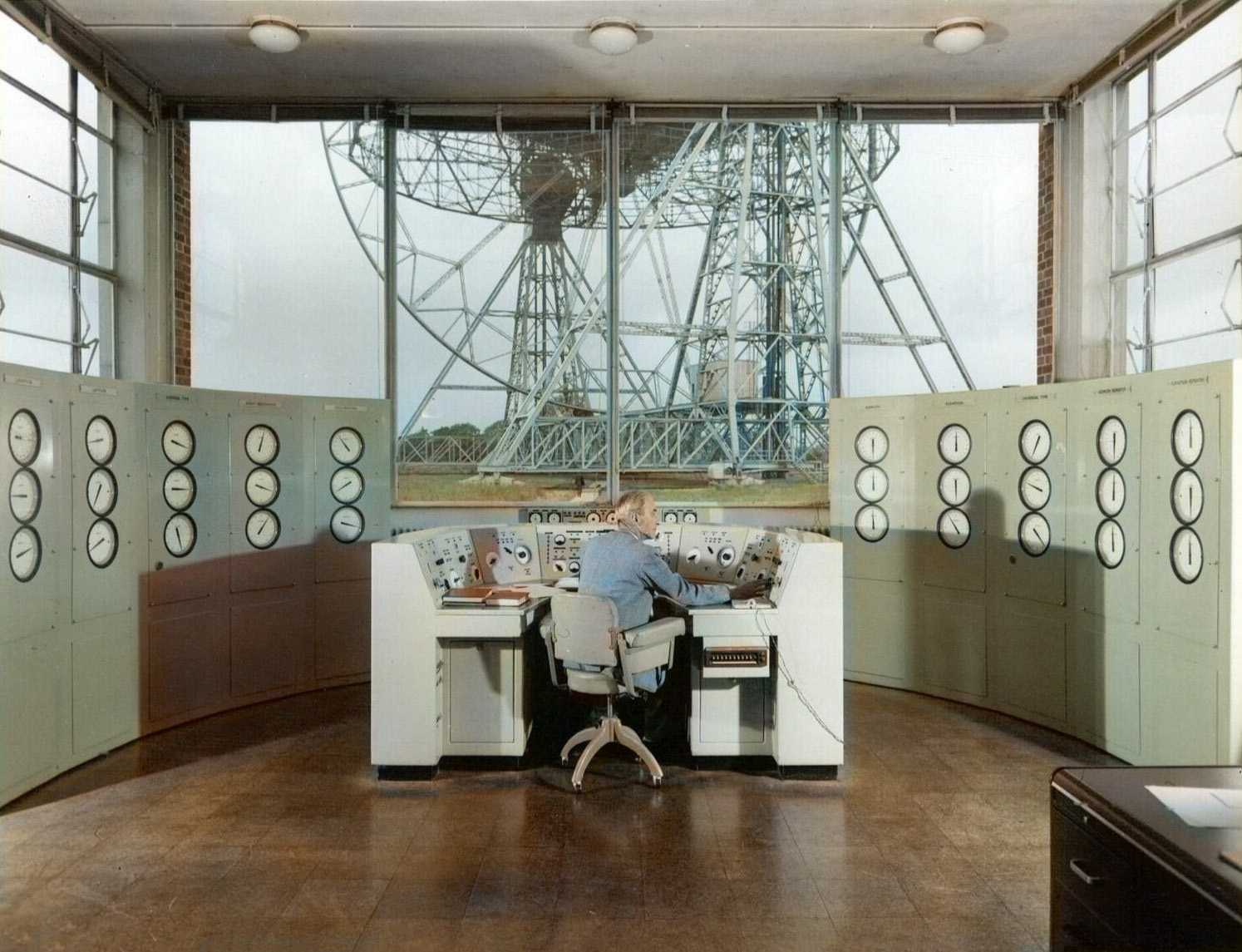
Sir Bernard Lovell, the project’s master-mind, turns on the power.
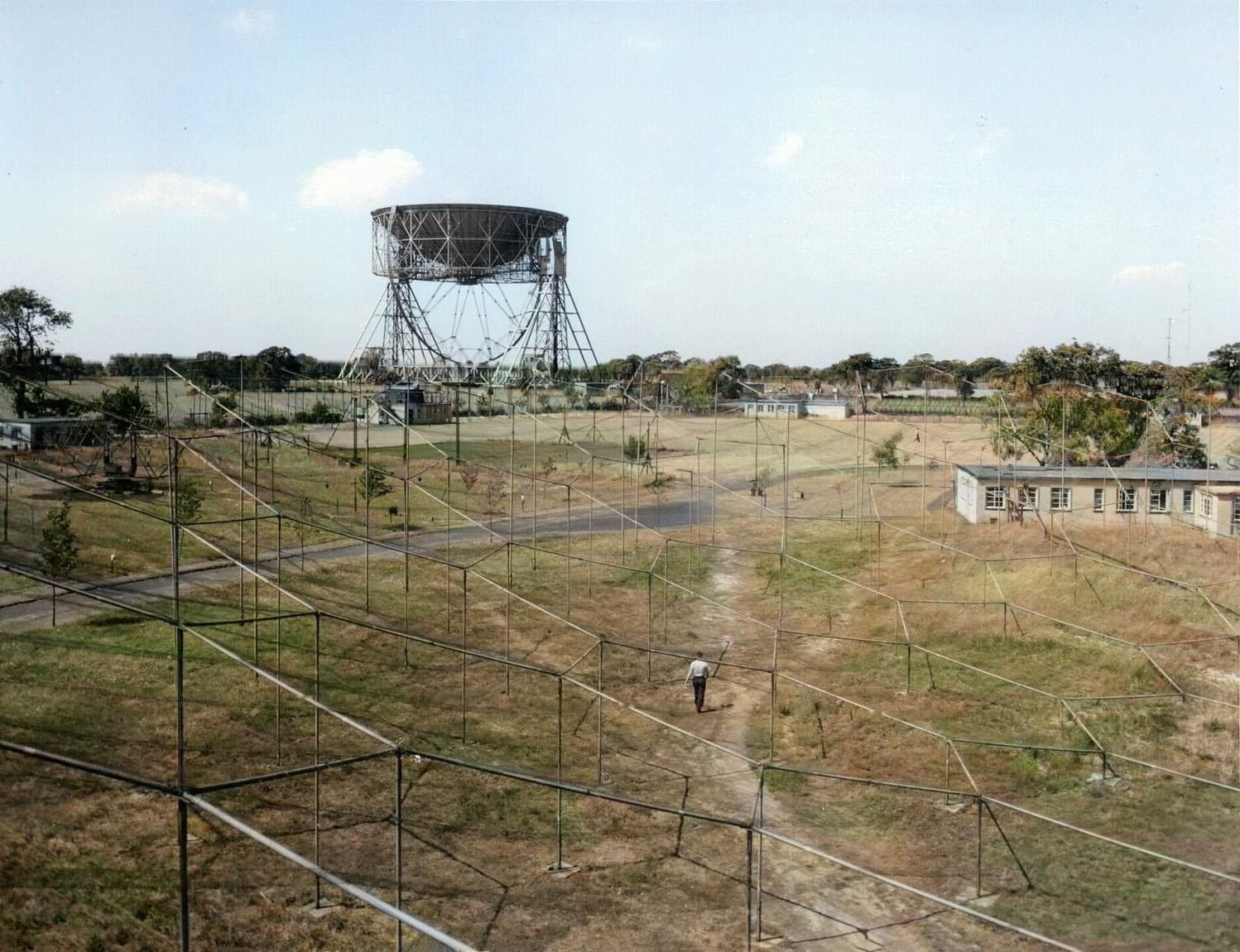
A growing advanced-research station on the Cheshire Plain, by the late 1950s.
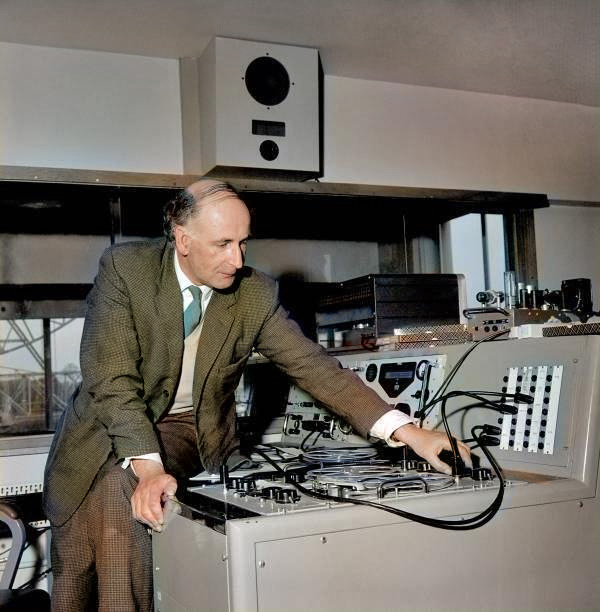
Sir Bernard Lovell, head of the project.
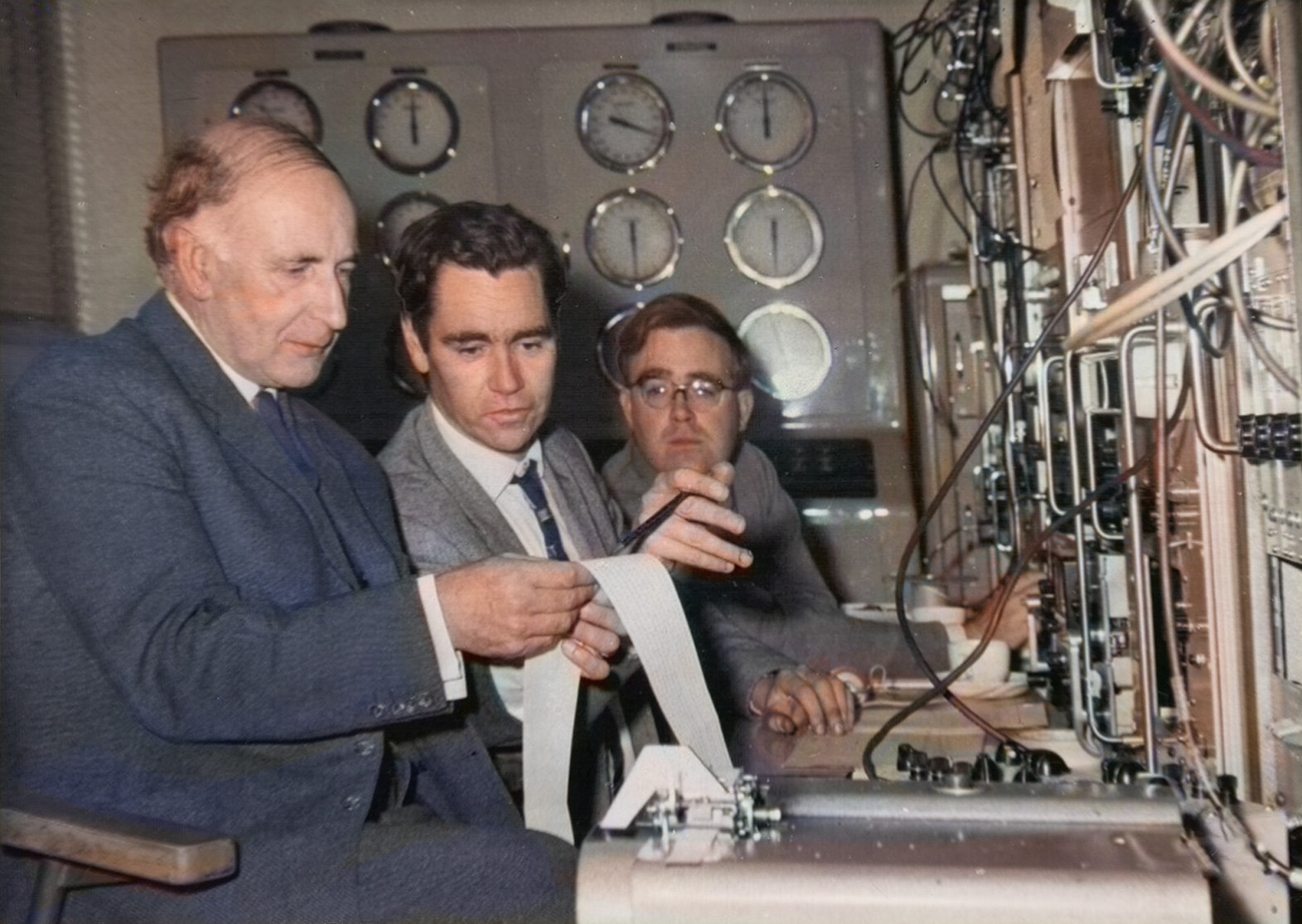
Sir Bernard Lovell, examining data on paper tape. In those days punched and graphed paper-tape was the most efficient way to stream and record massive amounts of data from the stars. Possibly mid 1960s.
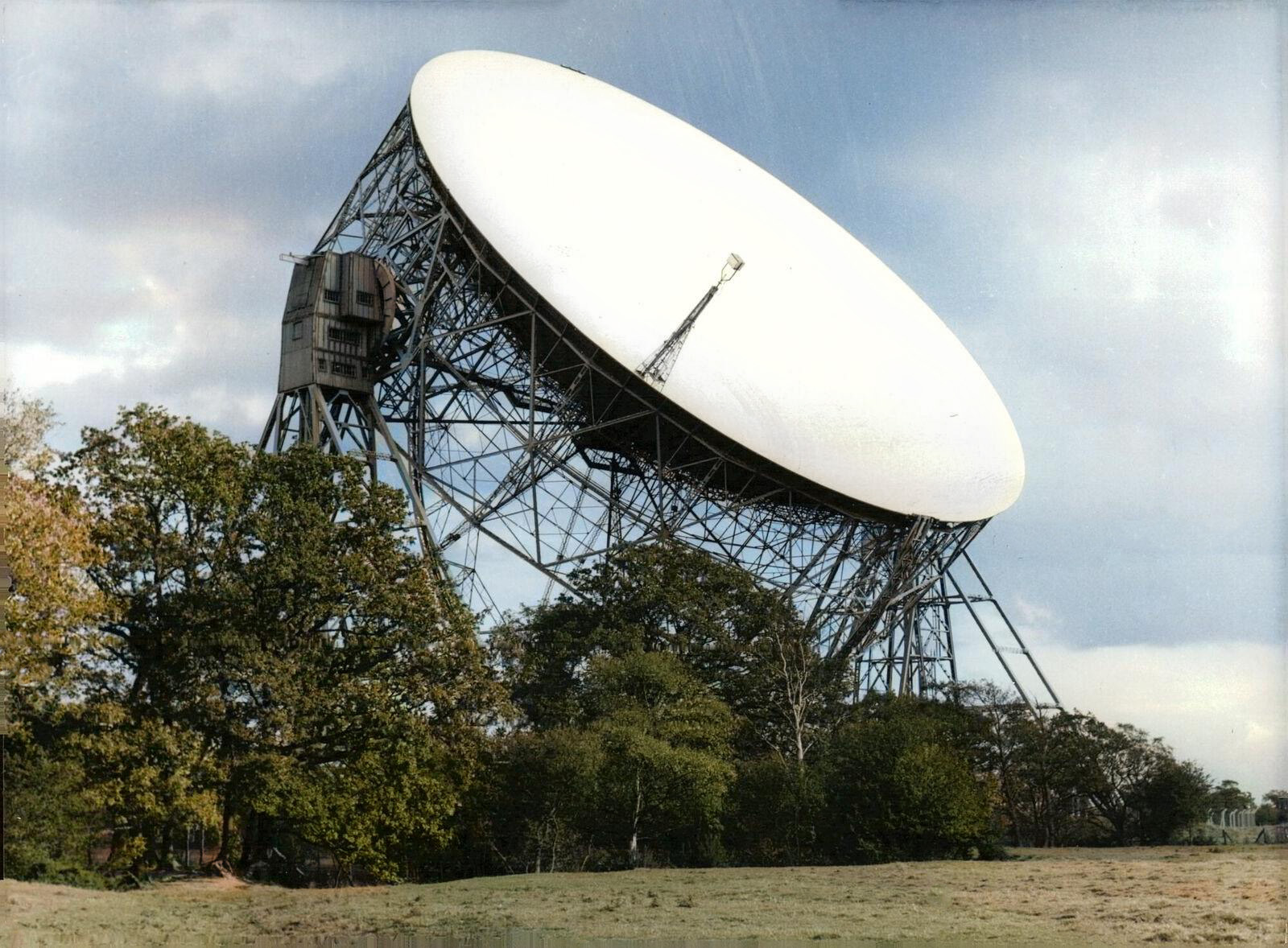
The giant dish becomes a local landmark in the countryside.
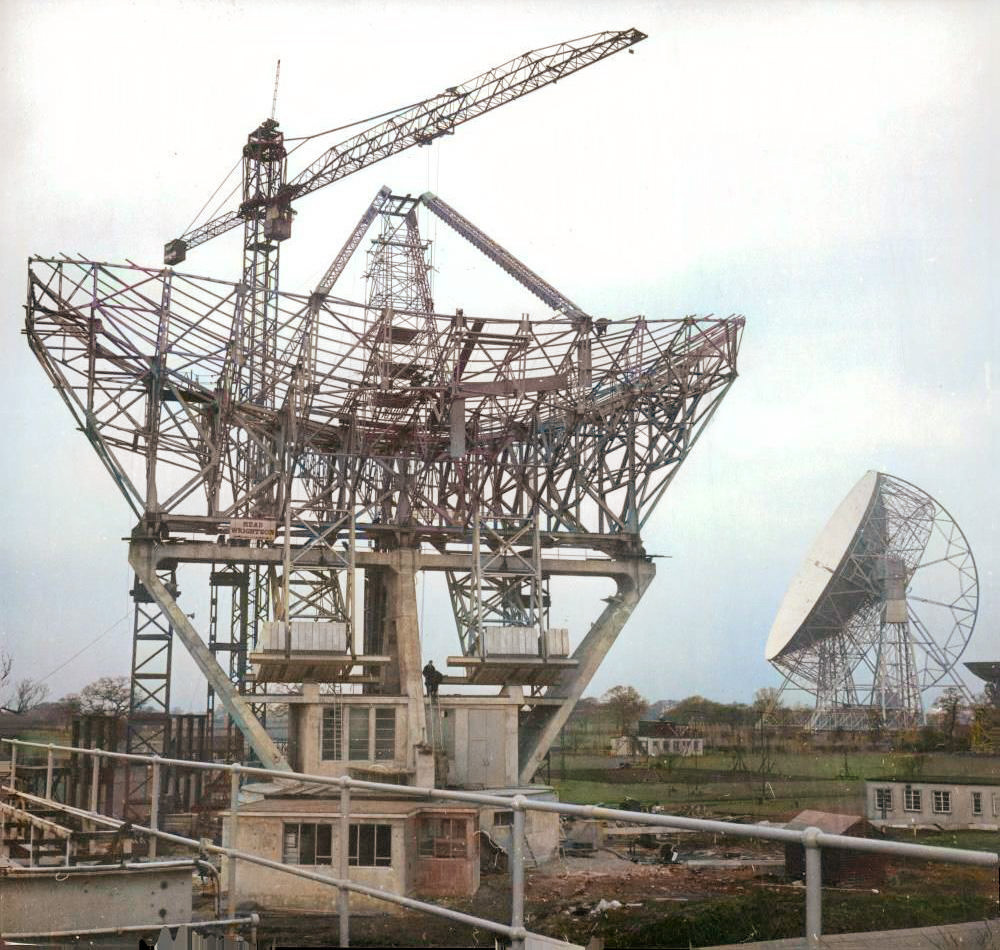
In the 1960s, new additional telescopes.
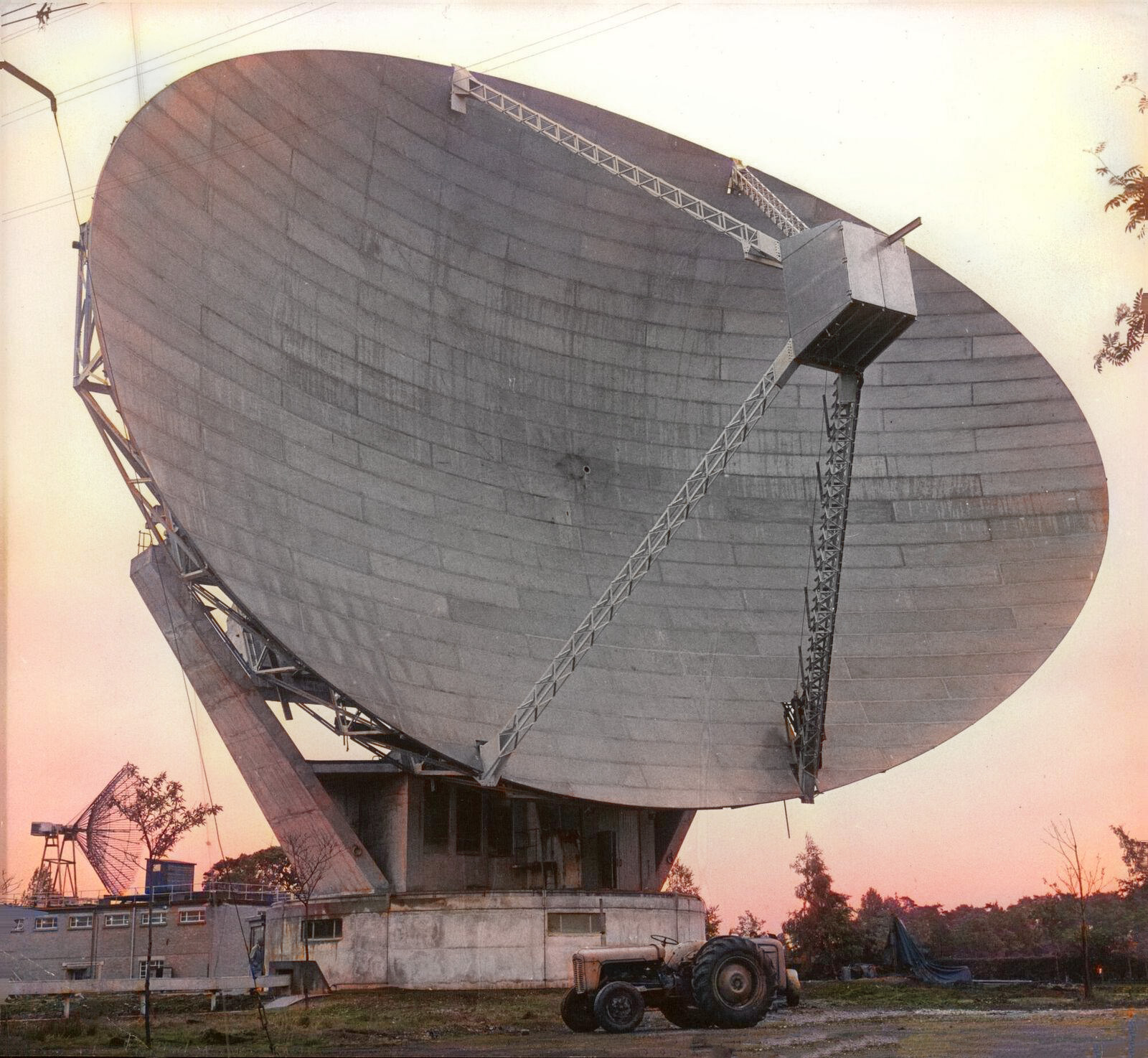
In the 1960s, new additional advanced radio telescopes.
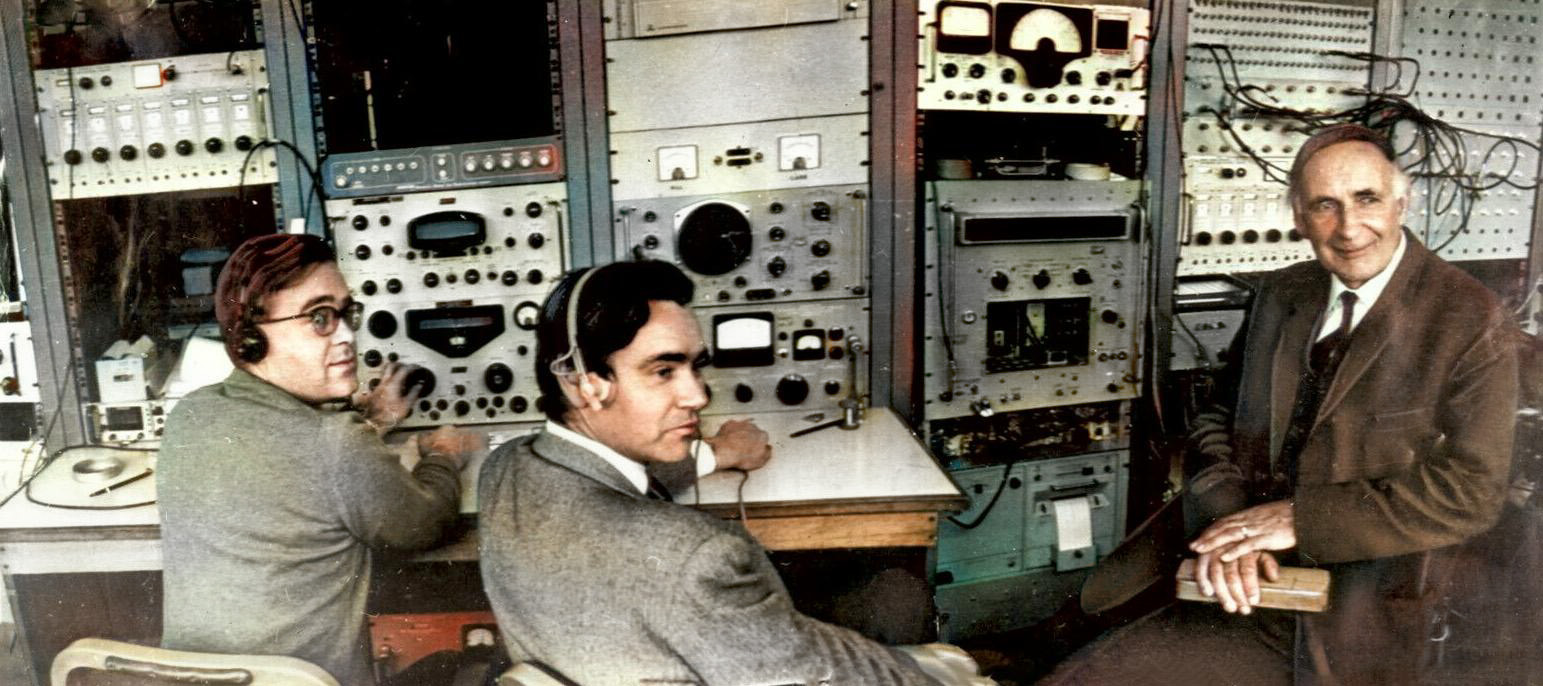
An older Sir Bernard Lovell and others, listening for messages from a Venus probe in the 1960s. Even aged in his 90s, he was still going into Jodrell every work day.
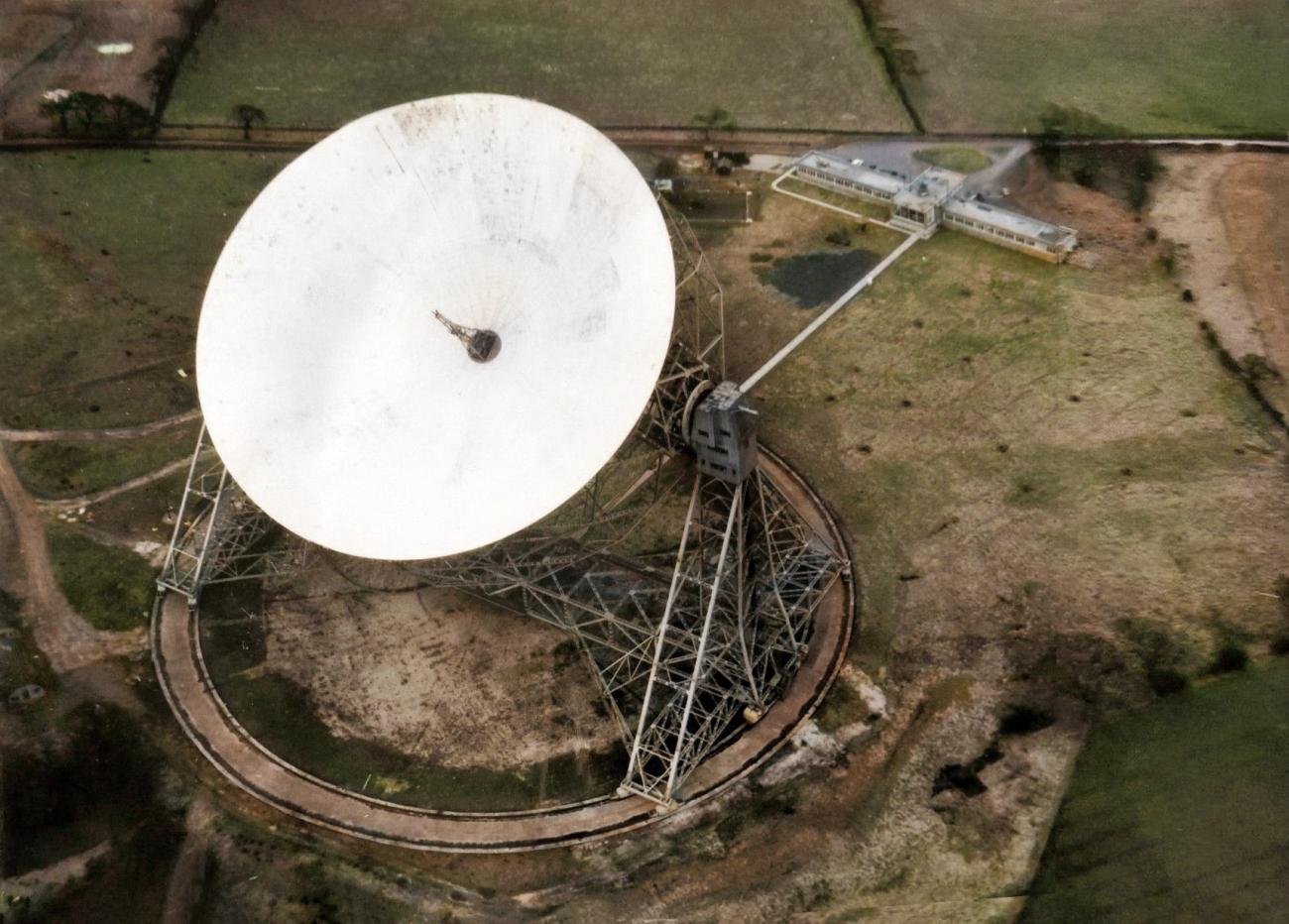
Early layout with control buildings. Very little fencing (pre IRA terrorists) or cars.
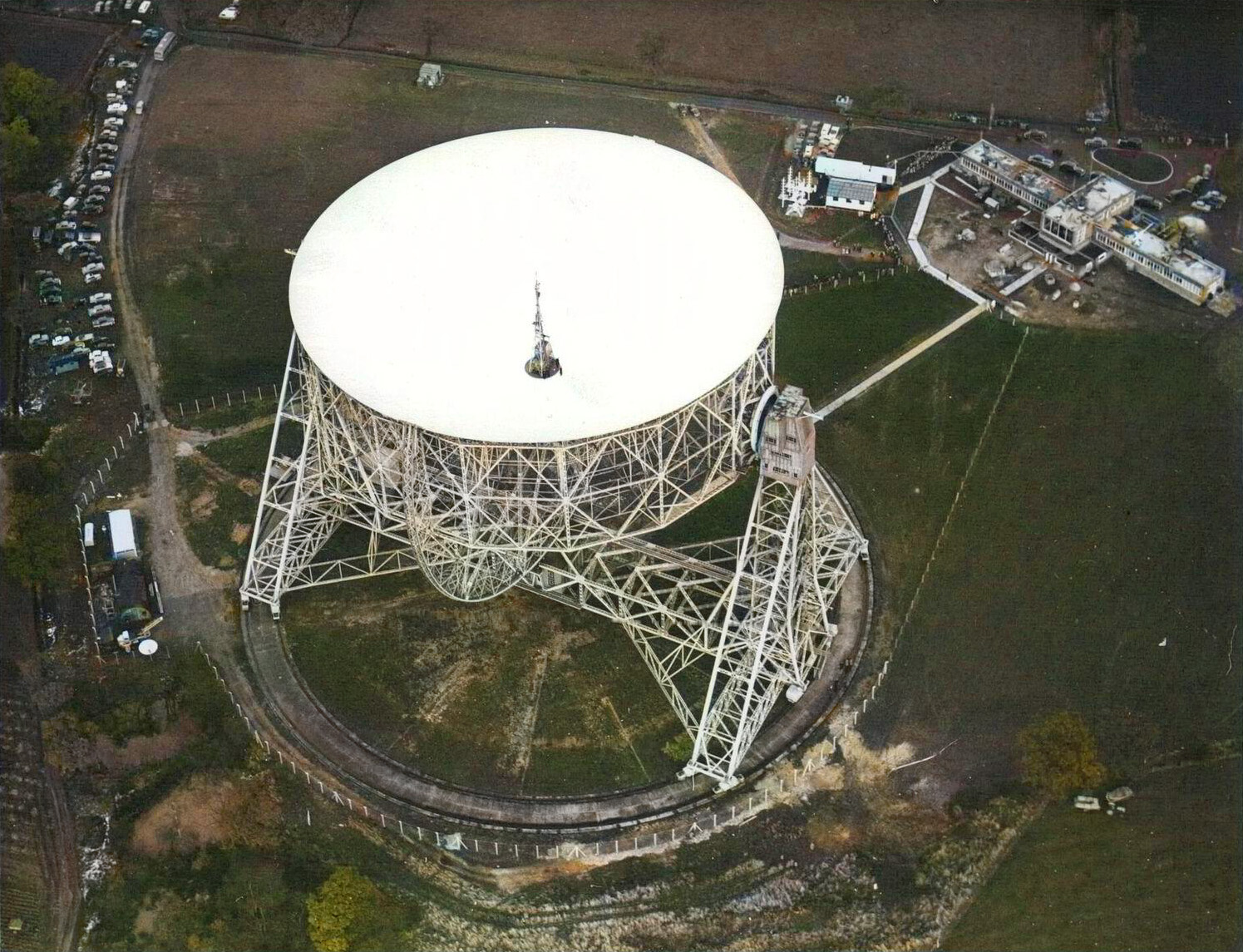
Later layout. By the late 1960s, with the first Space Race well underway, the place was becoming something of a tourist destination as well as a growing and widening research centre stretching out around the giant telescope. This mix continues today, in public events such as the sci-art Blue Dot Festival which returns in summer 2023.
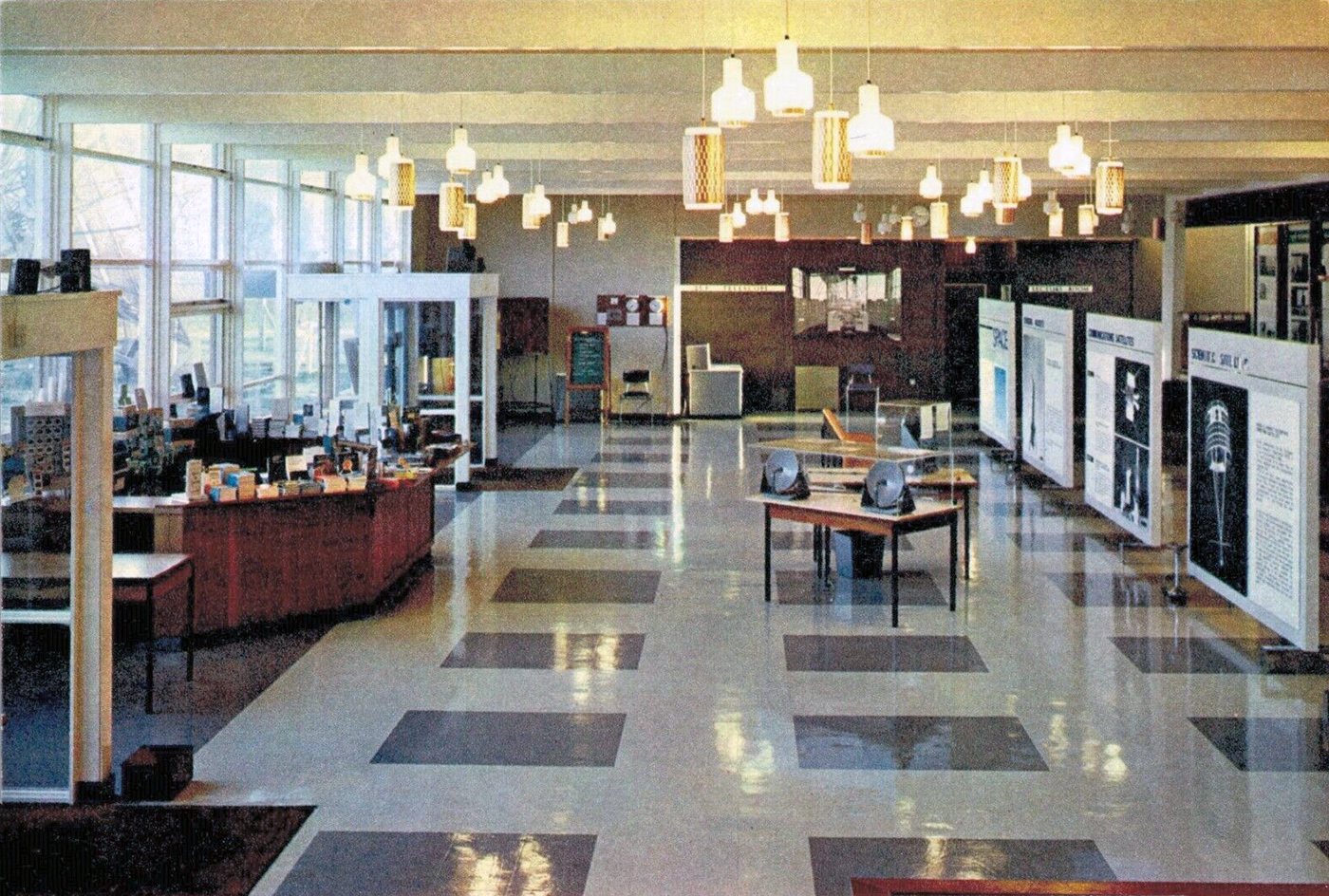
Throughout the late 1960s and into the 70s, the small but fascinating visitor centre helped to enthuse the new young ‘Space Race’ generation — who were already well enthused by the manned Moon missions and by humanity’s pioneering exploration of the Solar System. In 1971 a new Planetarium was added. I remember the visit well, and especially the reels of punched data-tape — some of which interested children were allowed to take home.
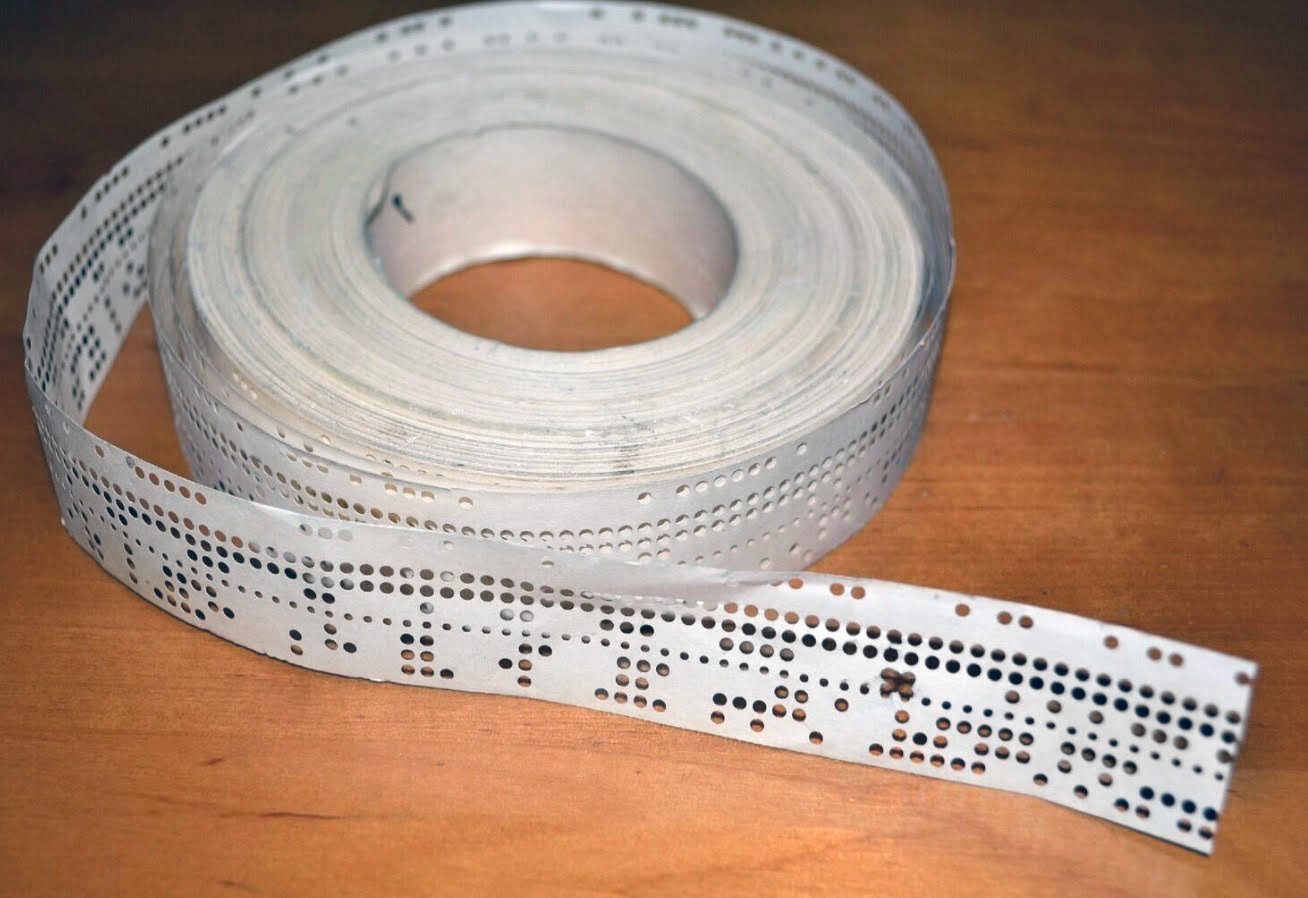
Secret messages from the stars!

Today Jodrell Bank is home to one of the most powerful telescope arrays in the world, created by linking together all the UK’s seven radio telescopes to work as one. Jodrell Bank is also home to the HQ for the Square Kilometre Array, an even larger multi radio telescope project that will do the same for sites in Africa and Australia.


Further reading:

Sir Bernard Lovell’s accessible book on the early history is The Story of Jodrell Bank (1968), and this was revised as Voice of the Universe: Building the Jodrell Bank Telescope; Revised and Updated (1983). The Out of the Zenith: Jodrell Bank, 1957-70 (1973) is a more technical book for astronomers, from Oxford University Press. The technical aspects of the telescopes themselves were later covered in the book The Jodrell Bank Telescopes (1985). All these are now on Archive.org.

Children’s publisher Corgi/Carousel also appears to have issued the Story of Jodrell Bank (1972) for children in middle-childhood, and this can still be found used in paper form on eBay and Amazon. At a guess, this is perhaps Lovell’s accessible 1968 book heavily adapted, condensed and illustrated for intelligent children? Surprisingly, there appears to have been no subsequent children’s book on the topic. Time for a graphic novel?

Sir Bernard Lovell also appears to have had at least three book-length biographies.

There appears to be no large modern coffee-table history book on the history of Jodrell Bank, but there is likely room in the market for one — perhaps even in conjunction with a new Ken Burns-style documentary film. In the meanwhile there’s a two-hour YouTube Playlist of available documentaries.
Mythlore and more

A new edition of the journal Mythlore brings two items of interest…

* “Notes of an Inklings Scholar: Musings on Myth and History, Promises and Secrecy, Ethical Reviewing, and the Limits of Authorial Intent”. A keynote conference speech that melded together several short essays. One of these is an entertaining evaluation of several key denigrators of The Lord of the Rings. Specifically asking: did they actually read it? On the available evidence… no they didn’t, the author concludes. I’d add, as a Lovecraft scholar, that there is also clear evidence that Lovecraft’s most dismissive critics — including a key contemporary editor and anthologist — have not read his key works such as “The Colour Out of Space”.

* Review of Tolkien as a Literary Artist. Usefully notes and details a poetry section in the book…

The analysis of “Poems and Songs”, of which there are more than 60 within The Lord of the Rings, posits that various recitations and performances serve the plot by advancing narrative development as much as to add entertainment. Kullmann notes four types of verse: Mythic, Functional, Bellicose, and Otherworldly. A handy table (pages 230-233) catalogs a breakdown of the types and their schemas. The poems are then elucidated by their textual traditions and genres, mostly related to English folksongs.

Which makes things sound very jolly. However, be warned that this is apparently also a book which lauds contemporary academic literary theory.

Also new and of note, and open-access elsewhere, are:

Light: the diegetic world-builder in J.R.R. Tolkien’s secondary world. A Masters dissertation at Glasgow.

“Ancient Sea Monsters and a Medieval Hero: The Nicoras of Beowulf”. Sees a classical influence. In a special themed issue of the scholarly open-access journal Shima, on sea and water-monsters. I also find that the earlier Vol. 15 No. 2, and Vol. 12 No. 2, were on mermaids.

Stellarium 1.0

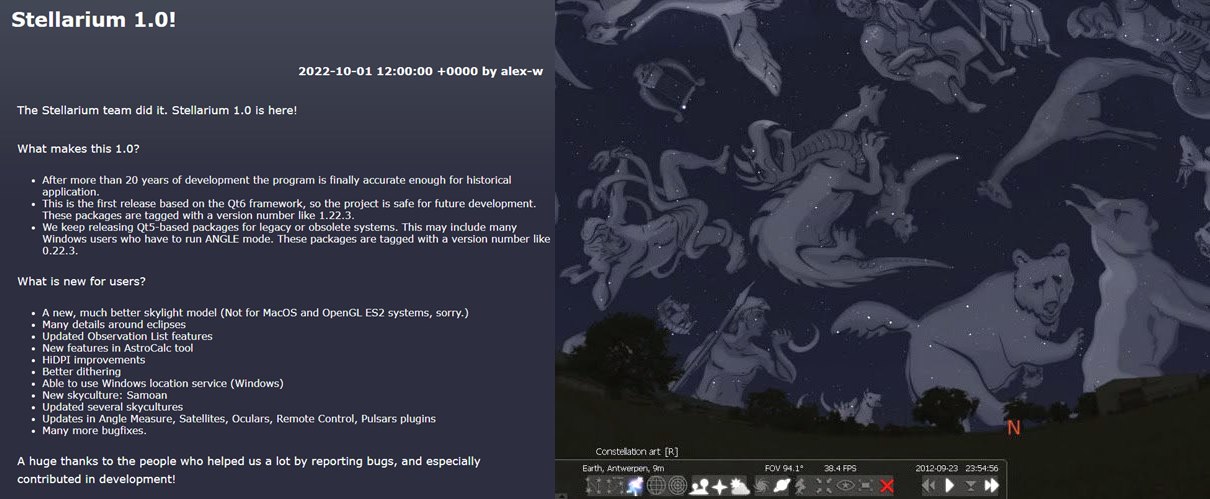
After many decades in beta, the excellent free Stellarium desktop software is finally in a stable version 1.0. Useful for casual astronomers and night-sky watchers, and its time-travel function also makes it useful for historical researchers and writers of historical fiction.

Slightly confusingly, 1.0 stable is officially 0.22.3 for Windows 7, and 1.22.3 for other lesser Windows OS’s.

A new Tom Shippey book and long podcast

News of a new Tom Shippey book, Beowulf and the North before the Vikings, from Amsterdam University Press. Here’s the blurb…

Ever since Tolkien’s famous lecture in 1936, it has been generally accepted that the poem Beowulf is a fantasy, and of no use as a witness to real history. This book challenges that view, and argues that the poem provides a plausible, detailed, and consistent vision of pre-Viking history which is most unlikely to have been the poet’s invention, and which has moreover received strong corroboration from archaeology in recent years. Using the poem as a starting point, historical, archaeological, and legendary sources are combined to form a picture of events in the North in the fifth and sixth centuries: at once a Dark and a Heroic Age, and the time of the formation of nations. Among other things, this helps answer two long-unasked questions: why did the Vikings come as such a shock? And what caused the previous 250 years of security from raiders from the sea?

It was slipped out in August 2022, when many were at the beach. The podcast History of Vikings has a late September podcast interview on the book, and appears to be the only interview. This has an .MP3 download and the excellent long interview starts at 3:10 minutes. Shippey states that he had large amounts of friendly help from Scandinavian archaeologists, eager to bring their little-read recent discoveries to a wider public. Judging from what’s said it seems to have been a very productive engagement, as discovery after discovery slotted into place in the broader framework that Shippey was able to provide.

Amazon notes of the book “New edition”. But I can find no earlier edition, and the podcast interview suggests this is a wholly new book. Shippey does mention that there was a big difficulty in getting copies into warehouses, so perhaps that’s what’s meant — perhaps the first run had to be pulped due to printing problems, and then a new one produced?


Also of note, elsewhere, the new “A Babel of Shadows: The Meaning and Function of Shadows in J.R.R. Tolkien’s The Lord of the Rings. A fine Masters dissertation, dated 2022, from a Dutch student. Written in English.

Staffordshire soup kitchens

A timely new PhD thesis, in part a study of post-medieval soup kitchens in Staffordshire including around five pages in total relating to the Potteries. Public and available for download.

Also reveals the origins of the well-known Soup Kitchen, in Stafford town centre…

Thomas Salt, a banker, founded Stafford’s soup kitchen as part of a ‘house of charity’ that provided lodging, clothing, and food to the poor, with an area to sit and eat. Salt’s son, Sir Thomas Salt MP, handed the institution over to a committee in 1865 which then ran the institution on a subscription basis [i.e. local people undertook a sort of early crowd-funding to sustain the service]. In 1868 it limited its ambition to soup. It opened all year unlike most other soup kitchens; its premises remain in use today as a restaurant called The Soup Kitchen.

I’m fairly sure it’s also still run by a charitable body.

On Tolkien’s poetry and art

I found what appears to be an offshoot of the January 2022 YouTube Tolkien Day lectures, which I discovered and noted here back in the summer. The offshoot video is an excellent short YouTube lecture on “The Poetry of J.R.R. Tolkien”.

Many good clear points are made in just 11 minutes, but the young speaker makes the especially pithy point that Tolkien — who must surely be the most read poet of the 20th century due to all the poetry and lyrics in his books — is…

“not even mentioned in any general account of 20th century English poetry, so far as I’m aware”

I recently found what appears to be a similar state of affairs in art history bibliography, judging by the massive new unified art history bibliography for 1910-2007. Just six hits for a simple search on “Tolkien”, and one of those spurious…

* Drawings by J.R.R. Tolkien (1976)

* Pictures by J.R.R. Tolkien (1979)

* The invented worlds of J.R.R. Tolkien : drawings and original manuscripts from the Marquette University Collection (44 page exhibition catalogue)

* J.R.R. Tolkien : artiste et illustrateur (1996, French)

* “Elements of myth in J.R.R. Tolkien’s Lord of the Rings and selected paintings of Paul Klee” (1980 microfilm dissertation, probably tangential)

* A collector’s guide to costume jewelry (spurious result, author is also named Tolkien)

… which seems odd. Because some of the many contributing mega-libraries must surely have at least one or two key pre-2007 Tolkien art books in their collections. Although, being charitable, I suppose such books may have proven so popular that they were either stolen, had the best pictures razored out, or simply fell to bits and were discarded.

Perhaps some kind soul could send the relevant publication data to the new openbibart.fr art history bibliography, in the hope that they might add the missing books and articles on Tolkien’s art? Alternatively, perhaps someone might make a comprehensive annotated bibliography on the art, fully up to date?

From Waterloo to Vindaloo

Not a bad local idea, and apparently backed with £2m of private money from a Cobridge businessman…

“the Burslem end of Waterloo Road” could become “Stoke-on-Trent’s very own ‘curry mile'” of curry houses.”

The Burslem end of the road is just down-a-bit from the town centre. Ideally you’d have Burslem town centre itself for such a thing. But I guess the business rates, car parking, and the Council’s retail use-zoning / liquor licensing / policing worries are all probably against such a notion. So far as I know Burslem is not about to become one of the new Investment Zones and sweep away such restrictions on trade.

So down on the Waterloo Road looks a good and probably cheap location. Perhaps the shop-fronts could also be nicely restored, so the road would not look like a wall of garish plastic tat. The adjacent olde church might even take in any spare food each night, and feed the homeless with it.

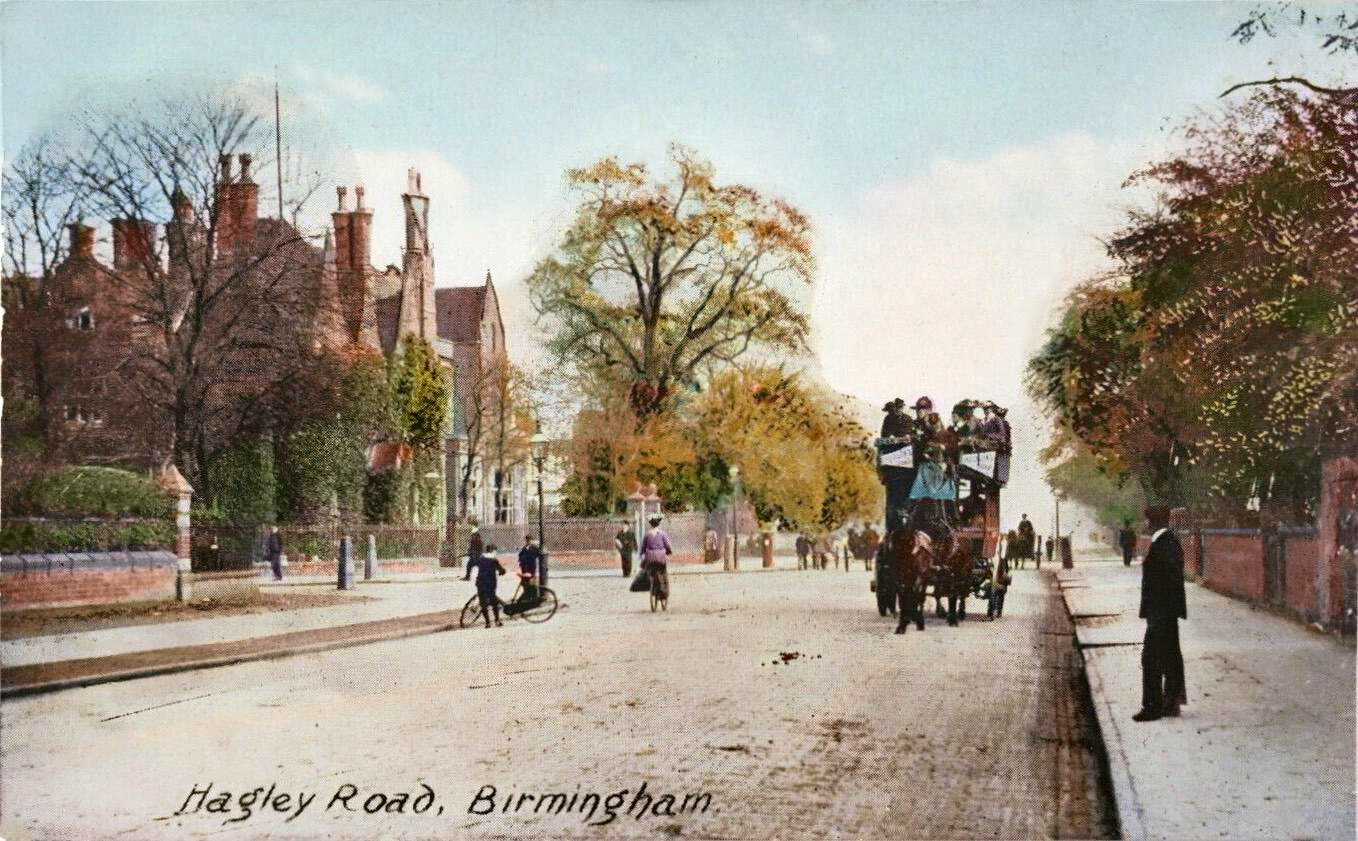
Old picture of this bit of the road, leading up to the town centre, circa the 1910s…