The Folk-lore of North Staffordshire, version 1.6 (2021)

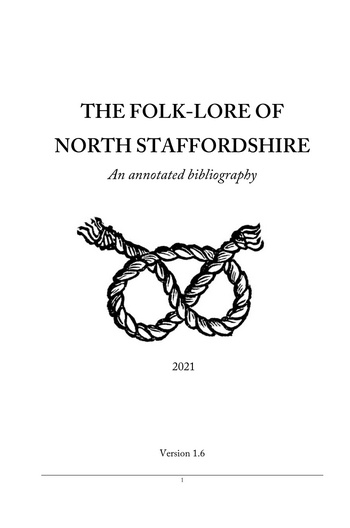
Here is a new edition of my free booklet The Folk-lore of North Staffordshire, an annotated bibliography. There are a number of newly discovered additions, some quite substantial, and a significant expansion of one item. All told, around seven extra pages are added and one new picture. Several of the new additions relate strongly to the wintry Sir Gawain landscape of the Moorlands, especially as I’ve now finally been able to see Sleigh’s book on Leek. As such the booklet now also forms a shelf-companion to my recent book on Sir Gawain and the Green Knight.

Download.

Please update any local copies you may be keeping. The previous revision was December 2020, when it was 24 pages. It’s now 32 pages and is again feasible to print as a booklet and slip between card covers.

A Moorlands astronomer

Addendum to Richard Sleigh’s A History of the Ancient Parish of Leek, in its 1862 edition:

“At Moorland House, Leek, on Christmas Day, 1888, died Mr. Abraham Kershaw Killmister, a gentleman of retired habits, and of manners indicative of nervousness. The world at large little suspected that in him was to be found an author of repute.

He was the well-known ‘Tom Oakleigh’ of literary sporting celebrity, author of the “Oakleigh Shooting Code”; of the article on Shooting in the “Encyclopaedia Britannica”; of the “Rod and the Gun” by Professor Wilson of Edinburgh, and ‘Tom Oakleigh’ of the “Dalesman”, a five-act play, and of various poems and literary articles, contributed to the “Mirror” and to the “Sportsman’s” and other magazines, principally between the years 1830 and 1845. In the “Mirror” and some other periodicals, he chiefly wrote under the signature of “Cymbeline.” For the article in the “Encyclopaedia” he received from the publishers Mess’rs. Black, one hundred guineas.

After his death a large unfinished work on Angling was found among his papers, and several manuscripts on astronomical subjects, astronomy having of late years occupied much of his attention (as he was indeed in all respects an humble seeker after truth); and he had at considerable expense erected an observatory and furnished it with a powerful refracting telescope, having an object glass, by Dollond, of near eight-inches diameter.

He often mentioned to me that his early sporting knowledge and tendencies had been much derived from the late Mr. Richard Sleigh, of Leek, a thorough sportsman of the old school, whole genial tales, and regular shooting and fishing habits, and favourite dogs, many here remember.”
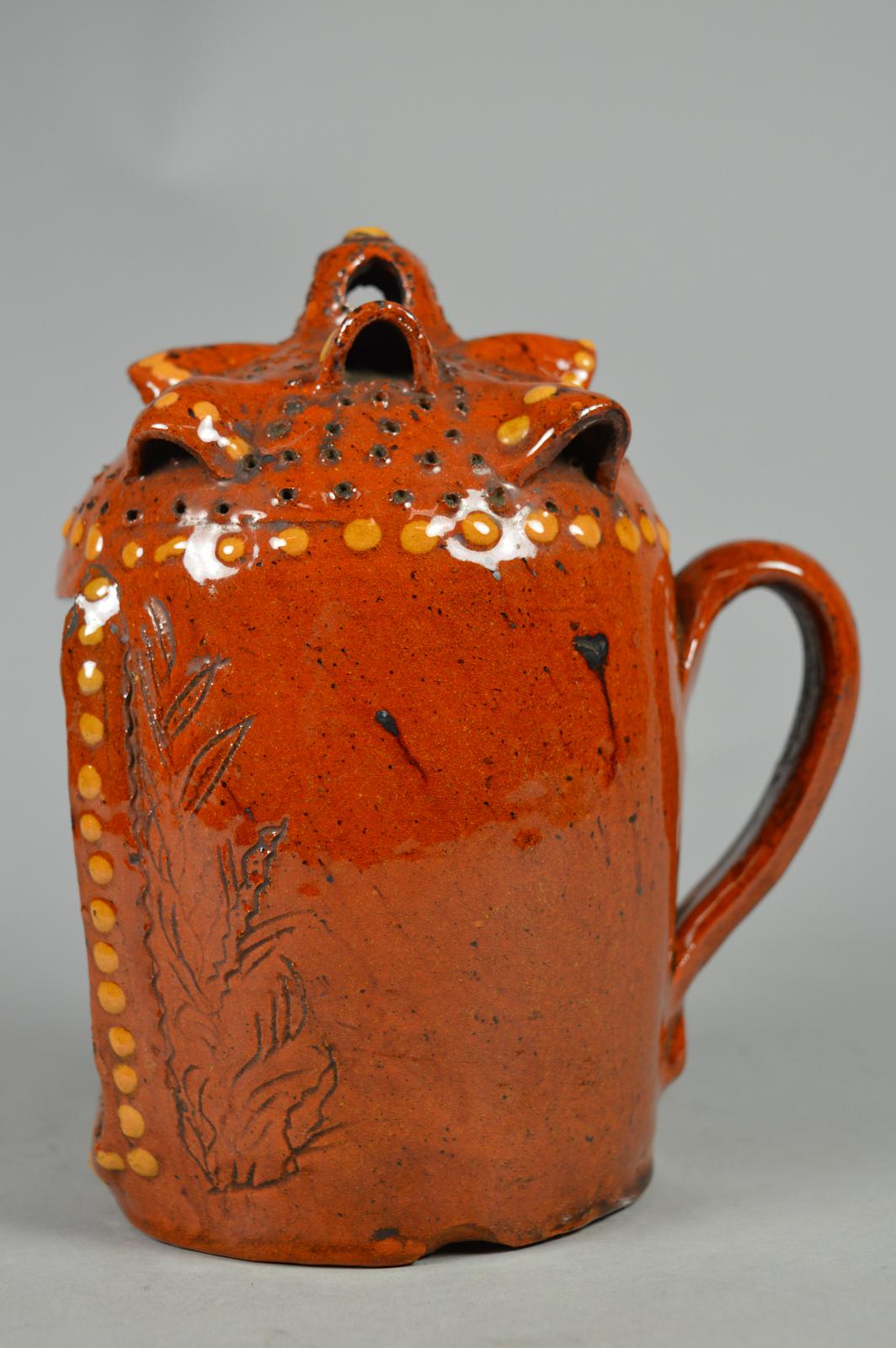
Staffordshire’s “newt”

The word newt came via Staffordshire…

“The Old English name of the animal was efte, efeta, resulting in the Middle English eft; this word was then transformed in some places to ewt(e). This form, pronounced “newt”, appears to have arisen in Staffordshire as a dialect variant of eft, and had entered Standard English by the Early Modern period.”

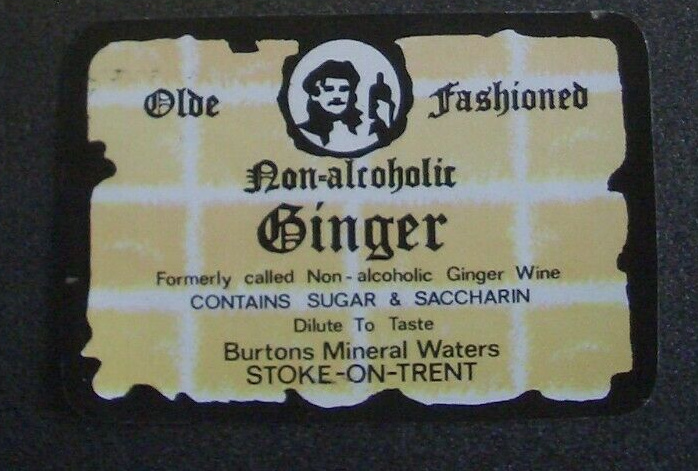
Burtons Mineral Waters

“Burtons Mineral Waters of Hanley”, Stoke-on-Trent. Local makers of Ginger Wine, and a maker who appears to be utterly unknown now except for this beermat on eBay and one mention in a trade magazine. I have a taste for ginger ale, so I’m interested to find a local connection. There seems to have been quite a trade at one time, in mineral and soda water making in the Potteries. But this appears to be a very late example, from the early 1970s given the mention of saccharin.

Assassin’s Creed: England and Ireland in 873 AD

I had assumed the new mega-game Assassin’s Creed: Valhalla was all icy fjords and spicy feasting. But it turns out most of it is set in the British Isles in 873 AD. The latest PC Magazine notes how…

Many environments look like recreations of The Lord of the Rings’ Shire, which itself was inspired by old England … where the bulk of the game occurs. … You can tell the development team spent many years researching the England of old. This is truly one of the finest worlds I’ve seen in a video game.

Nor do non-gamers have to wrestle with fiddly game mechanics and “pillage 10 villages to win a cow” grinding. Because the Assassin’s Creed games get special tourist versions. Eventually. You can already tour Ancient Greece, Egypt etc, from previous games, via a “Discovery Tour” version.

Will there be a Discovery Tour for Anglo-Saxon England? Yes. It was officially announced a month ago that Assassin’s Creed: Valhalla will get a Discovery Tour, along with addon-packs (‘DLC’) to add druids in a wild and apparently supernatural Ireland.

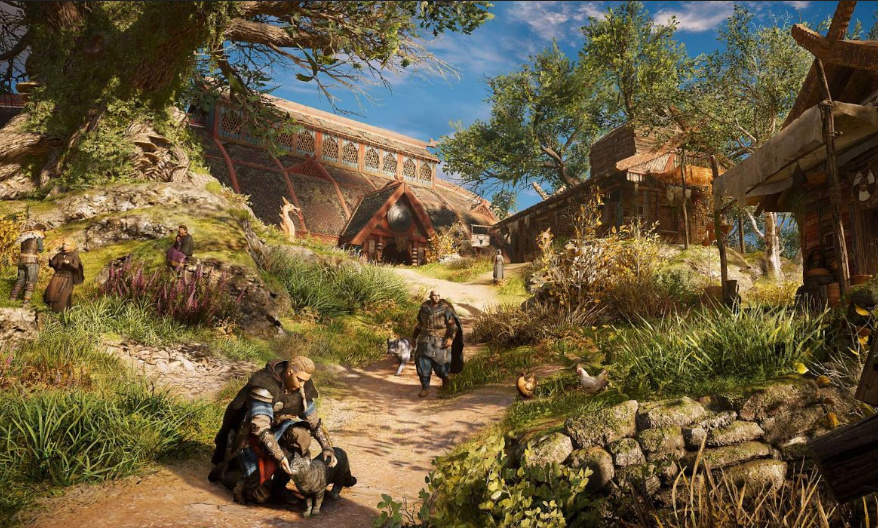
As for the Discovery Tour date, my guess based on the DLC timing would be summer 2021, so that it’s patched and ready for the back-to-school educational market in September. The game appears, from this screenshot, to include the cat-taming from the Ancient Egypt version of the game…

… but sadly it’s Windows 10 only. Also, the PC Magazine review concludes…

“To get the most out of Valhalla, you’ll need a near-godlike gaming PC.”