My Birmingham grandmother, who grew up in rural mid-Staffordshire, used a common Staffordshire and Shropshire phrase meaning ‘going all around-about on foot, in a long and tangled journey back to where you started’. This was “all around the Wrekin”. The same phrase was also used to refer to a person who verbally rambles, taking a long time to say something that could be said more directly.
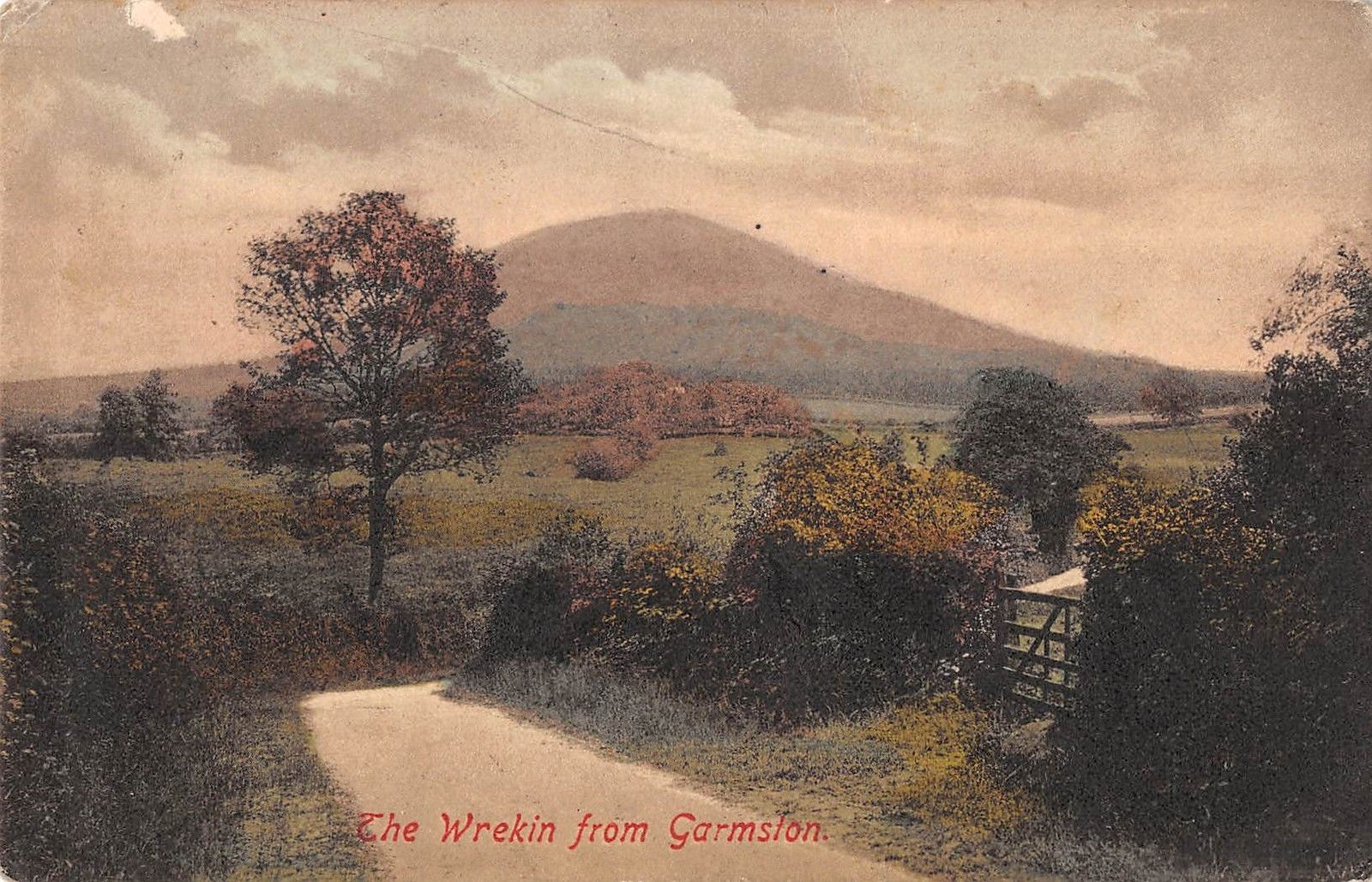
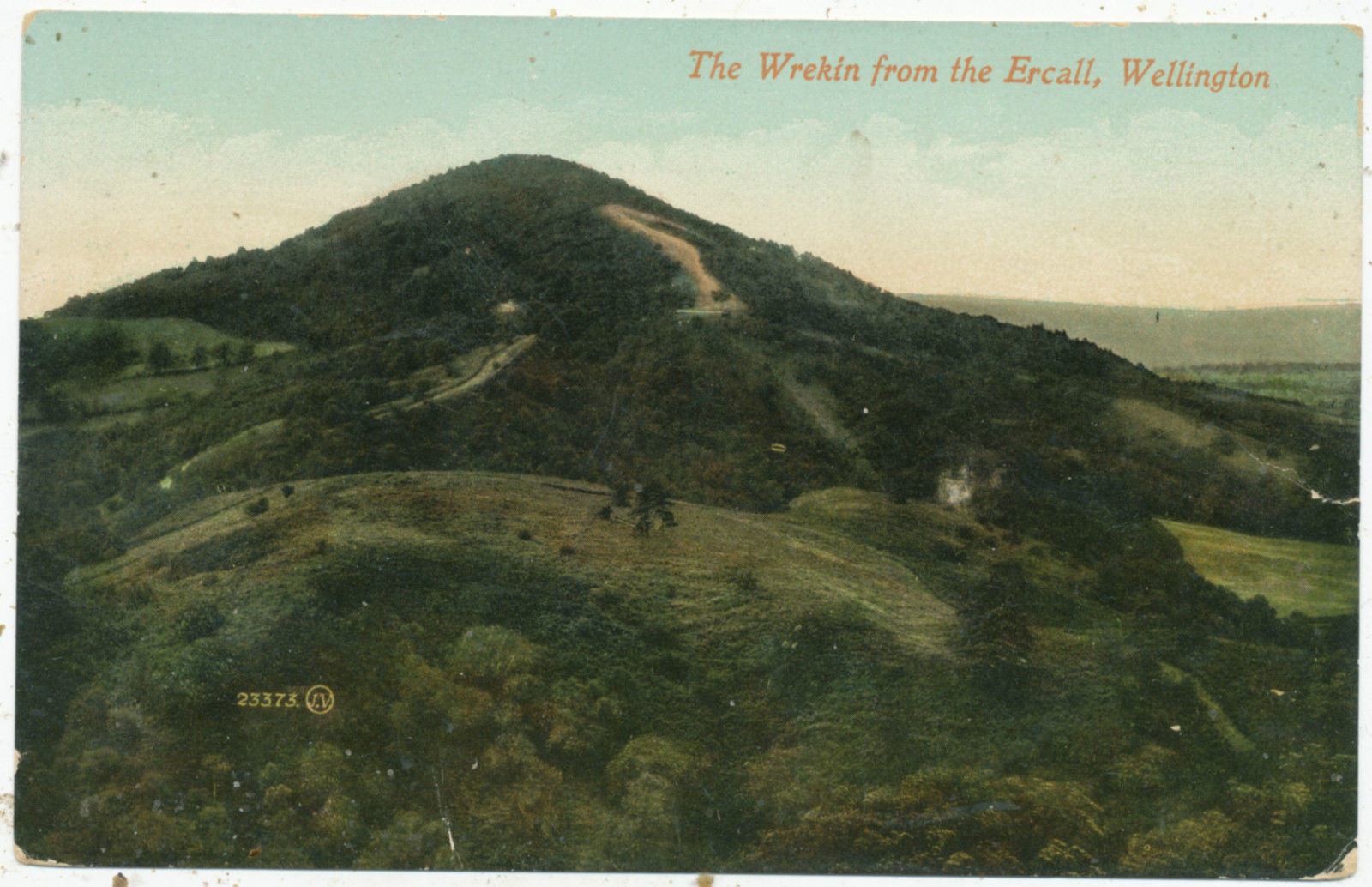
The Wrekin [ree-kin] in question is a famous and impressive hill-fort of the Cornovii in nearby Shropshire, on the Welsh Marches. Its size and location indicates it was their most significant tribal centre, although they were probably still somewhat seasonally nomadic in terms of having summer and winter palaces…
[Caesar] “had ample opportunities of observing the appearance of the country, and of learning much about the inhabitants … He considered the country very thickly inhabited, and the abundance of cattle to be deserving of notice. The buildings he saw resembled those of Gaul, and were very numerous, but according to him the British idea of a town or fortress was a place with a tangled wood [the mwthlach or mothlach] round it, and fortified with a rampart and ditch; inside this they would, as Strabo tells us, build their huts and collect their cattle, but not with a view of remaining there long.” (Sir John Rhys, Celtic Britain, page 53)
These are the words of J.R.R. Tolkien’s early inspiration on matters Celtic, Sir John Rhys. He published an essay on the Wrekin and its various linguistics in 1908, and this is now online: “All around the Wrekin”, Y Cymmrodor XXI, printed November 1908.
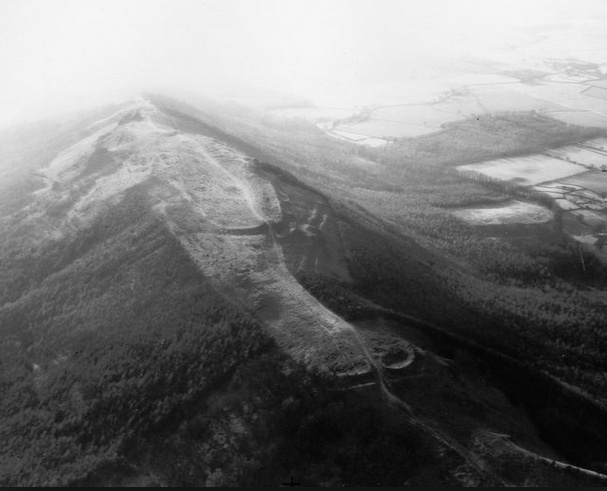
Tolkien was familiar with Rhys from a young age. He had read Rhys’s Celtic Britain (probably in the second edition of 1884) as a boy in Birmingham. Later he very likely sat in on Rhys’s series of lectures at Jesus College, Oxford, even though Tolkien was then at another Oxford college and the lectures were not required for his degree. There is, however, no evidence that I know of that the Wrekin was “the inspiration for Middle-earth” — a claim made in local Tourist Board piffle.
Rhys’s essay on the Wrekin mostly delves very deeply in the history and word-meanings, and is as digressive as its title suggests. But everyday readers may be interested to know that, buried deep among the dense philology, Rhys notes (page 11) a similar surviving phrase of the 1900s…
“a local toast in our day describes [the district] comprehensively as: “All friends round the Wrekin”.”
Rhys passes this swiftly by and he assumes the phrase was a conflation of the people of the district with the district itself. In effect a phrase meaning that: ‘all are friends who live around the Wrekin’, because from a common stock. But the use of the phrase in print, as a dedication for the book The Recruiting Officer (1706), seems to me to indicate that it then meant something slightly different: ‘too many friends to go all-around and mention each person by name’. In the era of heavy-drinking banquets, this would have been a convenient and welcome phrase for a toast-giver, getting him out of having to remember and recount a string of names while drunk. And risk mispronouncing or forgetting people’s names. This meaning is then congruent with the modern use of “all around the Wrekin” meaning someone who verbally rambles. In effect, at a banquet it would have been easily remembered shorthand for: ‘Here’s a toast to all my friends… but I won’t go all around the Wrekin, by trying to mention each of them by name’.
One might recall Bilbo’s party speech here, at the start of The Lord of the Rings, when he thanks the…
“”Bagginses and Boffins … Tooks and Brandybucks, and Grubbs, and Chubbs, and Burrowses, and Hornblowers, and Bolgers, Bracegirdles, Goodbodies, Brockhouses and Proudfoots …” Why couldn’t he stop talking and let them drink his health?”
The more casual reader of Rhys’s essay may also find useful his appendix, where in three pages he deftly summarises a long scholarly monograph on the name Wrekin: in Mercian the name was Wreocen, going back to a Celtic Wrikon-. Later authors (1949, 1963) have tentatively suggested a relation of Wrikon- to the Welsh gwrygio, meaning something like ‘to wax (grow, swell) strong and manly | to exert strength and thus thrive’.
[…] by Tolkien), but the meaning is broadly similar if on a much larger scale. Myrkviðr being a “dark boundary-forest” (Tolkien) which is “untracked” (Drout, J.R.R. Tolkien Encyclopedia, p. 430). […]
Update: I find that the “all around the Wrekin” phrase can also be used in casual conversation in Stoke-on-Trent. So it’s not purely a Birmingham area saying.