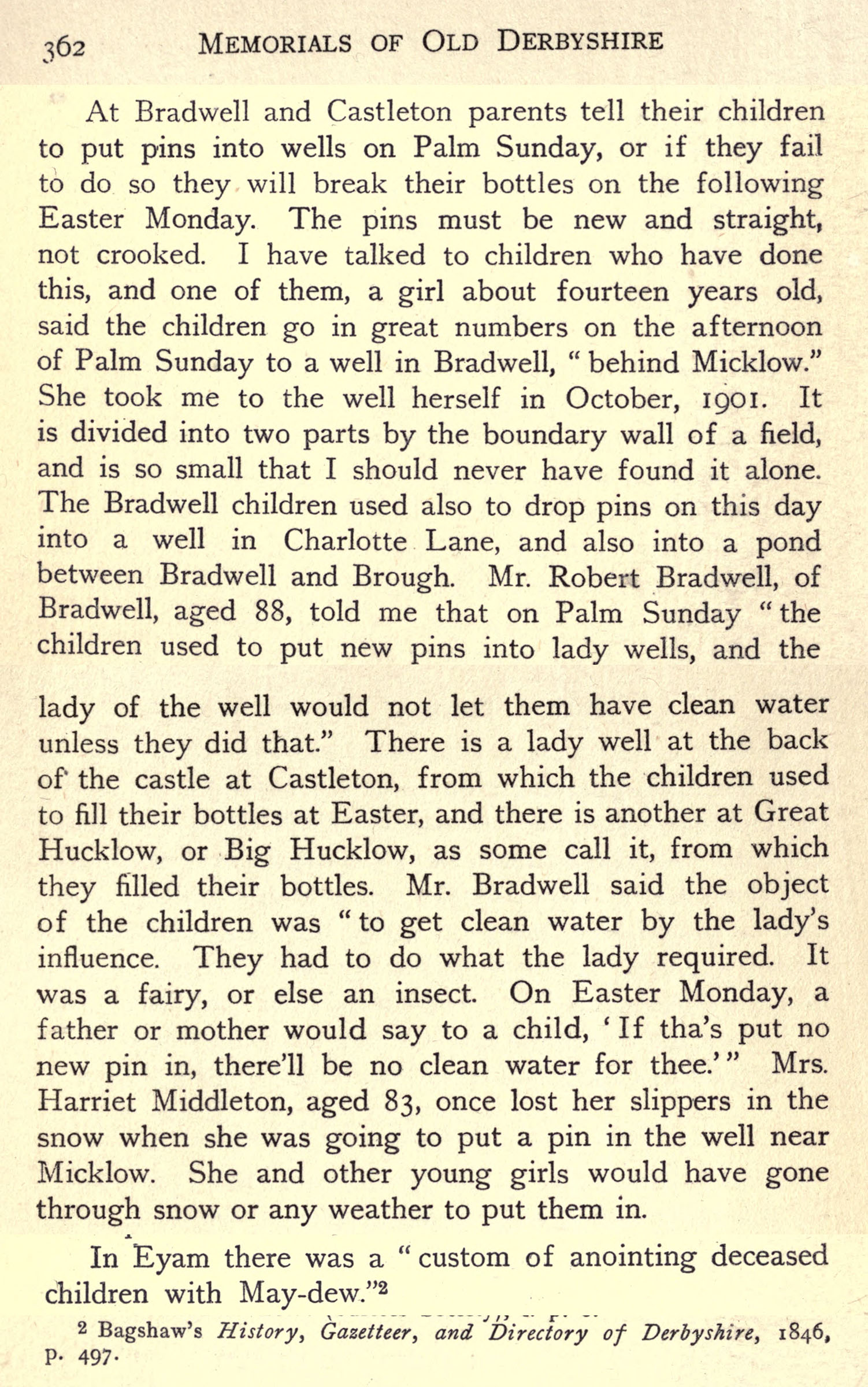
It appears there was once a living tradition of ‘Lady Wells’ in the High Peak, and of the dropping pins into them. This fits with the very extensive archaeology of votive objects thrown into dew-ponds and wells. Note there is also a comment on the nearby practice of anointing deceased children with May-dew. The Peak context suggests a time (early spring) for such votive offerings, and a reason (clean water there, for the coming year), and a female gender for the genius loci of such places.
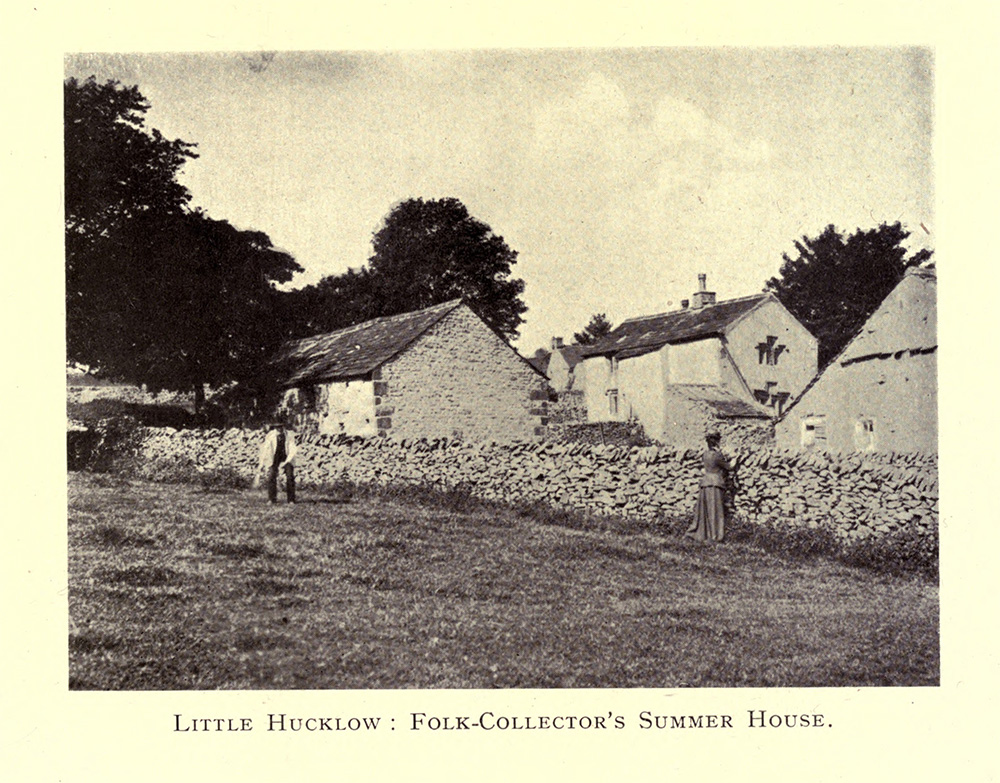
From Memorials of Old Derbyshire. The book also has a photo of the folklore collector’s summer house, presumably with the folk-lore collector visible.
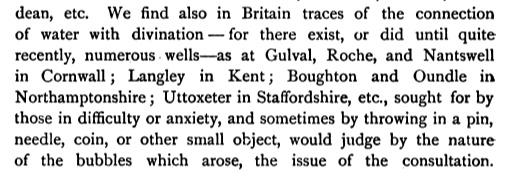
Another book, Lore of the Holy Wells of England, suggests a possible method of divination once associated with the pins…
It is easy to dismiss the curious reference to “or else an insect” as the chuntering of an ignorant country bumpkin. But perhaps it is we who are the ignorant ones. Since his reference may be explained as his recalling to mind the memorable words of the local poet and scientist Erasmus Darwin, given in his notes to his best-selling The Botanic Garden (1792, then much reprinted and pirated). Darwin explains aspects of the famous Portland Vase, as painstakingly copied locally by Wedgwood…
“The Psyche of the Egyptians was one of their most favourite emblems, and represented the soul, or a future life; it was originally no other than the aurelia, or butterfly, but in after times was represented by a lovely female child, with the beautiful wings of that insect. The aurelia, after its first stage as an eruca or caterpillar, lies for a season in a manner dead, and is enclosed in a sort of coffin: in this state of darkness it remains all the winter; but, at the return of spring, it bursts its bonds and comes out with new life, and in the most beautiful attire. The Egyptians thought this a very proper picture of the soul of man, and of the immortality to which it aspired.”
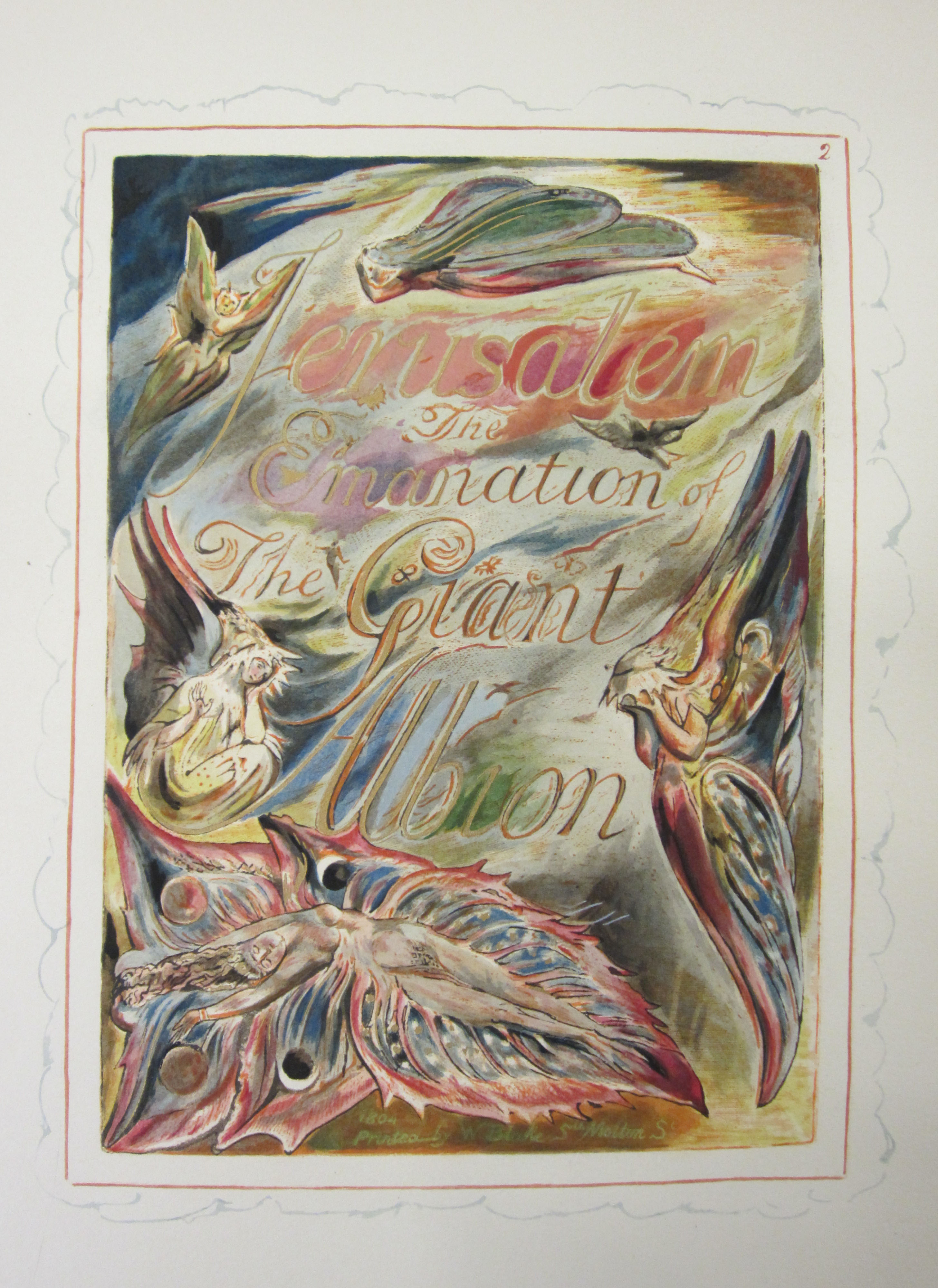
This striking recovery of historical imagery was also taken up by Blake, as seen on the title page of the famous “Jerusalem” (1804–1820). Such items are perhaps what an educated countryman, one interested in botanic poetry and Blake’s works, might have been musing on when he was recorded speculating “or else an insect”.
Darwin also mentions in the same passages that certain sacred trees such as elms were deemed to capture dreams as their leaves fell. Admittedly this was in the Ancient Roman context, and yet Rome also strongly affected much of northern Europe. This belief is quite congruent with the biology of our temperate woodland where…
“Most butterflies are less specialised, but still have quite precise requirements regarding habitats, larval foodplants, adult food sources and climate. A typical example is the White-letter Hairstreak, a butterfly of temperate deciduous woodlands, which exists in very localised colonies, often based on a single elm tree. The butterfly lays its eggs on elm twigs, and the caterpillars hatch a few days after the flowers appear on the tree in early spring. When tiny they feed within the flowers, but when the flowers have withered and died they feed openly on the elm leaves. The adult butterflies emerge in mid-summer and spend most of their lives at the top of the trees, but occasionally descend to feed on the nectar of thistles and other flowers.” (Adrian Hoskins / learnaboutbutterflies.com) (my emphasis)
One can thus quite imagine an ancient people venerating such a singular “butterfly tree” in various ways, especially if it was surrounded by food plants and a water spring that would tempt the butterflies down from the treetop. Perhaps they would even have imagined some connection between the elm leaves, the butterflies, and the dreams of their departed children.