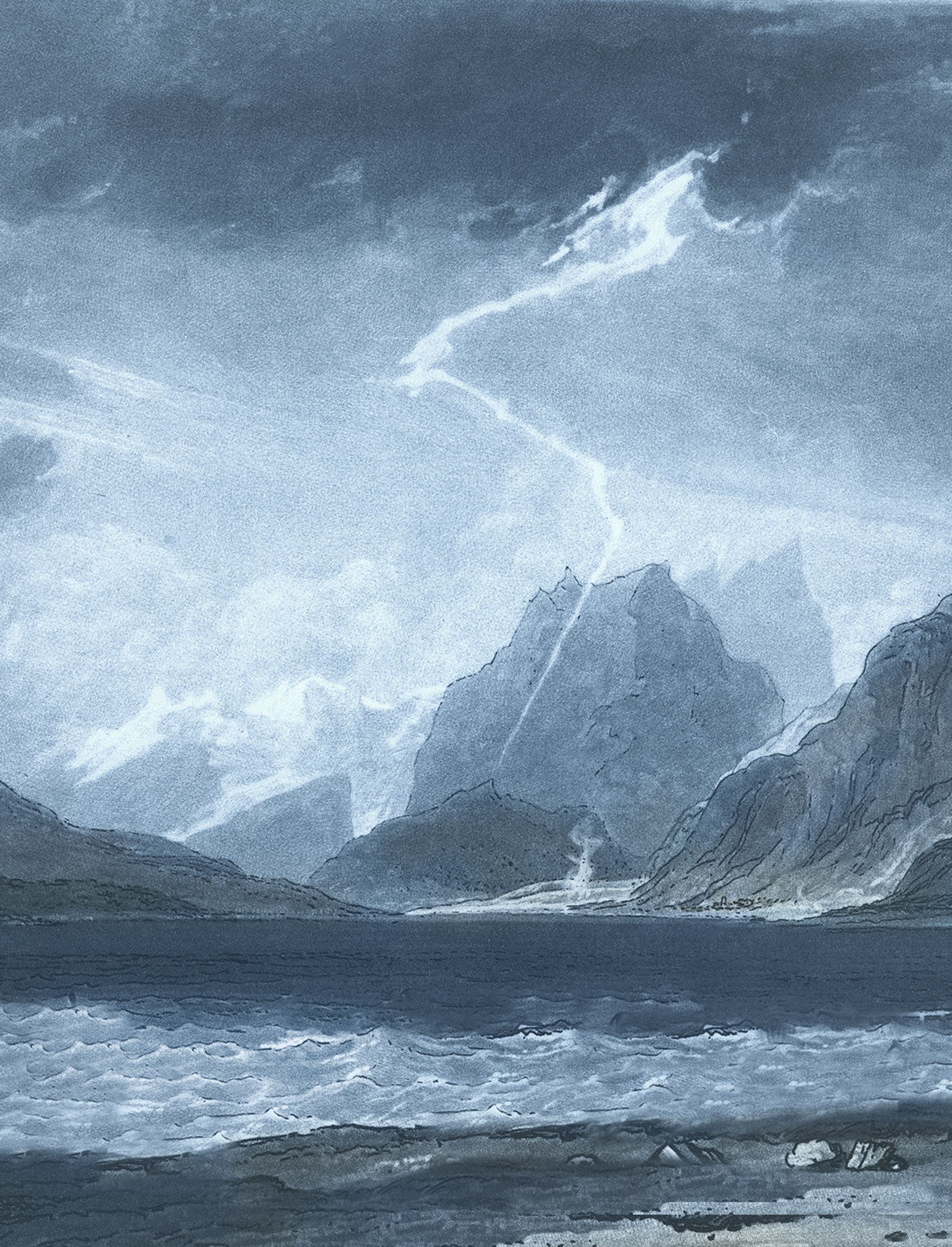
A detail of Turner’s engraving “Lake of Thun”, Photoshopped to remove figures and re-colour etc, and thus turned into a potential book cover for a book on thunderous Northern topics. Feel free to use, I’m placing this version under Public Domain. Original at embedded link.
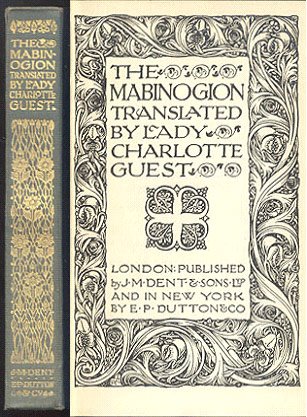
In Our Time: The Mabinogion
Melvyn Bragg’s In Our Time: The Mabinogion, coming Thursday 10th May 2018.
Gardening in ‘hell’
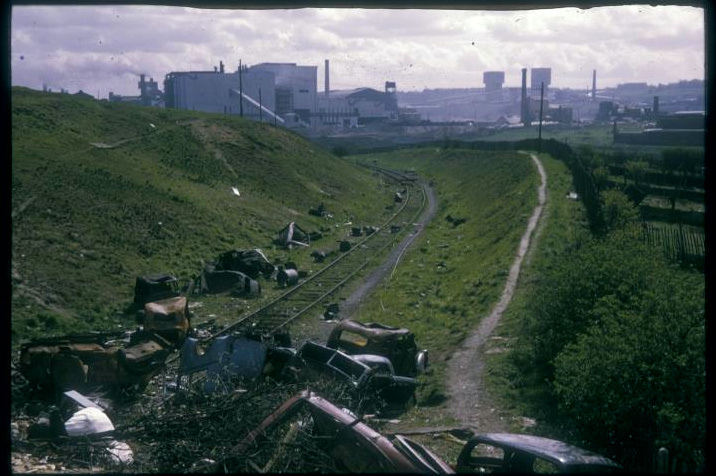
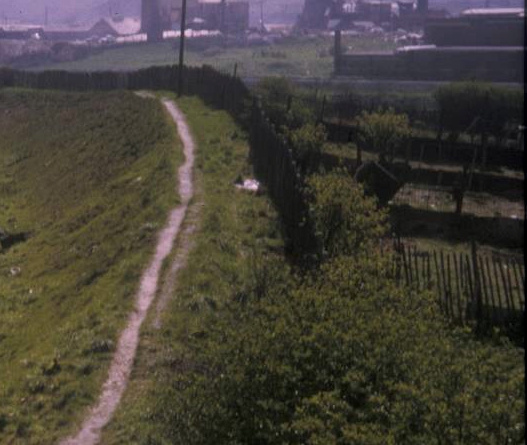
New on PastTrack: May 1964 on The Grange, Burslem, looking toward part of Shelton Bar.
What’s remarkable is the three strip-gardens seen on the right, possibly the top grassy bit of allotments, with what might even be small fruit trees. One of the most industrial and polluted sites in western Europe, and there are gardens in it that wouldn’t look out of place in a rural medieval monastery.
It’s another example that illustrates the way that the rural and the industrial co-existed in Stoke-on-Trent.
‘Corny
From slab to tablet
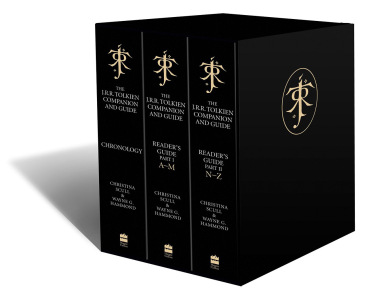
New Addenda and Corrigenda for the “now so big, it’s square-shaped!” new edition of the J.R.R. Tolkien Companion and Guide.
If your letter box and/or wrists can’t quite cope with such hefty slabs, I see there are now Kindle ebook tablet editions of the 2017 edition. Although these don’t show up as links from Amazon’s hardback/boxed-set page. Here are the links to the ebooks:
* Volume 1: Chronology (£24)
* Volume 2: Reader’s Guide – PART 1 (£5)
* Volume 3: Reader’s Guide – PART 2 (£24)
So £53 for the lot. Not bad, and on the Kindle these are also keyword-searchable to boot (albeit individually, rather than all three at once — I know of no tool that will index across multiple .mobi files, even they were to be DRM free).
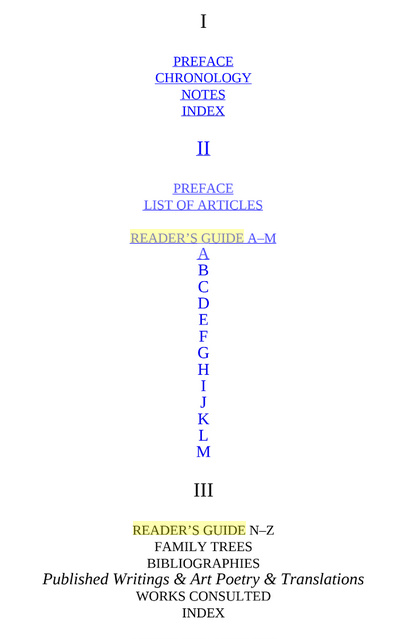
What is the difference between Reader’s Guide – PART 1 and PART 2? The publisher’s description is useless on that point. But thankfully there’s a view of the Contents page on Google Books:
Apparently the Index in Vol. 1 and Vol. 3 are both duplicates of each other, and presumably they refer to the pages of the print version.
Bombadil as guardian-spirit for LoTR
Ah, Bombadil. Whatever else he may be, he’s an excellent ‘door-guard’ guardian-spirit for The Lord of the Rings, preventing unworthy readers from entering the rest of the book — the readers who just can’t get their dull heads past the idea of what they see as merely a ‘jolly annoying singing garden-gnome, with a fish for a wife’. For the more perceptive reader, he more or less works the opposite way, as an enticing enigma and riddle. Partly shaped by Tolkien’s memories of his father-figure guardian Father Francis, obviously, and a dash of St. Francis… but far more than that and an enduring riddle for most.
Palmer’s shipwreck
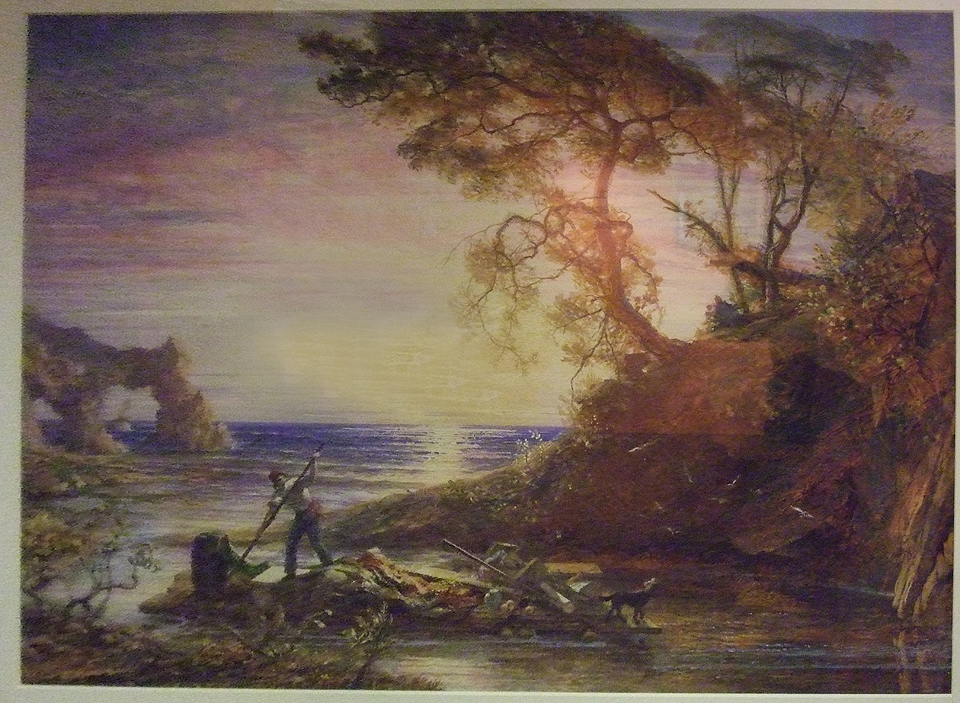
Interesting. The Samuel Palmer painting “Robinson Crusoe …”, owned by and occasionally on display in the city museum at Stoke-on-Trent, is (like its subject-matter) a survivor of what was once a large and now-lost part of Palmer’s work…
“Samuel Palmer is not usually thought of as a painter of the sea. However, his son A.H. Palmer included five coastal scenes amongst the 22 illustrations of his Life and Letters, and described one work, ‘Storm and Wreck on the North Coast of Cornwall’, as ‘one of the best of [his] sketches from nature’. The coast features in a number of the elaborate exhibition watercolours of the mid-century, such as ‘Robinson Crusoe guiding his Raft into the Creek’ (1850, City Museum and Art Gallery, Stoke on Trent) and ‘Farewell to Calypso’ (1848—49, Whitworth Art Gallery, University of Manchester). In addition to these, exhibition records show that in the 1850s and 1860s Palmer exhibited a considerable number of paintings which focus on the contemporary life of the British coast [mostly Cornwall and Devon]. In many cases we know these works only from their titles, because they sold very well, and disappeared into private collections straight after the exhibitions. Palmer evidently shared the preoccupations of other artists of the time: he made detailed studies of wave movements, and explored narrative subjects drawing on the life of the British fisherfolk, with all its anxieties and dangers. These works are from the middle period of Palmer’s life, which has been unduly neglected by art historians. The standard account of Palmer focuses on the visionary Shoreham years, which came to an end in the early 1830s, and the ‘vision recaptured’ in the Milton and Virgil illustrations of his last years, starting in 1865.”
— from Christiana Payne, “”Dreaming of the marriage of the land and sea”: Samuel Palmer and the coast” in Samuel Palmer Revisited, 2010.
I never knew that, despite having several books on Palmer on my shelves.
Stoke’s “Robinson Crusoe …” is not especially inspiring at first glance. I remember a girl I was looking at it with in the Museum, some years ago… she could obviously see nothing in it. ‘Just another example of pretty-pretty patriarchal/imperialist art’, seemed to be her implied political stance. But there are multiple resonances to be seen in it, for those who can discern the deeper cultural and literary contexts.
I see that the Ashmolean also has a fine Palmer painting of the Arthurian site of Tintagel in Cornwall. Since much of his sea work still seems to be in the Midlands/North West, I wonder if his surviving sea works might be brought together to make the nucleus of a cheery summer exhibition circa 2020, at the Potteries Museum & Art Gallery. Accompanied and bulked out by similar British sea paintings featuring or alluding to myth and legend?
There might also be a side-room that explains the spiritual concerns of the Staffordshire Hoard makers with the sea, and the symbolic resonances they gave it in their art and poetry. Perhaps paired with the other great English sea-poetry written written in North Staffordshire, later, by the Gawain-poet in poems such as Patience and Purity. That would link through to Tolkien (a Gawain-poet expert), who had formative experiences in Staffordshire while he was nurturing the foundational centre of his legendarium – the mythic mariner Earendel.
Perhaps such an exhibition could be co-organised with some large gallery in Cornwall, to share the costs.
“On J.R.R. Tolkien’s Roots in Gdansk” – now online
Newly online:
* Ryszard Derdzinski (Juliusz Zebrowski trans.), “On J.R.R. Tolkien’s Roots in Gdansk“, November 2017, PDF online March 2018.
Tolkien knew about the Polish line in his family tree, since he mentioned it in a major speech in 1955…
“I am not a German, though my surname is German … I have inherited with my surname nothing that originally belonged to it in language or culture, and after 200 years the ‘blood’ of Saxony and Poland is probably a negligible physical ingredient” — Tolkien in English and Welsh (1955).
The Saxony bit seems dubious now but is explained by a family tradition, as explained by Carpenter in the 1977 biography…
“Opinion differed among the Tolkiens as to why and when their ancestors had come to England. The more prosaic said it was in 1756 to escape the Prussian invasion of Saxony, where they had lands.”
A 1938 letter by Tolkien (Letters, No. 30) states…
“My great-great-grandfather came to England in the eighteenth century from Germany.”
But according to the new article the paternal line can be traced back to many generations in “Kreuzburg, East Prussia” (aka Kreuzberg, now Slavskoye, Russia). Then in the nearby port city of Gdansk (which “was then Lithuanian”), from where they took ship to London as Lutheran emigres skilled in the furrier trade.
Map: Königsberg is marked with red and Kreuzburg was about 20 miles east of it, about under the “erg” bit of its name label.
According to various historical maps of the tribal migrations, and current thinking on the origins, Kreuzburg was ‘ground zero’ for the bulk of the Gothic tribes. Which at first glance may seem to explain Tolkien’s early interest in them. Either that, or the Polish dimension to his family tree later (circa 1939-55?) came as a wonderful surprise to him — that the Goths who had fascinated him since boyhood emerged into history from exactly the place where his father’s family had originated.
On the other hand, perhaps the surprise of Poland wasn’t found to be very wonderful. Or maybe he never really knew much about or trusted the Poland connection that he evidently knew about in the 1950s. Because he firmly rebuts a late claim that his ‘Saxony’ surname actually originated from Poland…
Letters, No. 349. From a letter to Mrs E. R. Ehrardt, 8th March 1973:
I do not understand why you should wish to associate my name with TOLK, [meaning] an interpreter or spokesman. This is a word of Slavonic origin that became adopted in Lithuanian (TULKAS), Finnish (TULKKI) and in the Scand. langs., and eventually right across N. Germany (linguistically Low German) and finally into Dutch (TOLK). It was never adopted in English.
Thus his boyhood interest in the Goths was not spurred by knowing early on that his paternal family-tree went back to Kreuzburg. This is confirmed by his 1955 letter to Auden stating that his discovery of both Gothic and Finnish were accidents which happened while he was browsing through books out of sheer curiosity…
“I learned Anglo-Saxon at school [in Birmingham] (also Gothic, but that was an accident quite unconnected with the curriculum … Most important, perhaps, after Gothic was the discovery in Exeter College library, when I was supposed to be reading for Honour Mods, of a Finnish Grammar. It was like discovering a complete wine-cellar filled with bottles of an amazing wine of a kind and flavour never tasted before. … [the fascination with it proved] nearly disastrously as I came very near having my exhibition [i.e. course funding] taken off me if not being sent down [i.e. expelled]. Say 1912 to 1913 [for the first interest in Finnish].” — Letters, No. 163.
The Gothic book had been purchased in error by a Birmingham schoolmate who thought it might help him with his Bible studies, circa 1908-09. It didn’t help, and thus Tolkien — realising what it was — took the book off his hands for a modest sum. One imagines that the first word the tree-loving Tolkien looked up in it was “Tree”. He would have found that in Gothic this was bagyms, and that “the Germanic congates vary in their final syllable”. Old Swedish having Bagyn. Baggins, if you like.
Further reading: “The Realms in Exile: A Historical Origin?”, Amon Hen #204. Discusses the fate of the English exiles after the Norman conquest, who sailed a fleet to Byzantium and established a large and long-standing English colony on the northern shores of the Black Sea. Tolkien would have known of this via the Icelandic Edwardssage (aka Edward’s Saga, or Játvarðarsaga). Not discussed, but looking possible to me, is that after the fall or decay of this colony circa the 14th Century exiles from it may have travelled north to Kiev along the river, and from there to Kreuzburg hoping to take ship back to England. If they only made it that far, and settled there… then the Tolkiens might even have come, in a roundabout way, from English Anglo-Saxon stock.
Wyrm-tongues
The sounds of Lindisfarne
Chris Watson, In St Cuthbert’s Time (2013), a four-track album of mixed field-recordings that’s now free on YouTube. It can also be purchased as a high-quality FLAC download or had via Amazon Music for £7.
“The Sounds of Lindisfarne and St. Cuthbert. To celebrate the exhibition of the Lindisfarne Gospels at Durham Cathedral, award–winning wildlife sound recordist Chris Watson has researched and recreated the sonic environment of the Holy Island as it might have been experienced by St. Cuthbert (c. 634 – 687 A.D.).”
Bede’s Life of St. Cuthbert is also a fascinating insight into life in a wild Britain that was still only nominally Christian, and in which the peasants would still openly jeer at the misfortunes of the monks and curse them for taking away the old pagan ways of their ancestors. In fact, it’s quite a page-turner in its pre-PC 1955 Penguin translation (not the best, apparently, but the most readable). Who knew Bede could be fun to read?
On The Butts, Baggins, and Butterflies
Recently this blog had an article which found one of J.R.R. Tolkien’s First World War camps, at “The Butts” near Newcastle-under-Lyme. The name “The Butts” is interesting. It has long been the traditional English name for an outdoor shooting-range. But where does it come from?
My first thought on the meaning was that butt probably firstly relates to a root of -but — meaning ‘swollen’, ’rounded’, and thus is related to some Old English words for bulging things: baelg (bulge); beorg (a round tumulus), belg (a bag). Thus it would likely fit in a category of words referring to the shape of the bulging mounds and ridges, formed in the earth in order to stop stray bullets and make a safe shooting range. Presumably related words here would be butte, a word apparently of unknown origin, being a ‘natural steep-sided knoll’ isolated in the landscape, and the equally debatable Old English buttuc which was perhaps an agricultural term meaning very short mounded ridges found at the sides of fields.
But the name The Butts was used long before bullets, as it was in use long ago for a field with archery targets. Archers would appear to have no need of mounded earth banks for safety, to stop stray bullets. Yet it seems they did have large mounds on their target ranges, presumably to provide a backstop which would stop mis-shot arrows from overshooting and thus being lost. The book Fieldwork in medieval archaeology (1974) explains…
“The two oval mounds respected by the adjacent ridge and furrow [old ploughing furrows] at Wold Newton in the East Riding of Yorkshire would be quite impossible to interpret by either fieldwork or indeed excavation without knowing that they are called ‘The Butts’ and are recorded in 1299 as archery butts.”
Thus names for turfed ‘backstop’ mounds of earth cannot be ruled out as sources for the name “The Butts”.
I read that in the Northern European languages there were several ancient forms with a ‘lump’ meaning: “ON butr, NNo butt, Sw but, LG butt, all meaning ‘lump’ or ‘trunk'” of wood (Lund Studies in English, 1965). Here we appear to feel our way back to some original Northern meaning that must feed into “The Butts”. All these forms have the meaning of a fat and cut-off lump of wood, possibly the left-over ‘fag end’ that is unwanted. A tubular cigarette butt still has a similar meaning today. In Shakespeare’s time there were similar military terms to do with wood, such as the butt-end (the rough and dirty blunt end) of a soldier’s pike. And the word butt-shaft, for the blunt fat-ended practice arrows which archaeologists say were sometimes used in butt shooting by inexperienced archers. These military words presumably later gave rise to the butt being the name for the lower part of the wooden stock in an early-modern musket, which had a happy similarity (when in use against an enemy) to the violent butt action of a ram’s horns. Thus the name also became congruent with the meaning to butt, as in ‘to strike sharply with the head or horns’, and of course arrows and bullets fired into practice-targets have much the same striking action.
However, in the context of written evidence for early medieval archery ranges, butts appears to have been the name of the targets themselves rather than the arrows. Presumably then, the rows of archery targets were originally made of butts — meaning rough ‘thick wooden stumps’, rather than the flimsier type of targets we use today. I would suggest that these otherwise-useless lumps of wood were later replaced, due to the advent of lighter forms of archery, by old wooden ‘butts’ — these being fat empty barrels. This ‘barrel’ meaning of butt comes from the Old English ”bytt” (meaning firstly a bag made of skin, then a stiff ‘leather wine bottle’, later a ‘large wooden wine barrel’), all of which are containers of a kind. We still talk of a garden water butt barrel today. Such barrel butts, raised on a crux and placed end-on toward the archer, would have a target painted on their large round base-board, and the hollowness of the barrel would presumably make a most satisfying sound when struck by an arrow. There would thus be no need to go to the trouble of making targets by hauling in heavy lumps and tree-stumps, because the old worn-out barrels could be easily rolled in and they made a perfect ready-made substitute for the older form of targets.
Tom Shippey has suggested in Tolkien and the Study of His Sources (p.11) that the root of the end-part of the word hobbit may be in the Old English botl (‘a dwelling’, later bottles and in northern English butters). As we have seen above, the words related to this term all imply that the dwelling would have a tubular bottle or barrel shape to it. Such implications may have evoked in Tolkien’s mind the idea that his newly invented hobbit lived not in humdrum houses, but rather in short barrel-like ‘holes’ with blunt backstops at their far end. This would be congruent with the idea that, in the very early periods, people tended to live where possible in ‘rock houses’ that were carved back into soft sandstone outcrops or similar back-stops in the landscape. Such places could be made very comfortable.
Shippey further notes that Tolkien’s “Bag End” (the name of Bilbo’s home) can be shown to be similar in meaning to the modern made-up confabulation of cul-de-sac, meaning a short dead-end. I would add that Bilbo’s hole was at the end of “Bagshot Row”, a ‘-shot’ name which seems on the surface to imply the shooting of arrows. It would thus be interesting to know if Tolkien saw a historical connection between the Old English bytt (wine bag) and butt (a shooting target). The name of “Bagshot” seems to imply that he might have. The use of an inflated head-sized goat-skin wine-bag as a target would certainly give instant feedback if it was hit by an arrow from a great distance, by popping and deflating.
However, we know that Tolkien took the Bag End name from a real place. His aunt’s farm in the village of Dormston, Worcestershire, which was purchased 1922… “at the end of an untidy lane that led nowhere else” (Tolkien). But the name appears to have been something of a family joke, only somewhat justified by an old map and probably understood as an animal name by his aunt. The gloomy-sounding Dormston Manor Farm thus gained a more cheery and amusing name, much in the same way as she renamed her other farm as Phoenix Farm. The assumption at that time was that Bag = badger, and many would still like to give this nice furry badger meaning to English placenames such as Bagshot. But it appears it is a relatively modern neo-romantism, elevated into a ‘fact’ from an incredibly tentative academic speculation (made due to no evidence), and which now gets idly parroted from book to book. The placename authority Ekwall suggests that the obscure Old English personal name word bacga is actually the source, for which there is no trace whatsoever of it being used to mean a badger. Ekwall states that ‘shot’ was from sceat (a ‘stretch of untilled land, scrubland’). But the other great authority, Skeat, suggests that the placename Bagshot was simply from the Old English basc (‘the back’), and that shot is from sceat (‘a scrubby corner or field-nook, or angle’) — implying inconveniently-shaped. We thus seem to be back with the meaning of ‘the back-end’, which is very congruent with the meaning of butt as a ‘cut-off chunk’ of wood, an unwanted or left-over ‘fag end’ bit.
Probably Tolkien saw a link between bacga and the Old Norse personal name Baggi (‘sack, bag’), hence the name Baggins. But had he looked up “Tree” in his Gothic grammar he would have found that in Gothic this was bagyms, and that “the Germanic cognates vary in their final syllable” — Old Swedish having Bagyn. The Gothic bagyms was probably related to Old English beam (of wood). He would have been alerted to a curious cluster formed around a wooden beam / the bag / the goat — because in old Swedish bagge meant ‘ram’, as in the animal. Which is of course related to the word butt and battering (meaning, ‘many butts‘), which is what a ram does with its horns.
Of course, at one time most people would make bags from goat-skins. But I wonder if the practice of ‘bagging’ an aggressively butting ram also has something to do with this curious link between bags and rams? Aggressive rams can be very dangerous, liable to attack not only other unfamiliar rams but also to knock over horses and oxen and even people by violently butting them. These valuable but awkward creatures are thus ‘bagged’, with a bag secured over their head, and are placed away on their own in a back-end bit of scrubland where no-one will bother them. Such aggressive male goats might have been especially liable to become the ‘scape-goat, both in terms of their escaping and in terms of their being chosen to be a ritual sacrifice that it was believed would remove the problems of a community.
Bilbo is similarly seen in Hobbiton as a bit of an awkward type, something of a scapegoat for local grumbling, and best left on his own at the back-of-beyond on a no-through road where no-one ventures.
Such back-end bits of scrubland would also be ideal places to establish “The Butts”, were an archery training range to be required in the district. But a clearer and older connection between goats and bags arises from an apparently unrelated investigation. Specifically a connection between butt as the possible origin of the otherwise mysterious meaning of the word butterfly. The Old English for moth was niht-buttorfleóge [“niht-buttorfleóge. an; f. An insect that flies at night” (Bosworth-Toller)] and we then have to assume that buttorfleóge was also used for the daytime form (though there appears to be no evidence of this). Consider now the meaning of butt as ‘to strike sharply, to ram into’, as in the actions of a billy-goat. Used in the phrase battering ram, this refers to multiple butts from the ram. Butterflies will similarly “butt” multiple times into people as if they have no perception the person is there or may be a danger to them, and similarly moths will continually “butt” into lights and lamps as they spin around them at dusk. Note that, like rams, butterflies could also he understood to possess horns in the form of their antennae. Their tongues also curl up in a shape very like the horn of a ram. Tolkien evokes this blundering of large flying insects in his very early children’s poem “Goblin Feet” (1915):
The air is full of wings,
And of blundery beetle-things.
This understanding of butterfly can then also inform the origin of the word butter. Given the evidence presented above, the name butter must come from the method of its making: this being multiple butts, sharp strikes made in the creamed milk with a blunt wooden paddle (a butt off-cut of wood?), which after an hour or so produces the butter. In prehistory the butter would have been made and then stored in a goat-skin bag or bytt, rather than the later wooden ‘dash churn’ (a tall barrel-like churn design which dates back several thousands years and, despite being rather inefficient, cut butter-making time in half and produced more butter at one go than the goat-skin bags could). Here again we see the association of goats and butting, and in Saxon times the milk that most people used was probably from goats. Possibly an ancient people saw some symbolic connection in the process: a hard male principle (butting, a male action) applied to the soft feminine principle of the creamy milk (from female animals), producing new hybrid hard-soft substances such as butter and life-sustaining cheese. In a northern climate, easily storable cheese was especially important as a back-stop food in the hard winters.
Thus we can see how the ancient prehistoric name for the butter-making bag was later used for wine-bags, and when barrels appeared the same name was used for wooden wine butts (Shakespeare, The Tempest: “a butt of sack” meaning ‘a container of wine’). It is commonly assumed that the name of the Buttery (a cellar for food storage) takes its name from its late medieval use for wine barrels. But in its earlier form ‘the Buttery’ was that part of the underground food cellars in a monastery which doled out free food and ale to passing visitors at its exterior serving-hatch. Quite possibly the food doled out here by the Butterer — the cellar’s workman — would be ‘the butts’, as in the ‘leftover or hard bits’.
This meaning again suggests that the root meaning of butt evokes an original broad idea of: ‘the bit containing the end of some work’. The butter-making process is the ‘hard and difficult bit’ at the end of a long agricultural process, and is thus similar to the Northern wooden meaning of butt as being a ‘lump’ off-cut of wood, implying the irregular end bit left over at the end of the work. The Old English botl as a word for a dwelling has a more comfortable meaning, but might then mean ‘the place to spend the left-over bit of the day, the home at the end of the day’s work’, which would fit with the idea of the butt as the irregular ‘end bit’ of some work. A botl as a place where one would un-button, take off one’s boots, and enjoy hot buttered butties, a nice bit of meat and a butt of wine.
But where is the butting billy-goat in this? Perhaps the idea of the ram-butt arises here from the similarity with the final sharp striking action, made at the end of the wood-cutting process, which creates the irregular and unwanted end lump called the butt. Getting a sharp butt from a billy-goat is similarly unwanted, and makes the goat into an unwanted and difficult problem. It also produces a swelling lump, most likely on the buttocks of the person who has been butted. He becomes the butt of other people’s laughter. A most unwanted outcome.
J. R. R. Tolkien in Stoke
Early in the First World War J. R. R. Tolkien had learned to fire a rifle at a camp at Newcastle-under-Lyme, near Stoke-on-Trent. Less well known is that he had a connection with Stoke-on-Trent toward the end of his life, in the period after the first publication and tepid reception of The Lord of The Rings, and before his great work was re-discovered by a critical mass of young readers in the 1970s.
From 1960 through to the early 1970s he spent many holidays with his son — who lived at 104 Hartshill Road, at the top end of Stoke town in Stoke-on-Trent. His son had lived there from 1957, just a few years before his father retired as a university lecturer in 1959. We know, from Tolkien’s surviving published letters, that the senior Tolkien spent the summer of 1960 in Stoke with his son and many summer holidays thereafter. We also know from his letters that he spent winter holidays here, in the early 1970s. Specifically a long late visit at Christmas 1971, after his wife’s death, and a long summer visit in August 1972. His surviving letters don’t provide comprehensive day-to-day coverage of his life, and so there may have been earlier visits to his son in Stoke which went unrecorded. One imagines that Tolkien probably continued to live his life according to the divisions of the academic calendar, as he had since the 1900s, so perhaps some of the holidays were relatively long ones.
Picture: Northcote House, 104 Hartshill Road, seen today. Now converted to a children’s nursery. Presumably the rather bare back-yard, seen here, was once a garden.
Picture: 104 seen from the front, on Google StreetView. Catholic church on the left. Rear upper windows would have given a good view over the city in the valley below.
The church where his son was priest, Our Lady of the Angels and St Peter in Chains. Next to it on other side was the large St. Dominic’s Convent and School, and below that the Convent Pools where the girls did Botany studies. This large Catholic school for girls is said to have existed there until 1985.
We can thus imagine Tolkien, aged in his late sixties and seventies, being quite familiar with alighting from the Oxford train at Stoke with his trusty bicycle. He disliked cars (“Mordor-gadgets” as he called them), and the car-culture that was everywhere ruining England. Oxford-Stoke is a long-established direct train service, and there’s still a direct two-hour service today. Despite his increasing twinges of arthritis it seems the older Tolkien was still an avid train user and bicyclist and until about 1968 and IRA terrorism it was still fairly easy to get a bicycle onto an inter-city train. Thus we can easily imagine him bicycling from the station through Stoke town (the barrier of the A500 road did not then exist) and up onto the lower slopes of Hartshill. Admittedly, he moved from Oxford to a new home near Bournemouth in 1968 but this would not have hampered a train trip to Stoke. The four-hour journey would then have been Bournemouth to Oxford, and Oxford to Stoke.
Direct train ticket from Oxford to Stoke.
Tolkien as an older man, holding his pipe in one hand, circa 1972.
He was not the cultural colossus he would later become. In 1960 there would be no throng of adoring fans waiting for him at Stoke station, of the sort that might gather today for someone like Neil Gaiman. In Stoke he was just an obscure and rather isolated old man and a retired ‘professor of medieval language and literature’ (as most non-specialists would understand his job). His unwelcome retirement and his caring for his ill wife had tended to cut him off from social life. Yes, he had once published a mildly popular children’s book in 1937, as well as a follow-up fantasy book in three volumes from 1954-56. The children’s book had sold well-enough but not-all-that-well in bookshops, and was out-of-print for most of the 1940s (though there had been a special Children’s Book Club edition, issued in the dark days of 1942). The follow-up had mixed reviews in the press. By the time he was first in Stoke the establishment critics rarely thought of his work, and if they did they usually derided it after a hasty skim-reading, or even no reading at all. Philip Toynbee in the left-wing Observer newspaper (6th August 1961) was pleased to note of Tolkien’s works that… “today these books have passed into a merciful oblivion”. Tolkien’s deep national patriotism and his concern with the heroic past were increasingly out of fashion among the chattering classes of the 1960s and early 70s. What fans his work did have, mostly among the young from about 1966/67 onward in America and from 1968/70 in the UK, tended to see only the surface layer of his stories and he often found such people rather annoying. The cultural seeds that Tolkien had planted in The Lord of the Rings were thus still largely dormant, and they would only grow up into a vast murmuring forest long after his death.
Once unpacked and ‘settled in’ at his son’s house in Stoke, he might have regularly walked or cycled to a local newsagents. Seeking some Capstan Navy Cut ‘Blue’ pipe-tobacco for his very standard Dunhill pipe (sadly he did not sport a Gandalf-ian ‘Churchwarden’ pipe), and a fresh box of matches.
Picture: Tolkien’s preferred pipe-weed. Today referred to as ‘Capstan Navy Cut Ready Rubbed’.
Also some daily newspapers, which were very important to him in terms of keeping him connected to the world. He was in those years an avid newspaper reader, and took both the Times and the Telegraph and read them attentively every day. On these he sometimes liked to doodle fine decorative ‘elvish’ patterns with the newly-invented ‘biro’ pens of red, blue and green. Some of his doodles were exhibited at the Bodleian Library in Oxford, a few years ago now.
The only route for a probable walk from his son’s home to the centre of Hartshill, the nearest newsagents, pub and Post Office / post-box. Seen here in the 1930s, but much the same until the local Labour Council destroyed the coherence of this part of Hartshill by permitting a modern 1980s petrol station and used-tyres dump.
The shops at the centre of Hartshill, a little way up from The Jolly Potters pub and a short walk from where Tolkien was staying. Seen here in the 1930s but much the same in the 1950s-70s, and even today. The most likely local newsagents is in the middle of the picture on the left, with its awning out. On the nearer corner was the nearest Post Office and Royal Mail post-box (still there today).
Quite possibly he visited a local pub for a pint and a smoke of his pipe, the most likely pub being the very nearby Jolly Potters rather than the more work-a-day pubs down in the town. He liked traditional pubs, with good beer and no blaring radio playing music. His memory for everyday matters was by then noticeably declining, but he was still fascinated by the intricacies of language and the names for things. Thus he would have had an eager ear for our strong and distinctive local dialect and words, then far stronger than today’s faded forms.
He would certainly have visited local Catholic churches and places, since he was deeply religious. But where he worshipped in the Potteries is not known. One assumes the church next door to where was was staying, but that might not be the case. Very nearby, at both Burslem and Tunstall, there are very impressive Catholic ‘cathedral’-style churches for instance.
In 1962, he was prize-giver at the Catholic boys’ school of St. Joseph’s in Stoke-on-Trent. This was before the brief ‘Hobbit fever’ of the late 1960s. The end-of-May event was reported in the Catholic Herald on 1st June 1962. We have to assume that he was able to attend the prize-giving because he was staying locally with his son. The school was in Trent Vale, on the London Road, thus Tolkien would likely have walked or cycled down there from Hartshill in the May weather. If so, then we can add the summer of 1962 to the years that Tolkien stayed in Stoke.
St. Joseph’s on the London Road, Stoke.
One imagines that he visited the usual local places on day-trips: the new (opened 1956) city museum, where he might have been more interested in the archaeology and the very fine natural-history rooms, rather than our world-famous ceramics; Trentham Gardens and the richly-wooded parkland estate; Biddulph Grange with its fantastical compartment-gardens and trees; the vast grounds full of trees on the campus at nearby Keele. Apparently the son Tolkien was staying with was, or had recently been (depending on the date) the Catholic Chaplain there. The Keele grounds have fine trees and it later became a formal Arboretum of world class. He would have felt at home in a district that cherished, as he did so ardently, its trees and gardens. Pugin’s Alton Castle in the Staffordshire Moorlands would have been a strong draw for a Catholic. Perhaps he also once or twice waded through the bracken to see King Wulfhere’s hill-fort near Stone, since he had an abiding interest in all things that were early Mercian. Though admittedly such an adventurous and uphill visit might have been too arduous and risky for an older man. If he had visited Wulfhere’s hill-fort and Alton Castle, would he have known how very close he was to his beloved Beowulf and to Sir Gawain respectively? No, sadly he would not have known. The scholarship would have to progress for another sixty years.
Possibly he and his son liked to use the various bits of the local railway network to get about, since the local lines were fairly extensive until the cuts made by the despised Dr. Beeching in the mid 1960s. His story “Leaf by Niggle”, which features a small railway station at a pivotal point, was written in 1942 and thus cannot have been influenced by the Potteries network.
Pre-Beeching local railway system, at the start of the 1960s.
Any such local visits would of course have been far too late in time to have influenced the landscapes of The Hobbit or The Lord of the Rings.
There seems just one possibility for influence on his creative work. In early 1965 Tolkien wrote the bulk of the fine long fairy-story “Smith of Wootton Major”, a late masterpiece which appeared in 1967. One then wonders if the name might come from the elegant house at Wootton near Ellastone, in the moorlands of North Staffordshire.
Because, at that time, Wootton was the home of the war poet Major Alan Rook. Rook knew Tolkien, and might have once been his student…
Picture: Wartime postcard from Tolkien to Rook, April 1943. Tolkien assures Rook that he has “never forgotten you and those pleasant days which preceded this ghastly storm”.
Rook had the house from 1950. In 1959 Country Life reported that… “In 1950 the house was bought by the present owner, Major Alan Rook, the poet and playwright, who has solved with great ability and discrimination the problem of living in a house that is both somewhat large and exceedingly remote.” Tolkien’s great friend C.S. Lewis may also have been a visitor at Wootton, as Rook also knew Lewis well (see: Schofield, In search of C.S. Lewis, 1983). Could the ‘Major’ and ‘Wootton’ have then lent their names to the late Tolkien story “Smith of Wootton Major” (published 1967)? This is a very tentative theory, but it gains a little weight if we consider that Tolkien may have mused on the placename ‘Ellastone’ perhaps arising from ‘elf stone’, since this would connect with the matter of the tale. The ‘great house’ setting is also similar.
There is also a somewhat less likely influence, but one that is worth considering (if only to dampen the wild claims sometimes heard for it in the Staffordshire Moorlands). Given his continuing scholarly interests it is also conceivable that the older Tolkien made at least one excursion to the eerie cleft of Lud’s Church in the nearby Moorlands, stated nationally in 1958 (R. V. W. Elliot, article in The Times) to be one of the settings for the ancient tale Gawain and The Green Knight — of which Tolkien had published a fine scholarly edition in 1925. Tolkien was still interested in Gawain in his old age. He would broadcast his modern English translation of Gawain on BBC radio in 1953, and would publish his Gawain book again in a revised edition in 1967. Most of the work on the new edition appears to have been done by a student of his, but one then wonders if — as part of the field research for the new edition — Tolkien and his student ever made any trips by car from Stoke into the wild ‘barrow downs’ districts of the Gawain story? These are to be found very nearby, in the Staffordshire Moorlands and on the western edge of the Peak District, only a short car ride away through lovely scenery.
But did he know about such locations when he was younger? Before the writing of The Lord of The Rings, for instance? Well, in the 1925 edition he knew that the fading Gawain manuscript had been preserved by chance in a Yorkshire library, in a copy which was then thought to have been made in south-west Lancashire. However, it cannot be suggested that visits to the Gawain landscape inspired elements of Tolkien’s famous works (such as the road to the Door of the Dead, see postcard above). Since in his 1925 edition of Gawain he and his collaborator could only suggest a broad resemblance of the surviving Gawain copy to old manuscripts known to have been…
“written at Hales in south-west Lancashire, not many years earlier than 1413. This resemblance, however, only goes to show that the dialect of the copyist was of Hales in south-west Lancashire”.
Slightly later, in a 1928 text (Walter E. Haigh’s Glossary of the Dialect of the Huddersfield District) he suggested Gawain was “probably written to the west of Huddersfield”, this being a small district nestled under the northern edge of the Peak District. It was not until later, though, that we have the mature Tolkien stating that the dialect showed that the original author’s…
“home was in the West Midlands of England; so much his language shows, and his metre, and his scenery.”
By 1928 Serjeantson was suggesting “the western part of Derbyshire”. Much later the dialect specialists would place the Gawain-poet’s likely home-place on the south-west of the Peak and in the precisely described landscape where Gawain meets the Green Knight at the end of the tale, in the northern part of what is now the West Midlands. Most likely an isolated dialect ‘district’ infused with what Tolkien referred to (following the usage of his Oxford tutors) as “Old Mercian” — roughly the North Staffordshire moorlands and the Peak District of western Derbyshire, or just north across the River Dane and the high Cloud into directly-adjacent parts of Cheshire.
We appear to have no other public pronouncements or endorsements of a likely location from Tolkien. Thus, without delving further into what Tolkien thought about Gawain locations, it seems we have no indication that the pre-Lord of the Rings Tolkien associated Lud’s Church or the Moorlands landscape with a Gawain location. It would, however, be interesting for Tolkien scholars to more precisely date the exact point at which Tolkien switched away from his early focus on Lancashire. Could his focus have privately changed on that matter by the early/mid 1940s (perhaps due to Israel Gollancz’s student Mabel Day, who publicly and correctly suggested Wetton Mill in the Staffordshire Moorlands), before he wrote the 'Door of the Dead' sections of The Lord of the Rings? He would have been very remiss, and also very haughty, if he had not bothered to read the key new edition of Gawain in which Day’s statement was made. But if he took note of the suggestion is now unknown.
Further reading:
Tom Shippey, “Tolkien and the West Midlands: The Roots of Romance”, in Roots and Branches: Selected Papers on Tolkien, Walking Tree, 2007. (One of Shippey’s best and most important papers on Tolkien. Originally in Lembas Extra 1995.)
Tom Shippey, “Tolkien and the Gawain-poet”, also to be found in Roots and Branches (2007). (Originally in Mythlore Vol. 21, No.2., Winter 1996, and thus now free online.)
See also my new book Strange Country: Sir Gawain in the moorlands of North Staffordshire. An investigation.