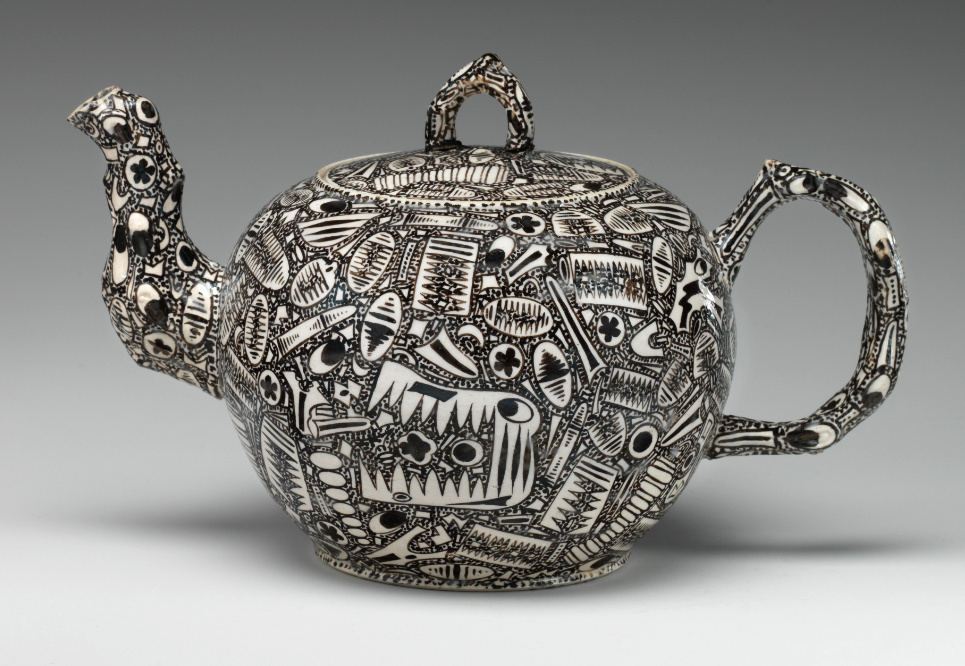
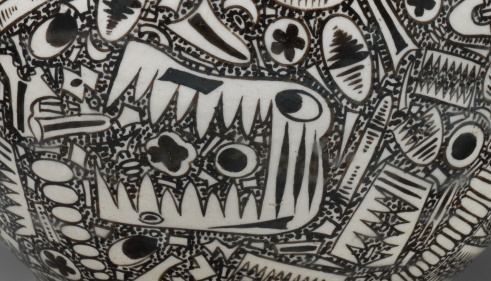
Crazy teapot, North Staffordshire, circa 1760–65. With hipster artwork of the type you might see today in Juxtapoz magazine.
I’d suspect there’s more of them out there, but I don’t know the right search keywords for the type.
Crazy teapot, North Staffordshire, circa 1760–65. With hipster artwork of the type you might see today in Juxtapoz magazine.
I’d suspect there’s more of them out there, but I don’t know the right search keywords for the type.
I’m pleased to find a new and previously unknown source on Staffordshire folklore, and it’s a subtantial 330-page book.
Fletcher Moss, Folk-lore, old customs and tales of my neighbours, 1898.
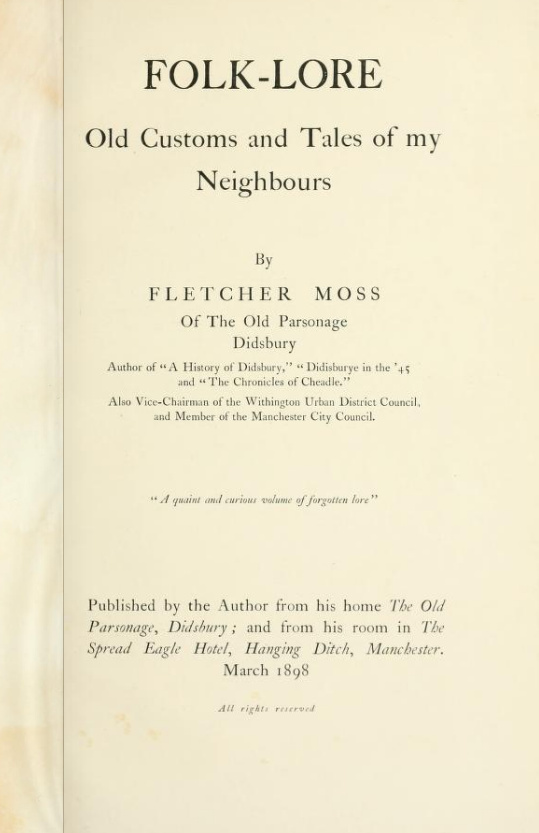
It may have been overlooked by Staffordshire folklorists and bibliographers because the author was located at Didsbury in Cheshire, now swamped as a suburb of south Manchester. Although the author writes that Stockport was the market town for Didsbury (“they knew little or nothing of Manchester” back then, he writes).
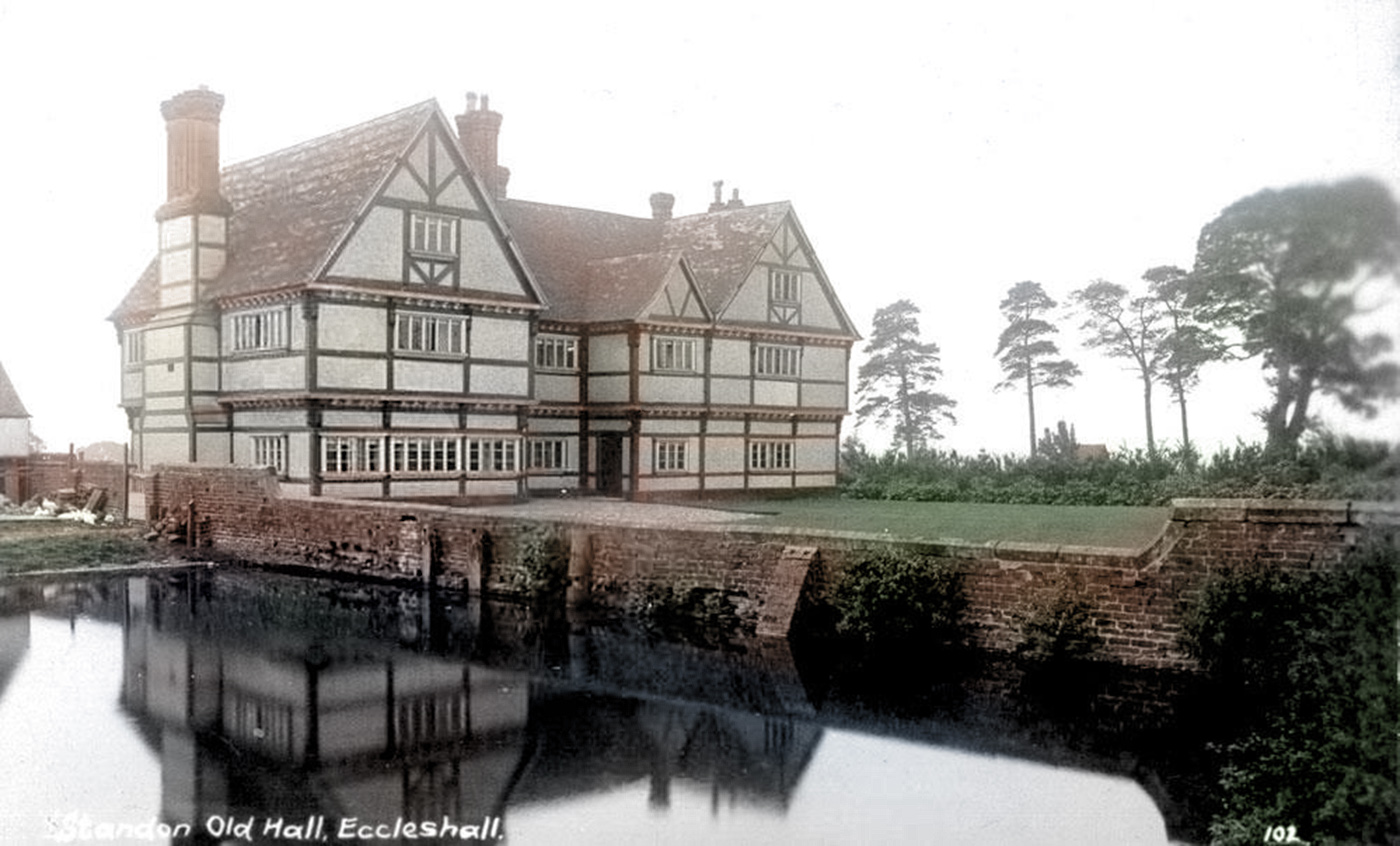
More importantly, the preface to his book states that he also draws heavily on the lore of his father’s family in rural north Staffordshire: at Standon Hall (a few miles south-west of Trentham) and Mees [Hall], and Walford (about three miles west of Stone). Standon Hall is also where the author passed his childhood and he frequently returned to visit. It is not to be confused with the rather ugly new Hall built in the village in 1910 and which later became a hospital. The author grew up at what is now Standon Old Hall, which apparently goes back to the 11th century but is seen here after what appears to have been a partial restoration…
But where was “Mees”? The place escapes the modern map makers, but the author elaborates in another book: “My father was born at Mees Hall, which is in Eccleshall parish, on the Staffordshire border, near to Standon church and parish.” So again, near to Trentham and the Potteries.
Possibly the same as what was later known as Meece Old Hall, Ecceleshall.
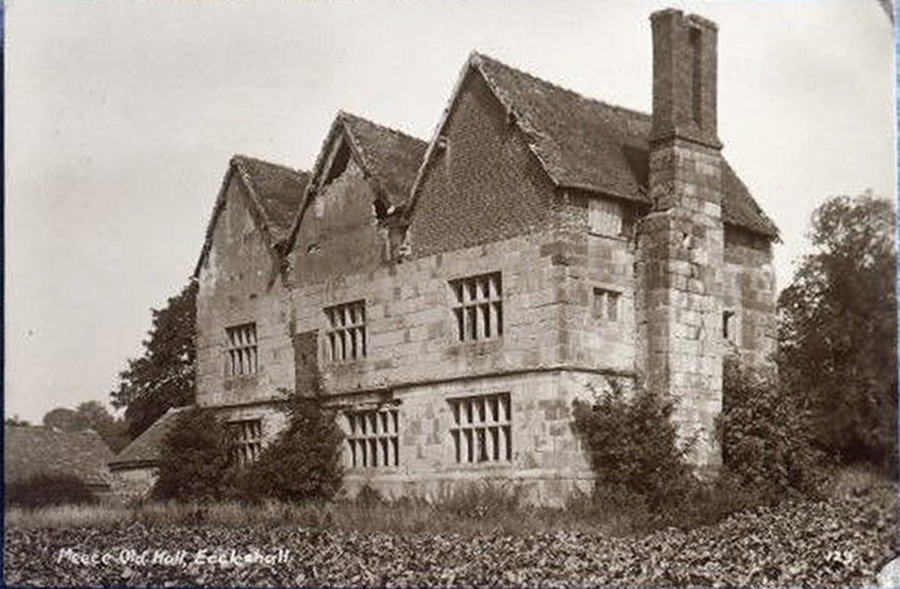
It looks very promising and I’ll be having a read, and noting any especially nice bits of local folklore. (Update: the information has now been extracted, as “The North Staffordshire folk-lore of Fletcher Moss”).
Moss also produced seven (some say nine) volumes of Pilgrimages to old homes, substantial books containing short accounts of his visits to various antiquarian and architectural gems.
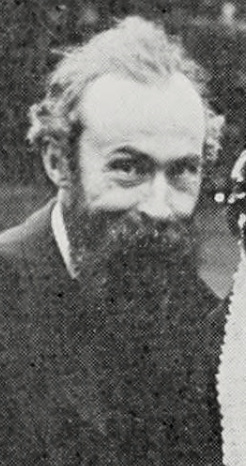
He was such a fine fellow they named the local pub after him, in Didsbury, ‘The Fletcher Moss’. His home environment at Didsbury certain appears to have been conducive to his collecting of folklore…
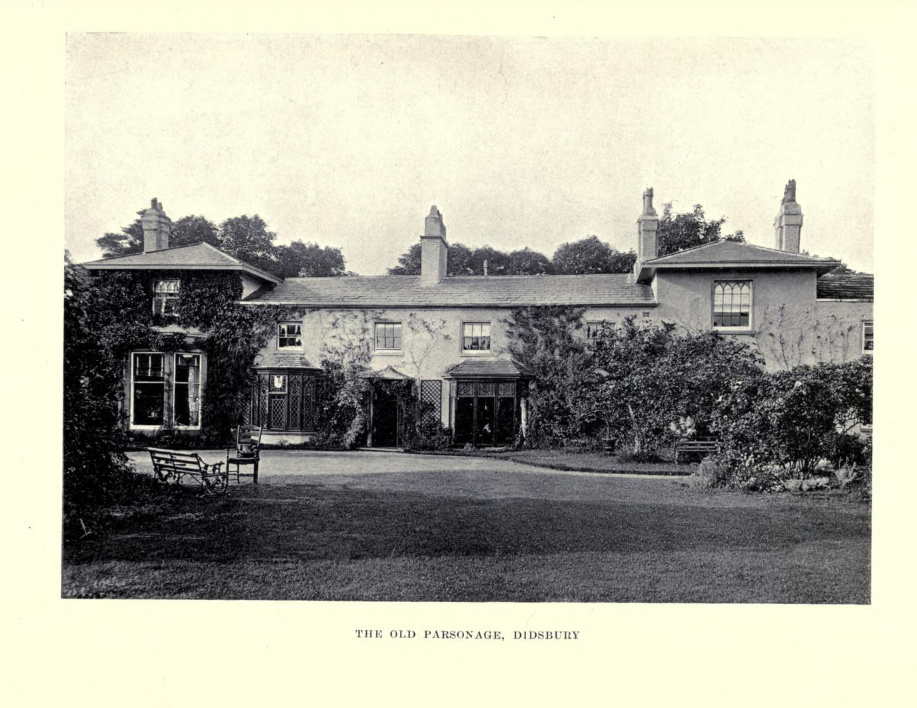
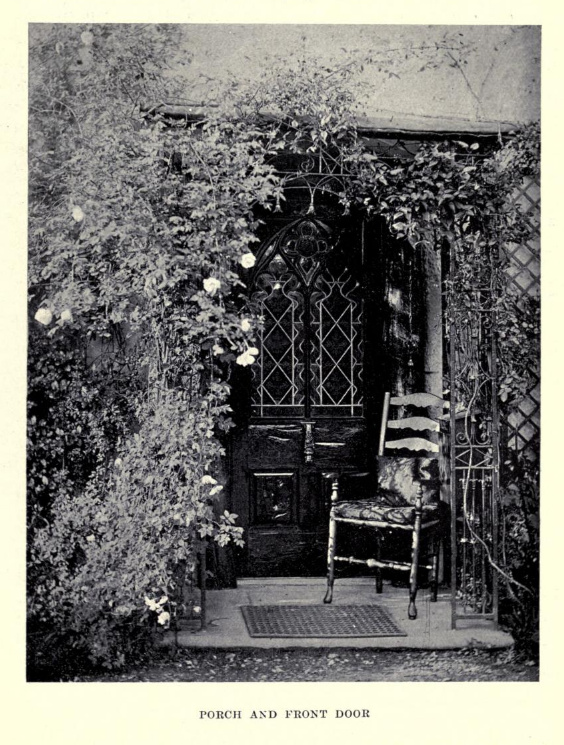
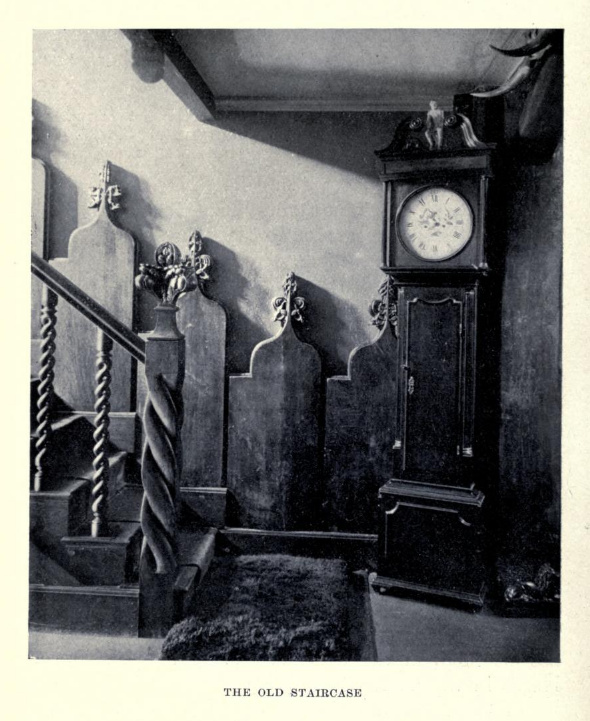
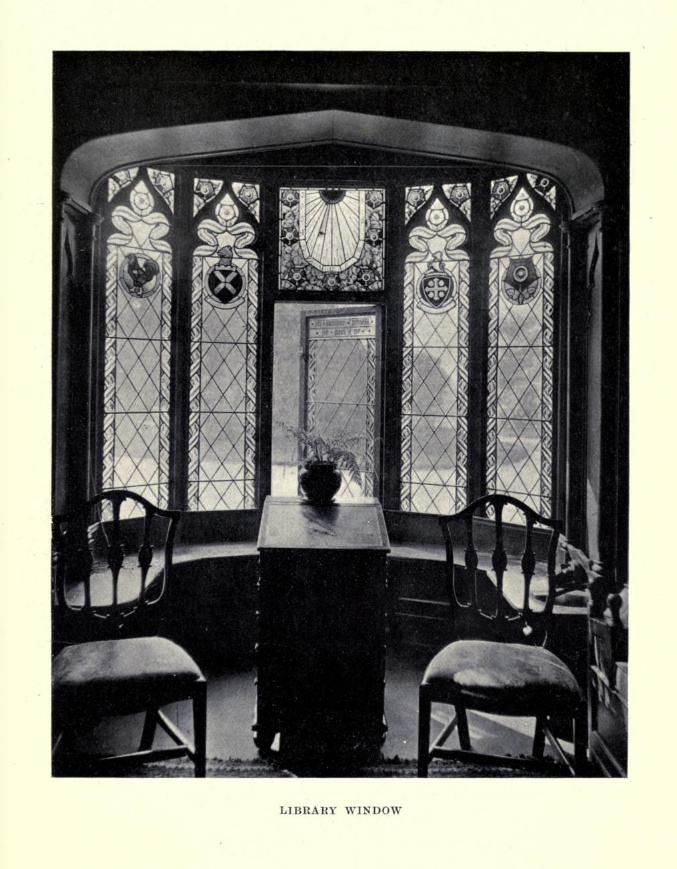
Regrettably his photographic archive appears to have perished, and the National Archive can only suggest some papers in the Manchester local archives.
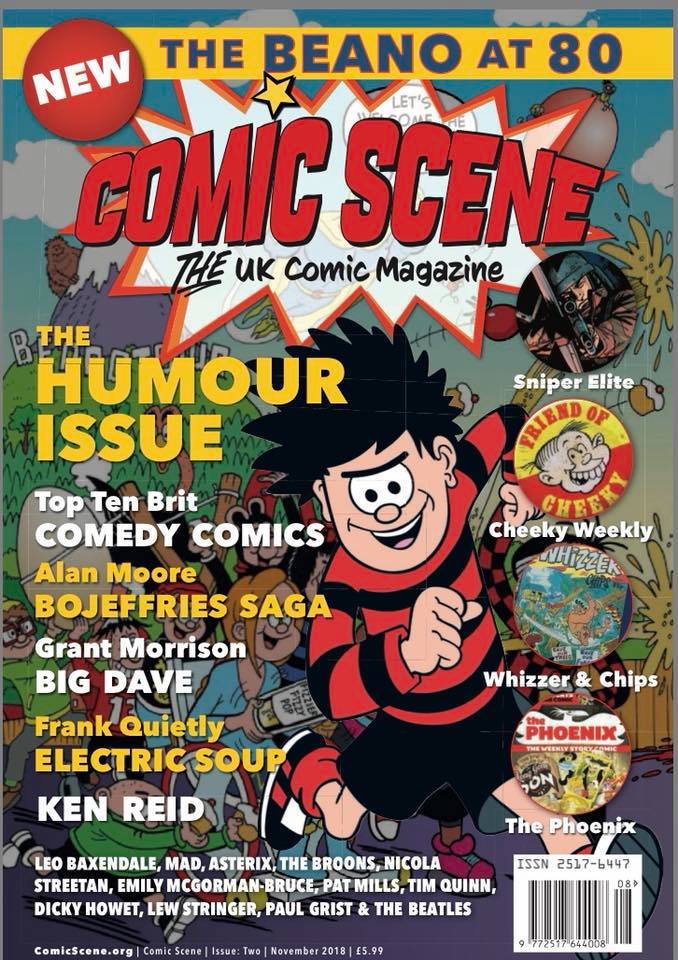
I’m pleased to see there’s now a magazine devoted to celebrating British comics, their makers and publishers. ComicScene UK. The second issue is pre-ordering now.
Free on Archive.org, Spitfire (1942), which was the wartime feature-film story of the life and work of Stoke-on-Trent’s Reginald Mitchell — who designed the Spitfire.
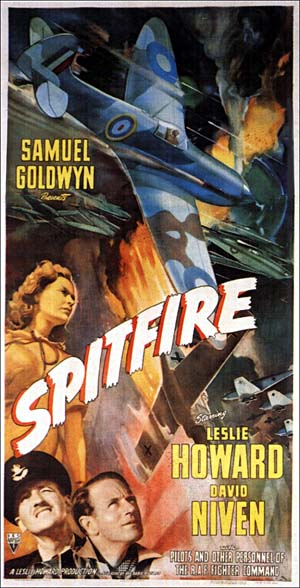
It’s a very grainy and poor copy, presumably dug out of the archive of some U.S. TV station, having fallen into the public domain in the USA. But it’s free. Though know that the USA version was cut down to 90 minutes, while the UK version runs 118 minutes.
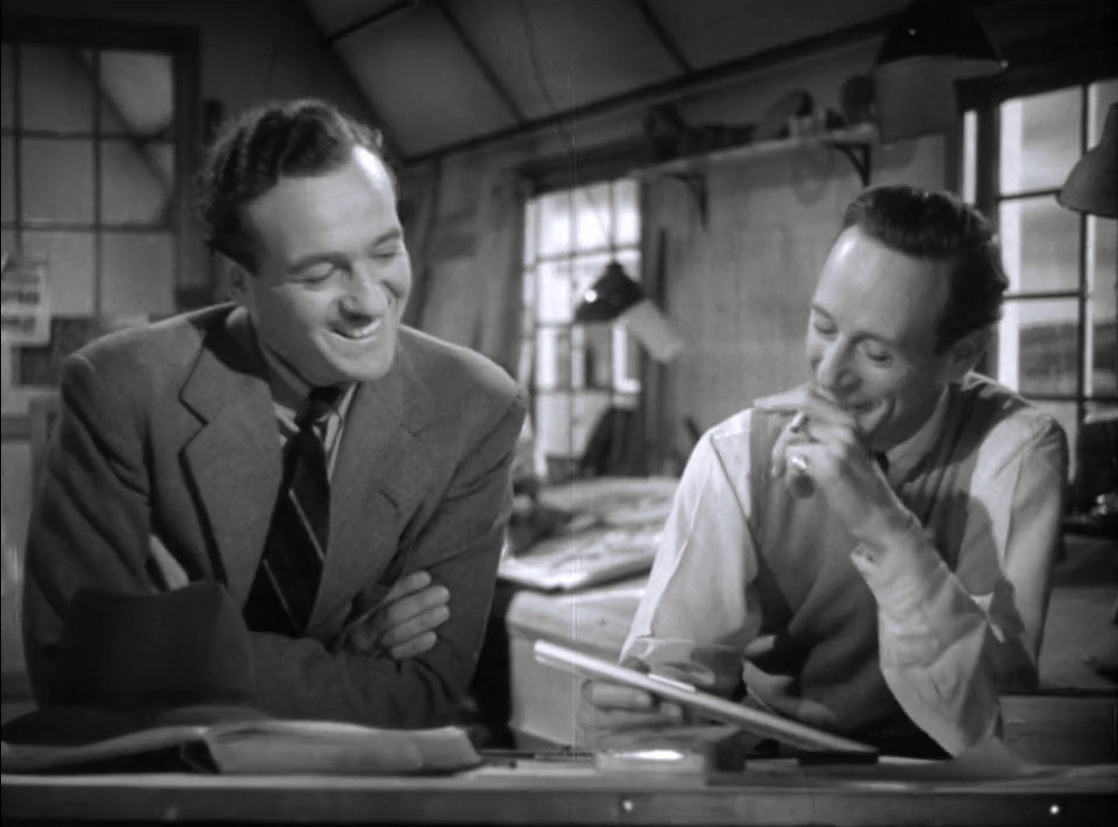
If you have some spare cash, there was a Blu-ray disc some years ago, using the movie’s British title The First of the Few, which was “digitally restored” (see above picture) and the full 118 minute version. One buyer on Amazon UK comments “don’t try to save a few quid with the unrestored one. The quality of the picture on the re-mastered edition is superb”.
It seems another good source for a locally-flavoured graphic novel, which could have the first three chapters set in Stoke-on-Trent, and later flashbacks. It would probably have to be a graphic novel, since a straightforward non-political bio-pic movie would be impossible to fund today. It would only get funding if it could be dragged out-of-shape by having various contemporary political angles inserted into it.
New to me, the book Tales from the Past: Anecdotes and Incidents of North Staffordshire History (1981), a collection of the first year (1958-59) of articles written for The Sentinel newspaper and drawn from local tales, stories and anecdotes. The weekly series by Tom Byrne continued for a decade, 1958-68.
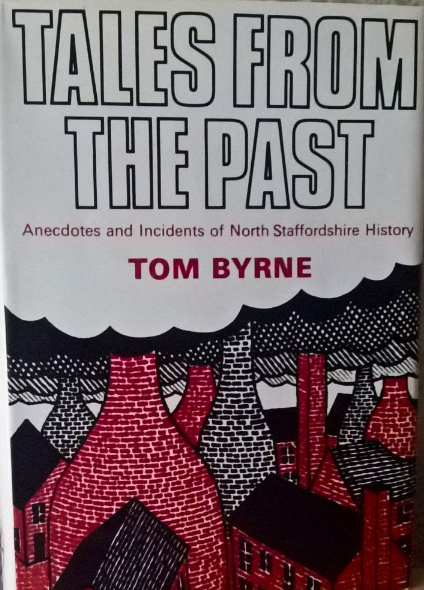
The book was followed five years later by More Tales from the Past: Anecdotes and Incidents of North Staffordshire History (1986).
Might be good to see a dozen or so tales from these books adapted as a comic-strip anthology.
I’d also wonder if they have any tiny remnants of local pre-industrial folk-lore, sayings or beliefs.
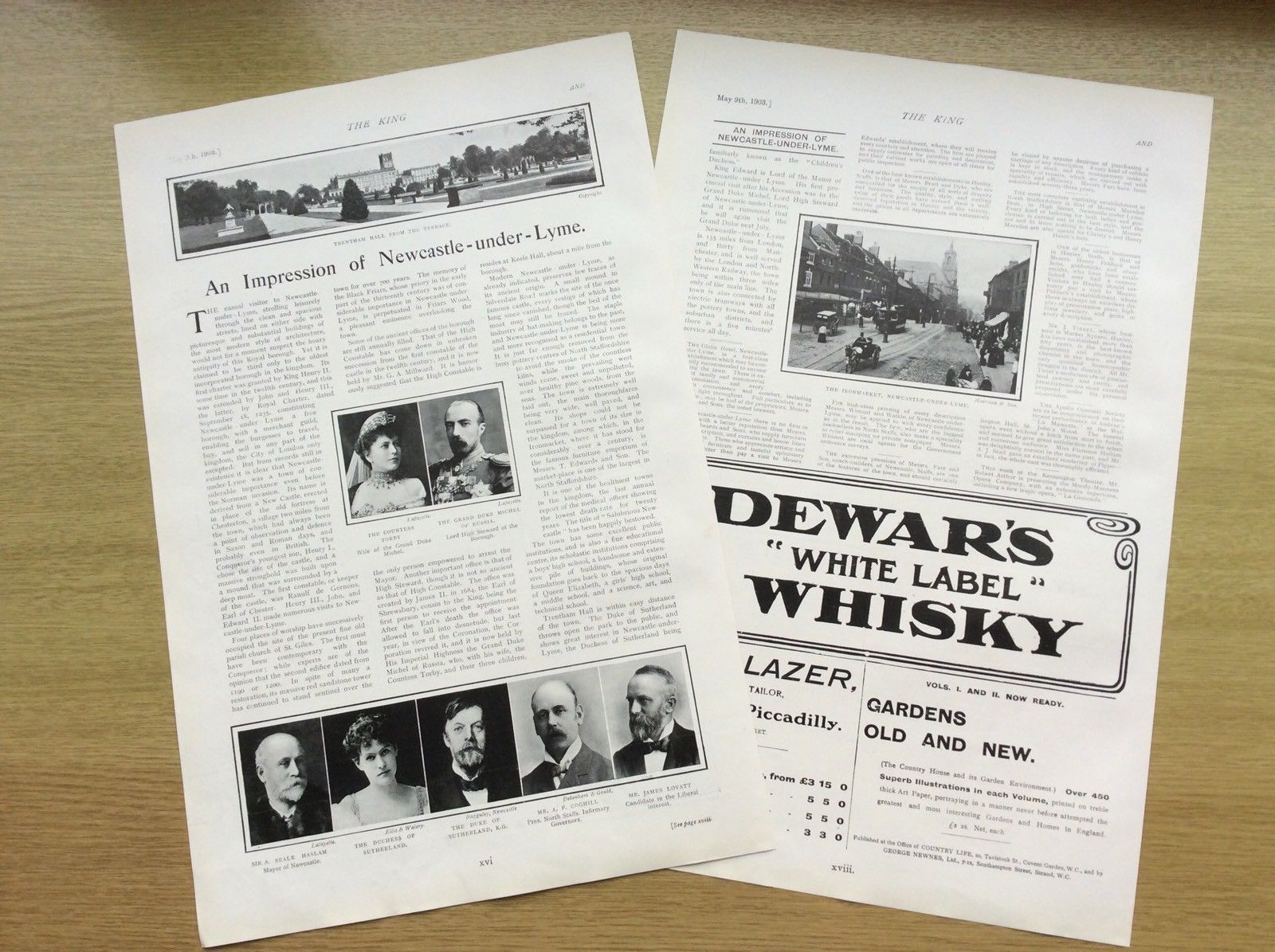
An article in The King magazine, 9th May 1903, on Newcastle-under-Lyme… “it is one of the healthiest towns in the kingdom, the last annual report of the medical officers showing the lowest death rate for twenty years”.
My quick survey of interesting texts coming out of copyright at the start of 2019, the author having died in 1948. It doesn’t seem to be an especially rich year, in terms of the “big names”.
* Alfred Edward Woodley Mason, author of Fire Over England (a beleaguered Queen Elizabeth I prepares for invasion by the tyrannical Spanish), and The Four Feathers (a filmed war novel). Other historical adventure novels such as The House of the Arrow and The Prisoner in the Opal, plus stories and some non-fiction.
* Montague Summers, a poet who also wrote many non-fiction books on belief in vampires and witches. Also Architecture and the Gothic Novel, and The Gothic Quest: a History of the Gothic Novel.
* Denton Welch, novelist and short story writer who influenced William S. Burroughs.
* W. Paul Cook, friend of H.P. Lovecraft and author of the important memoir In Memoriam: Howard Phillips Lovecraft.
* Samuel Whittell Key, author of a series of stories featuring his ‘occult detective’ character Prof. Arnold Rhymer.
* Guy Ridley, author of the tree-ish fantasy The Word of Teregor (1914).
* Jesse Edward Grinstead, popular writer of a great many Wild West novels.
* Rupert Gould, a cryptozoologist who published popular books such as The Loch Ness Monster and Others, A Book of Marvels, and Oddities: A Book of Unexplained Facts.
* Henry Marten, private tutor of Queen Elizabeth II. His pre-PC The Groundwork of British History (1912) became “one of the most used school textbooks of the first half of the twentieth century”. There was a 1923 edition, possibly simply a reprint. His The New Groundwork Of British History in 1943 updated this standard textbook to 1939 and continued its use in schools into the 1950s. But the 1943 edition was a multi-author work, and thus is presumably not going into the public domain. There was a later reprint in 1964. Various versions including 1943 can be freely found on Archive.org.
* D’arcy Wentworth Thompson, who published an acclaimed translation of Aristotle’s The History of Animals.
* Arthur G. T. Applin. An actor and a ‘name’ in the theatre world, as a writer he seems to have been prolific and with a wide range. An early writer for Mills and Boon, with Chorus Girls (1906) and The Stage Door (1909), but his well-reviewed town novels such as Shop Girls (real-life shop-girls of the 1910s) appears to have upped the tone considerably and somewhat evaded ‘the M&B formula’. Later produced countryside books such as Philandering Angler (memoirs of fishing and philandering), popular mysteries such as Blackthorn Farm, and even The Stories of the Russian Ballet. His later reviews in the 1920s and 30s emphasise his ability churn out swift-paced pulp-ish page-turners, with romantic settings ranging from racecourse to desert.
Also of note is S. J. Simon, a popular British mystery and historical-comedy writer, but only because his novels were written with a fellow writer who didn’t die until 1982. Thus his work is not going into the public domain.
Bill Brandt, “Evening Light in Burslem 1937”.

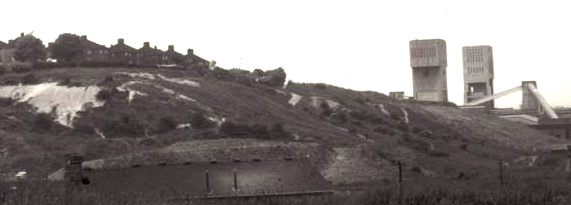
Purchasers of my H.G. Wells book may be interested in this good clear (if rather small) picture of the Etruria Woods, albeit as they barely remained in 1964 — as the era of heavy industry entered its final decades and neared its end.
Centre of picture, and in the ravine running off to the left. With what appears to be scrubby moorland to the right indicating more of the struggling remains. The towers are coal-mine winding towers.
I couldn’t find even a half-decent map of the Derbyshire Dales administrative area, via search engines. So I made one. Here it is… extracted from deep inside the local Council’s Local Plan PDF and usefully laid onto a wider map showing its relationship to the Peak District, the Staffordshire Moorlands, and the M6 motorway. As well as nearby Derby there is also a West Coast mainline rail station at Stoke-on-Trent, with fast regular connections to London and Manchester. The local railway station at Uttoxeter will also take you deep into the wilds of the East Midlands and then connect to take you over to the east coast, albeit on a lesser train.

Settlement dot size reflects population size. Green = The Peak District National Park, which the Dales don’t overlap.
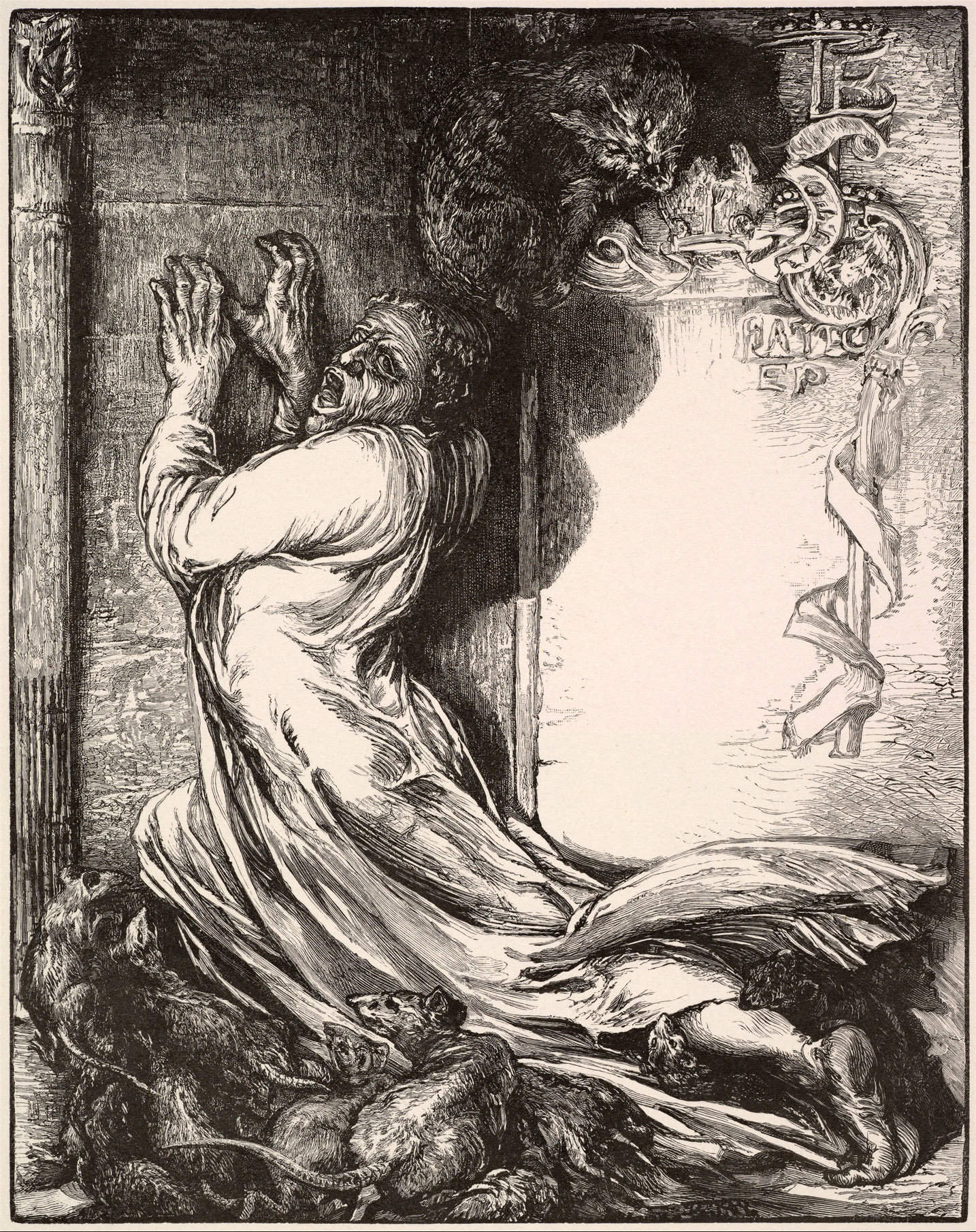
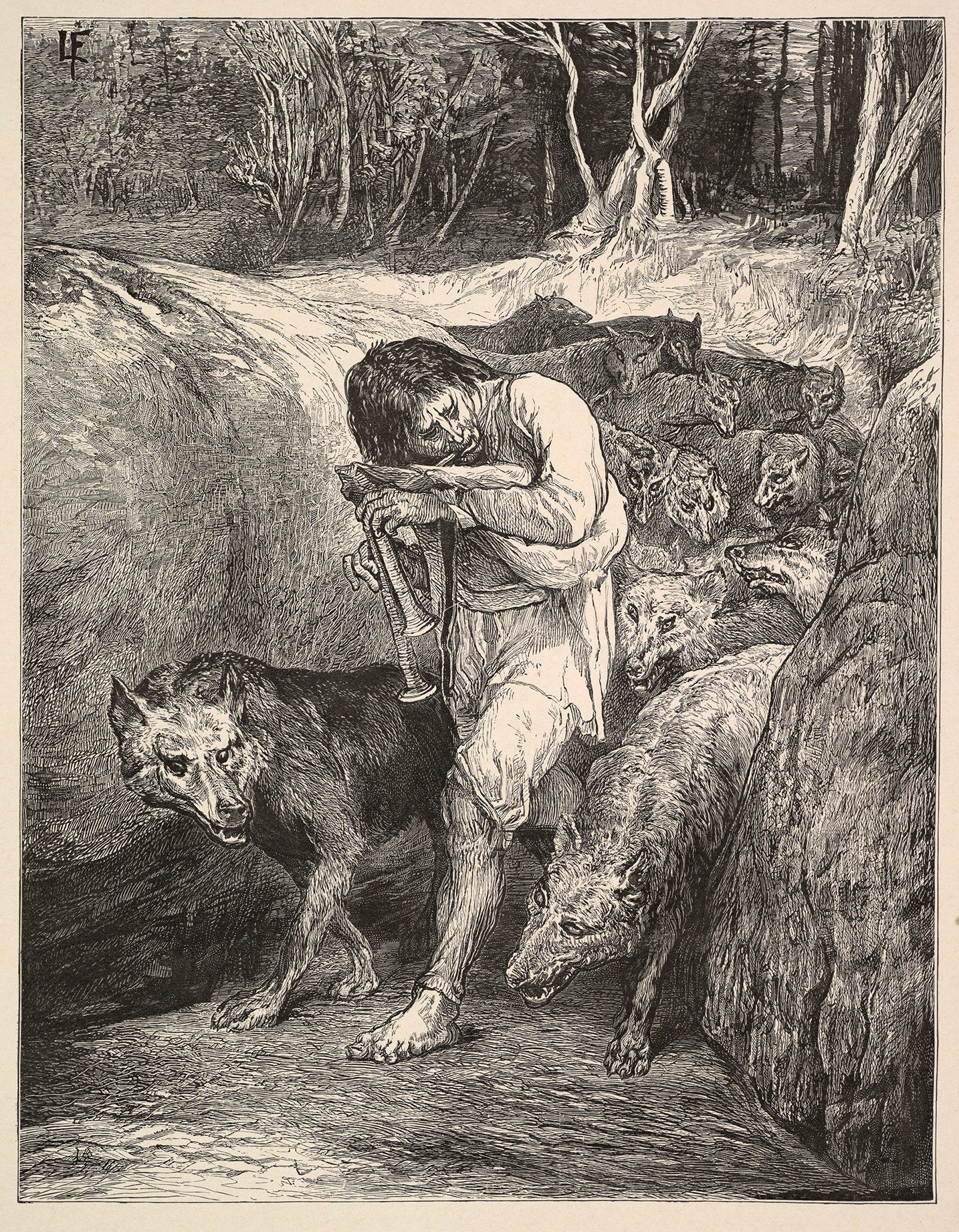
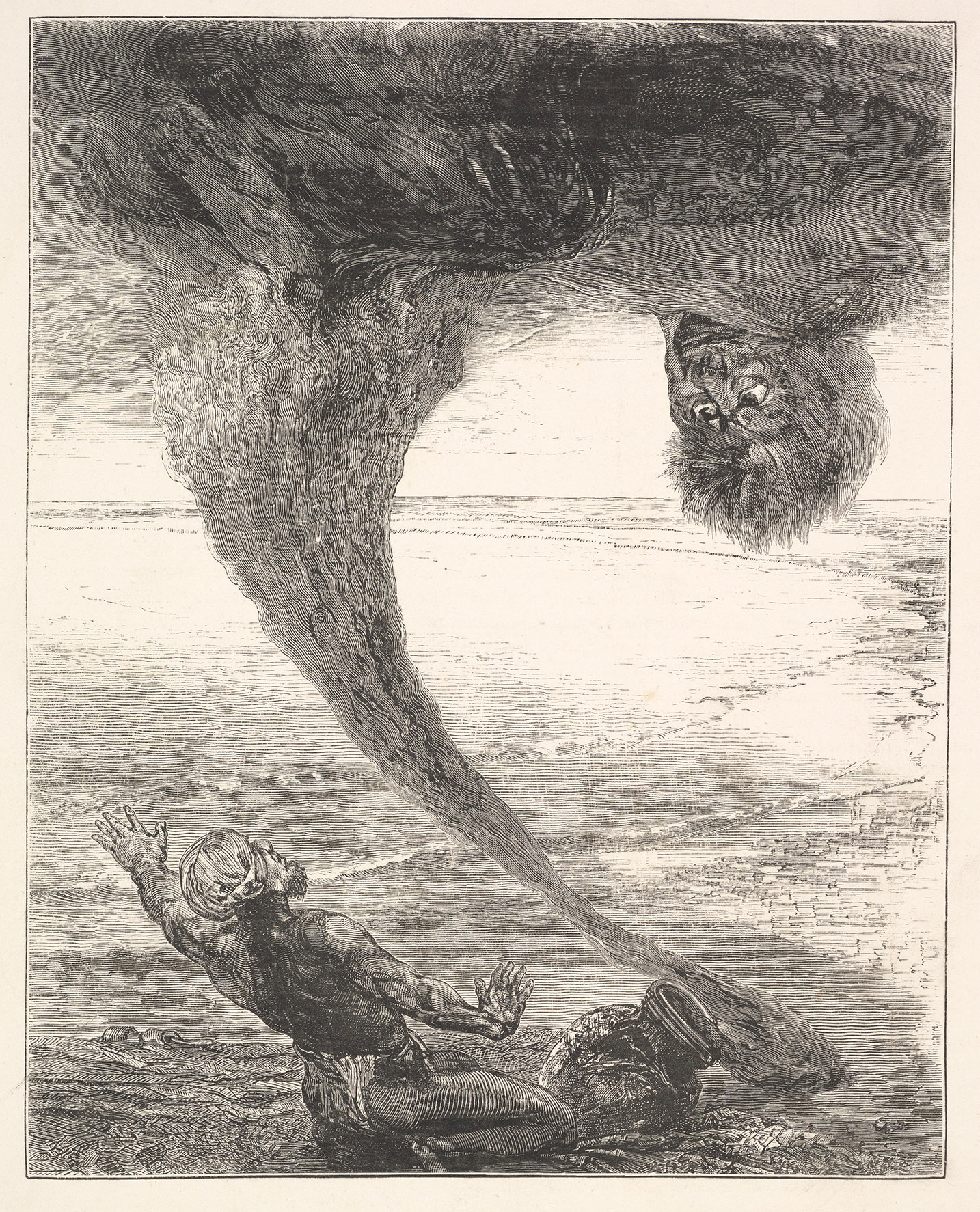
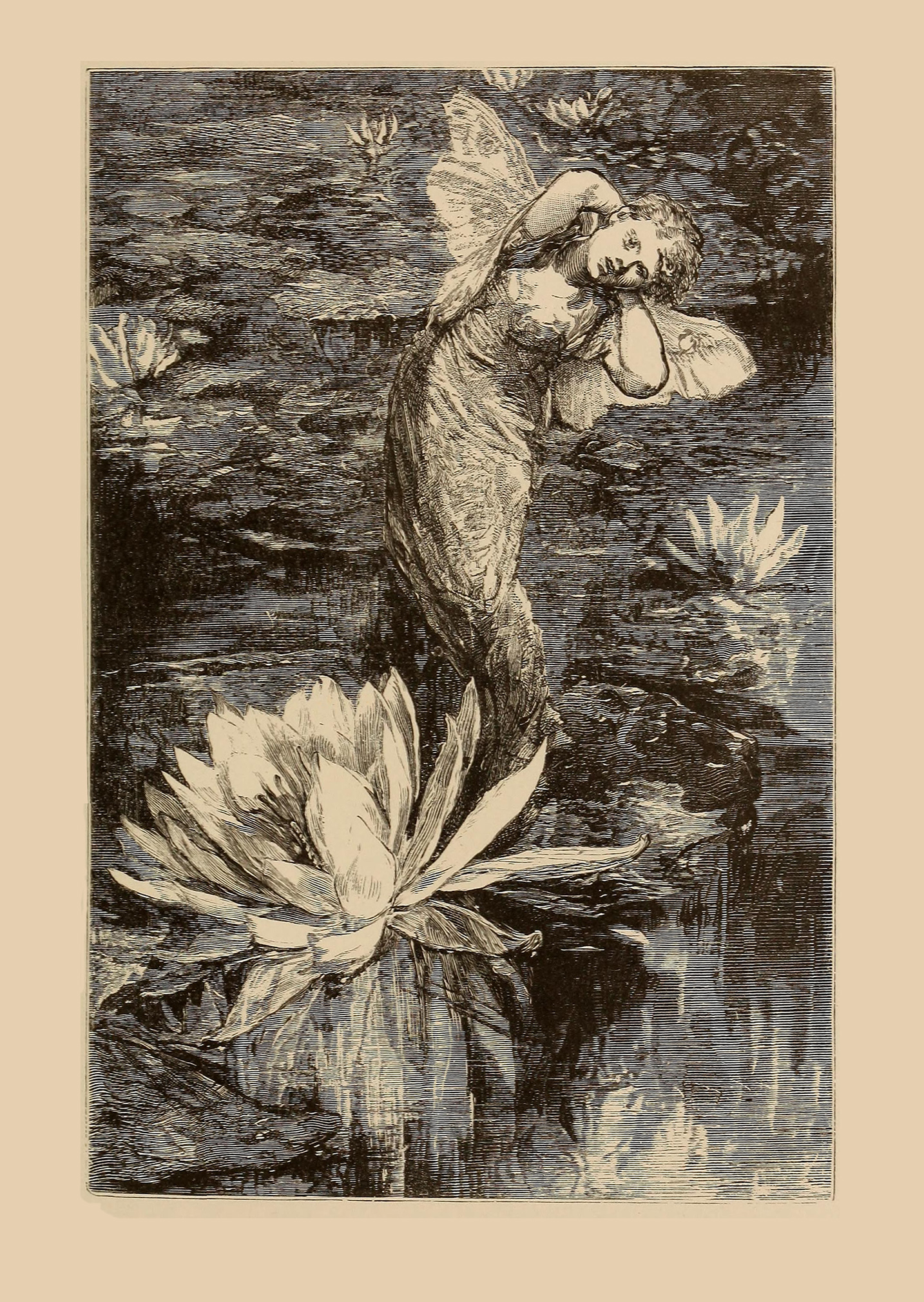
A macabre / fantasy illustrator duo from Rhode Island, a placename which is of course familiar to all who thrill to supernatural literature. John La Farge (1835–1910, lived and died in Providence, Rhode Island) and his engraver Henry Marsh (American, 1826–1912). Bed-ridden early in his career and in need of the cash, La Farge produced fairly loose watercolour designs which were engraved by Marsh and published in the upmarket Riverside Magazine for Young People. The “water-lily” picture appeared in an anthology of poetry. La Farge went on to a strong career in stained glass design.
Apparently these fantastical works were remade in oils some 15-20 years later, and were then presumably shown in Providence circa 1885 (give or take five years). One then wonders if a later sight of “Bishop Hatto and the Rats” might have been a boyhood influence leading to the famous horror story “The Rats in the Walls? Le Farge died at Butler Hospital in Providence in 1910, and there must have been good accounts of his life in the obituaries. Had Lovecraft known the picture, then he would have especially enjoyed the combination of a great bristling malkin of a cat, a churchman, and the rats, all done by an artist from his beloved Rhode Island.
“Bishop Hatto and the Rats”.
“The Wolf-charmer”.
“The Giant and the Travelers”.

“The Fisherman and the Afrit”. An afrit (also called afreet or ifriit) is a mischievous solo creature, similar but far less powerful than a jinn (genie), and they are probably best likened to ‘the imps of the jinn‘.
“The spirit of the water-lily”.
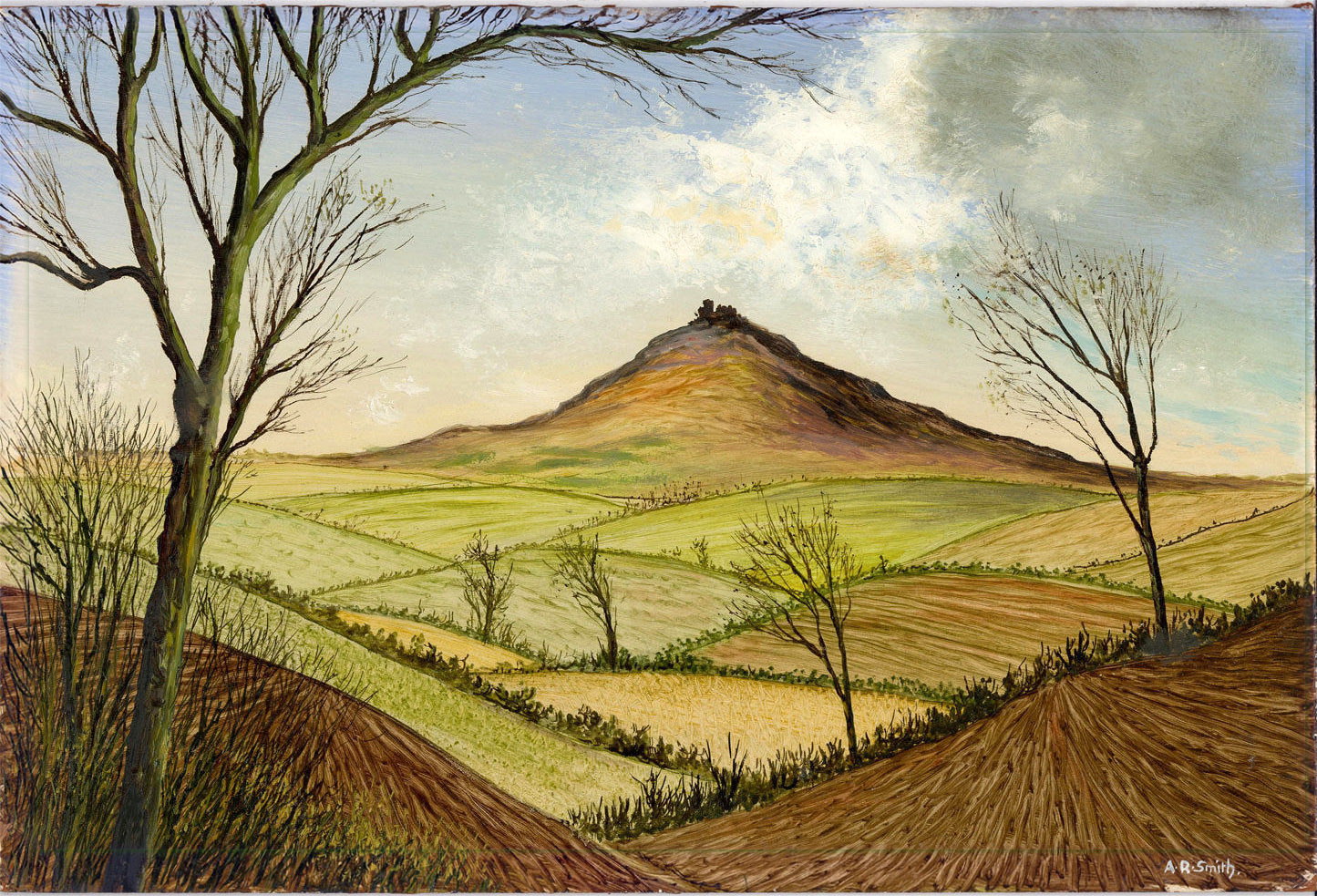
A. R. Smith, “Mow Cop” in oils. Style and age of the label on the back suggests later 1930s or 40s. A Google Books search suggests he was active 1920-1940.