My The Potteries Post has updated. ‘News you can use’, from Stoke-on-Trent and thereabouts.
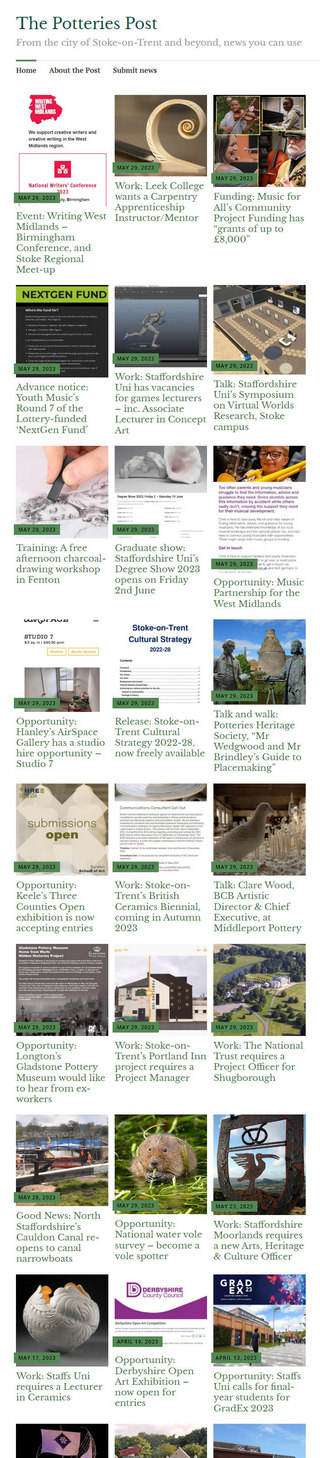
My The Potteries Post has updated. ‘News you can use’, from Stoke-on-Trent and thereabouts.
Fascinating Folk of Newcastle-under-Lyme Film Show: Philip Astley and the performing arts, 15th June at the Brampton Museum in N-u-L. Followed by more in the same series, including public talks on Potters at Play and Oliver Lodge. Booking now.
The town also has a new circus centre planned on the back of the Philip Astley connection, and have commissioned a photographer to make portraits of local performing families.
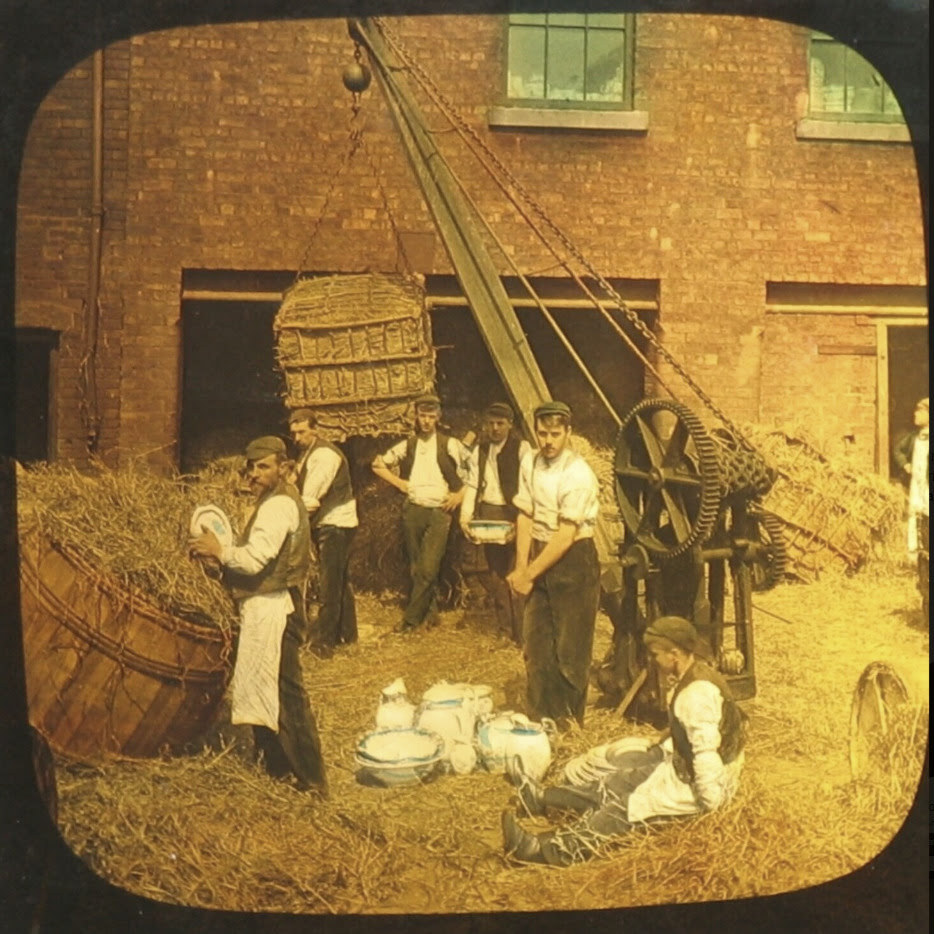
Currently on Ebay from dillonthestaff, a set of Doulton glass “magic lantern slides”. Presumably some from Burslem, but also likely to be some from the Lambeth works/studio in London.
Tolkien Gleanings #75.
* In the latest VII: Journal of the Marion E. Wade Center (June 2022)…
– Tolkien as Allegory: A Study in “Smith of Wooton Major” ($)
– Tolkien, and the Power of Allusion in “Leaf by Niggle” ($)
– Review of Tolkien & The Classical World (open access)
– Review of Law, Government, and Society in J.R.R. Tolkien’s Works (open access)
* A PhD thesis for Oxford Brookes University, Making Worlds Collide: Using Tolkien’s Fantasy Literature to Create a New Leadership Development Framework (2020). Includes sections on “The Biographical Context of Tolkien’s Leadership Writing”, and “Tolkien’s Possible Implicit Leadership Beliefs”. Freely available online.
* In Spanish, Vision ambiental del hogar en la obra Britanica La Comunidad del Anillo de J.R.R. Tolkien (2023, short trans. ‘Visions of a natural home in The Fellowship of the Ring‘). Suggests that The Shire as depicted in Fellowship offers a… “concept of home, in which … nature is not placed in a separate and artificial space, but on the same level as the protagonists of the stories.”
* In the city of York, at the annual Ridings of Yorkshire Society Conference 2023 in June, “a talk by Tolkien & the East Riding expert Michael Flowers”. Elsewhere, this is clarified as “speaking on Tolkien and the East Riding”.
* David Bratman takes a look at the remarkable family history of R. W. Reynolds. Reynolds was one of Tolkien’s most influential school teachers in the city of Birmingham (“Mr. R. W. Reynolds, King Edward’s School, Birmingham”), and someone whose opinion on literary matters Tolkien continued to value more than a decade later. It was for Reynolds that Tolkien wrote the ‘Sketch of the Mythology’ (1926-30).
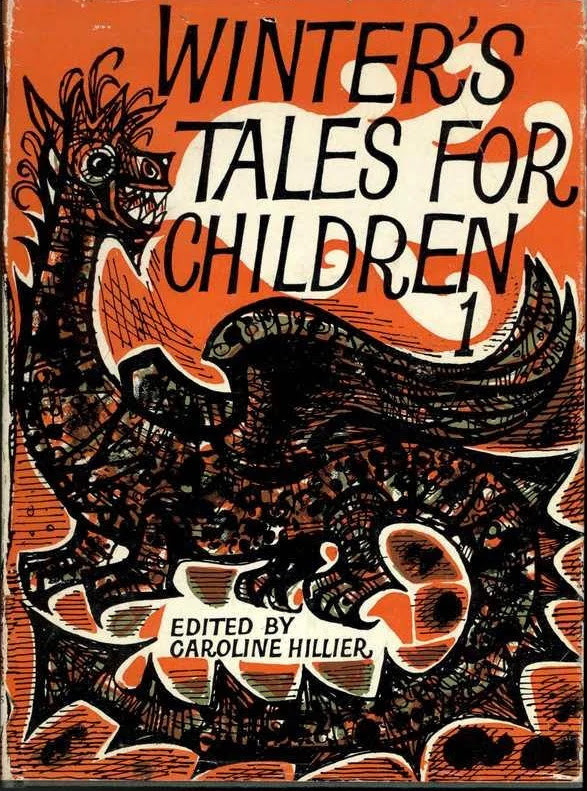
* And finally, a new Visual Collecting Guide to “non-Tolkien Books with Tolkien Content”. The most impressive cover is the Winter’s Tales for Children 1 (1965), the start of a four-book series, to which Tolkien kindly contributed the previously unpublished “The Dragon’s Visit”. Not on Archive.org.
Tolkien Gleanings #74.
* A new oliphaunt-sized YouTube playlist which collects John Garth interviews and talks. 22 hours in total!
* The Italian Tolkien Association tours the new Images/Imaginaires exhibition, with interior photographs. In Italian, but easily translated via Google.
* Call for papers: “Research and meeting days on Tolkien” in Paris, France on 6th-7th October 2023. This forthcoming academic colloquium, which appears to be annual, will be…
“in line with previous generalist colloquiums which have provided the French-speaking public with new insights into Tolkien and his work. Translation and reception issues may be highlighted [and also appreciated will be] clarifications of aspects of the life of the author. Young researchers are especially welcomed. Communications may be in French or English”.
Proposals should be sent to the email address colloquium2023@tolkiendil.com before 31st May 2023.
* A new podcast interview with “the man behind The Tolkien Collector’s Guide“.
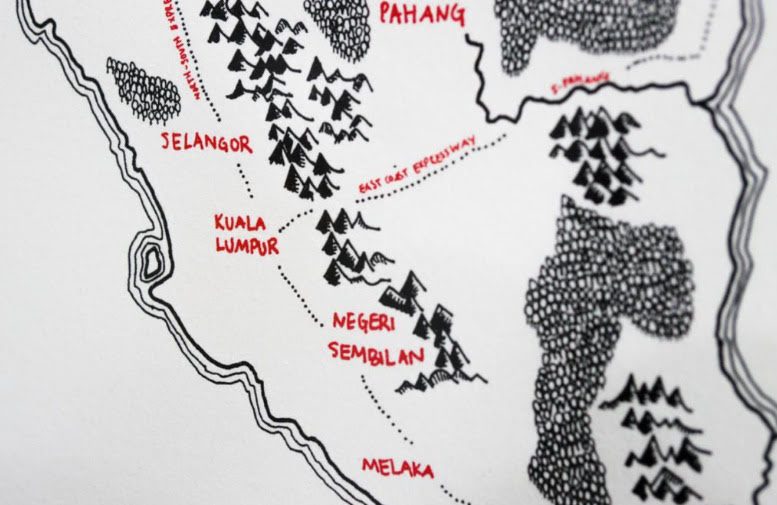
* And finally, Aziff Azuddin’s new Tolkien Malaysia Map (2020-23), Malaysia and Indonesia finely done in the Tolkien mapping style.
Tolkien Gleanings #73.
* Tolkien, Christianity, and Art… “The Lumen Christi Institute has designed this two-day seminar to introduce major themes and debates from the Catholic Church’s history to a wide online audience” and in the context of Tolkien and his work. 18th-22nd July 2023, led by faculty lecturers. $95 with “a limited number of scholarships available”. Though it appears not be an actual online seminar? Probably face-to-face in Chicago, recorded and then to be placed online as a recording? Anyway, wherever it is… booking now.
* New to me, Not The Fellowship: Dragons Welcome! (2022), a Luna Press book intended… “to foreground Middle-earth characters, across ages and races, who may not be as familiar as the Fellowship.” Includes, among others, articles on “The Last Prince of Cardolan: memory and mediation in the mortuary archaeology of Middle-earth”, and “The Gaffer: between cabbages and potatoes”.
* Feeling peckish after reading some heavy Tolkien scholarship? Both of these are in open access, “‘What’s Taters, Precious?’: Food in Tolkien’s The Lord of the Rings“ (2010) and “Simple Pleasures in Tolkien’s Poetry: Eating and Drinking and the Depth of Things” (2011). The latter crunchable PDF can be had without an Academia.edu sign-up, by searching for the start of the title in Google Scholar. Academia.edu has a special arrangement with Scholar, to give direct PDF access from its search results.
* The book Environmental Humanities and Theologies (2018) reviewed…
“One of the strongest chapters, chapter 2, shows a clear lineage from scripture to literature, weaving together a critical reading of [the Bible’s] Genesis with the disparaging view of wetlands depicted by Beowulf and The Lord of the Rings.”
Of course it could be that the “disparaging” is simply due to swamps being nasty smelly things full of dangerous mires and biting insects.
* Publications of the annual FantaelX event in Spain. Including four free annual volumes of scholarly work on the fantastic, in PDF and in English. A keynote at the 2022 event was “Vampires and Werewolves in Middle-earth” which is not online and has no abstract, but one can be found elsewhere. In the changing landscape of Middle-earth the reader’s journey sometimes encounters…
“a liminal space within the text, blur[ring] the boundaries between the natural and the supernatural, inviting the reader to confront the uncanny in an otherwise familiar-seeming subcreation. This includes those icons of the horror/fantasy genre and popular culture: werewolves and vampires.”
* And finally, fountains play a very subtle part in LoTR. Such as the contrasts that the attentive reader can find between those in Lorien, the overgrown ones in Ithilien (“land of many fountains”), and the top-most Court of the Fountain in Minas Tirith. One interesting point I hadn’t known — re: ‘the science of LoTR’ — is that in operation fountains are too fast for shadows.
Tolkien Gleanings #72.
* Apply — Inklings Project… “The Inklings Project requests fellowship applications from faculty at universities and colleges to encourage the teaching of the works of the Inklings, especially C.S. Lewis and J.R.R. Tolkien.” Deadline: 1st July 2023. Note also their set of past “Inklings-Related Course Syllabi”.
* My pick of Tolkien material in the newly open-access journal Sehnsucht: The C.S. Lewis Journal…
– The Lore of Wood and Stone: Magic in the Chronicles of Narnia and The Lord of the Rings (article)
– Review of Tolkien (the cinema movie)
– Review of The Worlds of J.R.R. Tolkien
– Review of Middle-earth and the Return of the Common Good
– Review of High Towers and Strong Places: A Political History of Middle
– Review of An Encouraging Thought: The Christian Worldview in the Writings of J.R.R. Tolkien
* Upstream Podcast – “J.R.R. Tolkien the theologian?” (April 2023) in which… “Dr. Austin Freeman discusses his book, Tolkien Dogmatics: Theology through Mythology with the Maker of Middle-earth”. Also a later Upstream Podcast – Further Upstream reflection on that interview. The .MP3 download at Listen Notes is found under the “More…” button.
* Newly on Archive.org, Tree of Tales: Tolkien, literature, and theology (Baylor University Press, 2007). Including a chapter titled, with admirable optimism for a dismal academy, “Tolkien and the Future of Literary Studies”.
* And finally, The Sheldon Tapestry Map: Oxfordshire. Currently restored and on display in Oxford.
Tolkien Gleanings #71.
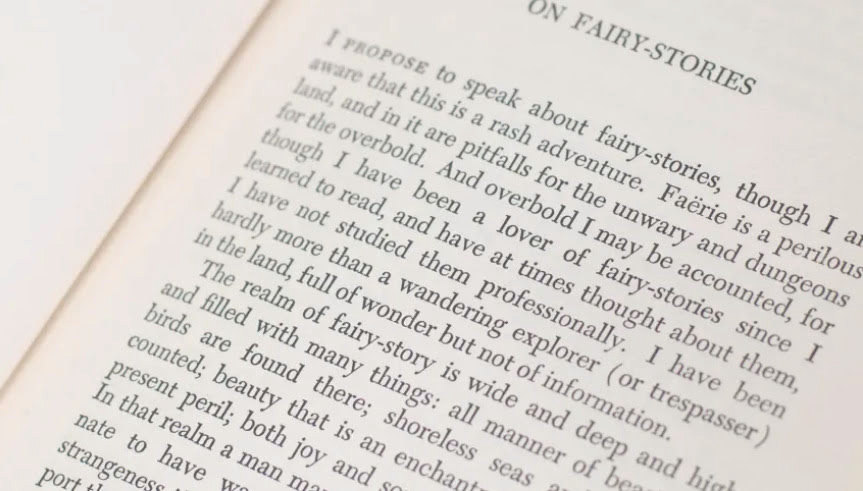
* J.R.R. Tolkien’s “On Fairy-Stories” (unabridged), as an audiobook reading of over two hours, from Catholic Culture Audiobooks. Currently free on YouTube, with a date of March 2023. Hat-tip for the news to Bruce Charlton who comments… “The superb performance is by [American] voice-actor James W. Majewski; who really seems to understand what he is reading, so that it is expounded with great clarity.” The voice is relatively neutral and soft, and at a guess is perhaps a New England accent?
* A May 2023 YouTube interview with Peter Grybauskas about The Battle of Maldon by J.R.R. Tolkien. Starts at 3:23.
* The March issue of the University Bookman had a scholarly and critical review of the new book The Fall of Numenor.
* This month’s Essential C.S. Lewis round-up brings news that Sehnsucht: The C.S. Lewis Journal is now open access and has a new university repository URL. This long-running scholarly journal has a pony-load of Tolkien content, as you might expect, mostly to be found in the reviews.
* And finally, a two-hour stage version of The Hobbit, at the Oxford Playhouse at the end of June 2023. It seems to be a local youth production, judging by the rehearsal pictures. Booking now.
Tolkien Gleanings #70.
* A new Masters dissertation for Tennessee Technological University, “J.R.R. Tolkien Depicts Camaraderie and Combat Trauma in The Hobbit and The Lord of the Rings“ (2023). The author… “highlights the specific trauma of Tolkien’s characters and how they connect to the trauma combat veterans face in modern warfare [with] insight into camaraderie [and its role in war and on returning home]”. Abstract and Introduction only, free online.
* A four-day event at the University of Lisbon in Portugal, just started and running through this week. “The road goes ever on and on”: Commemorating J.R.R. Tolkien (1892-1973) has keynote speeches, round tables, lectures, a book launch, singing and more. Including Thomas Honegger on “Beautiful and sublime – and never mind the pointed ears. Visualising the Elves throughout the centuries”. Other talks include: “About Ships, Pirates, and Distant Shores: Tolkien’s maritime world”; “Tolkien’s Anarcho-Monarchism”; “Tolkien’s Use of Magic” and more.
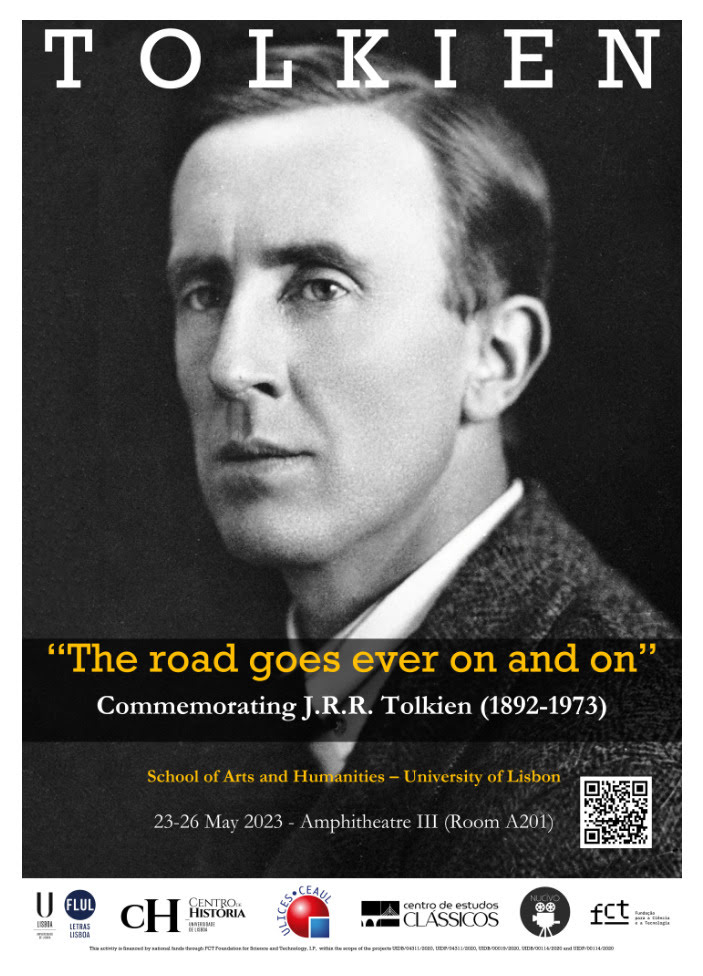
Note there is a streaming version, albeit on Zoom, and I guess some of the talks may be in English. Hopefully there will also be YouTube recordings in due course.
* The above conference will also launch the book J.R.R. Tolkien: Construtor de Mundos (2023). Apparently… “a first approach to certain figures and spaces” in the Legendarium, previous un-discussed in Portuguese.
* A Fantasy Study Day at the British Library in London. Saturday 17th June 2023. Booking now. This is ahead of their autumn/winter show, Fantasy: Realms of Imagination which opens on 27th October 2023 and which looks to have a strong political slant.
* A new free public-domain book in Spanish from the University of Salamanca, Authors In Search Of The Author: Literary Studies on Transcendent Identities (2023). Has the long essay “Desde y hacia el Logos: sacramentalismo y via pulchritudinis en Coleridge, Newman y Tolkien” (‘From and to the Logos: sacramentalism and via pulchritudinis in Coleridge, [Cardinal] Newman and Tolkien’). Can be freely translated and/or summarised in English, due to the permissive licence.
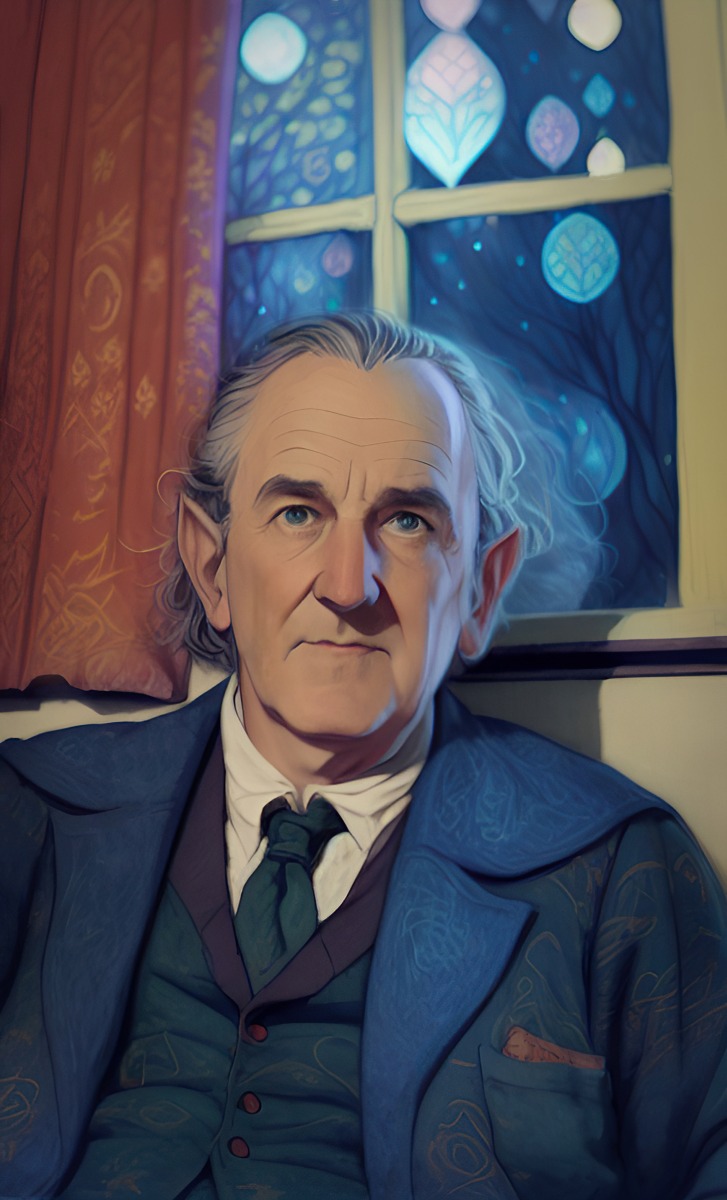
* And finally, a regrettable copyright response. Though such things seem somewhat moot, in a world newly inhabited by magic art-elves…
Tolkien Gleanings #69.
* In the latest edition of the UK magazine The Critic, “A Theology of Parties”. As we head into the healing phase of the post-pandemic era, the author suggests C.S. Lewis and Tolkien as exemplars of the sort of fun-with-fellowship reunion parties we might be planning. This being the… “J.R.R. Tolkien who purportedly went to a New Year’s Party in the 1930s dressed as a polar bear.”
* A review of the book The Art of New Creation: Trajectories in Theology and the Arts (2022). One of the chapters is on place-making and “creation and new creation in the work of Tolkien”, while another discusses the role of imaginative power in Tolkien’s sub-creation.
* Creative Writing Summer School at Exeter College, Oxford. Very costly, and one wonders what sort of writer can possibly afford it… but it seems to be booking up rapidly. 23rd July – 12th August 2023.
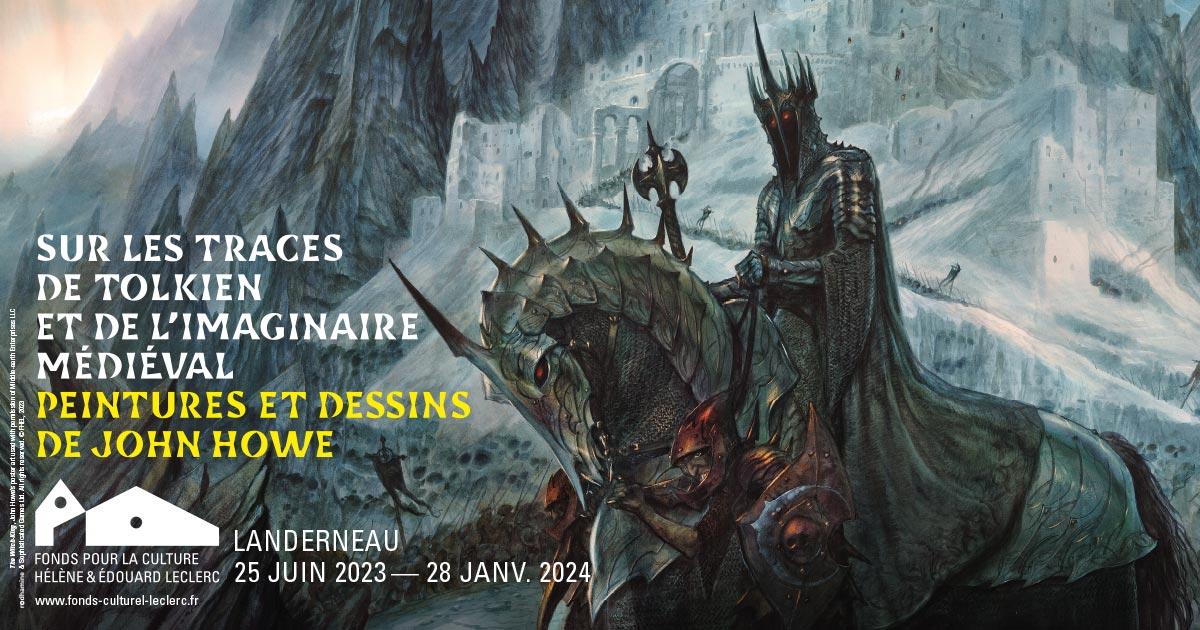
* The art exhibition ‘Sur les traces de Tolkien et de l’imaginaire medieval’, 25th June 2023 to 28th January 2024. A large exhibition with… “over 250 drawings and paintings by John Howe” plus armour and medieval items. Not Paris, as had previously been mooted… rather it’s near Brest in Brittany, northern France.
* A large group exhibition in Georgia, USA, from 1st July – 5th August 2023. A 15 artist… “group exhibition of artworks inspired by J.R.R. Tolkien’s Lord of the Rings”.
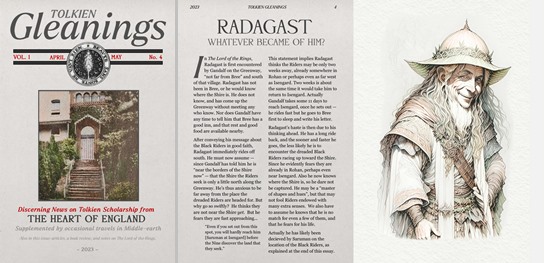
* My Tolkien Gleanings PDF ‘zine version is now available. Including a 5,000 word illustrated essay on Radagast.
* And finally, who knew that Leonard Nimoy (Mr. Spock, Star Trek) recorded ‘The Ballad of Bilbo Baggins’ in 1967? That’s noted in a new open access journal article on “Remediating fantasy narratives for participatory fandom: Tolkien’s stories and their translations in films, videogames, music and other products of the culture industries”. As well as the usual survey, there are also a couple of pages on the “music industry, with reference to well-known songs and bands”. Mercifully, Archive.org only has a 30 second clip of the cringe-tasic “Ballad of Bilbo Baggins”.
Would anyone even notice, if it dropped on Hanley in 2023?

Tolkien Gleanings #68.
* The John Garth public lecture, given this week as the annual Tolkien lecture at The University of Birmingham, is now online on YouTube as “The Houses of Healing: Tolkien, Fantasy, and the Road to Recovery” (May 2023). A very timely choice of topic, as the pandemic formally ceases but the wider healing is just beginning.
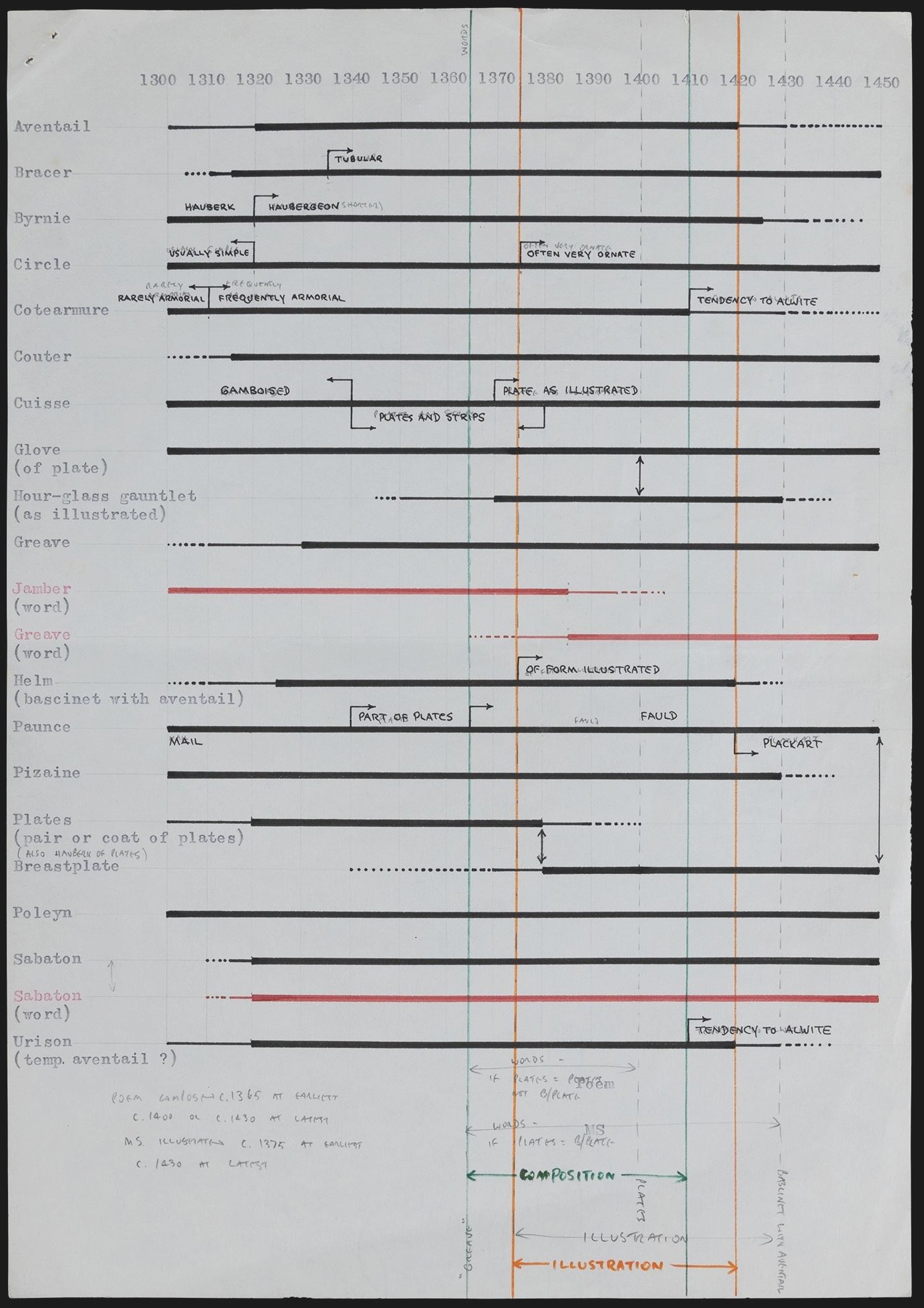
* For sale, “Two Pieces of Correspondence Concerning the Dating of the 14th C. Poem, ‘Sir Gawain and the Green Knight'”, with Tolkien’s initial reply and a useful scan of the armour terms in Gawain placed along a timeline. By that measure “composition” should have been between 1364 and 1410, at least according to the armour specialists of the 1960s (the letter was 1971). My own preferred date would be 1377, for the composition.
* Two of the large Tolkien tapestries are to go on display again, as part of a large exhibition in Soreze (south of France, in the hills some way back from the coast) from May to October 2023…
“The intention is to compare styles and show how, from one century to another, a fantastic universe is organised visually, becoming capable of arousing the imagination through the combination of text and printed image. From lithographs by Salvador Dali to tapestries representing the works of Tolkien, passing through the classics of ancient mythology and Robinson Crusoe, you will be surprised by the journey offered by this exhibition.
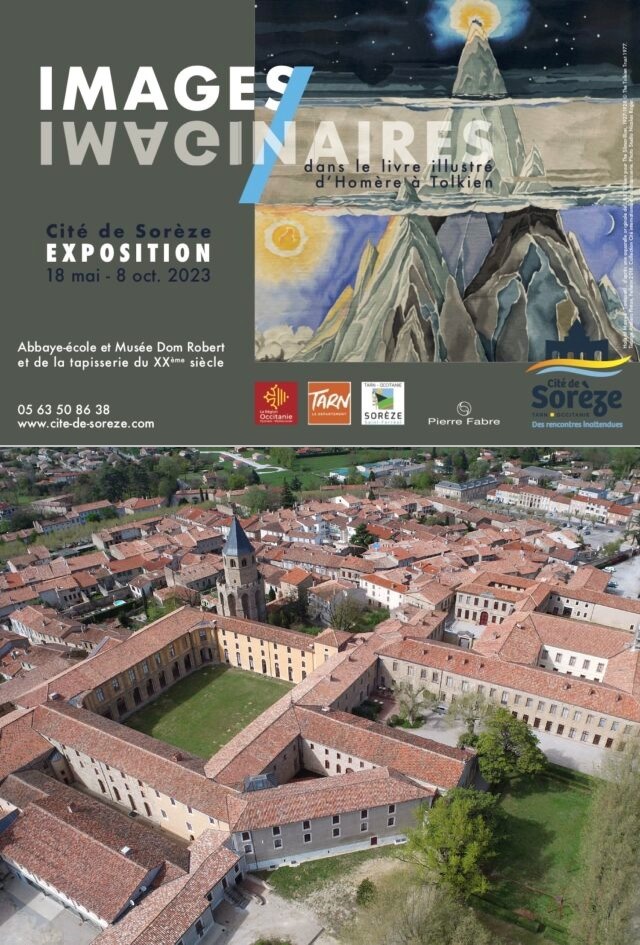
Also many other items relating to fantastical journeys, including medieval illumination work, Aesop’s animals, Robinson Crusoe, Jules Verne, Don Quixote, and Babar the elephant.
* Also from France, where Tolkien is obviously enjoying a second-breakfast year, news of a new book Un chemin inattendu: La somme sur Tolkien: Le seigneur des anneaux (June 2023) by Diego Blanco Albarova. Apparently a …
“Catholic ‘application’ of the parable of The Lord of the Rings, with an introduction by Bishop Jose Ignacio Munilla, Bishop of San Sebastian”
The title might translate, for sense in English, as something like An Unexpected Path through Tolkien and The Lord of the Rings. Seems to be a French translation of a well-reviewed Spanish religious best-seller of 2016, which even has a 2018 audiobook. No English edition, so far as I can tell.
* Now on Google Books with a very extensive selection of free pages, Myth, Magic, and Power in Tolkien’s Middle-Earth: Developing a Model for Understanding Power and Leadership. Otherwise the book is still forthcoming, to be published in mid July 2023.
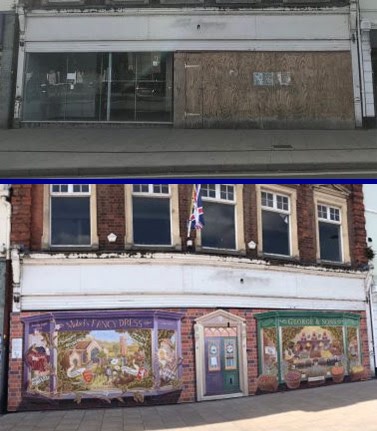
* And finally, the English Midlands town of Evesham remembers the Tolkien family, as part of the ongoing restoration of two 19th century High Street shops.