Tolkien Gleanings #350

Tolkien Gleanings #350

* Now open, the Tolkien Fanfiction Survey 2025. No deadline, it seems. But the survey details were posted six days ago. A survey for readers as well as writers. It happens every five years, and this one seem especially relevant as now we have advanced creative-writing AIs in the mix of tools.

* The editor of the new book Tolkien’s Medievalism in Ruins: The Function of Relics and Ruins in Middle-earth is featured in a press article issued by his university. Freely available online.

* Vincent Ferre has a new conference paper in French on Fabula, “Peuples fictionnels et dynamique de la creation chez J.R.R. Tolkien: peuples, langues et geographie imaginaires” (‘The Dynamics of Creation in J.R.R. Tolkien’s Fiction: Peoples, Languages, and Imaginary Geography’). Freely available online.

* A 2025 paper, “Comparing Tolkien’s Thieves To Beowulf and the Old English Context”. Freely available online.

* The journal Different Visions: New Perspectives on Mediaeval Art seeks essays on ‘recalcitrant’ works, for a future issue. Potential contributors are encouraged to think about…

“objects and images that they find confounding, have struggled to write about, have abandoned the study of, or have found resistant to art historical methodologies”

It strikes me that one might write about how Tolkien has influenced how students approach certain medieval imagery, and how this complicates teaching and student reading/writing.

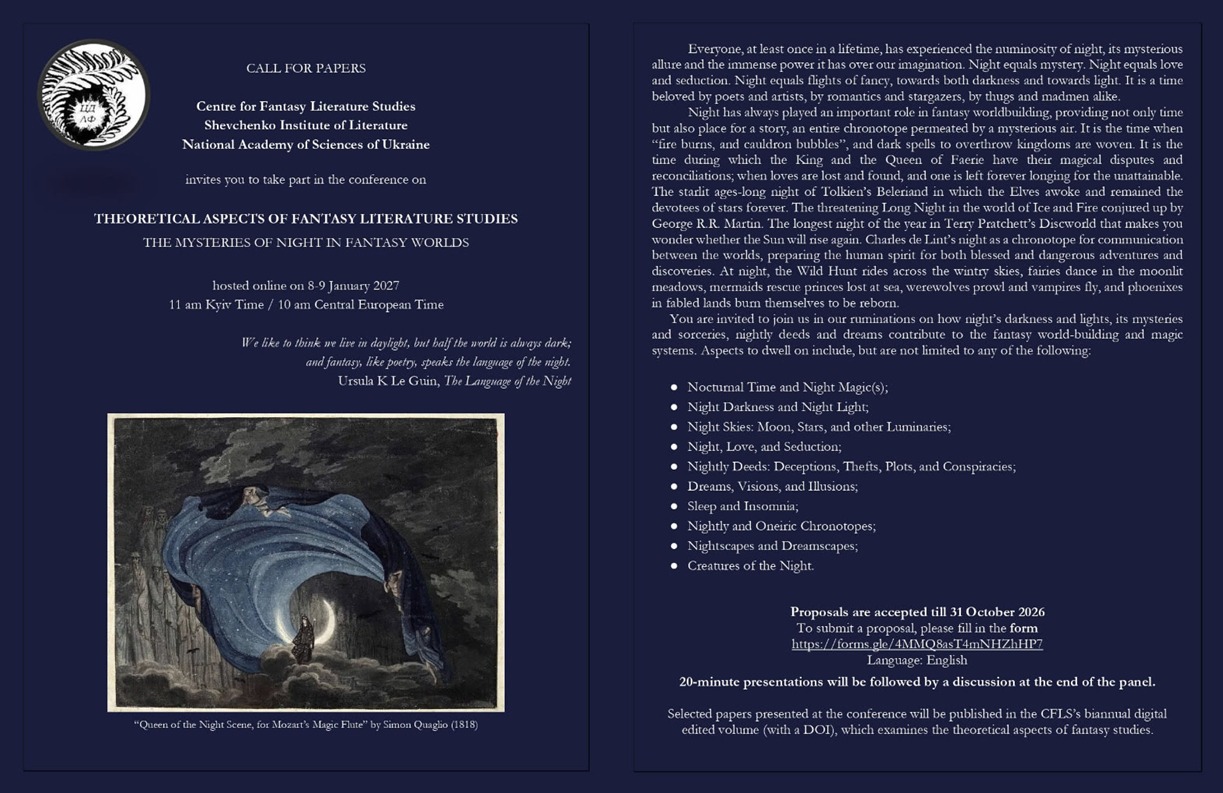
* The poster for the Tolkien exhibition in Trieste, Italy, on now.

* And finally, the latest Brookston Beer Bulletin on Tolkien and beer.

George Formby had his start in Burslem

Here’s an interesting bit of Stoke-on-Trent history. It was in the Potteries that George Formby launched himself as a national film-star. His first feature-film Boots! Boots! (1934) had its premiere in Burslem.

Boots! Boots! was a low-budget film and had been made independently in two weeks, after George had met (in Warrington, Cheshire) the owner of the tiny film studio Mancunian Films. The independent self-funded production meant that no-one from the studio/cinema chains wanted to premiere the finished film, or even to book it.

But Burslem gave George a chance, with a premiere of the film in early July 1934 at the Palladium Cinema (1910-1941) which was on the Waterloo Road, Burslem. According to George, reminiscing about his career on TV in 1960, “I went up there [to Burslem], and it packed them out”. Soon audiences nationwide were queuing around to block to see the new comedy-musical, thus launching him on his career as the biggest and best-loved comedy stars of the 1930s and 40s — and also a tireless entertainer of the front-line troops during wartime.

Apparently the Roxy cinema in Hanley quickly picked it up as well in July 1934, on seeing what a success the film was in nearby Burslem. Then the Regal over in Newcastle-under-Lyme ran it during the early part of the August 1934 school holidays.

Some of the Potteries audiences would have already known him by voice, since his 1932 song “Chinese Laundry Blues” (aka “Chinese Blues”, the ‘Oh Mr Wu’ song) had become a huge hit among the working-class of the Midlands and the North. Despite it only being issued on record as a B-side song on its 10″ disc. And despite George having his songs banned by the prim BBC, for being too saucy in their (implied) lyrics — which no doubt added to their appeal.

Boots! Boots! is not a great film by the standards of his later more polished studio films, but its reputation was marred over the decades by not being seen complete. To the extent that film historians thought it had almost no plot and was just a series of musical-hall skits. This was because the movie was half-lost — available to modern audiences only as a drastically-cut 55 minute version. Until… a complete 80-minute print was discovered by cinema sleuths in the year 2000! So, be warned that the current Amazon streaming version is only 64 minutes, and the two YouTube versions are worse at 50 and 52 minutes respectively. The only Archive.org copy (“George Formby Collection 1”, film 14) is even worse than that, at a paltry 49 minutes! Nearly half the film, missing!

The Palladium cinema appears to have been a relatively small cinema on the southern fringes of Burslem town centre, and according to cinema historians the owners didn’t advertise much in the local Sentinel newspaper. Thus there’s no 1934 newspaper ad in the archives. Possibly the cinema didn’t need to advertise, since (judging by a Staffordshire Past Track glimpse of the frontage) they were not one of those massive 1930s purpose-built ‘palace’ art-deco cinemas. More of a hold-over from the silent era, by the look of it. Presumably the owners had all the trade they wanted by word-of-mouth alone.

Where then is the DVD with the full movie, today? Not on Amazon. So far as I can tell from fairly systematic search, only the small store Loving The Classics has Boots! Boots! with a claimed 80-minutes running time, burned for you on a DVD-R. I guess it’s also possible that one might obtain a copy via membership of The George Formby Society.

But as I said above, it’s not for everyone. But even in its short version it’s a fascinating glimpse of the olde ‘music hall’ Formby, with Formby as an anti-authority figure in Chaplin-style baggy pants, a persona also seen in his next and equally-creaky indie movie Off the Dole. Once he was taken up by a big studio, his anarchic edge was smoothed into more of a hapless cheery-chappy character. Though he still regularly attacks policemen, and pokes fun at pompous officials, he does do as a comical booby. His run of British films have mostly held up very well, with Let George Do It! being generally regarded as one of his best mid-period films, while Come on George has great comedy-charm partly because he was working with the racing horses he loved. Even some of his later Columbia Studios films, obviously half-made with an American audience in mind, are quite acceptable. As well as singing his catchy songs — such as the classic “Leaning on a Lampost” — it’s said he did many of the film stunts himself, being an expert motorcyclist and horse jockey. He had left school at age seven, unable to learn to read and write (he never did, properly), to work as a professional boy racing-jockey until age 16. He went on to become the richest entertainer in Britain, known and loved throughout the British Empire.

And it all started for him in Burslem, on the Waterloo Road.

Tolkien Gleanings #349

Tolkien Gleanings #349

* 70 years ago today, 20th October 1955, one might stroll down to the local bookshop to buy a pristine hardback of the just-published The Return of the King, and thus be able to finish reading The Lord of the Rings. At the same time one might have picked up copies of The Chrysalids by John Wyndham (UK: September 1955) and The Magician’s Nephew (UK: May 1955). Other classics of that year were then only available in the USA (Bradbury’s The October Country, and the first hardcover collection of R.E. Howard’s Conan), in Paris (Lolita), or were still awaited (Larkin’s first mature collection of poetry, dated October but not in bookshops until November).

* Dimitra Fimi’s blog has a new post considering “the conception of hobbits as children”.

* The latest edition of the podcast Tangible: Theology Learned and Lived is on “Tolkien’s Way”, with guests Dr. Charles Arand and Dr. Kent Burreson.

* A new book from a Bible scholar on Lewis, Between Interpretation and Imagination: C.S. Lewis and the Bible. Due on 4th November 2025, according to Amazon UK. I also noted another forthcoming book, A Reader’s Guide to C.S. Lewis, due on 18th November 2025.

* I was amused to see that Tolkien’s friend Lewis has also become a fictional detective, via the ‘C.S. Lewis Investigates’ series of murder-mystery novels. The first of which appeared, seemingly to much acclaim from the critics of such things, back in April as The Mystery at Rake Hall. Although Tolkien-as-character has beaten Lewis to it by six months, being the protagonist of the novel Tolkien and The Dangerous Truth (2024).

* Some pleasing work on DeviantArt this week: ‘J.R.R. Tolkien’ by Numediteur, ‘Gollum’ by MooratSmith, ‘Fangorn Forest’ by LeopoldR (although the forest perhaps more suited to Sam, Frodo and Gollum skirting the wood as they approach the road to Cirith Ungol), and ‘Echoes of Gondolin in the Trenches’ by Xukarriere.

* And finally, the tireless British Fairies blog on “Early Accounts of British Faeries”.

Tolkien Gleanings #348

Tolkien Gleanings #348

* New in the latest rolling issue of the Journal of Tolkien Research, Kristine Larsen has “J.R.R. Tolkien and Peter Medawar”. Freely available online. In May 1941…

“… a military plane crashed near Tolkien’s home. This article ties together his family’s experience, the impact it had on the Oxford community, and a Nobel Prize, whose winner Tolkien later shared air raid warden duty with.”

* The forthcoming Winter 2025 edition of the British Fantasy Society’s BFS Journal is to be a “War in Fantasy” special issue. The deadline for accepted articles is 31st October, so I’d imagine that the journal might be released nearer to Christmas?

* The substantial exhibition Icons of the Fantastic: Illustrations of Imaginative Literature from the Korshak Collection runs until 9th December 2025 in Delaware, USA. Accompanied by a 200-image catalogue. Includes original… “rare masterpieces that defined the visual language of beloved classics such as […] Lord of the Rings”.

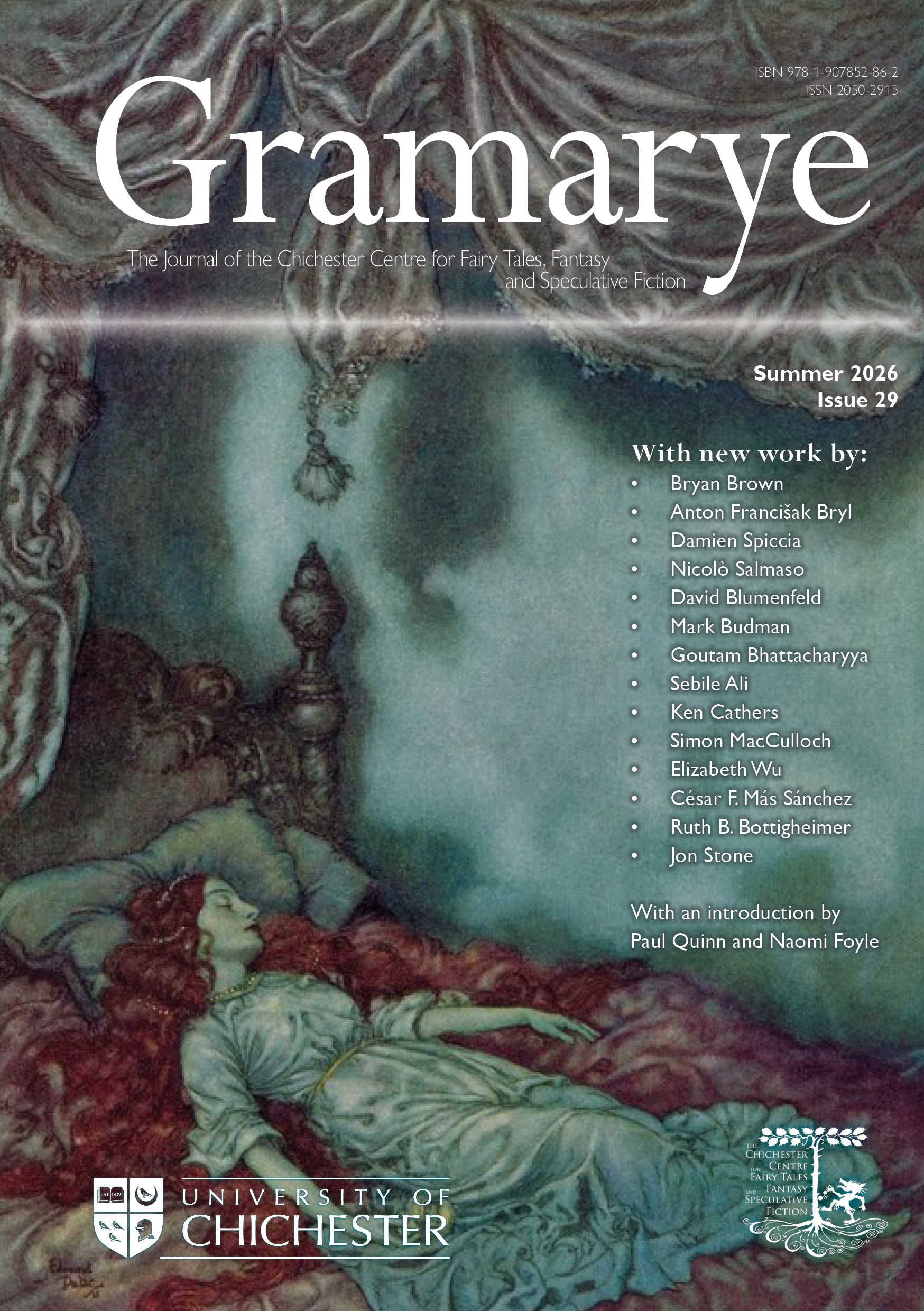
* The latest Summer 2025 issue of Gramarye is now available in print from the University of Chichester. Among other articles in the journal, “Nymphs and their Ways: Mr Tumnus’s Bookshelf”…

“The article explores the significance of the books on Mr. Tumnus’s shelf in C.S. Lewis’s ‘The Lion, the Witch and the Wardrobe’, highlighting how they contribute to the worldbuilding of Narnia. The titles, such as ‘Nymphs and Their Ways’ and ‘Men, Monks and Gamekeepers: A Study in Popular Legend’…”

The issue also reviews, among others, The Exeter Companion to Fairies, Nereids, Trolls and Other Social Supernatural Beings.

* The latest Spiked! magazine considers the claims for “C.S. Lewis: a hard-right icon?”. Freely available online.

* Now officially free on Archive.org, the new biography I Dream With Open Eyes: The Life of David Lindsay (2025). Also available for purchase in hardback.

“Lewis’s friend J.R.R. Tolkien (1892-1973) also read [Lindsay’s] Arcturus [novel] “with avidity”, but its most evident impact on his fiction is in an unfinished work titled “Leaves from The Notion Club Papers”, and takes the form of a criticism of Lindsay’s novel.”

* Next year’s Oxford Medieval Graduate Conference 2026 will be devoted to the theme of “Sounds & Silence”.

* And finally, popular flee-the-UK destination Dubai now has a special museum and cafe to make expats feel at home. The Legendarium Fantastic Museum Dubai. The slick website alone is worth a visit.

Tolkien Gleanings #347

Tolkien Gleanings #347

* “American Tolkien Society Collection now available for research”, though only on-site and in person at Bowling Green State University (Ohio, USA). As of October 2025, the collection is…

“now fully processed and available to researchers. The finding aid can be accessed through the University Libraries’ Finding Aids website. Spanning more than 40 years, this remarkable collection documents the evolution of Tolkien fandom from the 1970s through the 2010s. It includes organizational papers, correspondence, written works, artwork, promotional materials, and publications created or collected by the society, including extensive content related to its journal, Minas Tirith Evening-Star.”

* A new Journal of Inklings Studies, Vol. 15, No. 2 (October 2025), now online. Articles include, among others…

    – Revealed: Tolkien’s 1939 Lecture on Fairy-stories (free online).
    – Note on a Personal Acquaintance with Tolkien, by Fr. Geoffrey G. Attard ($ paywall).
    – Several book reviews of relevance, including on Tolkien and the Gothic, and Tolkien and Romanticism.

* From Eastern Europe, a sophisticated undergraduate dissertation in linguistics titled “Word-Formation in Fiction: Compounds in The Lord of the Rings” (2024). In English, and freely available online.

* The Tolkien Guide has a short review of Doomed to Die: An A-Z of Death In Tolkien. Usefully, some of the interior illustrations are shown. Thus potential buyers can see if the style is to their liking. The slim hardcover book is due to ship in a few days.

* The Tolkien & Illustration blog has an Oxonmoot diary 2025, with photographs.

* A Pilgrim In Narnia on “C.S. Lewis and the Art of Blurbology”.

* And finally, Editorial Erase, a new quality publishing house for Spanish-language Christian books for children in middle-childhood. Apparently such things have been lacking until now. In a 2025 Religion & Liberty interview, freely available online, the owners strongly reference Tolkien and Lewis, they appear to be very open to fantasy, and they also hope to publish past out-of-print classics.

Tolkien Gleanings #346

Tolkien Gleanings #346

* Wayne G. Hammond & Christina Scull have a new long blog post on “Legacy and Faith”, which considers the recent Walking Tree book Celebrating Tolkien’s Legacy. And one finds that the second half moves on to consider Tolkien’s Faith: A Spiritual Biography. Freely available online.

* John Garth has a new article on “‘Mounted on the monster’: Tolkien and the motor-car” ($ paywall), following the publication this week of The Bovadium Fragments.

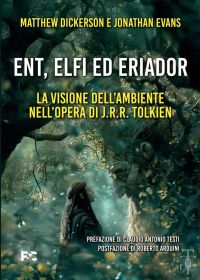
* The pioneering eco-studies book Ents, Elves, and Eriador: The Environmental Vision of J.R.R. Tolkien (University Press of Kentucky, 2006) has a release-date for the first Italian translation as Ent, Elfi ed Eriador. Due on 13th December 2025.

* At the University of Texas School of Civic Leadership, a talk on “The War for Middle-earth” on 19th November 2025. Joseph Loconte gives a talk on his forthcoming book The War for Middle-earth, which Amazon currently pegs to 18th November 2025 in hardcover and ebook.

* In Barcelona from 17th-19th October 2025, an international conference on Faith, Art and Myth

“focuses on the literary, philosophical and spiritual legacy of three giants of Christian literature: G.K. Chesterton, C.S. Lewis and J.R.R. Tolkien. Through conferences, round tables and cultural activities, the congress will offer an invaluable opportunity to explore the power of myth, beauty, and transcendence in their works”.

* In the latest Word on Fire, “Light and High Beauty: J.R.R. Tolkien’s Antidote to Despair”. Freely available online.

* Now freely available online, the Keble College PhD thesis “The Oxford School of Children’s Fantasy Literature: Medieval afterlives and the production of culture” (2011).

* New on YouTube, and well-timed for the falling of the leaves in England, Malcom Guite on trees, Tolkien & the meaning of things.

* And finally, Footnote remover, a new free online service to remove all footnotes and in-text superscript numbers from a PDF file. Perhaps useful if, for instance, you wanted to make a text-to-speech audiobook of an annotated text. Or ingest annotated letters or essays into an AI, without the annotations.

Tolkien Gleanings #345

Tolkien Gleanings #345

* A new issue of Mythlore, Vol. 44, No. 1 (2025) is now available. Includes, among others… “Tolkien on Kennings and the River-(woman’s) Daughter” and “Fathoming the Mathom-house: Museums and Material Heritage in Tolkien’s Legendarium”, plus book reviews including a review of Germanic Heroes, Courage, and Fate: Northern Narratives of J.R.R. Tolkien’s Legendarium. Freely available online.

* The contents are now known for Tolkien’s Medievalism in Ruins: The Function of Relics and Ruins in Middle-earth, due out later this week as an expensive academic book. Non-videogame chapter titles include, among others… “Ruins of Past Tongues: Tolkien’s Timeless Philology”; “‘What do you Elf eyes see?’ Perceiving Ruin in Middle-earth”; and “The Blade of the King: Tolkien, Arthur, and the Remnants of Kingship”.

* In the latest edition of the Spanish journal Scripta Theologica, a short review of the Spanish translation of Holly Ordway’s Tolkien’s Faith: A Spiritual Biography. Freely available online.

* The Tolkien Collector’s Guide reviews The Bovadium Fragments. One aspect of the book I wasn’t aware of is that… “there are excerpts from and mentions of various letters”, presumably letters of relevance to Tolkien’s theme.

* In Italian, a new one-hour and very echo-ey recording of a live event featuring the President of the Italian Association of Tolkien Studies in conversation with Paolo Nardi.

* The young Tolkien in “Battle”, a new picture by Gnome-the-artist on DeviantArt.

* The 45th Lustrumfeest, to be held in the Netherlands in June 2026. The guest of honour is to be the founder of the German Tolkien Society.

* And finally, an American-style cartographic map of Western Middle Earth in the Fourth Age. A larger version is freely available online, but sadly it’s still not large enough to read the smaller labels.

Tolkien Gleanings #344

Tolkien Gleanings #344

* This week The Imaginative Conservative has a new text interview with scholar Thomas Honegger on Tolkien. In English, and freely available online.

[Honegger:] Interestingly, Tolkien’s influence is even perceptible in the world of Hogwarts [the setting of the Harry Potter novels]. Rowling’s Horcruxes, the Elder Wand, and the Cloak of Invisibility can be seen as an intelligent Tolkien reader’s response to or commentary on issues that Tolkien left unanswered in his own texts, such as ‘How did Sauron forge his One Ring horcrux?’ and ‘How does an object that provides absolute power [as do both the One Ring and the Elder Wand] affect its possessor and those who come into contact with them?’

* This week Edmund Prestwich’s blog has a long article on the musicality of “Tolkien’s Lament for Boromir”, which includes a musical expert’s appreciation of the subtleties of the singing of the lament by the Clamavi De Profundis musical group.

* Talking of song, the McFarland book Tolkien’s Glee: A Reading of the Songs in The Hobbit and The Lord of the Rings is set for a paperback (only) release in a few days on 12th October 2025.

* A new Masters degree dissertation in Illustration, “Imaginary Friends: Engaging the Unconscious Mind through Picture Books” (2025). This focuses on… “the ‘imaginary friend’ as a narrative device in picture book storytelling”, and along the way looks in part at… “the benefits of imaginative play and fantasy in readers [as found in works] by Gianni Rodari and J.R.R. Tolkien”. Freely available online. From the same University of Washington degree, the dissertation “On Drawings of Dragons” (2025) also touches on Tolkien — but there the download is under embargo until 2028.

* Oxford Council’s planning dept. has at last fully approved plans to restore Tolkien’s Eagle and Child pub. The Ellison Institute of Technology (EIT) will refurbish the disused pub where the Inklings met, via the heritage specialist Donald Insall Associates and their workers. There will be a new rear landscaped garden, and a cafe will be added alongside the pub in 50 and 51 St. Giles. The upper floors will be made into new workspaces for EIT, and I recall there was also initial talk of a public meeting-room. Billionare Larry Ellison’s EIT is currently spinning up a new £300m cancer research facility in Oxford, based elsewhere in the city.

* And finally, another and earlier tea-rooms. I found a third view of the road frontage near the Post Office and Woodside Cottage (later ‘Fern Cottage’) at Rednal (Lickey Hills), where the young Tolkien brothers stayed with their mother. It shows, close-up, the house seen in the distance on yesterday’s postcard of Rednal Post Office. This house was a little beyond the start of the track that led to Birmingham Oratory’s Retreat House and the nearby Woodside Cottage. Turns out it was a pub, or would be.

At a guess the new picture seen above was made five or six years after the Tolkien brothers were there, so perhaps 1910 or thereabouts? The wide curving frontage of the Hare & Hounds pub has here become the “Motor Terminus, Rednal”, meaning the terminus for motor-buses from the city of Birmingham. A sign seen on the far left (the lower-lettering was covered by damage on the original, and has been slightly and inevitably gribbled by my restoration process) is clearly headed “_ern Cottage” (Fern Cottage), and was presumably directing people up the track towards the cottage. The apparent advertising(?) sign suggests the Cottage was then making money for the Oratory by serving as a summer tea-room?

The ‘supplies delivery’ wagon seen above somewhat evokes the Hobbiton ‘party fireworks delivery’ wagon, described at the start of The Lord of the Rings

An odd-looking waggon laden with odd-looking packages rolled into Hobbiton one evening and toiled up the Hill to Bag End. The startled hobbits peered out of lamplit doors to gape at it. It was driven by outlandish folk, singing strange songs: dwarves with long beards and deep hoods.

Tolkien Gleanings #343

Tolkien Gleanings #343

* In the 150th Mosaic Ark podcast, Professor Robert J. Dobie is interviewed at length about his book The Fantasy of J.R.R. Tolkien: Mythopeia and the Recovery of Creation (2024). It’s resulted in a very long podcast, at over two hours. The first 25 minutes or so can easily be skipped, if you’re short of time and just want to get to the core discussion.

* Dates for the 2026 ‘Tolkien Days’ of the German Tolkien Society, 28th to 31st May 2026, 17,000 people are expected to attend the huge annual festival, in person.

* The Tolkien Society has set a date for its new book, Numenor, The Mighty and Frail. It will contain eleven papers arising from their 2023 seminar on the topic. To be released on 25th November 2025.

* A repository record and abstract for an article due in a forthcoming Edinburgh University Press journal, “World War Weird: Blackwood and the First World War”. Blackwood being the well-known English writer of supernatural tales, and a man some 20 years older than Tolkien. See also “Possible Echoes of Blackwood and Dunsany in Tolkien’s Fantasy” in the first issue of Tolkien Studies (2004).

* London’s National Portrait Gallery has just opened its “Writers Revealed” exhibition in Busan (South Korea’s equivalent of Birmingham). The large show… “explores six centuries of portraits of literary giants. Alongside the portraits, the exhibition includes intimate handwritten manuscripts, letters and illustrations, as well as rare, published editions of the writers’ works.” Tolkien is said to be included, alongside Shakespeare, William Blake, Lewis Carroll and many others British writers.

* The French journal Belphegor had a 2024 themed issue asking “Do the Middle Ages sell?”, with many articles on the use of mediaeval imagery in modern marketing and product packaging (e.g. board games). Mostly in French, but easily auto-translated. Freely available online.

* Arv: Yearbook of Nordic Folklore invites articles… “that study changes in the interaction patterns between human beings and beings that are more than human” (i.e. supernatural). Abstract deadline: 15th December 2025. The call states that the journal becomes open-access six months after issue publication, but there’s no sign yet of their back-issues going open-access. Possibly 2026 will be the first such issue?

* A 50 minute talk from the esoteric Fintry Trust on “Tolkien and the Autumnal Equinox”. New and freely available on YouTube.

* And finally, the latest Mediaeval Podcast is a special on Medieval Wolves, interviewing… “a leading expert on wolves in the Middle Ages”. Freely available on YouTube.

Tolkien Gleanings #342

Tolkien Gleanings #342

* New on YouTube, an interview about the forthcoming Tolkien book The Bovadium Fragments, with the director of the Bodleian Library’s ‘Centre for the Study of the Book’.

* Newly added to the current rolling issue of Journal of Tolkien Research, a long 19-page review of the new book Proceedings of the Tolkien 2019 Conference (2025). Freely available online.

* “Ex Occidente Lux: Tolkien’s New Mythology for the Western World”, a Web page giving some details of a forthcoming lecture to be given at the University of Norway on 29th October 2025, by… “Visiting scholar Jan Kozak from Charles University in Prague.”

* Airyyn is making Middle-earth maps and infographics about maps, on Deviantart. Including an infographic which offers a tree of the Middle-earth cartographers

Her latest, published to Deviantart a few days ago, is The Maps of The Silmarillion… “This infographic shows the publishing history of the maps of The Silmarillion, from the first Silmarillion map in the 1930’s to the map in The Children of Hurin.”

* Australia’s OzMoot 2026 will discuss the themes of ‘Celebration, Ceremony, and Courtship’ in Tolkien. Canberra and online, from 24th-26th January 2026.

* “War, Fellowship, and Survival in the Lives and Works of C.S. Lewis and Kindred Spirits”, a three-day conference set for 11th-13th June 2026 in Amiens, France.

* And finally, I spotted an alternative view of the entrance to The Post Office, Rednal, which has popped up on eBay. Here I’ve newly enhanced and colorised the eBay scan. One can determine the location by comparing it with another postcard which named the Post Office, re: the same fence-sequence and sign-board. The new card looks in the opposite direction.

It’s not impossible that we see the Postmaster, in the man wearing the shopkeeper’s apron.

In 1904 the Tolkiens were staying with the postman and his wife very nearby at ‘Woodside Cottage’. Rednal Post Office was then only a stone’s throw from the start of the Oratory retreat’s driveway (a yard or two out of sight on the newly found view, at the end of the hedge on the right). The same driveway also led to the cottage. The lads had perfect weather in summer 1904 and went roaming, sketching, tree climbing, kite-flying and bilberry-picking. And presumably they visited the Post Office for fizzy-pop and crisps (U.S.: soda and potato-chips).

Tolkien Gleanings #341

Tolkien Gleanings #341

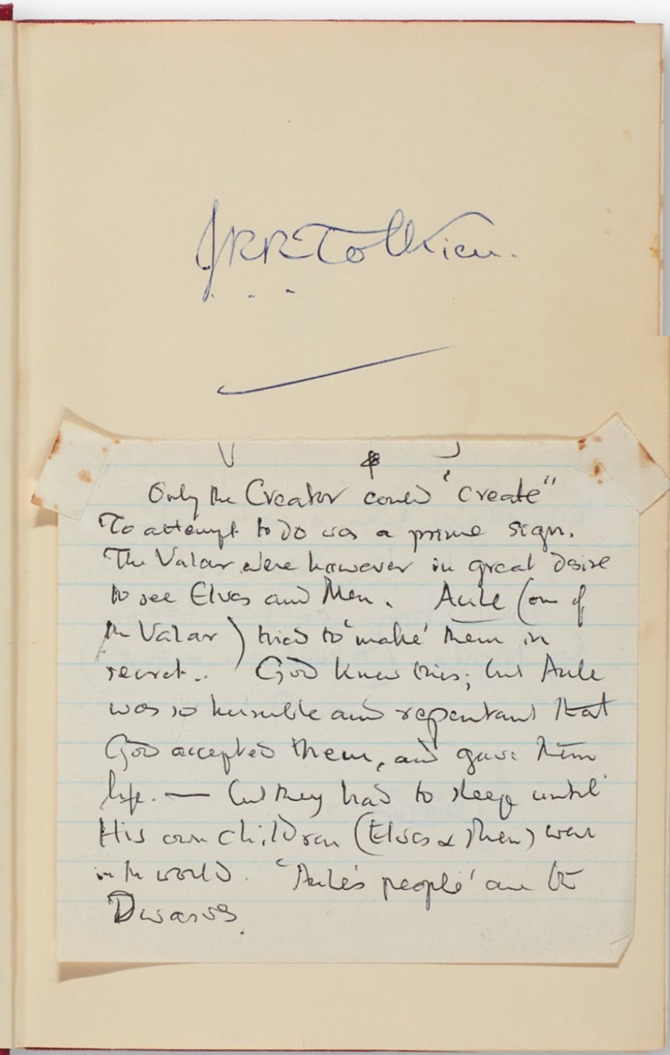
* The recently auctioned “signed by Tolkien in Elvish” LoTR set has sold for £24,000. The news also reveals some additional Tolkien biography…

“The book was originally gifted to one of three Oxford University students who befriended Tolkien in the 1950s. Alan Egerton Parker, then an undergraduate at University College Oxford in 1957, read The Lord of the Rings trilogy and decided – along with two pals – to track down the retired author, who was living nearby. Tolkien welcomed the students into his home, invited them for tea, and the group went on to enjoy a series of friendly meetings. Before the students graduated, Tolkien presented each of them with a personally signed set of The Lord of the Rings as a farewell gift.”

* TolkienGuide reviews The Bovadium Fragments, and gives the complete table-of-contents including the illustrations list. We also have a poem unpublished until now…

“One might think that we had been treated to so much poetry recently, with The Collected Poems […] that no more substantial poems would remain to be published. […] The poem [newly published here], with its mention of “Iffley” makes one look back to the poem bearing that same name, ‘From Iffley’, written from 1911 to c. ?1915″ [to be found in Poems, pages 54-6].

* Oronzo Cilli reports his findings on “Printing Tolkien: Investigating the 1925 Oxford Professorship Application”. Freely available online.

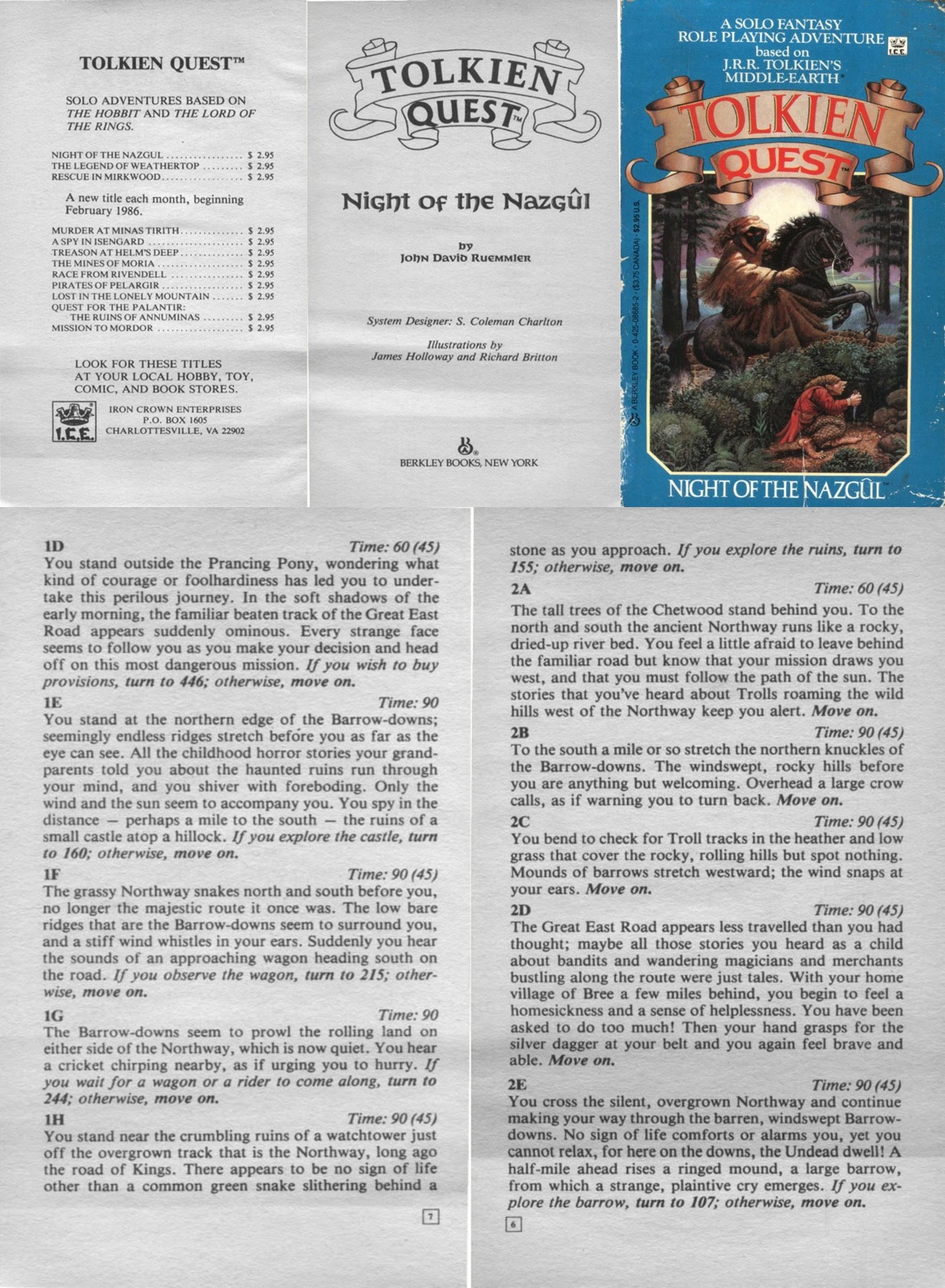
* The Soundscape of Ea by Jordan Rannells is apparently about to release, this week. Though the Web page is still offering a pre-order. For $70, an entire musical score for the Silmarillion mixed with suitable field records of the natural world. The recording is said to be precisely… “timed to match the Andy Serkis audiobook”.

* A new paper on “Cold Words, Heartless and Miserable: Tolkien’s Approach to Supernatural Horror” (2025). Freely available online. Tolkien’s LoTR chapter…

“”Fog on the Barrow-downs” is basically a tale of supernatural horror [and] demonstrates that Tolkien, as a horror writer, could innovate and improve on his materials”

* The tireless British Fairies blog has a new post on “Forever fading: the ever-present, ever-leaving faery”, arising from a recent conference talk…

“our perennial conviction [is] that the faeries have ‘just [now]’ disappeared — that they were something our grandparents believed in, but which can only be regarded as naive nonsense by ‘modern’ society. The irony is that people have been saying things like this at least since the time of Geoffrey Chaucer in the late fourteenth century.”

* And finally, talking of disappearances, a new scientific discovery in The Science of the Will-o’-the-Wisp. But the scientists must not only explain why the “tricksy lights” appear(ed), but also why they seem to have disappeared.

The science of the Will-o’-the-Wisp

The Smithsonian magazine this week has an article on the ongoing mystery of “What Actually Sparks Will-o’-the-Wisps?”, which follows from a new scientific paper which has discovered that bog-methane bubbles of different sizes can ‘spark’ as they rise and rub against each other. Or “sparked” might be more accurate, since no-one sees Will-o’-the-Wisps today…

“Pavao suggests that will-o’-the-wisps were caused by past reactions between travelers’ lanterns and gas generated by wetlands.”

Our using modern electric torches would then explain why they are no longer seen, even in the many places still wet and boggy. An easy theory to test, I would imagine. Just don olde leather boots (I imagine rubber wellies may prevent some vital electric conductivity or static build-up from happening), and traipse damp and windless moors in a warmish twilight with an olde flame lamp.

On the other hand, the Worcestershire first-hand account which opens the book On the Ignis Fatuus: Or, Will-o’-the-wisp, and the Fairies (1846) has a geologist observing the phenomena scientifically, and at at length, from a house, when there was no such passage of lamps across the spot being observed…


In the year 1835 I gave an account of a great many facts which I collected, and which were published in my pamphlet On the Old Red Sandstone of Worcestershire and Herefordshire, relative to that remarkable and interesting phenomenon called the Ignis fatuus, or Will-o’-the-Wisp, but I never had the pleasure of seeing it myself until the night of the 31st of December, 1839, in two meadows and a stubble field on the south side of Brook House, situated about a mile from Powick Village, near the Upton road. I had for several nights before been on the look out there for it, but was told by the inhabitants of the house that previously to that night it was too cold. I noticed it from one of the upper windows intermittingly for about half an hour, between ten and eleven o’clock, at the distance of from one to two hundred yards off me. Sometimes it was only like a flash in the pan on the ground; at other times it rose up several feet and fell to the earth, and became extinguished; and many times it proceeded horizontally from fifty to one hundred yards with an undulating motion, like the flight of the green woodpecker, and about as rapid; and once or twice it proceeded with considerable rapidity in a straight line upon or close to the ground.

The light of this Ignis fatuus, or rather of these Ignes fatui, was very clear and strong, much bluer than that of a candle, and very like that of an electric spark, and some of them looked larger and as bright as the star Sirius; of course they look dim when seen in ground fogs, but there was not any fog on the night in question; there was, however, a muddy closeness in the atmosphere, and at the same time a considerable breeze from the south-west. Those Will-o’-the-Wisps which shot horizontally, invariably proceeded before the wind towards the south-east.

On the day before, namely, the 30th of December, there was a white frost in the morning; but as the sun rose behind a mantle of very red and beautifully stratified clouds, it rained heavily (as we anticipated) in the evening; and from that circumstance I conjectured that I should see the phenomenon in question on the next night, agreeably to all the evidence I had before collected upon the subject.

On the night of the 1st of January, 1840, I saw only a few flashes on the ground at the same place; but on the next night (the wind still blowing from the south-west) I not only saw several Ignes fatui rise up occasionally in the same locality many feet high, and fall again to the ground, but at about eight o’clock two very beautiful ones rose together a little more than one hundred yards from me, and about fifty yards apart from each other. The one ascended several yards high, and then fell in a curve to the ground and vanished. The other proceeded in an horizontal direction for about fifty yards, towards the north-east, in the same undulating and rapid manner as I have before described. I and others immediately ran to the spot, but did not see any light during our stay there. Both these nights were star-light, with detached clouds, and rather warm, but no fog. On the night of the 3rd of January the atmosphere was occasionally thick, but there was not any wind or fog, nor the slightest appearance of the phenomenon.

There was a very considerable quantity of rain on the 4th of January, but it ceased at five o’clock in the evening; and from about seven till eight the meteors again appeared several times at the spot in question, but as there was not any wind they went in various directions.

On the night of the 5th of January (which was star-lit) I observed a few flashes on the ground at the turn of the evening, but it soon after became cold and frosty, and I saw no more of them either on that or the two succeeding nights. I did not see any lightning during the whole of those observations, which were made by others of the house as well as myself.

The soil of the locality is clay with considerable beds of gravel interspersed thereon.

From all the circumstances stated, it appears probable that these meteors rise in exhalations of electric, and, perhaps, other matter out of the earth, particularly in or near the winter season; and that they generally occur in a day or two after considerable rain, and on a change from a cold to a warmer atmosphere.

[The author witheringly concludes his book, after a long survey of possible fairy and ‘hob’ types which might shed light on the topic, with…]

An opinion has been entertained by some writers that “ Will-o’-the-Wisp is nothing more than a luminous insect; but from all that I have seen and collected upon the subject, the volume of light appears to be much too large to give any countenance to that opinion. The principal circumstance upon which the insect theory rests, is that a person who once upon a time chased a “Will-o’-the-Wisp,” caught a mole cricket in his hat: but the probability is, that in chasing one thing he caught another; and, I believe, we have yet to learn whether mole crickets are luminous or not.


Picture: Arnold Bocklin, “Das_Irrlicht” (The Will-o’-the-Wisp, leading a traveler to his doom) (1882).