Tolkien Gleanings #265

Tolkien Gleanings #265

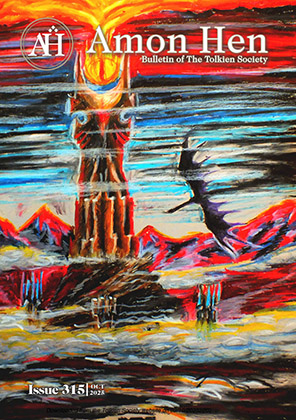
* Mallorn #65 (Winter 2024) is now available for download by Tolkien Society members. Among other items there are long articles on “The Horror of the Unnarrated” in LoTR, and another try at “Cracking the Bombadil Enigma”. Plus a shorter essay on the ur-spider Ungoliant, followed by several book reviews (in one, the pithy complaint that “Christopher Tolkien gets as many mentions as Karl Marx”). Also has excellent colour illustrations.

* The Routledge Handbook of Progressive Rock, Metal, and the Literary Imagination (2025) is a bumper collection of chapters which includes the long and dense chapter “Into The Storm”, on the band Blind Guardian’s Nightfall in Middle-earth and the reception of Tolkien in German metal music. This is followed by the chapter “Time Travel Through Tolkien”, which surveys Tolkien in classical (Swann etc), folk rock and psychedelia circa 1962-69.

* The exemplary and long-running localist publication The Hockley Flyer (for Hockley and the Jewellery Quarter, just to the north of the centre of Birmingham UK) lists an event on 12th January 2025, a walking tour of Key Hill Cemetery in Birmingham. Apparently “Tolkien used to visit” when living in Birmingham, when it may still have been marked on maps as the ‘General Cemetery’. The weather for the afternoon of Sunday 12th is currently looking crisply cold and dazzlingly sunny… take sunglasses.

* Canadian magazine Catholic Insight has the new article “Apostles of Joy: J.R.R. Tolkien and St. Philip Neri”. Freely available online.

* Contemplations on the Tree of Woe has a new long article on “Goethe and Faust for a New Age”, which considers the possibility that, like Goethe, Tolkien is to now be considered as… “a world-historical figure whose work is emblematic of an entire civilization”. Doomer Vox Populi responds, with the shorter blog post “We are the Elendilans”, which broadly agrees, but doomily suggests rather that we are a civilisation in inevitable decline.

* Note that Archive.org have just put a mass of 1930 books online “to borrow”. Technically, they will not be public domain in the U.S. until 1st January 2026. Not a very exciting bunch, judging by a ten-minute scroll through the titles. But I did spot the book Fairy tales from Baltic shores: folk-lore stories from Estonia.

* And finally, as ‘global boiling’ reaches new extremes of… erm… deep cold and ice… here’s a timely reminder that there is also a British summertime. Newly posted on YouTube, a simple video recording of the View from J.R.R. Tolkien Memorial Bench in Oxford Parks – June 2024.

Tolkien Gleanings #264

Tolkien Gleanings #264

* From Italy, new on YouTube, Franco Manni interviews Tom Shippey on Tolkien, mainstream literature and providence. Telephone call-box sound, but it’s steady and clear and has no drop-outs. Shippey offers amusing observations on Ugluk (an orc in LoTR). Comparing Ugluk’s difficulties in managing and directing orc-rabble, aggravated by squabbling orc factions, to the task of managing a university department.

* The book Tolkien’s Faith (2023) is now also available in Spanish, and this week ReL published a freely-available profile interview and book outline in Spanish. I translate…

“an educated Spanish Catholic today will learn peculiar things about the Catholicism that Tolkien experienced 100 years ago in England. His peculiar time and context [i.e. Edwardian England, initially] had practices and devotions different from those many practising Catholics know today. […] The Spanish translation of Ordway’s book is careful and attentive; it was done by Monica Sanz, a great connoisseur of Tolkien’s work, who in recent years has collaborated in correcting new Spanish editions of the British author’s books.”

* Karen L. Kobylarz’s blog this week reviews Tolkien’s Faith (2023). Talking of this book, one wonders when there’s going to be an audiobook version. Surely there would be enough demand?

* TradKitty has posted a new annotated reading-list of ‘Tolkien-related Books Interesting to Catholics’.

* A new book review in the latest Journal of Tolkien Research examines The Songs of the Spheres: Lewis, Tolkien and the Overlapping Realms of their Imaginations (2024).

* I think I missed this one. Back in November, there was an online event for two new books from Tom Shippey’s Uppsala Books.

I see that one of these books, Easter: A Pagan Goddess, A Christian Holiday, and their Contested History is now available (it was still ‘forthcoming’, last time I looked) and it is now also now listed on Amazon UK. Following a lot of neo-pagan confusion and confabulation, this book aims to clearly state and examine…

“the principal claims and counter claims that now surround the goddess Eostre (recorded once by the Venerable Bede in 725 AD) and the origins of the Christian paschal festival. It critically examines the substance and history of these ideas from their earliest sources to the present day.”

* Forthcoming from Uppsala Books, I see the title Northern Lore: A Thematic Guide to the Proverbs of Medieval England, Germany, and Scandinavia.

* And finally, Michael Kurek’s third symphony, the English Symphony, is to be released 7th February 2025. YouTube has a long sample from his Symphony No. 2 – Tales from the Realm of Faerie (2022).

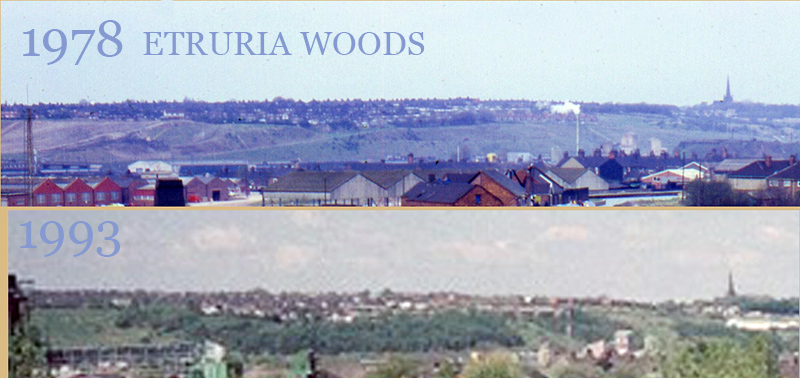
Strange Country: Sir Gawain in the moorlands of North Staffordshire – an update

I thought it was about time for a short survey of some of the academic findings that have emerged, or been found, after my book Strange Country: Sir Gawain in the moorlands of North Staffordshire.

1. I’ve since found that Ordelle G. Hill’s now-unobtainable book Looking Westward: Poetry, Landscape, and Politics in Sir Gawain (2009) opens by examining the similarities with… “the two most significant Welsh poets … Iolo Goch (1325-98) and Dafydd ap Gwilym (1320-80)”, wandering Welsh bards “well known throughout Wales”. Their dates certain align exactly with my timeline, since my candidate has the dates 1326-1383. And also note the major minstrel court meeting at Tutbury in Staffordshire from 1372 onward, supported by lavish patronage. Just the sort of thing to lure the best poets out of Wales. And with Tutbury being just 13 miles SE of my Gawain candidate (then 46 years old).


2. I read that in 2012, a lecture by Joel Fredell made a good argument that the Cotton Nero ms. (containing the surviving copy of Gawain) was scribed in York in the early fifteenth century. Quite possible, given that my candidate had strong connections to York as well as to Alton in Staffordshire. However, Fredell’s additional claim that this new… “evidence refutes many assumptions about the Gawain-poet’s connections” to Cheshire etc seems rather a dramatic over-reach. The man simply had, on my evidence, homes in North Staffordshire and York and moved between them as was common in the period.


3. In 2020, I spotted a new M.A. dissertation which considered “The Gawain-poet as Monastic Author”. I read this and found the case unconvincing, but the author usefully highlighted the work of Philip F. O’Mara (1992). O’Mara had proposed that one Robert Holcot could have been a possible tutor for the young Gawain-poet. I found the dates matched well, since the timeline for my candidate would have had a 16-18 year-old available to lodge with Holcot for a year. Perhaps so as to ‘polish him up a bit’, in terms of education and also spirituality, perhaps even after previously lodging at somewhere like Swythamley near Alton. The polishing would thus have been when Holcot was assigned, c. 1343, to serve with a Dominican religious house in Northampton. So the dates fit. But… it could just be that the Gawain-poet came to know Holcot’s writings later and a literary and philosophical influence came that way.


4. I was unaware of Helen Cooper’s 2021 Gollancz lecture (not online), which is reported to have suggested the patron could have been Richard Scrope. He became Bishop of Lichfield in Staffordshire, from 1387 onward. This connection with Staffordshire is too late in time, by my timeline. And there seems to be no prior connection of Scrope to Staffordshire. But it’s not impossible there was an interest in such works. One should note that Walsingham wrote of Scrope’s “incomparable knowledge of literature”, and that in 1378 Scrope became chancellor of Cambridge University. It is not therefore impossible that in 1378 or next year this friend of literature read a copy of the new Gawain-poem, originally written (as I reckon it) in time for a possible visitation at Alton Castle in Christmas 1377. Scrope was a northerner from Bolton, so may have been able to read the Midlands dialect.

Later, Scrope was the new Archbishop of York from 1398. Scrope would thus have been located in a city that still had strong family connections with my candidate, some 15+ years after the man’s death.


5. In 2022 there was another try at the claim for Sir John Stanley (1350-1414). I blogged about this journal article here. But by my reckoning, Stanley was too late in time by a good 20+ years. Further, it seems to me unlikely that such an ugly and murderous character would also have been one of our finest and most sensitive poets.

I’d further note re: the claims for Cheshire, the telling point in Bowers, An Introduction to the Gawain poet (2012), that (summarising Bennett, 1979)… “The Poll Tax returns of 1379 found that Cheshire and South Lancashire had only four university graduates who could have appreciated, never mind written, an intellectually challenging poem like Pearl”. I further note that I’ve also since heard a podcast with Tom Shippey, who pours very cold water on the idea that the Gawain-poet hailed from Cheshire.


6. In 2024 I noted Leo Carruthers new book Pearl / Perle: suivi de “Tolkien et Perle”, in paperback in French. The introduction apparently proposes… “a new theory about the poem’s patron … one of the most famous English princes of his time, son and father of kings”. I have not yet seen the book, or a review. However, a Google Books snippet in another French book of 2024 usefully informed me that (I translate)…

“Carruthers advances a series of arguments suggesting that Perle was composed for the family of John of Gaunt in memory of Blanche”.

Not strictly “new”, I think. Since I recall I’ve heard Gaunt named as a possible patron before. But possible in terms of dates, if a bit early by my reckoning. Not his wife who died 1368, at age 23. Rather his granddaughter Blanche of Portugal (1388-1389), who died as a babe. Rather late, I’d say, and if he were that close to John of Gaunt then surely we would know more about the author?


I’ve also found a Country Life magazine feature of 1960 on Alton Castle, that would have made many aware that the castle was built atop a mediaeval castle. Country Life having an immense readership at that time. Thus it’s all the more puzzling that Gawain academics have completely overlooked a mediaeval castle that is a near-perfect ‘fit’ both in terms of location and architecture.

Tolkien Gleanings #263

Tolkien Gleanings #263

* The Italian Tolkienists have identified Tolkien’s letter of 14th May 1955 as unpublished. The letter will shortly be auctioned. The Italian blog post quotes from the letter and also investigates the recipient, who lived in Italy.

* The Tolkien and Fantasy blog pins down the dates and places of Borges on Tolkien. Or on what Borges mistakenly thought was Tolkien. Since it seems the blind and ageing author only had “Concerning Hobbits” and the first chapter or so of Fellowship of the Ring read to him, before he became bored and asked his reader to abandon the reading. How much he missed.

* The latest Ancient History magazine has yet another review of Tolkien and the Classical World. There will soon be enough of these to fill another book with reviews-of-the-book! 🙂

* Four more long video-lectures from University of Chicago professor Rachel Fulton Brown. These were formerly in her paid-for course ‘The Forge of Tolkien’, but are now slowly being posted for free on YouTube. The Music of Creation; Melkor and the Leviathan; The Breath of the Gods; and Melkor’s Fall.

* Newly officially free on the Poe Society website, the book Poe and Our Times: Influences and Affinities (1986). Includes the chapter “In the Perilous Realm: The Fantastic Geographies of Tolkien and Poe”.

* Now free on Archive.org after being placed under Creative Commons, the book Death and the Pearl Maiden: Plague, Poetry, England (2019). Examines the Gawain-poet (aka the poet of the Pearl c. 1378-79) in the context of the mediaeval plagues of the time.

* No Birmingham Oratory, no merry Christmas? First Things has a new article on “How the Oxford Movement Saved Christmas”. A movement led by Cardinal Newman, who was later a strong influence on the young Tolkien (and also via Tolkien’s guardian Fr. Francis Morgan, who had been Newman’s private secretary). His movement pushed back against dour puritanism and…

“they were instrumental in revitalizing old rituals and practices, and even renewing interest in celebrating lapsed Christmas festivities” [and] “succeeded in changing many facets of Anglican [i.e. mainstream British Christian] worship, even among those who did not entirely agree with the movement. To the extent that by the 1870s, ‘Christmas decorations in churches and special Christmas observances were no longer’ merely characteristic of the [Oxford Movement] Tractarians. These observances included the widespread implementation of musical services on Christmas [and other changes]”.

Tolkien Gleanings #262

Tolkien Gleanings #262

* On YouTube, another apparently “rare audio … hidden for 50 years”, Tolkien sings “Chips the glasses” from The Hobbit.

* RR Auctions is shortly to sell a Tolkien letter dated 14th May 1955

Tolkien reflects on the anticipated publication of The Return of the King [to] Mrs. L.C. Beckett Frost in Ravello, Italy. He expresses his hope that readers will not be disappointed, comparing his work to Homer’s epics and discussing the delays caused by his commitment to provide extensive appendices and information.”

* The J.R.R. Tolkien Manuscripts collection at Marquette University has posted their 2025 dates for free public showings.

* A new rolling issue of the Journal of Tolkien Research has begun, with a review of Parma Eldalamberon #23 (2024). The PE issue under review contains Tolkien’s own texts, his three descriptions of the Feanorian Alphabet, and his five texts on Eldarin Pronouns.

* The latest issue of the open-access journal RUDN: Journal of Studies in Literature and Journalism is a special issue on ‘The Magical and Horrible in Literature’. Has the Russian-language article “Rhythmic prose in The Lord of the Rings“.

* In The European Conservative this week, “Rediscovering Our Wordhoard”, being a review of the book Ōsweald Bera: An Introduction to Old English (2024). The reviewer finds it…

“an exceptional work deserving of swift adoption by universities and independent scholars alike. Gorrie ditches the dry and difficult approach of learning a language’s rules almost independently of its vocabulary.”

* From 2016 and still available to buy, a special edition of the long-running French intellectual journal Europe, No. 1044: Lovecraft – Tolkien.

Tolkien Gleanings #261

Tolkien Gleanings #261

* On YouTube, apparently “Rare audio … hidden for 50 years”, in which Tolkien reads “Roast Mutton” and “Misty Mountains” from The Hobbit.

* A new podcast with Graham McAleer, author of the new book Tolkien, Philosopher of War.

* Colorado’s Mountain Moot, set for the end of May 2025, will take as its theme ‘Tolkien and the Green: The Environment of Middle-earth’. Proposals are invited, for what appears to be podium/microphone presentation rather than via streaming.

* New on Archive.org, Greenwood’s out-of-print reference book Fairy Lore: A Handbook (2006). With a downloadable .PDF file.

* This week Changing Lanes blog make an interesting observation. He sees Tolkien as being a prime influence in a long-term cultural shift. A shift away from heroes who actively seek out… “fortune and glory and great deeds”. Toward ‘Reluctant Heroes’, and cultural forms in which… “shying away from opportunity is now coded as the right thing to do, and [open] aspiration to greatness coded as villainous, or at least villain-adjacent”.

* The OnePeterFive blog has a new footnoted post on Ratzinger & Tolkien on the Novus Ordo and Organic Development. Specifically, Tolkien in relation to the idea of ‘the living tree’.

* Wormwoodania blog’s new “Second-Hand Bookshops in Britain: 2024 Report”. Here in the West Midlands, a shop I never even knew existed is reported closed…

Candle Lane Books of Shrewsbury, an archetypal story-book bookshop in an early 18th century house, with four floors, two creaking staircases, rooms at odd angles and a dusty attic.

A pity I missed the chance to visit, since the town’s only an hour away by train (and one can even get there via Crewe now, and thus avoid the nightmare stations of Wolverhampton and Telford). The good news is that, despite the occasional bargains on Amazon and eBay, Wormwoodania reports that… “there are more second-hand bookshops now [in the UK] than there were for most of the 20th century”.

* On the BBC 1 broadcast TV channel (yes, apparently broadcast TV still exists), the Antiques Roadshow‘s 5th January 2025 episode will have a short segment in which… “Clive Farahar finds a collection of signed Tolkien books, dedicated to a man whose relatives were neighbours of the author”.

Deepdale Cave and Gawain?

An interesting snippet from a review of Ordelle G. Hill’s now-unobtainable Looking Westward: Poetry, Landscape, and Politics in Sir Gawain (2009).

Apparently in tracing Gawain’s journey, Hill had Gawain reaching Blackshaw Moor near the North Staffordshire town of Leek. In my own book on the topic Strange Country I also get Gawain to the vicinity of the same Moor, but… then I have him following the ‘Earlsway’. Thus Gawain hooks south along a long ridgeway path and is then headed straight for Alton Castle, which matches the poet’s description very well indeed — and yet curiously no other scholar seems even to have noticed this castle.

Instead, Hill’s book has Gawain heading north from Blackshaw Moor, toward the town of Buxton and away from the dialect area. Hill then identifies “the Green Chapel with Deepdale Cave near Buxton”, according to the review I read. The cave is also known in the local antiquarian literature as the ‘Thirst Hole’.

Deepdale Cave looks physically very unlikely to me, though, judging by postcard images of the cave. More like an aircraft-hangar entrance, though I guess it may be been enlarged since the 1370s?

Still, Hill offers a closer suggestion than a recent unsupported claim from another author that Gawain’s journey has him journeying ultimately “into southern Yorkshire”, or the unsupportable notion among dogged Cheshire/Stanley advocates that he must have remained in the Wirral.


Incidentally, there’s another snippet of evidence that Gawain’s likely route had dramatic rock formations…

“Blackshaw Moor, where you are greeted by a dramatic panorama of intimidating rock formations. They rise up suddenly, looking like a row of ancient fortresses.” (Staffordshire Folk Tales, 2011)

Tolkien Gleanings #260

Tolkien Gleanings #260

* A listing for the Tolkien Seminars in Oxford, for Spring 2025…

    – Tolkien the Mythographer
    – Tolkien’s contribution to the specialisation of dwarves in popular fantasy
    – Tolkien’s Forms of Detachment
    – Tolkien and old English prosody
    – Themes in The Lord of the Rings: A Defence and an Exploration
    – Tolkien, Place, and the Past
    – Tolkien’s Invented Languages and Their Use in Adaptations

* FanHistory Project Zoom Sessions, with the holders and curators of science-fiction fandom university collections. This is an online webinar series, set to run from January through April 2025.

* Tolkien fan-fiction hub the Silmarillion Writers’ Guild is having a one-day 20th anniversary event on either 17th or 19th July 2025 (the Web page seems somewhat befuddled about 2024 vs 2025, and 17th vs 19th). The submission deadline is 15th January 2025, and the call is open to scholars as well as fan-fiction writers.

* A few years back the Chinese communist authorities took a sudden and unexpected interest in science-fiction and fantasy fans, writers and communities. What seemed relatively benign at the time now looks different. A new journal paper reveals the “unexpected intensification” of censorship which followed, and how “government censorship caused once-thriving fan-fiction communities to break apart”.

* Signum University SoCal Moot, 15th March 2025 is to be themed around Samwise’s words “‘The Same Tale Still’: The Intersection of Personal Experience With History and Storytelling”. Presentations can be delivered in-person or online. Deadline: 15th February 2025.

* Almost Archaeology blog is on the track of “Tolkien’s archaeological trail”. Meaning, the real ancient places he is known to have visited. The well-illustrated post relates to the new ARTE feature-length TV documentary on Tolkien’s places.

* Recently published, the £100+ academic book Medieval Spaces in Comics: Affect and Ideology (2024). The blurb makes no mention of the titles discussed, but by search one can discover that the author doesn’t appear to have drawn on any large collection of comics on the theme. The titles discussed being: Beowulf: Dragon Slayer (DC, 1975); Northlanders (Vertigo, 2016); Angela: Asguard’s Assassin (Marvel, 2015); Black Road (Image, 2016); and an issue of Monstress (Image, 2018). Also draws, a number of times, on a 2012 indie equivalent of a Classic Illustrated-type compendium, titled The Graphic Canon. Tolkien is not in the Index. Nor is Robert E. Howard or his much adapted character Conan. Though, admittedly, neither LoTR or Conan is strictly ‘medieval’ as such.

* And finally, a pleasing Shire still life, newly painted in delicate watercolour for the German Tolkien Society and now posted online.

Tolkien Gleanings #259

Tolkien Gleanings #259

* The new C.S. Lewis Podcast #189, with Holly Ordway on ‘What did Christmas mean to J.R.R. Tolkien?’ Freely available to download (the link is under the ‘three-dots icon’). A good overview but omits mention of hobbits celebrating Yule (“there was a great deal better cheer that Yule than anyone had hoped for”), and there’s no time for the podcast to also discuss the Father Christmas Letters.

* Signum University short courses for February 2025. Including candidate modules on “Pre-Christian Religions of the North”, and “Turin’s Bones: The Influences of Sigurd, Oedipus, and Kullervo on J.R.R. Tolkien’s Tale of Turin Turambar”.

* Medievalists.net on “Searching for hidden medieval stories from the island of the Sagas”. Old parchment, used for the stiff covers of medieval Latin books from Iceland, is now being inspected for previously hidden texts in Old Norse. So far, the discoveries only amount to… “hymns, prayers, sermons, hagiographies and church music”. But there are many still to be inspected, and who knows… perhaps some snippets of unknown tales, one day?

* The latest online Elvish Lexicon, last updated 18th December 2024.

* A short talk by the Byron Society, “Byron’s Literary and Cultural Legacies in Tolkien’s Middle-earth”. Set for April 2025, with an online option.

* Set to be published at the end of December, the ebook of Theology, Religion, and Dungeons & Dragons: Explorations of the Sacred through Fantasy Worlds (2024). The paper edition is due in February 2025.

* Teen Fandom and Geek Programming (2018), a book for librarians seeking to bring young people’s fannish ‘clubs and collections’ into community and school/college libraries. Probably also useful for museum curators.

* And finally, Reviews from R’lyeh enjoys “A Hobbity Holiday” in a long review of a free pen-and-paper Yule-set RPG adventure set in The Shire. Note that this requires the One Ring Starter Set (2021) core game-book, which frames various Shire adventures… “set between the time Bilbo went on his journey [with the dwarves] and the events in The Lord of the Rings“. Not to be confused with the unrelated board-game with a very similar name. Even non-gamers may be interested to know the 2021 crowdfunded book has… “a full compendium covering the four Farthings of the Shire, all the way from Greenholm and the White Downs in the west to Buckland and the Old Forest in the east”. A review of the boxed 2021 edition states this 52-page Shire-description section has…

“a ton of lore for any RPG setting, let alone for a starter set. While I am a fan of Tolkien’s work, I’m no uber fan and I do have to admit that reading this took me the longest time. It can get quite dry at times and honestly reminded me of reading Tolkien’s books, complete with descriptions of various flower types. Big-time Lord of the Rings fans will probably eat this up.”

Sounds great. I see the boxed edition also has a rather pleasing fold-out colour wall-map in paper.

Tolkien Gleanings #258

Tolkien Gleanings #258

* Thoughts on Tolkien has a long post with “Musings on Christmas Poetry”.

* Tolkien Gateway now has a handy online title-list of Collected Poems : Previously unpublished contents.

* I’m pleased to see that the book Bridal-Quest Epics in Medieval Germany (2012) is now newly available as an affordable £10 paperback, and also that Amazon UK can ship it to a delivery locker. Relevant to Tolkien because it has a “detailed history of the textual scholarship” done in Germany on the Orendel epic (the German cognate of earendel). I’ve ordered a copy and will report on it in due course. After promising “1-2 days”, Amazon now seems to think it may take a few months to arrive.

* There’s now a list of Westmoot 2025 Keynote Speakers and a Westmoot Call for Artwork. No mention of an AI ban for the latter.

* At the newly Tolkien-ified Oxford Centre for Fantasy, a week of “Walking and Writing in the Shires”. 14th – 19th July 2025. Booking now.

* Cannock Chase Council (Labour) is proposing the closure of the Museum of Cannock Chase to save money. Despite the bankable Tolkien connection (90,000 people saw the Museum’s Tolkien exhibition a few years ago), it appears that only “locals” are invited to comment on the proposal.

* And finally, new on Archive.org is a very hi-res scan of the recent Tolkien £2 coin. The idea springs to mind of making a ‘Tolkien Tree’ for Christmas. Tweak the image for brightness, print it, cut out the centre, Pritt-stick onto some generic ‘giant gold chocolate-coins’. Hang on your custom Christmas ‘Tolkien Tree’. Merry Christmas.

Tolkien Gleanings #257

Tolkien Gleanings #257

* A substantial new review has been added to the latest Journal of Tolkien Research, a detailed 40-page critical review of The Collected Poems of J.R.R. Tolkien (2024). Freely available online.

* A new edition of the scholarly Spanish Tolkien journal Aelfwine. Includes the English essay “Middle-earth Without Clovers: Unveiling the Myth of ‘Celticism’ in Tolkien”. Freely available online.

* “Jung, Campbell, Tolkien, and the Christian Moral Vision”. An old essay dug up from 20+ years ago, and now freely republished online.

* A forthcoming conference strand will be on “Hobbits in the 25th century: enjoying Tolkien’s Legendarium into the Future”. Perhaps partly interesting in relation to the likelihood of a specialist AI ingesting and then ’embodying’ all of a writer’s letters, works, and essays. A related topic of discussion at the event is “AI and the future of literary preservation”. Abstracts are due before 1st January 2025.

* A December 2024 call for submissions to Gramarye , the journal of the venerable Chichester Centre for Fairy Tales, Fantasy and Speculative Fiction. Deadline 21st March 2025. No special theme for the issue, but submissions must relate… “to literary and historical approaches to fairy tales, fantasy, Gothic, magic realism, [or] science fiction and speculative fiction”.

* And finally, a page from the Forum Auctions catalogue for 30th November 2023…