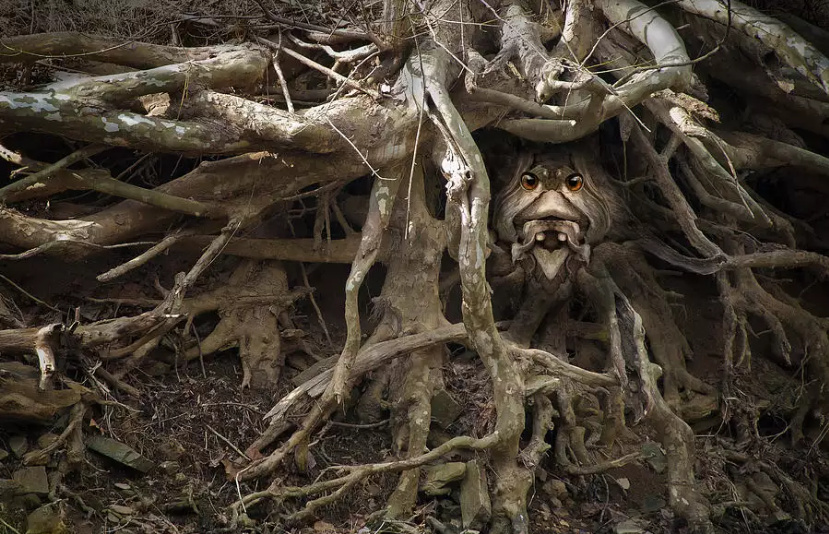
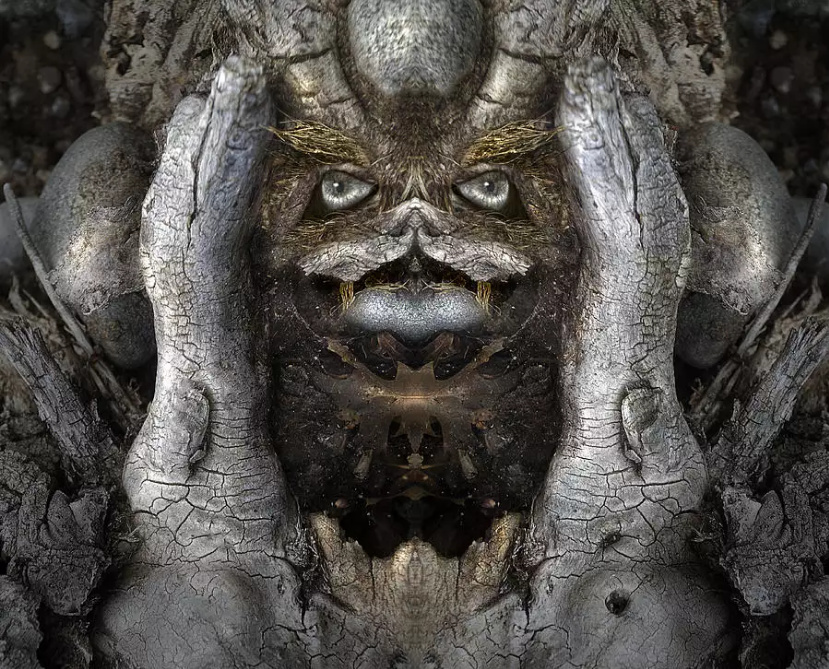
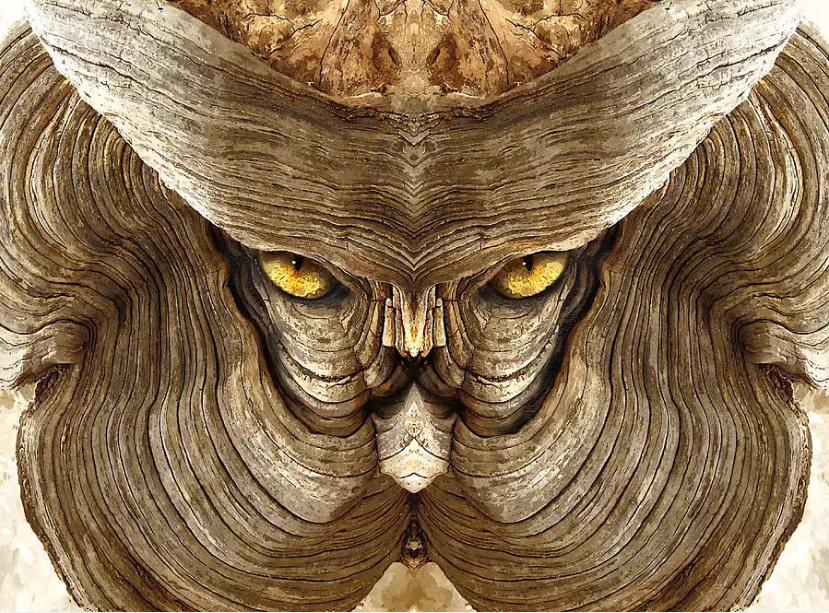
Rick Mosher’s tree faces, a rather pleasing combination of digital and rustic…
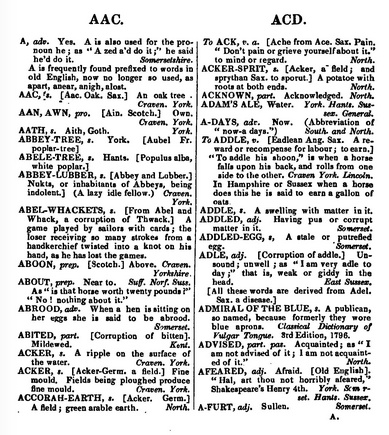
William Holloway’s A General Dictionary of Provincialisms (1838) in the British Isles. PDF version is not OCR’d.
From Wellcome, the University of Oxford, and UCL, the first fine-scale genetic map of the British Isles. This definitely settles some long-standing debates and also bolsters common folk understandings of boundaries…
* “the Anglo-Saxons intermarried with, rather than replaced, the existing populations”.
* “there is no obvious genetic signature of the Danish Vikings” — and even up in Orkney the Norwegian Vikings are only at 25% of the DNA, which is congruent with raiding rather than robust over-wintered settlement. Very interesting, and perhaps the most unusual finding. Perhaps a strict Danish Viking religious prohibition on siring inter-bred children could explain this?
* “a substantial migration across the channel after the original post-ice-age settlers, but before Roman times.” Presumably this means the mysterious but relatively short-lived ‘Beaker people’ influx and then the later pre-Roman Gaulish Belgic tribes such as the Cantii (Kent) and the Regni (Sussex and Surrey). The latter pressed across the Channel and somewhat up into southern England, displacing the south-coast natives over to London in the east and Cornwall in the west. That would explain, as the new findings state, “why the Cornish are much more similar genetically to other English groups than they are to the Welsh or the Scots.”
* there’s no discoverable Roman genetic presence, or of their variously-recruited legionnaires or slaves. Maybe they really did all go home as the Empire withdrew from the British Isles?
* “The Welsh appear more similar to the earliest settlers of Britain after the last ice age than do other people in the UK.” That fits with other genetic studies from 2006/7, which found that the Celts had started moving north from the Basque country to colonise all along the Atlantic coast as far north as Ireland and western Scotland, a migration completed into Ireland circa 1,700 BC. But the new Wellcome study appears to show that the south-to-north migrating Celts never fully penetrated the difficult terrain of inland Wales, even once they were settled along that part of the British Isles.
* English areas have maintained their “regional identity for many centuries”, and many broadly map onto the old English counties and onto long-standing regional grassroots understandings of boundaries. Cumbria vs. Yorkshire, Devon vs. Cornwall are sharply distinct genetic regions, for instance.
The report can offer no indication of where the Mercian Anglians may have come from, or who they really were on the continent (Vandals, Goths, Frisians?). Continental DNA sampling is apparently patchy at present, and sometime outright outlawed, and the study didn’t look at the Netherlands. Where Ghent was a Vandal city, for instance.
The study papers and maps can be found at: People of the British Isles.
Update: Two years after this post in 2018 there was a a new study of 400 instances of degraded DNA from skeletons across Europe, to claim a supposed “90% replacement” of the British by circa 1,000 B.C. This was apparently by immigrants from central and northern France, who apparently had fairly recently originated somewhere on the steppes of Eastern Europe before sweeping westward into Central Europe and replacing the natives. But the Welcome study and a mass of other British and historical evidence contradicts this claim. The scientific consensus is still that the British date back to the Mesolithic, and that we do so in a fairly stable continuity. One way, I would suggest, to encompass the new “90% replacement” claim would be to assume that incomers did arrive and that they were buried rather differently than the natives. Thus, we would have more of their remains in a form amenable to DNA extraction, which would skew the picture.
There’s an entertaining and well-delivered recent Acton Institute podcast on Tolkien’s political stances, “J.R.R. Tolkien’s Vision of Freedom” (major plot spoilers). Be warned that the sound quality at the start is terrible. The lecture itself starts at 3:48 minutes, using a different microphone, and from then on the sound becomes much better.
It’s a very illuminating lecture, and didn’t drift off into the usual tedious American think-tank concerns about: ‘… and how does this relate to the Constitution and the Founding Fathers?’ The speaker’s grasp of both The Lord of the Rings and British history is obvious somewhat superficial (at one point he forgets the names Merry and Pippin, and never mentions the roots of Tolkien’s ‘conservative anarch’ politics in the lived experience of pre-Norman England), but otherwise the lecture seems soundly based. After listening I can certainly see an additional political aspect to the initial tepid reception of The Lord of the Rings in the Cold War of the mid and late 1950s. Soviet agents and communist sympathisers were in key positions in British literary life at the time. The publication of Orwell’s Animal Farm for instance, was repeatedly blocked by what we now know to be Soviet ‘sleeper’ agents. One wonders how this influenced the reviews for The Lord of the Rings, though one also has to wonder how many of those early reviewers actually read the book, let alone got all the way to “The Scouring of the Shire”. The same problem also informs the more recent sour reception of the movie adaptation, among leftists and Guardian readers.
The lecturer also has a whole book on the topic, for those who need the details and the footnotes, The Hobbit Party: The Vision of Freedom That Tolkien Got, and the West Forgot. This has a deeply off-putting title and cover, which I presume were somehow meant to ‘attract the Harry Potter generation’, but with the unintended consequence of making everyone else cringe and flee. Nevertheless, the book has been well-reviewed, and it’s definitely not another ‘Shopping Lists of the Inklings: a Lacanian analysis’.
I saw the constellation Orion rising in the dawn sky, standing up and rather fine, this morning at 6.30am. So I thought I’d make a suggestion that might put right a misconception, about the nature of the “moor-stepper” found in the gnomic “Ur” Runic Poem (pub. 1705). Especially for the benefit of any pagans out there, who according to my cursory searches appear to think it was a Grendel-like monster or a wild auroch (extinct type of wild bull).
Runic Poem, original:
U | [ur] byþ anmod and oferhyrned,
felafrecne deor, feohteþ mid hornum,
mære morstapa; þæt is modig wuht.
Charles William Kennedy, 1910, in the “Introduction” to the best translation of Cynewulf:
U | [Ur] is headstrong and horned, a savage beast. With its horns the great moor-stepper fighteth; that is a valiant wight.
My translation:
U | is steadfast has horns above all,
a very savage beast, fighting with its horns,
great mere-stepper; that is greatly spirited.
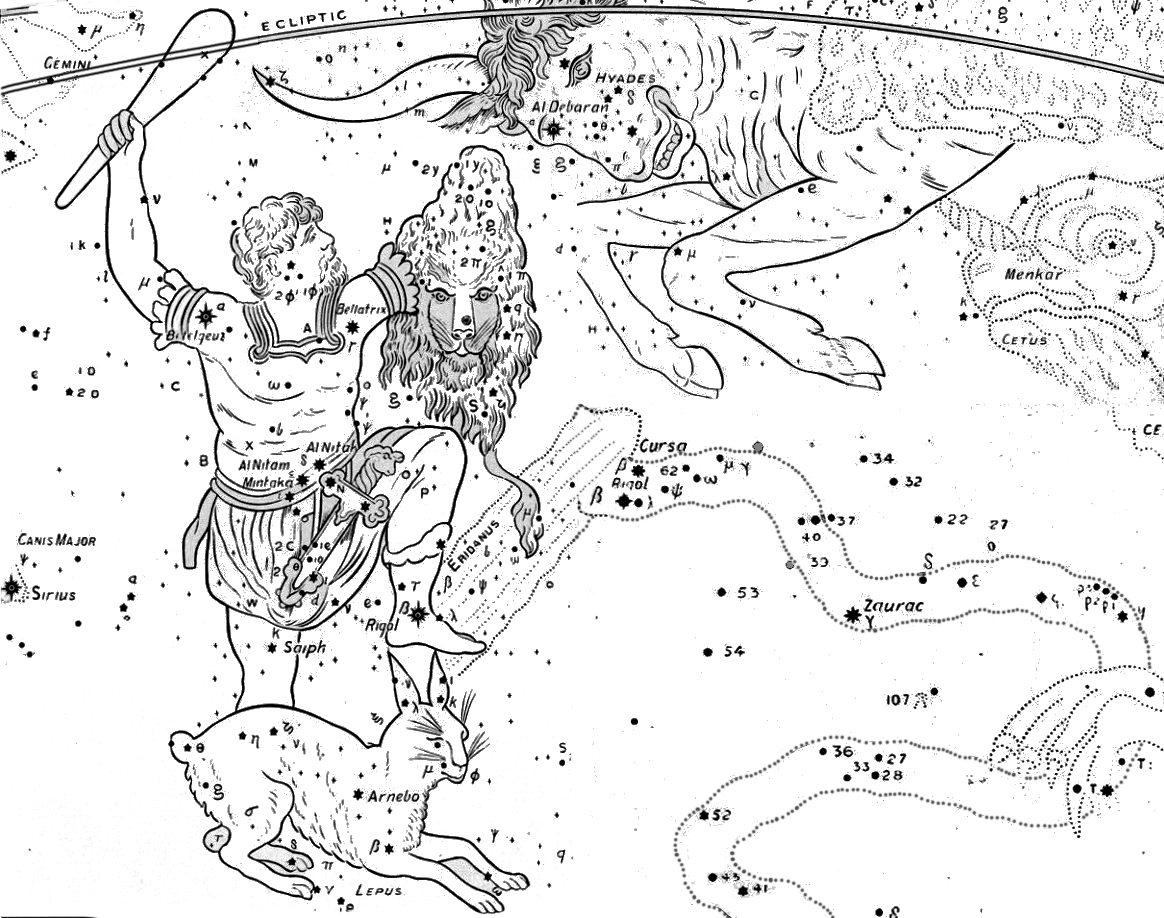 Picture: Simplified design based on Orion shown in the Firmamentum star atlas, 1690 AD. He steps into a mere, a spring-fed mere-pool that feeds the river constellation. (This is a .GIF image and may not appear if you have a GIF blocker).
Having seen Orion this morning I can say that his stepping pose is quite obvious to the star-gazer. So I’d suggest it’s not only a moor-stepping bull in the Runic Poem. It’s also Orion, who is frozen in the pose of stepping up. The “mere” is the (assumed moorland) mere-pond that feeds the river constellation, into which he steps in order to face the bull. He is at a disadvantage in the fight, due to the terrain, not to mention the gigantic bull. The trickster hare gives him ‘a leg up’ on her ears, and lets him borrow her back legs for a moment, with the implication that he may be about to spring over the bull’s horns.
My use of “greatly spirited” is more subtle than Kennedy — since the lines are meant to be a sort of night-sky riddle. So there’s no need to blatantly spell out that to the reader the supernatural aspects. The implication of the lines is that both the Bull and Orion are “greatly spirited”, and that they both exemplify the ‘fighting spirit’ in the rune Ur. The word “wight” was also avoided because modern readers now understand “wight” as being connected to Tolkien’s “barrow-wight”.
Orion’s rising (as a wintertime standing figure) traditionally heralds the autumn storms — “the storms that annually attend the heliacal rising of Arcturus and Orion” (Bede, drawing on Job in the Bible). Thus, the runic Ur is also the associated “greatly spirited” storms and winds. Thus we get the name, presumably, Ur-ion.
The Ur rune might be thought of in terms of man’s bravery and courage, in the face of implacable fury. Not in terms of the rather lumpen modern pagan suggestion that: “durh… Ur means a mad cow, dude!”
It’s then a dual-pronged rune in meaning as well as design: consider for instance the military distinction made between the two types of battlefield bravery: mad foolhardy rush-at-’em bravery, and considered bravery that is brought forth from within oneself in the face of an implacable opposing force. Only the latter type gets medals.
There is a sound-play in the rune poem (given above) between mǽre (‘great’, ‘monstrous’, ‘boundary’, ‘mere (pool)’) and the following word morstapa (‘ranger in-the-wilds’, ‘Orion’). If the Runic Poem was a mnemonic for teaching people the runic alphabet and then helping them to recall its subtleties, this would be a kind of test for them. The choice of meaning that a student has to bravely declare to the teacher (‘it’s just an angry bull’) thus encapsulates the choice a brave man must take in battle, in weighing the evidence and then pressing forward bravely regardless of the known risk. The correct student should emulate this type of subtle military decision-making, before he makes his brave call on the gnomic meaning of the lines (‘actually it’s the Bull and Orion, and is about the two types of bravery’).
Incidentally, “modig” = ‘spirited’ in the Anglian form. Which implies the Runic Poem may be Mercian, or at least copied there by a scribe, because in other territories modig was only used religiously and later. (The Cambridge History of the English Language, Volume 1, p. 343).
I can call an eminent philologist to my cause here. Bosworth obviously also thought the morstapa wasn’t the wild bull itself, but rather a man ranging into the wilds to fight it…
Mor-stapa, an; m. a moor stepper, a desert ranger (A Dictionary of the Anglo-saxon Language, 1838)
Compare also the Roman writer Manilus (d. 384 BC) on Orion (Jewish: gibbor, ‘the giant’; Arabic: ‘the hero’). To him this sky-deity makes… “Smart souls, swift bodies, minds busy about their duty (officium), hearts attending all problems with speed and indefatigable vigor”. (A.E. Housman trans.) Also Thomas Hood of Trinity College, Cambridge (1590)… “the reason why this fellow was placed in heaven, was to teach men not to be too confident in their own strength.” Horne, famed for his deep study of Orion and his three-volume epic poem on the topic, also has in his Introduction… “Orion is man standing naked before Heaven and Destiny, resolved to work as a really free agent to the utmost pitch of his powers…”.
Tolkien might have nodded to the -or part of Gibbor in The Lord of the Rings… “as he climbed over the rim of the world, the Swordsman of the Sky, Menelvagor with his shining belt. The Elves all burst into song.”
Finally, I’d also note that the bottom half of Orion with his ‘stepping’ leg looks like the shape of the Ur rune….
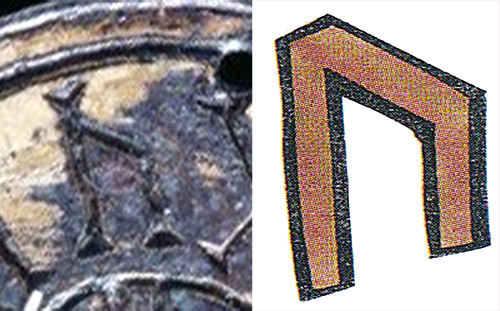 Picture: Malton Pin, 10th century northern England (my crop of the British Museum’s photo of the cleaned brooch); and a modern simplified version of the rune.
For the convenience of current and future scholars and poets, here are the key source texts of the 1915-1924 Taliesin controversy in chronological order:
1. John Gwenogvryn Evans, Facsimile & text of the Book of Taliesin, 1916.
2. John Gwenogvryn Evans, Poems from the Book of Taliesin, 1916. Complete translations by Evans from the original manuscript, completed over seven years. Evans had been a speaker of Welsh in Carmarthenshire until age 19, when he learned English, but thereafter lived in England (he later retired to Wales).
Note that, “Though thus dated [1910 and 1915 respectively], the volumes [above] were not issued until 1916.” — Y Cymmrodor, 1918.
3. The Athenaeum, 1916, issues 4601-4612. Review by Quiggin of Evans’s book editions of Taliesin. A substantial section is given in Y Cymmrodor, 1924.
4. John Morris-Jones, Y Cymmrodor 1918, Vol 24. A substantial attack on Evans for his edition of Taliesin, and with a very strong Welsh nationalist flavour to it. The review was assisted by Ifor Williams. See Evans’s 1924 rebuttal.
5. Gilbert Waterhouse, The Year Book of Modern Languages, 1920. Annual review of the recent Celtic literature, and which addresses the dating of the life of Taliesin. “John Morris-Jones undertook to review Dr Gwenogvryn Evans’ two volumes on Taliesin [but he supports] his linguistic arguments with rather slender palaeographical evidence”. (At Google Books in Preview).
6. John Gwenogvryn Evans, Y Cymmrodor 1924, Vol. 34. Evans’s book-length reply to his 1918 critic.
7. Obituary of John Gwenogvryn Evans, J. Vendryes in Revue celtique 47, 1930.
8. At 2016 Angela Grant has recently completed a thesis at Jesus College, Oxford: “The View from the Fountain Head: the Rise and Fall of John Gwenogvryn Evans”.
Liverpool Hope University has a free Tolkien Day of talks on 11th November 2016.
“Speakers on the day include John Garth, author of Tolkien and the Great War, Edmund Weiner, co-editor of the Oxford English Dictionary, Liverpool Hope University Alumnus Lord David Alton, and Stuart Lee and Elizabeth Solopova from the University of Oxford.”
Looks like an interesting speaker roster…
* Fairies, Goblins & Britain: Tolkien’s ‘Goblin Feet’ (1915, the early wartime faerie poetry)
* Tolkien’s Manuscripts
* Tolkien’s views on children’s literature
* Diction and narrative in ‘The Lord of the Rings’
* The Great Wave (he had a recurring dream of a Great Wave)
* Tolkien and Faith
* Alan Lee (Tolkien artist)
It’s free, but it’s on an awkwardly-placed campus outside the city centre, and requires a rail traveller to take a bus through inner-city Liverpool from Liverpool Lime Street station. Not an enticing prospect at the end of a 90 minute rail journey, for someone who doesn’t know Liverpool and loathes bus travel. Doing it via a taxi would bump the total cost to £40 (rail + taxi), which is too expensive for me. Oh well. But, hopefully there will be podcast recordings available online after the event.
Interestingly, the press blurb for the day remarks that…
“Tolkien was part of a team based at what is now Liverpool Hope University, who translated and edited The Jerusalem Bible. The Jerusalem Bible was the first translation of the whole Bible into modern English (1966) and celebrates its 50th anniversary this year. Tolkien’s translation of The Book of Jonah is admired for both its beauty and accuracy.”
Fascinating, I never knew that. A perfect fit of course, what with his long-standing interest in the sea and mariners. Although according to Carpenter his text was a translation from French and not the Hebrew, and once delivered it was then “extensively revised by others before publication”. Still, his pre-polishing manuscript of The Book of Jonah is available. It was published as a book in 2009.
A Scottish riddle, published 1881 in Notes on the Folk-lore of the North-east of Scotland (Folk-lore Society). As far as I can tell it doesn’t seem to have been noticed in the assiduous search for the origin of the word “Hobbit”…
Q: “Hobbity-bobbity sits on this side o’ the burn, Hobbity-bobbity sits on that side o’ the burn, An gehn ye touch hobbity-bobbity, Hobbity-bobbity ‘ill bite you ?”
A: “A nettle.”
Lovely archaic “sleeping vegetation god” ceramics from Loughborough’s Oddbods Pottery. The artist seems to be taking the English ‘wide awake’ Green Man further back in time, toward the sleeping-and-rebirth of the very earliest-known of such gods, Tammuz of Eridu…
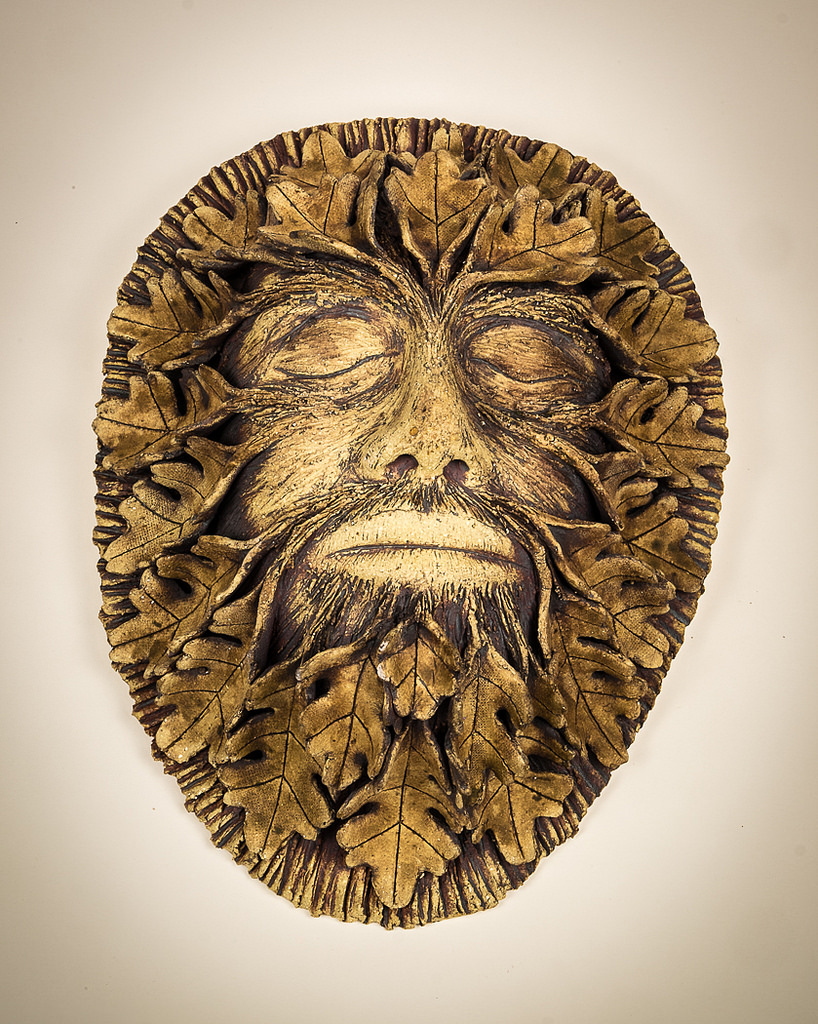
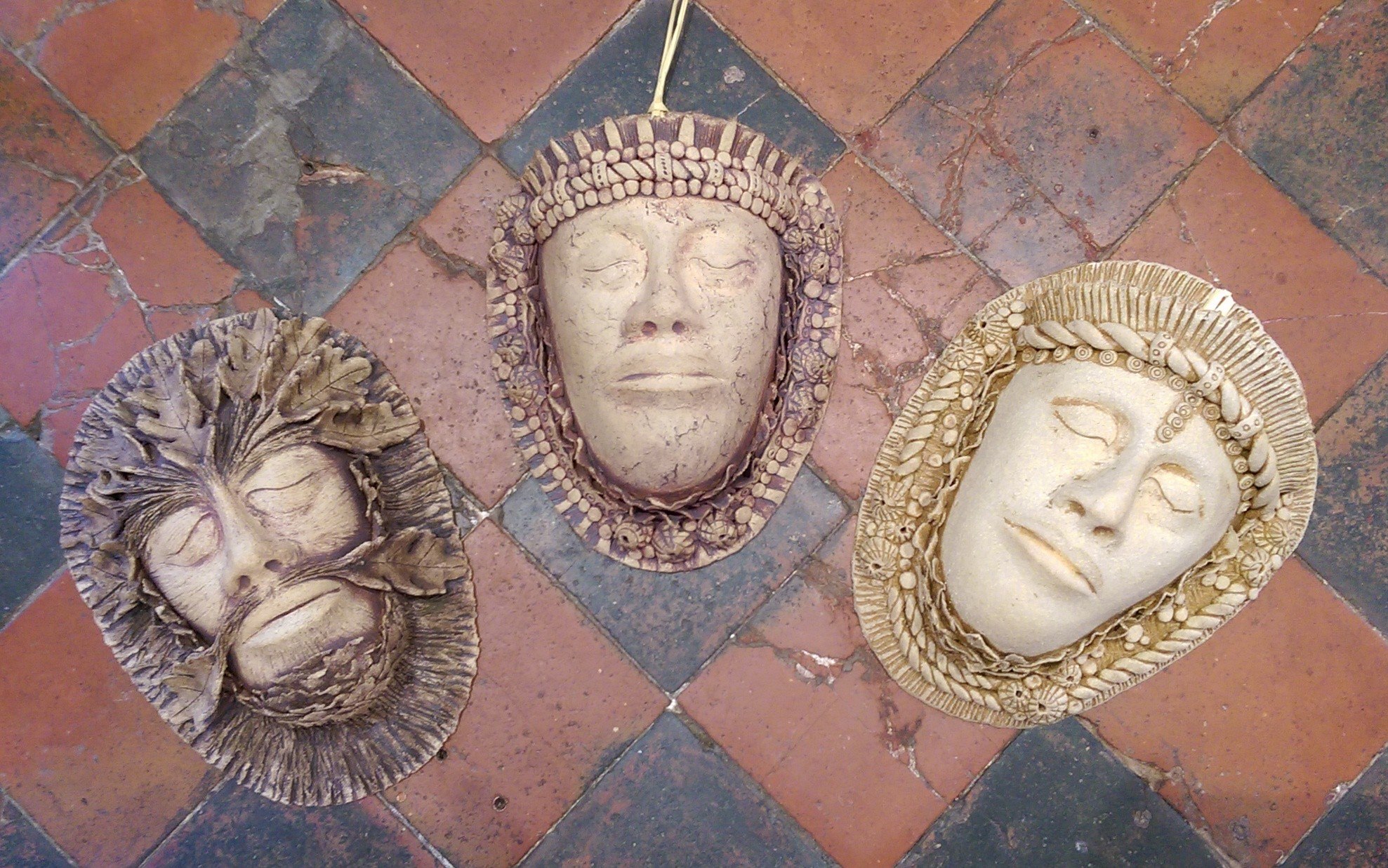
A delightful ‘biff on the nose’ to parroting literary academics and over-cautious politically correct historians, from Catholic World: The Lord of the Rings: A Source-Criticism Analysis…
“Because The Lord of the Rings is a composite of sources, we may be quite certain that “Tolkien” (if he ever existed) did not “write” this work in the conventional sense, but that it was assembled over a long period of time by someone else of the same name. We know this because a work of the range, depth, and detail of The Lord of the Rings is far beyond the capacity of any modern expert in source-criticism to ever imagine creating themselves.”
In case you’re skim-reading this: it’s a joke.
Funded by Historic England, a scientific research team has been looking into the historicity of the legendary Cornish Lyonesse. Early medieval historians had noted memories of a very large tract of land that was said to have slipped into the ocean off Cornwall, once extending across “one hundred and forty churches and a forest”. Since then Lyonesse has regrettably attracted wave after wave of swivel-eyed madmen, who have enfangled it with UFOs, psychic super-civilisations, dragon-headed spiritualists from Tibet and similar utter lunacy, until it’s become near impossible to even find the first historical accounts of the legend online. Thankfully the Encyclopaedia Britannica has it straight…
“… since the 13th century [there have been accounts] that concerned a submerged forest in this region, and a 15th-century Latin prose work, an account of the journeys of William of Worcester, makes detailed reference to a submerged land extending from St. Michael’s Mount to the Scilly Isles. William Camden’s Britannia (1586) called this land Lyonnesse, taking the name from a manuscript by the Cornish antiquary Richard Carew.”
Now six years of archaeological and seabed scientific work by the CISMAS Lyonesse Project has rigorously investigated the matter, albeit somewhat under cover of the hot topic of ‘sea-level rise’. The project has just published its final report, The Lyonesse Project: a study of the historic coastal and marine environment of the Isles of Scilly.
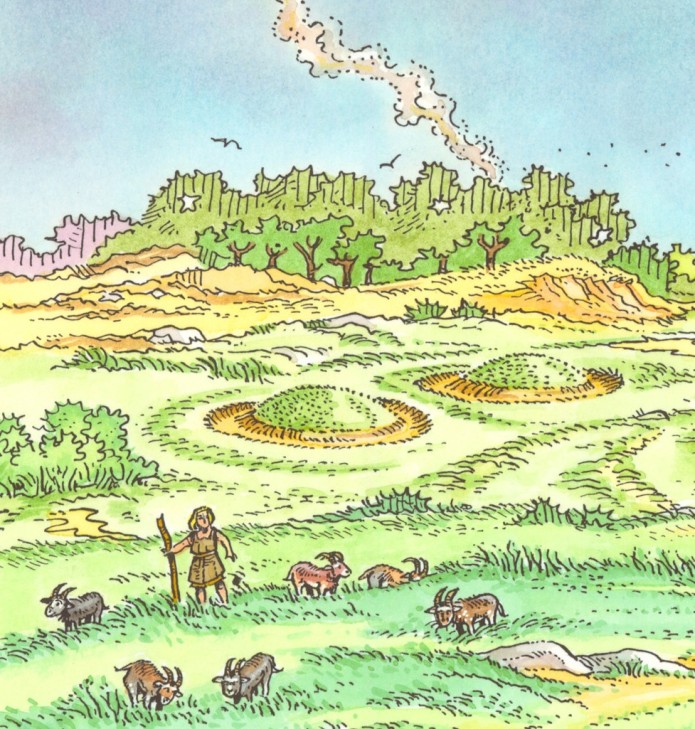
Their research has found that the Isles of Scilly were indeed a single large island 9,000 years ago, and that two-thirds of the island’s land mass was then submerged over a period of just 500 years between 2,500 and 2,000 BC (presumably with no CO2 involved, hem hem…). The team found “a submerged forest”, just as the 13th-15th century Lyonesse story had it — though no submerged land-bridge between the Scillies and St. Michael’s Mount in Cornwall. There were, of course, no churches to submerge at that time, though one imagines that “one hundred and forty” submerged stone circles might be a possibility.
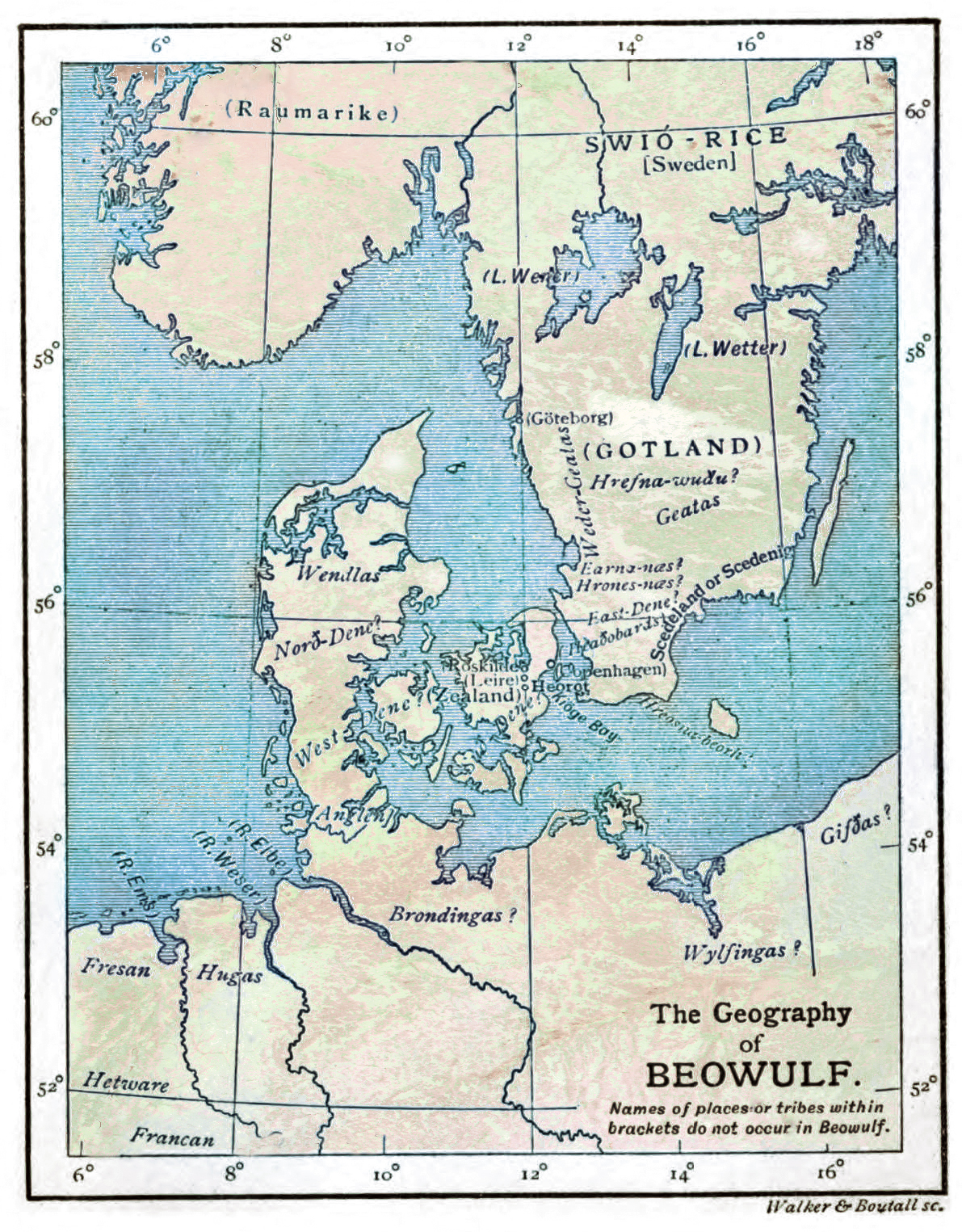
The map of Beowulf, from “Notes on Beowulf” (1898) by Thomas Arnold, colourised by me…