Bury Bank added to the “at risk” register

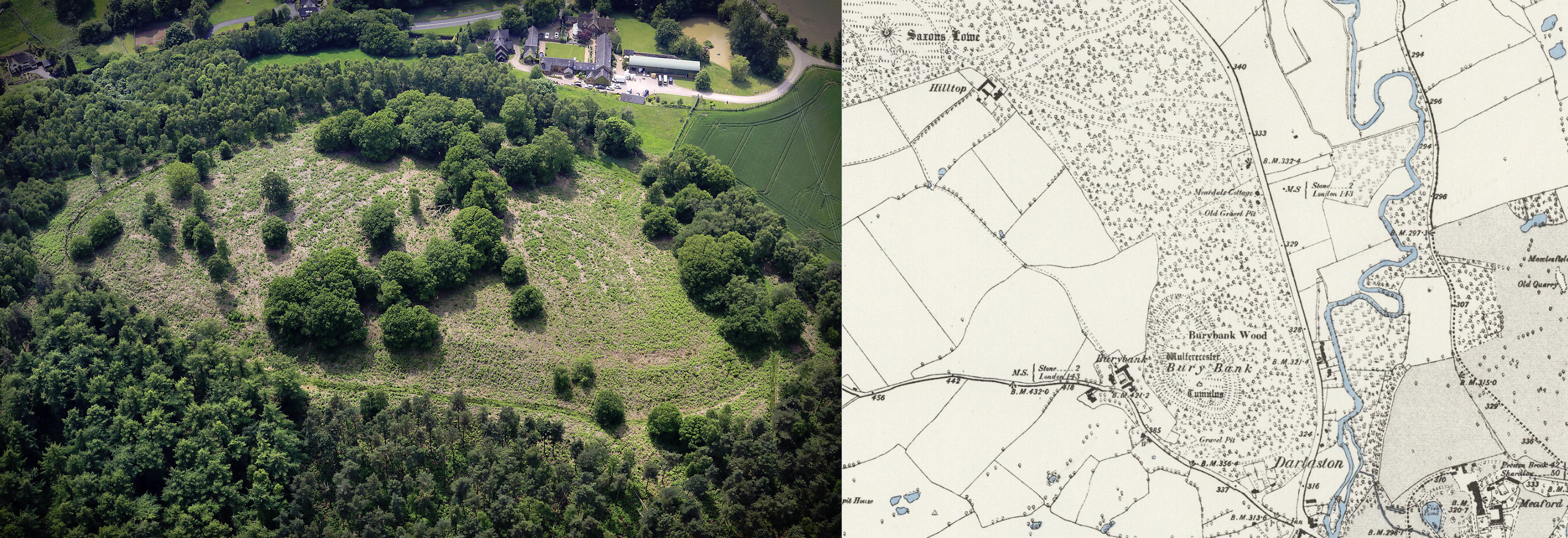
The hillfort at Bury Bank, north of Stone at Meaford, is a new addition to the 2016 official “at risk” register of historic sites.

“Declining: Generally unsatisfactory with major localised problems”, mostly arising from natural “scrub/tree growth”.

Since the time of John Leland’s travels in Tudor England the site has been known and written of as an ancient seat of the Anglian king of early Mercia, King Wulfhere (657-74 AD).

burybankview

From “A few jottings on some Staffordshire Camps” in North Staffordshire Naturalists’ Field Club, Annual Report and Transactions, 1892. quoting Plot:

“Dr. Plot in his Natural History of Staffordshire, published in 1686, thus quaintly describes this place: “On the top of a hill there yet remains the ruins of a large castle, fortified with a double vallum and entrenchments, about 250 yards diameter, the gate seeming to have been on the west part of it where the side banks on each hand plainly appear : others fancy there was a second gate on the east side too ; though I could not perceive any probability for it, but on the south side there is a round conical hill, much like a tumulus cast up higher than all the rest of the work, which, according to the tradition of the country thereabout, was the seat of Ulferus [Wulfhere], King of Mercia …. Mr. Sampson Erdeswick asserts that he had seen an old writing relating to the foundation of the Priory of Stone [founded from c. 1138 – 1147 A.D.] that affirms as much : which may, perhaps, be that of R. de Suggenhill and Petronel his wife, whereby they gave to the Church of S. Mary and S. Ulfade of Stone Messuagium juxta montem qui dicitiur Ulferecester in terroris de Derlaston ; which index proves fully that this was the royal mansion of the said Ulferus who governed Mercia from the year of Christ 657 to 676, the Lowe (tumulus) adjoining being in all probability the place of his sepulture.”


Approximate translation of the Late Latin given above:

“A plot of land with a house, next to the great mound on the lordly castle of Ulfere [Wulfhere], the fierce warrior of Derlaston”.

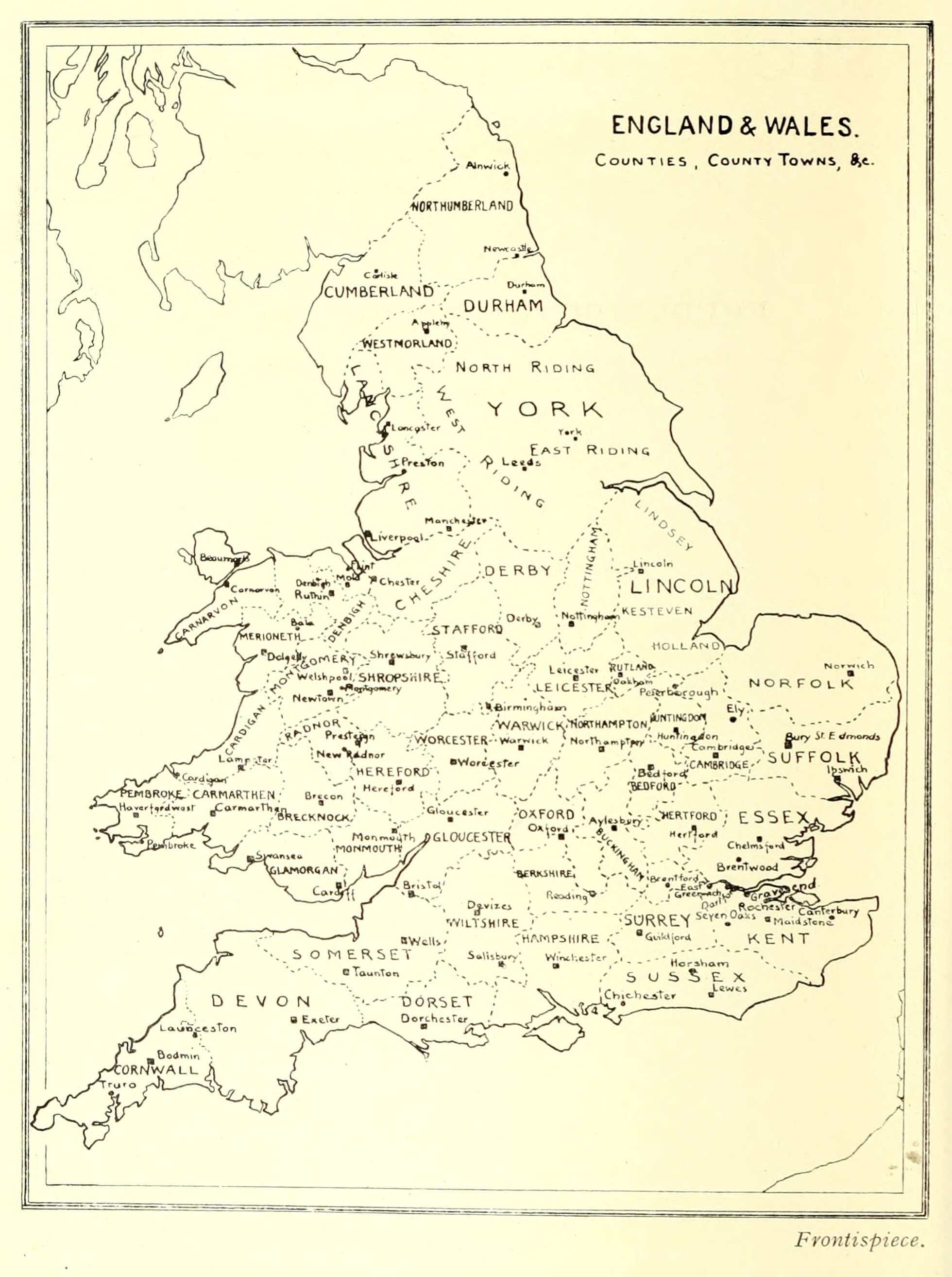
On Derlaston, see map (above). On the name, The Place-names of England and Wales (1916) records: “DARLASTON (Wednesbury and Stone): St. D. 954 Deorlavestun, Derlavestone, 1004 ib. Deorlafestun, Dom. Dorlavestone. Wed. D. a. 1200 Derlavestone.”

Now, in Deor|lave|stun the deor was a deer (or, at that time, any other large hunted meat-animal), lave was ‘to wash’, and stun is presumably stone. Given the geography, possibly the name is then related to the stepping stones across the river, also a place where the deer / animals were cleaned and washed after the King’s summer hunts? The hounds would also need such a place to be washed in, and any wounds or scratches noticed and treated. And yes, there was deer-hunting before the Normans arrived.

The similarly-named Darlaston in South Staffordshire, near Wednesbury, has a comparable situation on the upper reaches of a river — being located where the three head-streams of the River Tame converge. The convergence of three streams was long regarded as a ‘special place’ for pagans, especially if at or near the head of a water that when lower down became a large river to the sea.

The recent scholarly book Lichfield and the Lands of St. Chad (2020) notes another textual source for the Wulfhere link…

Wulfhere’s fortress in the Passio [of St. Wulfhad, early 14th C.] is called Wlferecestria, a name that was applied locally to a hillfort a mile north-west of Stone, known now as Bury Bank, which is attested in early thirteenth-century entries in the Stone Chartulary.

Further, if we accept a relatively early date for the famous poem Beowulf, then the summer hunting palace of a King of Mercia would have a starting claim as the possible place where Beowulf was first written down by a scribe circa 700 A.D. — who we know originally used the Mercian dialect. There was a period of academic debate about the dating of Beowulf, but recent books now give fairly incontrovertible evidence for the long-assumed early dating.

Given such dating, a summer scribing at Bury Bank would have been after King Wulfhere’s time (657-74 AD), and would also have to assume that the site was also used later under the pious Aethelred (king from 675–704) or young Coenred (king from 704–709). The latter’s short reign was “blighted by numerous Welsh incursions into western Mercia”, which would suggest the need to have Bury Bank also become something of a strategic military site on the border with Wales. Though the reign of Aethelred is the more likely of the two, for Beowulf.

Tom Shippey however puts ‘the date of coining’ of the Beowulf tale a little after Coenred, at 710 A.D. — as a deft poetic melding of real earlier Scandinavian tribal history with supernatural elements and a Christian overlay — and puts the scribal copy-of-a-copy we now have at around 1000 A.D. He has elsewhere noted that the first known owner of the Beowulf original was the Bishop of Lichfield, which I would add is relatively near to Bury Bank in mid Staffordshire.

The Association of British Counties

The Association of British Counties is “a society dedicated to promoting awareness of the continuing importance of the 92 traditional Counties of the United Kingdom.” Their basic aims are that:

  * the borders of the historic counties should be marked on maps and appropriately signed;

  * the geography of the historic counties should be adopted by writers, editors, publishers, organisations, and businesses for all suitable (non-administrative) purposes;

  * the historic counties should be the standard for use in studies of history, local history, historical geography and genealogy; and used in cataloguing, indexing and organising historical records and documents;

  * the historic counties should be used as the county line in all UK postal addresses.

These worthy aims are getting some traction, and the traditional counties are now once again publicly recognised by government. The Secretary of State for Communities and Local Government said in a speech in 2013…

“… we are championing England’s traditional local identities which continue to run deep. Administrative restructuring by previous governments has sought to suppress and undermine such local identities. Today, on St George’s Day, we commemorate our patron saint and formally acknowledge the continuing role of our traditional counties in England’s public and cultural life.”

It has also been announced by government that traditional county names can be placed on road-signs. In 2014 the people of Cornwall were officially recognised as a people. From 2015 Staffordshire formally adopted and promoted May 1st as the ‘County Day’, branded and promoted as Staffordshire Day from 2016, and with a very major ‘A Day at the Lake’ celebration in North Staffordshire (sadly utterly washed-out by rain and cold). In future we need to ensure that the marketing and map for each Staffordshire Day covers the country’s traditional rather than current boundaries. Journalists, writers and artists and others can all do their bit in such promotion. Sports coaches and teachers too, when naming new sports teams, school houses and suchlike. A simple website to help with that is the ABC’s excellent County-Wise: get to know the Historic Counties.

The ABC have an annual journal, free online, Our Counties : The Association of British Counties Annual.

I have to say that currently the ABC seems to have got a bit sidetracked into designing and promoting very naff new county flags. A flag has no emotional resonance whatsoever in somewhere like north Staffordshire, and frankly it feels like an unwarranted imposition into history. The flags also give cynical journalists the opportunity to make ‘the counties’ cause look incredibly cranky in the mainstream media. Their clunky and gaudy design also undermines the ‘cool factor’ needed to entice a critical mass of serious artists and writers to quietly take up the cause. But otherwise the ABC is a very worthy organisation and should be supported.


From The story of the shire, 1921.

Dr. J. Wilfred Jackson – pictures of the Peak

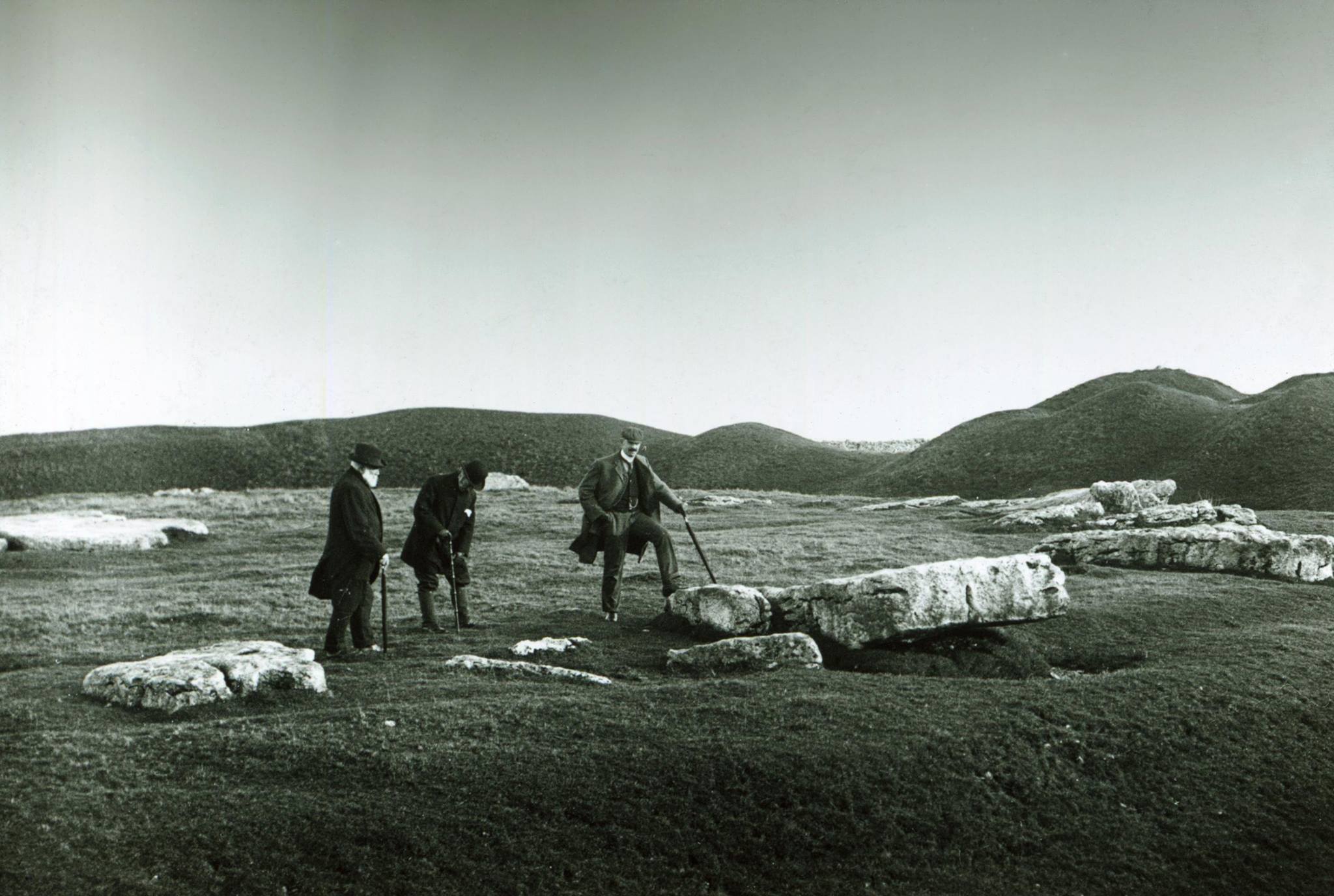
peakArbor Low, from the J.W. Jackson Collection.

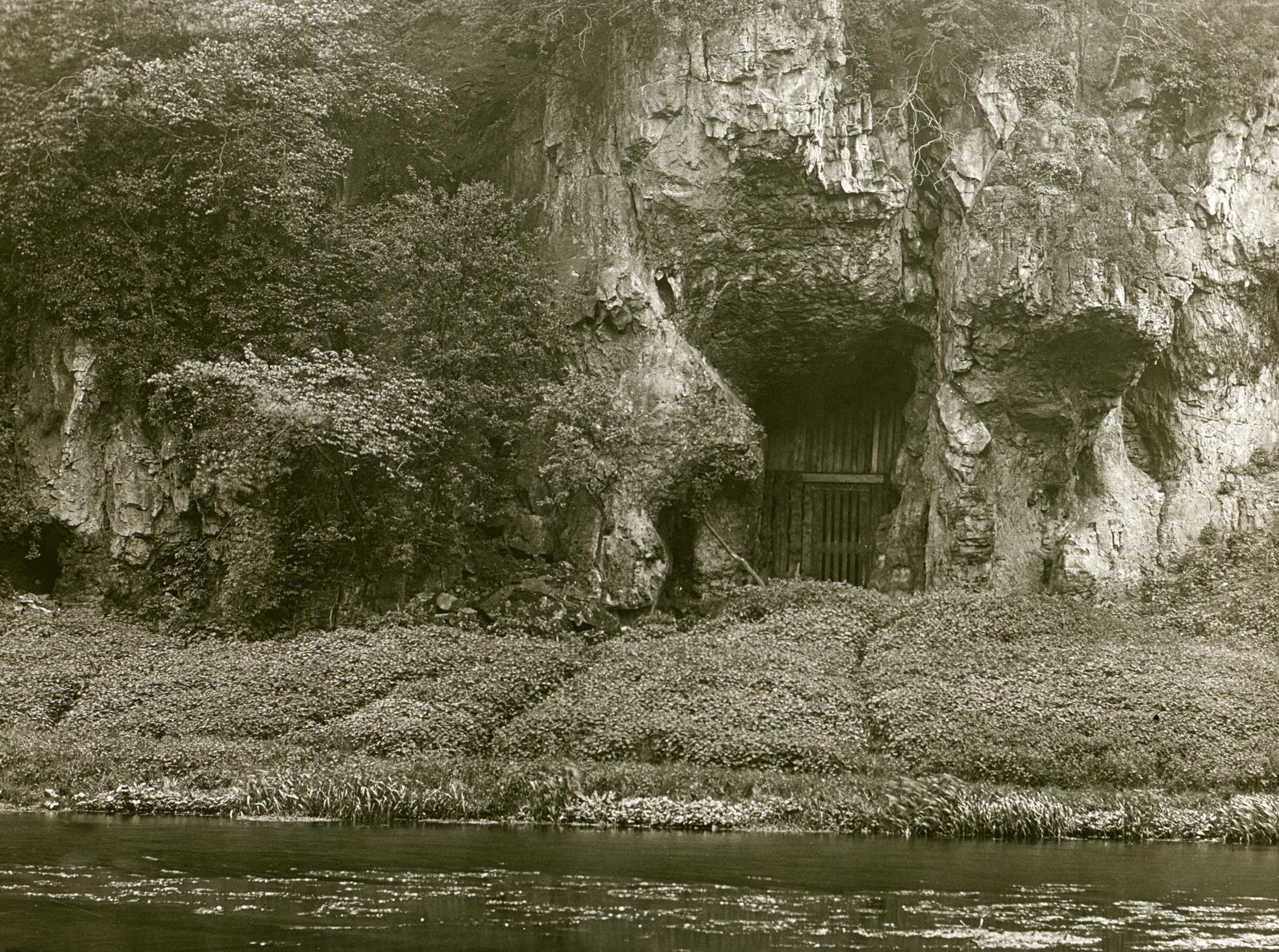
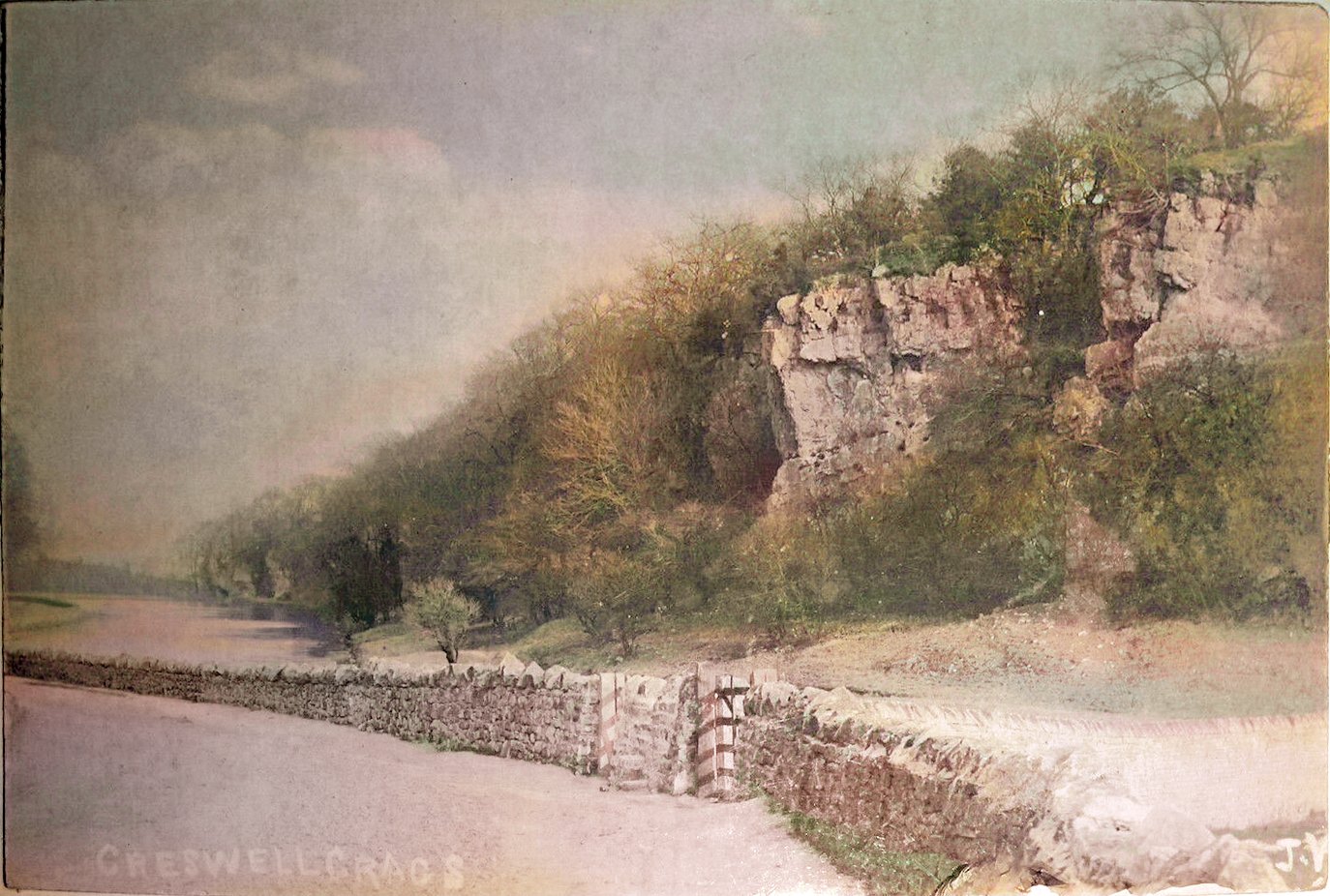
dersb-2005-3-680Church Hole Cave, Creswell Crags, from the the J.W. Jackson Collection.

Pictures from the J.W. Jackson Collection at the Buxton Museum, in the north Midlands of England, a collection which is in the early stages of being digitized. They write of the stone circle picture that… “The location is Arbor Low, near Monyash [Neolithic, in the Peak District]. We think Jackson took original photo himself. We have a great number of his lantern slides at the museum, including other views of Arbor Low, but also many other places in the Peak District. We’re currently in the process of trying to digitise more of the collection so that we can share more online.”

Jackson was Dr. J. Wilfred Jackson (1880-1978).

The Arbor Low picture looks to me to be after about 1905, and probably the 1910s, judging by the wearing of a flat cap with a country suit.

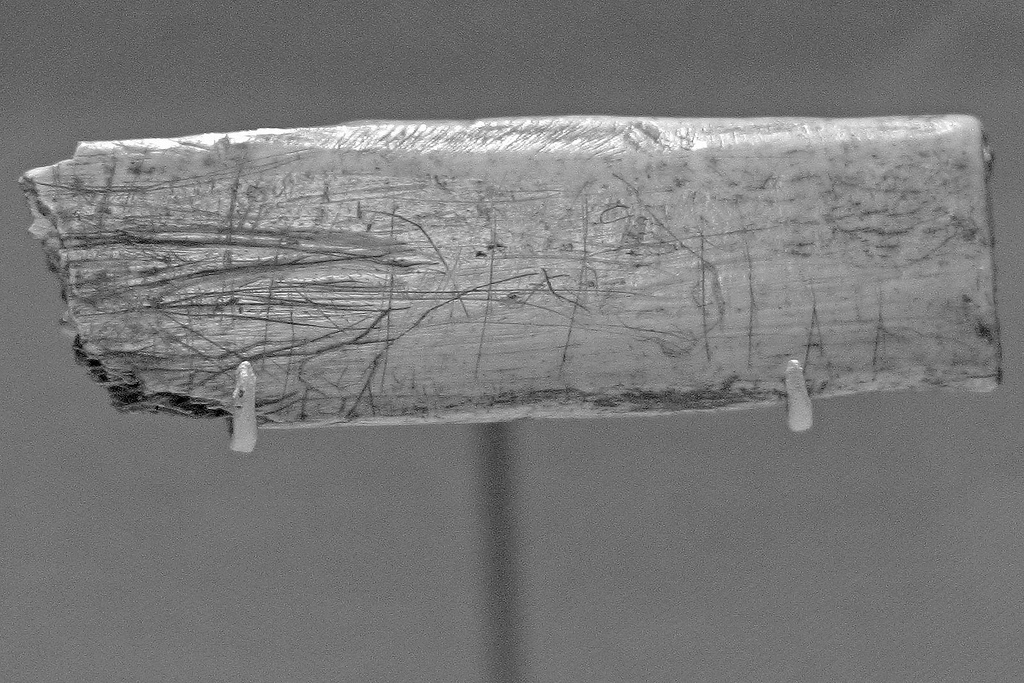
The lower picture is of Church Hole Cave, Creswell Crags, near to the site of the discovery of the most ancient art in the British Isles. Below is my macro photo made in the British Museum, of the art found there. The shape of an Ice Age horse’s head, with a mane etched across the top. Found at Robin Hood Cave at Creswell Crags in Derbyshire.

crag_ice_age_art_uk

Why do we ignore Birmingham and the West Midlands?

An interesting theory today on “Why do we ignore Birmingham and the West Midlands?”. Because, the writer says, of the total mess we’ve made of our boundaries including our beloved traditional county boundaries. We’ve tinkered and tinkered until we ended up with the total mess that have today, exemplified by monstrosities such as the map of the Greater Birmingham LEP area.

“Without a common identity, city regions have struggled to create common institutions. Without those, they struggle to solve joint problems, or build a single economy.”

I think he’s broadly right, but needs to factor in the dire legacy of municipal socialism in places such as Birmingham and Stoke, and of course the sneering prejudice from London, which both scared away business investment. The lesson: don’t tinker with key boundaries that have been settled for a millennia or more.

Two free books on wassailing in England

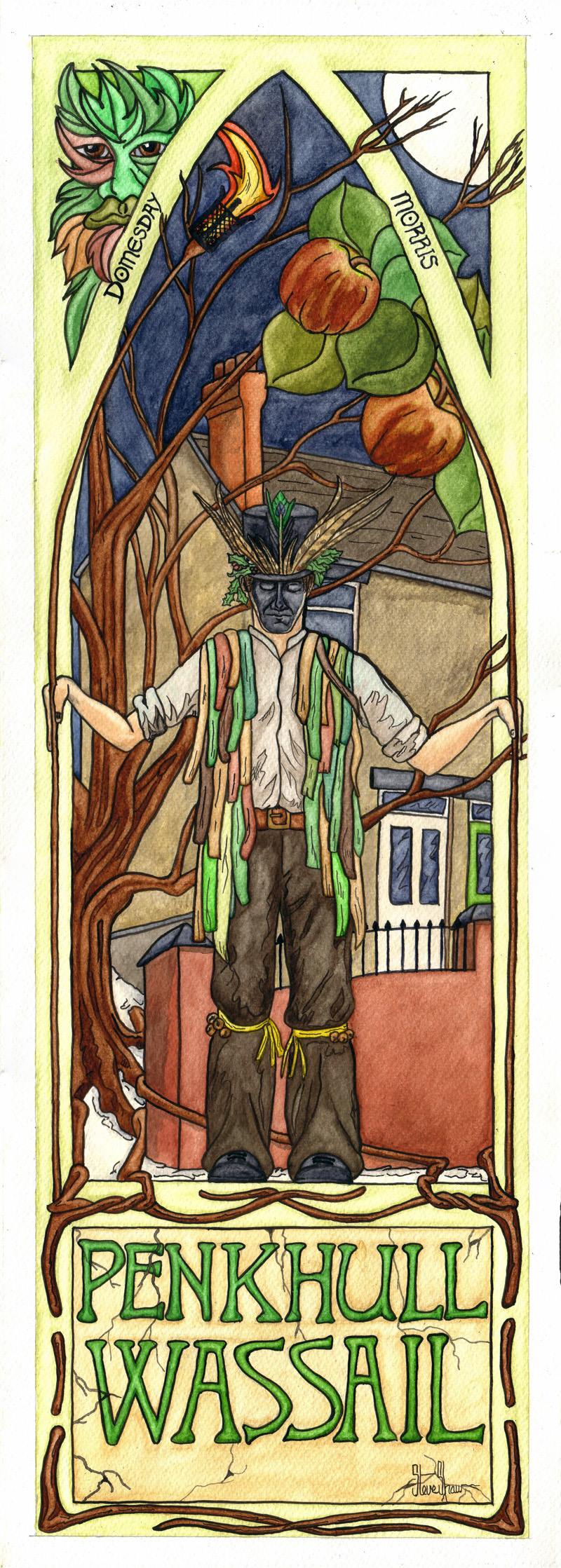
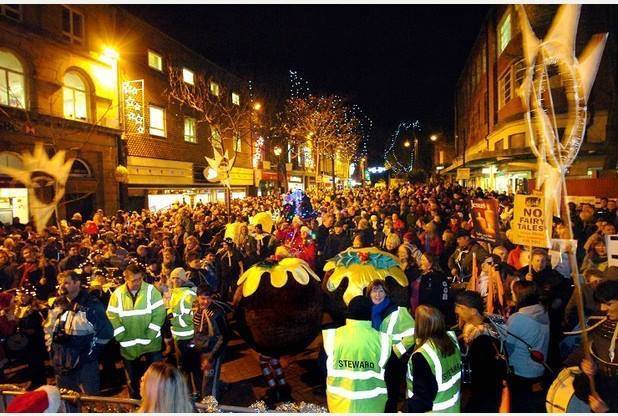
Apple wassailing is an ancient tradition, taking the form of a New Year procession. I was pleased to see it revived recently in Stoke-on-Trent. The apple and fruit trees of a district are each visited in turn. The men sing to them, toast their health in cider and the boys tap their trunks with whippy sticks in a sun-wise direction, in order to ‘wake up’ the trees and ‘turn them back toward life’. The wonders of digitisation have recently turned up two excellent free books on the topic, written by a Cambridge academic and published by Manchester University Press.

* J. Rendel Harris, “Origin and meaning of apple cults”, Bulletin of the John Rylands Library, 1919, Vol.5, Nos. 1-2, pages 29-74. Later published as a pamphlet by Manchester University Press and Longmans.

* J. Rendel Harris, The Masque of the Apple, Manchester University Press, 1920. This attempts to embody the traditions and beliefs in a series of historically accurate masques (short plays).

wassailing-devon

Milton’s Comus – a forgotten Midlands gem?

mas

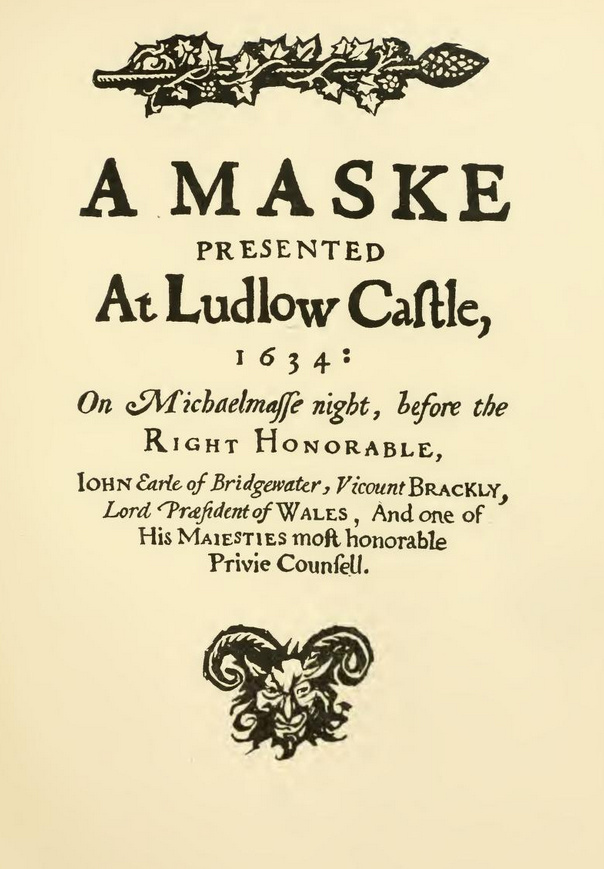
Perhaps wrongly, I’ve always associated Milton with ponderously unreadable 500,000-line puritan poems on Biblical themes, in which he basically tried to rewrite the Bible. But on looking into his influence on the young J.R.R. Tolkien (slight, except in one instance) I’ve discovered that as a young writer, age 26, Milton produced a sprightly and short young man’s play. This was the Midsummer Night’s Dream-like masque, Comus (1634). [Audiobook]. In his time it had a one-and-only performance locally, in Shropshire in the grounds of Ludlow Castle, to celebrate the appointment of the new Marcher Lord there. The Encyclopaedia Britannica has…

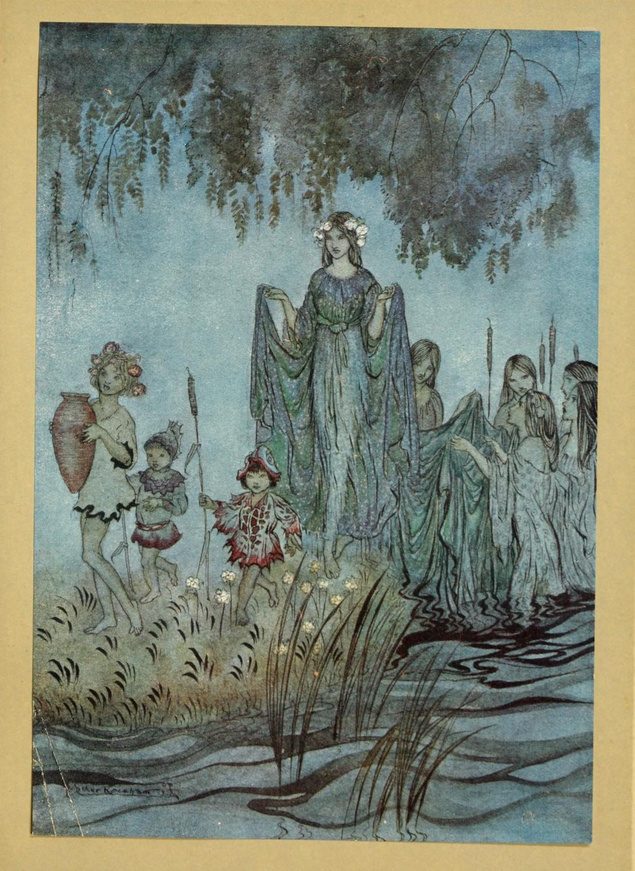
“Comus is a masque against “masquing,” contrasting a private heroism in chastity and virtue with the courtly round of revelry and pleasure. It was Milton’s first dramatizing of his great theme, the conflict of good and evil. The allegorical story centres on a virtuous Lady who becomes separated from her two brothers while travelling in the woods. The Lady encounters the evil sorcerer Comus, son of Bacchus and Circe, who imprisons her by magic in his palace. In debate the Lady rejects Comus’s hedonistic philosophy and defends temperance and chastity. She is eventually freed by the two brothers, with the help of an angelic Attendant Spirit and the river nymph Sabrina.”

Fascinating. It has sweet music as well: in 1745 Handel wrote “three songs and a trio” for the masque, which were likewise performed at Ludlow Castle.

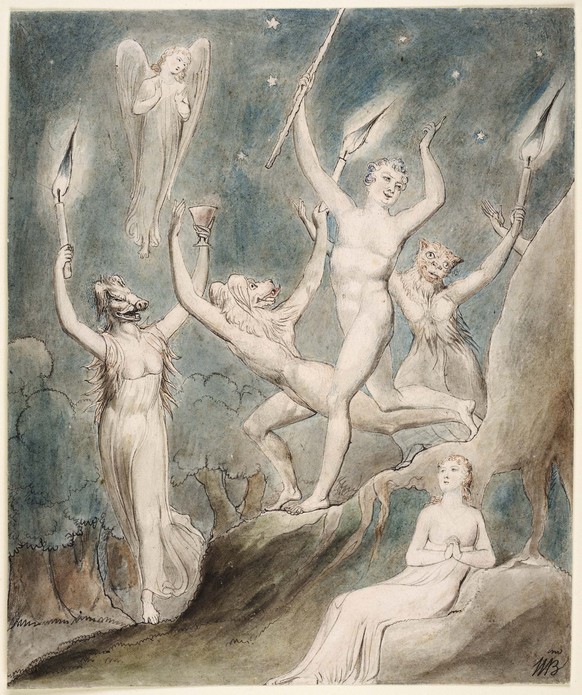
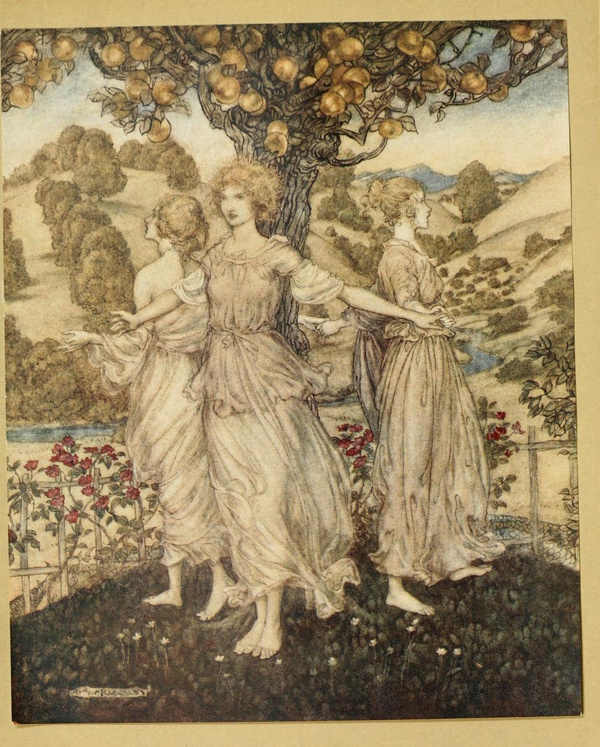
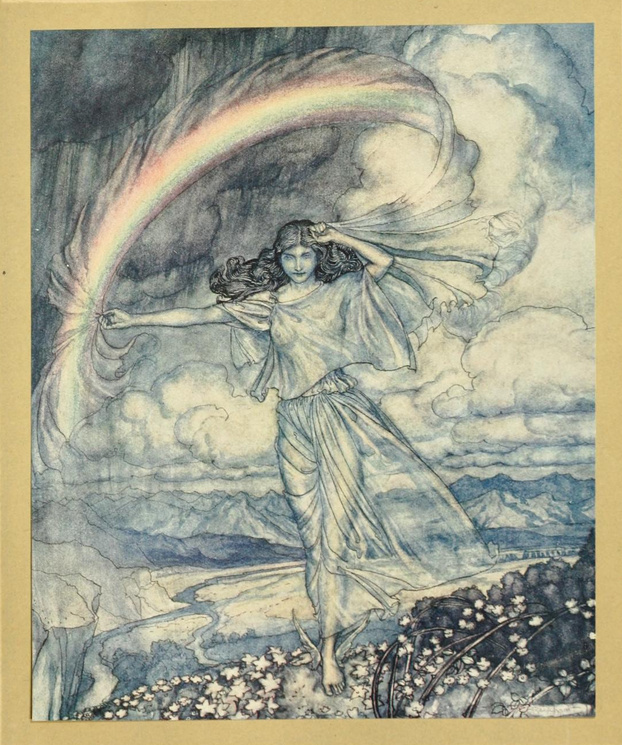
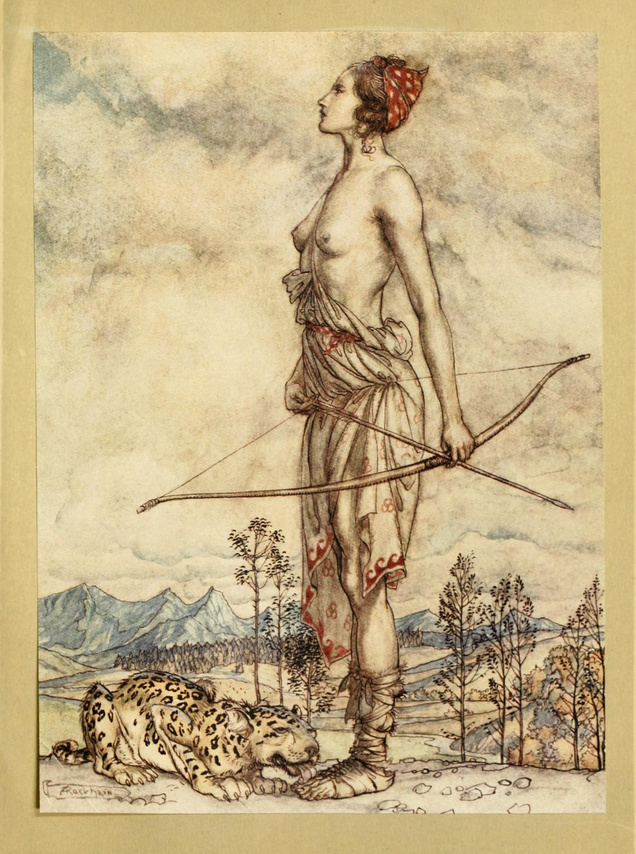
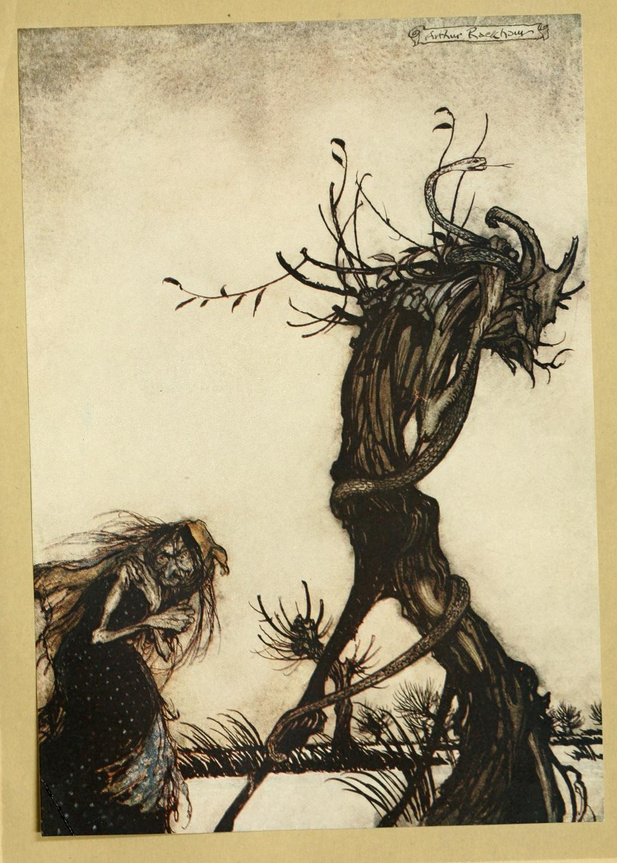
Illustrations too. No less than William Blake produced a set of illustrations for it. The great Arthur Rackham also produced an illustrated edition in 1921.

comus

blake-comus1

Seriously… Milton, Handel and Blake… strong women, sex, wizards and fairies… why on earth isn’t Comus being claimed as a West Midlands classic (no-one else seems to want it) and regularly performed by the Royal Shakespeare Company as an adapted touring show with slightly modernised language? It’s short, so could be paired with something more box-office friendly in the same line, such as some of the hobbit songs from The Lord of the Rings. And an exhibition of the artwork.

Sources:

* Comus, facsimile edition of 1903.

* Comus illustrations by William Blake

* Comus, illustrated by Arthur Rackham along with a clear presentation of the text.

* Comus, annotated version explaining the classical allusions and antiquated words.

* Handel’s Comus music.

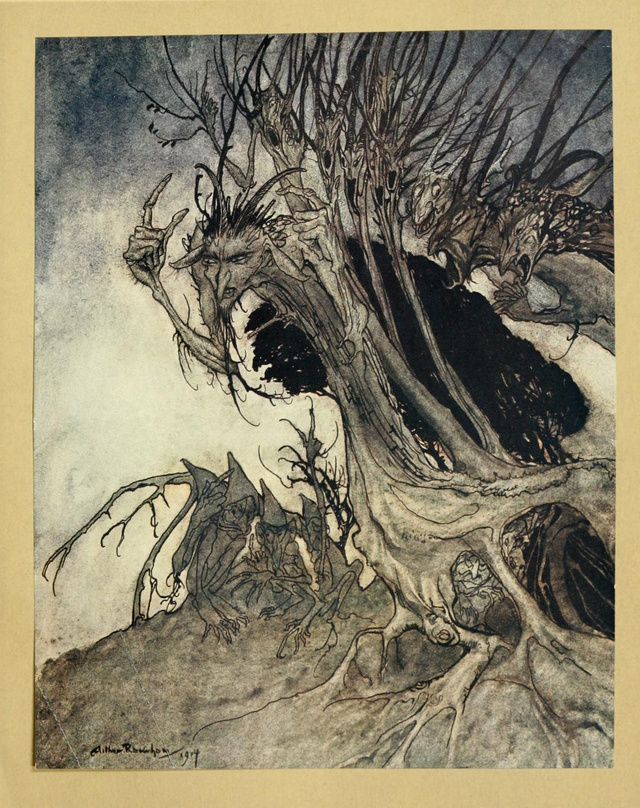
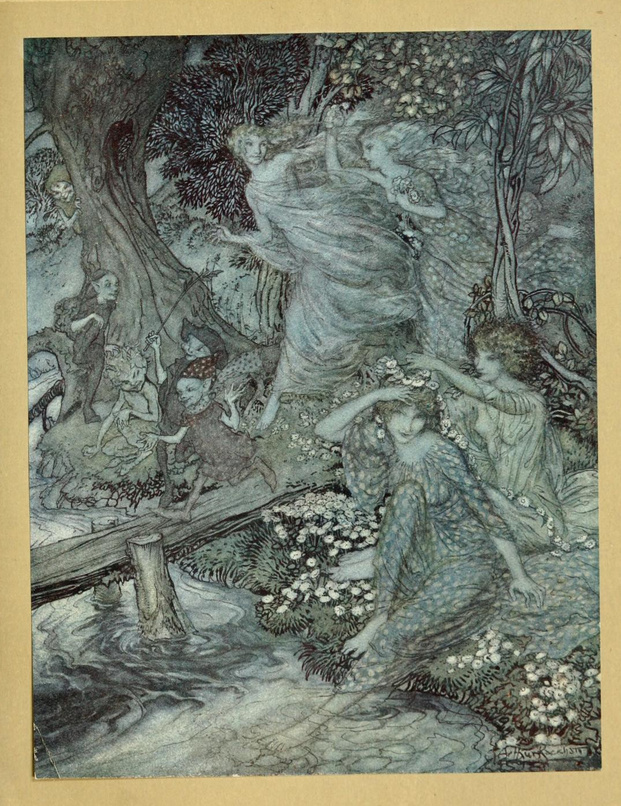
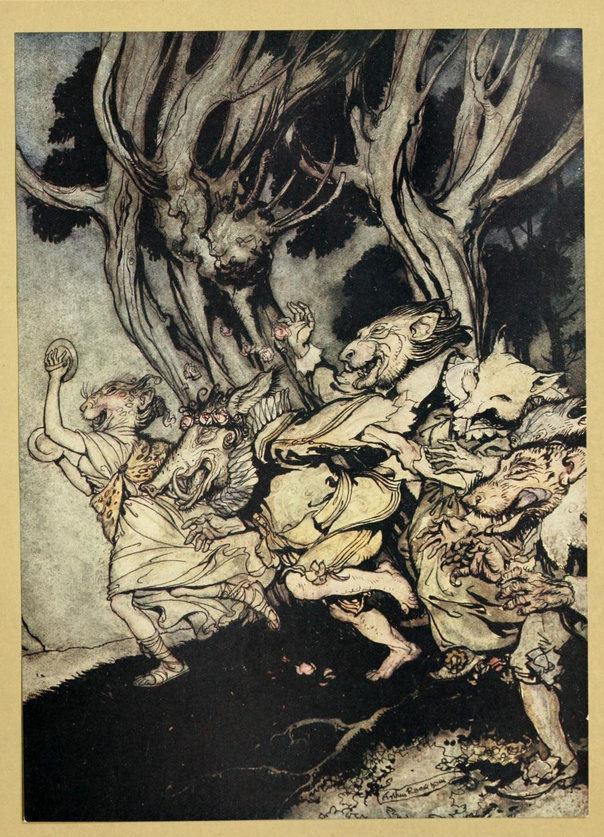
Some of the Comus illustrations by Arthur Rackham…

r8

r7

r6

r5

r4

r3

r2

r1

There was one recent instance where Comus attracted attention. The book Scenes from Comus (2005), from the great Midlands poet Geoffrey Hill, was a collection of poems on notions of the comedic and masques, and the ridiculous aspects of old age. But it wasn’t any kind of adaptation of the play, as the word is usually understood.

People of the British Isles

From Wellcome, the University of Oxford, and UCL, the first fine-scale genetic map of the British Isles. This definitely settles some long-standing debates and also bolsters common folk understandings of boundaries…

* “the Anglo-Saxons intermarried with, rather than replaced, the existing populations”.

* “there is no obvious genetic signature of the Danish Vikings” — and even up in Orkney the Norwegian Vikings are only at 25% of the DNA, which is congruent with raiding rather than robust over-wintered settlement. Very interesting, and perhaps the most unusual finding. Perhaps a strict Danish Viking religious prohibition on siring inter-bred children could explain this?

* “a substantial migration across the channel after the original post-ice-age settlers, but before Roman times.” Presumably this means the mysterious but relatively short-lived ‘Beaker people’ influx and then the later pre-Roman Gaulish Belgic tribes such as the Cantii (Kent) and the Regni (Sussex and Surrey). The latter pressed across the Channel and somewhat up into southern England, displacing the south-coast natives over to London in the east and Cornwall in the west. That would explain, as the new findings state, “why the Cornish are much more similar genetically to other English groups than they are to the Welsh or the Scots.”

* there’s no discoverable Roman genetic presence, or of their variously-recruited legionnaires or slaves. Maybe they really did all go home as the Empire withdrew from the British Isles?

* “The Welsh appear more similar to the earliest settlers of Britain after the last ice age than do other people in the UK.” That fits with other genetic studies from 2006/7, which found that the Celts had started moving north from the Basque country to colonise all along the Atlantic coast as far north as Ireland and western Scotland, a migration completed into Ireland circa 1,700 BC. But the new Wellcome study appears to show that the south-to-north migrating Celts never fully penetrated the difficult terrain of inland Wales, even once they were settled along that part of the British Isles.

* English areas have maintained their “regional identity for many centuries”, and many broadly map onto the old English counties and onto long-standing regional grassroots understandings of boundaries. Cumbria vs. Yorkshire, Devon vs. Cornwall are sharply distinct genetic regions, for instance.

The report can offer no indication of where the Mercian Anglians may have come from, or who they really were on the continent (Vandals, Goths, Frisians?). Continental DNA sampling is apparently patchy at present, and sometime outright outlawed, and the study didn’t look at the Netherlands. Where Ghent was a Vandal city, for instance.

The study papers and maps can be found at: People of the British Isles.


Update: Two years after this post in 2018 there was a a new study of 400 instances of degraded DNA from skeletons across Europe, to claim a supposed “90% replacement” of the British by circa 1,000 B.C. This was apparently by immigrants from central and northern France, who apparently had fairly recently originated somewhere on the steppes of Eastern Europe before sweeping westward into Central Europe and replacing the natives. But the Welcome study and a mass of other British and historical evidence contradicts this claim. The scientific consensus is still that the British date back to the Mesolithic, and that we do so in a fairly stable continuity. One way, I would suggest, to encompass the new “90% replacement” claim would be to assume that incomers did arrive and that they were buried rather differently than the natives. Thus, we would have more of their remains in a form amenable to DNA extraction, which would skew the picture.

J.R.R. Tolkien’s Vision of Freedom

There’s an entertaining and well-delivered recent Acton Institute podcast on Tolkien’s political stances, “J.R.R. Tolkien’s Vision of Freedom” (major plot spoilers). Be warned that the sound quality at the start is terrible. The lecture itself starts at 3:48 minutes, using a different microphone, and from then on the sound becomes much better.

It’s a very illuminating lecture, and didn’t drift off into the usual tedious American think-tank concerns about: ‘… and how does this relate to the Constitution and the Founding Fathers?’ The speaker’s grasp of both The Lord of the Rings and British history is obvious somewhat superficial (at one point he forgets the names Merry and Pippin, and never mentions the roots of Tolkien’s ‘conservative anarch’ politics in the lived experience of pre-Norman England), but otherwise the lecture seems soundly based. After listening I can certainly see an additional political aspect to the initial tepid reception of The Lord of the Rings in the Cold War of the mid and late 1950s. Soviet agents and communist sympathisers were in key positions in British literary life at the time. The publication of Orwell’s Animal Farm for instance, was repeatedly blocked by what we now know to be Soviet ‘sleeper’ agents. One wonders how this influenced the reviews for The Lord of the Rings, though one also has to wonder how many of those early reviewers actually read the book, let alone got all the way to “The Scouring of the Shire”. The same problem also informs the more recent sour reception of the movie adaptation, among leftists and Guardian readers.

The lecturer also has a whole book on the topic, for those who need the details and the footnotes, The Hobbit Party: The Vision of Freedom That Tolkien Got, and the West Forgot. This has a deeply off-putting title and cover, which I presume were somehow meant to ‘attract the Harry Potter generation’, but with the unintended consequence of making everyone else cringe and flee. Nevertheless, the book has been well-reviewed, and it’s definitely not another ‘Shopping Lists of the Inklings: a Lacanian analysis’.

The Runic Poem’s “moor-stepper”: Orion

I saw the constellation Orion rising in the dawn sky, standing up and rather fine, this morning at 6.30am. So I thought I’d make a suggestion that might put right a misconception, about the nature of the “moor-stepper” found in the gnomic “Ur” Runic Poem (pub. 1705). Especially for the benefit of any pagans out there, who according to my cursory searches appear to think it was a Grendel-like monster or a wild auroch (extinct type of wild bull).

Runic Poem, original:

U | [ur] byþ anmod    and oferhyrned,
felafrecne deor,    feohteþ mid hornum,
mære morstapa;    þæt is modig wuht.

Charles William Kennedy, 1910, in the “Introduction” to the best translation of Cynewulf:

U | [Ur] is headstrong and horned, a savage beast. With its horns the great moor-stepper fighteth; that is a valiant wight.

My translation:

U | is steadfast     has horns above all,
a very savage beast,    fighting with its horns,
great mere-stepper;    that is greatly spirited.

orionPicture: Simplified design based on Orion shown in the Firmamentum star atlas, 1690 AD. He steps into a mere, a spring-fed mere-pool that feeds the river constellation. (This is a .GIF image and may not appear if you have a GIF blocker).

Having seen Orion this morning I can say that his stepping pose is quite obvious to the star-gazer. So I’d suggest it’s not only a moor-stepping bull in the Runic Poem. It’s also Orion, who is frozen in the pose of stepping up. The “mere” is the (assumed moorland) mere-pond that feeds the river constellation, into which he steps in order to face the bull. He is at a disadvantage in the fight, due to the terrain, not to mention the gigantic bull. The trickster hare gives him ‘a leg up’ on her ears, and lets him borrow her back legs for a moment, with the implication that he may be about to spring over the bull’s horns.

My use of “greatly spirited” is more subtle than Kennedy — since the lines are meant to be a sort of night-sky riddle. So there’s no need to blatantly spell out that to the reader the supernatural aspects. The implication of the lines is that both the Bull and Orion are “greatly spirited”, and that they both exemplify the ‘fighting spirit’ in the rune Ur. The word “wight” was also avoided because modern readers now understand “wight” as being connected to Tolkien’s “barrow-wight”.

Orion’s rising (as a wintertime standing figure) traditionally heralds the autumn storms — “the storms that annually attend the heliacal rising of Arcturus and Orion” (Bede, drawing on Job in the Bible). Thus, the runic Ur is also the associated “greatly spirited” storms and winds. Thus we get the name, presumably, Ur-ion.

The Ur rune might be thought of in terms of man’s bravery and courage, in the face of implacable fury. Not in terms of the rather lumpen modern pagan suggestion that: “durh… Ur means a mad cow, dude!”

It’s then a dual-pronged rune in meaning as well as design: consider for instance the military distinction made between the two types of battlefield bravery: mad foolhardy rush-at-’em bravery, and considered bravery that is brought forth from within oneself in the face of an implacable opposing force. Only the latter type gets medals.

There is a sound-play in the rune poem (given above) between mǽre (‘great’, ‘monstrous’, ‘boundary’, ‘mere (pool)’) and the following word morstapa (‘ranger in-the-wilds’, ‘Orion’). If the Runic Poem was a mnemonic for teaching people the runic alphabet and then helping them to recall its subtleties, this would be a kind of test for them. The choice of meaning that a student has to bravely declare to the teacher (‘it’s just an angry bull’) thus encapsulates the choice a brave man must take in battle, in weighing the evidence and then pressing forward bravely regardless of the known risk. The correct student should emulate this type of subtle military decision-making, before he makes his brave call on the gnomic meaning of the lines (‘actually it’s the Bull and Orion, and is about the two types of bravery’).

Incidentally, “modig” = ‘spirited’ in the Anglian form. Which implies the Runic Poem may be Mercian, or at least copied there by a scribe, because in other territories modig was only used religiously and later. (The Cambridge History of the English Language, Volume 1, p. 343).

I can call an eminent philologist to my cause here. Bosworth obviously also thought the morstapa wasn’t the wild bull itself, but rather a man ranging into the wilds to fight it…

Mor-stapa, an; m. a moor stepper, a desert ranger (A Dictionary of the Anglo-saxon Language, 1838)

Compare also the Roman writer Manilus (d. 384 BC) on Orion (Jewish: gibbor, ‘the giant’; Arabic: ‘the hero’). To him this sky-deity makes… “Smart souls, swift bodies, minds busy about their duty (officium), hearts attending all problems with speed and indefatigable vigor”. (A.E. Housman trans.) Also Thomas Hood of Trinity College, Cambridge (1590)… “the reason why this fellow was placed in heaven, was to teach men not to be too confident in their own strength.” Horne, famed for his deep study of Orion and his three-volume epic poem on the topic, also has in his Introduction… “Orion is man standing naked before Heaven and Destiny, resolved to work as a really free agent to the utmost pitch of his powers…”.

Tolkien might have nodded to the -or part of Gibbor in The Lord of the Rings… “as he climbed over the rim of the world, the Swordsman of the Sky, Menelvagor with his shining belt. The Elves all burst into song.”

Finally, I’d also note that the bottom half of Orion with his ‘stepping’ leg looks like the shape of the Ur rune….

malton-pinPicture: Malton Pin, 10th century northern England (my crop of the British Museum’s photo of the cleaned brooch); and a modern simplified version of the rune.

Sources for the 1915 Taliesin controversy

For the convenience of current and future scholars and poets, here are the key source texts of the 1915-1924 Taliesin controversy in chronological order:

1. John Gwenogvryn Evans, Facsimile & text of the Book of Taliesin, 1916.

2. John Gwenogvryn Evans, Poems from the Book of Taliesin, 1916. Complete translations by Evans from the original manuscript, completed over seven years. Evans had been a speaker of Welsh in Carmarthenshire until age 19, when he learned English, but thereafter lived in England (he later retired to Wales).

Note that, “Though thus dated [1910 and 1915 respectively], the volumes [above] were not issued until 1916.” — Y Cymmrodor, 1918.

3. The Athenaeum, 1916, issues 4601-4612. Review by Quiggin of Evans’s book editions of Taliesin. A substantial section is given in Y Cymmrodor, 1924.

4. John Morris-Jones, Y Cymmrodor 1918, Vol 24. A substantial attack on Evans for his edition of Taliesin, and with a very strong Welsh nationalist flavour to it. The review was assisted by Ifor Williams. See Evans’s 1924 rebuttal.

5. Gilbert Waterhouse, The Year Book of Modern Languages, 1920. Annual review of the recent Celtic literature, and which addresses the dating of the life of Taliesin. “John Morris-Jones undertook to review Dr Gwenogvryn Evans’ two volumes on Taliesin [but he supports] his linguistic arguments with rather slender palaeographical evidence”. (At Google Books in Preview).

6. John Gwenogvryn Evans, Y Cymmrodor 1924, Vol. 34. Evans’s book-length reply to his 1918 critic.

7. Obituary of John Gwenogvryn Evans, J. Vendryes in Revue celtique 47, 1930.

8. At 2016 Angela Grant has recently completed a thesis at Jesus College, Oxford: “The View from the Fountain Head: the Rise and Fall of John Gwenogvryn Evans”.