An interesting and well-reviewed new book, The War of the Wheels: H. G. Wells and the Bicycle. Sadly there’s no Kindle ebook version.

An interesting and well-reviewed new book, The War of the Wheels: H. G. Wells and the Bicycle. Sadly there’s no Kindle ebook version.
This blog post has now been superseded by my new book on H. G. Wells in the Potteries, where it is expanded and referenced.

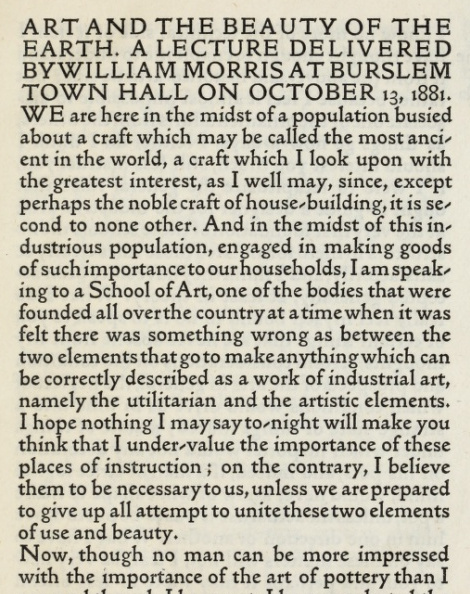
Art and the beauty of the earth : a lecture delivered at Burslem Town Hall on October 13, 1881, by William Morris to the Burslem School of Art.
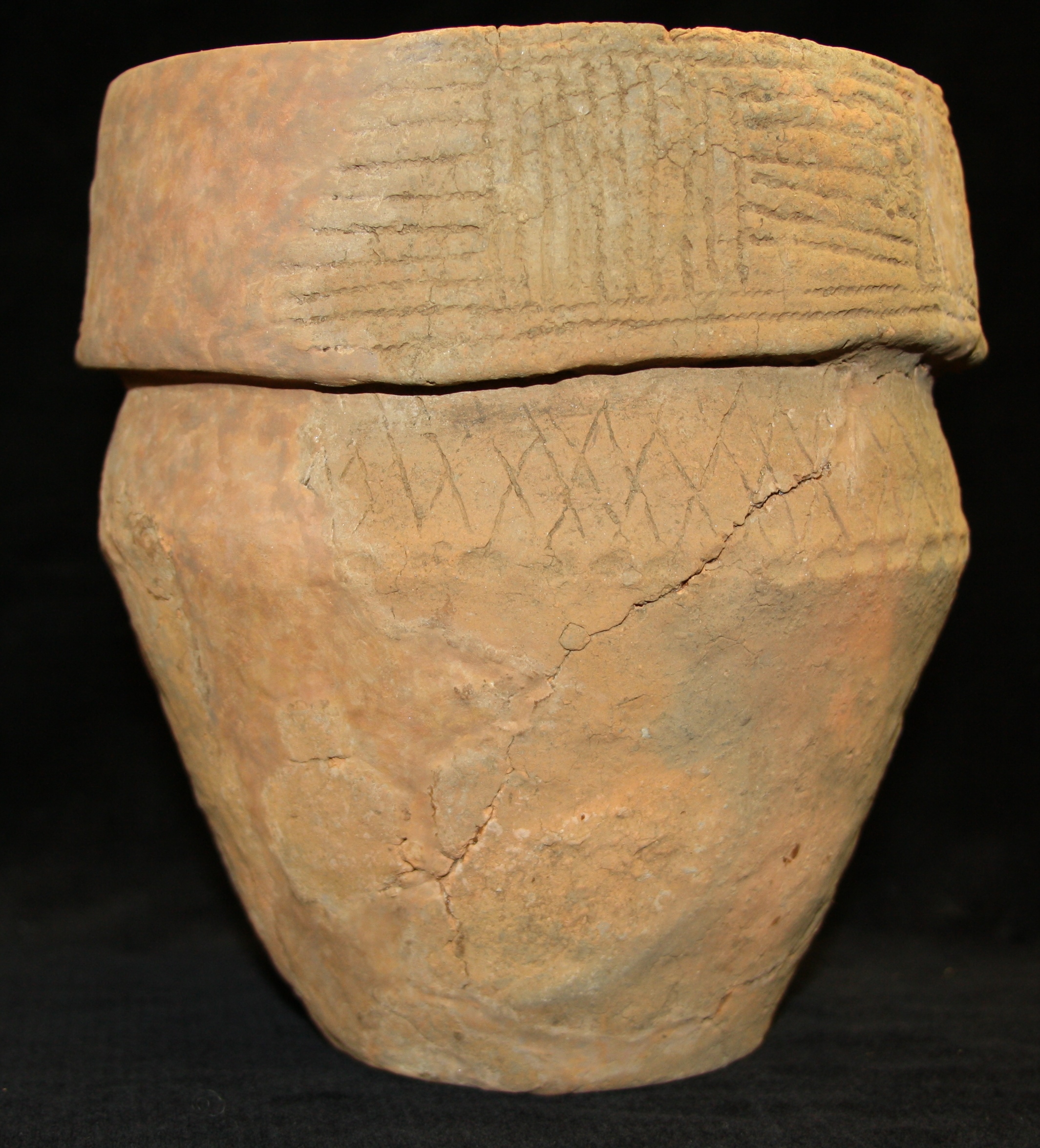
An early bronze-age urn, recently found in the Staffordshire Moorlands, has been restored and is set for display in Stoke-on-Trent…
Some early Etruria characters, extracted from the reminiscence “The Land of Pots” in TITAN: A Monthly Magazine, 1859.
William Theed, another gifted artist and most amiable man, for a long time devoted all his talents to the improvements at Etruria. He lived rent-free in one of the cottages on the Basford bank, and was married to a charming little French woman, whose foreign manners and broken English seemed out of place in that dull smoky land.
Among the chemists [in the early days at Etruria] were Leslie, long professor in the University of Edinburgh, who is described as fat and ugly, yet, like many a hideous mortal, intensely vain of his person; and Chisholm, a worthy old bachelor, who worked out the ideas and suggestions of others.
In fact, Etruria soon became the resort of scientific men, among whom was Sir James Hall, the father of Basil Ball, and a great oddity.
For a long time there was no church or chapel at Etruria, and those who could not or would not go to Stoke or Hanley to hear the gospel, were addressed by a working potter, a Wesleyan who roamed from place to place carrying a lantern under his coat to light him home at night.
Canals were the railroads of those days, and a person who lived for many years in Etruria remember seeing the red jackets [soldiers], and hearing the shrill note of the bagpipes of the Highlanders, passing down on barges during the long war.
Walking by the sea at Penzance one day, Thomas Wedgwood [of Etruria] saw a boy picking up seaweed and rock plants. He spoke to him, and was so pleased with his answers, that he undertook to secure for him an education which should develop his latent capacities. He wrote in his behalf to Dr. Beddoes … The Doctor received [Humphry] Davy as assistant at Clifton, and Mr Wedgwood supplied the necessary funds.1
(No Davy Lamp would have meant no deep coal mining, thus no industrial revolution that lasted, and thus no modern world… )
(1) This is corrected a little by the book A Group of Englishmen (1795 to 1815) Being Records of the Younger Wedgwoods…
“What were the benefits conferred on Davy by the Wedgwoods [in Cornwall in winter 1797, for their health] is not stated; but he certainly did not owe to them his [initial] introduction to Beddoes. That was due to Davies Giddy…”
However I would suggest that it was one thing to receive an introduction by letter, by a rather limited local antiquarian, of a promising local lad. It would have been quite another thing to have an introduction by Thomas Wedgwood, with a donation of £1,000 attached.
A facsimile sketch of one of the few remaining heliotype photographs made by Thomas Wedgwood in a series at Eturia, Stoke-on-Trent, in 1791-3.
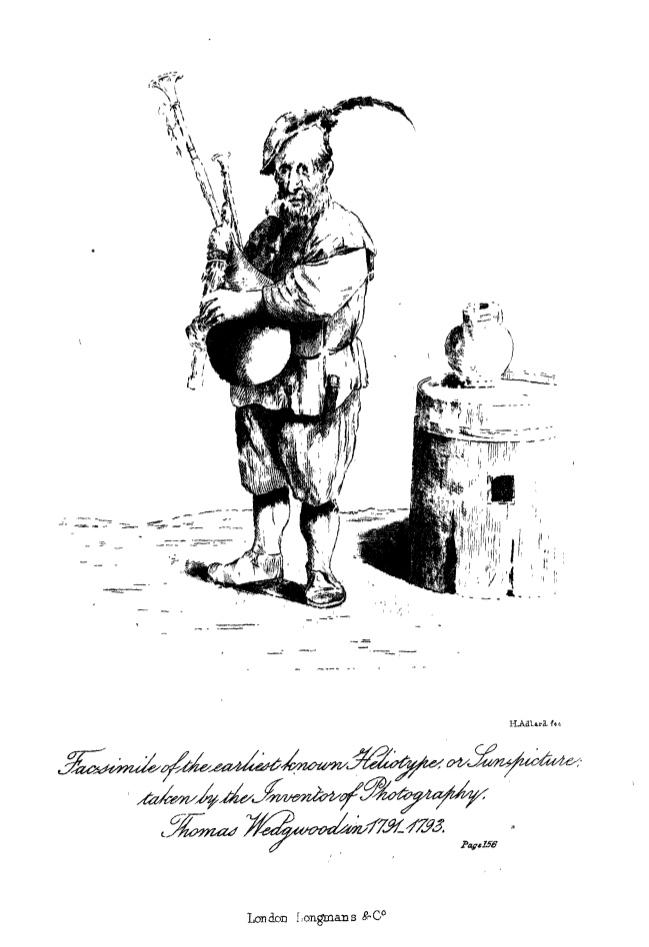
From the book A group of Englishmen (1795 to 1815) being records of the younger Wedgwoods and their friends (1871).
The 260-page book Arnold Bennett and H.G. Wells: a record of a personal and a literary friendship (1960, Hart-Davis / University of Illinois Press) is sadly not available in any library in the Potteries. It’s not on the Staffordshire or Keele catalogues, and Stoke Local Archives is listing it as “0, reservations unavailable” which seems to imply “stolen or lost”. According to Copac the nearest copy is down at Birmingham University.
However, I’m pleased to see it’s actually online at Archive.org for free: Arnold Bennett and H. G. Wells: a record of a personal and a literary friendship. It’s been scanned and placed online by the University of Florida. Good for them. There’s even a Kindle ereader edition. The letters are annotated.
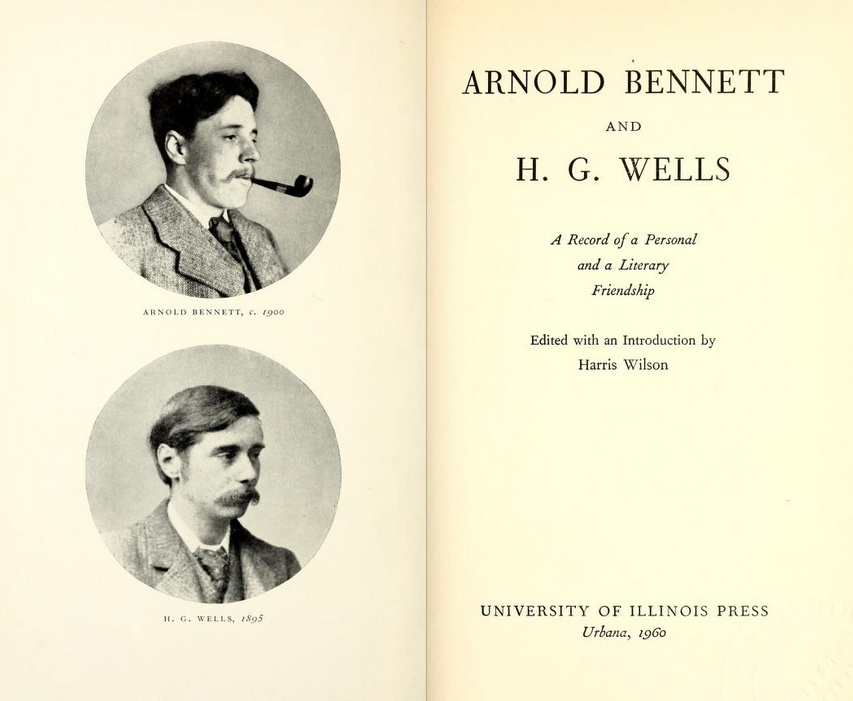
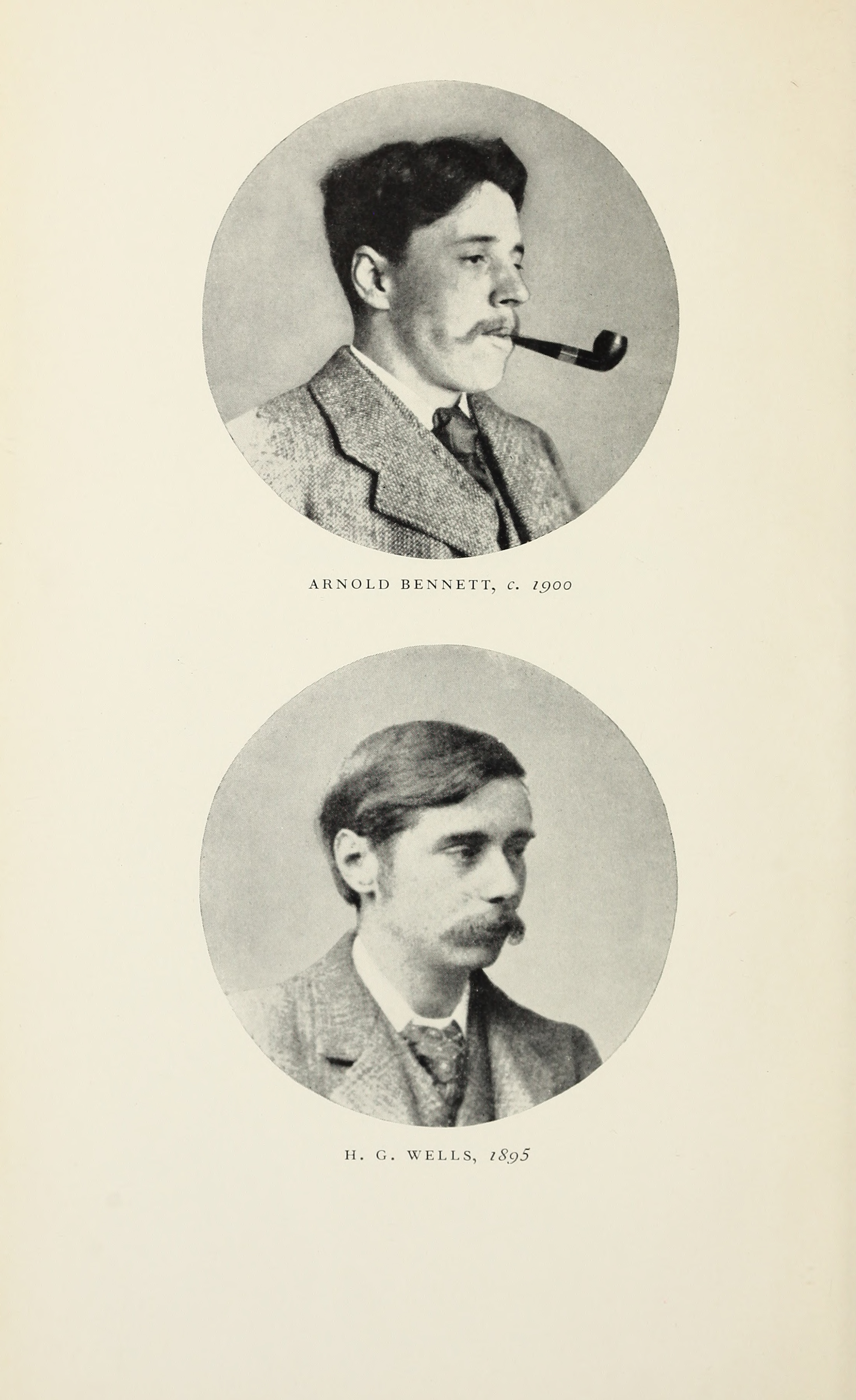
Since the book has been placed “Out of copyright”, here are the front portrait pictures, extracted by me at their highest resolution from the raw scans package. Feel free to re-use.
I found a very cool 1949 photo of a gas-holder at Etruria, Stoke-on-Trent. This one was up near the Shelton New Rd., across from Twyfords at Cliffe Vale (now Lock 38). I recall that a few years ago Fred Hughes tried to have one much like it, and nearby to this one, preserved as the last local example of the type. The photo is at Britain From Above. Such a pity they don’t take Paypal — they must be missing out on so much income by not doing so.

We also see there the Fowlea Brook, still flowing free and shining in the sunshine just above and behind the gas holder. It flows right to left, and goes under the old railway line to Market Drayton and Shropshire. How much would the city give today, for that line to still be intact and able to reach HS2!
If the picture goes missing due to a future blog move, the photo is EAW020983.
This blog post has now been superseded by my new book on H. G. Wells in the Potteries.
This blog post has now been superseded by my new book on H. G. Wells in the Potteries.
A new paper, “The palaeogenetics of cat dispersal in the ancient world”…
In order to trace the origins of the domestic cat, the authors examined DNA of 230 ancient and modern cats from Europe, north and east Africa, and southwest Asia, spanning around 9,000 years, from the Mesolithic period to the twentieth century CE.
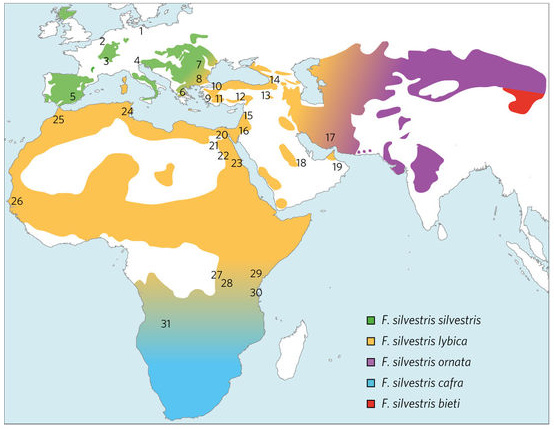
The first major [domestication] event was probably in the Fertile Crescent about 7,500 years ago, from wildcats originating in Anatolia. “Cats can then be seen moving with human populations as early as 5,000 to 6,000 years ago, as farmers spread from the Near East into Europe, and also with seafaring communities,” […] “Cats appear to have traveled along maritime trade routes … The second major wave of domestication occurred in the Greek and Roman periods, when a fad for Egyptian cats led to a movement of domestic cats descended from North African Felis silvestris lybica to Europe. … “The fad for Egyptian cats very quickly spread through the ancient Greek and Roman world, and even much further afield [specifically] the presence of the Egyptian lineage IV-C1 [cats] at the Viking port of Ralswiek 7–11th century AD”.
The team also analysed one of the rare genetic markers of domestication in cats: the colouring of their fur. “The gene coding for spots and mottling is found only in domestic cats, while the fur of wildcats is always striped,” the authors said. “And here we stumbled on a surprise: spots only began to appear under the Ottoman Empire, between 500 and 1300 CE, becoming more common after 1300 both in the Ottoman Empire and in Europe. This is a very late development in relation to other species. … this phenomenon constitutes irrefutable evidence of selection by humans …”
I see that in 2007 the famous British science-fiction author Brian Aldiss updated his famous Penguin Science Fiction Omnibus (1973). The original book was one of the strongest surveys of the best short science fiction published during the 1940s-1960s. Doubtless I read that book in the 1980s, when I read everything worth reading in science-fiction except for the novels of Heinlein and Rand. Regrettably I was gullible and thus easily put off those two great writers by socialist critics and commentators, who sought to dissuade the young from reading anything that might be ‘libertarian’.
Aldiss’s new 560-page edition of the book has added his choice from the intervening 30 years, bringing the book up to 31 stories. Newly added are works such as the novella “Great Work of Time” by John Crowley (whose Nabokovian Little, Big I still have on my shelves) which concludes the volume. Sadly I see that there’s no audiobook version, which I thought there might have been for such a major book from Penguin.
I occasionally nibbled at bits of literary science fiction after leaving it in the late 1980s, but only really returned to print science-fiction in 2008 with Stephenson’s superb door-stopper novel Anathem. As such I’m still winkling out the various nuggets I missed in the 20 year gap. It’s proven to be rather a useful time-saving strategy actually, as I can now bypass all the mediocre, leftist and politically-correct, ‘middle-age angst’ and ‘young adult’ books and can just go straight to the very best. Ideally in audiobook format.
I discovered Aldiss’s new expanded Penguin Science Fiction Omnibus via a roundabout route. I was reading a short interview with the curator of the London Barbican’s excellent new major exhibition on the history of science fiction (on until September 2017), and read that…
Gyger said his favourite science fiction book was John Crowley’s novella “Great Work of Time”, explaining: “Crowley did a lot of Science Fiction, and still does, and his Great Work of Time is a very small novel about time-travel, and is very nostalgic and very powerful about people trying to kind of perpetuate the British Empire forever.”
‘That sounds fun’, I thought, for a moment confusing Crowley with Cowper. ‘Where is it?’ I found that the late-1980s steampunk-ish novella is included in Aldiss’s 2007 edition of Science Fiction Omnibus, and I’m looking forward to dipping into it on the Kindle ereader. Apparently Crowley’s “Great Work of Time” is a little more than just ‘fun’, though, as you might expect on such a topic. It’s said to be a lyrical work on time-travel, about the dangers of civilisational stagnation and the ways in which one has to make harsh choices for the wider good.