Tolkien, time and stars

Anna Smol usefully rounds up the papers set to be presented Tolkien at Kalamazoo 2019. Of interest to me, re: my forthcoming book, and being noted here for my future reference (I’ll see if I can find open access versions in nine months or so) are…

* Two on time…

“Of Niggle and Ringwraiths: Tolkien on Time and Eternity as the Deepest Stratum of His Work”. Robert Dobie.

“The Eschatological Catholic: J. R. R. Tolkien and a Multi-Modal Temporality”. Stephen Yandell.

* Three on stars…

“Who maketh Morwinyon, and Menelmacar, and Remmirath, and the inner parts of the south (where the stars are strange): Tolkien’s Astronomical Choices and the Books of Job and Amos.” Kristine Larsen.

“‘It Lies Behind the Stars’: Situating Tolkien’s Work within the Aesthetics of Medieval Cosmology”. Connie Tate.

“Cynewulf, Copernicus, and Conjunctions: The Problem of Cytherean Motions in Tolkien’s Medieval Cosmology”. Kristine Larsen.

* And one of personal hobbit-ish interest…

Queer Hobbits: Language for the Strange, the Odd, and the Peculiar in Tolkien’s The Lord of the Rings. Yvette Kisor.

Archaeologies and Cosmologies in the North

Relational Archaeologies and Cosmologies in the North, coming soon. Some dunderheaded cover-bot at Routledge has given it a most misleading cover photo of a moose crossing a road. Either they’re hoping for the Northern Exposure crowd, or the bot’s auto-semantics module confused animistic with animal.

Surely Routledge makes enough profit on its over-priced academic books that it can afford some proper cover designers? But apparently not. It’s time that authors started demanding oversight of their cover designs at academic publishers, I’d suggest, as the trend toward robo-designers increases.

Anyway, despite the misleading cover, the book is actually a survey of… “animistic-shamanistic cosmologies and the associated human-environment relations from the Neolithic to modern times” in the far-north, which incorporates the latest thinking and discoveries. Looks fascinating. No ebook, but the paperback looks somewhat affordable at about £30. It’s due toward the end of July 2019.

New book: Words Derived from Old Norse in Sir Gawain

There’s an interesting new forthcoming book for those interested in the language of Sir Gawain, and also for those seeking to place the Gawain-poet geographically via the dialect.

Back in 2013 Richard Dance published his fine and detailed study titled “”Tor for to telle“: Words Derived from Old Norse in Sir Gawain and the Green Knight“, to be found in the volume Multilingualism in Medieval Britain (c. 1066-1520): Sources and Analysis. My heart sank when I learned this was from a AHRC-funded project, but on reading it I was pleased to find that Dance’s work proved a magnificent exception to the rule.

In this Dance found that…

“One could hardly, therefore, describe the Norse-derived words at this ‘fundamental’ end of the lexical spectrum as unusually deeply embedded within the author’s language; and, for all their interest in terms of the Gawain-poet’s stylistic strategies, their evidence does not justify searching for his home in parts of England reckoned to be especially densely settled by Scandinavian speakers”.

In a 2014 paper for the British Academy he mentioned that a… “full etymological analysis of the words derived from Old Norse in Sir Gawain will appear in a future
publication”.

Now Amazon brings a date for this future publication. Dance’s full book Words Derived from Old Norse in Sir Gawain and the Green Knight: An Etymological Survey will weigh in at chunky 256 pages. Published by Wiley-Blackwell, the book is set to appear on 7th June 2019.

Minna Sundberg’s old languages map

Finland’s Minna Sundberg has a super new illustrative chart of the “Nordic Languages in the Old World Language Families”. The amount of leaves indicate the size of the current-day population speaking that language.

Useful for getting your head around what came from where. A small additional translator inset would be been useful for converting the sort of terms one encounters in deeply researching pre-LOTR Tolkien, such as “Old Norse”. It would have been nice to have just a couple of orienting dates. The Indo-European (Aryan) family had its origins in the Near East just over 8,000 years ago from today, for instance, with a big diffusion into Europe around 5,000 years ago.

Minna is the fine comic artist and storyteller making the ‘young adult’ graphic novels Stand Still. Stay Silent (ongoing – a future Scandanavia has returned to a state of Nordic mythology complete with monsters and magic), and A Redtail’s Dream (completed – a young boy of the North strays into the land of dreams).

The Cracks of Doom: Untold Tales in Middle-earth

I’m pleased to present The Cracks of Doom: Untold Tales in Middle-earth. My new book is available now, and is a side-project from my larger scholarly Tolkien book. It should be of interest to RPG players, as well as to fan-writers of Tolkien stories.

The Cracks of Doom is a fully annotated and indexed list of ‘Untold Tales’ in Middle-earth, pointing out the ‘cracks’ where new fan-fiction might be developed. There are 125 entries and these usually lightly suggest ideas for story development. It will also be useful for scholars seeking to understand what Tolkien “left out” and why, or those interested in ‘transformative works’ and fandom.

Contents:

1. Introduction: “On Untold Tales in Middle-earth”.

2. Writing guidance: “Faith, Duty and Fun: plan and style in Middle-earth fiction”.

3. The list: ‘Openings, Gaps and Cracks’. 125 entries. Note that this is only for LOTR, inc. the Appendices. It also draws on Unfinished Tales, books in the History series, and for one item I also reference the Letters. It does not, of course, cover the vast amount of material in The Simarillion.

PDF sample with index. The full book has 64 pages, about 22,000-words, and a full name and place Index. The book is wholly unofficial, and very respectful of Tolkien’s vision.

There’s also a Kindle ebook version, slightly expanded with some additional entries. Also available now.

I think I’m fairly safe with the title, re: the Estate. Tolkien is not mentioned in the title, and “The crack of doom” was a common colloquial phrase in the Edwardian period, being found in Shakespeare’s Macbeth, Act IV, Sc. 1.

Mythlore 1996

There’s a fine Christmas present for Tolkien scholars, the journal Mythlore Vol. 21 | No. 2 (1996) is now newly free and online in public. It’s a very large edition and contains the elusive proceedings of a major 1992 conference. It has per-chapter downloads, so it’s a simple matter to download only the articles you need and compile them to a truncated PDF that suits your needs. Including the editorial, I bagged 10 articles and ended up with a manageable 100-page ebook on my 10″ Kindle HD.

The Jake Whitehouse collection

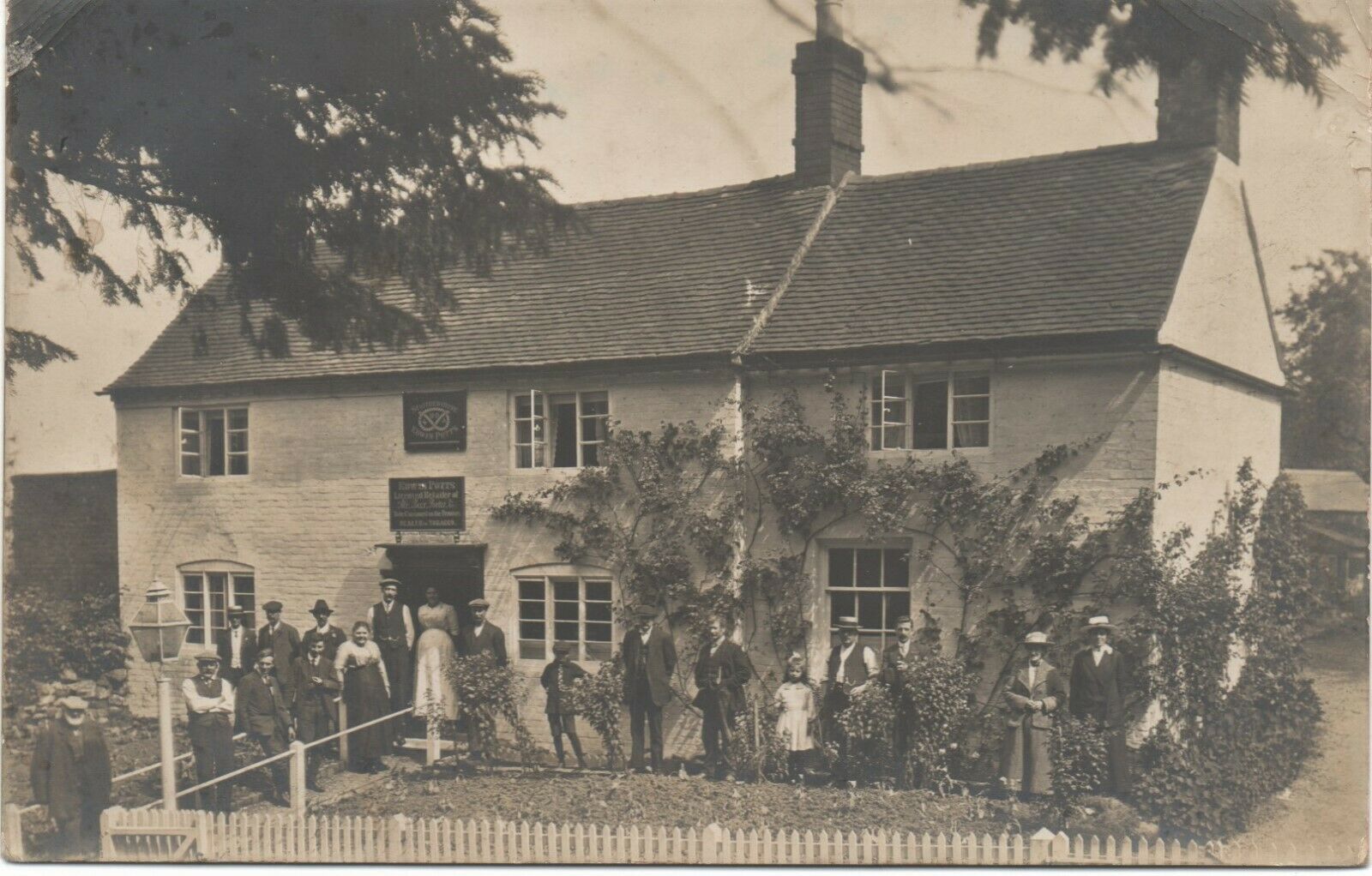
There is now a dedicated website for the Jake Whitehouse collection of First World War photographs and postcards relating to mid Staffordshire. The tight focus is the First World War and the area around the military camps on Cannock Chase, the camps themselves, and places the soldiers might have visited such as Rugeley, Alton and Stafford.

There are about a dozen pictures of the Haywood villages and a couple of Shugborough, but Tolkien scholars will be most interested in the wealth of camp pictures.

“Tolkien in Love”

While we’re waiting for the slow-as-treacle big-screen Tolkien biopics to arrive (two are said to be due), Radio 4 is to repeat the one-hour “Tolkien in Love” Afternoon Play drama this Sunday, 9th December 2018. Appears to have been first broadcast 2017. It follows a 30-minute mid-morning documentary of the same title, broadcast by Radio 4 in 2012.

The BBC has no Listen Again for this drama, though its Web page promises it will be “available shortly after broadcast”. The earlier Tolkien in Love documentary has long-since been made “unavailable” from the BBC. Surprisingly, neither broadcast appears to have been pirated or sent to Archive.org.

Update: now on Archive.org.

Five new Tolkien lectures from Oxford

Five new online lectures on Tolkien and his interest in languages, from Oxford, with one per podcast. I have no interest in the intricacies of his invented languages, but in this case it’s real languages such as Old Norse.

Regrettably they’ve only put up the videos, and they’re over a Gb each to download and there’s no plucking torrent so the download speed can’t be throttled back. We don’t all have gigaspeed Internet like Oxford does.

Tolkien Studies 2018

Now online, a new issue of the leading journal Tolkien Studies, Volume 15, 2018. Especially interesting for me are…

* “Doors into Elf-mounds: J.R.R. Tolkien’s Introductions, Prefaces, and Forewords”. No abstract, but it appears to be a brisk survey and summary of such?

* “Tolkien’s Classical Beowulf and England’s Heroic Age”. No abstract, but it appears to be on the influence of Virgil and similar authors Tolkien would have known from his days at school and university?

* And of course the usual The Year’s Work in Tolkien Studies 2015 and Bibliography (in English) for 2016.

The latest Mythlore, September 2018 is also available. In which the lead essay is of interest…

* “”No Pagan Ever Loved His God”: Tolkien, Thompson, and The Beautification of The Gods”. On the Catholic poet Francis Thompson, now deeply unfashionable but whose best work was once ranked alongside Blake. The young Tolkien was a strong late admirer. At first glance it looks like Thomson’s Essays are being considered here as an influence, and especially one on paganism.