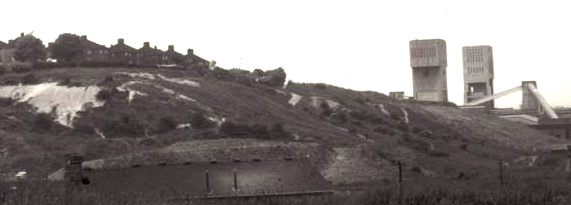
New picture of the Etruria Woods

Purchasers of my H.G. Wells book may be interested in this good clear (if rather small) picture of the Etruria Woods, albeit as they barely remained in 1964 — as the era of heavy industry entered its final decades and neared its end.

Centre of picture, and in the ravine running off to the left. With what appears to be scrubby moorland to the right indicating more of the struggling remains. The towers are coal-mine winding towers.

Map of the Derbyshire Dales

I couldn’t find even a half-decent map of the Derbyshire Dales administrative area, via search engines. So I made one. Here it is… extracted from deep inside the local Council’s Local Plan PDF and usefully laid onto a wider map showing its relationship to the Peak District, the Staffordshire Moorlands, and the M6 motorway. As well as nearby Derby there is also a West Coast mainline rail station at Stoke-on-Trent, with fast regular connections to London and Manchester. The local railway station at Uttoxeter will also take you deep into the wilds of the East Midlands and then connect to take you over to the east coast, albeit on a lesser train.

Settlement dot size reflects population size. Green = The Peak District National Park, which the Dales don’t overlap.

A macabre / fantasy illustrator duo from Rhode Island

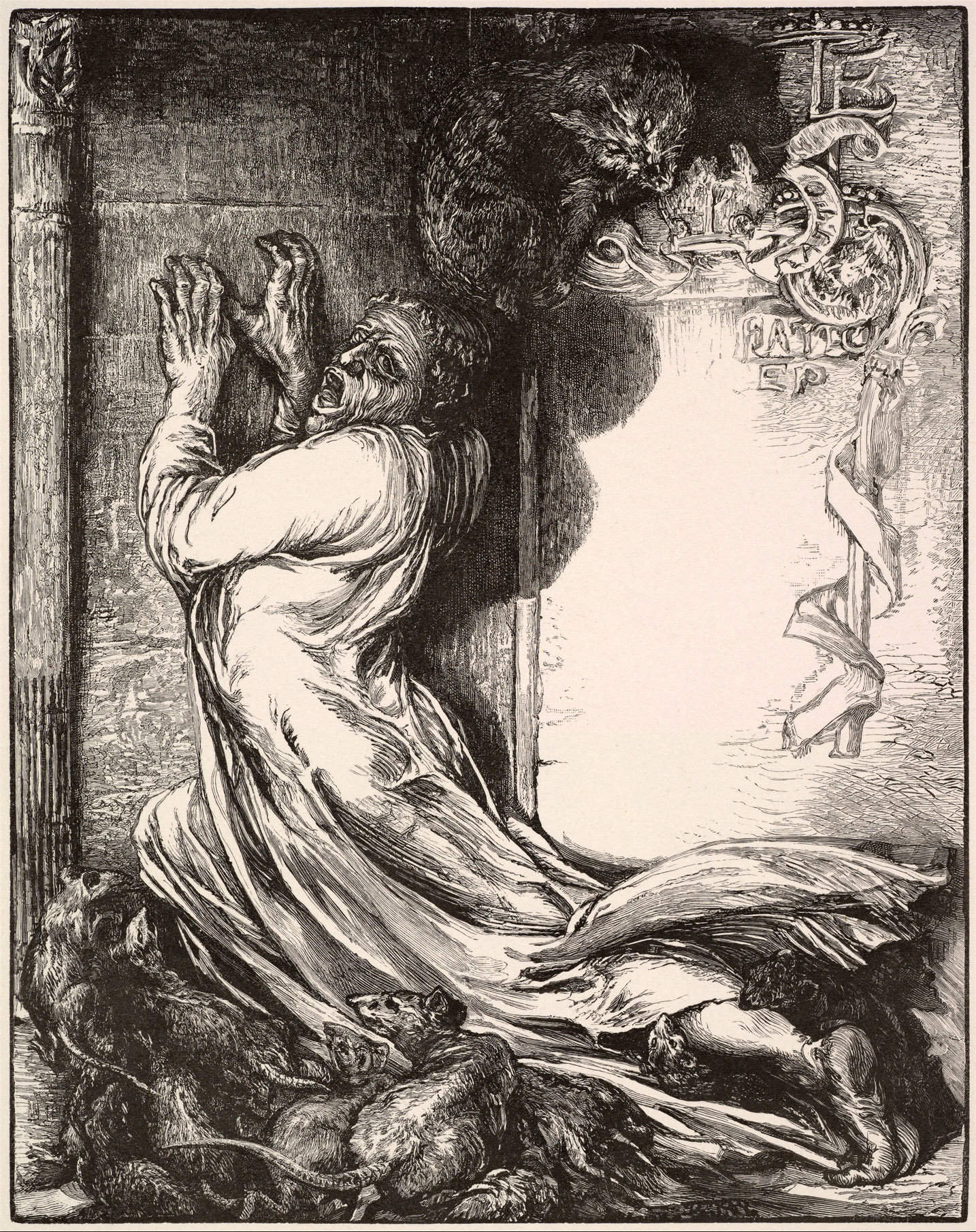
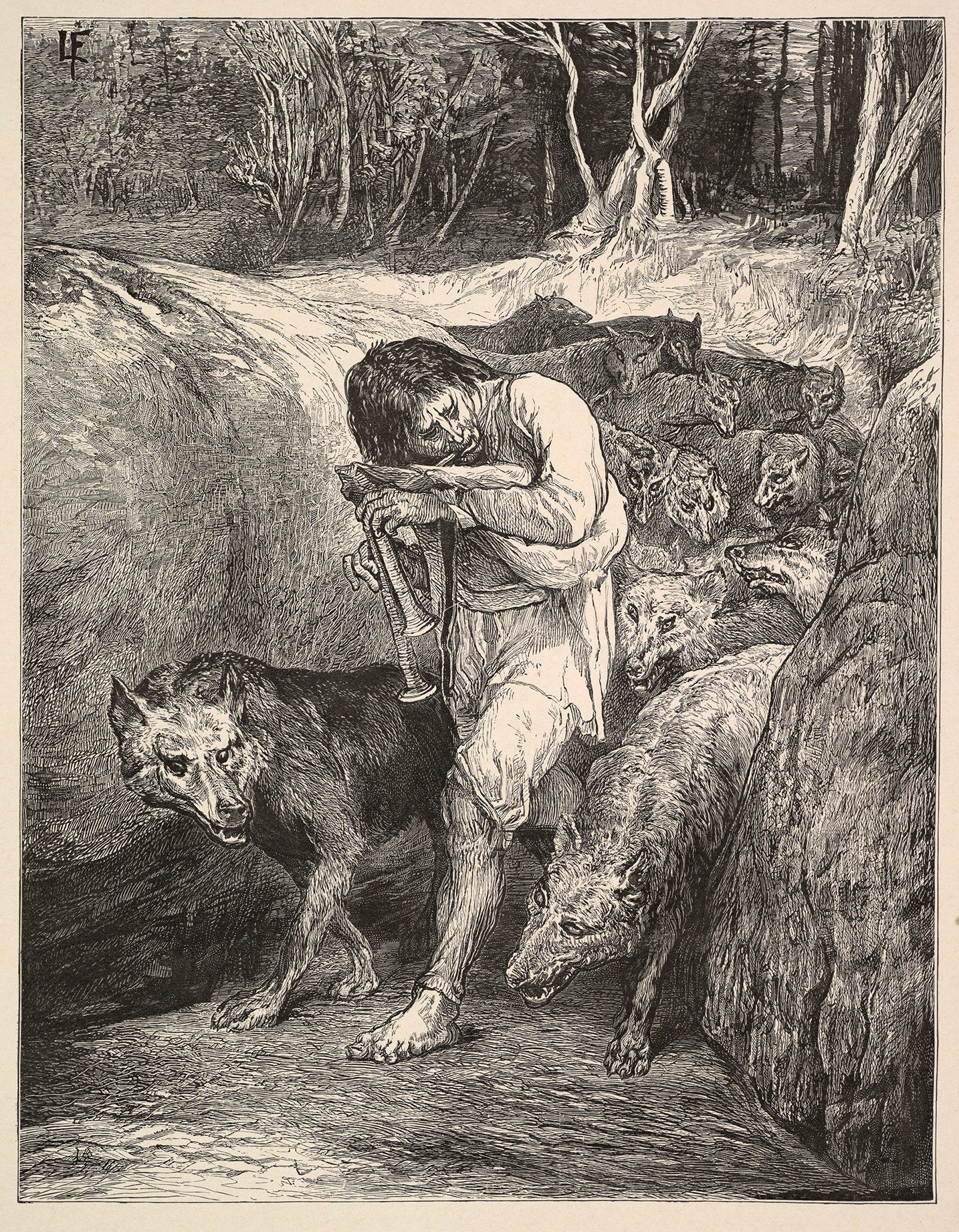
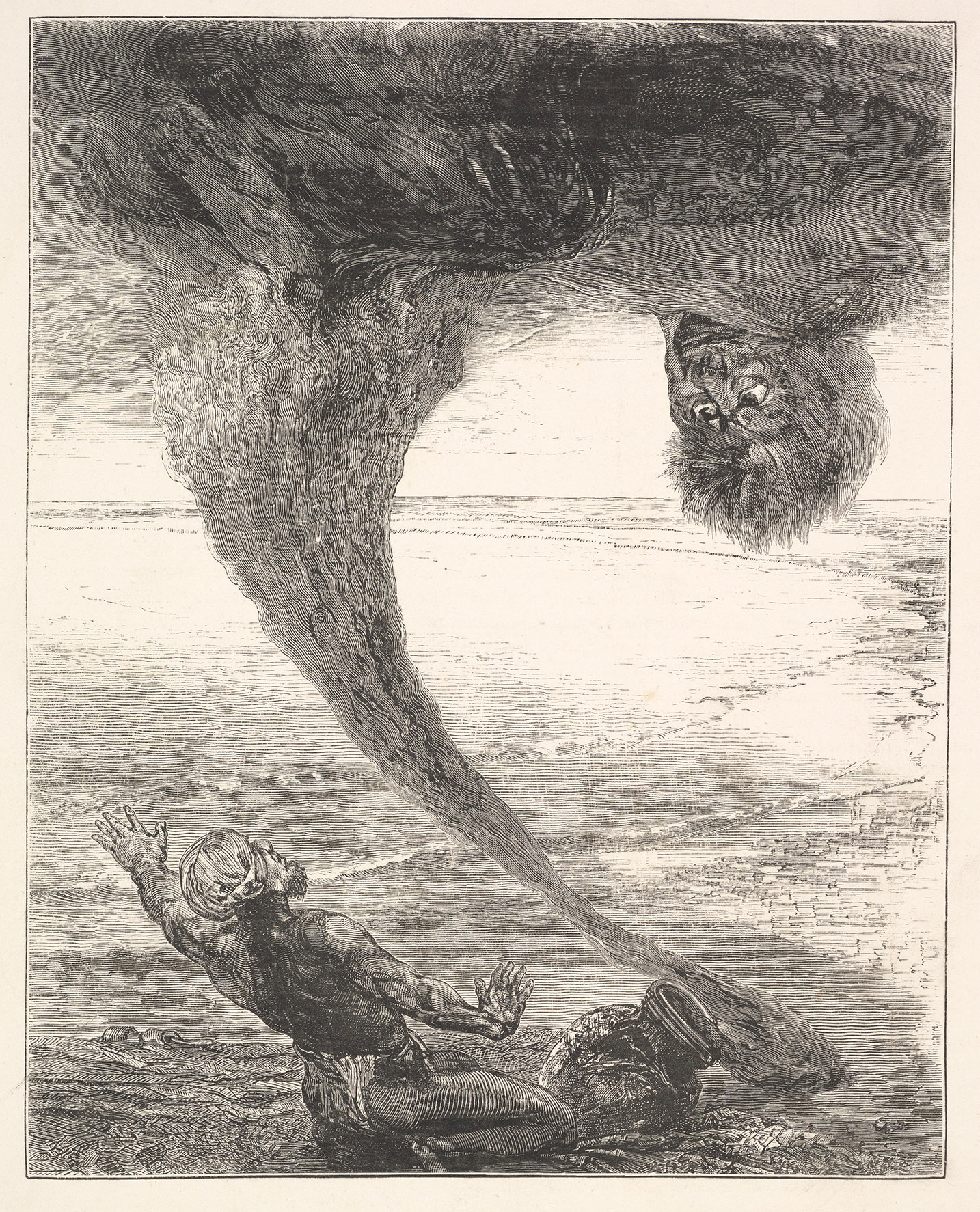
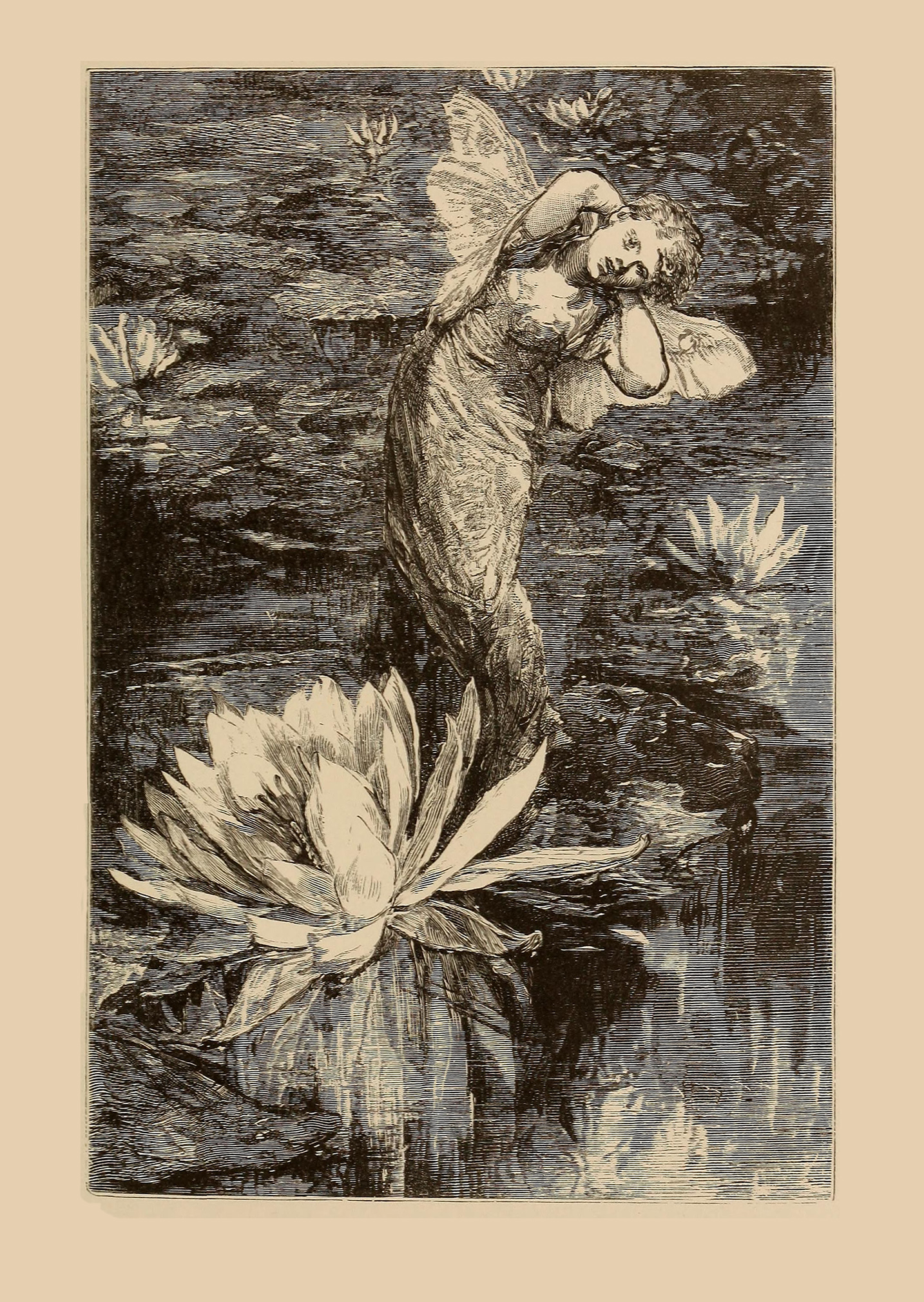
A macabre / fantasy illustrator duo from Rhode Island, a placename which is of course familiar to all who thrill to supernatural literature. John La Farge (1835–1910, lived and died in Providence, Rhode Island) and his engraver Henry Marsh (American, 1826–1912). Bed-ridden early in his career and in need of the cash, La Farge produced fairly loose watercolour designs which were engraved by Marsh and published in the upmarket Riverside Magazine for Young People. The “water-lily” picture appeared in an anthology of poetry. La Farge went on to a strong career in stained glass design.

Apparently these fantastical works were remade in oils some 15-20 years later, and were then presumably shown in Providence circa 1885 (give or take five years). One then wonders if a later sight of “Bishop Hatto and the Rats” might have been a boyhood influence leading to the famous horror story “The Rats in the Walls? Le Farge died at Butler Hospital in Providence in 1910, and there must have been good accounts of his life in the obituaries. Had Lovecraft known the picture, then he would have especially enjoyed the combination of a great bristling malkin of a cat, a churchman, and the rats, all done by an artist from his beloved Rhode Island.

“Bishop Hatto and the Rats”.

“The Wolf-charmer”.

“The Giant and the Travelers”.

“The Fisherman and the Afrit”. An afrit (also called afreet or ifriit) is a mischievous solo creature, similar but far less powerful than a jinn (genie), and they are probably best likened to ‘the imps of the jinn‘.

“The spirit of the water-lily”.

The Wolseley Gyrocar

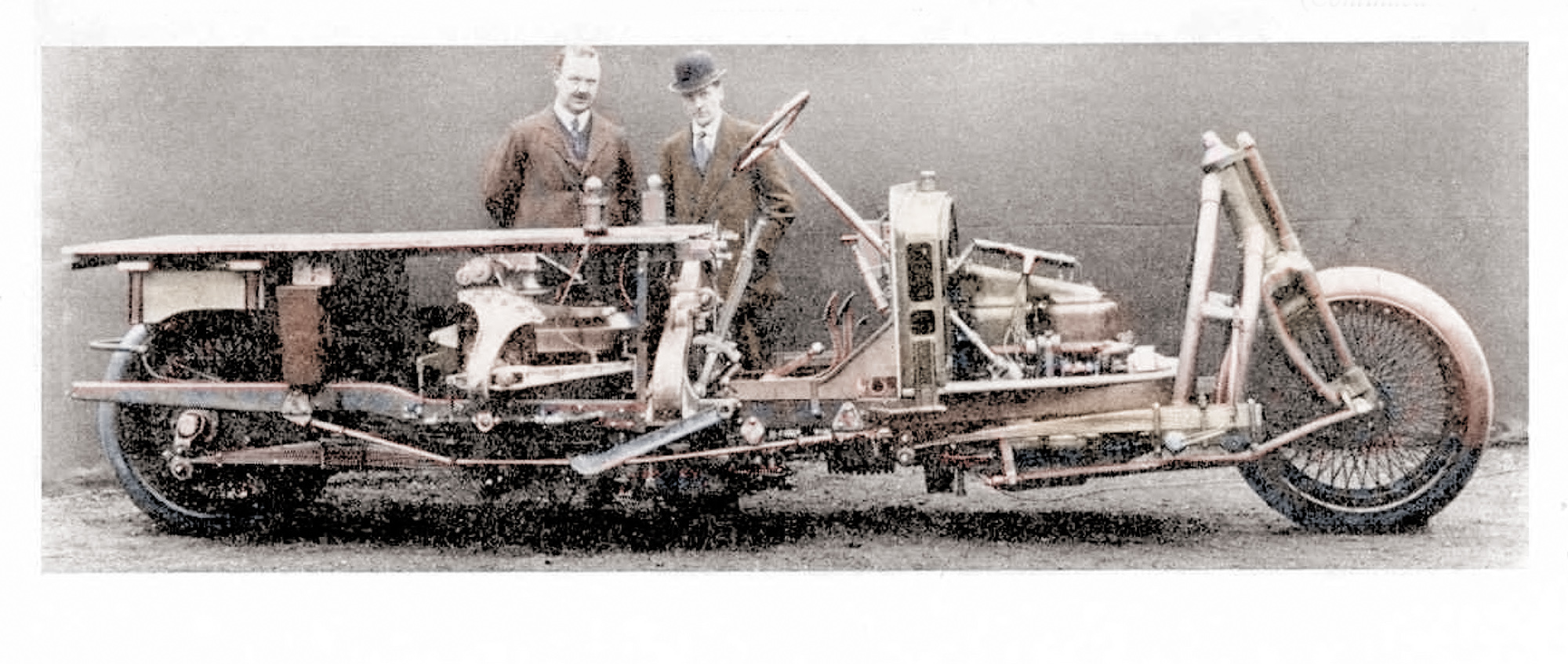
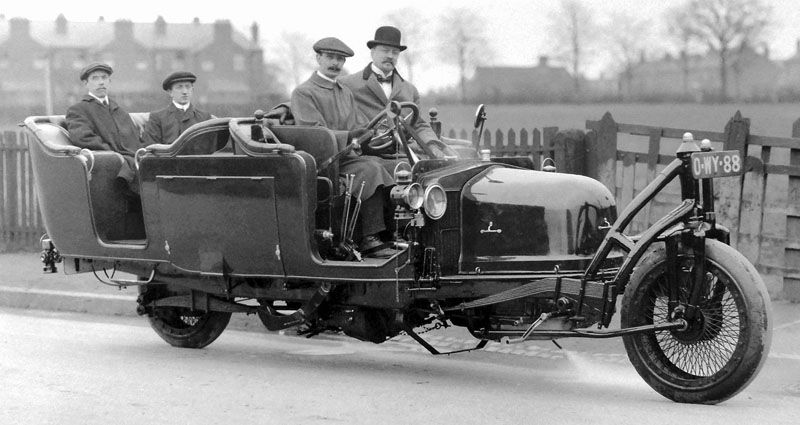
The Wolseley Gyrocar, made in Birmingham, seen here in November 1913 before a successful test run around the streets of the city. Once started up the two-wheeler was firmly stabilised by gyroscopes which spun at 2,000 r.p.m. The inventor is the man on the left of the picture.

Fully clad in bodywork, fitted out with upholstery and with the internal gyro giving the ‘levitation’ effect…

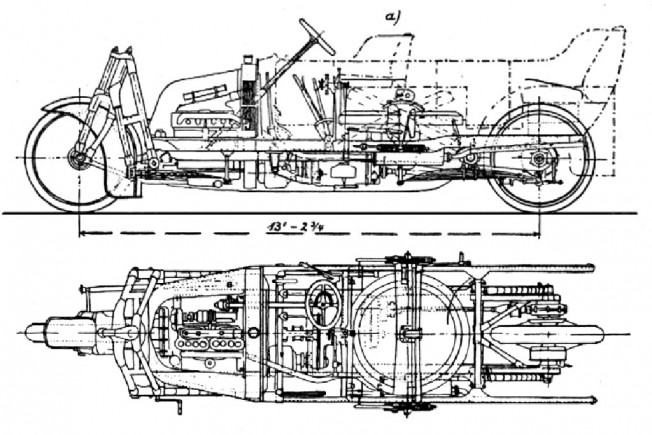
The plans… if you were thinking of re-making it as a 3D model.

Grotesque Animals (1872)

Grotesque Animals: Invented, Drawn, and Described by E.W. Cooke (1872), co-creator with James Bateman of eccentric gardens at Biddulph Grange in North Staffordshire. The book followed Lear’s Book of Nonsense by a few years, but the drawings were begun in 1864, a few years after Biddulph Grange was completed and Bateman had sold up and moved away. The book has 24 plates, not well reproduced here in this partial 14-plate reconstruction, as subtle shades and tones are lost. Each monster is explained briefly on a following page, but only one of these text pages can be found.

Plate V – too small to include in the partial reconstruction…

The Trial of Mary Broom

Another Potteries novel, found. The Trial of Mary Broom, 1894. If it is set partly in Burslem, then it may have some interesting descriptive scenes of the town.

“The Trial of Mary Broom, by Mrs. Harry Coghill [b. Brewood, 1836, lived Staffordshire c. 1884-1891], is a story of good plot, interest, and quick exciting movement. It is founded, it would seem, upon historical events, in which the principal actors were the brother Elers, Dutch potters, who left their own country during the reign of their great countryman, William III., and settled at Bradwell, near Burslem. Their proficiency in their trade excited the jealously of their English neighbours; and a real or imaginary conspiracy against them provides Mrs. Coghill with a motif, which she has skilfully and pleasantly utilised. The Trial of Mary Broom is a capital tale.” — Academy and Literature review.

Fairly short at 160 pages, it was her sixth novel and was apparently part of the ‘Homespun’ series for women. She also published a Moorlands short story, “The vicar of Moor Edge” in Leisure Hour, 1895. This probably gives a taste of what The Trial of Mary Broom would be like if it could be obtained.

Complete 51-Volume Harvard Classics

The Complete 51-Volume Harvard Classics (1909-10), now officially available free in PDF. Buying a fine set in print would cost you around $600 or more. Includes beautifully edited and presented pre-PC volumes of The Thousand and One Nights; Folk-Lore and Fable: Aesop, Grimm, Andersen; and Epic and Saga. Volume 50 appeared in 1916 and provided “Introduction, Reader’s Guides, Indexes”, including eleven carefully designed ‘reading plans’ based on a set amount of reading each day. Thus it is not necessary for the rather daunted reader to just start at Vol. 1 and plough on from there. Volume 51 is a printed series of public lectures on the series.

Potiphar’s Wife by Kineton Parkes

Another local author, found. Kineton Parkes (1865-1938) was a Birmingham man from Aston, who from 1891 to 1911 was curator and principal of the Nicholson Institute in Leek. He was also was the manager-actor of the Leek Amateur Operatic Society for 1899, and generally appears to have been a leading light of the town’s cultural life.

During this time he developed an interest in walking and thus naturally encountered the Roaches, Morridge and the Manifold Valley. This led to his Potiphar’s Wife (1908), a novel of farm life in the Moorlands/Peak and with a good deal of dialect. Apparently it was set circa the ‘hungry’ 1840s and the economic recession of the time (triggered by natural events which began with a massive volcanic eruption in 1816). In 1911 the novel was developed as a play for the London stage, handled by someone who knew the Staffordshire Moorlands and the dialect, although it probably didn’t have too long a run in London.

* Sunday Review — “Rose Critchlow is a woman of strongly passionate and sensuous temperament. Unlike many beautiful women, it is not the excitement of general admiration, the winning of open homage [that she wants, but rather …]

* Staffordshire Sentinel — “The book is a very thoughtful and artistic novel. […] The author describes two widely different aspects of life with skill and understanding. Mr. Kineton Parkes knows the country in the neighbourhood of the Dove and its curious tributary the Manifold with a thoroughness which is only born of a deep and affectionate interest.”

* The Westminster Review (1908) — “Potiphar’s Wife by Mr. Kineton Parkes, is, without exaggeration, a work of genius instinct with the loves and hates of the dalesfolk.”

* The Lady journal — “A story so powerful, original, so full of vigorous and convincing characterisation and of sheer human interest […] worthy of comparison with Thomas Hardy’s Wessex romances.”

Sadly the novel appears to be utterly lost in terms of ‘online’, though the British Library apparently has a copy, along with the libraries at Oxford and Cambridge.

There was also a North Staffordshire novel called The Money Hunt: A Comedy of Country Houses (1914), which was distinctly more cheery than the tragic Potiphar’s Wife

“The Money Hunt is one of the last the author wrote before leaving the moorlands of North Staffordshire for Devonshire. The scenery of “The Money Hunt” is that of the moorlands, as was that of Mr. Parkes’s previous novels, full of excellent humour and with illustrations.”

This blurb assumes that his novel The Altar Of Moloch (1911) was also set in the Moorlands. Despite its gruesome title it was apparently not supernatural, but rather “an account of the musical temperament”. The Westminster Review called it…

“a story of four men and a maid, Beautiful Vaudrey Woodrolle who is the only daughter of a ‘cello-playing village schoolmaster. Her wonderful voice so much impresses the Lady Bountiful of the village that she persuades Mr. Woodrolle to send his daughter to Madame Andreini …”

His Moorlands novels are sadly forgotten and unavailable, and if he is remembered today it’s by academics as a Ruskinite and writer of the 1920s on the sculpture and sculptors of the time. His main output was:

Shelley’s Faith: Its Development and Relativity [1888]
The Pre-Raphaelite Movement (non-fiction) [1889]
The Painter-Poets (Editor) (non-fiction) [1890]
The Library Association In Paris (non-fiction) [1893]
The Sutherland Binding (non-fiction) [1900]
A Guild Of Cripples (poetry and short stories?) [1903]
Love a La Mode: A Study in Episodes (short stories on the philosophy of love) [1907]
Life’s Desert Way (novel) [1907]
Potiphar’s Wife (novel) [1908]
The Altar Of Moloch (novel) [1911]
The Money Hunt: A Comedy of Country Houses (novel) [1914]
Hardware. A novel in four books (modernist novel?) [1914]
Windylow (novel) [1915]
Sculpture Of To-day (non-fiction, 2 volumes, third volume did not appear) [1921]
Mystery Of Chinese Art (non-fiction) [1929]
The Art Of Carved Sculpture (non-fiction) [1931]

He probably also has a number of uncollected essays on sculpture and sculptors, in art journals such as Apollo.

He was also a magazine editor. Kineton Parkes was editor of the illustrated journal Comus (1888-89). Then while at Leek he was tapped as editor of the short lived Library Review (1892-1893), which rather ambitiously aimed to track and briefly review the entirety of the torrent of new books then being produced. One has a vision of wagon-loads of books being carted to Leek from London on a weekly basis. He was later assistant editor and then editor of the monthly Igdrasil: the Journal of the Ruskin Reading Guild.