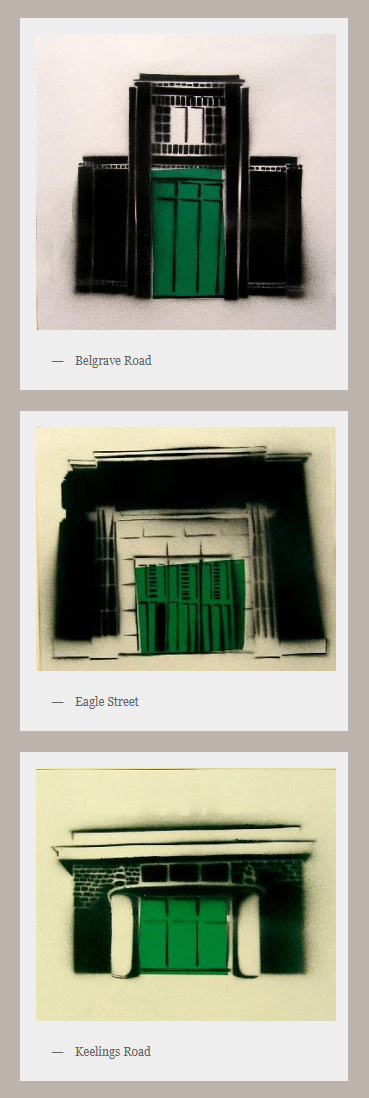
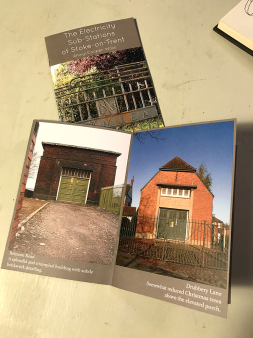
The Beautiful Electricity Sub-stations of Stoke-on-Trent. In photography and art-stencils.
A new report from the UK’s Office for Students finds 34% of Staffordshire University students now get ‘first class’ for their final degree classification. At nearby Keele it’s 27.8%. A little further away, at the nearly-closed MMU Crewe campus it’s 32.3%.
The Mail reports…
“The Department for Education has now said that universities have been given a ‘stark warning'” on this grade inflation.
Of course these are aggregate percentages per institution. To really make sense of things you’d need to see it all broken down by degree area and weighted by the comparative stringency of the admissions policy for that degree area. But perhaps such figures are already posted on each degree’s recruitment page, these days, and I’m just unaware of that. Though I don’t see such things on a sample degree page at Keele, just a vapid ‘student satisfaction’ number.
For those readers of this blog who have little contact with education, I should point out that 27-34% is highly abnormal. The true figure should be about 8-12%, even accounting for a slight general up-skilling in students when balanced against the current state of secondary education.
In the old days before about 1996, back when ‘a first was a first’, if you had generally high-quality recruitment onto a degree, and had the usual moderate drop-out from the course at the end of the first-year, then at the end of a three-year degree you should expect no more than about four first-class degrees. That would be in a final-year class of around 40 students. 8 to 10% of students getting firsts is about right, and reflects the essentially fixed distribution of such abilities in the degree-capable population.
It used to be casually assumed that it was just duffers such as Wolverhampton University that had this grade-inflation problem. But the curious uniformity of the rises is now fully revealed, across everyone from Wolverhampton all the way up to Durham. This suggests to me that it’s not only some occasional institutional laxity or management-driven rankings-pressure on lecturers that’s at the root of the problem. The Office for Students finds a big chunk of this widespread rise to be simply “unexplained”, despite their casting around for suggestions from those on the ground.
One thus wonders what part the take-home essay and coursework has to play, as that must increasingly enable the easy use of informal and online ‘essay-writing services’ and other more undetectable methods such as translation-plagiarism for final dissertations. This suspicion of outright cheating seems at first glance to be backed up by a government comment, found in the media stories on the new report, that…
According to Education Secretary Damian Hinds, this increase is probably the result of “unfair practices”.
One might ask if these “unfair practices” happen at the bottom of the ability range, and thus (as a knock-on effect) they encourage university administrators to re-shape grade curves and thus make things easier at the top as well. Or perhaps the cheating is happening among marginal 2:1 students, who try to play the system with a few cheating third-year essays and a final dissertation in order to get a first. Or it may be a mix of both pressures.
If it’s mostly due to largely undetectable ‘contract-essay cheating’ then simply ‘toughening up the marking’ will have little impact. The essay-mills will scale accordingly. One way to get around the problem might then be to bring back sit-down exams. On my undergraduate degree, each year we had regular sit-down timed exams in large classrooms and halls, giving hand-written answers to a previously unseen sheet of exam questions. Something which one would almost certainly not encounter today as an undergraduate. We had the expected number of firsts — three in a class of about 40, and I still have a photocopy of the final noticeboard sheet that announced the final grades for the class.
End-of-year exams would pose certain organisational and logistics hurdles, given the sheer number of students today. It would also have to be introduced uniformly across all courses, or students seeking ‘easy’ choices would skew toward no-exam universities and a two-tier system would develop overnight. If done on a huge sports-hall scale there might also be a slight problem with ‘impersonation’ cheating, i.e.: where Dull Bill’s bright cousin turns up to take his written exam, pretending to be Bill. But if end-of-module exams were done on a small per-class basis and supervised by the class tutors in the usual classroom, then there would be no chance for that to happen.
There are likely to be emerging technical possibilities to prevent cheating. I don’t read the trade newspapers these days but, off the top of my head, I imagine that one might run timed date-limited exams online, with retina-scans enforcing identity, though that’s probably not ideal for a range of reasons. One of the best options might be to build an algorithmic ‘fingerprint’ of the student’s writing style and research-source types, from age 14 onward, which would flag up any coursework likely to have been written by someone else. By ‘research-source types’ I mean that if the quantity and range of sources for an essay suddenly expands, either Dull Bill just got really unexpectedly good at finding and reading research sources to pinpoint excellent supporting quotes, or else the essay may actually have been written by Dull Bill’s bright cousin. One of the problems here is that essay-writing services may ask to be sent three of your past essays, and then have an A.I. that re-shapes their cheating essay to conform to your personal style.
One further twist is likely to be added by the ‘all must have prizes’ brigade among leftist teachers. Customised personalised sit-down exam papers, thus making it impossible even for Dull Bill to fail. Provided he can be bothered to attend the exam hall, and has learned to read and write.
A new first* classification might also be a fix for the problem, although that would also inevitably become corrupted over time if the underlying problems were not fixed.
One very robust check on cheating would be if all job interviews for recent graduates were required, by law, to include a written sit-down exam component and basic intelligence test via an accredited test-centre. The centres would be completely independent from the educational system, under the control of industry and strictly monitored.
New YouTube documentary videos from Byron Machin, on the deep-time history of the Peak District in the Palaeolithic, Mesolithic and Neolithic periods.

A new lecture series by Richard Sharpe, from the “Libraries and books in medieval England: the role of libraries in a changing book economy”. Given April – May 2019.
1. Medieval libraries of Great Britain.
2. English medieval library catalogues.
3. Library books and personal books.
4. Turnover in medieval libraries.
5. Growth, competition, stability, loss, renewal.
6. Decay and closure of the libraries.
The Bodleian Libraries Podcasts. Regrettably they’re video-only and weigh in at a huge 1.2Gb each. The files are too big for online audio-only rippers.
Newly available online, Richard Dance’s final book-length edition of Words derived from Old Norse in Sir Gawain and the Green Knight: An etymological survey (2019).
* Table of Contents, Acknowledgements, Abbreviations.
* Part One (Introductory remarks, 238 pages).
* Part Two (The word-by-word analysis, 600 pages).
I trailed the book back in mid-April 2019.
There were several bits of questionable history in The Sentinel, today. Which I fisk below…
1. Claim: H.G. Wells could look down over the industrial Potteries from his bedroom window…
“Wells’s front bedroom overlooked the sloping hill down to Etruria, and in 1888 the houses which are now opposite had yet to be built, so he had a clear view down to the industrial heartlands below. At this point, the huge Shelton Bar Steelworks was in full operation, and at night the steelworkers would vent the furnaces. … this inspired his imagination and got him thinking about the red planet Mars. He is said to have imagined the tall Martian war machines stalking about in this red glow.”
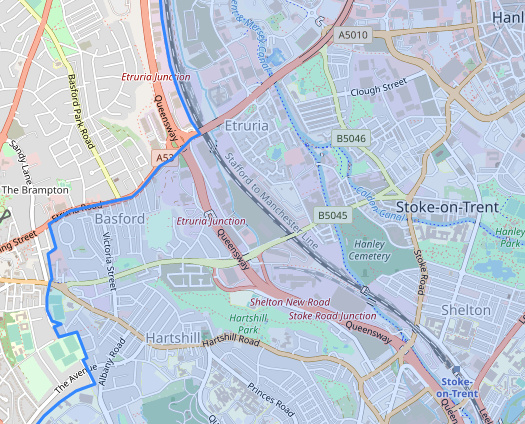
For initial orientation, here is 18 Victoria St., Basford, Stoke-on-Trent, on a modern map. The blue shading indicates the area and boundaries of Stoke-on-Trent. One can see Victoria St., under the “Basford” label.
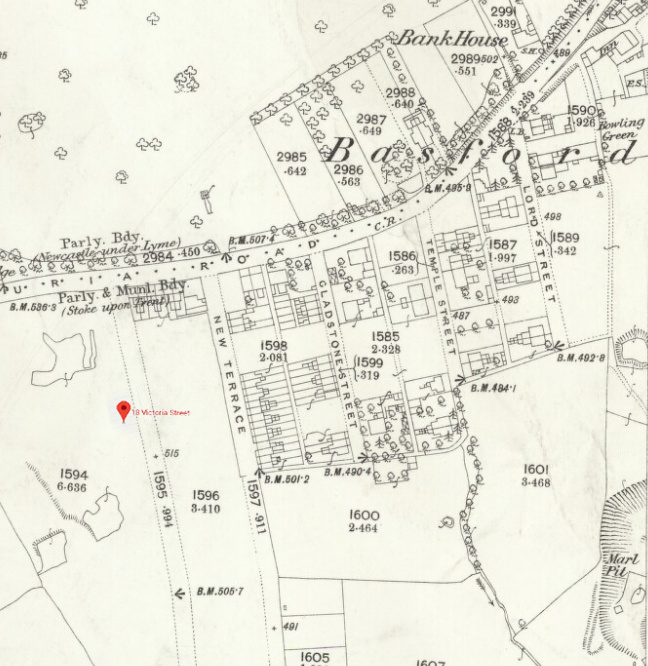
And here is the house location on a 1879 map, with the line of Victoria St. laid out, but not yet built. I’ve precisely marked the future No. 18, via a matched overlay in Photoshop.
And here is a semi-3D terrain view showing that the house was set back from the edge of the valley, rather than on the lip. Also seen marked is the site of the Iron Works at Etruria, which was on the relatively flat land below the valley ridge.
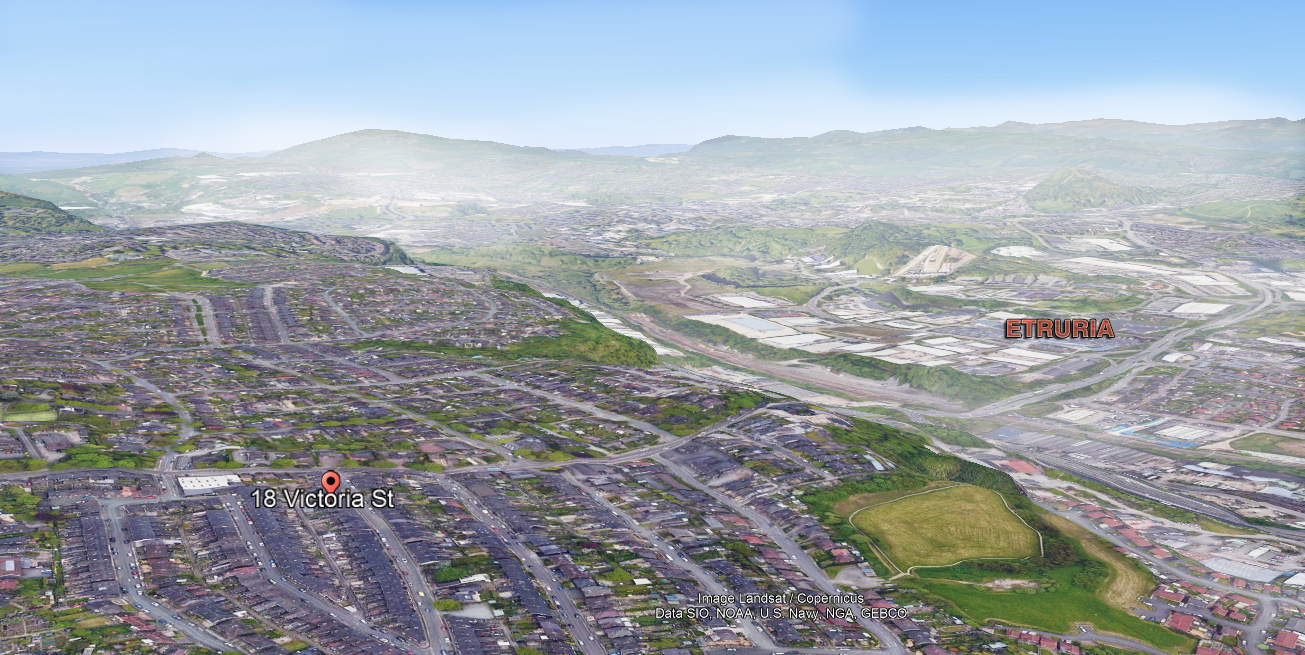
As one can clearly see, “a clear view down to the industrial heartlands” is just not possible, even assuming less houses in the way in 1888. At best, when looking out of the left-hand upper front window at No. 18, Wells might have had the merest 2-degree sliver of a view of sky to the east, between houses that had already been built by 1879, and there might have seen there a strong red sky-glow coming through at night from the furnaces.
If Wells had then looked from the right-hand upper front window, assuming no houses in the way, by craning his neck a bit he could have perhaps have seen a view SSE over flat fields which went gently sloping away in the general direction of Stoke town. But he would not have been looking directly down onto the valley and nor would that view (if view it was) have shown him anything of Etruria.
Wells’s story “The Cone” does, however, imply that a dynamic red-sky flicker could be seen from the house with the lights out…
“… she sank down into a crouching attitude in the big arm-chair, her eyes wide open and staring out at the red lights from the furnaces that flickered in the sky”
But to get a view of the industrial valley from the house, Wells then has the two men in the story go out from the house, down the Basford Bank and then turn onto the cinder track toward what were the Etruria Woods…
“side by side down the road in silence, and in silence turn[ed] into the cinder-made by-way that presently opened out the prospect of the valley”
2. Claim: Shelton Bar Steelworks was in full operation.
Not quite. Steel-making had not yet begun down in the valley. Built around and across a former racecourse, on the relatively flat valley bottom at Etruria, in the year 1888 Earl Granville’s Shelton Bar Iron Company was about to transition to the more intensive process of making steel — but had not yet done so when Wells was there. A contemporary account of a foreign tour of the works in 1875 had thought the place rather old-fashioned even then, and it still had not transition to steel by the spring of 1888. That it was then an Iron Works is also confirmed by Wells’s own description of it as the Iron Works…
“I’ve sat in ‘Trury woods [Etruria Woods] in the springtime, bluebells all about me, and seen overhead the smoke from Granville’s (I think it’s Granville’s) Iron Works streaming by under the white clouds.”
As we can see from this quote, Wells often had views over the valley, from bits of the Fowlea Bank lane that runs steeply down behind Basford Bank, and also from the top of the Etruria Woods. But these views were not to be seen from the house at 18 Victoria St.
3. Claim: “He is said to have imagined the tall Martian war machines stalking about in this red glow.”
I wrote the book on Wells in the Potteries, and I’ve never read any scholarly claim that he was directly inspired to create the war-machines from seeing Etruria at night. The claim above is probably vaguely referencing the section in The War of the Worlds (1897), in which Wells makes a fleeing comparison of the devastation of the Martian heat-rays to the red sky of “the Potteries at night”…
“I closed the door noiselessly and crept towards the window. … There was a light down below the hill, on the railway, near the arch, and several of the houses along the Maybury road and the streets near the station were glowing ruins. The light upon the railway puzzled me at first; there were a black heap and a vivid glare, and to the right of that a row of yellow oblongs. Then I perceived this was a wrecked train, the fore part smashed and on fire, the hinder carriages still upon the rails. Between these three main centres of light — the houses, the train, and the burning county towards Chobham — stretched irregular patches of dark country, broken here and there by intervals of dimly glowing and smoking ground. It was the strangest spectacle, that black expanse set with fire. It reminded me, more than anything else, of the Potteries at night. … this was the little world in which I had been living securely for years, this fiery chaos! What had happened in the last seven hours I still did not know; nor did I know, though I was beginning to guess, the relation between these mechanical colossi [the Martian war-machines] and the sluggish lumps I had seen disgorged from the cylinder [the Martian arrival craft]. … three gigantic black things were going to and fro in the glare about the sand pits. They seemed amazingly busy. I began to ask myself what they could be. Were they intelligent mechanisms? Such a thing I felt was impossible. Or did a Martian sit within each, ruling, directing, using, much as a man’s brain sits and rules in his body? I began to compare the things to human machines, to ask myself for the first time in my life how an ironclad [war steamship] or a steam engine would seem to an intelligent lower animal.”
While it’s possible that some mechanical elements of the Iron Works at Etruria may have somewhat resembled the war-machine tripods in the night-glow in 1888, I’ve never seen any pictures of such machinery or gantry-towers that makes me think “aha! — there’s your Martian war machine”. Nor seen any letters or suchlike from Wells which noted such things. The Iron Works at Etruria is vividly and precisely described in “The Cone”, but the closest Wells gets to a war-machine in it is… “The shining black tower of the larger blast-furnace rose overhead out of the mist”.
In another autobiographical account, he…
“surveyed across dark intervening spaces, the flaming uproar, the gnome-like activities of iron foundries”
But this is from the “Margaret in Staffordshire” chapter in the late novel The New Machiavelli (1911), and as such no-one can claim that the industrial “gnomes” of Etruria might have somehow prefigured the drivers of the Martian death-machines in 1897.
4. The article’s journalist also can’t resist making an implicit and false claim on Wells for Newcastle-under-Lyme… “Newcastle’s links with the famous author”.
18 Victoria St. in not today in Newcastle-under-Lyme. Also, it was part of the Borough of Stoke-upon-Trent in 1888.
The spot where the house would be built also seems to have been part of the parish of Stoke when it was still fields, prior to the incorporation of Stoke in the Borough of Stoke-upon-Trent in 1874.
Mythical beasts and places of Stoke-on-Trent:
My unofficial expansion for The Midderlands RPG, a British RPG in the spirit of Monty Python and old-school White Dwarf type RPGs. This runs on Swords & Wizardry Complete, now free as the S&W Revised PDF.
Update: revised slightly to be in line with the “Stoke Pottington” section of the second book for the Midderlands, which I’ve now seen. Stoke Pottington is in Staffershire. What follows assume you’ve read the “Stoke Pottington” section.
Turnstool Market at Turst | Tunstall Market. (Akin to Diagon Alley in Harry Potter. This is where Josiah Hedgewood sells his magic-focusing pots).
Broodwell Woods | Bradwell Woods. (A dark place of brooding and grumpy ghosts. The older name for the woods was ‘the Burgweard’).
Trent Thumb Gurndens | Trentham Gardens. (A weird garden of Thumbelina Hall, full of plants with gurning faces, and leaves like hands with deformed thumbs. Lady Thumbelina despises Josiah Hedgewood for taking the peasants off their ‘rightful place’ on the soggy land and giving them regular indoor work at good wages).
Eat Rear | Etruria. (A very strange but festive ‘greasy cafe’ in a small wood called Festival Part, run by gnomes who escaped into the wild from the gardens at Josiah Hedgewood’s mansion. These gnomes were originally small prototype Clay Golems, made that way because Mrs. Hedgewood wanted garden gnomes as workers in the garden).
Bastard Bank | Basford Bank (A steep place, impossible to climb up. Used for new-recruit training practice by the Clay Guard).
The Lemmy of Borslemy | Lemmy (A fearsome shrieking beast, believed to be extinct… but its voice can still be heard on dark nights…)
The Poorlands | The Moorlands. (Full of ragged folk, vicious thistles and bullywarts, and emaciated ponies in need of rescue).
Snootcastle-under-Rhyme | Newcastle-under-Lyme. (Full of snooty folk who fancy themselves as poets. They often have ‘poetry-duels’ with each other, wounding each other with terribly bad poetry).
Harrop | (Name of a hat-maker or ‘hatter’, located on a little old lane that runs up behind the Bastard Bank. His curious hats enable one to see glimpses of the future, under certain circumstances, when worn. Friend of Josiah Hedgewood).
Honeylee or known officially as Hanelet | Hanley. (A blissful utopia, where no-one ever works and yet wine and honey perpetually flows from the golden bottle-ovens. Possibly just a dream induced by eating too many owl-cakes).
Meow Cop | Mow Cop. (Strange hilltop castle ruin which serves as a cat-rescue home and also a residence for old cat-ladies. Not all the moggies there are what they appear to be…).
Bear Town | Congleton. (Notorious for having sold the town’s only book to buy a dancing bear. The bear was later elected to be Mayor).
Hairthistle | Harecastle. (Triffid-like walking plants found between Turnstool Market and the Broodwell Woods, that will sneak up on walkers and give them a nasty nip while plucking out some body-hair. At night they all retire into the Hairthistle Tunnel).
Moonthistle | Found on the fringes and in the glades of the dark Broodwell Woods. (The dreamy moony variety of the Hairthistle plant – see above. Spiky but non-aggressive, glowing softly in the dark, and it doesn’t ‘walk’. Can be used as a carrying lamp on dark nights, but they are so adorable that benighted travellers are disinclined to pluck them).
Kidsgrubs of Kidsgroove | Kidsgrove. (A nasty-looking insect of the district, bright green and poisonous to adults but edible to certain ‘groovy’ musical children who inhabit Kidsgroove. The grub sometimes conveys temporary magical powers when eaten, usually powers relating to ‘musical magic’…).
Burt365 | Bet365. (A team of young wizards who will deliver Burt anywhere, 365 days a year. Burt is not too happy about this, and would rather be up on his allotment).
The Up Handee Duck | ‘Up Hanley, Duck’ (Tame ducks that can be trained to work as not very skilled, but very cheap, handymen on the river. Good at repairing the underside of Josiah Hedgewood’s boats with blobs of tar, but not much else).
Burrs Loom at Borslemy | Burslem. (A gigantic and dark hilltop barn, where spindles packed with horrid plant-burrs from the barren Poorlands are used to run monstrous spider-silk looms).
Owl-cake | Oatcake. (A surprisingly tasty flat pancake made from owl droppings. First, catch your owl…).
Owt-cake | Oatcake. (Not to be confused with the Owlcake. Made from ‘owt, and is thus invisible).
The Potty Loo Line | The Potteries Loop Line. (Travelling toilets on primitive rails. For the use of the Clay Guard only. Other folk have great difficulty grasping this new concept of the ‘rails-away’).
Wool Standing | Wolstanton. (A town of talking but rather woolly-minded sheep. They walk upright like men, and demand to be treated as such).
The Wedgeweird | Wedgwood. (A silent clay-covered golem, tattooed all over in blue-and-white patterns that resemble bird-droppings. Unconnected with the Clay Golems, but akin to a natural/supernatural wild Clay Golem, and as such cannot be given commands).
The Surly Knell | The Sentinel. (The doom-laden local town-crier, full of dire news of crime and grime).
Creel | Keele. (A small and very insular community of creel basket-makers. World experts on basket-making, but utterly clueless about anything else).
Stuck | Stoke. (A small pottery hamlet, part of Stoke Pottington but so small and obscure it went un-noticed by the chroniclers. So full of sticky wet clay that the inhabitants can’t drag themselves out of it).
Wetport and Longspurt | Westport and Longport. (Has a certain reputation, locally, for its ‘amorous’ ladies who are always eager to ‘serve’ the Clay Guard. The name ‘port’ was originally given because it’s where Josiah Hedgewood stores his wares in warehouses, for sending down the water to the Great City of Lunden. Groups of stowaways have been known to hide in the barges, seeking a free and easy ride to Lunden).
Bull-Terror | Staffordshire Bull Terrier. (A bull-size wild dog with luminous green eyes, scary but harmless unless provoked. Must be fed daily with Pigweed).
The Prancing Pony | (A painting of a frisky white pony on an inn sign-board, that has come to life and escaped into the landscape. Some local rustic informers say it has also grown a horn and is now a small unicorn).
Wittersack | (A hand-sized talking fungus, of scrotal shape and appearance. Especially likely to infest the beer-cellars of ill-kept inns, where it ‘witters on’ drunkenly and interminably. It mostly talks about the ribald and uncouth matters it has faintly overheard being discussed by the inn’s patrons upstairs).
Bawl Holes | Marl Holes. (Old deep clay-digging pits, used to supply the first potteries but now disused and left to become small lakes. Local children talk of a ‘Granny Grinny’ who lurks beneath the bright-green pond-weed, and who it is said will drag them in if they venture too close to the water).
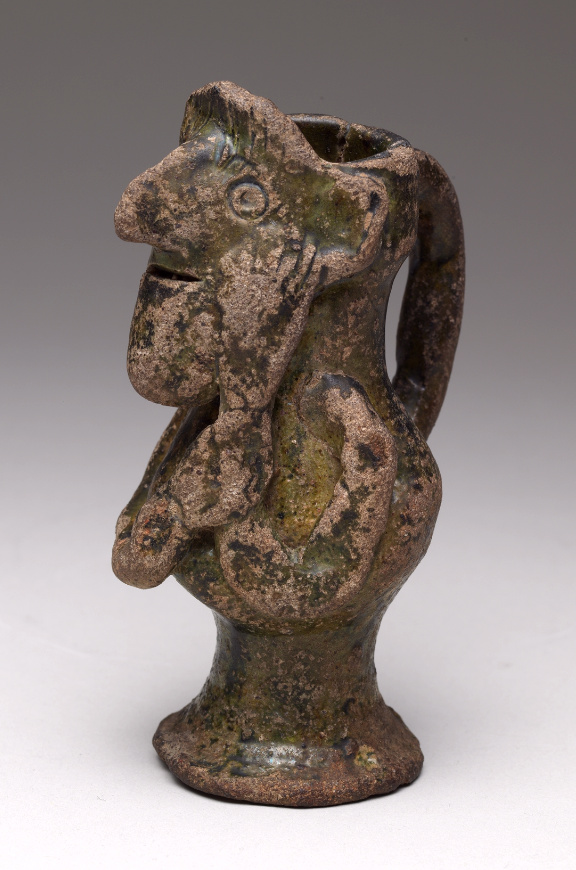
A “face jug” produced by English potters in the 14th century. Apparently once widespread in England, and presumably a direct precursor of the ‘Toby’ jugs.
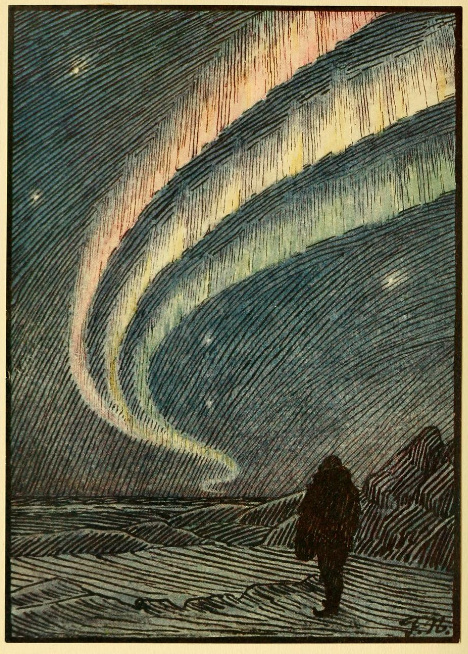
Free on Archive.org, In northern mists: Arctic exploration in early times (1911) Vol. 1, and Vol 2. It’s a deep history of the discovery of the high northern lands, with plenty of well-scanned hand-drawn maps. “Early” here means from the Greeks to the discovery of North America.
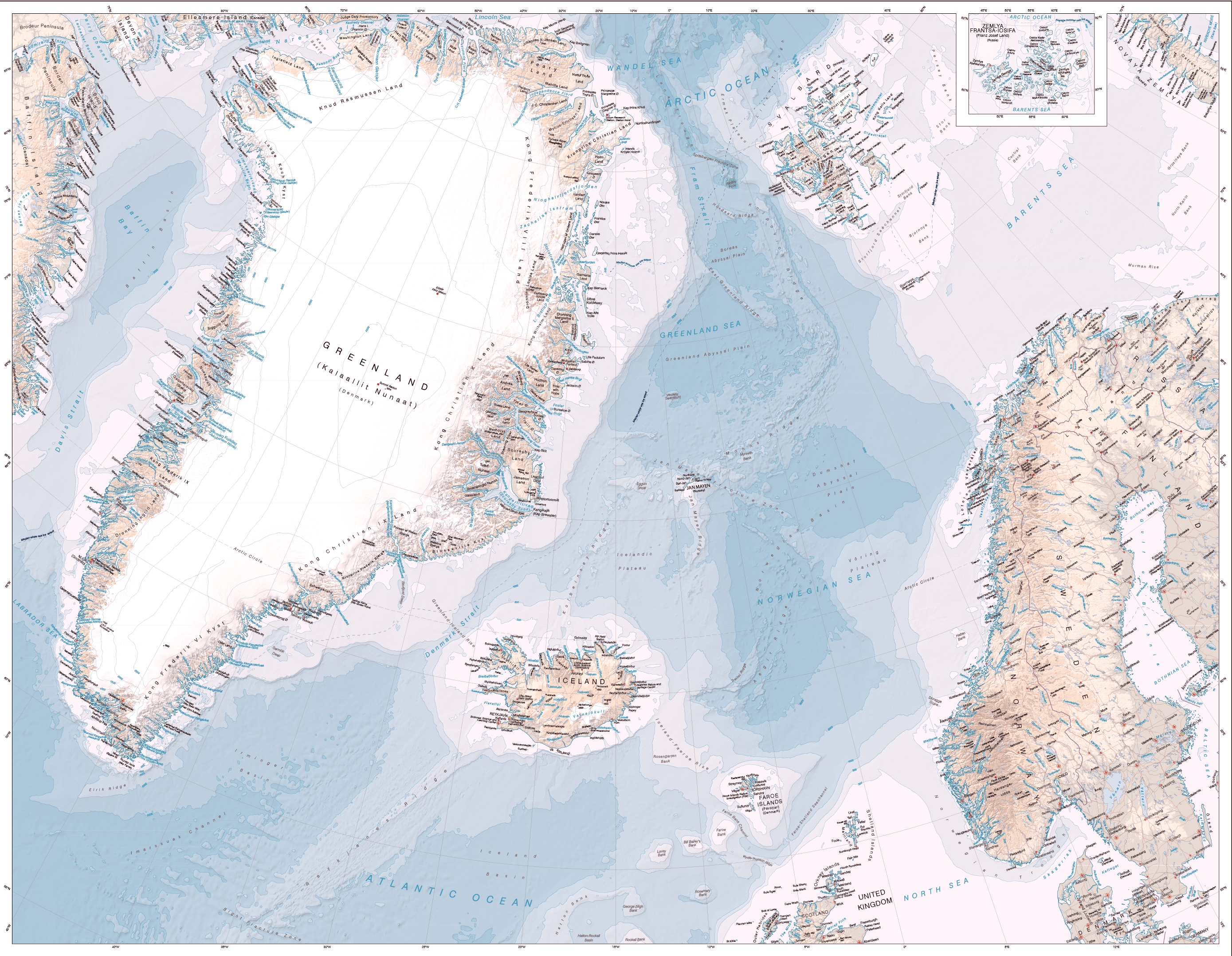
A new one-sheet map will help readers of such books orient themselves, although it doesn’t cover the integral area that lies a little further east — where Finnish culture leaps the dividing channel of water and shades down into the lake-country of what is now Lithuania.
A nice idea for an exhibition, albeit down in at the other end of the West Midlands in Warwickshire. I wonder if something similar could be done for Stoke’s ceramics, showing the journey of the clay up from Cornwall and the same for all the other elements, glazes and components that go to make a humble pot in 2020?
Sabbath, Bloody Sabbath. No, not a reference to an especially rough Sunday in Stoke-on-Trent. It’s a Kickstarter for a horror-story anthology revolving around the Birmingham heavy rock band Black Sabbath. I hesitate to inflict a Kickstarter on readers, but it seems a worthy and novel idea, and it appears to be struggling a bit with just six days to go.
It also segways neatly into news that Home of Metal: Black Sabbath – 50 Years is a major retrospective exhibition set to open in Birmingham, on 26th June and it will then run through to 29th September 2019.

Likely to be of interest to those reading this blog for the Tolkien posts…
Symposium: THE SURROUNDING FOREST: TREES IN THE MEDIEVAL IMAGINARY
When: 22 June 2019, 09:30 — 18:30
Venue: Birkbeck 43 Gordon Square, The Keynes Library
Booking details: Free entry; booking required.