Tamworth Castle makeover – now open

Now open after much work is Tamworth Castle in mid Staffordshire, with its major new attraction the…

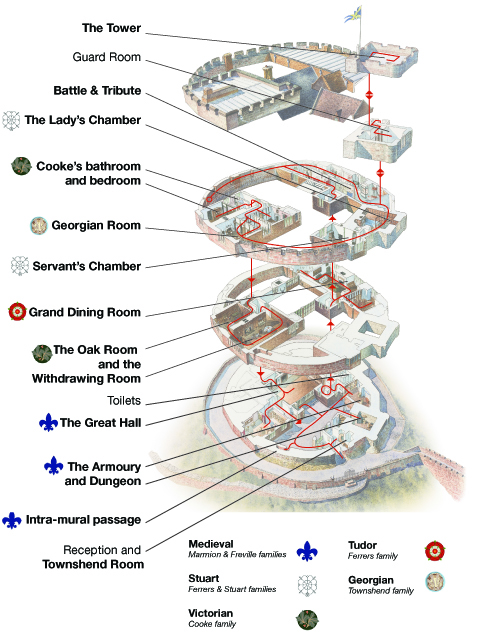
“£768,000 ‘Battle and Tribute’ exhibition, including mead hall, immersive combat film experience and touch-table strategy game, bring the area’s Anglo-Saxon history to life, including the role of our famous warrior queen, Aethelflaed. It also explores the Staffordshire Hoard, including themes of battle, kingship and the warrior culture in Anglo-Saxon Mercia.”

The castle grounds are now set for a £350,000 makeover.

New or newly-online Tolkien scholarship of interest

More new or newly-online Tolkien scholarship of interest, freely available:

* Kristine Larsen has “Numenor and the “Devouring Wave”” in the Journal of Tolkien Research. She also has “”I am Primarily a Scientific Philologist”: Tolkien and the Science/Technology Divide” (2019, expanded), and “”While the World Lasted”: End Times
in Tolkien’s Works” (2015), both newly showing up on Google Scholar. The latter two are on Academia.edu, which if you’re not member only allows linked PDF downloads from a Scholar search — thus you’ll have to search for the titles there.

* Review of Tolkien and the Classical World. The title and cover page of the review has the book as 2021, but the review’s header has it as 2017. The only paper I’d want has an abstract which puts it at December 2020, “”Eastwards and Southwards”: Philological and Historical Perspectives on Tolkien and Classicism”… “it is argued that Tolkien is fascinated with the spread of culture from an area which seems to map onto the Caucasus-Caspian region. In this he appears to follow the German Indo-Europeanists Otto Schrader and Victor Hehn, rather than the ‘Nordicist’ school represented by Karl Penka and Hermann Hirt.” There is also a usefully different abstract here. The book is not yet on Amazon UK as Tolkien and the Classical World, and is not to be confused there with the earlier Tolkien and the Classics (2019) which is on Amazon and has a different editorship. Tolkien Gateway has Tolkien and the Classical World as being released January 2021, which I’ll take as valid over the other dates. eBay seems to be your best current bet for getting a copy.

* Newly open access at Mallorn (2018, released via the two-year paywall) “The Lovecraft Circle and the Inklings: The “Mythopoeic Gift” of H.P. Lovecraft”, and “Checking the Facts” (appears to closely pick up and scrutinise various scholarly errors of recent years).

* “Deep Roots are Not Reached by the Frost”: Tolkien and the Welsh Language.

* “A Ray of Light: The Theological Vision of Letter 89”. (On Academia.edu, which if you’re not member only allows linked PDF downloads from a Scholar search — thus you’ll have to search for the title there).

* “The Theopolitical Vision of G.K. Chesterton and J.R.R. Tolkien and its Contemporary Relevance” (Appears to be in Spanish, but is in fact in English). Related are the various essays on Tolkien and Distributism of recent years, which are now getting to be enough to fill a book.

* J.R.R. Tolkien’s sub-creation theory: literary creativity as participation in the divine creation.

* Comments from Beyond Bree, on the recent book Something has Gone Crack.


Past surveys: Unleash the mega-Tolk! and More recent Tolkien work.

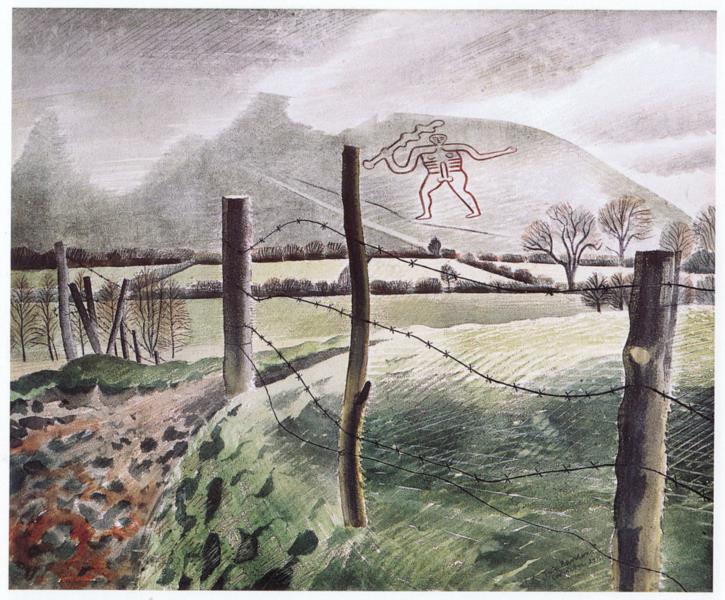
A firm date for the Cerne Abbas Giant

Nice. The Cerne Abbas Giant was probably first constructed in the late Anglo-Saxon period, according to…

“a new state-of-the-art sediment analysis by National Trust archaeologists”.

They’ve concluded the giant can have been made no earlier than 700 A.D. Given that it’s obviously not Christian in the modern sense, it’s therefore presumably a genuine if rather late pagan survival from the liminal conversion period.

Cerne Abbas Giant, by Eric Ravilous.

Similar work on the famous White Horse put that hill-figure at around 1,000 B.C.

Elias Ashmole as a source of Staffordshire and Peake lore

Some Staffordshire sections from Tobias Churton’s book The Magus of Freemasonry: the mysterious life of Elias Ashmole, scientist, alchemist, and founder of the Royal Society


Following the Royalist defeat at Worcester in July 1646, Parliamentary officers ordered Elias Ashmole to keep out of London […] he returned to the area of Shallowford in Staffordshire, near the Bishop of Lichfield’s palace at Eccleshall, about twenty miles northwest of [his home place of] Lichfield.

Ashmole was a friend of Izaak Walton [who was of like mind, and had retreated to the same area …] They were certainly friends by the time of the 1676 edition of Walton’s world-famous The Compleat Angler … To those who are familiar with his references, Walton’s work, apparently devoted to the harmless pastime of angling, reads like a covert message to depressed Royalists and dispossessed Anglican clergymen throughout the country. […] The book’s message can be read as “Be calm, contemplate the waters;
receive inspiration therefrom: all troubles will pass.” Or, as Walton himself recommended, “Study to be quiet.”

The “troubles” referred to by Walton derived from the puritanical, repressive, anti-ecclesiastical, and generally hot-headed manifestations of Cromwell’s [Puritan] government. […] In his letter to Barlow, Walton notes that he is himself “not suspected,” to the extent that he can even attend a “fanaticall meeting” of Puritanical activists […] The violence [of the Puritans] extended beyond stones, lead roofs, and church bells. [This point refers to the fact that the puritans were busy destroying Lichfield cathedral with its three magnificent spires]. On August 2, 1652, Ashmole went “to heare the Witches tryed, and tooke Mr Tradescant with me.” […] In the event, six witches were hanged […]

[Returning from the trials] On August 19, 1652, Ashmole “entered Lichfield about sunset.” Against the reddish skyline he would have seen the silhouettes of two spires, the third truncated at its base, having crashed through the roof. According to local historian Howard Clayton’s Loyal and Ancient City, after the Parliamentarian destruction of 1646, “Centuries of religious custom disappeared and the Cathedral Close became for 14 years a place of ruin, inhabited by squatters and haunted by owls at night.”

On September, Ashmole “took a Journey into the Peake [Peak District], in search of Plants and other Curiosities.” Ashmole’s “Noates”* of his journey contain short entries of peculiar words, sayings, rhymes, miners’ language and customs, cookery recipes, people, inscriptions, and sights. For example, a Staffordshire oatcake was called a “Bannock” consisting of oatmeal and barley, baked on a griddle. “A Spider is called an Aldercrop.” [a folk preservation of the Old English word at(t)orcoppa and the Middle English attercop]

He mentions a man called “Wagge” from the moorland village of Wetton who “is Staffordshire Astrologus,” a fellow astrologer. At Dove Bridge (near Uttoxeter), Ashmole actually participated in a magical “Call,” or invocation of spirits. “I came to Mr: Jo: Tompson, who dwells neare Dove Bridge. He used a Call, and had responses in a soft voyce.” Ashmole inquired of the spirit concerning the health of his friend Dr. Thomas Wharton, who was poorly. “He told me Dr: Wharton was recovering from his sickness, and so it proved.”

Incidentally, at nearby Great Haywood, Tolkien later caught a similar spirit-of-place. As he stood on the long bridge there, listing to the “wistful murmuring” of possibly-spirits beneath it (Lost Tales II).


* – “Noates in my Peake Journey“, printed in the five volume Elias Ashmole, 1617-92, aka Elias Ashmole: His Autobiographical and Historical Notes. Vol. 2 seems to be the target that contains the “Noates in my Peake Journey“. Archive.org has another volume, but Vol. 2 is not there or on Hathi. The hardback set only has one library copy for the whole of the UK university system.

There are three “Noates” of interest according to The Antiquary via Google Books. None has been digitized and placed online by the Bodleian.
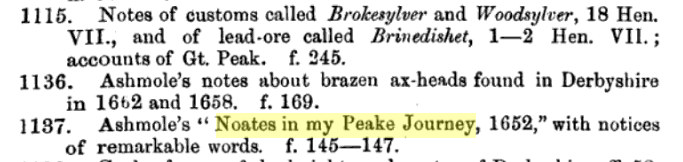
Ashmole MS 1137 is said to be a copy by an engraver, the original being lost.
Threading through Cheshire

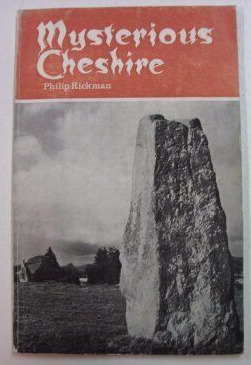
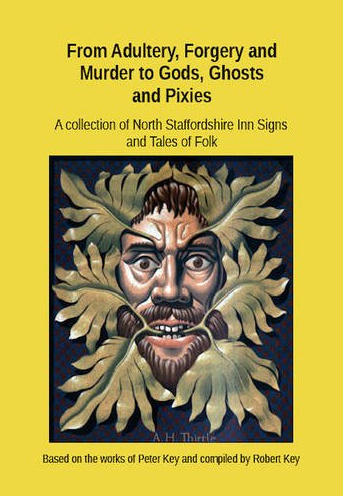
Wormwoodiana blog browses through an old copy of Mysterious Cheshire from the Earth Mysteries era of the late 1970s and early 1980s and finds a Welsh Marches author…

the ‘Philip Rickman’ who wrote or co-wrote these booklets went on to write, as Phil Rickman, many highly-regarded supernatural fiction novels, including the Merrily Watkins series about a Church of England exorcist and psychic sleuth in the Welsh Border country around Hay-on-Wye.

It’s suggested there was a possible connection between the timing of an antiquarian paper on the ‘Biddlemoor’ population on Biddulph Moor, and Arthur Machen who at that time was musing on relic populations of the Little People. Although such things had been ‘in the air’ for several years before that, re: the establishment of a serious fairy research society and suchlike.

Update: Mysterious Cheshire is now on Archive.org.

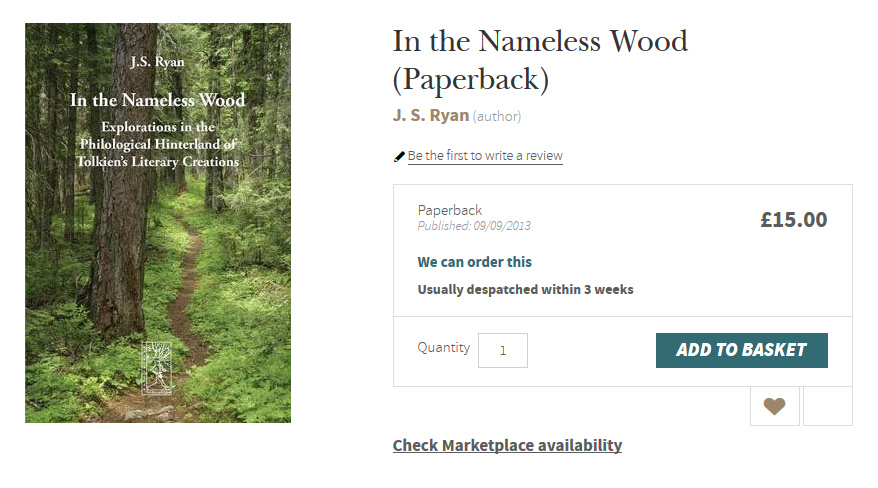
Wood you believe it…?

Interesting news on the ‘airborne particulates’ front, which I’ve blogged about here before in historical context.

Cars and their supposedly ‘eco-friendly’ diesel fuel (unleashed by Gordon Brown, under Labour in 2002) are not the only culprit, we now find. New research shows that a key culprit in the UK is now, ironically, the trendy wood-stoves of eco-worriers…

“domestic burning is the single largest contributor to the UK’s harmful particulate matter emissions. PM2.5 emissions from domestic burning accounted for 43% of total PM2.5 emissions in 2019.”

Who knew? But they pump out nearly half of the UK’s tiny PM2.5 airborne particulates, which are the ones said to have the worst impacts on human health. These days “domestic burning” overwhelmingly means wood-fired stoves and heating, with lesser seasonal contributions by garden bonfires (mostly in the early autumn), and barbeques (mostly in high summer). Eurostat estimate such trendy stoves cause some £14 billion a year in health-related problems in the UK and EU, albeit basing their figures on a 2013 WHO estimate.

The newer UK research was done in 2019, so the particle percentages were not skewed by the reduction in car travel during the lockdown. And so few people now have coal delivered for home fires, and most of those use clean coke, that one can’t sensibly blame coal either.

The news comes along with the banning of sales of “wet wood” (from 1st May 2021, it’s reported). You’ll no longer get wet bags from any-old-where, and will have to get supplies properly pre-dried from a wood fuel merchant. That’s could be a bit hard on the owners of small woods, as they’re presumably now denied the immediate public sale of the thinnings and fellings, other than to a registered wood dealer. But I guess that may already have been the way of doing such things.

Also to be banned from being installed in homes are the smokiest types of home wood-stove, though only from 2022. Presumably that’s to allow dealers time to sell off their old stock. Beware of what you’re buying then, as you could find that the use of the old type will also banned sometime in the 2030s — when you’ve only had a few years of use from it.

Presumably canal-boaters will still be allowed to burn dropped wood that they’ve dried, after being found free in the hedgerows etc.


Update: Country Life reports a backstep by the government. Council Inspectors will now not actually be ripping out the older stoves from your home, come 1st January 2022. The Stove Industry Alliance, who presumably know about such things, tells the magazine that… “there will be no requirement to remove” existing open fireplaces and older stoves.

A new interpretation of the name ‘Trent’

A new linguistics paper by Andrew Breeze (University of Navarra, Spain) challenges the usual interpretation of the river-name Trisantona (the Trent, as named by Tacitus) as ‘trespasser’. This meaning has been very plausibly assumed to refer to the river’s frequent flooding and bank-breaking, and shifting ox-bows, in pre-modern times. The new suggested meaning is slightly different and by implication more libidinous…

“… reconstructed *Trisuantona (from *Tresuantona) would thus … mean ‘she of great desire, she who is much loved.’ [The new interpretation works from] the basis of Old Irish sét (‘treasure’, Modern Irish seoid) and Welsh chwant (‘desire’, from hypothetical Common Celtic *suanto-).”

Despite appearing to be in Russian and appearing in a Russian repository, the PDF is in fact in good English.

One-way Romans?

Some interesting news from Burton-on-Trent, where a local expert has carefully spent many years tracking down the likely location of an Ancient Roman marching fort. He remarks on the Roman practice of placing auxiliary ‘marching’ forts, at a day’s march or 15 Roman miles apart. This means 14.167 modern miles. There were then some slight adjustment to ensure access to two clean water sources, one for the baths and one for drinking.

So it would be interesting to plot that on a map from the marching camp at Chesterton along the Rykeneld Street. That camp was a 2 acre site at the far eastern end of Loomer Road, Chesterton, near St. John the Evangelist (R.C.) and Chesterton’s main road roundabout. Nearby was a larger fort under what is now Chesterton Community Sports College. These two sites are about 300 yards apart, so a point between them seems the best starting point for measuring, and makes little difference to the outcome.

So one can take the road out from there on a map, and along the most likely route. It’s known it went across Wolstanton Golf Course, and reached the current site of Stoke Station, then went on to Blythe Bridge and to Uttoxeter. It thus seems to me that there was most likely a marching fort about a mile or so east of Tean, most likely more or less at the the small modern village of Checkley — when you have several streams feeding down to the nearby River Tean.

On then looking for corroboration one finds that “there is evidence of a Roman road about a mile north of the village”, but also there is the known Roman fort at nearby Rocester, a few miles further on. This is now under the eastern part of the town.

However, if one goes the ‘other way’ from Rocester toward Chesterton, then at 14.1 modern miles you reach the vicinity of Heron Cross and Mount Pleasant, Fenton. Again, a short distance above the river (the Trent in this case) and well-watered and a likely spot.

Of course, it may be that both notions are more or less correct and that you had ‘one-way’ marching forts? Those headed north-west from Uttoxeter might then use Mount Pleasant, those headed south-east from Chesterton might use Checkley or thereabouts. Or visa versa. Because presumably the Army would not want squabbles about beds and food, which might occur if two or more marching companies both arrived at the same fort for the night, each going different ways. But I can find no information on such practices. Perhaps an expert reader can tell me if that was the way of such things, or not?

Honeyed Meades

The MeadesShrine, collecting all those wonderful Jonathan Meades documentaries about curious provincial architecture and grandiose foreign monstrosities. He’s still around, and currently has a regular column which enlivens the worthy-but-dull magazine The Critic. Of course, he’s too dangerous to allow on the telly these days. But at least he can be enjoyed at the MeadesShrine and on YouTube.

His new 1988-2020 writing collection is out as as the book Pedro and Ricky Come Again, which is a shelf-companion to his previous essay and article collection Peter Knows What Dick Likes (sadly not in ebook).

Fairies at Trentham

A local poem of Trentham by Annie Keary, “Fairy Men”, written when living in Trent Vale, Stoke-upon-Trent in the mid nineteenth century. In the second half she has “Cobbolds” = Kobold work-fairies, which I have looked into here in relation to Tolkien.

FAIRY MEN

In Trentham woods […] I spied the fairy men.

[Various very conventional fairy troops are seen passing by, for five verses]

Last the sad stooping cobbolds came,
  Through earth-holes small they creep;
With patient steps they struggle up
  The under ways so steep:
For sins they are condemned to work
  While other fairies sleep.

They carry tiny water-pails
  Upon their shoulders small,
Toilsomely in the under world
  Work they to fill them all:
Catching each raindrop as it drips
  Through their dark cavern wall.

All night through fields and lanes they go,
  And deftly as they run
They slip a dewdrop in each flower,
  On each grass-blade hang one,
Yet dare not wait to see them turned
  To diamonds by the sun.

Recovered: a Keary fairy-tale

The literary Keary family had a home (homes?) somewhere around Trent Vale / Penkhull, Stoke-on-Trent, and Annie Keary’s children’s novel Sidney Grey: A Tale of School Life (1857) was said to have… “dealt with their [north] Staffordshire region and its brick-kilns” in the 1850s. This fact is also mentioned in a childhood memoir, Memoir of Annie Keary

“On the other side a shady road [at Trent Vale], a church almost opposite the gate; beyond the church the village, and beyond the village, to give the needful inferno element, one or two brick kilns, whose ministers (the ‘ultimi Britanni’ [ancient Britons] of our [childhood] world) were evil-looking, dark-faced boys, terrible to speech or thought. These brick-kilns were introduced into one of the stories Aunt Annie wrote for us, which was afterwards published under the title of Sidney Grey.”

This is the novel Sidney Grey: A Tale of School Life (1857). Still no sign of this novel online, but there is now her novel Sidney Grey: A Year from Home (1876). This is mostly set in “Dunstall, Staffordshire”, after the first few chapters, but with no mention of the brick yards. There is a short melodramatic episode of a rescue of some stray tots from a Hanley bottle-kiln, but that is clearly a ceramics factory. For this reason I suspect Sidney Grey: A Year from Home is a sequel.

No local colour in Sidney Grey: A Year from Home, apart from the brief rescue from a pottery kiln. But half way through we do get an interlude in which there is something better than brick kilns… a long imaginative children’s fairy-tale from Annie Keary, “Through the Wood”. Here it is, extracted in PDF and OCR’d…

Download: keary-through-the-wood-ocr.pdf

This is not the same “Through the Wood” as the story in her collection Little Wanderlin, and other fairy tales.