Tolkien Gleanings #334

Tolkien Gleanings #334

* From Italy, “Una Compagnia all’interno della Compagnia: Frodo, Sam e lo spirito del comitatus” (2025) (‘A company within the company: Frodo, Sam and the spirit of the comitatus’). In Italian, with a very lengthy English summary at the back. Freely available online. Examines…

“the concept of comitatus – the bond of loyalty and protection between a leader and his followers, central to ancient Germanic society – and tries to trace its transformations through literary and historical tradition up to its modern reworking by J.R.R. Tolkien in The Lord of the Rings.”

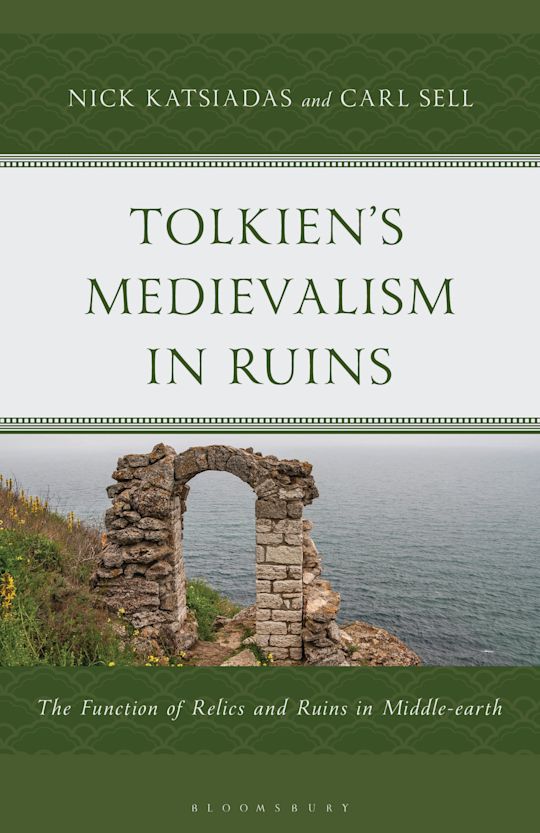
* Now listing on Amazon, the scholarly collection Tolkien’s Medievalism in Ruins: The Function of Relics and Ruins in Middle-earth. Shipping just before Christmas 2025, at a ruinous £90 (hardback only, as currently listed). Although the publisher’s page pegs the release at 16th October, and anticipates that a slightly cheaper ebook version will also be available.

* VII: Journal of the Marion E. Wade Center (2024) has “The Historical Perspective: Gleanings from C.S. Lewis’s Personal Library”, plus reviews of What Barfield Thought, The Battle of Maldon Together with The Homecoming of Beorhtnoth, Tolkien’s Faith, and book notes for “Something Has Gone Crack”: New Perspectives on J.R.R. Tolkien in the Great War, and The Fall of Numenor. Freely available online.

* A Vintage Dutchman goes “Exploring Geoffrey Bache Smith’s Impact on Tolkien”.

* A Masters disseration from the University of Iceland, “Puck’s Medieval Ancestry: The Puck Figure in Medieval Evidence and Late Collected Folklore of North Atlantic Europe” (2024). Freely available online.

* Some readers may also be interested in the chapter “From Homer to John Eugenicus: The Long Journey of Riddles through Greek and Byzantine Literatures” (2024), freely available online…

“Another mysterious poet who is credited with the composition of seven riddles is a certain Theodorus Aulicalamus. […] The first riddle in [his] small collection still baffles the scholars, who are not sure about its real solution:

  Even if am not alive, I have two heads;
  my nature belongs both to the sea and to the land.
  If you cut my head, made up of a double sign,
  you change neither my name, nor my nature.

I’d suggest “the tide” fits well as an answer, if the Greek symbol of the tide(s) was Neptune’s trident. If one made a horizontal cut across the top of the head of a simple trident, it would still be a trident.

* And finally, “How to practice leisure like a hobbit”. To which one might add: invent activity-songs (for bath, walking, etc) and the occasional riddle.

More new local evidence on local Roman roads

More newly published evidence on local Roman roads, and also an item of possible relevance to the route that the Gawain-poet knew and had his Sir Gawain take into North Staffordshire. In the form of “The Roman Road in East Cheshire: Unfinished Business”, Journal of the British Archaeological Association, 2025. Sadly this academic journal item is paywalled at a ridiculous £56, but there is at least an abstract…

This short notice considers the possibility that a medieval reference of 1405 provides a missing clue to the existence of a Roman road in east Cheshire. This road, which later marked the western boundary of the Macclesfield Forest, continued southwards via the Staffordshire Way on Congleton Edge to the village of Six Ashes near Wolverhampton, and very probably thence to the Malvern hills and the Severn estuary. Northwards it continued as Staley Street west of the Tame valley on the Lancashire-Yorkshire border, and probably further. It is suggested that in the AD 50s and 60s, the Romans connected the Severn and Humber estuaries by a road to facilitate the swift lateral movement of forces across their front. After the conquest of the Midlands the road had no enduring military value but may subsequently have been exploited as a trade route.

“The Staffordshire Way” here is presumably a reference to the modern long-distance footpath. On “the western boundary” of the forest, the History of Macclesfield states…

The Forest of Macclesfield […] western boundary was approximately the present London Road from the Rising Sun Inn to Prestbury, from thence along the Macclesfield township boundary to Gawsworth, where it avoided the precincts of the church and continued south to the Dane.

But it’s then a huge jump by the new article’s author between the Congleton Edge and all the way down to Wolverhampton. Actually not Wolverhampton at all, except by modern postcode. It turns out that Six Ashes is far west of Dudley and near Bridgenorth.

So it’s an interesting claim that touches on local topography. But the paywall means one can’t find out more. One wonders what evidence the author has for claiming the long Congleton Edge -> Six Ashes run, if any? Since the abstract suggests the (new?) “1405” evidence relates only to “a Roman road in east Cheshire”, and not down through Staffordshire. If it also referenced Staffordshire, then surely the abstract would say so?

And if there was once an early road along the Congleton Edge, then where would it go after that?

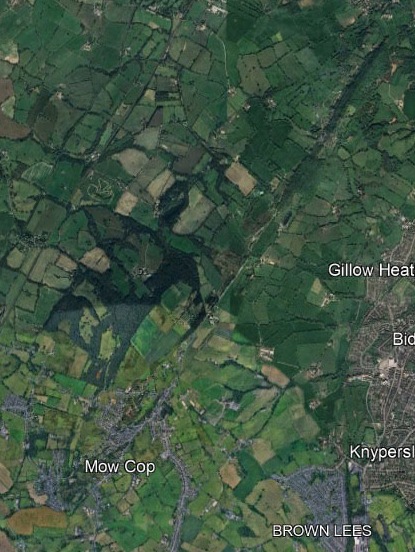
Roman roads were largely straight and the straight Congleton Edge line points directly at Mow Cop. Which was quarrying some of the best millstones in Europe, and thus would logically need sturdy roads to haul the finished millstones out.

One then has to suppose the hypothetical road would go on from Mow Cop, to somewhere around Talke and hook up with our known early Roman road going to Chesterton… and then to what would become Stoke. That said, some of our Roman roads do appear to go nowhere/somewhere and then stop. There’s one which was unearthed for a long length in 1961 at Hanchurch during motorway work, and seemed to go nowhere. Also the Roman road from Buxton towards Leek, which I would guess didn’t need to go further… because it only needed to access the sheep country of the Moorlands rivers via the trackway along the Morridge edge?

Tolkien Gleanings #333

Tolkien Gleanings #333

* Seemingly a new podcast on YouTube, There and Back Again: Interviews Podcast. Now with two long episodes available, Revolutionizing Tolkien Research: Interview with James Tauber from Digital Tolkien Project and Tolkien and Technology, Did We All Get It Wrong?: Interview with Dr. Holly Ordway.

* John Garth on the recent plausible claim about the connection between the view from Gedling church tower and key artwork in The Hobbit, “Tolkien’s hidden gift to his favourite aunt” ($ paywall).

* A call for papers for the Tolkien Studies Area of the Popular Culture Association meeting, to be held in Atlanta in April 2026. Deadline for proposals: 30th November 2025.

* The Daily Cardinal helps with the local promotion of the new Karen Wynn Fonstad exhibition, in the paper’s article “Middle-earth in Madison?” Freely available online.

* The Tolkien & Illustration blog has “A Princess Illustrates The Lord of the Rings: Ingahild Grathmer, Eric Fraser and the Folio Society”. This is newly online (without the pictures) at July 2025, a version of a 2022 conference paper… “In 2022, I presented this paper at the Tolkien’s Society convention Oxonmoot [but it] was neither published nor recorded”.

* Two public talks of interest on members of the Inklings, at the University of Oxford before Christmas. C.S. Lewis and the Atmospherics of Fantasy, and Fantasy & the Occult: Charles Williams, Dion Fortune and the Order of the Golden Dawn. Booking now.

* Rise Up Comus has committed to ‘keying’ one hex per day for the recent free hex-map of the whole of Middle-earth, with his facts kept straight via reference to the Atlas of Middle-earth. The ‘keying’ means writing a role-playing gamer’s text to accompany the map, in which he notes environment and plants, likely characters present in each hex, and also invents basic quests (‘hobbit fallen into bog, in need of rescue’, etc) to save the game master from inventing one every time.

* A new Masters dissertation from Oklahoma, “Chasing Chivalry Revival and Reinvention of Chivalric Knights Throughout Twentieth and Twenty-First Century America”. Freely available online.

* Frank Frazetta has just dinged the highest-ever bell for the sale of a fantasy artwork, reaching $13.5 million at an auction sale for one of his paintings. The painting depicts R.E. Howard’s Conan character battling a ‘man ape’, and it illustrated the tale “Rogues in the House” (1934).

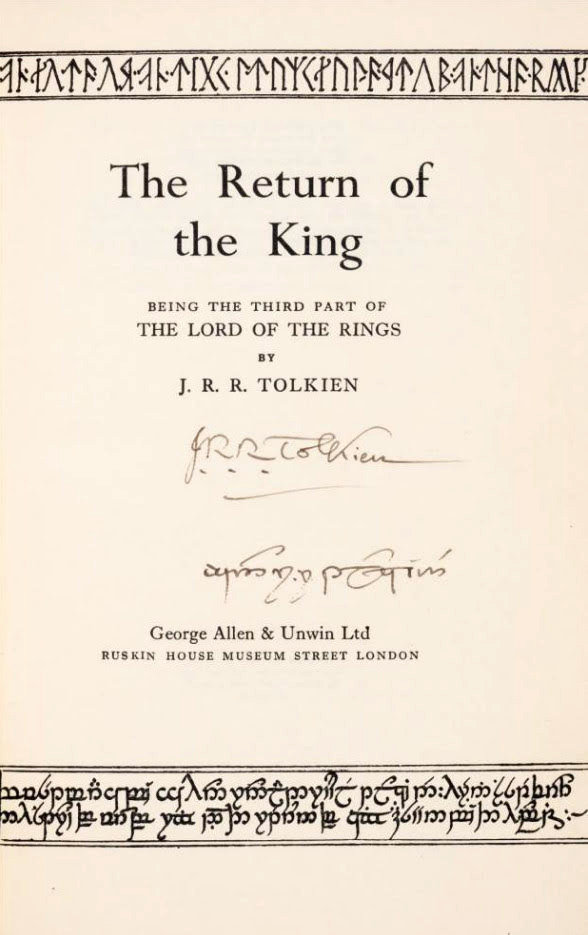
* And finally, Rare Tolkien book signed in Elvish to auction for around £15,000. Though probably likely to fetch more.

On Alderley Edge

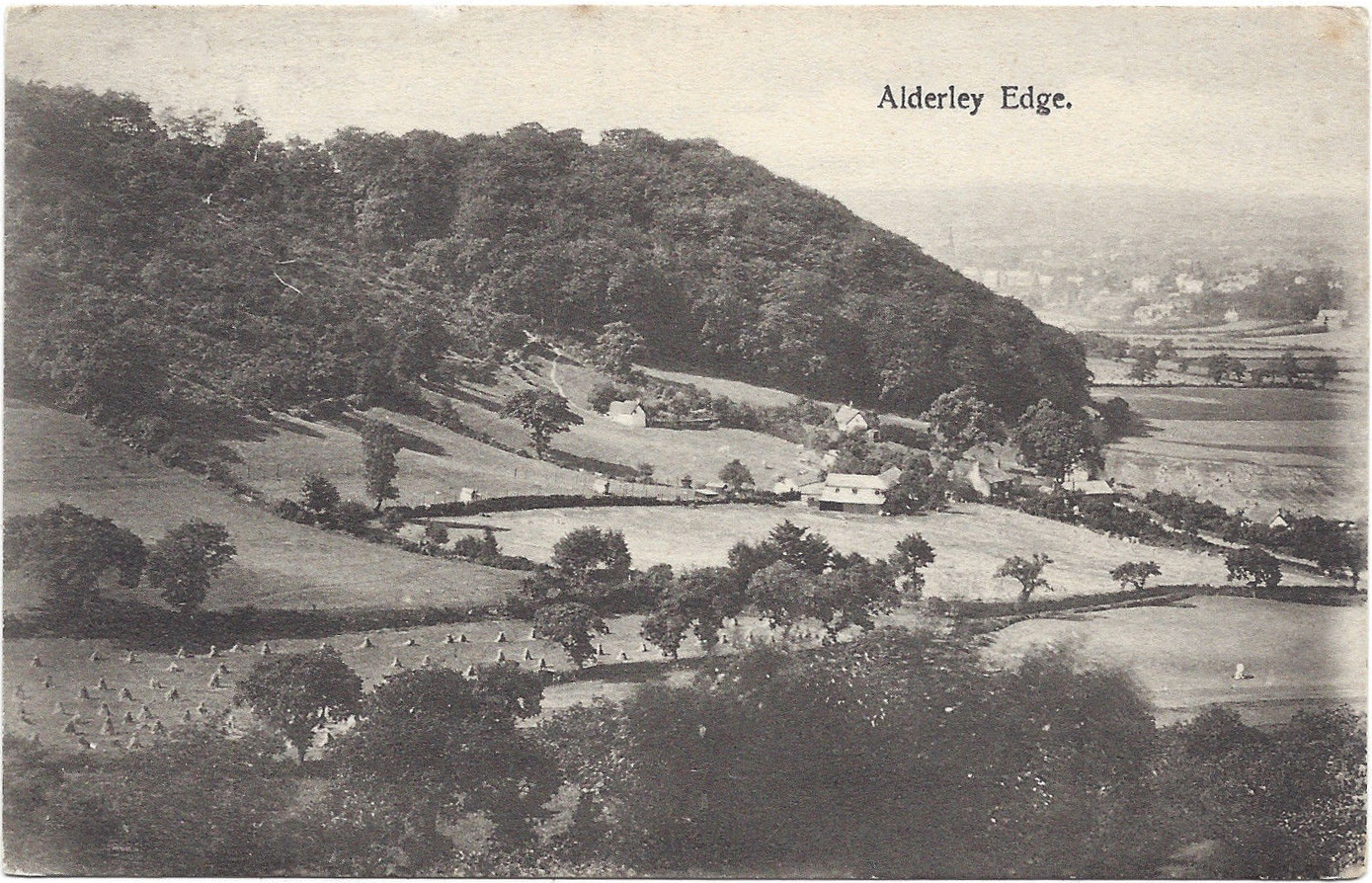
The new £145 academic collection Magical Tourism and Enchanting Geographies: Storytelling, Heritage, Fantasy, and Folklore (2025) has the chapter “Can you hear the knights breathing? Invisible heritage and the magic of Alderley Edge”. For which I can find an abstract at least…

“… home to a legend of which variant versions are found across Europe from antiquity to the present: the legend of the sleeping king or hero and his army, who will awaken when need is greatest. [I explore] the relationship between the legend (as a distinctly medievalist imagining), its medieval precedents, and its new re-imaginings in contemporary literary and oral culture of the NW Midlands [of England], which present a new chapter in a long regional oral and literary culture of storytelling as placemaking.”

Presumably the chapter relates partly to the Invisible Worlds project (2020-23), which created a phone-app AR guide for visitors to Alderley Edge.

Pioneering photographers in the Moorlands

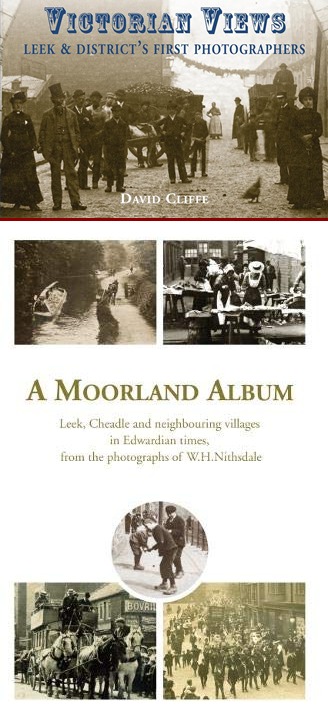
I’m pleased to learn that David Cliffe of Leek is doing good work uncovering the photographic history of the town of Leek and the wider Staffordshire Moorlands, and publishing the results as accessible books.

He’s also integrating the knowledge into local mystery novels in his Old Leek Mystery series…

Tragedy strikes when a travelling theatre visits the Staffordshire market town of Leek in Edwardian times. The town also becomes embroiled in suspicion of foreign agents. Local photographer Nathaniel Blake and his teenage daughter Cora turn amateur detective and find themselves in peril.

A better attempt at mapping the line of the Roman Road through Stoke

Having obtained the various OS map coordinates from the North Staffordshire Journal of Field Studies (1967), I can now plot more precisely the line(s) of the ancient Roman Road that ran from Chesterton – Stoke – Longton. The map used is public-domain OS and pre mass-housebuilding.

Updated: fixed dumb WordPress blogging software, which had scaled down the large image automatically. Now links to the full large version!

Tolkien Gleanings #332

Tolkien Gleanings #332

* Tolkien Society members now have a new issue of Vingilot (Fall 2025, though the cover has “Summer 2025”) to download. Poems and artwork, plus the article “The Hunt for the Fellowship”, which with the aid of the text and various timelines… “attempts a plausible reconstruction of the actions carried out by the enemy factions” in Fellowship, who these are and why they act.

* The latest edition of the open-access journal Alambique has two reviews in Spanish (Review 1 and Review 2) of the book Resena de Fantasia epica Espanola (1842-1903) (2024). The book offers an introduction and an “anthology of representative texts” of early Spanish fantasy literature from 1842-1903.

* Talking of early continental fantasy novels, Maurice Sand’s epic fantasy / sword-and-sorcery novel Le Coq aux Cheveux D’or (1867, in French) now has a free English translation on Archive.org. This is the first translation, so far as I know.

* In English from Poland, “Delights of Dinners, Pleasures of Picnics in the ‘Make-believe’ Food Fantasies of the Edwardian Children’s Literature” (2024). The article surveys a handful of classic British works translated into Polish. Tolkien’s hungry hobbits and (later) cooks would seem to echo this tradition. Freely available online.

* Signum University now has a page for the short online courses proposed for November 2025. Note “The Poetic Corpus of J.R.R. Tolkien: The Later Poems 2 (Volume 3: The Years 1931-1967)” and “She Watered It With her Tears: Grief, Mourning, and Death in Tolkien’s Legendarium”. And Anne-girls everywhere will also want to consider October’s now-confirmed online course “Reading Anne of Green Gables as Fantasy”.

* The Staffordshire Catholic History Society was formed in 1961, and to 1991 it produced twenty-four issues of a scholarly journal titled Staffordshire Catholic History. Thereafter the journal was issued as the journal of the Midlands Catholic History Society, an annual title which continues today. I’ve looked through the online tables-of-contents for both these journals, and the only item of possible Tolkien relevance appears to be the article “An English Spring: Newman’s Anglo-Saxonism” (2006). This sounds like it may have background relevance to Tolkien’s intellectual upbringing, though I can’t tell — because the journal runs are not online.

* This week on YouTube, “History in Flames with Robert Bartlett” offers a long podcast interview with the author of a new book on the destruction of mediaeval manuscripts over the centuries.

* And finally, London’s Curtis Brown agency, now owned by the Beverley Hills based UTA, has taken over the handling of rights requests on behalf of The Tolkien Estate.

Tolkien Gleanings #331

Tolkien Gleanings #331

* Tolkien Notes 22 (September 2025), new at the blog of Wayne G. Hammond & Christina Scull. They also have links to their current “addenda and corrigenda” PDFs for various books including the new Poems, and an “Index to The Letters of J.R.R. Tolkien (1981, 2023)”.

* Drout’s forthcoming The Tower and the Ruin: J.R.R. Tolkien’s Creation has a cover image, a seemingly firm date, and is now pre-ordering for the more affordable Kindle ebook.

* The UK’s annual Heritage Open Days happen each September. 2025 offers a number of free tours of Tolkien sites, including the Birmingham Oratory and in nearby Warwick the “beautiful church where J.R.R. Tolkien was married in 1916”. Nothing Tolkien-specific for the Lickeys, but visitors will be able to see “watercolours by Elijah Walton of the area in the 1850s” and the views, hills and lanes Tolkien knew as a boy were much the same fifty years later.

* The Spanish Tolkien Society has announced the 21st edition of its Essay Awards for unpublished essays. Open to all it seems, but you do also have to submit a Spanish version of your work. Deadline: 5th October 2025.

* There’s to be a Prancing Pony Podcast Moot, just before Christmas 2025. 18th – 21st December in Dallas, Texas and online. The theme will be “Creating Historical Depth within Fantastical Worlds”.

* I’m pleased to see that The Time Machine has been translated into Gaelic (Inneal na Time by H.G. Wells). It’s currently battling A’ Hobat by one J.R.R. Tolkien, for the annual Gaelic translation prize. Seems a little unfair that two great masterpieces should have to go head-to-head, but I guess it’s the quality and fluidity of the translation that counts.

* Recent lidar (ground penetrating radar) probing by archaeologists has discovered more about one of Sir Gawain’s two likely ancient Roman road routes, the routes which could have taken an armored knight up off the Cheshire Plain and into North Staffordshire.

* And finally, I note that Tolkien’s posthumous book Sir Gawain and the Green Knight, Pearl, and Sir Orfeo is now fifty years old. Having been published in September 1975.

Two lidar discoveries on the route of the Roman road through Stoke-on-Trent

I’ve found a local item I missed in 2019, an article going by the unpromising name of “Investigation leading to the Scheduling of RR181”, in the Roman Roads Association Newsletter, Summer 2019. Titled differently on the newsletter’s contents-page as “RR181, from realisation to Scheduling”.

Stoke-on-Trent’s Roman road (the ‘Ryknield Street’) from Chester to Derby had, as the article details, been missing knowledge of “its first four miles as far as Langley Common [west of Derby], where no confirmed evidence of the road had ever been identified.” The newletter’s article is mostly about the discovery of this lost Langley Common route and the consequent scheduling.

However, page 7 of the same article also usefully details the route back to Stoke-on-Trent and the fort at Chesterton in Newcastle-under-Lyme. This reveals a vital new bit of lidar evidence for Stoke…

Where the Roman line crosses Queensway close to its junction with the A53, lidar [i.e. ground-penetrating radar] reveals a substantial road cutting, now appearing artificially filled. It is conceivable that the Roman road survives well within the cutting.

This is of course only a trace, but it adds good evidence to my suggestions that the Basford Bank was more-or-less the place the road came down off the ridge and crossed the marshy Fowlea valley. The valley would have been just too waterlogged further down, as it approached the Trent. If the road sloped slowly down the valley side from Wolstanton Marsh towards the bottom of the Basford Bank, or if it came down steeply at the old Basford Bank (now the quiet lane behind the modern road) must remain unknown for now. However, the possible need for a deep cutting suggests it came down a steep slope as it approached the Fowlea.

After crossing the Fowlea and the valley-bottom, then much wider and marshier than today, the road must have got up onto somewhat higher ground east of the Fowlea. Before then proceeded on through Cliffe Vale towards its known route past what is now Stoke Station, and then across the Trent (roughly where the University nature reserve is now) and out through Fenton and along part of King Street.

Here is what the article means by the “line”, which I’ve marked approximately here…

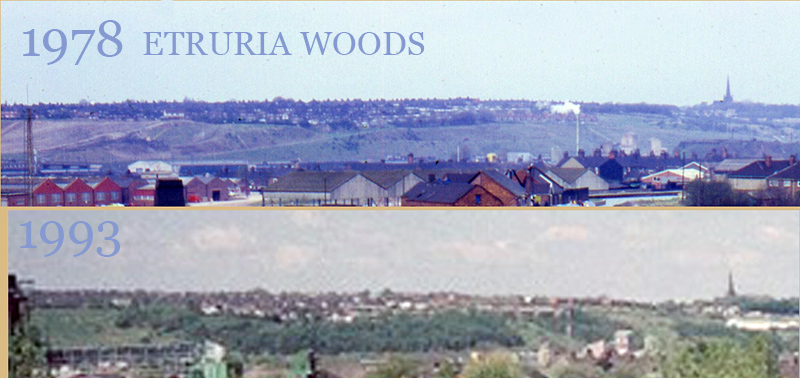
Green indicates the two possible approaches to the Fowlea, either across the top of Etruria Woods and gently down the valley slope, or dropping off the valley side steeply at the old Basford Bank lane.

One might thus whimsically imagine a footsore Roman legion rocking up at the Holy Inadequate pub, had it been there back then, thirsty and in need of reviving drafts of ale! Unfortunately there’s no precise location for the lidar discovery of the buried cutting at the Queensway / A53 junction, and that item in the Roman Roads Association Newsletter article is unreferenced. Possibly it can be seen on recent lidar maps, but I can’t immediately find where those are online. Archiuk.com has a lidar map for Stoke, but it fails to respond and is anyway possibly not up-to-date.


There has also been another key recent lidar development, that I also missed. This discovery was made at the Chesterton end of our Roman road, as detailed at the Roman Roads in Cheshire website…

The route of the [Roman] road is well documented in the north of the county [of Cheshire], but the nearer it got to Chesterton the more its course was lost, with several alternative suggestions. The biggest clue to tracing it south is that the road direction just south of Sandbach appears to be in alignment on the high ground near Bignall Hill / Wedgwood’s Monument. This represents a logical direct alignment, but until lidar [i.e. ground penetrating radar] the evidence was not forthcoming. [But] we can now be confident that the route took a very direct course and went over Bignall Hill / Wedgwood’s Monument, as the lidar evidence is convincing there.

The direct route approached Chesterton fort along the ridge of high ground around [the east side of] Wedgwood’s Monument. The latter would have been a very logical position with excellent view ahead to set out the alignment to Middlewich — assuming it was set out south to north. With the release of Series 2 lidar we now have the [exact] route across Bignall Hill/Wedgwood Monument. [Nearby] Red Street would appear to be a clue [to the presence of an ancient road, due to its name]. It is [however now revealed to be] slightly off line, but must have been named after the [nearby] road.

Or after its purloined stones, perhaps? The routes are very close, and it would have been relatively easy to cart the stones over.

This discovery adds another local node to the route. It came up off the Cheshire Plain and slipped around what is now Wedgwood’s Monument and into North Staffordshire. Which also makes it, in mediaeval times, Sir Gawain’s likely route into North Staffordshire. I had suggested the nearby Red Street for this entry-point in my recent book on Gawain, but now there’s an even more precise mapping. But that’s another story.

So it’s good to learn that the old road isn’t totally forgotten today, and that the lidar boffins still occasionally probe the likely route and make solid discoveries.

Tolkien Gleanings #330

Tolkien Gleanings #330

* The 3rd edition of A Bibliography of Tolkien Studies in French and English (summer 2025) is now available. The venture is nicely ‘filling up the corners’, with the current edition offering… “4,245 references […] classified and presented in several usual [scholarly] quotation formats.” Freely available online, under Creative Commons Attribution ShareAlike.

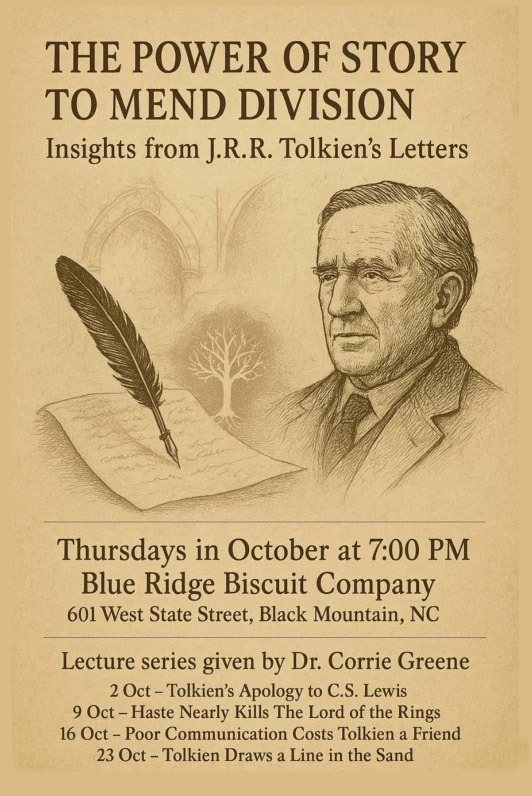
* The OxonMoot 2025 schedule (warning: VPN users are automatically blocked, with not even a captcha). Among others, these caught my eye…

   – “Ho! Ho! Ho! To the Bottle I Go: The Pub in Tolkien’s Life and Works”.
   – “Tolkien the Caveman: Poetry as a Cudgel” (Tolkien’s poetic ridicule of his colleague Percy Simpson).
   – “Belliphonic Tolkien: Sounds of War in The Lord of the Rings”.
   – “Tolkien and the Miniature” (his “sustained interest in the minuscule and in the interplay of different scales”).
   – “Tolkien’s Bicycle” (his bicycles and cycling life, amid the emerging and increasingly dangerous car-culture).

* In the August 2025 issue of the journal Themelios, “Angelic Fall Theodicy in Dialogue with Tolkien, Augustine, and Aquinas”. Freely available online.

* In Italy, Avvenire reviews Tolkien and the Mystery of Literary Creation (2025). Review freely available online, in Italian.

* New at the website of the venerable Catholic journal The Lamp, “Soaring Music”. A rather mis-titled article in which the author muses on the appeal of “the strangeness of Tolkien”, and compares The Lord of the Rings with Nabokov’s Pale Fire. Freely available online.

* Due in September 2025 and pre-ordering now, a new issue of Undefined Boundary: The Journal of Psychick Albion. Includes the article “The Other Country: Numinous Landscape in English Supernatural Fiction” and “On Time Slips: Jack Finney, Charles de Lint and an old house in Chester” (which at a guess may be a survey of English ‘time-slip’ literature).

* Extended free access to a large medieval site is a rare thing in England today, other than castles. But there’s still the walkable circuit of ye olde city-walls at Chester, formerly a major port city. Clas Merdin has posted a new up-to-date descriptive photo-tour of the city-walls walk, on his blog: Part One and Part Two. Might be a good place for a Tolkien event, such as a promenade performance, I’d suggest?

* Lovely poster for the Hobbiton 2025 program in Italy. That’s how you do event posters.

* And finally, Tolkien pictures were bought for six eggs in wartime Hull…

“The pictures, which are of two stylishly dressed women and dated 1918, were handed down generations of the farmer’s family, along with the story of how he got them [from Tolkien].”

If genuine, then they show Tolkien experimenting with collage as a medium.