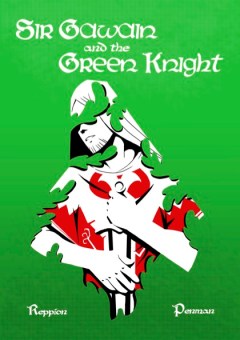
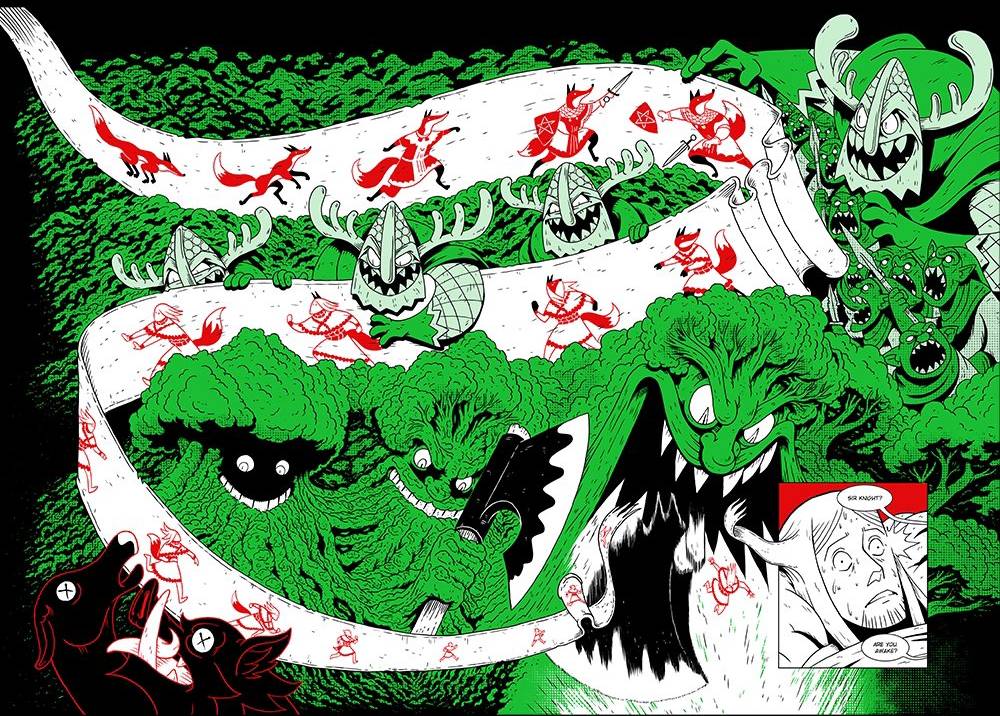
Tolkien Gleanings #0

More mega-Tolkishness. New Tolkien scholarship items are…


Kristine Larsen’s new “Moons, Maths, and Middle-earth”, which looks at Tolkien’s mathematical abilities. See also her earlier “We hatesses those tricksy numbers” (2011).


A new Journal of Inklings Studies (October 2022) brings a review of A Sense of Tales Untold: Exploring the Edges of Tolkien’s Literary Canvas, and also of the monograph Following the Formula in Beowulf, Orvar-Odds saga, and Tolkien.


Also in the same new issue of Journal of Inklings Studies, a sufficient abstract of the pay-walled An Inspired Alias? J.R.R. Tolkien’s Frodo Baggins ‘Underhill’ and Fr Gerard Albert Plunket ‘Underhill’, O.P. (1744–1814). Argues that a Leeds priest may have been the inspiration for the name. I’d note that the Earendel cognate Urvandill also has a certain similarity in terms of its ‘look on the page’, although the meaning is of course different.


“The Beeches Were their Favourite Trees”: An analysis of peoples’ relationships with trees in J.R.R. Tolkien’s The Hobbit. Takes 50 pages to get to the point, but then there’s quite a bit that’s interesting after that.


“Galloping through the Middle Ages: The Horse in Medieval Life and Middle English Literature”. Horses and ponies are a ubiquitous but somewhat neglected aspect of Middle-earth, so this sort of historical background survey is useful.


“The Symbolic Function of the Cityscape in J.R.R. Tolkien’s The Lord of the Rings.


“”Fairies and Fusiliers”: Warfare and Faerie on the Western Front”. Abstract only, described as a completed “doctoral project”.


“Celtic Things” In Tolkien’s Mythology. Has some musing on Goldberry and Bombadil at the end.


A rather needling review, seemingly the first, of the $105 collection Critical Insights: The Lord of the Rings (2022). The review usefully notes…

John R. Holmes’ article “‘A Dream of Music’: The Eärendil Poem in The Lord of the Rings”. Holmes’ contribution is one of the best pieces

Sounds good. Another essay on Bombadil apparently notes “the character’s Finnish sources”. The reviewer also offers a snippet relating to the chapter “Speak Memory: Some Biographical Sources of The Lord of the Rings“…

While [the chapter’s section] “Inventing Buckland” is its most persuasive portion, Bunting’s comparison between Eärendel and Brandywine proves rather uncompelling.

Interesting. I’ve not seen the book. But it sounds like the author tries to make connections between place-names in Buckland and Old English names? Tolkien certainly put a lot of effort and thought into his place-names. But how would that work, in this case?

Internally to Middle-earth, Brandywine is from Baranduin, i.e. “golden brown”, and the simpler “brown river” is stated early on in Fellowship. “The Etymologies” (Lost Road and other Writings) has the name Baranduin as from baran (brown) and seemingly inspired via the real-world Old Norse barane, the latter meaning a sandy-brown river-sandbank made of sands and shining river-muds. Probably related is Old Norse brunn, which meant either ‘brown’ or ‘shining, polished’ depending on context and modifiers. ‘Amber’ then immediately suggests itself to me as a middle-ground, allowing easy slippage between the two meanings. Something of the latter Old Norse ‘shining’ meaning survives today in English as ‘burnish’.

So the name Brandywine may not relate to the colour of the river-water, but rather to the rich colour of the sandbanks and shifting sandy eyots so beloved of Tolkien (river eyots appear regularly in LoTR). That said, the Baranduin river was once long ago made navigable, and thus one would assume a central deep channel. The river’s source was near the city of Annuminas in the Hills of Evendim, founded by Elendil. This once-great city’s people travelled only by this river, being otherwise hemmed in by high hills. Tolkien once called its waters “Elvish” in explaining why the Black Riders were later reluctant to cross this water in LoTR. This perhaps implies that the Elves had once frequented the river, visiting Elendil in Annuminas. That the Elves named the same city Torfirion suggests they knew it and thus the river-route that was the only approach to it. And, recall here that Legolas says, “Much evil must befall a country before it wholly forgets the Elves, if once they dwelt there”. If they had once used this river, they did not exactly “dwell” there, but it would have been a route well-known to them. Perhaps leaving enough of a legacy to be off-putting to the Black Riders.

[Update: Nature of Middle-earth reveals that the elves “still controlled” Lake Evendim, the source of the river, at the time of Frodo’s departure from the Shire. This is why the Riders will not touch the “elvish” river.]

But that Elvish usage, if such it was, was long past by the time of the founding of Brandy Hall. Either way, if the Brandywine had golden sandbanks or golden-brown water or both, hobbits would have made a natural comparison with the colour of whatever distilled golden-brown hobbit-wine was the equivalent to ‘brandy’. Indeed in early Hobbit-language it was Branda-nîn (possibly ‘border-water’, perhaps also a pun on the brandy colour). Thus we may have a triple semantic weighting, two Hobbit-y and a deeper one that may percolate through and yet live in the memories of the long-lived Elves. Indeed we have evidence of this living-on, since the river is named by Glorfindel in an early manuscript as Branduin — he tells Frodo on the hills above Woodhall of “the Branduin which you turned into Brandywine” — with the line later being cut from the published text. The Elvish name for it is also translatable to ‘golden-brown’.

But “golden brown” is also the colour of a partly charred brand of wood. Recall here Tolkien’s early/sometime use of ‘Burning Briar’ for the well-known star-constellation The Plough and its Middle-earth symbolism as its form of an enduring war-threat to the evil Melkor. Briar = branch = brand (of wood). Perhaps this was partly inspired via the extensive Biblical literature debating the translation of the Hebrew ‘branch’ as ‘dayspring’ (rising light before dawn). Which, if an early inspiration for the name Branduin, would then give one a roundabout earendel connection.

However, if in “The Etymologies” one were to confuse BARAN- with the immediately adjacent BARAD- or BARATH- then either way one could get a quick (but wrong) connection with Varda / Elbereth, and hence with the Middle-earth star-equivalent for the Old English earendel (if the star Venus). Which is not to say that this wasn’t an early conflation once made by Tolkien in his several BARA- words, before later separation. But that would have to be shown by the Middle-earth language specialists and the historians of the evolution of LoTR. By the sound of it, “Bunting’s comparison between Eärendel and Brandywine” — whatever that was — may lack such considerations.

In the real-world the name Brandywine (a river, a real-world folk-etymology) is well known in American history. There it goes back to brandwijn and the earlier brantwijn (Middle Dutch) -> meaning “burnt wine” -> i.e. a ‘fiery spirit distilled from wine’. Then in Old English I suppose one might surmise a hypothetical parallel in biernan (burning) + win (wine, implied dark). Fiery spirit burning, dark, implied wetness, probably good for cheering one through the cold midwinter darkness… yes, I guess you could just about wrangle it into a connection with the Old English earendel in terms of the meaning. But the connection would be more than a bit creaky. Unless… you were to assume another hypothetical original, way back in Old English, as biernan (burning) + windle (turning, winding), with the windle claimed to root back to -wendil. Again, by a roundabout route, there you’d then have an earendel connection via -wendil.

So, those would be my guesses about what might be going on in “Bunting’s comparison between Eärendel and Brandywine”.

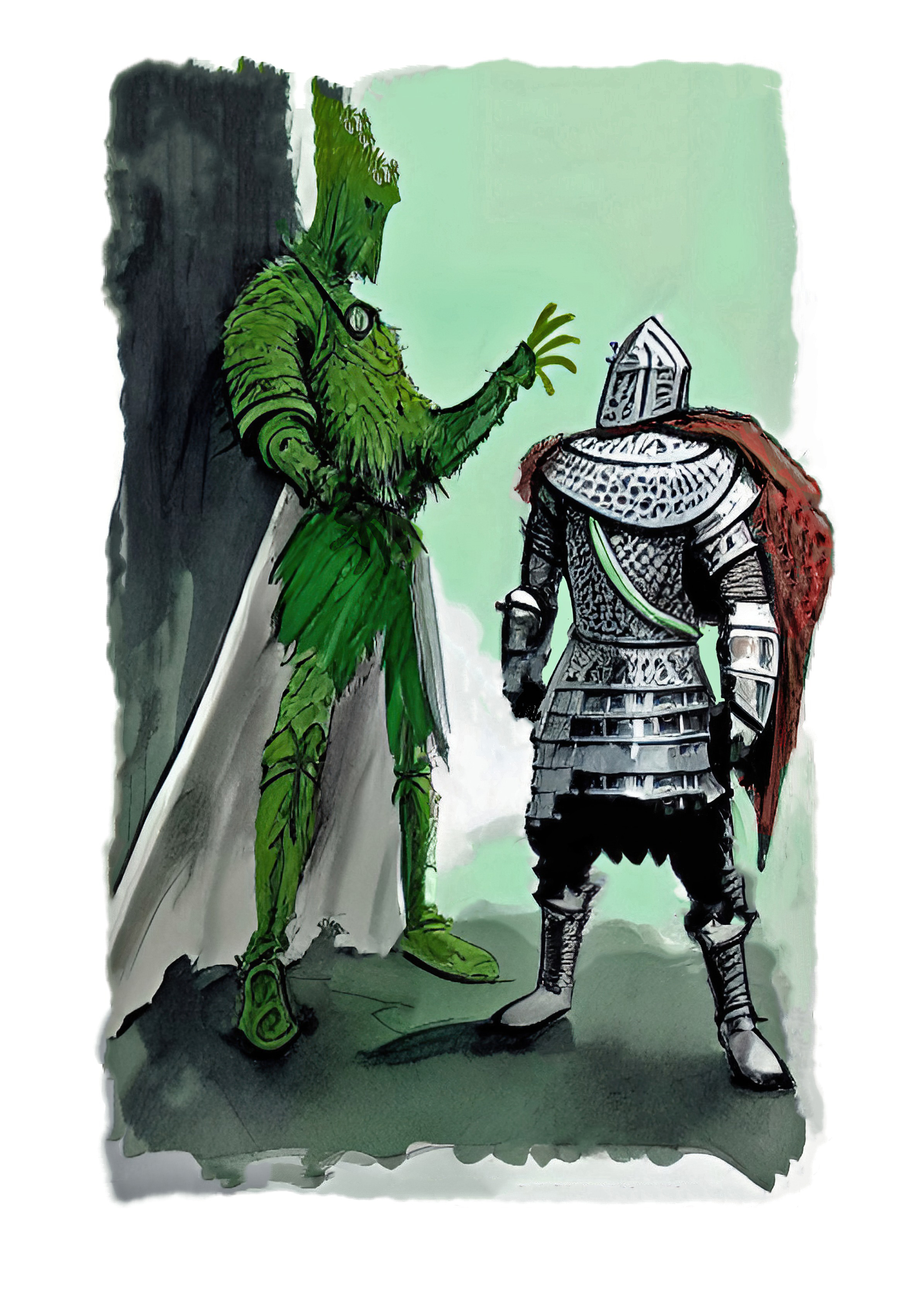
Not sonic

Interesting discovery with YouTube. Searching for…

“sir gawain” -sonic

… does not work to remove Sonic the Hedgehog videogame crap from results.

Nor does…

“sir gawain” NOT sonic

But using both together…

“sir gawain” NOT -sonic

…does work.

Forthcoming: The Historical Arthur and the Gawain Poet (2023)

Even more Gawain. Andrew Charles Breeze’s book The Historical Arthur and the Gawain Poet: Studies on Arthurian and Other Traditions (Studies in Medieval Literature) is set to be released in hardcover for circa £80 on 15th January 2023.

The blurb reveals that it is partly Arthurian, and states that the first part will offer…

evidence for the Arthur of film and legend as a real person, a Celtic commander (not a king) who fought battles in North Britain during the terrible volcanic winter of 536-7, before dying a hero’s death in a conflict on Hadrian’s Wall.

The second part…

uses arguments of the U.S. scholar Ann W. Astell to date the text to 1387 and name the poet as Sir John Stanley (d. 1414), a Cheshire and Lancashire grandee.

The date given seems curious, since Astell states “my argument necessitates dating Gawain after 1397” (in her Political Allegory in Late Medieval England, page 188). This is slightly expanded when she gives “1397-1400” elsewhere in the same book, the date being drawn from reading Gawain as a mirror-like political allegory of events — claimed by her to be inspired by the beheading of Richard of Arundel in 1397. But I guess the arguments that Breeze takes from her must relate to something other than Astell’s own choice for the dating of Gawain.

Either late date seems doubtful to me, and the Stanley claim more so. But it will be interesting to see if the book has new evidence.


Update: Ah, I see that the dating is explained in Breeze’s latest paper. He notes Astell’s observation of… “line 678 of Gawain, on its protagonist as being made a duk or duke [which she sees as a coded reference to] Robert de Vere (1362-92), ninth Earl of Oxford, created Duke of Ireland on 13 October 1386. She adds that ver or spring, used in line 866 of beautiful clothing given to Gawain, is a dig or quiet joke at the expense of de Vere, favourite of Richard II and notorious for flamboyant dress.”

More than a bit tenuous, and seemingly an insight originally from McColly and not Astell. Let’s hope there’s more new evidence than that in the book.

Two local folklore talks

A couple of local folklore talks, albeit in central London. London Fortean Society: ‘The Haunted Landscape: Folklore, Monsters and Ghosts’ event, set for 19th November 2022.

Includes:

* Dr. Victoria Flood – “Alderley Edge and the Dead Man”. (“Based on research undertaken as part of the Arts and Humanities Research Council-funded ‘Invisible Worlds’ project, this paper traces engagement with medieval prophecy at the Edge from the eighteenth century to the present”).

* Jeremy Harte – “Hell-Wrestling with the Magic Methodists” (who largely originated on Mow Cop).

Little brother of Mega-Tolk

My last big Mega-Tolk round-up was only a month ago, but there are already more items of interest freely available.

* In Mythlore, “Soup, Bones, and Shakespeare: Literary Authorship and Allusion in Middle-earth”. Includes observations on what are claimed to be Tolkien’s “literary allusions to Shakespeare’s Macbeth” in The Lord of the Rings.

* In Journal of Tolkien Research “Hearing Tolkien in Vaughan Williams?”. Explores the “juxtaposition of their approach and philosophies” re: the much-loved English music (and now apparently adopted as Tolkien-ish) “Fantasia on a Theme by Thomas Tallis (1910), The Lark Ascending (1914), and Fantasia on Greensleeves (1934)”. Excellent. Also notes a Birmingham connection…

Samwise Gamgee in Lord of the Rings sings the tale of the Stone troll “to an old tune” — and Tolkien himself sang this poem in Sayer’s tape recorder with slightly different words in a tune that, according to Sayer, is “an old English folk-tune called ‘The Fox and Hens.’” This tune, as Bratman notes, is a Birmingham variant tune for the folksong “The Fox and the Goose” or “The Fox Went out on a Chilly Night.”

* Mythlore “Review of Musical Scores and the Eternal Present: Theology, Time, and Tolkien (2021).”

* A Kirk Center review of In the House of Tom Bombadil (2021). A slim but apparently perceptive new study of Bombadil by a pastor. Sounds interesting, if rather short.

* A review in Fafnir: Nordic Journal of Science Fiction and Fantasy Research of Middle-earth, or There and Back Again (2020). The review has a misleading comment on the Pearl, re: the casket.

* Review of Eternal Light and Earthly Concerns: Belief and the Shaping of Medieval Society (2021). On the medieval practice of always… “lighting the altars of churches” [at all times. This] “Christian practice of lighting in fact stemmed from ‘pagan’ practices and Old Testament precedents.”

Also noted along the way was a not-free retail book new to me, The Library: A Catalogue of Wonders (2018). Mostly historical (though makes no mention of scriptorium/library cats), and only has one chapter that is a rather scattergun survey of various libraries in fantasy fiction. But this chapter has a substantial section which usefully surveys the range of books and libraries in Middle-earth — this boil down to about six pages once the superfluous publication history of the Hobbit/LoTR is discounted. You do have to wonder if an author who talks of “the elf-city of Rivendell” has actually read The Lord of the Rings, but the survey does appear comprehensive. A passing aside also claims that Tolkien was influenced by Borges, though any glance at the relevant dates would have cast doubt on this. While it’s not impossible that Tolkien saw “The Garden of Forking Paths” in English in Ellery Queen’s Mystery Magazine (Aug 1948), Borges otherwise only arrived in English in 1962. True, Tolkien had learned to read some Spanish in his youth, and perused Father Francis’s library which included books and dictionaries in Spanish. But I doubt he then went to enjoyed Spanish contemporary fiction, or that he would have even encountered Borges in Spanish print form. There was no love the other way, with Borges finding his sampling of Tolkien (probably just the first chapters of Fellowship) “rambling on and on” and tiresome. Elsewhere he calls the tale “pointless”.

Tolkien (2019)

One of the nice things about finishing and releasing my big Tolkien book, at last, is that I’ve been able to watch the recent ‘young Tolkien’ biopic film in its extended form (i.e. complete with 12 minutes of deleted scenes on the DVD version). I hadn’t wanted to watch Tolkien (2019) before now, due to the risk of skewing my book.

Here are some notes…

Update: These notes have now been replaced by my full polished review in the free Tolkien Gleanings PDF issue 1.

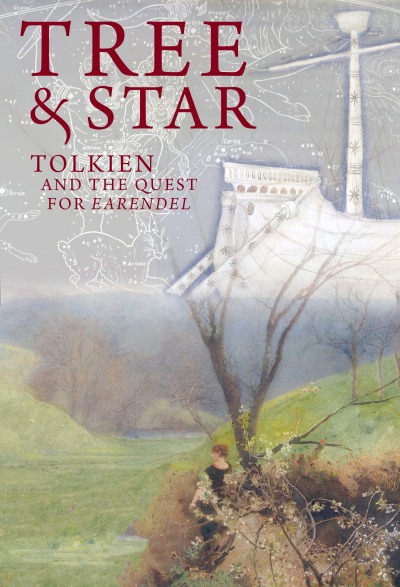
New book – “Tree & Star: Tolkien and the quest for Earendel”

I’m pleased to say that my “big Tolkien book” has been finished after many years, and is now available to buy on Gumroad as an ebook or at Lulu.com as a paperback.

The title is Tree & Star: Tolkien and the quest for Earendel

200,000 words. 472 pages. Delivered as a DRM-free printable .PDF file, suitable for reading on a 10″ digital tablet.

CONTENTS:

Introduction: 24th September 1914.

1. J.R.R. Tolkien’s discovery of Cynewulf’s earendel and its key variants.

2. Down the little rivers and bright streams.

3. Earendel variants: of magic horses, flaming arrows and sea-wargs.

4. Earendel and the early Christian north: the solstice chanter-songs.

5. Earendel and the early Christian north: a glitter of eagle wings?

6. Earendel and the early Christian north: an imposition or a recovery?

7. A Christmas interlude: of the curious Earendel of Charles William Stubbs, some poems, and party-trees.

8. Before Cynewulf: ‘dipping a toe’ in ancient star-lore.

9. Earendel’s earthly voyage, ‘there and back again’.

10. In Cornwall: Tolkien’s holiday with Fr. Vincent on The Lizard.

Selected bibliography.

Index.


Note: Yes, I am well aware that modern academics claim Cynewulf was not the author of the earendel lines, but I largely worked with the scholarly assumptions current during Tolkien’s time. Hence Chapter One is titled “.. discovery of Cynewulf’s earendel and its key variants.”


PDF Samples: tolk_earendel_sample.pdf and tree_and_star_index.pdf


I think $36 (around £30) is about the right price for something of this size and scholarly weight, in ebook. I’ve also tried to keep the paperback at Lulu.com at a similar price, and have managed to price it there at around $45.

Not all potential buyers will immediately know how Gumroad works, for the ebook version. You input the price you want to pay and click on “I Want This”. In this case there is a minimum, though I believe the nice thing about Gumroad is that generous people you can input a higher price if they wish. Your purchase is then placed in your Library at Gumroad, and you should also get a link sent by email, from where you can download it. I believe you can also “Send to Kindle” (Amazon’s tablet), if you have that set up at Gumroad, though I’ve not tested the resulting formatting.

Gumroad does not require a sign-up to purchase, and can accept PayPal and cards.