Tolkien Gleanings #359

Tolkien Gleanings #359

* Just published, the 2025 edition of the Italian Tolkien journal I Quaderni di Arda. It appears to be a comparative special-issue, with articles on Tolkien in relation to Moorcock, le Guin, Gaiman, China Mieville, A.S. Byatt (integrated a few references to Tolkien in her work, apparently), and even Stephen King. Plus reviews of Pity, Power, and Tolkien’s Ring; Tolkien and the Mystery of Literary Creation; and the Collected Poems. All in Italian, and freely available online.

* A long new interview by Graham Scheper with Michael Drout on “The Tower is Beowulf: Beowulf and the Lord of the Rings”. Freely available online. Drout’s book The Tower and the Ruin is out in early December 2025.

* The Green Notebook podcast interviews Joseph Loconte on “Fascism, Communism, and the War for Middle-earth”. The .MP3 download is under the “… More” button. Loconte’s book The War for Middle-earth: J.R.R. Tolkien and C.S. Lewis Confront the Gathering Storm, 1933–1945 is due in a few days.

* The Critic magazine reviews the new book Literature and Learning: A History of English Studies in Britain (2025). Freely available online. Apparently the book is a thorough but also consequently revisionist history, in which Tolkien’s discipline of philology is relatively favourably treated…

“Even the Oxford philologists are seen as reasonable men, trying to preserve a bedrock of seriousness in a newfangled discipline that at all times had threatened to get out of hand.”

* New on Archive.org, a 1932-1963 run of the Leavisite journal Scrutiny. Has some pungent criticism of the Tolkien and Gordon edition of the Green Knight, among much else.

* I failed to spot a relevant academic book, last year. Fantasies of Music in Nostalgic Medievalism (2024), from Manchester University Press. The author surveys works from 1939 to the present day.

* And finally, new on YouTube is a three-minute video peep at The Brandywine Festival, a rustic Hobbit festival held in Kentucky, USA. Well made and with steady-cam, so no worries about sea-sickness from wobbly camera shots.

Tolkien Gleanings #358

Tolkien Gleanings #358

* The contents-list is now available for the academic book Queer Approaches to Tolkien (2025). This offers 12 essays plus a bibliography. Amazon UK is saying ‘U.S. import only’ and Amazon USA is saying 25th November 2025, but publisher McFarland now flags it as “in stock” and I assume it’s shipping.

   – The Problematic Perimeters of Elrond ­Half-elven and Ronald ­English-Catholic.
   – I Dream of Gandalf: or, How I Was Raised by Wizards.
   – The End Is Queer: Cleanness and ­Tolkien’s Apocalyptic Landscape.
   – Mother or Other: ­Tolkien’s Shelob and the “­Monstrous-Feminine”.
   – Eowyn and/or Dernhelm: Reading Eowyn’s (Trans)Masculine Disguise.
   – “Something Mighty Queer”: Destabilizing Gender, Intimacy and Family in ­Tolkien’s Legendarium.
   – “For he would take no wife”: Surface Reading, Earnur and the Queering of the Unmarried Male in The Lord of the Rings.
   – “Bending over with naked blade”: The Erotics of Suffering and ­Male-Male Penetration in ­Tolkien’s Legendarium.
   – Frodo, Sam and the Ring of Power: A Queer Erotic Triangle.
   – “Saruman [?Pardoned]”: The Queerness of Sex in ­Tolkien’s The Lord of the Rings.
   – “and stooping he raised Beleg and kissed his mouth”: Queering Canon with ­Tolkien Fanfiction.
   – “What care I for the hands of a king?”: ­Tolkien Fanfiction and Narratives of the Transgender Self.
­   – Tolkien and Alterity: A Bibliography.

* A review in English of the new German-language academic book “In Texten wildern: Slash oder die Erotisierung fiktiver Stoffe durch Fangemeinden” (2025) (‘Poaching texts: slash or the eroticization of fictional material by fan communities’). The review is freely available online. One of the book’s chapters focuses on an apparently very popular three-year pornographic fan-fiction which… “portrays a sexual power struggle between Aragorn and Boromir. Despite apparent non-consensual elements, the narrative emphasizes that both characters are equally strong and willingly engage in the power play” which is depicted in “explicit sex scenes”.

* New from Germany, in English, the article “Reimagining The Lord of the Rings Slash Fiction, Queer Interventions, and Their Limits” (2025). Freely available online. Centers around discussion of the comic-book Lord of the Cock Rings which depicts Sam and Frodo as gay lovers…

“Rejecting any impulse toward subtlety or restraint, the visual narrative refuses to sanitize queer desire, instead embracing graphic portrayals of erotic encounters, including self-pleasure, rimming, penetrative intercourse, and foot-based masturbation.”

* I read that the recent academic book Cosplay and the Dressing of Identity (2024) opens with an extended consideration of Tolkien cosplay (i.e. ‘fans dressing up as fictional characters’). A review notes… “Ethnic and gender identities are also discussed at length, as are psychological problems” among cos-players.

* Vivid Seats has details of the stage-show “Tolkien It Off – A Burlesque & Drag Tribute to Lord of the Rings”.

* I just now noticed a U.S. ‘celebrity news’ item, from last month. George R.R. Martin (Game of Thrones author), reportedly bemoaned the “lack of explicit sexual scenes” in The Lord of the Rings, while being interviewed at The Kimo Theatre in Albuquerque. I would have responded that — even if a hypothetical ‘alternative-timeline Tolkien’ had felt the need for such scenes — Martin overlooks the historical and national context. Britain has no U.S. First Amendment to guarantee its citizens free speech, and effective de-censorship of the printed word only happened here some two decades after the publication of The Lord of the Rings.

* And finally, an unusual new academic journal. Epic Threads aims to… “weave together fact and fiction to breathe new life into the ancient world”. The journal is open-access and the first issue is now available. An interesting idea, which might be characterised as a sort of ‘fan fiction for historians’. It makes me wonder if Northern ancient history could benefit from a similar imaginative-scholarly journal, assuming appropriate editorial rigour?

Tolkien Gleanings #357

Tolkien Gleanings #357

* Joseph Loconte draws “Lessons About ‘the Will to Power’ from Middle-earth”. Freely available online.

* For Remembrance Day, John Garth offered an article on Tolkien’s friend “Robert Quilter Gilson on the eve of war, 1914” ($ paywall).

* The 2026 C.S. Lewis conference will visit Amiens, France, to discuss “War, Fellowship, and Survival in the Lives and Works of C.S. Lewis and Kindred Spirits”. The dates are 11th-13th June 2026.

* Marquette has a page for public showings of the Tolkien manuscripts, 2026. I can’t give you dates, since Marquette University completely blocks anyone using a VPN. Which presumably includes their own students, using laptops + VPNs in their campus cafes? Durh. But I assume from the search-result snippet that the dates are indeed there.

* New in English, in the latest issue of Italian journal Ricognizioni, “Quenya is Practically a Main Character: Elvish-English Multilingualism in Tolkien-inspired Fan-Fictions”. Freely available online. The same issue also has an article on “Plant Names in Constructed Worlds”, which may interest some.

* The Tolkienist surveys some of the many recent Kickstarter offers. Judging by this, it appears to be becoming increasingly easy to obtain a licence to sell expensive branded ‘Tolkien tat’ on crowdfunding sites.

* Some of the Lord of the Rings movie trilogy actors are going on an 11-city U.S. stage tour, January to September 2026, billed as ‘An Evening With the Hobbits: In Celebration of 25 Years’. Will there be hobbit songs sung, one wonders?

* New on Archive.org, an audiophile’s painstaking The Hobbit (1977) VHS Hi-Fi Audio Capture. This is the Rankin Bass cartoon release.

* And finally, as the usual November rains pour down here in Britain, a timely and beautifully illustrated post. Miriam Ellis on “The Glory of Goldberry’s Washing Day”.

Tolkien Gleanings #356

Tolkien Gleanings #356

* From Germany and mostly in German, the $ paywall book Eine Kleine Geschichte der Orks: Der monstrose feind im wandel der zeit (2024) (‘A Little History of the Orcs: the monstrous enemy through the ages’). Eleven chapters including, in English, Thomas Honegger’s “From Old English orcneas to George MacDonald’s Goblins with Soft Feet: Sources of Inspiration and Models for Tolkien’s Orcs from English Literature”. A key example of the “Old English” of the title is found in Beowulf (c. 710 A.D), which talks of… “eotenas ond ylfe ond orcneas” (‘thence awoke all evil offspring, ettins and elf and orcs, also giants’).

* In Portuguese, the book J.R.R. Tolkien: construtor de mundos. Personagens, lugares e adaptacoes. Vol 1. (2023). This is officially freely available online. Chapter titles in English translation…

   – Tolkien and the ring myth.
   – Sauron and his many names.
   – Beorn.
   – Boromir, an imperfect hero.
   – Aragorn and Anduril: The representation of the hero and the medieval sword.
   – Orcs and evil.
   – Dwarves and Elves: Between stones and Norse gods.
   – Through Rivers and Forests: Norse mythological geography.
   – The Mountains and Kingdoms Beneath Them.
   – Adaptations: recreating Tolkien for the cinema.

* A student paper from Marquette University, “Faramir’s Quality: how Faramir is influenced by and embodies the theme of hope in The Lord of the Rings” (2025). Freely available online.

* A new open Reddit attempt to track down all Silmarillion references and allusions in LoTR. Offhand I don’t recall any other attempt to do this. I’ve checked the Reader’s Companion book (i.e. the annotated LoTR) just now, but that only has the general index, offering about 30 page numbers under the heading of Silmarillion (book).

* The Angmar Archives podcast has a long interview with the maker of the new artbook Doomed To Die: An A-Z of Death in Tolkien. Freely available on YouTube.

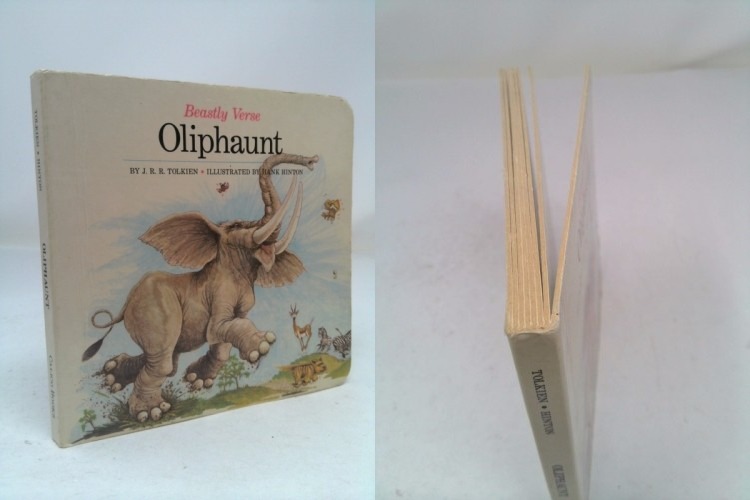
* New to me, Tolkien’s hobbit poem “Oliphaunt” was issued as a standalone children’s picturebook in 1989, of the “stiff boards, for small kids who might tear normal paper” type of picturebook.

* And finally, talking of near-mythical animals… news of rare big-screen outings for the extended Director’s Cut of the LoTR movies. The “special one-night-only event will feature the remastered extended edition” of Fellowship, then Two Towers and Return of the King. All in early 2026.

Tolkien Gleanings #355

Tolkien Gleanings #355

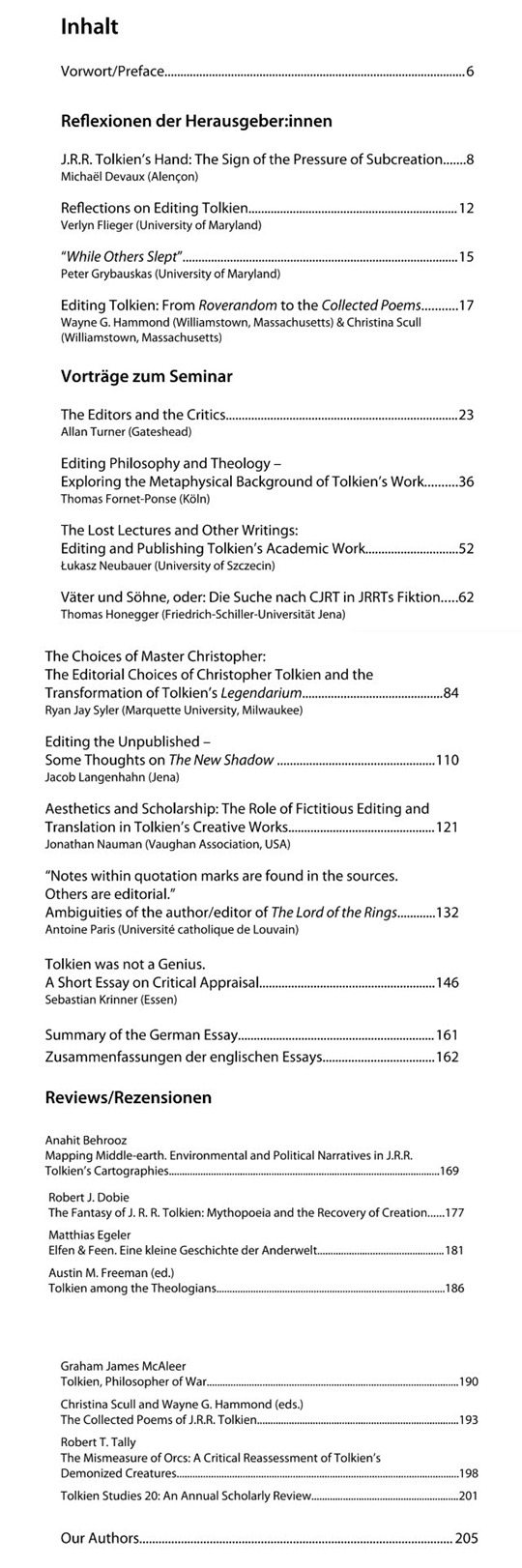
* The German/English journal Hither Shore 21, a themed issue on ‘Tolkien and his Editors’, is now available on Amazon. This “2024” issue is there dated as being published 4th November 2025. Here are the contents…

* First Things magazine has a new article on “The Inkling Who Fought Abortion”… “Owen Barfield, the philosopher, novelist, and a key influence on both C.S. Lewis and J.R.R. Tolkien, was one of the fifteen founders of the Society for the Protection of Unborn Children.” The first such pressure group. The first third of the article is freely available online, and is then $ paywalled.

* Christianity Today reviews the stage play Lewis & Tolkien. Also has a partial interview with the makers, possibly drawn from the Q&A. Freely available online. The play’s theme of determined friendship is one that…

“feels especially relevant now. Two men reconciling over an unhurried, in-person conversation, nestled in a snug pub, defies everything about modern society’s bitter ideological divisions and disembodied digital distractions. Not a single iPhone in sight. No email notifications. No Slack messages interrupting the conversation. Prolonged eye contact, full attention, and a radical willingness to stay in the same room even when wounded by the other.”

* New in the latest issue of the rolling Journal of Tolkien Research “A Detestable Nation of Orcs: echoes of Eurasian nomads in early fantasy and the literary ecosystem behind them”. This seeks models for orcs in various groups of historical primary-world Eurasian nomads, such as the Huns and Mongols.

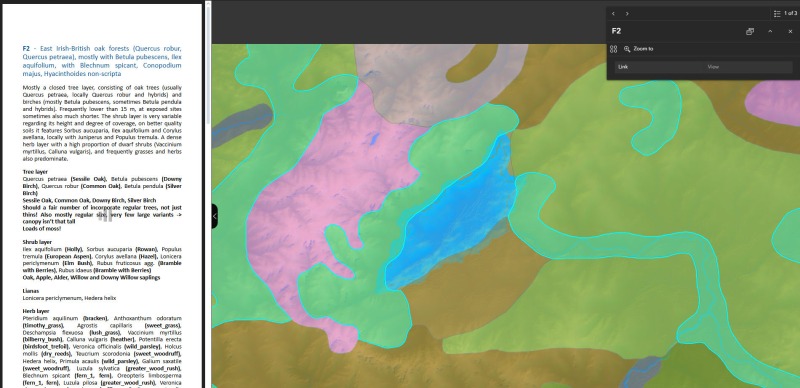
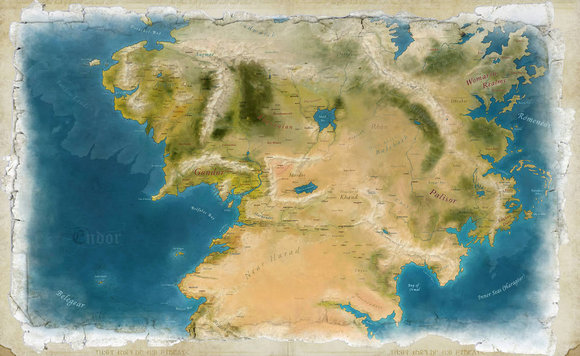
* The link on Lindefirion‘s site to the “Expanded Middle-earth poster map” is now “404”, but on DeviantArt Mairon666 has a new makeover of it, as “Northern Middle-Earth (3rd Age)”. With a free and un-watermarked 4.5Mb download. Though sadly this is still not big enough to read the smallest place-labels.

* Robert Plant talks at length about how the mystique of Wales and magic of Tolkien influenced his 1970s rock band Led Zeppelin. There’s a five-minute clip from the interview on YouTube, but the full interview doesn’t appear to be online — unless perhaps you subscribe to streaming services for U.S. TV channels.

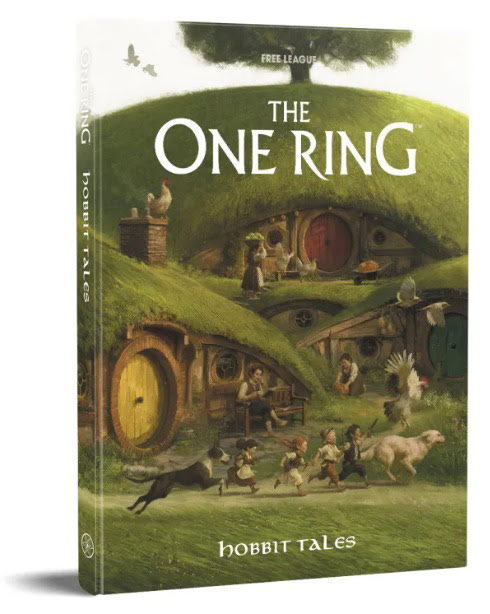
* Free League has announced their forthcoming Hobbit Tales, a $46 role-playing game add-on book for the core One Ring game. The value of such books for non-gamers is in the sumptious production values and artwork, their maps and detailed descriptions of places and terrains, and their attention to everyday items and trading.

Though the only information in that regard is that the book will have “detailed descriptions of the four farthings” of the Shire. Gamer buyers should know that this new book is a one-volume collection for five “silly misadventures” of hobbits that were… “previously published in the starter set for The One Ring Second Edition and in the Shire Adventures compendium for The Lord of the Rings Roleplaying”. Thus avid tabletop gamers may already have it, since the current core game One Ring is now “the official tabletop roleplaying game” — and many will likely have the starter set in its second edition.

The Hobbit Tales promo is interesting in its own right, in that the makers claim a ‘TM’ trademark on the word “Hobbit”. Either that or they’ve acknowledging someone else’s trademark, which is perhaps why they use “hobbit” on the cover with no distinctively-obvious capital “H”? On the promo page it’s definitely capital “H”. Anyway, be aware that someone is trying to claim a trademark on a word which was in use prior to Tolkien.

* And finally and seasonally, Miriam Ellis savours the hobbit mushroom habit. Ellis makes the perceptive comment that… “I expect hobbits had a fund of stories and songs about their passionate love for this near-magical food.” And probably short sayings and little everyday rhymes too, I’d add. To help children learn and recall the differences between edible mushrooms and dangerous toadstools. “If ‘t has a frill, you’ll be ill”, “If ’tis red, you’ll be dead”, that sort of thing.

My top 10 George Formby movies

Having now seen all the George Formby movies, I’d say these are my “top 10”, in order of excellence and cohesiveness. I was seeing all but one of them for the first time, since I don’t think they were shown on TV when I was growing up, and it appears it took a long while for them to be released to retail on DVD.

1. Let George Do It! (1940)

The most cohesive film. A wartime spy story, fast-paced and also very funny.

2. He Snoops to Conquer (1945)

The war is over and reconstruction is in the air in a little northern town. Excellent story of a little local man against a corrupt town council, with the aid of a very eccentric local inventor.

3. Come On George! (1939)

A horse-racing stables story, made all the more charming because of George’s knack with horses. He had spent his middle-childhood and early teens as a child jockey in Ireland. Somewhat spoiled by the juvenile supporting actor, but not much — all George’s films were perfectly cast, but not in this one case.

4. Keep Your Seats, Please (1936)

Grandma leaves her money to George in a very unconventional way, to avoid it going to grasping relatives. A bit episodic, due to the nature of the plot, but a fine entertainment.

5. Get Cracking (1943)

It’s basically Dad’s Army with George and a home-made tank, and this time George has excellent juvenile support. It helps to know the historical context: Princess Elizabeth (later Queen) was then doing war service working as a vehicle mechanic.

6. George in Civvy Street (1946)

George returns from war to find the pub he’s inherited run down and in need of reviving. A bit too ‘slick’ and stage-y, and you can tell it was made partly with an American audience in mind.

7. I Didn’t Do It (1945)

A little bit more of a serious drama, but with plenty of superb supporting comedy-drama actors. A boarding-house murder-mystery, well filmed.

8. It’s in the Air (1938)

George in the Royal Air Force. Often a bit too manic and fast-paced, as was the way in the late 1930s, but good entertainment.

9. Feather Your Nest (1937)

Young love on the hire-purchase, hindered at every step by a gorgon of a mother-in-law. Centers on the classic song “Leaning on a Lamp-post”.

10. No Limit (1935)

His big breakthrough, as a TT racer on the Isle of Man. Often said to be his best, and since my grandfather was a TT racer it has personal appeal for me. But on third viewing it really doesn’t hold up well, compared to the others. Which is why it’s number 10 on my list.

There are plenty of others after that. Possibly also add Spare a Copper (1940), with George mis-cast as a policeman (usually he was physically attacking them) and the film obviously a quota-quickie aimed at the export income from an American audience. But you may think it worth it simply for the hilarious line “Listen Matilta, a weasel!” during a madcap chase scene.

Tolkien Gleanings #354

Tolkien Gleanings #354

* New at Word on Fire, Holly Ordway looks into “Tolkien’s Newman Connections”. Freely available online.

* Alas, not me blog has a substantial new post “From a Gift in Death to the Gift of Death: Turin and the Doom of Men”.

* Upcoming Courses at Signum University for spring and summer 2026. Online courses, for which the sign-up deadline is 7th December 2025. Includes…

   – Tolkien in Context
   – Beowulf through Tolkien (if enough sign up for it)
   – Tolkien & Medievalism
   – Tolkien & Science

* I spotted a book I seem to have overlooked, though perhaps it appeared just before my Gleanings started in 2023. It’s David Bratman’s Gifted Amateurs and Other Essays on Tolkien, the Inklings, and Fantasy Literature (2023), published by Mythopoeic Press. I was alerted to it by encountering a used copy for sale. The book’s page at the Mythopoeic Press usefully gives the contents-list, and I see there’s now a budget-priced Kindle ebook edition. Potential buyers might usefully note that “The Condensed Silmarillion” section is apparently a parody, not a handy summary.

* Forthcoming from Ava Maria Press, the book Into the Heart of Middle-earth: Exploring Faith and Fellowship in J.R.R. Tolkien’s The Lord of the Rings. From the author of the Tea with Tolkien blog. Due 20th February 2026.

* Currently being auctioned at Heritage Auctions, “Treebeard” by the Brothers Hildebrandt (1975).

* New on YouTube from the University of Oxford ‘Tolkien talks’, a recording of “Other Minds and Hands”: A conversation with Philippa Boyens. Boyens was one of three screenplay writers for the Lord of the Rings movie trilogy.

* An excellent new Anglotopia podcast on Craftland: A Journey Through Britain’s Disappearing Crafts with author James Fox. One if the best podcasts I’ve heard for a while. It also made me think more about many craft elements in Middle-earth, from Sam’s rope-making to Aragorn’s supple and yet weather-resistant leather boots, and from humble hobbit wood-craft to seemingly-magical elf-craft. Freely available on YouTube. I wonder if a hypothetical Crafts of Middle-earth book might help a little with the survival of some critically endangered traditional British crafts, such as bell-making and bow-making for archery?

* And finally, a new AI-powered Tolkien’s Neo-Archaic English Translator. Free, and allowing the user to… “Translate from Normal Language into Tolkien’s Neo-Archaic English”. More interesting is that it translates the other way too, which means that William Morris now becomes somewhat more readable. It didn’t catch Morris’s “perchance” though, in this section I picked at random from his The Well at the World’s End

Tolkien Gleanings #353

Tolkien Gleanings #353

* In the Market podcast interviews the author of The War for Middle-earth: J.R.R. Tolkien and C.S. Lewis Confront the Gathering Storm, 1933–1945. 45 minutes, .MP3 download under the “… More” button. The book’s forthcoming 18th November release-date is holding, after having slipped so many times before.

* Wayne G. Hammond has a new blog post on Wonder and Imagination, in which he reviews recent books which collect works by Clyde S. Kilby.

* A new Masters degree dissertation, From Deep Heaven with Love: C.S. Lewis’s Early Preoccupation with Love in the Ransom Trilogy (2025). Freely available online.

* A new issue of the Italian Tolkien journal Endore No. 27, undated but internal evidence suggests early 2025. Freely available online, in Italian. Includes, among many other items, a review of Tolkien’s Faith: A Spiritual Biography.

* The Digital Tolkien Project has launched the HoMe Base website, which is set to become the… “hub of the Digital Tolkien Project’s work on The History of Middle-earth [HoMe] series”.

* Dr Lynn Forest-Hill blogs that she is set to write a substantial scholarly article about… “Tolkien’s poem The Sea Bell and its relationship to The Silmarillion”.

* New to me, Bibliography – The Andrew Lang Site. An extensive scholarly bibliography, freely available online. Notes plenty of items related to Lang and Tolkien, including…

Green, Roger Lancelyn. “Andrew Lang and the Fairy Tale.” The Review of English Studies 20.79 (Jul. 1944): [pages] 227–31. (Roger Lancelyn Green’s 1944 B.Litt thesis on Andrew Lang (revised extensively into the 1946 biography above) was written under D. Nicoll Smith and J.R.R. Tolkien’s supervision. Tolkien did not pass the thesis initially in 1943 but sent it back to Green for revisions because he ‘wanted to know more about the Fairies!’ [Scull & Hammond II.352])

* And finally, Lorenzo Daniele’s Lord of the Rings illustrations, a large set of stained-glass window style depictions of the entire narrative. Freely available online. Including a scene only briefly mentioned in the book, of Gimli and Legolas visiting the Glittering Caves together…

“Then Legolas repaid his promise to Gimli and went with him to the Glittering Caves; and when they returned he was silent, and would say only that Gimli alone could find fit words to speak of them.”

Tolkien Gleanings #352

Tolkien Gleanings #352

* In France, an unusual multi-sensory Halloween event at Doullens Castle on the Somme. On 31st October and 1st November, an interactive performative event…

“combining investigation, history and imagination […] delve into the fascinating world of J.R.R. Tolkien, through a sensory and narrative investigation that revisits the torments of the famous author while he was fighting in the trenches of the First World War. Participants will ’embody’ fragments of memory, helping to guiding Tolkien himself through his trench nightmares and encounters with shards of legend. Each session lasts 1.5 hours and can accommodate up to 150 participants.”

* Signum University’s regional SoCal Moot has a date and a theme. 7th February 2026 in California, to hear papers on the theme of ‘Lux in Tenebris: The Dialectic of Light and Darkness in Tolkien’s Legendarium’. Submissions are now open.

* Another ‘religious biography’ of Tolkien, Inside a Very Great Story: The Life & Wonder of J.R.R. Tolkien. This is a forthcoming book, currently under contract for the Eerdmans Library of Religious Biography series. Apparently it will also seek to answer a follow-on question… “What did J.R.R. Tolkien mean for religion?”. Which may be interesting if it means a section which outlines the cultural history of the religious reactions to his works, both for and against (recall the fevered U.S. evangelical moral panic about fantasy in the 1970s and 80s, for instance).

* The latest Thomistic Institute podcast is titled Catholic Culture with Tolkien. Freely available online (.MP3 download is under the “More…” button) and offering in full a recording of…

“a lecture given on 18th January 2024, at the University of Washington. Prof. Patrick Callahan explores the living tradition of Catholic culture, using Tolkien’s life and imagination to demonstrate how the Mass, community, and cultivation of virtue form a unified Christian identity resilient amidst modern challenges.”

Be warned there’s a huge discursive introduction, inadvisable for a short 45 minute lecture, which goes all around the houses trying to define ‘culture’. Eventually the speaker gets to the meat of discussing Tolkien at 33 minutes.

* A new Italian screen documentary, Uma Odisseia: Em Busca de Tolkien (‘An Odyssey: In Search of Tolkien’). The makers are said to have completed filming in 20 places, for what appears to be a feature-length documentary that… “delves into the origins and inspirations of the universe created by J.R.R. Tolkien”. They recently screened an excerpt at the Imagineland festival in Italy, and discussed the film afterwards.

* ‘Ve have wayz of making you Tolk!’ “New travel guide takes Tolkien fans to German destinations”

“The travel guide spans an impressive arc from the island of Sylt in the north to the majestic Watzmann in the Bavarian Alps. Between Rugen and the Palatinate, the author discovers places that bear a striking resemblance to the iconic locations from Tolkien’s epic.”

The book Deutschland fur ‘Herr der Ringe’ Fans (‘Germany for fans of The Lord of the Rings’) offers 192 magazine-style pages, from an experienced German travel-guide writer and publisher. Set for publication on 7th November 2025, in German only. It strikes me that the British Isles might offer a similar book, and without having to tread on the toes of Garth’s The Worlds of… book.

* And finally, in Tolkien’s home city the Birmingham Museum & Art Gallery’s Pre-Raphaelite paintings are once again on public show, the Museum having been closed for five years. I’m uncertain if the whole collection is now on show again, or just a curated selection, because I read that the full re-opening of BMAG is still set for 2031 (and that’s if the bankrupt City Council can find the funding). The Anglo-Saxon ‘Staffordshire Hoard’ gallery has also re-opened to the public this week.


Picture: The Birmingham Museum & Art Gallery circa 1911, with the pre-Raphaelites seen on public display. “The Star of Bethlehem” by Burne-Jones, is a centerpiece painting. Tolkien at that time in his final year at school, a few hundred yards away down New Street. Newly colourised.

Tolkien Gleanings #351

Tolkien Gleanings #351

* The new journal Fantasy Art and Studies 18 (Summer 2025) takes as its theme ‘Non-violence en Fantasy / Non-Violence in Fantasy’. Inside one can find the French-language Tolkien article “Corps epargnes, esprits traumatises: de la violence necessaire a la non-violence chez Tolkien” (‘Bodies Spared, Minds Traumatized: From necessary violence to non-violence in Tolkien’). The journal can be read online for free in your Web browser as a flipbook (pages cannot be bookmarked as Web links, but see page 100). The flipbook format makes auto-translation rather difficult, but not impossible with capture tools suitable for fine text + accents such as ABBYY Screenshot Reader and then Google Translate.

* In Italian in the journal Studi sulla Formazione, the article “Il tema della mostruosite in J.R.R. Tolkien” (2025) (‘The theme of monstrosity in J.R.R. Tolkien: Reflections on the ethics and pedagogy of fantastic narrative’). Freely available in open-access and also under Creative Commons Attribution.

* In English, in the French Reviews in Science, Religion & Theology (2025), “Eschatological Expectations and Ecology in J.R.R. Tolkien”. The article is also posted on Academia.edu, but only freely available without Academia.edu membership via searching for the title on Google Scholar. Scholar has a special arrangement with Academia.edu for open downloads via their search-results.

* This week in The Imaginative Conservative, “Reliving the Life of Chesterton”. In which a Chesterton biographer (2015) reviews the new I Also Had My Hour: An Alternative Autobiography of G.K. Chesterton (2025), a book which is… “the labour of love of Dale Ahlquist, that Chestertonian extraordinaire, who has made it his life’s work”. Usefully the reviewer also notes, in passing, something of possible relevance to Tolkien’s thinking on fairy tales…

“I had forgotten what Chesterton had written about fairy stories; I’d forgotten “The Ethics of Elfland”.”

The essay “The Ethics of Elfland” was widely available in Tolkien’s youth, in Chesterton’s book Orthodoxy (1908). Although admittedly 1908 was long before Chesterton became a Catholic in 1922. The book was however continually reprinted, including after the conversion. On the possible influence of the Orthodoxy essay on Tolkien, Hammond & Scull (Reader’s Guide) have…

“… apart from references in his published letters, it is clear from his lecture “On Fairy-Stories” that Tolkien was closely familiar with Chesterton’s writings. He quotes Chesterton or mentions him approvingly several times in the lecture, and seems to have drawn at least from Chesterton’s ‘Ethics of Elfland’ in Orthodoxy [among a few other titles by Chesterton]”

Incidentally, I find that Chesterton also reviewed at length Lang’s The Violet Fairy Book (1901) under the same title of “The Ethics of Elfland”, in The Speaker magazine for October 1901.

* On YouTube this week, a new flip-through video of the large-format Dover artbook edition of Arthur Rackham’s Color Illustrations for Wagner’s Ring (1979).

I looked up the publication details, found in the front of the book, and as I had thought they were published at a formative time for Tolkien. As such the dates and title may interest some Tolkien researchers…

The color illustrations, here reproduced in their entirety, and the black-and-white vignettes and tailpieces, here reproduced in a selection, appeared in two volumes, both published by William Heinemann, London, and Doubleday, Page & Co., New York: Siegfried & the Twilight of the Gods (1911) and The Rhinegold & the Valkyrie (1912).”

Both books are now public-domain and free on Archive.org as reasonably good scans. They’re linked above. The scans are slightly light in their contrast, presumably so as not to crush the blacks.

* And finally, a bit more art that might have been encountered in magazines and books during Tolkien’s Edwardian boyhood. Chicago has a substantial art exhibition titled Strange Realities: The Symbolist Imagination. The show is on now at the venerable Art Institute of Chicago, and runs until 5th January 2026.

Tolkien Gleanings #350

Tolkien Gleanings #350

* Now open, the Tolkien Fanfiction Survey 2025. No deadline, it seems. But the survey details were posted six days ago. A survey for readers as well as writers. It happens every five years, and this one seem especially relevant as now we have advanced creative-writing AIs in the mix of tools.

* The editor of the new book Tolkien’s Medievalism in Ruins: The Function of Relics and Ruins in Middle-earth is featured in a press article issued by his university. Freely available online.

* Vincent Ferre has a new conference paper in French on Fabula, “Peuples fictionnels et dynamique de la creation chez J.R.R. Tolkien: peuples, langues et geographie imaginaires” (‘The Dynamics of Creation in J.R.R. Tolkien’s Fiction: Peoples, Languages, and Imaginary Geography’). Freely available online.

* A 2025 paper, “Comparing Tolkien’s Thieves To Beowulf and the Old English Context”. Freely available online.

* The journal Different Visions: New Perspectives on Mediaeval Art seeks essays on ‘recalcitrant’ works, for a future issue. Potential contributors are encouraged to think about…

“objects and images that they find confounding, have struggled to write about, have abandoned the study of, or have found resistant to art historical methodologies”

It strikes me that one might write about how Tolkien has influenced how students approach certain medieval imagery, and how this complicates teaching and student reading/writing.

* The poster for the Tolkien exhibition in Trieste, Italy, on now.

* And finally, the latest Brookston Beer Bulletin on Tolkien and beer.

George Formby had his start in Burslem

Here’s an interesting bit of Stoke-on-Trent history. It was in the Potteries that George Formby launched himself as a national film-star. His first feature-film Boots! Boots! (1934) had its premiere in Burslem.

Boots! Boots! was a low-budget film and had been made independently in two weeks, after George had met (in Warrington, Cheshire) the owner of the tiny film studio Mancunian Films. The independent self-funded production meant that no-one from the studio/cinema chains wanted to premiere the finished film, or even to book it.

But Burslem gave George a chance, with a premiere of the film in early July 1934 at the Palladium Cinema (1910-1941) which was on the Waterloo Road, Burslem. According to George, reminiscing about his career on TV in 1960, “I went up there [to Burslem], and it packed them out”. Soon audiences nationwide were queuing around to block to see the new comedy-musical, thus launching him on his career as the biggest and best-loved comedy stars of the 1930s and 40s — and also a tireless entertainer of the front-line troops during wartime.

Apparently the Roxy cinema in Hanley quickly picked it up as well in July 1934, on seeing what a success the film was in nearby Burslem. Then the Regal over in Newcastle-under-Lyme ran it during the early part of the August 1934 school holidays.

Some of the Potteries audiences would have already known him by voice, since his 1932 song “Chinese Laundry Blues” (aka “Chinese Blues”, the ‘Oh Mr Wu’ song) had become a huge hit among the working-class of the Midlands and the North. Despite it only being issued on record as a B-side song on its 10″ disc. And despite George having his songs banned by the prim BBC, for being too saucy in their (implied) lyrics — which no doubt added to their appeal.

Boots! Boots! is not a great film by the standards of his later more polished studio films, but its reputation was marred over the decades by not being seen complete. To the extent that film historians thought it had almost no plot and was just a series of musical-hall skits. This was because the movie was half-lost — available to modern audiences only as a drastically-cut 55 minute version. Until… a complete 80-minute print was discovered by cinema sleuths in the year 2000! So, be warned that the current Amazon streaming version is only 64 minutes, and the two YouTube versions are worse at 50 and 52 minutes respectively. The only Archive.org copy (“George Formby Collection 1”, film 14) is even worse than that, at a paltry 49 minutes! Nearly half the film, missing!

The Palladium cinema appears to have been a relatively small cinema on the southern fringes of Burslem town centre, and according to cinema historians the owners didn’t advertise much in the local Sentinel newspaper. Thus there’s no 1934 newspaper ad in the archives. Possibly the cinema didn’t need to advertise, since (judging by a Staffordshire Past Track glimpse of the frontage) they were not one of those massive 1930s purpose-built ‘palace’ art-deco cinemas. More of a hold-over from the silent era, by the look of it. Presumably the owners had all the trade they wanted by word-of-mouth alone.

Where then is the DVD with the full movie, today? Not on Amazon. So far as I can tell from fairly systematic search, only the small store Loving The Classics has Boots! Boots! with a claimed 80-minutes running time, burned for you on a DVD-R. I guess it’s also possible that one might obtain a copy via membership of The George Formby Society.

But as I said above, it’s not for everyone. But even in its short version it’s a fascinating glimpse of the olde ‘music hall’ Formby, with Formby as an anti-authority figure in Chaplin-style baggy pants, a persona also seen in his next and equally-creaky indie movie Off the Dole. Once he was taken up by a big studio, his anarchic edge was smoothed into more of a hapless cheery-chappy character. Though he still regularly attacks policemen, and pokes fun at pompous officials, he does do as a comical booby. His run of British films have mostly held up very well, with Let George Do It! being generally regarded as one of his best mid-period films, while Come on George has great comedy-charm partly because he was working with the racing horses he loved. Even some of his later Columbia Studios films, obviously half-made with an American audience in mind, are quite acceptable. As well as singing his catchy songs — such as the classic “Leaning on a Lampost” — it’s said he did many of the film stunts himself, being an expert motorcyclist and horse jockey. He had left school at age seven, unable to learn to read and write (he never did, properly), to work as a professional boy racing-jockey until age 16. He went on to become the richest entertainer in Britain, known and loved throughout the British Empire.

And it all started for him in Burslem, on the Waterloo Road.