A pox on Stoke?

Penkhull historian Richard Talbot, writing in The Sentinel today, mentions the earliest medical institution in the modern Potteries district circa 1804 to 1820…

“Apart from one small Dispensary of Recovery at Etruria, there was little to support those who were ill with mass-killers of the day: smallpox, cholera, typhoid and typhus were left to their own devices.”

“Small”? But the Victoria County History records that that the ‘House of Recovery’, far from being “small” or only a dispensary, was three stories high…

“The ‘House of Recovery’ for the poor, consisting of a dispensary and a reception ward and supported by voluntary contributions, was built in 1803–4 at Etruria Vale, north of the Bedford Street canal bridge; of brick and three stories high”.

Even this was soon replaced by something even larger. The article “Dispensary and House of Recovery: The first public hospital in North Staffordshire” states that in 1819 it was realised that…

“larger buildings were required and the site was not suitable for expansion. A new infirmary was erected in Etruria [and that] operated until 1869”.

There may have been in the 1810s, as Talbot claims, “little to support those who were ill with mass-killers of the day: smallpox”, simply because little could be done by science once the disease took hold of an individual. But Talbot’s article omits something. Since the “Dispensary and House of Recovery” article also comments that at Etruria…

“Good work on the prevention of illness progressed with a program of vaccination against smallpox (developed by Edward Jenner in 1796-8) and encouragement to factory and mine owners to improve safety.”

So, Etruria was not “small” by the standards of the time, and nor it seems were its doctors indifferent to smallpox in terms of its mass prevention in the district. Indeed, as early as 1792 the Reverend William Turner of Newcastle had issued a booklet entitled “An Address to Parents on the Subject of Inoculation for the Small-Pox”, in favour of pre-Cowpox vaccination, and…

“Thomas Wedgwood (a son of Josiah Wedgwood I) had evidently expressed interest in the subject, for he took 1,000 copies for distribution round Etruria” (The Reverend William Turner, 1997)

Evidently then at least one large manufacturing family personally engaged in the struggle against smallpox, alongside the doctors. Indeed, the Wedgwood family led by example, and had long been vaccinating their own children.

By the early 1860s smallpox had all but gone as a regular epidemic…

“Smallpox is occasionally met with in the Potteries, but of late years has not been a prevailing epidemic. Vaccination is carried on pretty effectively in the Potteries.” (Clinical Lecturers on The Diseases of Women, 1864)

There appears to have been a virulent outbreak in Longton in 1871, with 27 deaths, but vaccination proved its worth and it was contained. The authorities reported that “the disease has not spread to other towns” in the district. A national epidemic of 1902-03 did reach the Potteries in 1903, when newspapers reported that it led to a surge among the still un-vaccinated…

“So great has been the rush to be vaccinated during the present severe outbreak of smallpox in the Staffordshire Potteries that the police have been called to keep order outside the public vaccinator’s surgery.”

… but although it led to panic, the disease appears to have been late arriving from its then-stronghold of Walsall. Despite being initially “severe”, it appears to have quickly burned-out on our heavily vaccinated population — judging by medical reports in late April 1903 stating that there were few cases to be found in North Staffordshire.


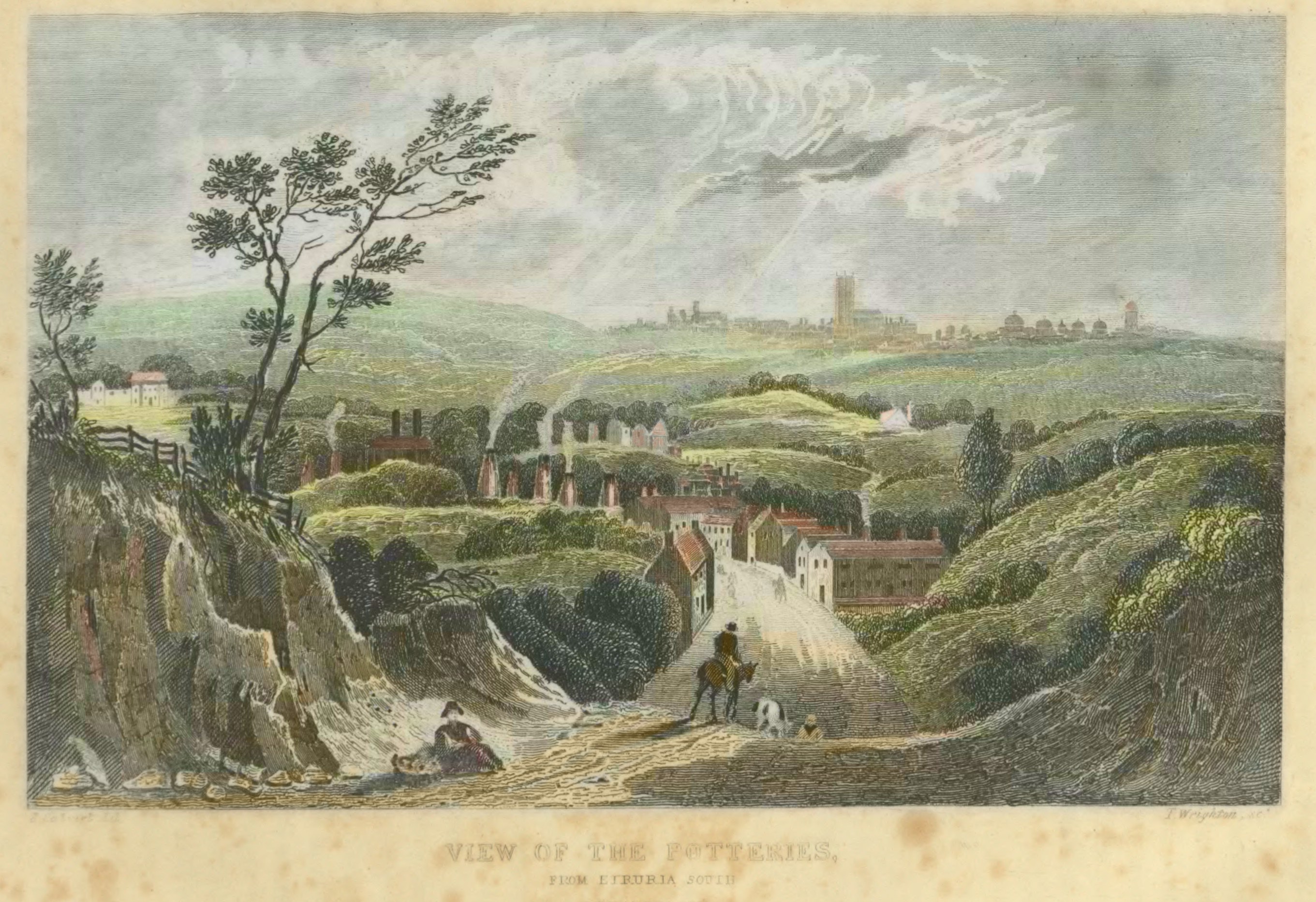
Talbot’s Sentinel article also makes one especially sweepingly claim that “Little of nature’s green was visible” in the Potteries of the early 1800s and onwards. Yet this appears to be amply disproved by the paintings and sketches of the Etruria part of the valley of around that time, as well as by first-hand accounts. For instance, here we see Etruria from the Basford Bank in 1830…

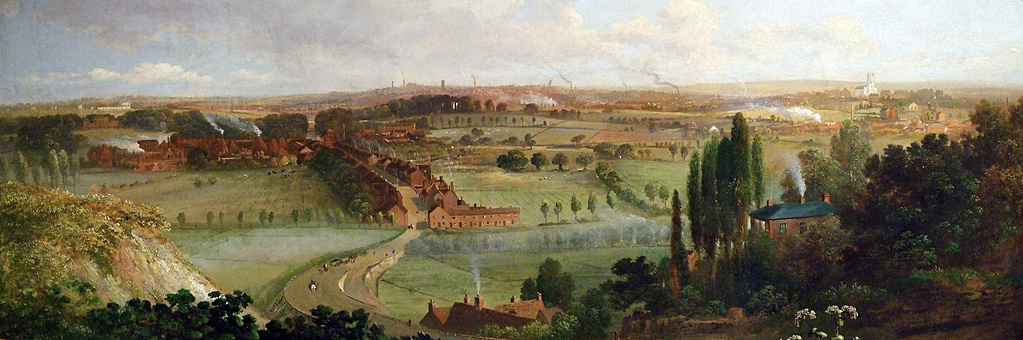
And here is another of Etruria from Basford Bank, by Henry Lark Pratt (1805-1873), perhaps two decades later. With Hanley in the distance, and Cliffe Vale to the right with upper Shelton beyond it…

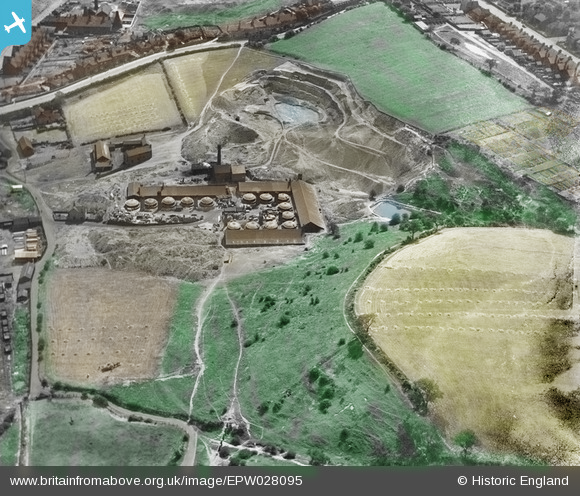
This claim is also disproved more widely in the valley by even a brief study of early maps, and then later by early aerial photography made of the entire district. For instance, even in the 1920s one can see large cornfields in harvest next to Etruria Station (the Basford Bank road runs across the top of the picture), with a tile works nestled in amongst them…

We have long been a district that has mixed the rural and the industrial, side by side. Many writers including Bennett recognised this. Occasionally smoky, yes, when the pot-banks were ‘in smoke’. Often despoiled by industrial manufacturing sites and their spoil tips. But not the utterly desolated wasteland of urban myth.

‘Tolkien in Staffordshire’ touring exhibition, list of 2018 dates

Additional 2018 dates for the ‘Tolkien in Staffordshire’ touring exhibition:

Chasewater Innovation Centre (near Cannock): 6th March to 21st April 2018.

Eccleshall Library (to the west of Newcastle-under-Lyme): 24th April to 22nd May 2018.

Norton Canes Library (near Cannock): 5th June 2018 to 14th July 2018.

Hednesford Library (near Cannock): 17th July – 28th August 2018.

Shenstone Library (just south of Lichfield): 5th September – 13th October 2018.

Penkridge Library (between Stafford and Wolverhampton): 16th October – 1st December 2018. (The most accessible date via train).

On Jenny Green-teeth

North Staffordshire’s local moor-monster Jenny Green-teeth, said to be resident under Doxey Pool in the Staffordshire Moorlands in modern times, is not recorded in the historical books and articles on Staffordshire folklore. Yet one does find the name attested in Victorian books and earlier sources, and as close as South Cheshire — where her kind presumably haunted the abundant meres and pool-strung “mosses”. There was also a late mermaid tale from Black Mere near Leek.
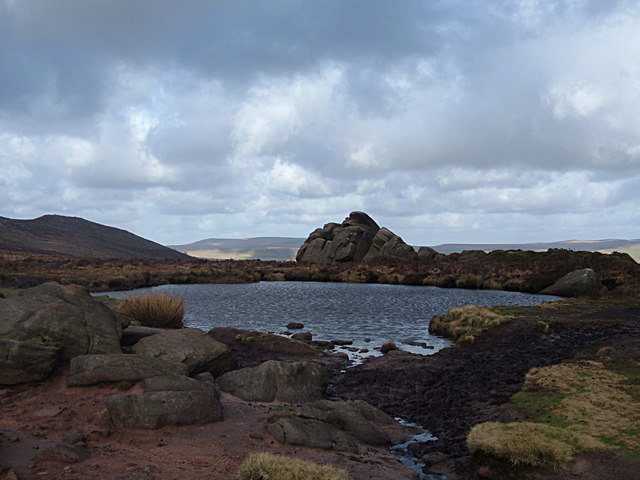
Doxey Pool, high in the Moorlands.

A detailed article by Charles P. G. Scott, “The Devil and His Imps”, is found in Transactions and Proceedings of the American Philological Association, 1895, and this usefully and precisely surveys the evidence for a wealth of such old names in the British Isles. Scott remarks…

Jenny Green-teeth, in the vernacular Jinny Green-teeth, is the pretty name of a female goblin who inhabits wells or ponds. […] She is one of the very few female goblins [that are, in character] as frightful as male goblins” [since she was believed to bite and then drag children under the water].

In name she appears to be closely related to faintly glowing will-o-the-wisps, meaning the tricksy-lights especially likely to be seen above or encountered near marshy moorland pools or on gas-seeping rocky crags…

“Jenny with the lantern, Kitty with the wisp, and Joan in the wad [an East Cornwall ‘pisky’ name, a wandering light], are indeed mischievous damsels, but they are fair to look upon, and have no voracity.”

The furtherest back in time one can easily find the name in print is in the book A Glossary of the Words and Phrases of Furness (North Lancashire) (1869)…

Jinny-green-Teeth — green converva on pools.

Conversa here meaning…

“green scum on ponds, but supposed to imply the presence of a water-sprite or “boggart”, a terror to children as they pass the pond on which the appearance is seen.”

The Scott article (1895, see link above) also references the name of ‘Nelly Long-arms’, a very similar water-dweller to Jinny but instead to be found in deep wells. Nelly might draw children over the brink of the well. Presumably, the surface of a deep well being invisible down in the darkness, no child would be able to see the green weed which they deemed to indicate the presence of Jinny. Hence the need for another name, “Long-arms”.

There is no other indication, other than teeth and arms, of the actual physical appearance of Jenny Green-teeth. The absence of visual description being infinitely more scary to the child-mind than otherwise, since it calls the imagination into play. She is always solo and wholly supernatural. Meaning that there was no indication in the folklore that she was thought of as being akin to a medieval human witch, or was thought to have once been a witch but had since become a ghost. ‘Mermaids in pools’ do occasionally have tales that they were once accused as witches and drowned (e.g. Black Mere near Leek), but these are very late in time and were obviously confabulated on top of existing lore.

The lack of visual description hasn’t stopped modern confabulators from dreaming up and depicting all sorts of visual appearances for Jinny, from a fearsome mermaid to an eerie water-fairy to a green-skinned river-hag — though it is clear that she was never originally associated with rivers, only with isolated freshwater pools, wells, flooded quarry pools and Potteries marl-holes.

River spirits of the north obviously once had different names, recorded as ‘Peg Powler’ on the Tees, and ‘Peg-o’-Nell’ on the Ribble. These Pegs are the only two examples known, and as such my guess is that it’s possible they were Viking imports. Also suspect is the 1912 claim of a ‘river mermaid’ at Marden in Herefordshire (south West Midlands) which can be discounted as an obvious late invention, albeit confabulated on top of genuine lore about a lost church bell: “There is a tradition at Marden that there lies in the river Lugg [Herefordshire, former Mercia], near the church, a large silver bell, which will never be taken out until a team of white [female] oxen are thereto attached to draw it from the river.” Horses would not move it. This was reported in Archaeologia Cambrensis shortly after an “ancient [four-sided] bronze bell was actually discovered in a pond at Marden” in 1848, corroded and well below the sediment of centuries. Mrs E. M. Leather’s Folk-Lore of Herefordshire (1912) added to this a locally-heard tale that had grown up since 1848 of the “Mermaid of Marden”, deemed to have charge of the bell in the river, and which makes the two oxen into twelve. This obviously evolved locally from the 1848 bell discovery, and probably also via a reading of Hans Christian Andersen’s Danish story of “The Bell-Deep” on ‘the River-man and his bell’. But the initial story of the bell in the river seems interesting in relation to a wider related folkloric tradition of ‘stuck things’, the obvious antiquity of the river name of Lugg, and the more practical and better-attested historical practice of Irish monks who “concealed their bells by letting them down into the river” during times of war and attack.

Locally, the late books Folk-speech of South Cheshire (1887) and A Glossary of Words Used in the County of Chester (1886) also record the name Jinny Green-Teeth, both using much the same phrasing…

“Children are often deterred from approaching such places [as wells or ponds] by the threat that “Jinny Green-Teeth will have them.”

The name and tradition was also well attested in child-life around Warrington and Manchester, discussed in February 1870 in Notes and Queries. In this article there is a memory of the tradition extending up to some pits near Fairfield, Buxton, “Some half century ago”. Meaning, in the 1820s. A later note in a March issue of Notes and Queries adds that the common duckweed on ponds was then still known in Birmingham as ‘Jenny Greenteeth’, though the informant doesn’t state if this was still being personified in child-lore or if (in the urban environment) it had dwindled to just being a folksy plant name.

There is an interesting early partial example of the name, found on page 56 of Thomas Sternberg’s The Dialect And Folk-Lore Of Northamptonshire (1851), which usefully delves for a source for the name…

   JINNY-BUNTAIL, s. The ignis fatuus, or Will with the wisp. Believed in Northamptonshire to proceed from a dwarfish spirit, who takes delight in misleading “night-faring clowns,” not unfrequently winding up a long series of torments by dragging victims into a river or pond. The word is evidently a corruption of Jinn with the burnt tail, Jild burnt tail.
   “Will with the wisp, or Gyl burnt taylte.” – Gayton’s Notes on Don Quixote. London 1654. p. 97.
   “An ignis fatuus, or exalation, and gillon a burnt tayle, or Will with the wispe.” Ibid, p. 268.

Here we glimpse how the Will o’ the wisp and Jenny Green-teeth may once have been deemed one and the same. Initially alluring and teasing, only to turn monstrous and fatal.

The book Lancashire folk-lore (1867) records one curious instance of a “Grindylow”, a name suspiciously similar to Beowulf‘s Grendel’s mother and unknown elsewhere…

“Aqueous nymphs or nixies, yclept “Grindylow,” and “Jenny Green Teeth,” lurked at the bottom of pits, and with their long, sinewy arms dragged in and drowned children who ventured too near.”

I suspect here that a wily local antiquarian was trying to claim for Lancashire the similar and rather more famous moorland female mere-monster of Grendel’s mother, found in Beowulf (1826 in English translation). By Nixies he refers to the Germanic ‘nixies’ and Icelandic ‘nykr’ (possibly Beowulf’s nicors and akin to the Germanic Moorjungfern), thus perhaps further indicating the antiquarian’s confabulating intentions. On the other hand, we do know that the six surviving lines of the lost Wade epic mention ‘nixies’ and water, which may suggest an English aspect.

But evidently some Jild– or Gyl– or Gill– word was once in fairly widespread use to mean a Will o’ the wisp, and this was closely associated with some slightly harder Jinn– or Ginn– name for a dangerous spirit who lurked below the surface of wells or ponds. As such, there may indeed be some link with the name of the Anglo-Saxon Grendel mother-monster. The Will o’ the wisp aspect (see Jinny-Buntail, above) indicates the ability to emerge from the pool and roam around, as Grendel’s mother does in Beowulf. Note that in Beowulf, at the haunted mere in the story a… “dreadful wonder does appear each night, a fire on the flood”, which perhaps indicated a glowing will o’ the wisp. “Flood” implies ‘wide and still’, a mirror-like surface.

Possibly there is some folk memory of this overall tradition in the famous and enduring nursery-rhyme “Jack and Jill went up the hill / to fetch a pail of water / Jack fell down / And broke his crown / And Jill came tumbling after”. This associates the Gill- name with a well, water, and with falling and tumbling (“fell down” the well, rather than the hill?), and resulting child-injury. Shakespeare may have played upon his audience’s everyday knowledge of such a rhyme in his famous A Midsummer Night’s Dream, where he gives the line: “Jack shall have Jill; Nought shall go ill”.

The “crown” here is of course a part of the head, and if Jack and Jill “fell down” the well rather than than hill, then there would be a certain level of ritual resonance at play in the rhyme. For instance, David Rudling in Ritual Landscapes of Roman South East Britain (2008) remarks on a very ancient British cultic tradition that once linked wells with heads…

“… a pre-Roman cult of the head, an ancient custom dating back to the late Bronze Age, which continued long into the Roman period (ibid, 96-97). As well as skulls deposited in streams, a human skull was found deposited after a well in Queen Street had silted up (GM 1 44). There are numerous accounts of other finds of skulls, both human and animal, in Romano-British wells and their magical power is recorded in many Celtic legends (Merrifield 1969, 176).”

The archaeologists are more cautious on that…

“Certain Celtic ritual activity, such as deposition of ‘head objects’ re-emerged strongly in the fourth century in Roman Britain. Although Ross refers to this as a ‘cult’ of the head, it is probably best described as part of a general phenomenon, and not a ‘cult’ (Riddel 1990).” (Theoretical Roman Archaeology: Conference Proceedings, 1993, page 123).

But even a cautious appraisal of this ancient phenomenon suggests a possible linkage with the famous nursery rhyme. Could a Gill have been a name for the annual sacrificial child-victim, rather than the deity of the water? But perhaps it just relates to being ‘in service to the water’ — consider for instance that in the British Isles (north of about the Wye), “a gilly” is an estate’s river servant, an experienced man of quality who knows rivers, fishing and pools. One who accompanies the estate’s master and guests on fishing trips.

Evidently, there is some nexus of ancient belief at play among these surviving words and fragments, though while we can just about glimpse its outlines we may never know for sure quite what it was.

What can be noted in closing is that as ‘a frightening figure that threatens drowning’ she has a close similarity in modus operandi with aspects of the widespread Northern folk idea of the strong and male water-horse connected with rivers. This supernatural shape-changing river-spirit will emerge from a river to stand stock still and thus tempt people to mount and try to ride him. Immediately they do so he will race away back to the river with wind-like speed and plunge in, drowning the rider. There is an obvious and close parallel here between the still pool and still river-horse, and the temptation to the unwary and the drowning are both the same. Dag Stromback has a fine and detailed overview discussion of… “the old and fundamental idea” of the water-horse “within the Nordic area … and their similarity with Scottish, Irish and Breton traditions” in his essay “Some Notes on the Nix in the Older Nordic Tradition”, in Mandel and Rosenberg, Medieval literature and folklore studies: essays in honor of Francis Lee Utley, Rutgers University Press, 1970.


Interestingly, in relation to my recent delvings here on the overlap between insects and pisky (once deemed the souls of dead children), Jinny is found in “A Glossary of the Words and Phrases of Furness (North Lancashire)” (1869), which offers…

Jinny-spinner — an insect (Tipula).

Tipula is the class of insects that include Daddy Long-legs and Crane-flies, but A Glossary of North Country Words (1825) suggests the country folk understood a broader class of any “very long slenderlegged” fly. Which implies that the presence of pond-skaters on the surface of a still freshwater pool could also be taken by northern children to be a similar ‘danger indicator’ of the presence of Jinny under the water, akin to the ‘green teeth’ pond-weed. Interestingly the name in Scotland was Jenny Nettles, the Scots word for long slenderlegged insects. Nettles arising from Scotland’s notorious profusion of biting long-legged midges, which presumably caused a nettle-like rash.

Also in the north, The Dialect of Craven in the West-Riding of the Country of York (1828) records…

JINNY SPINNER, A large fly, called also ‘Harry long legs’. “Her wagon spokes made of long spinners legs.” Shakespeare, Romeo & Juliet.

This latter quote is from Shakespeare’s description of Queen Mab…

She is the fairies’ midwife, and she comes
In shape no bigger than an agate-stone
On the fore-finger of an alderman
Drawn with a team of little atomies
Athwart men’s noses as they lie asleep
Her wagon-spokes made of long spinners’ legs
The cover of the wings of grasshoppers
The traces of the smallest spider’s web …

Evidently then “spinners” — and presumably also the common name Jinny-spinners — was known to a South Warwickshire playwright and was deemed to be easily understood by a London audience of play-goers in the 1590s.


Incidentally I also found in A Glossary of North Country Words, in Use (1829)…

“‘By Jinkers’, a sort of demi-oath. From jingo.”

Again, this points to a Jinn– or Ginn– name which was perhaps once some sort of spirit which could be invoked by a veiled oath. One wonders if jingo was where Tolkien got the original name for Frodo, who was for a short while to have been called ‘Bingo’ in an early draft. Possibly not, as family members reportedly later remembered that Tolkien probably… “derived his name from the Bingos, a family of toy koala bears owned by the Tolkien children”. But the definitive Tolkien Companion seems unsure on this, and remarks “perhaps” on this claim.

The word Jinkers / Jingo is uncertain but has been variously suggested to be: the Roman god Jove; early stage conjurers’ language akin to “Hey presto!”; a veiled oath which was Puritan slang for the obscure Saint Gengulphus or Gingolph (so obscure he presumably wouldn’t be offended by the oath); or an actual euphemism for Jesus or God (in Basque, Jinko is God).

“Bingo” was also recorded prior to the popularity of the game of bingo (newly popular under that new name in the 1920s) as being “A customs officers’ term, the triumphal cry being employed on a successful search” for contraband. Possibly this use was a contraction of “By jingo!” to “b’ingo”, the old word jingo having by then been made unavailable — due to its having accidentally taken on the new connotation of ‘jingoistic’ or ‘displaying a proudly militaristic nationalism’.
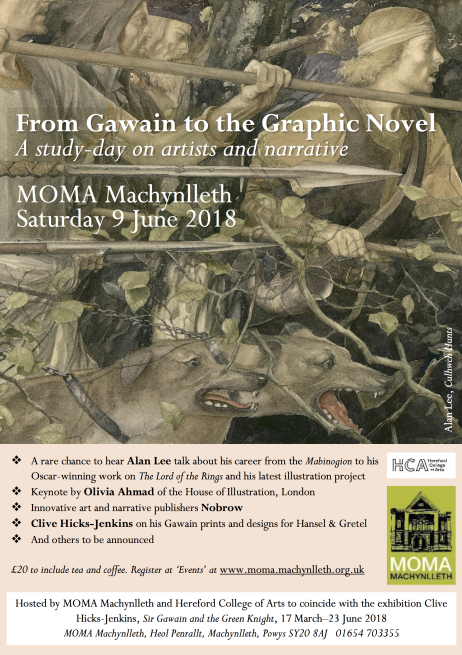
From Gawain to the Graphic Novel – study day in June 2018

From Gawain to the Graphic Novel: A study-day on artists and narrative on the mid Wales coast in June 2018, with accompanying art exhibition.

News of the day reminded me that we still really need a good graphic novel of Gawain, one which takes it seriously and accurately depicts the local topographies involved. So far the two comic takes on it appear to have been toon-y and unsatisfactory:

1. There was what looks like a very superficial ‘superhero’-like appearance of a stock medieval Green Knight character in Eco Comics’s The Green Man #1 (2013). But the title never seems to have gone beyond issue #1.

2. There was also a well-made cartoony German-language adaptation Sir Gawain und der Grüne Ritter (2016). But reviews talk of its approach being “tongue-in-cheek” and “jokey”. That may well be the most suitable approach for interesting children in the tale, but as far as I can see it hasn’t yet been translated into English. And, being in German, the jokes may not translate — because the German sense-of-humour is notoriously difficult to get working in English.

Naked on the Barrow-downs

The third volume of Thomas Crofton Croker’s Fairy legends and traditions of the South of Ireland (1825) runs out of Irish material and has sections on the Welsh and the then-scarce English tradition. I was struck by a section of his preface, specifically its similarity to elements of the barrow-wight sequence which occurs in “Fog on the Barrow-downs” in The Lord of the Rings. Here is Croker…

I have taken some pains to seek after stories of the Elves in England; but I find that the belief has nearly disappeared. [Yet] In Devonshire, the Pixies or Pucksies are still remembered and described as “little people and merry dancers” but I can collect no other anecdotes respecting their pranks than the two following.

About seventy years [meaning, circa 1755] since a clergyman named Tanner held two benefices between Crediton and Southmolton, adjoining each other. The farmers of both parishes attended the tithe-audit annually at his residence; and in going to the glebe-house the distant parishioners had to pass an extensive moor, intersected by numerous tracks or sheep-walks.

Although they reached their destination in safety in the morning, yet on their return they invariably found themselves “Pixy-laid,” and were compelled to pass a night of bewildered wandering upon the moor. Such recreation at Christmas was not very agreeable, and it was determined that a deputation from the parishioners should proceed to Exeter, and consult an old woman celebrated for her skill in charming away the tooth-ache. Her instructions against Pixy spells proved effectual. She directed the way-laid travellers, on reaching the verge of the moor, to strip themselves, and sit down on their clothes for five-and-thirty minutes, or more, according to the state of the weather; and so soon as they discovered the cloud which the Pixies had thrown around them to be dissipated, they might then safely proceed. By following this valuable prescription Mr. Tanner’s parishioners invariably reached their homes without further interruption from Pixy spells.”

Whatever one may think about such rustic superstition, some of the resemblances to Tolkien’s “Fog on the Barrow-downs” chapter in The Lord of the Rings are notable, in terms of:

1. All-male group journeying away from an important meeting at a friendly house.
2. A malevolent ‘cloud’ then thrown around the moorland travellers, followed by bewildered night-wandering on the moor.
3. Casting off of all clothing as a definitive ‘breaking of the spell’…

‘You won’t find your clothes again,’ said Tom, bounding down from the mound, and laughing as he danced round them in the sunlight. […] Tom shook his head, saying: ‘You’ve found yourselves again, out of the deep water. Clothes are but little loss, if you escape from drowning. Be glad, my merry friends, and let the warm sunlight heal now heart and limb! Cast off these cold rags! Run naked on the grass, while Tom goes a-hunting!'” (The Lord of the Rings)

It may also be important to someone that I note here that Anna Eliza Bray, working as a respected and careful folklorist in Devon and Cornwall under the direction of Robert Southey a decade later, found of “the little people” of the twilight that they were clearly distinguished from fairies…

“The pixies are certainly a distinct race from the fairies; since, to this hour, the elders amongst the more knowing peasantry of Devon will invariably tell you (if you ask them what pixies really may be) that these native spirits are the souls of infants, who were so unhappy as to die before they had received the Christian rite of baptism.” (Anna Eliza Bray, The Tamar and the Tavy, 1836, Vol. 1, page 172.)

Thus, perhaps, there was some ‘sympathetic’ element to the old woman’s prescription for the problem. In that, perhaps her thinking was that if the travellers were to strip ‘naked as they day they were born’, and to sit down so as to lower their height, then the “the souls of infants” might mistake them for fellow babes and thus let them pass?

CountryPotter

An interesting call, in the latest edition of Country Life magazine. The editorial says we need a “ruralist Harry Potter“, to do what Potter did in reviving interest in learning Latin, boarding schools, school uniforms and more. This new ‘CountryPotter’ would at least aim to revive interest the wide range of wild herbage, encouraging children to learn tree types and what “a meadow clary or a hairy mallow” looks like. More ambitiously, also the old dialect words, the ins and outs of rural crafts inc. den-making, the more reliable bits of our weather-lore, the seasons and their foods, and the ways of wildlife and horses. A healthy disdain for health and safety, and irrational far-left eco-politics, would probably also add to the appeal to intelligent children in middle-childhood. It would have to be about magic in some way, tightly plotted but also epic, and probably a bit ‘alternative history’.

Views of Rome

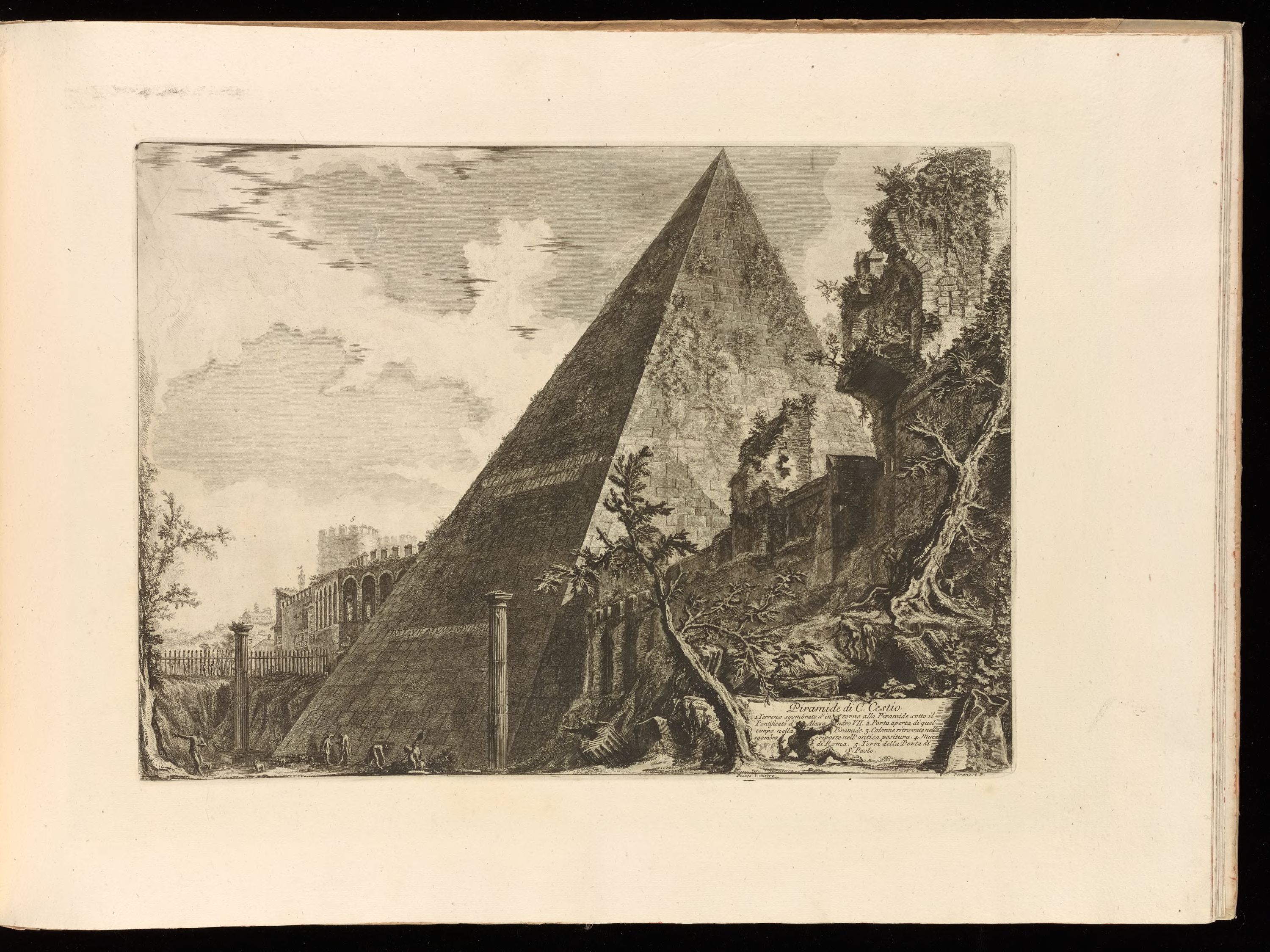
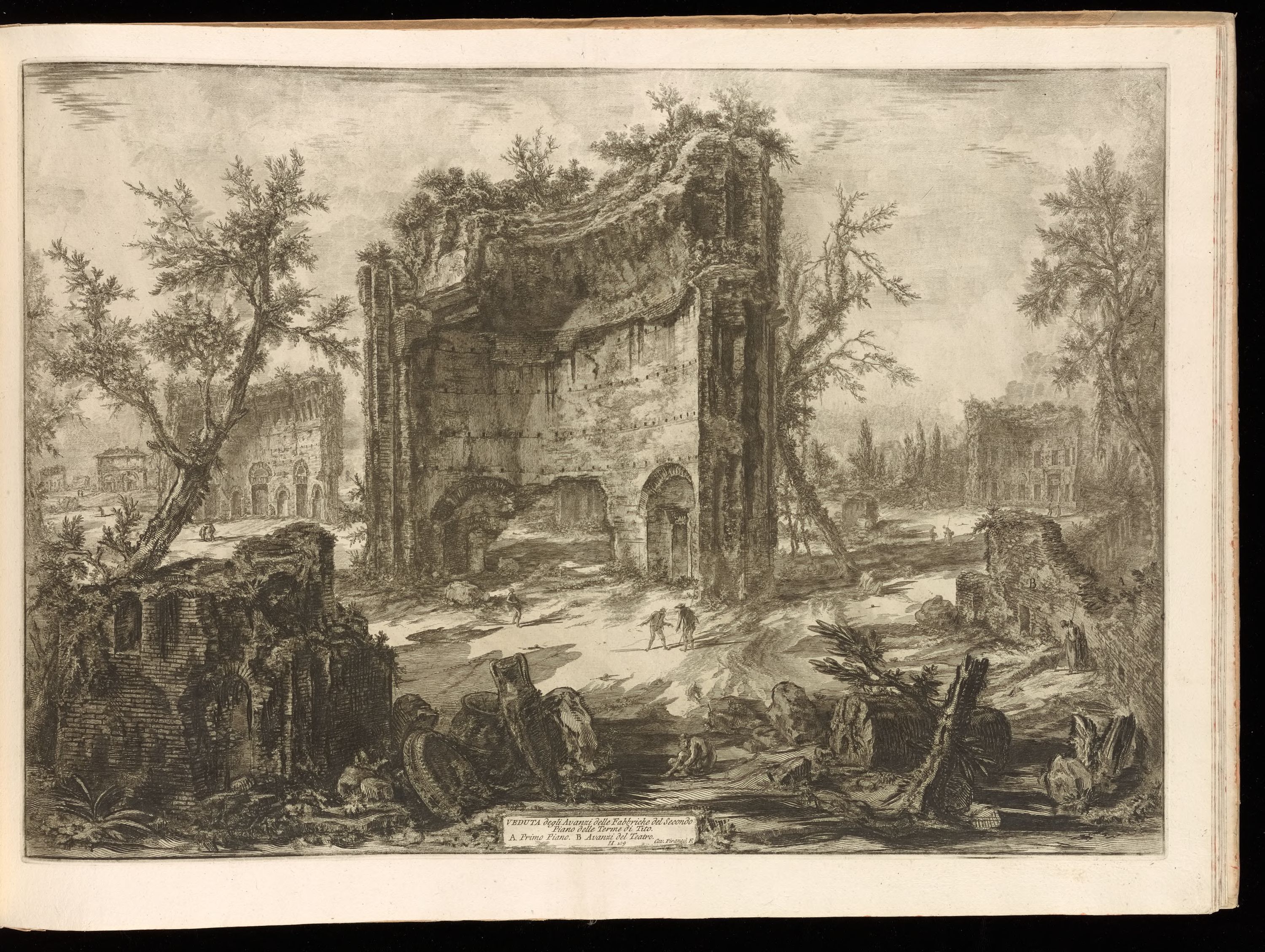
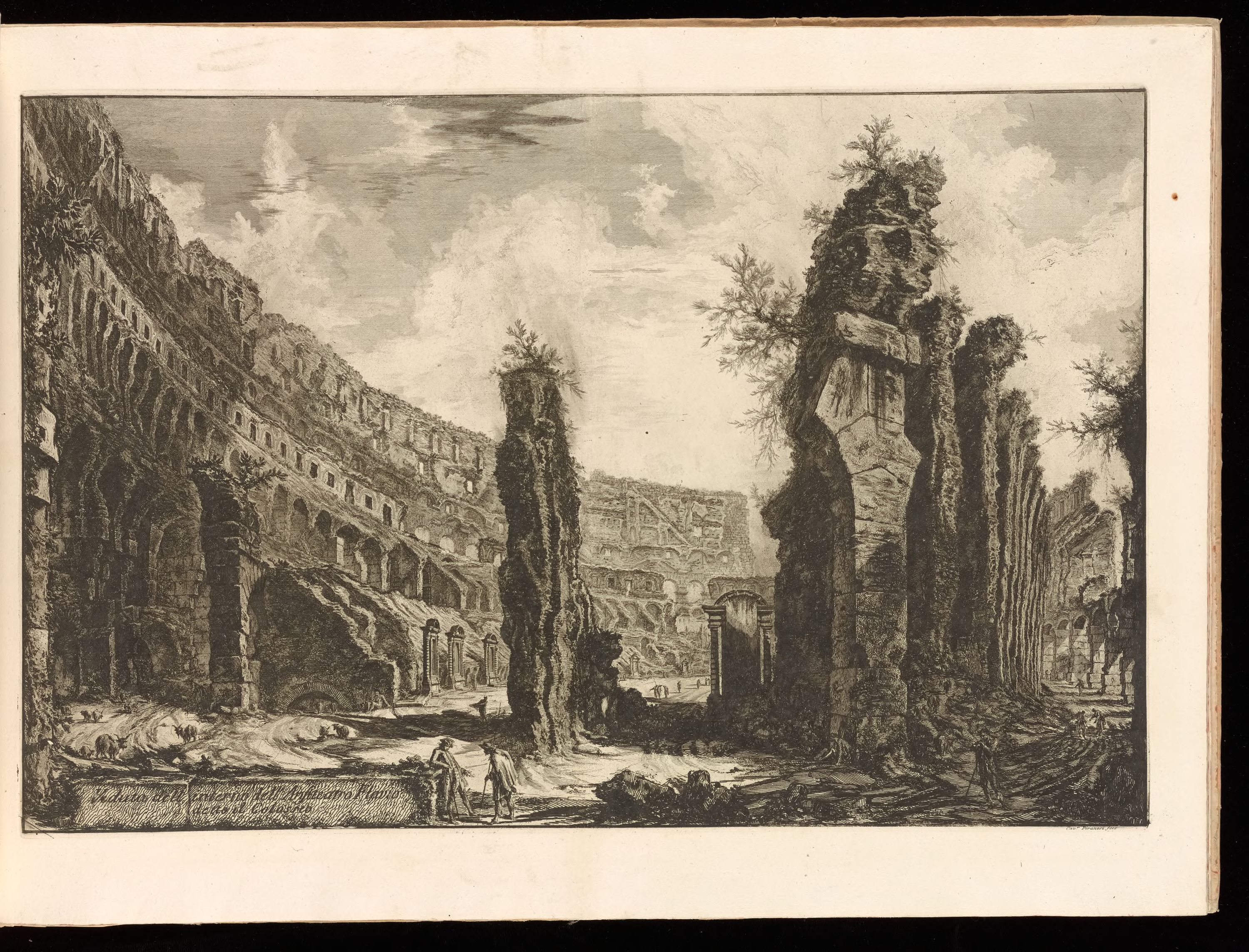
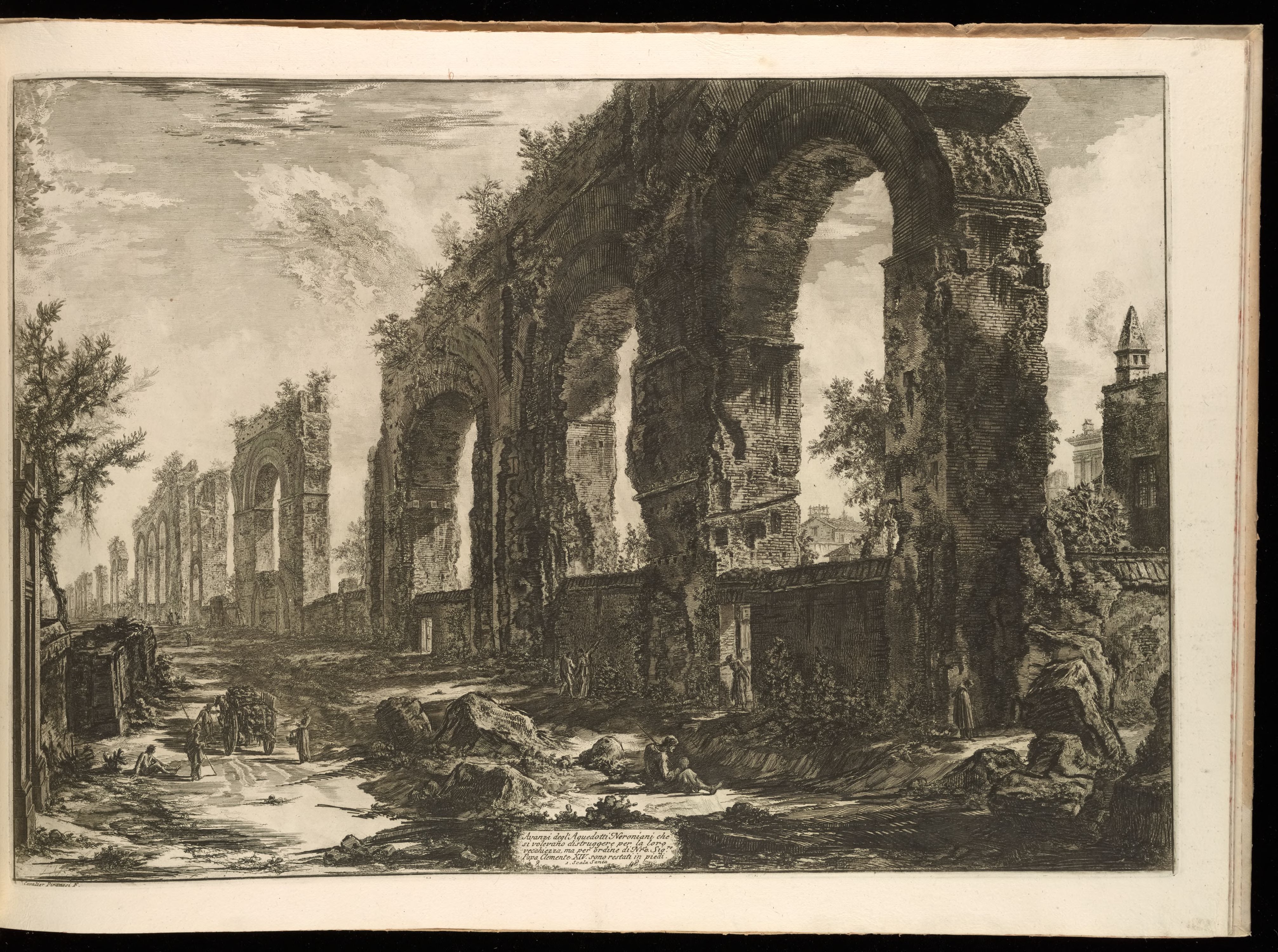
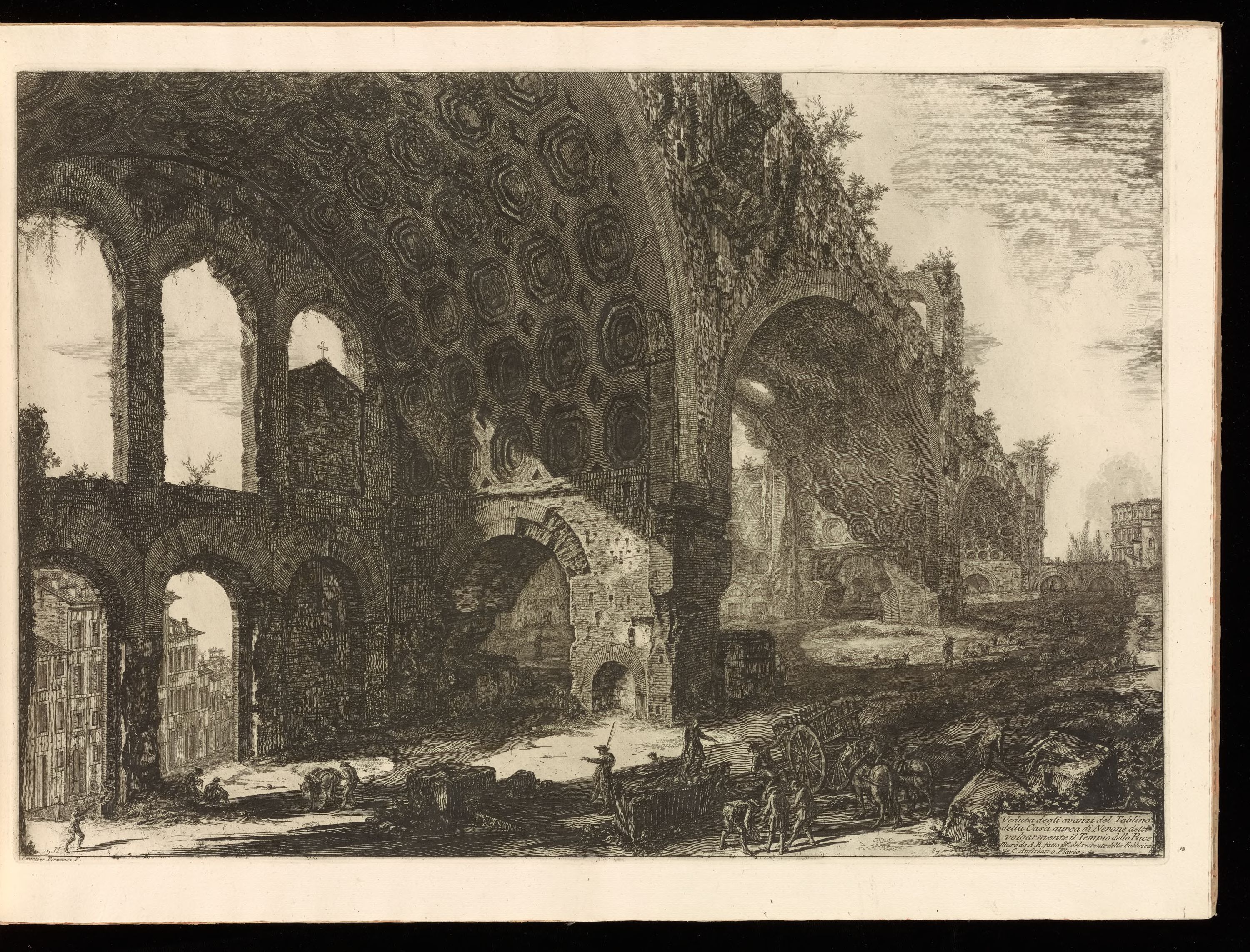
Selected pictures from Piranesi’s Views of Rome (Vedute di Roma), of the ruins of Rome as they were when the place was still a “living in the ruins” city. I’d had it my Amazon wishlist for ages in print form, but now Archive.org has it (search: Piranesi + Roma, not Rome).

Trolls discovered in Manchester

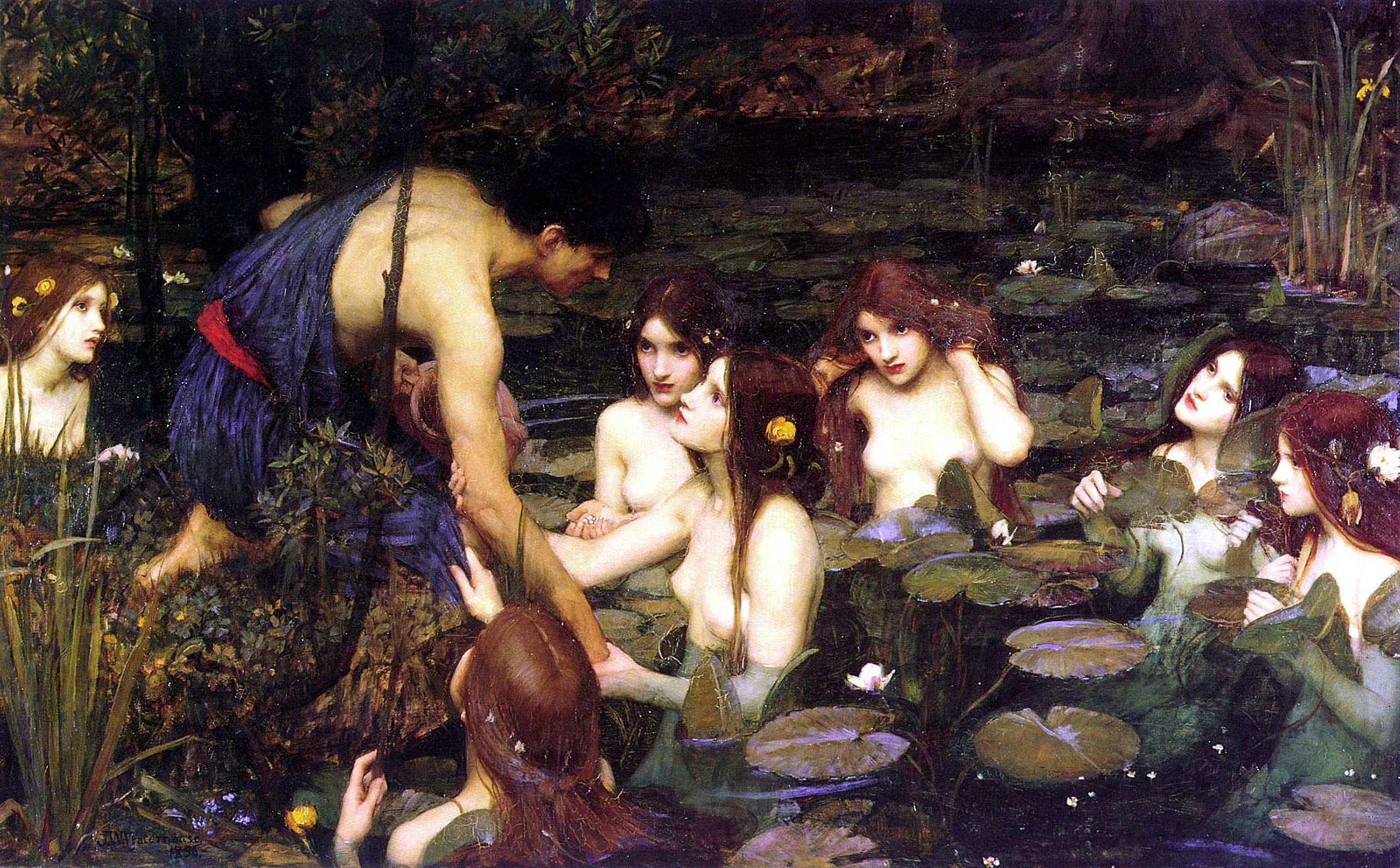
The Manchester Art Gallery‘s Director has removed a well-known Pre-Raphaelite painting “Hylas and the Nymphs” (1896) by J. W. Waterhouse, calling it an “embarrassment”.

This is obviously about the political trolls getting ‘a foot in the door’ and trying to widen the spectrum of ‘acceptable’ political censorship in art galleries. Accept this, and the next removals will be even more serious.

If I know the political far-left then their end-game is pervasive censorship of nudity (to make a ‘safe space’ for various groups), alongside a ‘Year Zero’-style erasure of the mythic past from museums and galleries. The leftist Independent newspaper gives the game away on this, with a headline which asks: “Why are we in such a hurry to erase the past?”. Which implies that the left’s political project is to “erase the past”. But that the left doesn’t want to hurriedly tip its hand too soon, and thus make the public aware of what its long-term aims are.

Thankfully it’s all futile, a powerless power-fantasy of the leftist professional elites who are rapidly losing their status as cultural gatekeepers. So possibly the censorship in Manchester is just about the Director cynically angling for a big pay-off, when she’s sacked for bringing both the gallery and the curatorial profession into disrepute.

“Blind Orion Searching for the Rising Sun”

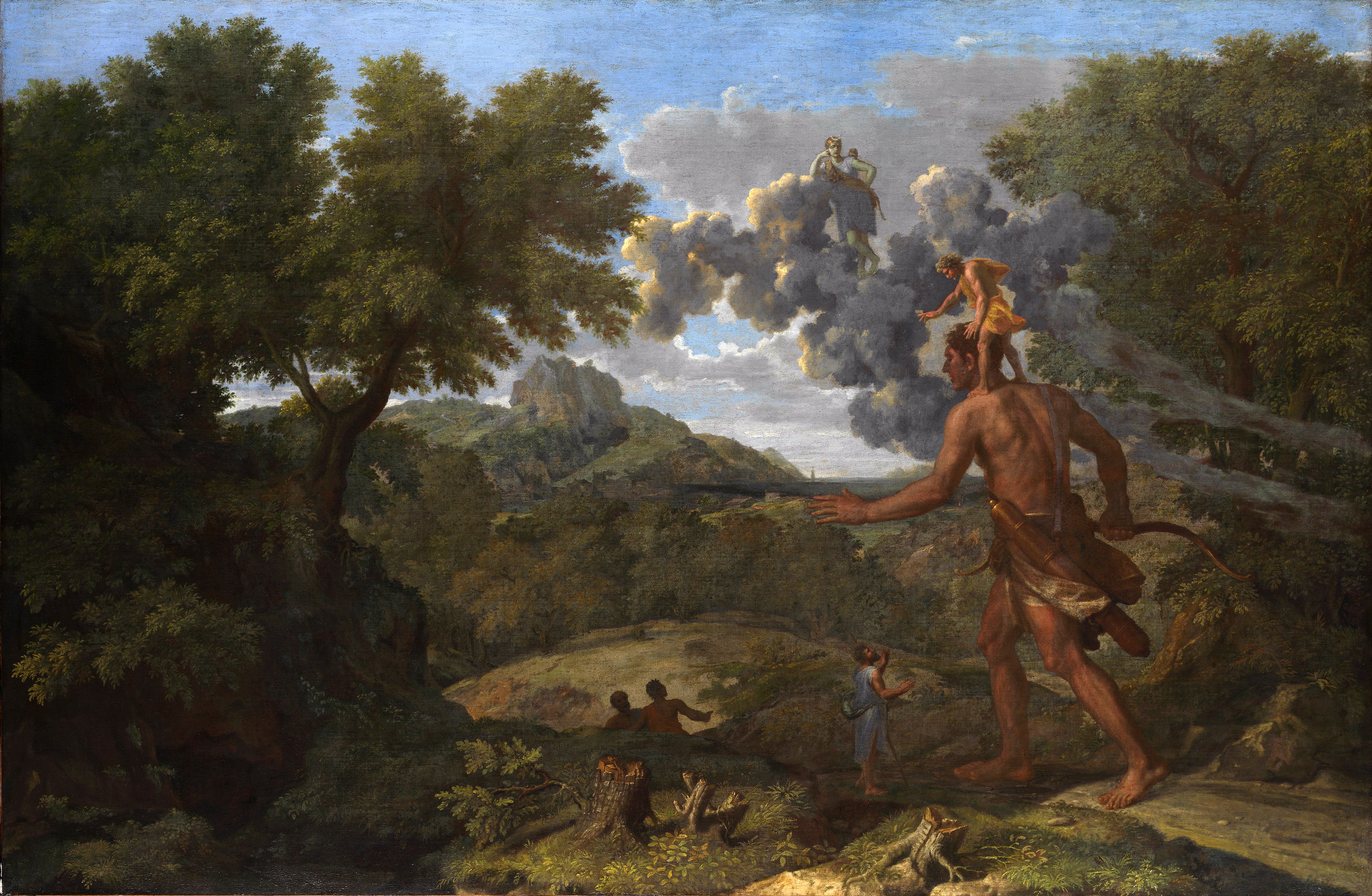
Poussin’s painting “Blind Orion Searching for the Rising Sun” (1658):

The painting draws on the deeply confused1. classical Greek and Roman stories of Orion, with a tilt toward the later Roman versions which emphasise the huntress Diana. Broadly these stories can be boiled down thus:

Before he was a constellation in the night sky, Orion was deemed by stories to be a giant youth and an impulsive hunter. He was an earthly being, but also a primal son of the dynamic Sea and the fertile Earth.

He was blinded due to his youthful lust, but he believed that his sight would be restored if ever he reached the seat of the rising Sun. In this he embodied the typical adolescent conflict between base impulses and lofty aspiration, something typical of humanity as a whole during prehistory.

Seen on Orion’s shoulders is the blacksmith’s assistant Cedalion. In some of the stories the blind Orion was wading (or stepping upon and over) the ocean and he was drawn toward the sound of the ‘source-of-all-fire’ smithy, where he picked up the fire-god’s assistant Cedalion. As shown by his orange robes in the painting, Cedalion is a primal ‘fire-associated’ being. He stands on the shoulders of the giant, and with his far-sight he tries to guide Orion to find the ever-elusive seat of the rising sun. In his guiding role Cedalion symbolises ‘the flame of knowledge’, guiding impulsive and blind humanity through its historical adolescence.2.

In this painting the rising place of the sun is hidden by storm clouds which emanate from the (implied-mystical) woodland of the goddess Diana. The edge of her deep woodland realm is seen in the bottom-right of the picture. Poussin’s picture shows the moment the goddess Diana spies and falls in love with the blind Orion.3. The figure can be identified as Diana because she wears the bow-like crescent moon on her brow and she is equipped with the bow and quiver of a woodland huntress. The green tint on her skin might be meant to indicate that her realm is that of the woodland seen in the right-hand corner, or it could be that the paint has colour-shifted.

The educated viewer of the painting would remember the next part of the general story. Infatuated, Diana will take Orion into the sky to hunt in her perpetual pre-sunrise dawn woodland. From which place he will never reach or see the earthly sunrise. Presumably his hunting skill is so superlative that he can hunt even while blinded, and possibly Diana values him partly because he loves her for herself and not for her visual beauty (which he cannot see). He of course stays too long in the pre-dawn sky. His hubris in chasing the title of ‘the greatest hunter’ leads him to try to hunt everything. Including, fatefully, even an attempt to hunt the sacred doves of the Pleiades. He has clearly outstayed his welcome. This dove-hunting, and Diana’s apparent elevation of an earth-dweller to the heavenly realm, angers the gods. The gods cause Orion to be killed, with either Diana’s own arrow or a scorpion-sting.

But Orion had proven himself to be ‘the greatest hunter’, so the gods then place Orion in the night sky as the famous constellation of stars, where he is forever a hunter facing the constellation of the Bull with the Pelaides flying above its back, while Orion is also being circled by the She-bear (The Great Bear). But Orion is fixed in place among the nightly wheel of the constellations, and by sunrise he has vanished from the sky. Thus he can never again enter the pre-dawn sky to be with Diana/Aurora.


1. The first chapter of Joseph Eddy Fontenrose’s book Orion: The Myth of the Hunter and the Huntress (University of California Press, 1981) makes a valiant attempt at a concise summary and comparison of the tangled mess of stories.

2. This is an inversion of today’s understanding of the common phrase ‘standing on the shoulders of giants’, which arises from a literary culture of transmission. Here the giant is impulsive/blind, and it is the inventive ‘bright spark’ who stands atop him who has the intelligence and far-sight.

One can also suggest that the enduring idea of “the pot of gold at the end of the rainbow” bears comparison with Orion’s quest for the golden sun. Like “the end of the rainbow”, he can never reach the point at which the sun rises.

3. In the painting Diana ‘stands in’ for the rising-dawn pre-sunrise goddess Aurora, who was the protagonist in older versions of the story — in which it was Aurora who took Orion into the pre-dawn sky, and only later does Orion somehow meet Diana while hunting there.

Mothlach

Mothlach was a word in old Irish, meaning “rough, bushy, tangled, scraggy”, with the implication of a type of scrubbily wooded place. With the variant Mothrach being the name for an equivalent woody tangled place if the place were persistently wet and damp, such as an overgrown wet hollow.

In Welsh it took the form of the very similar mwthlach, meaning a tangled and scrubby bit of overgrown ground. Later, and within living memory in the 1900s, it was applied in parts of Wales to a soft person who was a bit of a ‘walking heap’. Presumably with the implication that a few moths or flies might be flitting about them.

The words are mentioned by Sir John Rhys in his Celtic folklore, Welsh and Manx (1901, in two volumes, I and II), and I found the variant Mothrach in an earlier Irish dictionary. There was also the related meaning of murlach from the Isle of Islay, as ‘woman having an ugly head of hair’.

I can’t discover scholars noting a link to the Norse Myrkviðr (Anglicised as Mirkwood by Scott, Powell, William Morris and then picked up by Tolkien), but the meaning is broadly similar if on a much larger scale. Myrkviðr being a “dark boundary-forest” (Tolkien) which is “untracked” (Drout, J.R.R. Tolkien Encyclopedia, p. 430) and thus implicitly defensive in military terms. Drout refers to the deeper…

   proto-Indo European roots for *mer– “to flicker,” with derivatives indicating dim states of illumination, and *merg-, “boundary, mark, border”

Interesting. Moths flicker in dim illumination, and recent linguistic scholarship seems to confirm the ‘soul’ cultural connotations…

   “certain other small, often winged, creatures are marked as special by the fact that their death, unlike that of “normal” animals, can be described with forms based on the Proto-Indo-European root *mer– (as in Lat. morior), otherwise reserved for humans.” (Anatolisch und Indogermanisch, 2001, Indogermanische Gesellschaft Kolloquium, page 209)

Those “certain other small, often winged, creatures”… again that sounds to me like moths. The ecological habitat of a dark “trackless” wood, windless and “rough, bushy, tangled, scraggy”, would certainly be conducive to abundant moth-life. One wonders if there was an ancient perception that moths were “already-dead things” or linked with human death? I found immediate confirmation of this notion via a quick search…

   “folklore describes moths or butterflies — and occasionally, bees — which appear after a person’s death and which hold their escaping soul.” Source: Henderson, George. Survivals in Belief Among the Celts. Glasgow: James MacLeose and Sons, 1911 (in The Encyclopedia of Celtic Mythology and Folklore, 2014).

This reminded me of my recent and similar musing on a local instance in which a ‘lady well’ spirit was referred to with the curious phrase “or else an insect” by a local informant.

This brings me neatly back to Rhys’s authoritative Celtic Folklore, in which I found Mothlach. Elsewhere, on page 612 of volume 2, he notes…

   “Cornish tradition applies the term ‘pisky‘ both to the fairies and to moths, believed in Cornwall by many to be departed souls. So in Ireland: a certain reverend gentleman named Joseph Ferguson, writing in 1810 a statistical account of the parish of Ballymoyer, in the county of Armagh, states that one day a girl chasing a butterfly was chid [chided] by her companions, who said to her: ‘That may be the soul of your grandmother.’ This idea, to survive, has modified itself into a belief less objectionably pagan, that a butterfly hovering near a corpse is a sign of its everlasting happiness. … it is also stated that the country people in Yorkshire used to give the name of souls to certain night-flying white moths.”

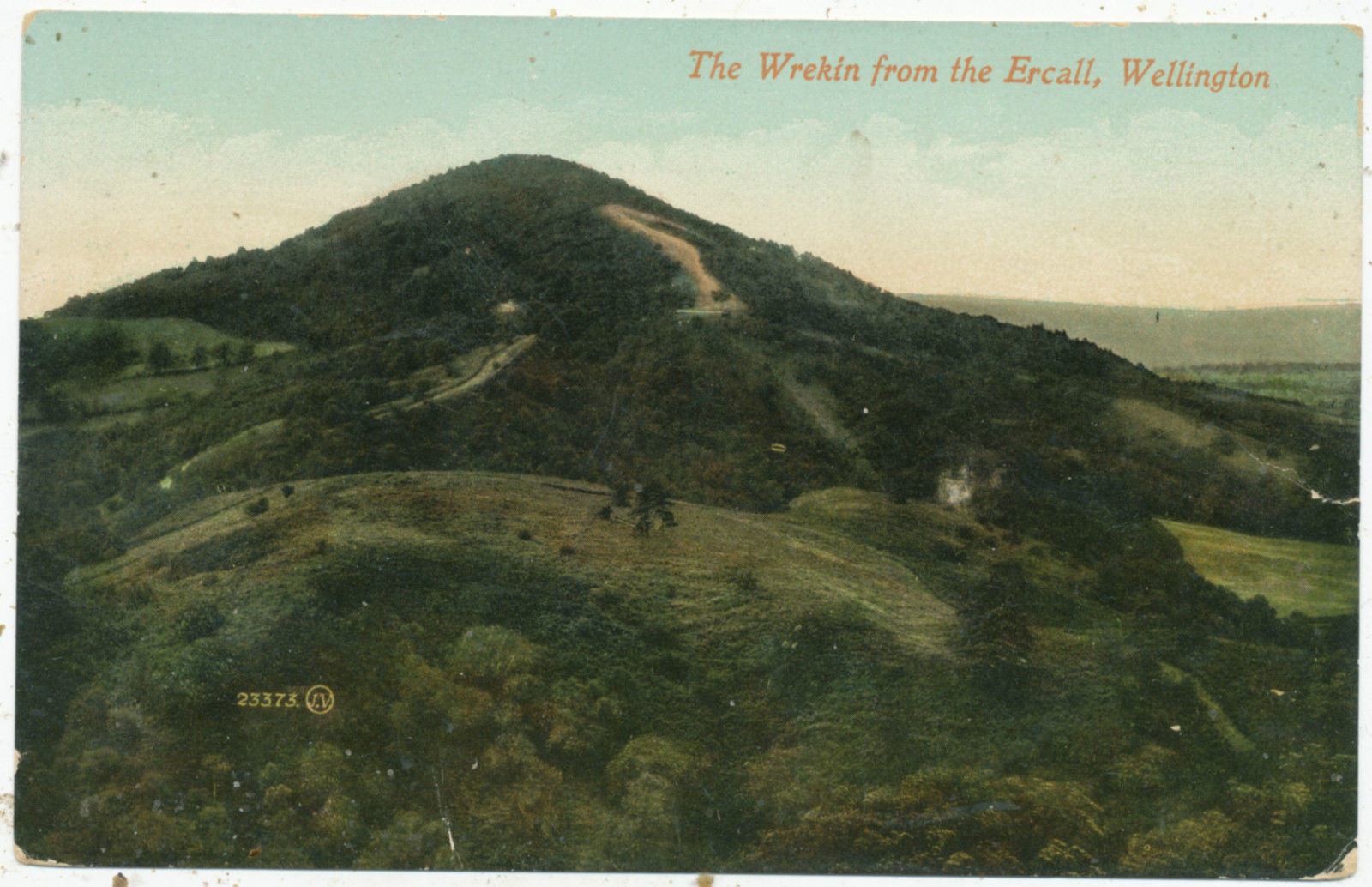
In which case the dense tangled woods that defensively surrounded hill-forts such as The Wrekin

   “according to him [Caesar] the British idea of a town or fortress was a place with a tangled wood round it, and fortified with a rampart and ditch” (Sir John Rhys, Celtic Britain, page 53)

… might have been understood by the ancient inhabitants to be flickering at night with the souls of their recent ancestors. And these large white moths would have visited for nectar the first wood anemones — wind-stars or windflowers in the Midlands. These beautiful flowers are the first and commonest woodland flowers of the year and are likewise white, since they have no need to attract day-time insects (there are none at that time of year). The wearing of these wood anemone flowers on the lapel or in the hair was recorded by late English folklorists as deeming bad luck, and I wonder of this was originally due to their cultural association with attracting the souls of the dead (in moth form)? In this they would be rather like Tolkien’s grave-associated Simbelmyne white flowers, which likewise grow at the edge of a large hill-fort.


Sadly the excellent word mothlach doesn’t appear to have survived into English, its meaning having been superseded in use by common Norse and French words. Although in meaning “tangled, scraggy” it has a likeness to the disused Old English mothfret, meaning something moth-eaten. To say today that an item of clothing had been found to be “moth-fretted” would still be understood in modern English.

Lastly, if someone wanted a title for an eclectic magazine or academic journal then Mothlach might serve.

All around the Wrekin

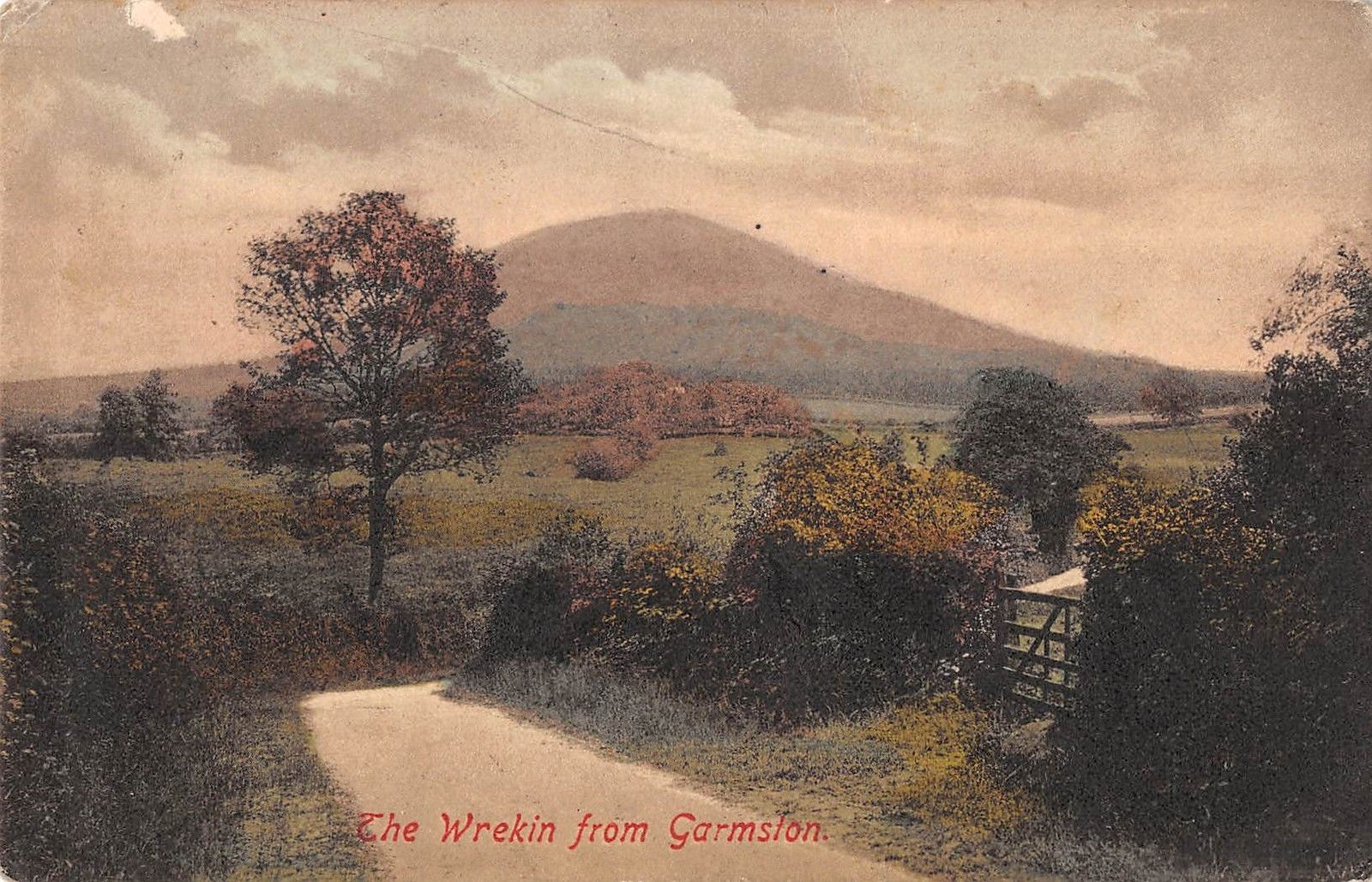
My Birmingham grandmother, who grew up in rural mid-Staffordshire, used a common Staffordshire and Shropshire phrase meaning ‘going all around-about on foot, in a long and tangled journey back to where you started’. This was “all around the Wrekin”. The same phrase was also used to refer to a person who verbally rambles, taking a long time to say something that could be said more directly.

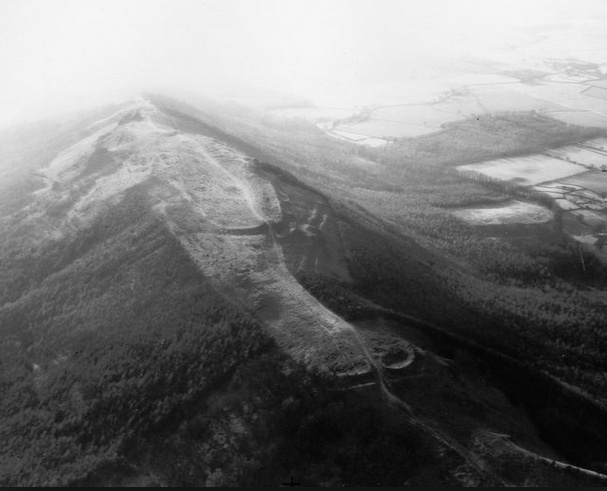
The Wrekin [ree-kin] in question is a famous and impressive hill-fort of the Cornovii in nearby Shropshire, on the Welsh Marches. Its size and location indicates it was their most significant tribal centre, although they were probably still somewhat seasonally nomadic in terms of having summer and winter palaces…

[Caesar] “had ample opportunities of observing the appearance of the country, and of learning much about the inhabitants … He considered the country very thickly inhabited, and the abundance of cattle to be deserving of notice. The buildings he saw resembled those of Gaul, and were very numerous, but according to him the British idea of a town or fortress was a place with a tangled wood [the mwthlach or mothlach] round it, and fortified with a rampart and ditch; inside this they would, as Strabo tells us, build their huts and collect their cattle, but not with a view of remaining there long.” (Sir John Rhys, Celtic Britain, page 53)

These are the words of J.R.R. Tolkien’s early inspiration on matters Celtic, Sir John Rhys. He published an essay on the Wrekin and its various linguistics in 1908, and this is now online: “All around the Wrekin”, Y Cymmrodor XXI, printed November 1908.

Tolkien was familiar with Rhys from a young age. He had read Rhys’s Celtic Britain (probably in the second edition of 1884) as a boy in Birmingham. Later he very likely sat in on Rhys’s series of lectures at Jesus College, Oxford, even though Tolkien was then at another Oxford college and the lectures were not required for his degree. There is, however, no evidence that I know of that the Wrekin was “the inspiration for Middle-earth” — a claim made in local Tourist Board piffle.

Rhys’s essay on the Wrekin mostly delves very deeply in the history and word-meanings, and is as digressive as its title suggests. But everyday readers may be interested to know that, buried deep among the dense philology, Rhys notes (page 11) a similar surviving phrase of the 1900s…

“a local toast in our day describes [the district] comprehensively as: “All friends round the Wrekin”.”

Rhys passes this swiftly by and he assumes the phrase was a conflation of the people of the district with the district itself. In effect a phrase meaning that: ‘all are friends who live around the Wrekin’, because from a common stock. But the use of the phrase in print, as a dedication for the book The Recruiting Officer (1706), seems to me to indicate that it then meant something slightly different: ‘too many friends to go all-around and mention each person by name’. In the era of heavy-drinking banquets, this would have been a convenient and welcome phrase for a toast-giver, getting him out of having to remember and recount a string of names while drunk. And risk mispronouncing or forgetting people’s names. This meaning is then congruent with the modern use of “all around the Wrekin” meaning someone who verbally rambles. In effect, at a banquet it would have been easily remembered shorthand for: ‘Here’s a toast to all my friends… but I won’t go all around the Wrekin, by trying to mention each of them by name’.

One might recall Bilbo’s party speech here, at the start of The Lord of the Rings, when he thanks the…

“”Bagginses and Boffins … Tooks and Brandybucks, and Grubbs, and Chubbs, and Burrowses, and Hornblowers, and Bolgers, Bracegirdles, Goodbodies, Brockhouses and Proudfoots …” Why couldn’t he stop talking and let them drink his health?”

The more casual reader of Rhys’s essay may also find useful his appendix, where in three pages he deftly summarises a long scholarly monograph on the name Wrekin: in Mercian the name was Wreocen, going back to a Celtic Wrikon-. Later authors (1949, 1963) have tentatively suggested a relation of Wrikon- to the Welsh gwrygio, meaning something like ‘to wax (grow, swell) strong and manly | to exert strength and thus thrive’.