A wonderfully archaic Staffordshire -style bear-jug, complete with cover. Recently sold at auction and dated to the mid 18th century in either Staffordshire or Derbyshire. 16 inches high.
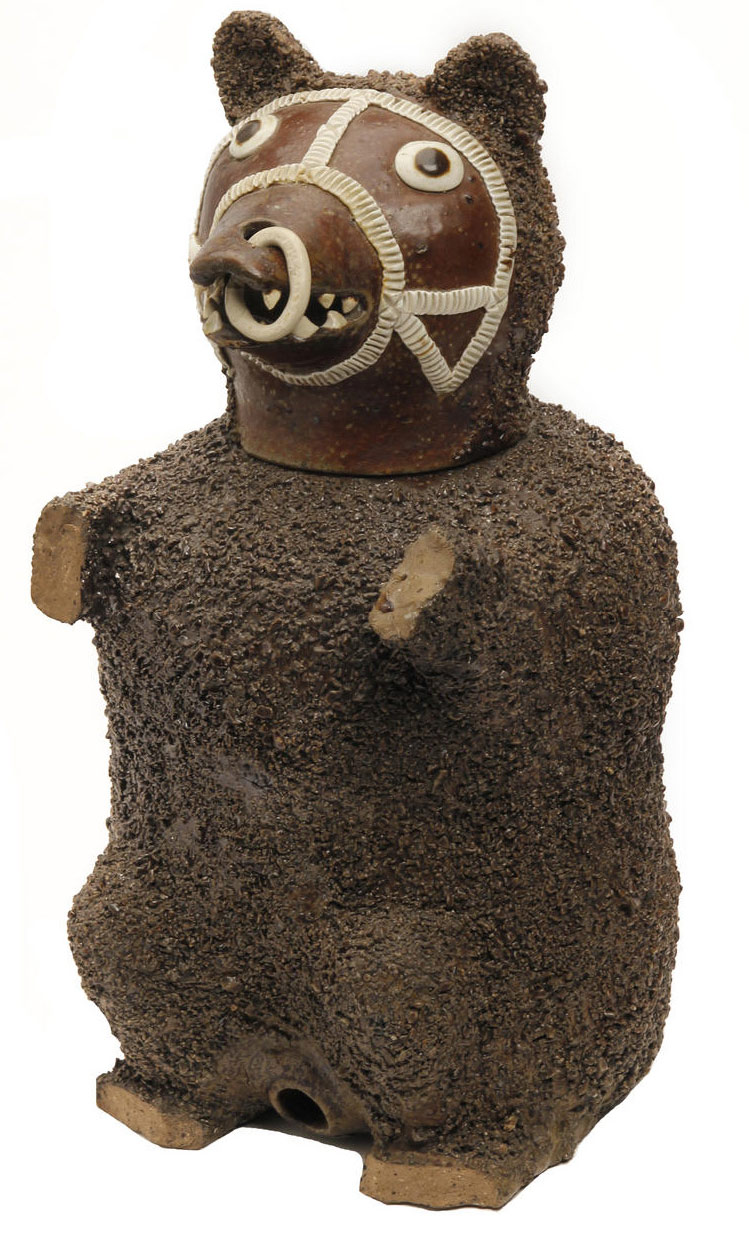
A wonderfully archaic Staffordshire -style bear-jug, complete with cover. Recently sold at auction and dated to the mid 18th century in either Staffordshire or Derbyshire. 16 inches high.
Some of the wonderfully archaic-looking Staffordshire slipware of the 1700s and 1600s, which recently sold at auction at Christie’s in London. Is that a witch on the first plate? Or, perhaps more likely, a man with a telescope under a pair of surveyor’s dividers. Not sure why he’d be wearing a skirt, though. Unless it’s meant to be a Masonic apron?


An interesting new article from historian Fred Hughes, on Trubshaw Cross, between Dalehall and Longport [Longbridge] in Stoke-on-Trent…
“Trubshaw Cross is one of Stoke on Trent’s major gateways. It’s where Percy Adams gave us a glimpse of an ancient world where the packhorse was once king of the road.”
Now the area’s modern bits are mostly demolished.
But in 1624 the Cross was described as the terminus of the Moorlands and Peak packhorse routes headed across the Fowlea for the London Road…
“a great passage out of the north parts unto diverse market towns”.
The turn-piking of roads in 1763 likely put paid to the cost-effectiveness of the onward route to Newcastle-under-Lyme, and then canal haulage effectively came to Burslem around 1805 with a new wharf just a stone’s throw from the Cross.
Trubshaw Cross is a place which is featured in the first chapter of my novel The Spyders of Burslem. Fred interestingly notes an antiquarian dating of the cross base…
“[Percy] Adams identified the stone base as being of Saxon origin” […] “the historian John Ward Ward notes in 1843 that only the stone base remained”.
Fred seems to imply there’s a threat that the cross’s traffic island might be removed. In which case, if it is Anglo-Saxon (as seems likely from the ancient age of the site and the old documentation), then it might be interesting to first do a proper deep archaeological dig on the site of the whole island. Perhaps nearby Steelite might sponsor that?
Just spotted news of a must-see Staffs Uni Science Centre exhibition. The “Spirit of Radio Exhibition” is on the life and work of the Stoke inventor Sir Oliver Lodge (1851-1940). Lodge was the pioneering inventor on whom I loosely based Miss Merryweather Craft, in my novel The Spyders of Burslem. The exhibition runs from 19th March – 22th April 2013.
Interestingly, there is a further parallel between Lodge and my novel’s Miss Craft, although I’m not sure how much the exhibition will feature of that side of Lodge…
“For many years, Lodge had been investigating psychic phenomena…”
It’s interesting that the traditional historical mingling of science and superstition could persist right into the 20th century. There’s a fascinating book-length history of such unexpected co-minglings, Techgnosis.
It’s good to hear that the local historian Nigel Daly is to publish a book on the life and work of the North Staffordshire artist Robert Bateman, one the the “last romantics” in the school of Burne-Jones, and also one of the Bateman family sired by botanist and garden designer James Bateman (Biddulph Grange). Nigel wants to locate images of Robert Bateman’s large major oil painting “Saul and the Witch of Endor”, given into the trust of the Potteries Museum — but since mislaid. It was last heard of in Longton Town Hall in the early 1950s. If you know anything of it, please contact Nigel at: nigel@nigeldaly.co.uk
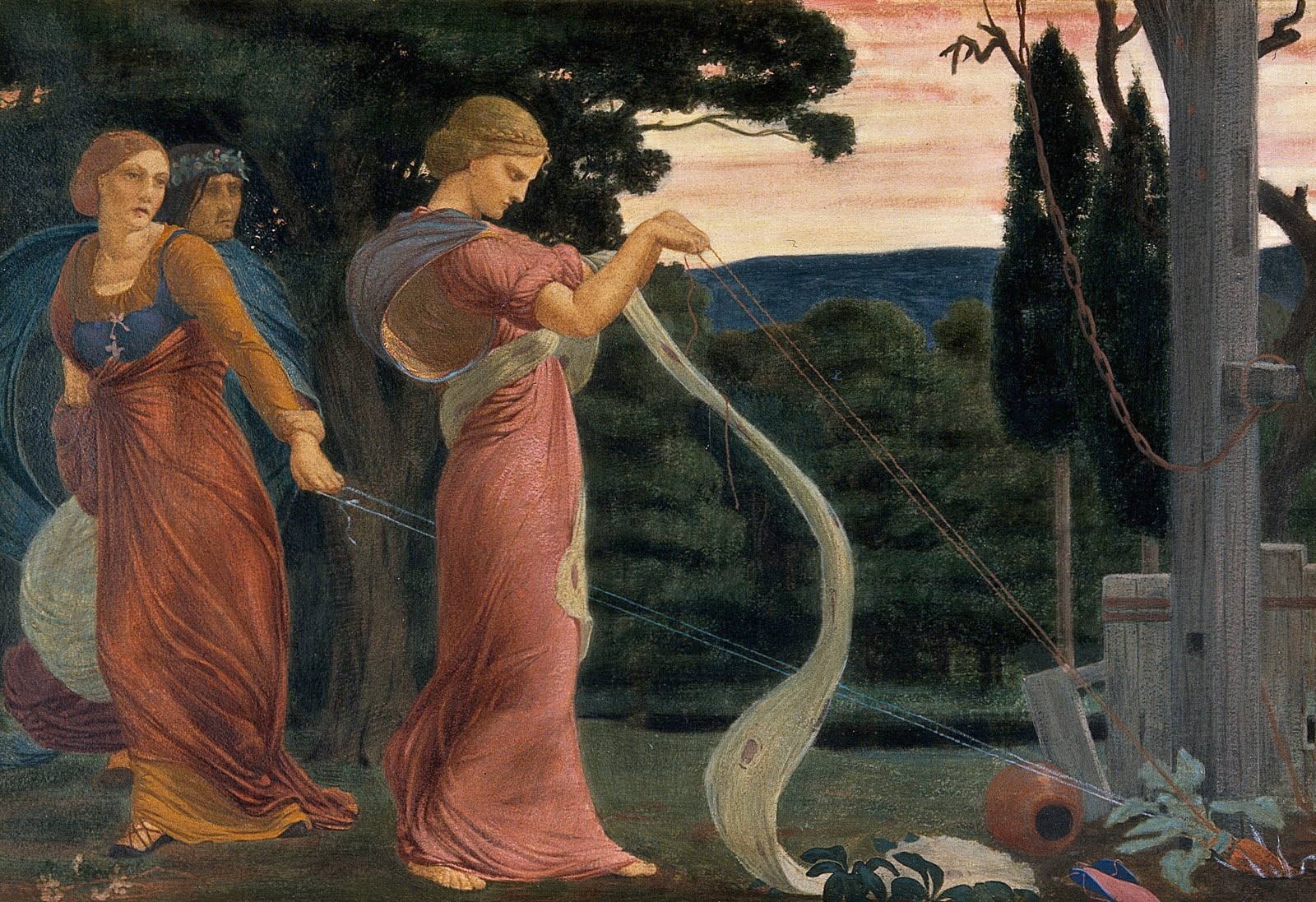
Above: Robert Bateman, “Three Women Plucking Mandrakes”. The mandrake root was reputed to produce a deadly scream when plucked from the earth, and the root has accumulated many strange superstitions over the centuries. Picture: Wellcome Trust collection.
The excellent hyperlocal website Little Bit of Stone has an article by local historian Philip Leason which places online the plot and words of Stone town’s traditional Christmas “guisers play”. Here’s a section of dialogue from the opening, in which a doctor is questioned about what he can cure…
“The itch, the pitch, the palsy and the gout. If a man’s got nineteen devils in his skull, I can cast twenty of them out. I have in my pocket crutches for lame ducks, spectacles for blind bumble bees, and plasters for broken-backed mice.”
The words were part of an article on folklore by W. Wells Bladen (1847-1914), for a 1900 issue of the The Annual Report and Transactions of the North Staffordshire Field Club (sadly not even the contents-list of said journal has been made available online — needed are a Heritage Lottery application for digitisation and a website).
His “Notes on the Folk-lore of North Staffordshire, Chiefly Collected at Stone” was reviewed (seemingly in the form of 35-page pamphlet reprint of 1901) by E. Sidney Hartland, in the journal Folk-lore, XIII, 1902. Hartland notes that the article included a rare recording of the local children’s culture…
“Counting-out Rhymes, his collection of Singing-games, and his diagrams of Hopscotch as played at Stone”
Which might be something that the modern local schools at Stone would be interested in. The original journal article appears to be…
W. Wells Bladen, “Notes on the Folk-Lore of North Staffordshire, chiefly collected at Stone”, The Annual Report and Transactions of the North Staffordshire Field Club, XXXV, 1900-1, pp. 167-174.
We can only hope that this 8-page article was not expanded for the 35-page pamphlet, since the pamphlet version now seems lost to history. Neither the British Library, Keele, or Staffordshire record any copy of it in their catalogues.
The same reviewer also notes of W. Wells Bladen’s…
“recording [of] the words of the Guisers’ Play as performed at Stone, [that it] differs materially from the version performed at Eccleshall, only six miles away, and recorded by Miss Burne (Folk-Lore journal, IV, 350). This again differs noticeably from that of Newport, nine miles distant.”
W. Wells Bladen also published pamphlets on the “Terraces and Earthworks at Stone” and “The Stone Terraces and Their Possible Origin”, which appear to be about what are still open fields in the north-east of the town, at the start of the footpath to Barlaston. His suggestions on the ancient human origin of these do not, however, appear to be tenable today. They are more likely to be from the time of the Jacobites.
Ooh, I’ve just realised what sort of wonderful archaeology we’ll get, ahead of and during the construction of HS2 in the Northern Midlands… a real “slice through history” from The Trent at Stone – through to Keele and Crewe. Roman roads, previously unknown settlements, maybe even a few artifacts or perhaps a horde. Here’s hoping that the fenced off route will be opened up to citizen archaeologists and metal detectorists for a year ahead of actual ground-breaking construction, in areas not identified by the County archaeologists as being “reserved for the professionals”.
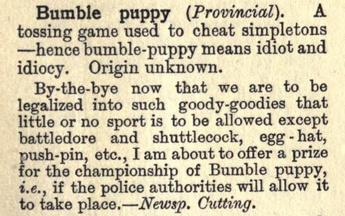
This would have been useful when writing the novel. Free online, a fascinating dictionary of Victorian English slang from 1909…
My new 22 minute reading of the short tale “The Boy Who Shuddered” (aka “The Boy Who Left Home to Learn Fear”), from the famous book of folk tales transcribed by the Brothers Grimm. I’ve adapted and abridged the tale. My audio book version is now on Archive.org, under a Creative Commons licence. The downloadable MP3 has none of the slight crackle that the audio in Archive.org’s Flash preview player has.
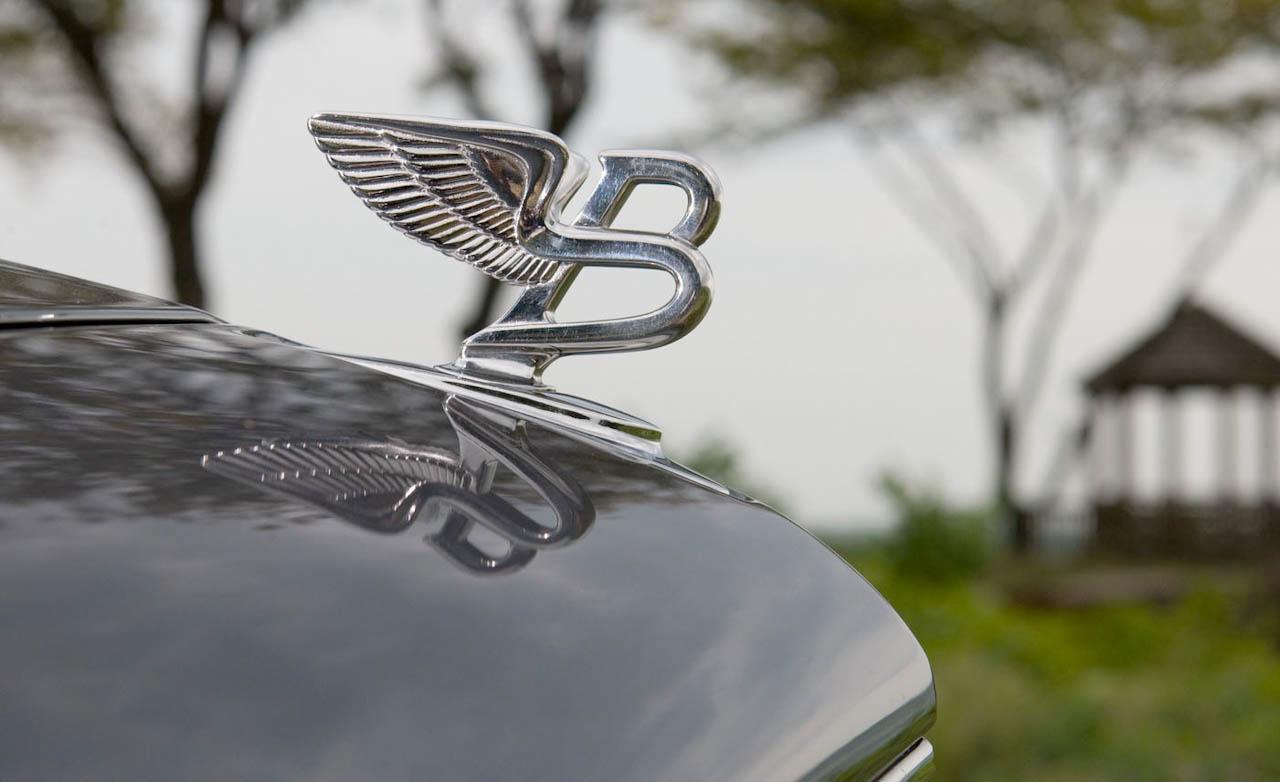
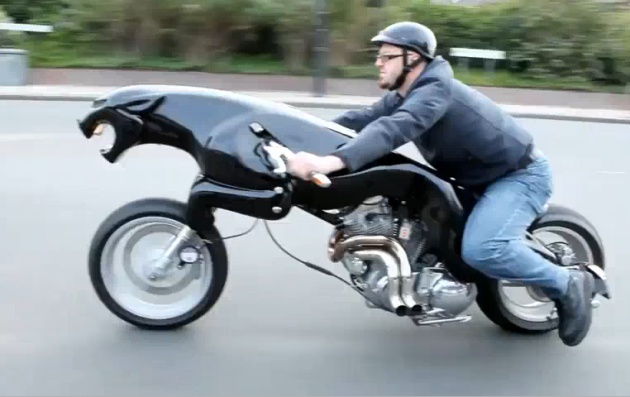
A passing thought about the Staffordshire Hoard. The Anglo-Saxons wore metal totemic animals (such as wild boars) on their battle helmets. But today we still sometimes have animals and similar totemic emblems on the front hoods of our cars. Midlands examples would be Jaguar’s big cat (Birmingham); the serpent-like winged B of the Bentley (Crewe); the Dark Ages ship on the Rover cars (Birmingham). Cars could even be understood as the modern equivalent of war helmets — metal status-symbols that protect the body.
This Jaguar marque fan would certainly be instantly recognisable to an Anglo-Saxon, in terms of the blue woad-dyed cloth and the totemic animal and the, er /cough/ “helmet extension” nature of the vehicle…
Great to see that the folk tradition of “Penny for the Guy” is still happening — Sainsbury’s, Stoke town, Stoke-on-Trent, October 2012…
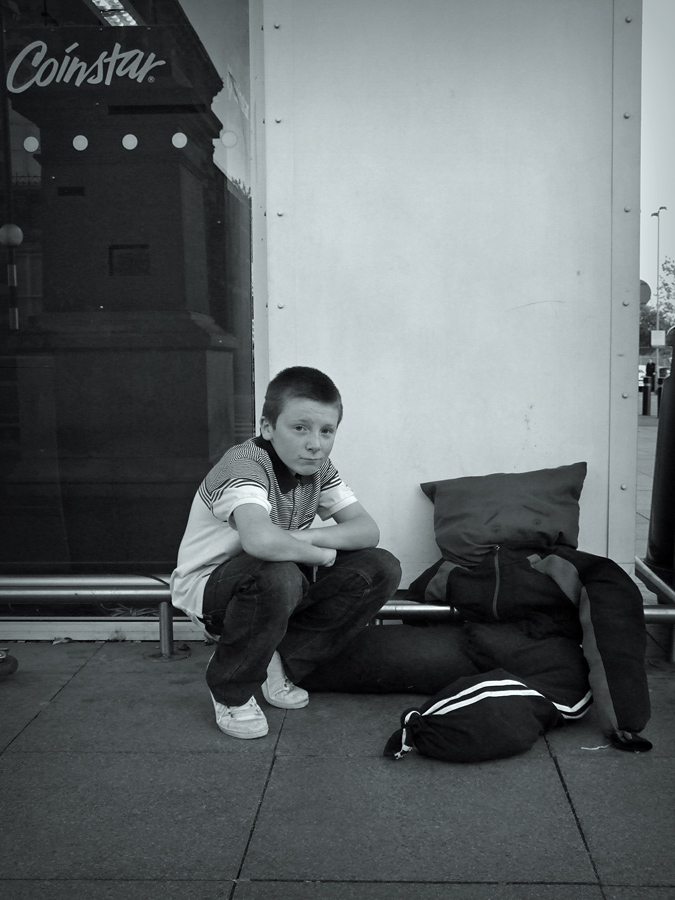
“Coinstar”.
A bit fuzzy, here — click on the image to see the original version.
Margaret Drabble writing in The Spectator in 2011 explained: “The Potteries are one of the strangest regions in the British Isles”. It’s quite true. There are even people who still believe in fairies in Stoke-upon-Trent town. I went into the newsagents to get a paper today, before going to the allotment. There was a pensioner in there, obviously well known to the newsagent (who had a bemused smile on his face), telling the newsagent about: “the hob-elfs, they call ’em — they has little arrows, tiny ones, with stone points… they fires ’em at you… you look out for ’em, they’re sharp…”