The Magical Imagination

Interesting new Cambridge University Press book, The Magical Imagination: Magic and Modernity in Urban England, 1780-1914, with obvious resonances with my novel The Spyders of Burslem

“This innovative history of popular magical mentalities in nineteenth-century England explores the dynamic ways in which the magical imagination helped people to adjust to urban life. Previous studies of modern popular magical practices and supernatural beliefs have largely neglected the urban experience. … Rather than portraying magical beliefs and practices as a mere enclave of anachronistic ‘tradition’ and the fantastical as simply an escapist refuge from the real, he reveals magic’s adaptive and transformative qualities and the ways in which it helped ordinary people navigate, adapt to and resist aspects of modern urbanization. Drawing on perspectives from cultural anthropology, sociology, folklore and urban studies, this is a major contribution to our understanding of modern popular magic and the lived experience of modernisation and urbanisation.”

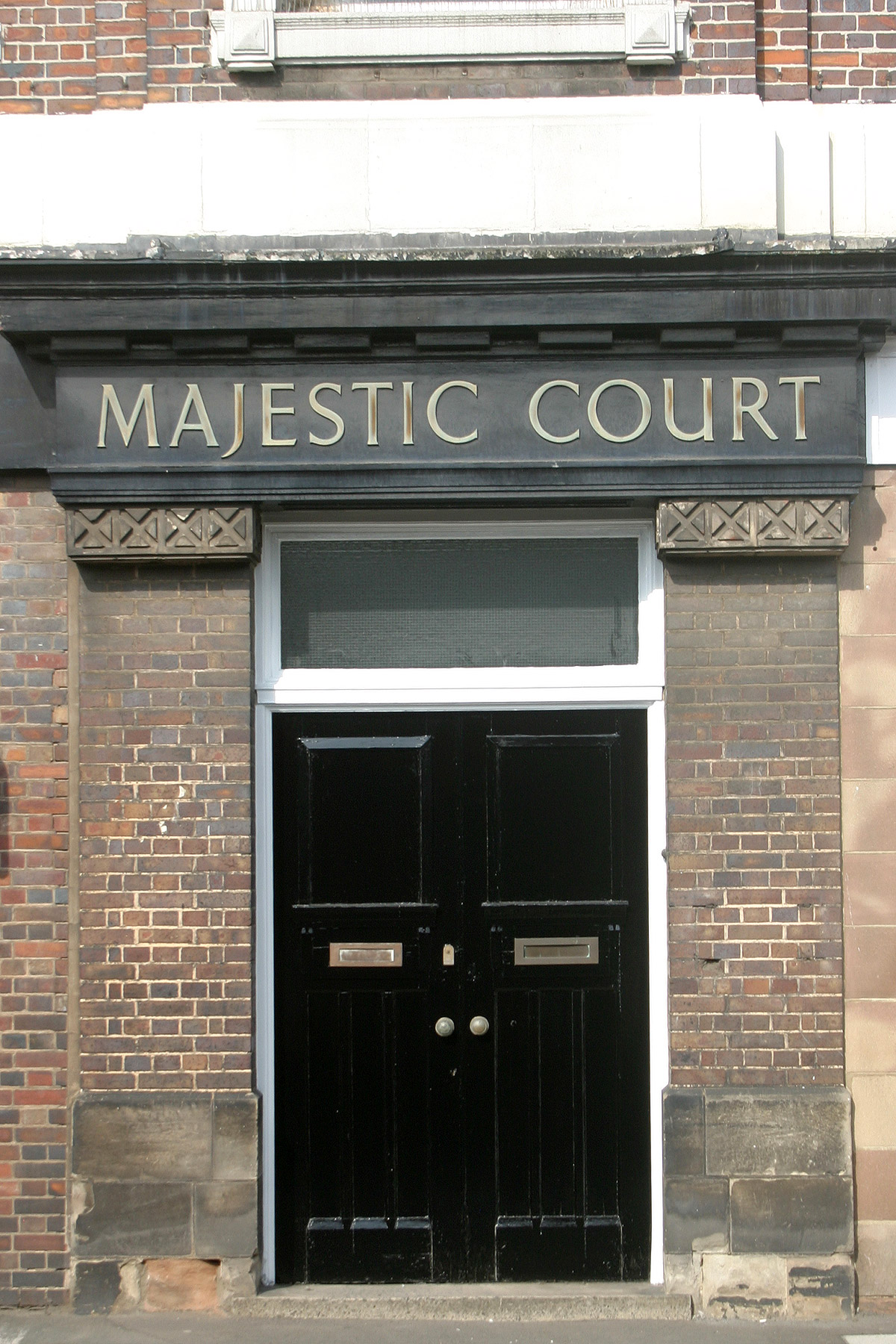
History of Majestic Chambers, Stoke town

It’s good to see that the Majestic Chambers in the centre of Stoke town have been taken over by artists. I thought I’d rustle up a quick history of the site to celebrate. I’ve not done any deep research, this is just the result of a half hour among the online resources.


Outline history of Majestic Chambers (front, Campbell Place) and Majestic Court (rear, South Wolfe Street):


* Not to be confused with the former cinema next door:

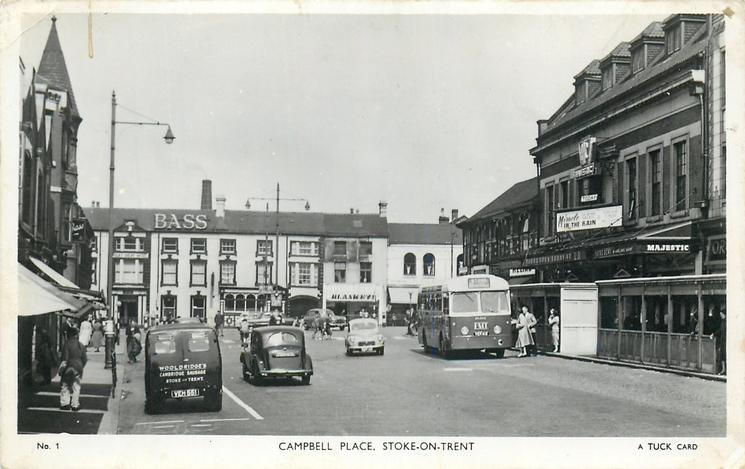
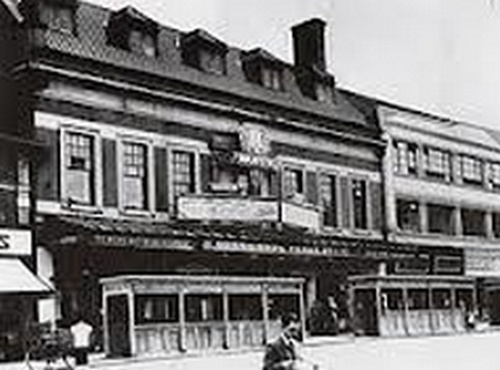
Majestic Chambers are not, as has been supposed by online forum chat, the site of the old ABC Majestic Cinema. As you can clearly see here from this circa 1930s photo, the current Majestic Chambers offices are off to the right of the cinema…
abcstoke

stoke-majestic

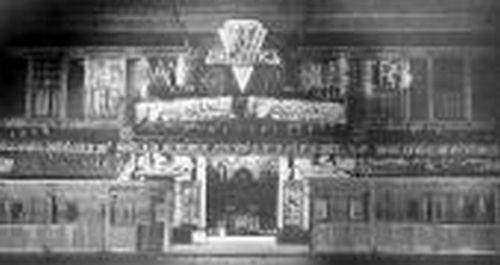
Top picture: probably 1930s? Bottom picture: showing The Dam Busters, 1955.

The structures outside the cinema appear to be to shelter the queues from wind and rain. Here’s a photo of the entrance in 1953…
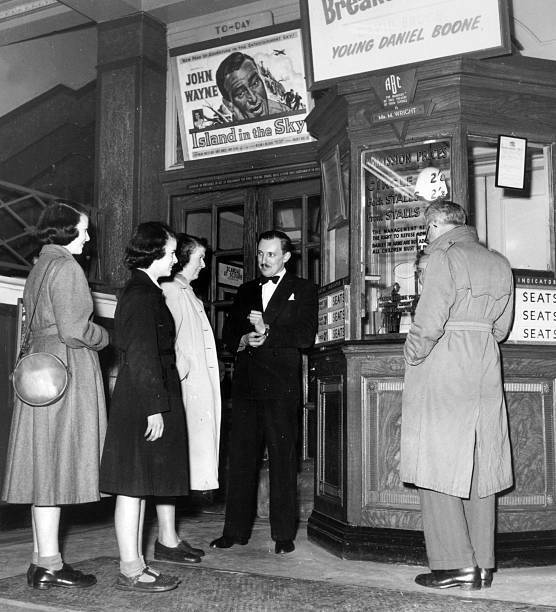
Originally erected c.1914 as the silent cinema boom began, the cinema was named the Majestic Cinema. It seated 1,000 in two levels. It was taken over by ABC in late 1929, shortly after the Great Depression began, when it became known as the ABC Majestic. At that time internal changes were made, reducing the number of seats. The ABC Majestic closed — presumably due to television — on 30th November 1957. (My thanks to Midlands cinema historian “Richie” for these details).

Judging by the photos it looks to me as if the ABC Majestic cinema was in what later became Woolworths (and is now the Woolworths-clone shop BargainBuys). Woolworths opened in the town c.1928, but presumably it was only later — possibly 1957/8 — that they took on the old cinema site that they occupied until recently.

* Beresford’s toy shop:

The Sentinel once published memories of a Beresford’s toy shop that sat to one side of the cinema in the 1950s. The kids queuing up for the Saturday morning children’s cinema showings of children’s films (a sadly long-vanished tradition) must have have a fun time window-shopping as they went past the toy shop windows. Possibly Beresford’s was where the furniture shop is now?

Update, Dec 2017: My thanks to Terence Bate, who clarifies this last point…

“The full width of the frontage at ground floor level was part of the cinema. In fact the cinema occupied only a small central section of the ground floor frontage, and this was set back a considerable depth with shop windows on either side, Woolworths to the left and Beresfords to the right. Thus all were to the left of the Chambers. The cinema and toyshop were closed when Woolworths acquired the entire building and rebuilt their store on the site.”

* Majestic Chambers: 1926?
megesticent

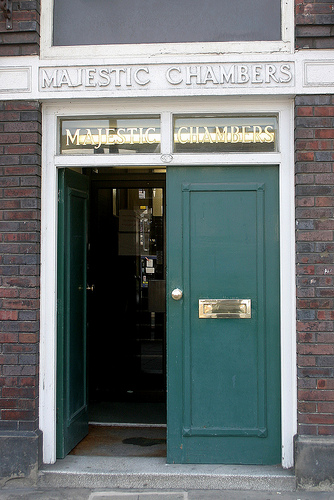
So, given all this information and the 1920s art deco frontage, a construction date of the 1920s seems likely for Majestic Chambers / Majestic Court. By that I mean, more likely than the c.1914 date of the cinema that was next door. Indeed, “1926” can be seen molded on the the ornamental drainpipe headers that adorn the Majestic Court frontage at the back of the building complex. A check of The Sentinel files on microfilm would give the exact opening date(s).

From the late 1930s to the 1950s the upper floors at Majestic Chambers appears to have served as purpose-built office space for professionals allied to the building trades, accountants, and similar professionals. These men had wonderful names, such as: A. W. Tonks, Fellow of the Royal Institution of Chartered Surveyors, who was there early 1950s; G. A. Barley of the Milk Marketing Board; Crofts the mechanical engineers, the Stoke branch of which was headed by a R. Moss; D. D. Jolly, P.A.S.I., a surveyor; and doctor A. Meiklejohn, M.D., D.P.H. There was also an industrial chemist, whose name I haven’t been able to discover.

As the city’s heavy industries declined or collapsed in the 1970s, from the mid 1980s the offices of Majestic Chambers became home to quasi public-sector organisations. Such as the Staffordshire Housing Association Ltd.; Groundwork Stoke-on-Trent (the environmental landscaping charity); and trainers of the unemployed such as Model Systems Training.

Today at 2013 the ground floor once again reflects its times; Greggs fast-food pasties and cakes; a pawnbrokers; a slick betting shop; a cheapo frozen food store. And, until taken over by artists this month, the upper floors were empty — having been previous occupied by another training firm for the unemployed.

However, independent shops do hang on, on that main shopping drag; there’s the cafe which does a fine cheap lunch; the computer parts shop; the card shop on the corner opposite Sainsbury’s; the ‘olde worlde’ sweets shop. All manage to compete with Sainsbury’s.

majcourt

At the back of the building, across a courtyard, Majestic Chambers turns into Majestic Court. According to “Deltabus”, who once worked there, the right-hand ground floor of Majestic Court once housed the town’s Post Office while the left-hand side served as a butcher’s storage room. That was probably in the 1960s and 70s.


Update: Dec 2017. New postcard showing the Majestic cinema, which was then screening the romantic tragedy Miracle in the Rain (1956).

The future sucks

The pneumatic message system, featured in my novel The Spyders of Burslem, is set to make a high-tech comeback according to New Scientist magazine.

“Pneumatic tubes were once heralded as the future of communication and delivery” [but in London today] “Hidden in the walls is a vast computer-controlled network of pipes propelling capsules via air pressure and vacuum. Installed in the early 2000s, it is one of many places worldwide boasting a high-tech pneumatic network. Some places have hundreds of stations, fed by several kilometres of tubes and junctions.”

Talking of science journalism, it’s sad that New Scientist is one of the few places at which intelligent readers can escape from the tidal-wave of sloppy reporting of science and junk science that is swamping the daily newspapers and the BBC.

Essays On The History Of North Staffordshire

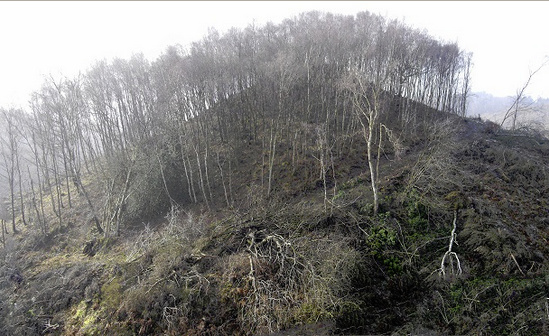
There’s an interesting new website, Martin Docksey’s Essays On The History Of North Staffordshire, currently with a focus on Norton-in-the-Moors (east of Burslem), the ancient history of the Maer Hills, and Burslem during the plague of 1647-8. With a fine picture of the apparent site of the first Norman Mott and Bailey (i.e. a wooden fort, 1070-1086), sited near the Shrewsbury-to-Chesterton Roman road…

normanmot

Potteries Folk Art exhibition

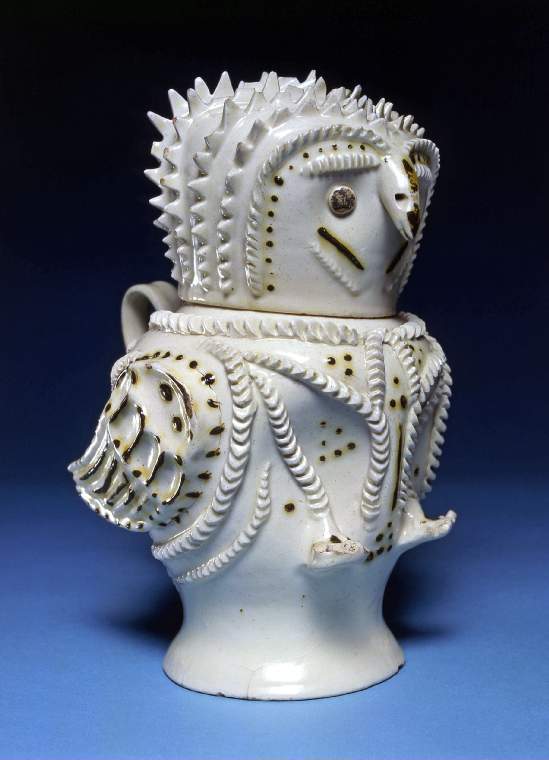
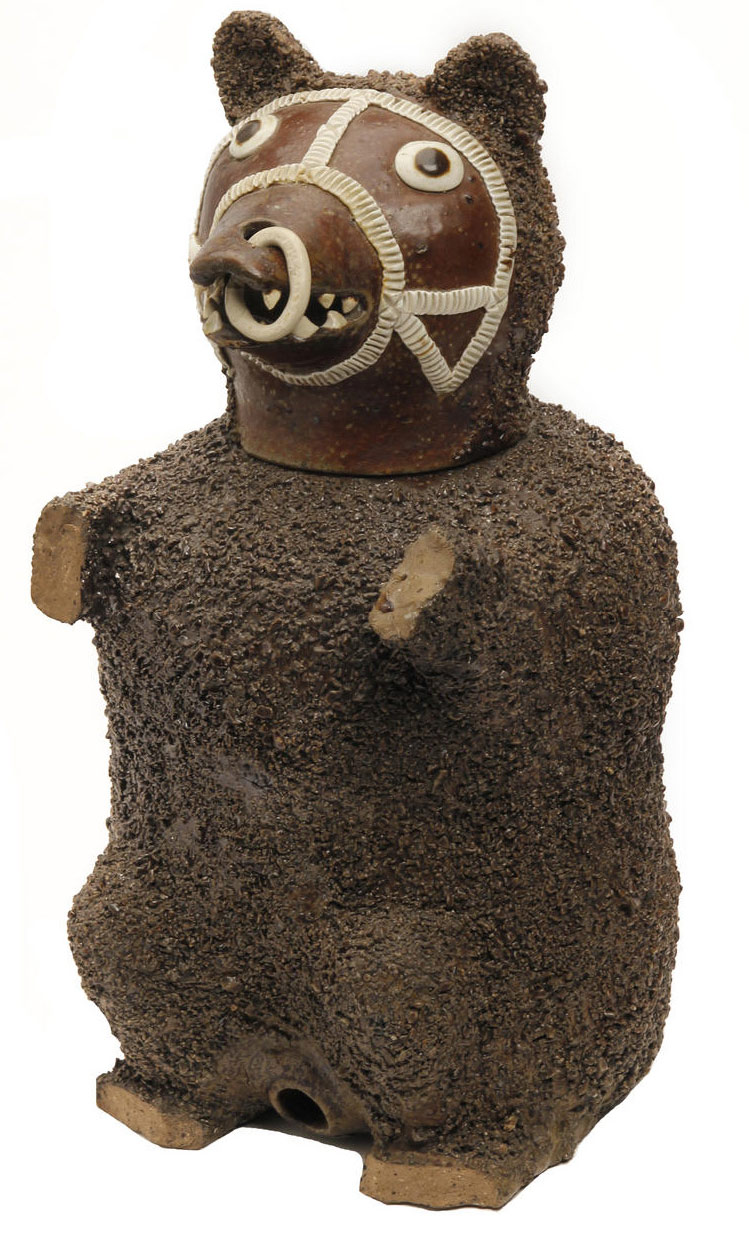
It would be great to have a folk art exhibition at the Potteries Museum and Art Gallery. Perhaps in two parts. The first could include items like the Buxton Mermaid; the Staffordshire Clogg Almanacs; the Staffordshire corn dollies recently exhibited in 2010 in St. Ives and the traditional corn bowknots of Staffordshire; examples of the pottery bird whistles that were placed in chimneys to prevent spirits from entering the house that way; the oldest traditional canal art relics; unusual weather vanes; small pre-Victorian kinetic wood or papier-mache toys; textiles and embroidery; wood carving if some has survived from before the 19th century (also the Staffordshire Clogg Almanacs); archaic designs on ceramic slipware from the 1700s and 1600s, with curious ceramics such as bear jugs and the weird archaic owl in the FitzWilliam. More could probably be found if one put out a call to the UK’s museums. But if there’s not enough material available, then the older items could be the lead-in for an exhibition of modern and contemporary (genuinely naive) folk art from Staffordshire.

C.497 & A-1928
Staffordshire owl at the FitzWilliam, circa 1730-1750.

staffsbear1
Primitive bear jug.

Tolkien’s The Fall of Arthur

It’s not often we get a new work by the Midlands author J.R.R. Tolkien. But one is to be published in hardcover and Kindle ebook today, presumably with an audio-book to follow soon after. Written in the early 1930s, The Fall of Arthur was Tolkien’s last try at working up the fabric of British legend into the sort of bleakly beautiful native verse epic he wanted it to be.
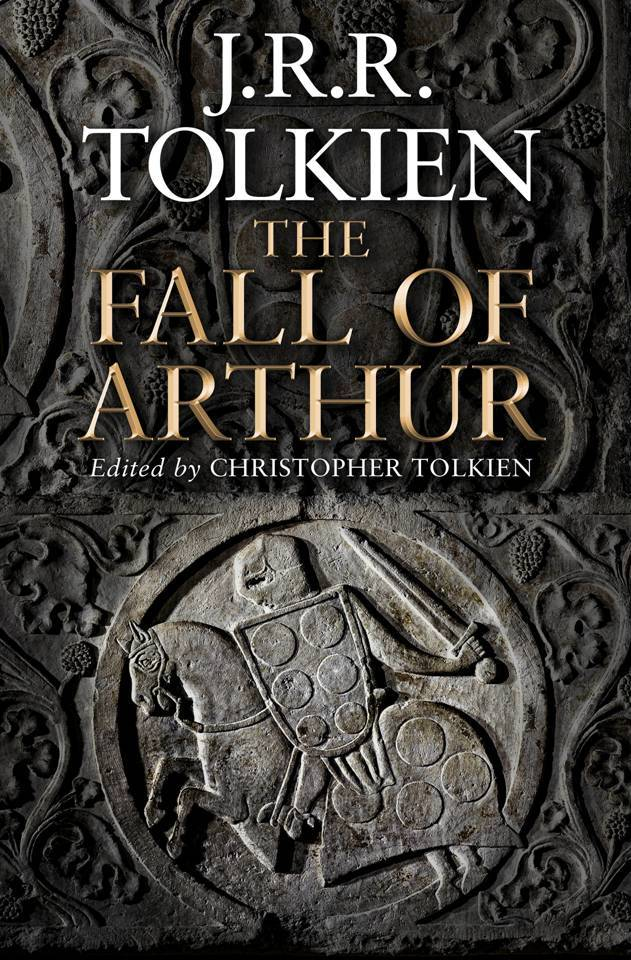
Tolkien’s Arthur is a Romano-British military leader fighting in “Saxon lands” in order to stem an invasion of the island at its root, he eventually finds himself at the edge of a great eastern Mirkwood when he and Gawain are called back to Britain to deal with the treachery of Mordred. Tolkien appears to have assumed a King Arthur drawn along the Romano-British historical lines proposed by R.G. Collingwood (the excellent Director’s Cut of the recent movie King Arthur did much the same). This character developed over time into a legendary one, but much later descends to touch history again — when Arthur was re-shaped by the bards to parallel Alfred and his defence of Mercia against the Vikings. What will be interesting will be the extent to which Tolkien blends this plain historical approach with a mythic one, and the extent to which he sets the pursuit of Mordred in the nexus of the Welsh Marches and the English Midlands. One has to hope that, from a Midlands man, we might have a Midlands epic.

the-fall-of-arthur-by-tolkien

Anyway the result was a 1000-line epic poem, much admired by his colleagues, but which was left unfinished. Here’s a taste of his dark Mordred…

   His bed was barren / there black phantoms
   of desire unsated / and savage fury
   in his brain had brooded / till bleak morning

And his scheming Guinevere…

   lady ruthless
   fair as fay-woman and fell-minded
   in the world walking for the woe of men.

Tolkien left the work unfinished and instead turned to the realms of Middle-Earth where his world-building talent had a free rein, namely The Hobbit, and The Lord of the Rings.

Once The Fall of Arthur is published, and despite our culture’s general modern disdain for poetry, doubtless there will be numerous unofficial fan attempts to finish the work. The new publication is also perfectly timed to feed into interest in the vivid poetry contemporaneous with the iconography of the Staffordshire Hoard.

Wedgwood Institute to be saved

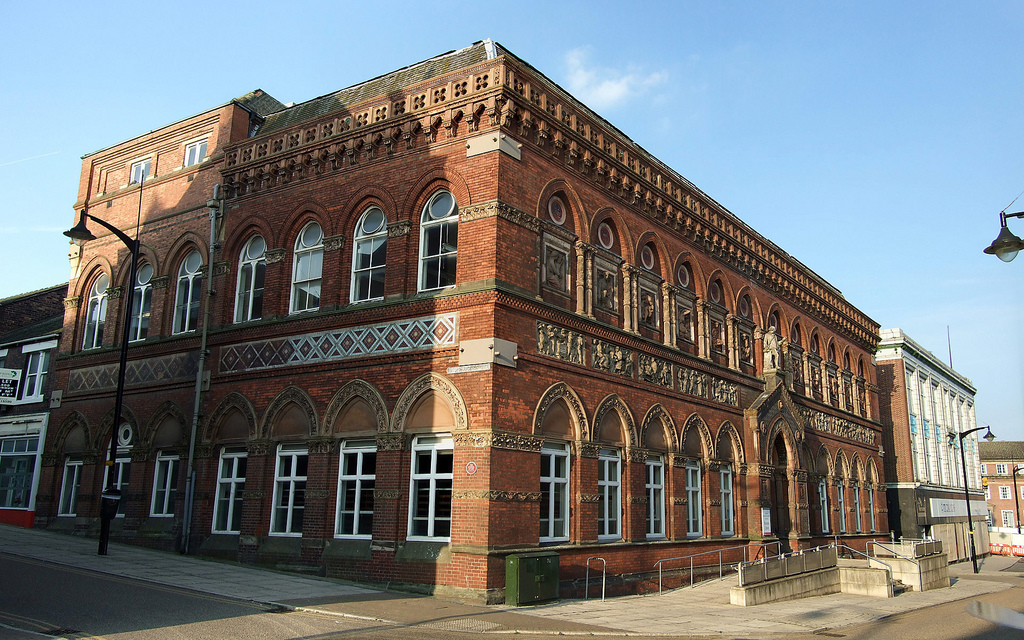
Super news! One of the main settings for my novel The Spyders of Burslem, The Wedgwood Institute in Burslem, is to be brought back to life….

“Burslem’s historic Wedgwood Institute has been identified by the Prince [Prince Charles] for his latest Potteries regeneration project.”

It was last used as the Burslem public library, but that was closed by the City Council (Labour) and the building mothballed. A few years ago I was told that the roof needs a lot of attention, but if anyone can pull off a restoration it’s the Prince’s Trust.

wedgwin

A creative industries use would fit nicely with the School of Art etc nearby. It would be nice to see it as home to a mix of craft ceramics makers and digital 3D modelling and 3D printing startups, based around project work where craft makers and digital technologists worked together on projects — something which might also chime with the City Deal’s aims of working with innovative new materials in Ceramic Valley.

Garden as eschatology

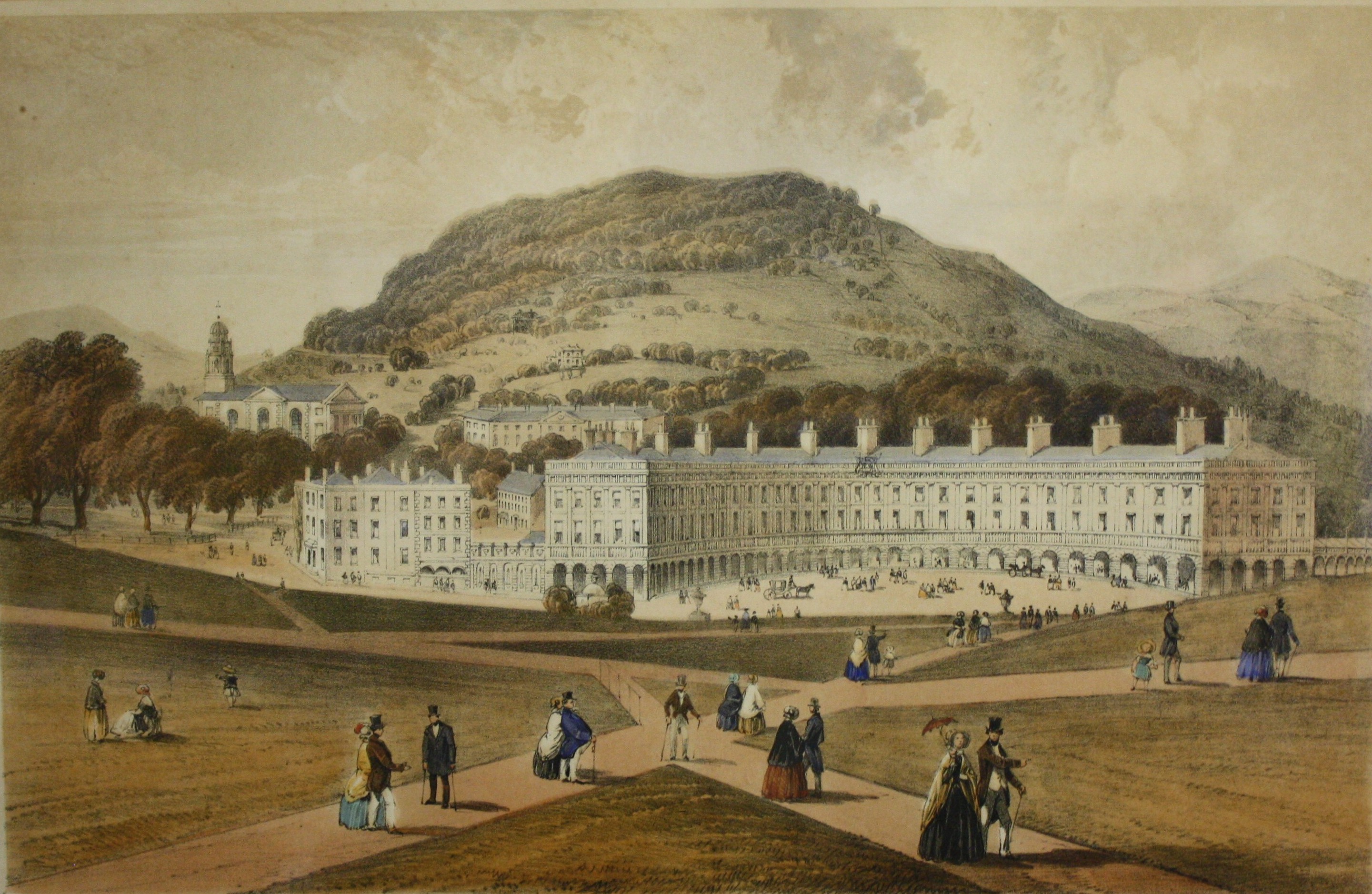
Interesting article on the possible beliefs implicit in the garden at Biddulph Grange [dead link removed, not re-findable], from Paul Baker of the Garden History Society…

The concept of a link between the Millenarian belief of the imminent second coming [of Christ] and the layout of the garden at Biddulph has been the subject of some literary discussion. […] Brent Elliott in his book Victorian Gardens writes ‘… the garden at Biddulph Grange, by evoking vanished and alien civilizations, served as an affirmation that the millennium was coming.’

However, Peter Hayden’s Biddulph Grange, Staffordshire: A Victorian Garden Rediscovered (1989) is more cautious…

“While religion was an important factor throughout Bateman’s life, it is difficult to gauge to what extent the garden was created as an expression of faith”

Old Staffordshire saying: Fetch a duck off water

I heard an interesting old phrase used in natural speech today, by an elderly man remembering a girl he once knew: she’d “fetch a duck off water”. The Internet has hardly heard of it and its possible variants, and Google Books hasn’t heard of it. My source used it in the context of remembering a Hartshill (Stoke-on-Trent) childhood in the 1940s, and used it naturally to refer to someone so ugly that they’d “fetch a duck off water”. Or possibly I was mis-hearing, and he said she was ugly but had eyes that would “fetch a duck off water”.

Online I found a memory by Ian Clayton who remembers of his grandmother that…

“She met and fell in love with my Granddad [a man originally a miner from Staffordshire, the “rural Midlands” north of Wolverhampton] on a bus near Tadcaster after he had said to her “You have got eyes that could fetch the ducks off the water.”

I then did some further online research and found…

Manchester:

Nick Allen (raised in Manchester) remembers of his grandmother…

“As me granny would say “he could charm a duck out of water and money from a miser”

I’ve only found one use in old literature: The Sorcery Shop, an impossible romance (1906), a utopian political romance novel in the English tradition of William Morris…

“She has an eye that would charm a duck off the water”

The author was Robert Blatchford, who after 1890 was based in Manchester.

East Midlands:

An online source from someone living in Nottingham uses it to mean that: someone’s eyes were so attractive that they’d “fetch a duck off water”…

“Eyes to fetch a duck off water, and she does”

And there’s an oral history account in the BBC wartime memories archive in which “fetch a duck off water” is used by someone from Leicester…

“I noticed what beautiful eyes she had, large and dark brown, they spoke volumes. I always said ‘They would fetch a duck off water’.”

Yorkshire and general:

There’s also a recent review of a folk LP by Bob Pegg originally of Leeds and later for a long time in Yorkshire, that uses…

“singing, guaranteed to charm the ducks off the water”

P.R. Wilson’s Thesaurus of Traditional English Metaphors (1993) does record something like it, but only in Yorkshire…

“It would charm the ducks off the water” (West Yorkshire)

An earlier book Modern proverbs and proverbial sayings (1989) records the same phrase in a newspaper from 1956, and this may be where the 1993 Thesaurus had it from. That exact phrase has since been used in three pulp historical romance novels, possibly all by the same person writing under pseudonyms, and again I’d suspect the author(s) had it from one of these book collections.

There’s no use of “charm the ducks off water” online either, other than one lone British review of a Turkish holiday, said by a young woman of the charm of the young Turkish waiters in the hotel.

There’s also a mention of a similar phrase in the pulp Harlequin romance No Way Out (1980) by Jane Donnelly…

“You know what they say about charming a duck off water”

It’s also used in a Christian book, Spiritual Arts (2009) by Jill Briscoe. It doesn’t say where the author grew up in, but there’s enough to know it was England during the Second World War. She uses it as…

“smiles that would charm a duck off water”

So it seems to have been used from Staffordshire above Wolverhampton, up through North Staffordshire to Manchester, and across into the East Midlands in Nottingham and Leicester. Possibly also in Yorkshire, although that may rest on a single newspaper usage that was recorded in two collections of sayings.

Anyway, it seems to have almost died out now, so I’m just “rescuing” it for the Web 🙂 Maybe a few people using it again will start a revival.