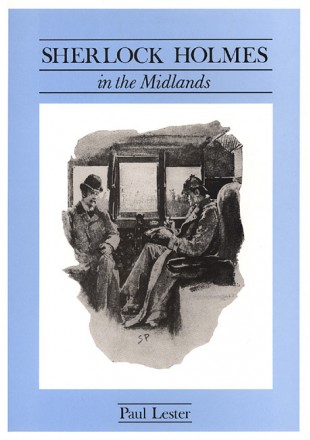
“And as far off as Birmingham?” – a review of the book Sherlock Holmes in the Midlands

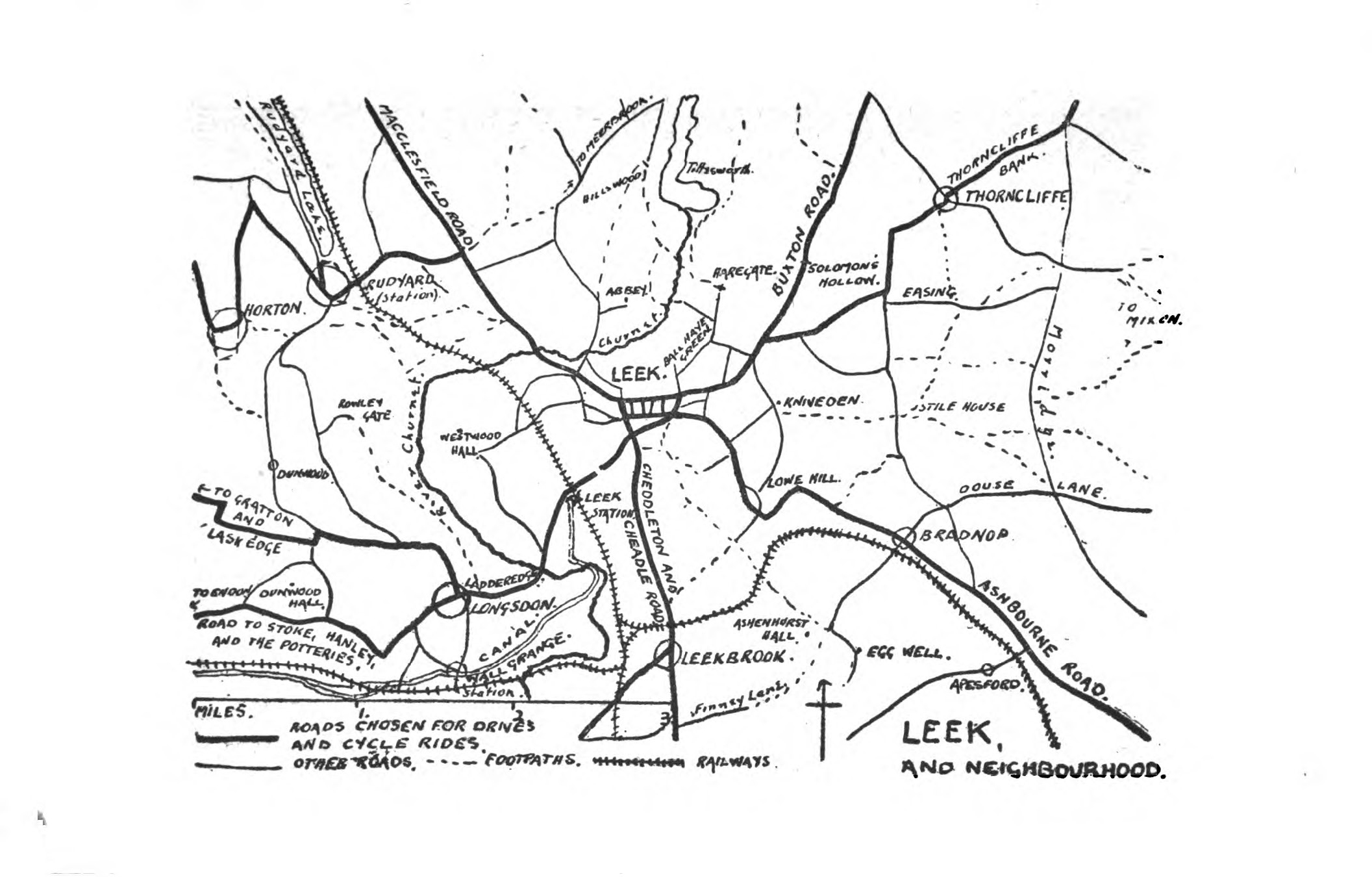
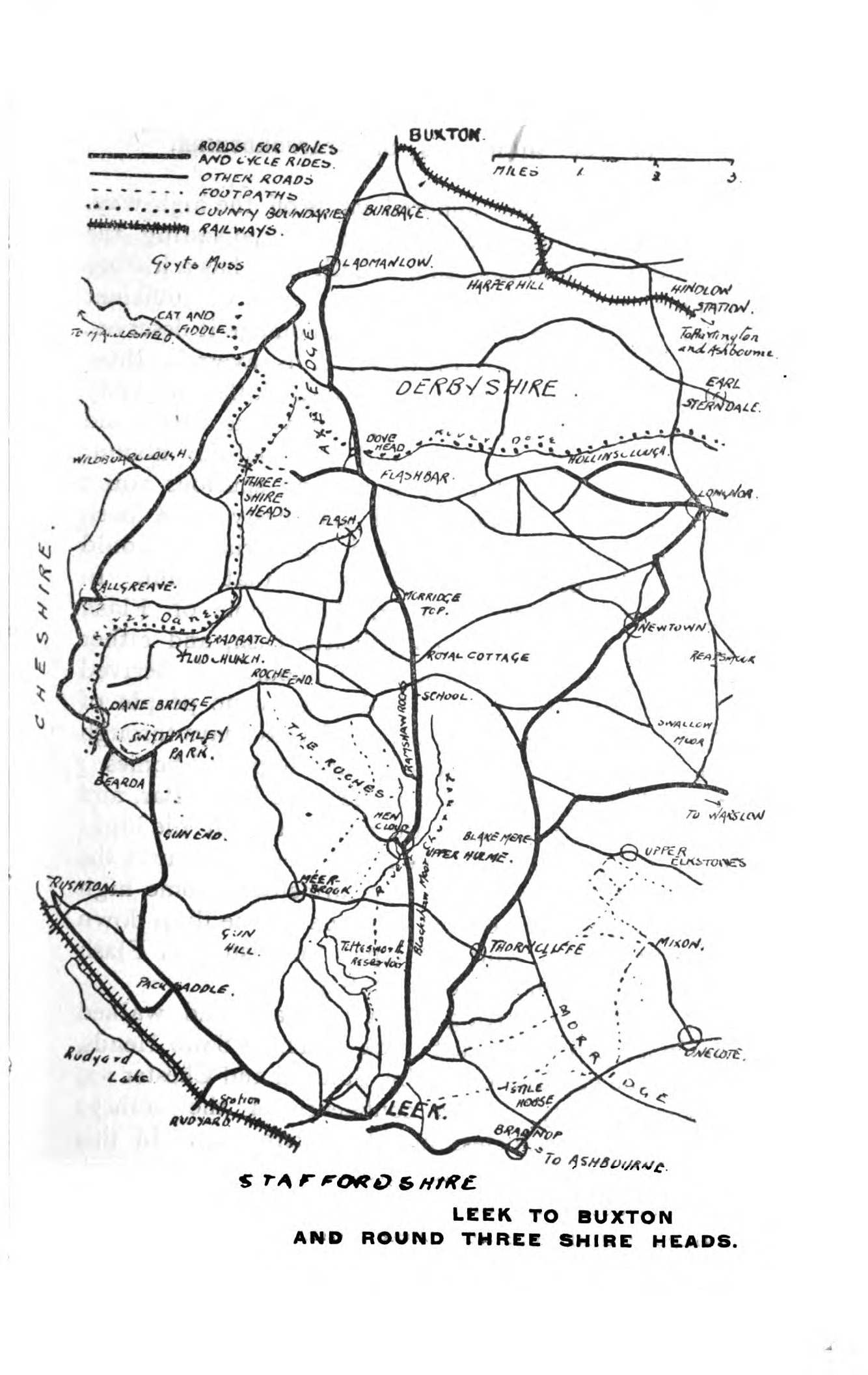
Sherlock Holmes in the Midlands is a small 8” x 6” book of 125 pages, and is an excellent read. Clearly written and well researched by Paul Lester, it is logically arranged and illustrated with period illustrations, crisp contemporary photographs of sites, plus a few basic maps. Apparently it originated as a 20-page 1980s fanzine in Birmingham, but here it becomes a proper local history book. The typesetting is professional, and chapter endnotes are set in a font size that is readable without a magnifying glass. There is no final bibliography, but the bibliographic endnotes for chapters supply all the references any scholar of Holmes might require. Published in 1992, the book’s stiff covers and glue-binding have been quite adequate for 25 years, but in my copy the glue is obviously failing, with several pages almost coming loose in 2017. If a purchase of this book is being made for archival purposes, then a rebinding may be needed.

This book is best suited to those who know both Holmes and the proper1 West Midlands — the former Mercia which stretches from Herefordshire and Worcestershire and Evesham in the south, up through Birmingham and Lichfield, to the Potteries and the Peak District moorlands in the north. Almost nothing is said in the book of the East Midlands, and a casual purchaser from Nottinghamshire or Leicestershire will be sorely disappointed. I, however, was delighted by the book. Because at a great many points I was able to make a connection with places where I had grown up, where I had lived or where I now live, or places I had visited. This is due to my particular family-history, and also my childhood and workplace connections. I was especially interested in Aston and Corporation St. in Birmingham, and pleased to find that these places are extensively discussed in the book. I was even instructed on the correct pronunciation (albeit Shropshire rather than Staffordshire) of the Norman name of the place where I now live.

The book opens in the Welsh Marches, rural Shropshire, where Conan Doyle was a medical student working as an unpaid intern to a truculent local doctor. Even at that slight geographical remove from the Welsh heartlands, it appears that Conan Doyle formed there a clear prejudice regarding the Welsh tendency to nurture the sour and resentful aspects of their nature. The book then deals in a substantial manner with Doyle’s happier internship, working for a doctor in Aston, a jolly and hard-working man who welcomed the intelligent young lad into his bustling family. Aston, I should explain for the unfamiliar reader, is very near the centre of the city of Birmingham. I was delighted to learn that Doyle “saw a very deal of the very low life” in Aston between mid 1879 and February 1880, as a visiting doctor, because that meant he might have been rubbing shoulders with my ancestors in Aston. Perhaps even treating one of them, since a key female relative was plucked from poverty in Weeman Row, a slum since cleared and now roughly underneath the current Children’s Hospital at the east end of Corporation St.

Lester usefully points out possible connections of places and place names with Holmes stories, but he doesn’t labour his points. He also usefully summarises and evaluates the speculations of previous Holmes scholars, but again briefly and with a very light touch. Thus the reader learns that there was a violin seller in Sherlock Street in Birmingham city centre at the time Doyle was working there (mid 1897-February 1880, and again in early 1882), but this is not claimed as a sure-fire inspiration for Sherlock Holmes, merely suggested as one such possible example. Doyle’s keen interest in photography while in Birmingham is later mentioned in an aside, and I thought it a pity that more was not said of this. Perhaps it might have been explored in a few paragraphs added to the chapter on Doyle’s Midlands spiritualist connections and spirit photography. In that chapter I was however fascinated to read a full account of Doyle’s duping by spiritualist forgers at Crewe (a stone’s throw outside the Midlands, being a large railway town not far from the Potteries), and learned there once existed a ‘Society for the Study of Paranormal Pictures’, of which Doyle was the Hon. Sec. It seems incomprehensible today that the effective removal of the assured comforts of the Christian religion by science could have displaced the old religious sentiments in such gross directions. In Doyle’s case, into a belief in such obvious charlatanry as spiritualism, spirit photography and the idea that bottom-of-the-garden fairies could be photographed. Yet, Doyle credulously championed them all, and was often flanked by accomplished scientists such as the Potteries man Oliver Lodge.

As well as tracking Sherlock Holmes through the Midlands counties of Herefordshire, Warwickshire, and up into the Peak District, some of the local non-Holmes stories are also noted. Personally I would have been inclined to add an extra chapter just to explore these stories and their settings. These are stories such as “The Doings of Raffles Haw” (set “14 miles north of Birmingham” in the wedge of mid Staffordshire country between Lichfield and Tamworth); the fine horror story “The Terror of Blue John Gap” (the Peak District, ‘Blue John’ implying Castleton); and the weird story “The Japanned Box” (near Evesham, in the far south of the Midlands). Doyle’s real-life investigation of the Great Wyrley police conviction of George Edalji is given another re-telling, with careful summation and evaluation.

Shropshire and Herefordshire are places I only know from early and middle childhood, but so far as I can tell Lester’s book is sound on all the points of local geography for the various counties. Which is not the case for the Penguin Classics notes found in a key Holmes edition — in which cloistered academics misleadingly parrot local tourism puffery that Walsall is… “in the heart of what is known as the Black Country” — when it’s at the far end of it and the “heart” is around Tipton. Sherlock Holmes never stalked the industrial districts of the Black Country or the Potteries, and so far as I know (I’ve read all the stories three times now, the last read-through being about ten years ago) there is no substantial descriptive mention of such places. Though this very absence might suggest locations for the writers of newly-minted Holmes stories, the characters now being in the public domain. Thus the Black Country cannot claim a setting used for a Holmes story, but in Lester’s book I learned that the Industrial Museum there does now have the original ‘pillar box’ (red iron post-box, into which the public could post hand-written letters and postcards) that once stood in Baker St. in London. Other fascinating snippets I learned included the insight that the local makers of umbrellas, sewing machines and watches in Birmingham and Coventry all contributed some aspect of their skills to the invention of the first modern bicycles (Doyle, like Wells, was a keen cyclist, and I have an interest in the trade due to a long line of bicycle makers in my main family-tree). It takes a while to think that one through, but it’s correct and is a fascinating spotlight on how inventions arise in dense industrial districts in which many trades mix and mingle in a free market. Before reading this book I had also not known that Samuel Johnson of Lichfield — the famous dictionary maker — had started his literary career at Old Square, just off Corporation St. in Birmingham. Thus Corporation St. can claim to have been a formative influence on Johnson was well as on Tolkien.

This is a fascinating read for those interested in its locations. It is formed from a blend of well-tested Holmes scholarship and new primary sources, polished up with much pavement-pounding at the actual locations. Sherlock Holmes in the Midlands is well worth your £3-£5 when it pops up in used form on Amazon or eBay. Might we hope for an expanded and updated ebook version, at some point in the future? Perhaps surveying the non-Holmes Midlands stories, expanding on Doyle’s interest in photography at Aston, and surveying or listing the best of the Holmes fan fiction set in the West Midlands?


1. proper West Midlands — There is also a vile 1970s bureaucratic invention calling itself the West Midlands, but which only covers a Birmingham/Coventry portion of the real West Midlands. It seems to be merely a way of grabbing taxpayer funding without having to then share it with the surrounding towns and rural areas.
For the birds…

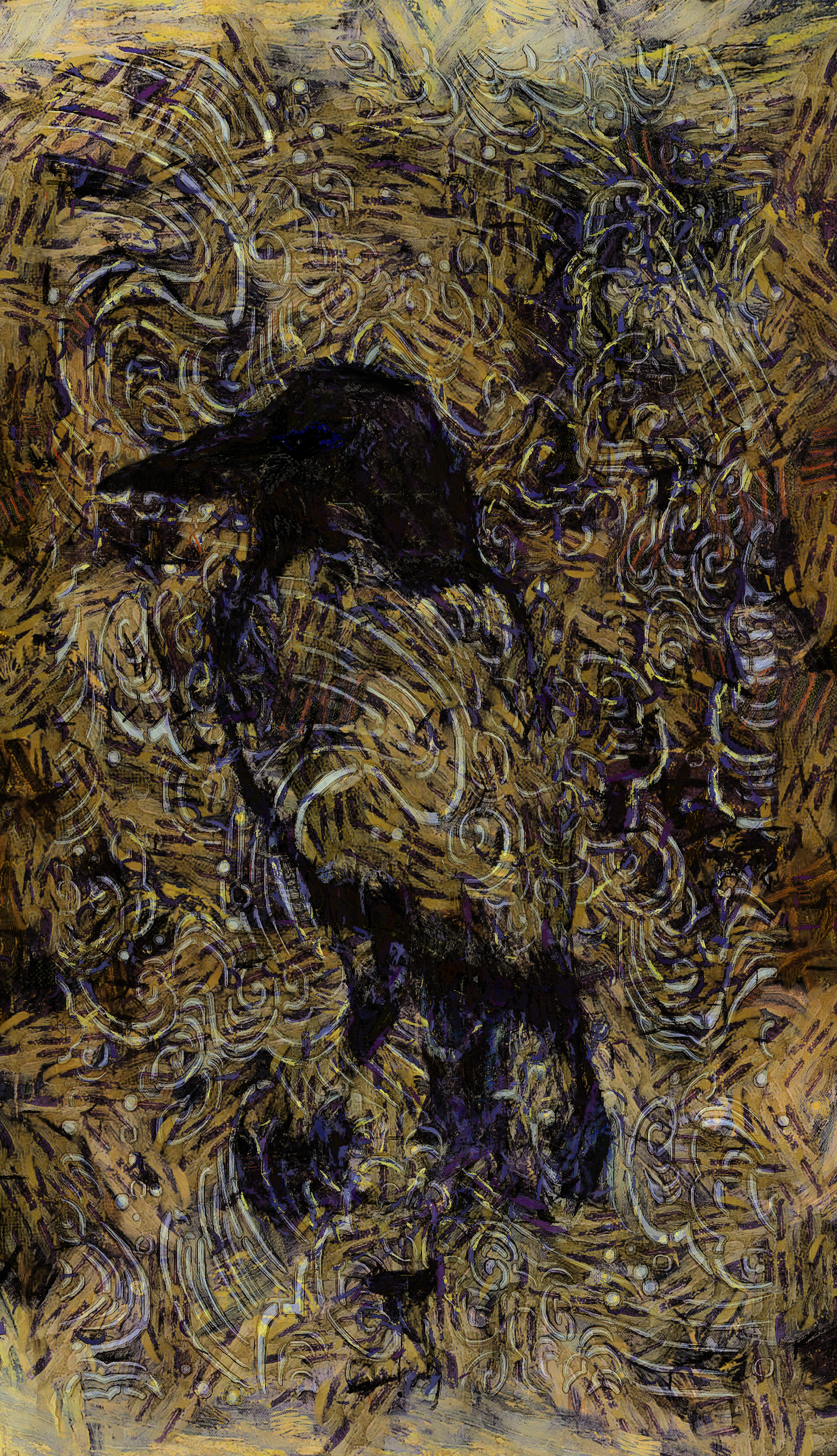
Here’s a free ‘bird’ book cover. Not great, and it all went a bit muddy in the end — so ‘Creative Commons Attribution’, and feel free to use for the cover of a poetry book, nature notes books etc. May look better in black and white.

Sherlock Holmes in the Midlands

I’ve today fished a bargain ex-library copy of Sherlock Holmes in the Midlands out of my postbox. An excellent small book on Conan Doyle and Holmes, of which I’ve so far read the introduction and first two chapters (the first being rural Shropshire, and then suburban Aston in Birmingham, following Conan Doyle’s early career as a medical assistant). Well researched, and well written. There are currently two more copies at under £3 on Amazon, inc. postage, if any reader of this blog wants to grab one before they’re sold. It appears to be more usually listed with a bit of a ‘scholarly rarity’ premium added, at above £20.

Update: my review.

Natural Navigator: a lichen mnemonic

I was watching a Tristan Gooley (Natural Navigator) video on YouTube, where he shows how to tell north from where certain rusty shades of tree lichens grow on tree trunks. Find a couple of large patches on a lichened tree and you can be sure where north is. It seemed to need a new mnemonic rhyme for children, so I made one…

  Round and round the trunk we goes,
  to find the way the wind a’ blows.
  Where large the rusty lichen grows,
  to that way point your northy nose.
  Now sniff the wind, and off we goes!

Once you know where north is, and can tell from that what the prevailing wind direction is, then all sorts of natural indicators become available from that. Such as cloud movements seen inside woods, which side of copses birds are sheltering on, where spiders have spun webs on bushes, and suchlike.

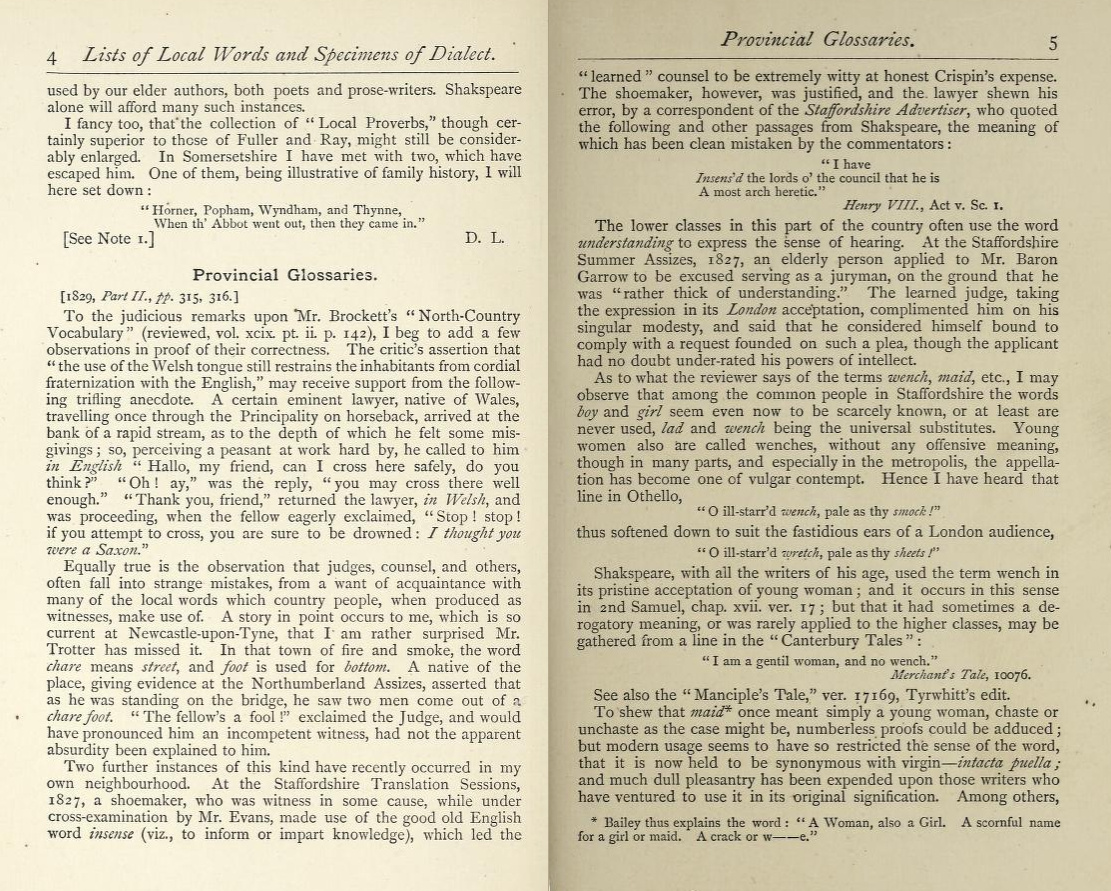
Insense

Insense: a word which survived in use in Staffordshire until at least the late 1820s. Seeming to mean: to inform or briefly instruct a group of people about information useful to them, thus helping them to make sense of a situation.

Source: The Gentleman’s Magazine Library: being a classified collection.

The Monthly Magazine of 1806 talks of…

insense, to instruct, or put in the head of any one: as for instance, the judge is said to insense the jury how to bring in their verdict”

The Atheneum of 1827 referred to it as Scottish and/or Scots-Irish…

“to unravel those mysteries which the people want taste and leisure to study for themselves, and to insense the multitude (I like that Hibernicism) on their dearest interests”

It is referred to as “a north country expression” in a memoir of 1869 (A Memoir of H. Hoare), so was at that time either dying out or had never existed in the south of England.

But, since Shakespeare used it, it may once have been present as far south as south Warwickshire.

Ceramics in board-game sets

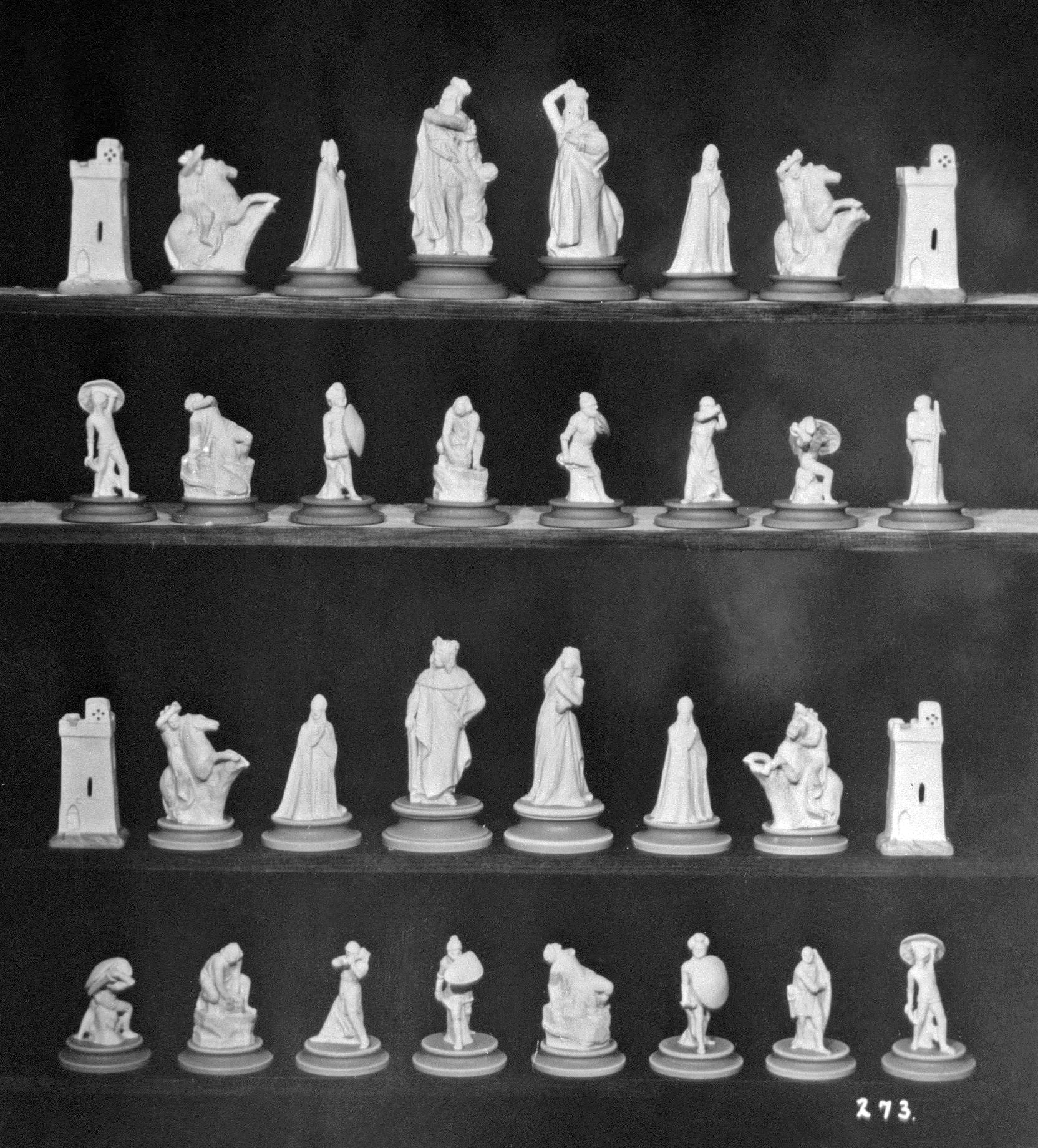
A jasperware chess set, made in north Staffordshire and most likely by Wedgwood, perhaps 1800-1820s.

I suppose the fragility of early ceramic meant it wasn’t favoured for small board-game pieces. Too easily brushed off the table, to smash on the floor. But now the industry has the unbreakable Steelite-style of ceramics, one wonders about a revival of the use of ceramics in board-game sets?

Erasmus Darwin’s The Botanic Garden – a survey of the best podcasts and ebook version

As a sidelight on my new book on H.G. Wells in the Potteries, I’m currently reading Erasmus Darwin’s book-length poem The Botanic Garden: the Economy of Vegetation (1791) in its free Gutenberg version (clean in .ePub and Kindle .mobi, with the original footnotes, corrected long-s, and line numbers).

Here are some recommended introductory podcasts on local man Erasmus Darwin:

* “Erasmus Darwin: People, Language, & History Connections”, a nippy little fast-paced and friendly 15-minute introduction, from a popular podcaster.

* The 14 minute “The Poetry of Erasmus Darwin’s The Botanic Garden is also rather good. The best of a mostly rather dry series of such videos made by academics, apparently for the public.

The only broadcast documentary I can find is John Scotney’s “A Mind of Universal Sympathy”, though it’s not online. It was a long BBC Radio 3 partly-dramatised narrated documentary, broadcast in September 1973. Re-broadcast in 1974 and 1978, but probably now lost due to the BBC’s criminal policy of not preserving their archives in the 1980s and 90s. Such a pity that our regional archives never thought to record such key broadcasts on good reel-to-reel tape. An oral history interview with Desmond King-Hele, via the British Library, reveals more…

I also should mention the radio programme in 1973 called A Mind of Universal Sympathy. This was commissioned by John Scotney, one of the producers at the BBC, and it was really quite difficult to write, it was a dramatised documentary about Erasmus Darwin for Radio 3, it was forty five minutes [Radio Times suggests one hour] and it was a drama with Freddie Jones as Erasmus. It was very successful actually and financially one of my most successful things, because it was repeated several times on Radio 3 and they gave fees for those as well. I did another similar type of radio drama called The Lunatics covering the Lunar Society of Birmingham, again with Erasmus Darwin in a major role.”

Possibly these scripts might be rescued from archives somewhere, and re-made as a new semi-dramatised feature-documentary?

Illustration for The Botanic Garden, via The British Library.

I had been recommended to read The Botanic Garden years ago, I forget by whom, but was reminded of it again by Wells’s “The Cone”. In this macabre revenge short-story Wells has a wife talk of her iron-master husband and his… “dreadful theory of yours that machinery is beautiful […] It’s his great theory, his one discovery in art.” Thus for my footnotes to “The Cone” I investigated the extent of the ‘heavy industry and machinery is beautiful’ sentiment at the time, in art and literature, to see if there was an obvious source Wells might have been gesturing toward and expecting his readers to recognise. There was no obvious source, but few choices at that time. Darwin’s “The Economy of Vegetation” certainly celebrated the rising new industries in no uncertain terms, and had both a Etruria (Stoke) and a Staffordshire connection (Darwin was a Lichfield man). It was a best-seller and went through multiple editions, and thus was likely to be easily available in used and reprint copies in the Potteries by 1888. There were also pirated Irish and American editions due to its immense popularity.

In it there is a striking use of a vengeful husband and his revenge, as a metaphor for the earth’s making of iron in the earth, with fits with the theme of “The Cone”…

Indignant Vulcan eyed the parting Pair,
And watch’d with jealous step the guilty pair

[… he traps and fixes them in a mesh of metal, in their love-bed]

Hence dusky Iron sleeps in dark abodes,
And ferny foliage nestles in the nodes;
Till with wide lungs panting bellows blow,
And waked by fire the glittering torrents flow

With the book-length poem’s visions of a future Empire in the air with airships (“The flying-chariot through the fields of air. Fair crews triumphant, leaning from above”) and in submarines under the sea (“Britain’s sons shall guide | Huge sea-balloons beneath the tossing tide; The diving castles, roof’d with spheric glass, […] Buoy’d with pure air shall endless tracks pursue”) and a great many other items of interest to a budding purveyor of the future, one has to wonder if Wells may have read The Botanic Garden in 1888 or thereabouts. Certainly the botanical aspects of the didactic poem would also have interested him, complete with Erasmus’s own fascinating scientific footnotes. In 1888 Wells appears to have been somewhat light on the botany half of biology, and in need of ‘cramming’ on the topic if he was to teach the subject, perhaps another reason to ‘give it a go’.

However… I can find not a whit of hard evidence that Wells ever mentioned Erasmus, despite Erasmus’s pioneering championing of the cause of “enlisting the imagination under the banner of science”, and his practical linkage of Romanticism and speculative optimistic science (and thirty years before the birth of Jules Verne, to boot). Given Wells’s immense and prolific output, and his effective founding of futurology, this absence in itself is perhaps indicative of a key influence being cloaked from public scrutiny. But the lack of hard evidence has to mean that a Wells connection can only be very tentatively suggested.

Still, The Economy of Vegetation is proving to be an interesting read, especially when viewed as in part an early work of science-fiction. Interestingly, Lovecraft had a copy in his library, and he no doubt adored the blend of the 1700s poetic style with speculative science. The long-s style of Pope and Erasmus Darwin was by then deeply unfashionable, but it was one Lovecraft doggedly championed in public until well into the 1920s.

There’s more to be had locally, and very much in the Darwin style, in The vales of Wever, a loco-descriptive poem (1797) by John Gisborne. It ‘Erasmus-ifies’ Wootton, near Alton Castle, complete with the same style of explicatory footnotes. Rather usefully, the poem throws several lights on the otherwise-unknown natural history of the Gawain landscape.

Enville Gardens

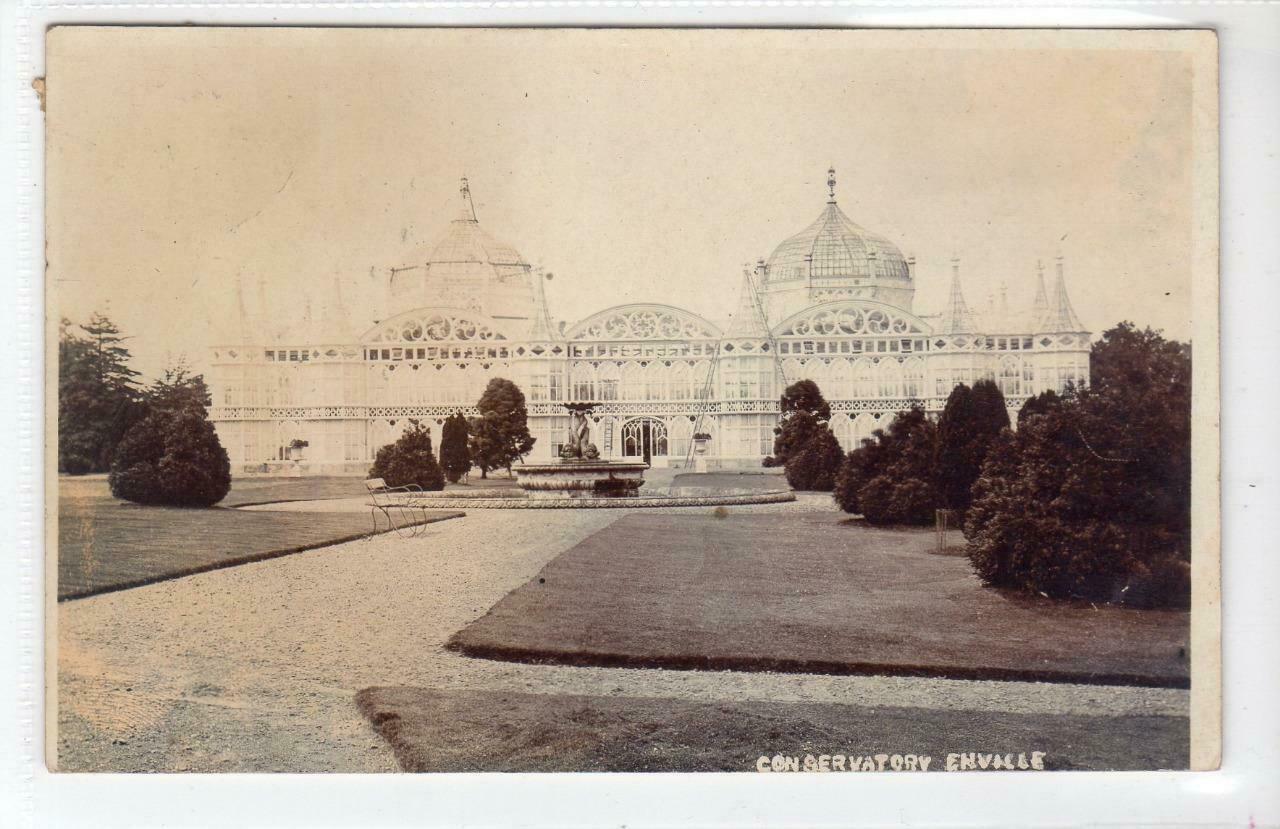
The Victorians certainly did know how to create a stylish glassed-in greenhouse. Enville Gardens, near Stourbridge, part of a 100-acres of gardens open to the public since at least the 1860s. This connects with my family tree, re: glass-making at nearby Wordsley and then Birmingham, and the new market appreciation for glass. Also, it seems likely that some of the family members would have visited there.

It had a fine send-off. It was spectacularly blown up with explosives as a practice demolition exercise by the Royal Engineers, before they embarked for the Second World War.