Tolkien Gleanings #334
* From Italy, “Una Compagnia all’interno della Compagnia: Frodo, Sam e lo spirito del comitatus” (2025) (‘A company within the company: Frodo, Sam and the spirit of the comitatus’). In Italian, with a very lengthy English summary at the back. Freely available online. Examines…
“the concept of comitatus – the bond of loyalty and protection between a leader and his followers, central to ancient Germanic society – and tries to trace its transformations through literary and historical tradition up to its modern reworking by J.R.R. Tolkien in The Lord of the Rings.”
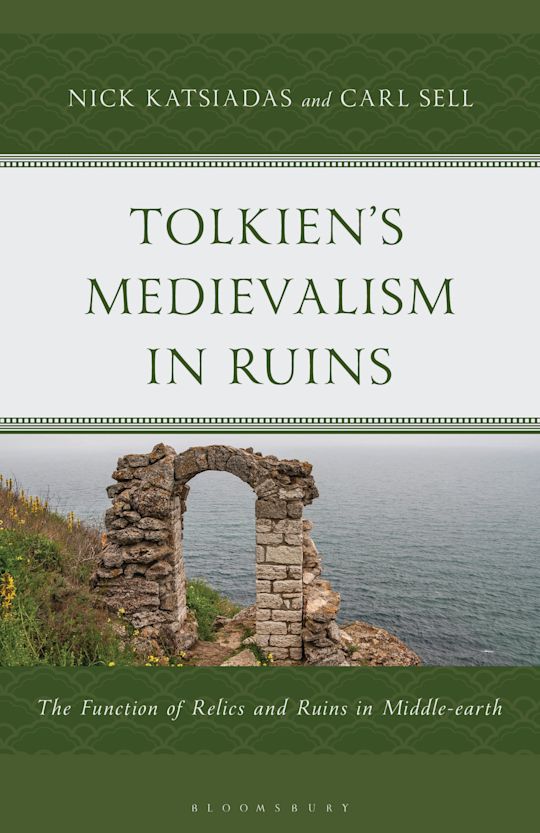
* Now listing on Amazon, the scholarly collection Tolkien’s Medievalism in Ruins: The Function of Relics and Ruins in Middle-earth. Shipping just before Christmas 2025, at a ruinous £90 (hardback only, as currently listed). Although the publisher’s page pegs the release at 16th October, and anticipates that a slightly cheaper ebook version will also be available.
* VII: Journal of the Marion E. Wade Center (2024) has “The Historical Perspective: Gleanings from C.S. Lewis’s Personal Library”, plus reviews of What Barfield Thought, The Battle of Maldon Together with The Homecoming of Beorhtnoth, Tolkien’s Faith, and book notes for “Something Has Gone Crack”: New Perspectives on J.R.R. Tolkien in the Great War, and The Fall of Numenor. Freely available online.
* A Vintage Dutchman goes “Exploring Geoffrey Bache Smith’s Impact on Tolkien”.
* A Masters disseration from the University of Iceland, “Puck’s Medieval Ancestry: The Puck Figure in Medieval Evidence and Late Collected Folklore of North Atlantic Europe” (2024). Freely available online.
* Some readers may also be interested in the chapter “From Homer to John Eugenicus: The Long Journey of Riddles through Greek and Byzantine Literatures” (2024), freely available online…
“Another mysterious poet who is credited with the composition of seven riddles is a certain Theodorus Aulicalamus. […] The first riddle in [his] small collection still baffles the scholars, who are not sure about its real solution:
Even if am not alive, I have two heads;
my nature belongs both to the sea and to the land.
If you cut my head, made up of a double sign,
you change neither my name, nor my nature.
I’d suggest “the tide” fits well as an answer, if the Greek symbol of the tide(s) was Neptune’s trident. If one made a horizontal cut across the top of the head of a simple trident, it would still be a trident.
* And finally, “How to practice leisure like a hobbit”. To which one might add: invent activity-songs (for bath, walking, etc) and the occasional riddle.