Tolkien Gleanings #80.
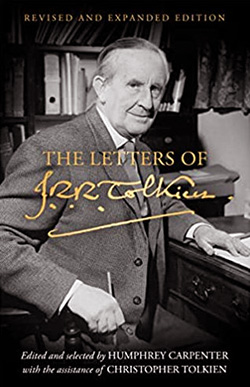
* Further details of the new volume of the Tolkien Letters. Specifically, where the new letters are being found. A new article in The Bookseller reveals that the original Letters…
“… was not the book envisaged by Humphrey and Christopher [Tolkien]. At the publisher’s request, they were required to reduce the original selection to what was then deemed a publishable extent. By going back to the editors’ original typescripts and notes, it has finally been possible for us to reinstate the 150 letters they excised purely for length – an additional 50,000 words – and publish the book as originally intended.”
Which means the new edition will be these, and presumably any other letters which have since turned up. Sounds good. The title of the early November book is The Letters of J. R. R. Tolkien: Revised and Expanded edition. The £20 hardback is now pre-ordering for delivery well before Christmas 2023 and its inevitable UK postal strikes.
* A PhD thesis for Concordia University in Canada, freely online in PDF, Mere Love: The Theology of Need and Gift-Love in the Fiction of C.S. Lewis and J.R.R. Tolkien (November 2021).
* At the University of Leiden, a course titled The Medieval in Middle-Earth: J.R.R. Tolkien and Old English Philology, running 2023-2024. Unusual for focusing on one man’s academic work, and in Philology too. Starting September, and seemingly limited to the university’s eligible students. Who should book early, I’d guess, as it’ll probably fill up quickly.
“Reading Tolkien’s academic work will first of all provide students with a better insight into the culture, language and literature of early medieval England, as well as the methodology of Old English philology. At the same time, it will also illuminate their reading of Tolkien’s fantasy fiction.”
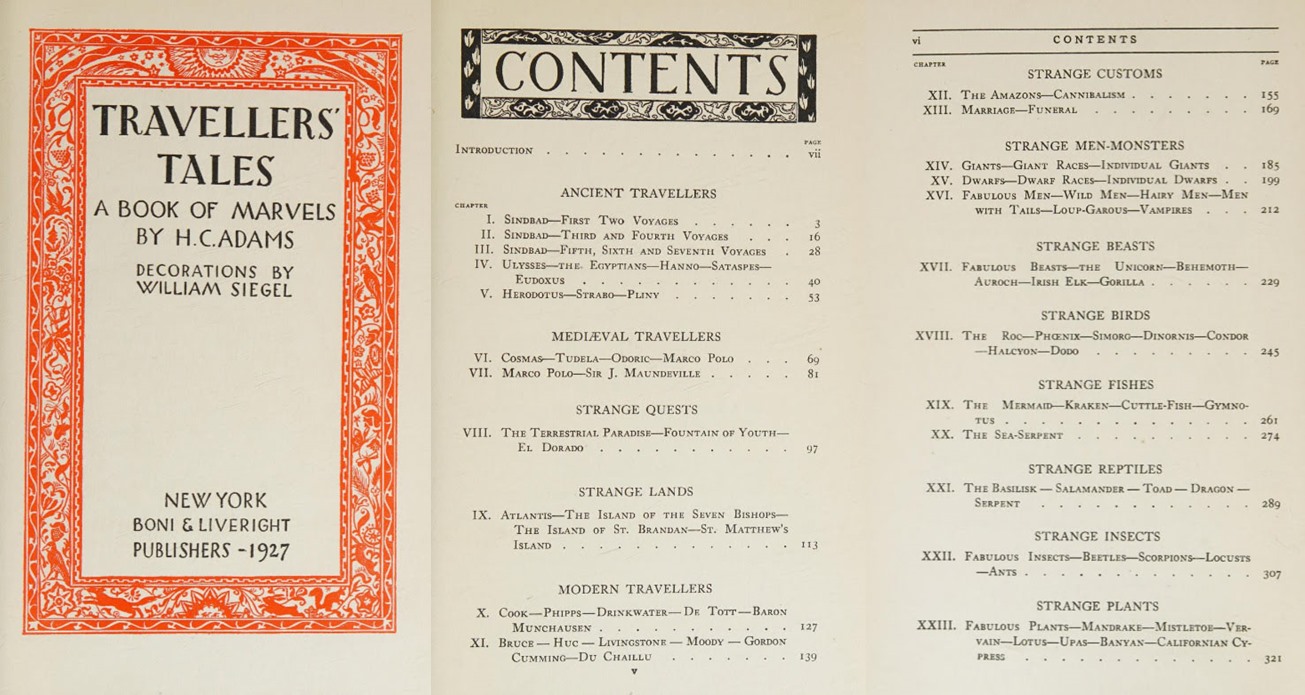
* A fine fresh scan of Travellers’ tales: a book of marvels (1927), new and free on Archive.org. Previously only available as one of the abysmal Digital Library of India scans. An accessible English collection of the material Tolkien would have known, though some of it perhaps only by reputation, by circa 1930.
* And finally, a new article on “How to Replicate J.R.R. Tolkien’s Education for Your Child”. I’d add a ‘daily translation’ exercise (Latin, Anglo-Saxon, Middle English etc), which was a commonplace for children of ability in Tolkien’s time. Also lots and lots of walking to school. Or the home-schooled equivalent.