Tolkien Gleanings #374
* All of Phil Dragash’s original recordings (2026), on a 9Gb .torrent. This new ‘complete collection’ including all outtakes, versions and extras, now issued in a bundle via the Internet Archive for…
“…the sake of completeness and preservation. […] all versions of each chapter, original and re-recorded, preserved in their unedited form. […] All files provided here are encoded in MP3 at 192 kbps.”
This treasure-trove potentially now gives the opportunity for an audiophile to ‘patch to perfection’ Dragash’s full-cast Lord of the Rings unabridged soundscape. Perhaps with the aid of the voice-cloning AI called Chatterbox to replace a few mispronunciations or skips, plus the AI prompt-to-SFX generator Stable Audio Open.
* New in the book Transformations of Oral and Written Narratives: The Interdisciplinary Approach (2025), the chapter “Tolkien’s refashioning of the Volsung material in The Legend of Sigurd and Gudrun and the depiction of the titular hero as a world-saving typos Christi”. Freely available online, in open-access and Creative Commons Sharealike.
* A new podcast discussion on “Middle-earth and Modern Meaning: Tolkien, Barfield, and the Soul of Story”…
“In this conversation, philosopher Robert Rowland Smith is joined by psychotherapist and writer Dr Mark Vernon to explore the imaginative world of J.R.R. Tolkien and the often-overlooked influence of Owen Barfield.”
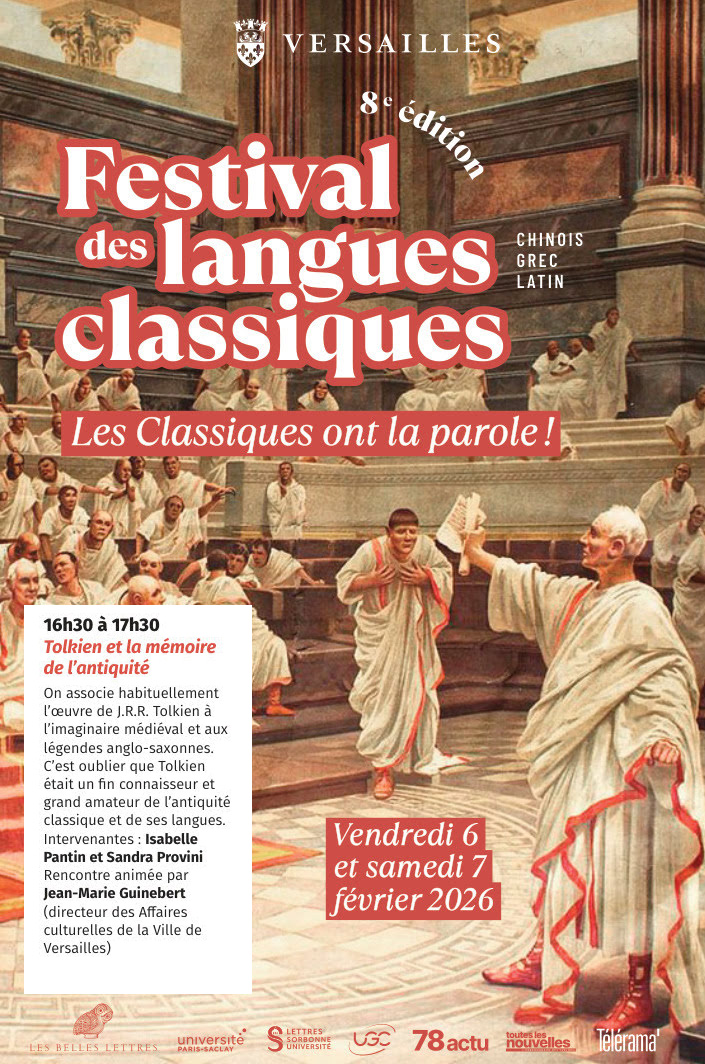
* The French Festival of Classical Languages (February 2026) will have a short session on ‘Tolkien and the Memory of Antiquity’.
* Possibly of interest to some readers of Gleanings, the new biography The Buried Man: A Life of H. Rider Haggard (2025).
* Now booking in Oxford, Magdalen College’s Lord of the Rings Marathon Screening, a one-day screening of the extended movie trilogy. Tickets likely to vanish in a twinkling, as it’s only £20 inc. food.
* Oxfam charity-shop volunteers in Scotland have turned up a 1968 edition of Tolkien’s The Hobbit among the donations. It turned out to be a rare schools edition of which only around 50 copies have survived. Now sold for £3,000.
* And finally… some of the Google Earth (desktop version) overhead imagery for the UK now has a “1945” toggle. Thus one can see Barnt Green and its train station as it was at the end of the war. Including a quiet back-lane that would have led from the back of the station to the north corner of the village. The alignment of modern roads (yellow) on old roads seems slightly mis-registered, presumably so one can actually see the old roads.
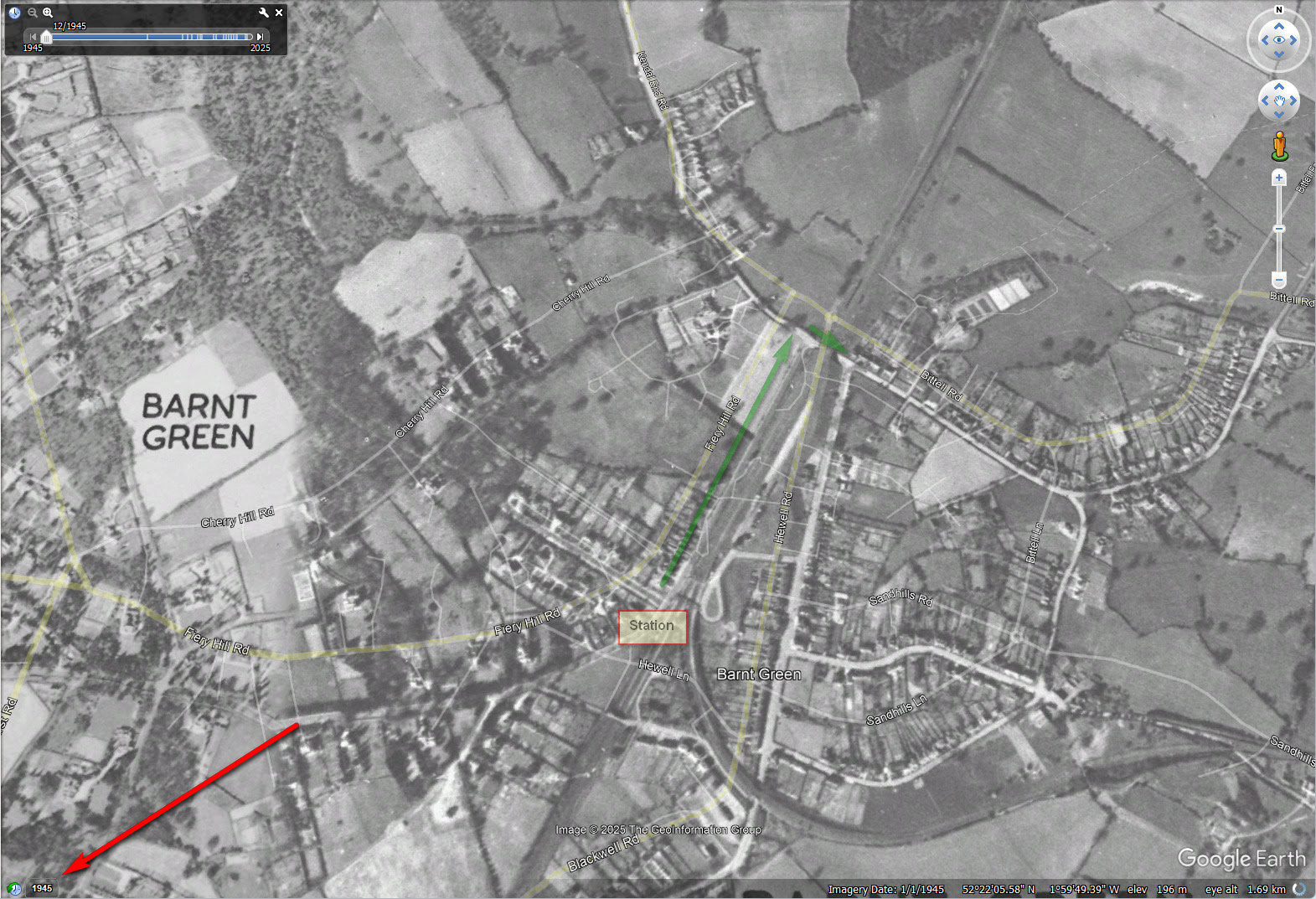
At the top of this back-lane, which still bears the evocative name of ‘Fiery Hill’, one would have turned immediately right into the village, through this unusual tall railway archway…
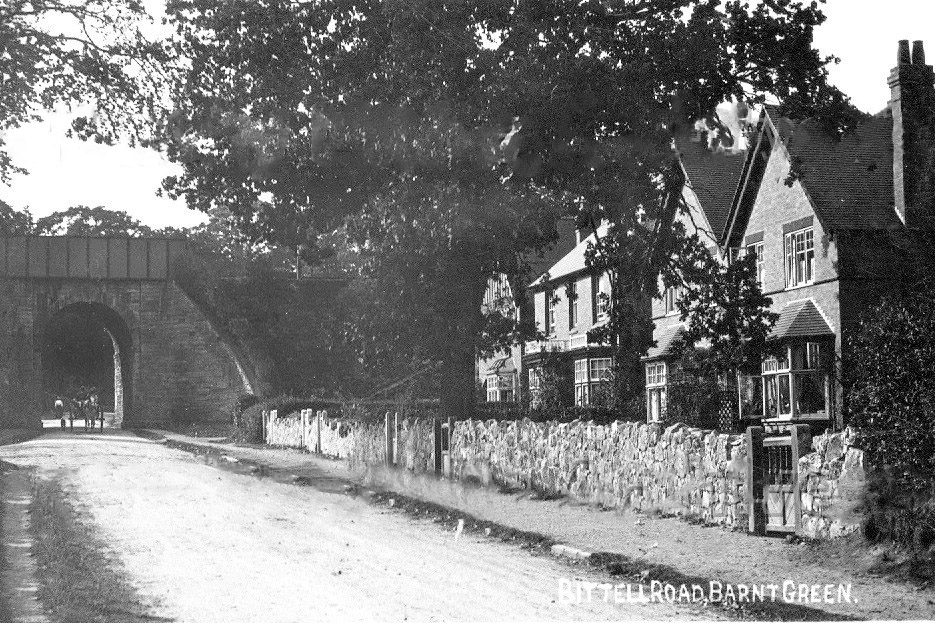
The arch recalls the shape of the entrance to Moria in LoTR. One can imagine that if an imaginative boy encountered it in 1900s rural darkness, on the way to the train station and back to Birmingham, it might have for a moment seemed a sort of forbidding door to a dark underworld. Though one would have to get a modern straight-on photo to compare the dimensions exactly with those of the Moria entrance, to see how precisely they match.